




Free Shipping
New
Product Category
Control Valves
The valve is the part that sits on top of softening and filtration tanks and decides when the system does what. Even if the tank and the resin are sound, the system produces no water when the valve does not work. In the same way, a wrongly chosen valve burns more salt and water than it needs to and…
- Free Shipping · across Türkiye
- 2-Year Warranty
Filter
Daily capacity
The daily treatment capacity stated by the manufacturer.
Products
Free Shipping
New

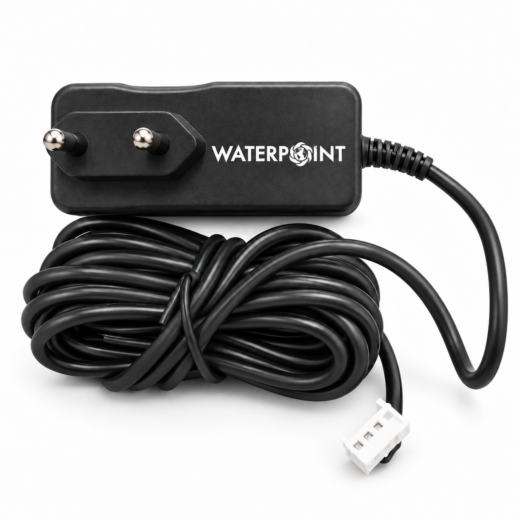
Clack Valve Board – Panel – 3 Buttons
Valve Electronic Board
Clack WS1TC · WS1.25TC
₺11,764.42
VAT included
Free Shipping
New

Clack Valve Panel – Board – 4 Buttons
Electronic Control Board
Clack WS1–WS2 EI
₺17,156.44
VAT included
Free Shipping
New
Free Shipping
Free Shipping
Free Shipping
Free Shipping
Free Shipping
Free Shipping
Free Shipping
Free Shipping
Free Shipping
Free Shipping
Free Shipping
Free Shipping
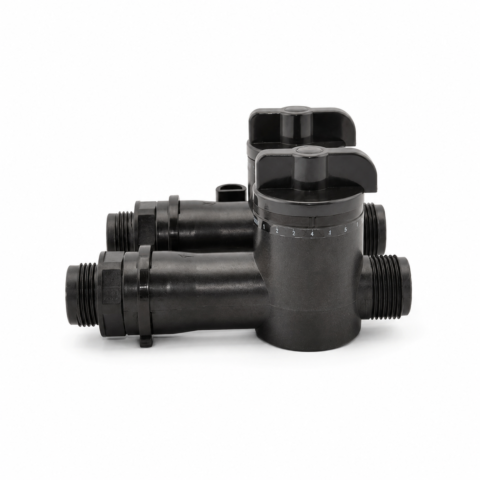
Runxin Bypass Valve 3/4"
Bypass Valve (Connection Fitting)
3/4" Inlet / Outlet
₺3,921.47
VAT included
Free Shipping
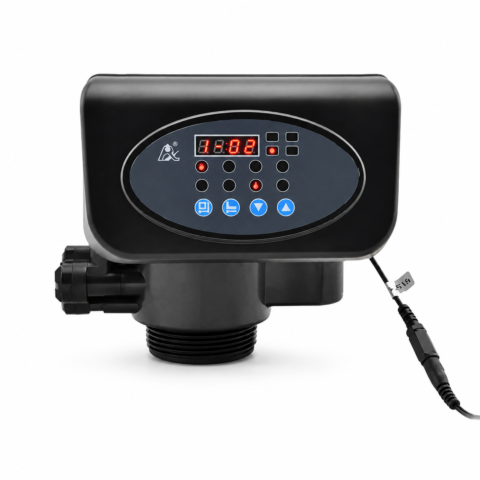
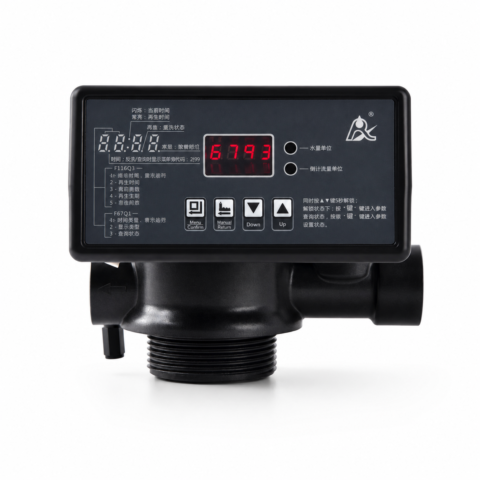
Runxin Digital Flow-Controlled Valve
Softener Control Valve
Digital / Flow-Controlled
₺14,705.52
VAT included
Free Shipping
Free Shipping
Free Shipping
Free Shipping
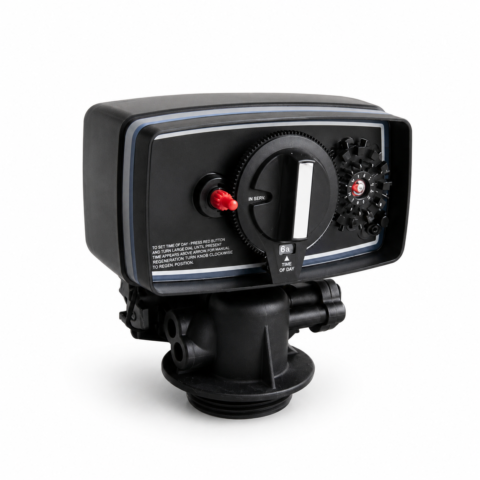
Time-Controlled Water Softener Valve – 5600
Softener Control Valve
5600 Timer
₺9,803.68
VAT included
About Control Valves
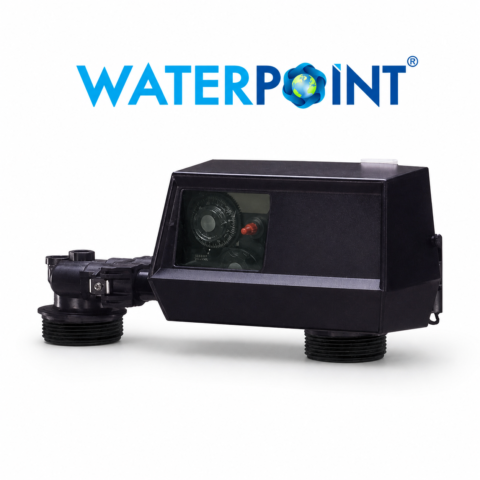
The valve is the part that sits on top of softening and filtration tanks and decides when the system does what. Even if the tank and the resin are sound, the system produces no water when the valve does not work. In the same way, a wrongly chosen valve burns more salt and water than it needs to and pushes the running cost up for years. Valve type, regeneration logic and the difference between brands are what decide the choice; most of the common faults also arise under these three headings. For the tank and media side, see our Pressure Tanks and Ion Exchange Resin categories.
What a Valve Does
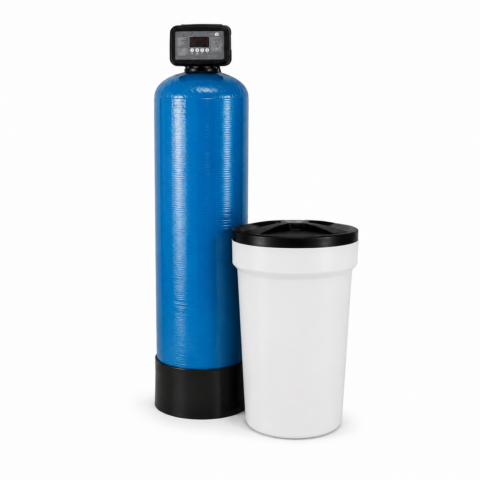
In a softening system the resin holds the calcium and magnesium in the water and reaches saturation in time. The job of the valve is to start the renewal cycle called regeneration when that saturation is reached, and to run the steps in order.
A typical regeneration cycle has five steps:
- 1 — Backwash: Water is passed in the reverse direction to lift the resin bed, and the sediment that has collected is flushed out.
- 2 — Brine draw: Brine drawn from the brine tank is passed through the resin bed; sodium ions take the place of calcium and magnesium.
- 3 — Slow rinse: The brine is held in the bed long enough to do its work.
- 4 — Fast rinse: Residual salt is rinsed out of the bed and the resin is settled again.
- 5 — Brine tank refill: Water is fed into the brine tank for the next cycle.
The duration and the order of these steps are managed by the valve. A wrongly programmed valve lets hardness come back or consumes excess salt, even when the resin is sound.
Time-Controlled Valves
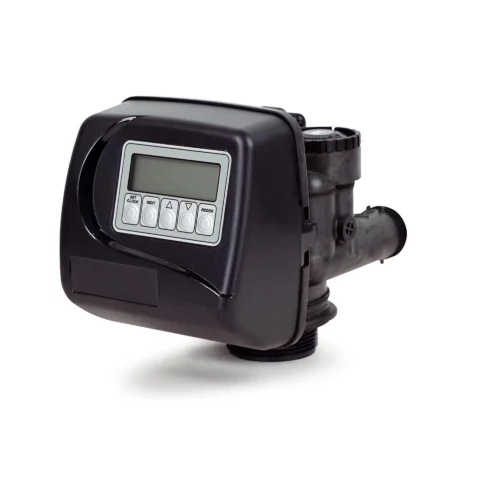
It starts regeneration by calendar or by clock. For example it is set to "every three days, at 02:00 at night". It works independently of water consumption.
Its advantage is simplicity: it is easy to install and set, it carries little electronics, and the initial cost is low. Its disadvantage is that it knows nothing about consumption. It also regenerates through a week when nobody is at home; salt and water go to waste. Conversely, if capacity runs out early during a busy period with guests, hard water comes through until the next cycle.
| Product | Price | Use |
|---|---|---|
| 5600 Timer Filter Valve | 10,293.86 TL | Filtration tanks |
| Time-Controlled Water Softener Valve 5600 | 9,803.68 TL | Softener tanks |
In homes with steady consumption it is an economical and sufficient choice.
Flow-Controlled (Volumetric) Valves
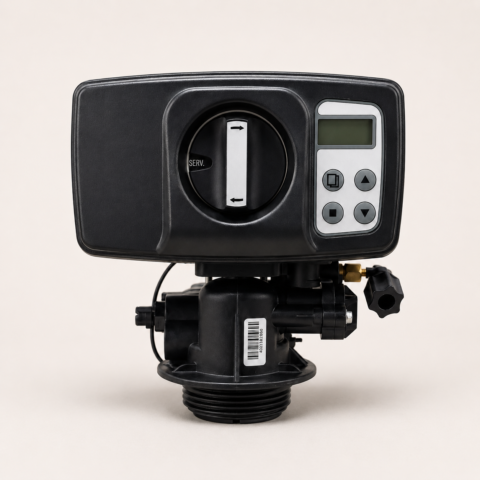
The meter inside it measures the amount of water passing through the tank. Regeneration only starts once the calculated capacity is used up. In this way no unnecessary cycle is run in periods of low use, while in busy periods renewal starts as soon as capacity is reached.
Saving salt and water is the clearest benefit of these valves. The difference is marked in homes, businesses and seasonal installations where consumption varies. Fewer cycles also mean less wear on the resin, which indirectly extends resin life.
| Product | Price | Where it is used |
|---|---|---|
| Runxin Digital Flow-Controlled Valve | 14,705.52 TL | Entry-level digital option |
| BNT1650T Digital Flow-Controlled Valve | 19,607.36 TL | Higher-capacity systems |
| Clack Volumetric Softener Valve | 58,822.08 TL | Commercial and industrial use |
Twin-Tank Systems and Uninterrupted Soft Water
In a single-tank system, soft water production stops while regeneration is running. In homes this is usually not a problem, because the cycle runs at night. On a production line, however, an interruption in supply is not acceptable.
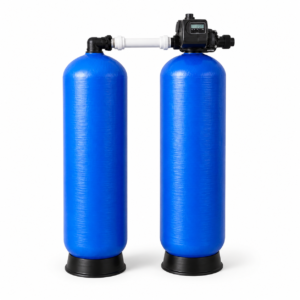
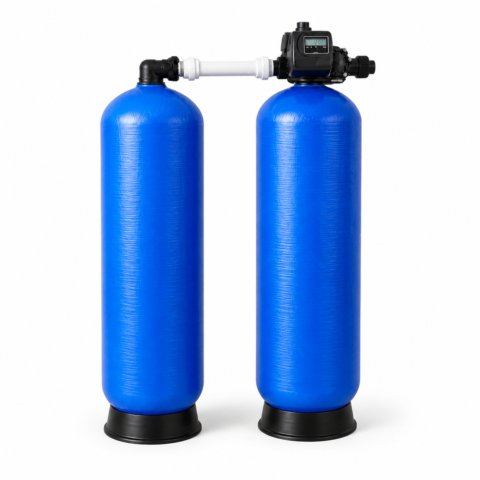
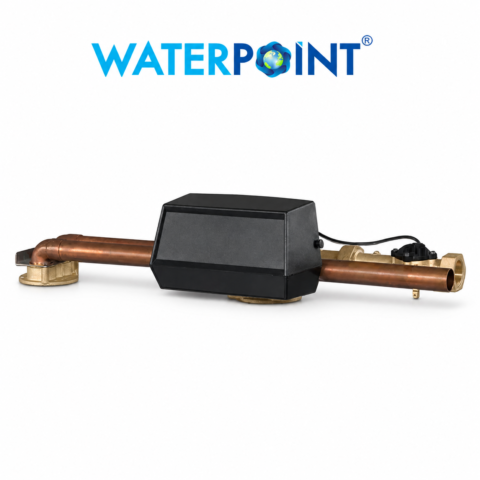
In twin-tank systems two tanks work in turn: while one regenerates, the other keeps producing. The Clack WS1 EI Twin Valve 98,036.80 TL is the valve that runs this logic. It is used where uninterrupted soft water is needed, such as steam boilers, production lines and commercial laundries. For detail, see our Industrial Water Treatment category.
Clack, Fleck and Runxin Compared
The three brands address different budget and capacity ranges. What decides the choice is not brand prestige but the flow rate of the system, the tank diameter and how continuous the use is.
| Brand | Positioning | Notable models | Price range |
|---|---|---|---|
| Runxin | Entry and mid level, widely available spare parts | F67Q1, Digital Flow-Controlled, F111B1, F111A3 | 9,486.10 – 98,036.80 TL |
| Clack | Commercial and industrial, twin-tank support | WS1 TC, Volumetric, WS1 EI Twin | 47,430.50 – 98,036.80 TL |
| Fleck | High-capacity industrial lines | 9100, 9500 | 170,749.80 – 441,165.60 TL |
| Brand | Product | Price | Role |
|---|---|---|---|
| Runxin | F67Q1 Filter Valve | 9,803.68 TL | Filtration |
| Runxin | F111B1 Filter Valve | 88,233.12 TL | Filtration |
| Runxin | F111A3 Water Softener Valve | 98,036.80 TL | Softening |
| Clack | WS1 TC Clack Filter Valve | 49,018.40 TL | Filtration applications |
| Fleck | 9100 Fleck Valve | 176,466.24 TL | High-flow industrial line |
| Fleck | 9500 Fleck Valve | 441,165.60 TL | High-flow industrial line |
For simple, occasional use the Manual Valve 1,470.55 TL is an option; regeneration is started by hand.
Key Settings in Valve Programming
On most digital valves a few basic values are set. Knowing what these values mean makes both the check after installation and the diagnosis of later problems easier.
Hardness value
This is the most critical figure entered into the valve. If the hardness of the incoming water is entered into the valve wrongly, the valve calculates the capacity wrongly. Entered too low, regeneration comes late and hard water gets through; entered too high, the valve regenerates more often than needed and salt is wasted. With the Water Hardness Test Kit 1,176.44 TL, measuring the real value is far more accurate than entering a guess.
Resin volume and capacity
The amount of resin in the tank determines how much hardness can be removed in one cycle. Knowing this volume, the valve calculates after how many litres of water it will regenerate. When the resin is changed or its amount changes, this value must be updated.
Regeneration time
The hour at which the cycle starts is usually set to the night hours when water use is lowest. In businesses it is set according to the shift pattern; going into regeneration during production means an interruption in supply.
Backwash and rinse durations
Set too short, the bed is not cleaned enough and the resin becomes fouled in time; set too long, water runs to waste. The factory values suit most installations, and on water with a high sediment load the backwash duration can be extended somewhat.
Ways to Reduce Salt and Water Consumption
The running cost of a softening system consists almost entirely of salt and regeneration water. The way to lower that cost is not to change the brand of salt but to remove the unnecessary cycle.
- Move to a flow-controlled valve. A time-controlled valve regenerates even when no water is used. This is the largest single saving.
- Enter the hardness value correctly. A hardness value entered higher than it really is makes the system regenerate more often than needed for the whole of its life.
- Prevent salt bridging. Salt that hardens into a bridge in the brine tank leaves a gap underneath and makes the draw ineffective. A regular check is enough.
- Do not neglect the pre-filter. Sediment fouls the resin bed and increases both the backwash duration and the cycle frequency. The pre-filter stage directly affects the efficiency of the softening system.
- Separate unnecessary use with a bypass. Taking lines that do not need soft water, such as garden irrigation, off the system prevents capacity from being wasted.
The Water Softener Salt 588.22 TL used for regeneration must be in tablet form and must be chosen to suit the brine draw arrangement of the system.
Common Mistakes in Valve Installation
- Cutting the riser tube too short or too long. The tube must sit at the right distance from the base of the tank; the wrong length spoils both the backwash and the brine draw.
- Not capping the tube while filling the resin. If the mouth of the riser tube is not capped, resin fills the inside of the tube and blocks the valve.
- Commissioning without fitting a bypass. Adding one later means cutting into the line.
- Running the drain line too high. Excessive height or length lowers the backwash flow rate and stops the bed lifting.
- Not tightening the brine tank draw line. A draw line that leaks air stops the brine being pulled through; the system looks as if it is working but does not soften.
- Not running a manual regeneration at first start-up. Running one manual regeneration when new resin is commissioned clears the manufacturing residue out of the bed.
Capacity in Industrial Valve Selection
In residential systems the valve is chosen largely according to the tank diameter. On industrial lines, what decides it is the peak flow: the highest amount of water that has to pass through the system at one time.
When a flow rate above what the valve can handle is forced through, pressure drops and the equipment at the end of the line runs on insufficient pressure. For this reason industrial selection takes into account not the average consumption but the total of all the points running at the same time.
The second deciding factor is the need for continuity. Can an interruption in supply during regeneration be accepted? If it cannot, a twin-tank arrangement is needed instead of a single tank, and a valve that runs this logic, such as the Clack WS1 EI Twin Valve, is chosen. If the interruption can be tolerated, a single-tank arrangement is both more economical and simpler.
On high-flow lines the 9100 Fleck and 9500 Fleck valves are used. At this scale the valve is not chosen on its own; it is calculated together with the tank diameter, the resin volume, the brine tank capacity and the booster pump pressure.
Valve, Tank and Resin Are Chosen Together
A valve is not a part that is chosen on its own. The diameter of the tank, the resin volume inside it and the flow rate of the line are tied to one another; changing one affects the others.
For example, when you want to increase capacity by raising the resin volume, the tank diameter grows as well. A larger tank diameter calls for a higher flow rate for backwashing; if the valve cannot supply that flow rate, the bed does not lift enough and channelling forms in time. In the same way, the capacity the valve calculates must be programmed according to the real amount of resin in the tank; otherwise regeneration starts either too early or too late.
| What changed | Selection affected | What to watch |
|---|---|---|
| Resin volume increased | Tank diameter, valve capacity | Is the backwash flow rate enough |
| Tank diameter increased | Valve connection, riser tube | Tube length and valve thread match |
| Flow rate demand increased | Valve model, connection size | Is the pressure drop acceptable |
| Continuity is required | Twin-tank instead of a single tank | Two tanks and a twin-tank valve |
| Hardness increased | Regeneration frequency, salt consumption | Move to a flow-controlled valve |
For this reason, when a system is built or enlarged, the valve, the tank and the resin must be assessed together. Changing a single part afterwards often does not give the expected result.
The Difference Between a Filter Valve and a Softener Valve
Although they look similar, the two valves do different jobs and cannot take the place of one another.
A filter valve is used on tanks carrying sand, carbon or similar media. Its work consists of backwashing and rinsing; it lifts the bed and flushes out the sediment that has collected. It has no brine circuit. The Runxin F67Q1 and the WS1 TC Clack Filter Valve are in this class.
A softener valve, in addition, has a brine draw circuit. During regeneration it draws brine from the brine tank and passes it through the resin bed. The F111A3 Runxin and the Clack Volumetric are in this class.
If a filter valve is fitted to a softener tank by mistake, the system backwashes but cannot renew the resin; within a few weeks hard water starts coming through. This is one of the installation mistakes most often met in the field.
Valve Life and the Decision to Replace
The valve body serves for many years when it is run within the right pressure and temperature range. What needs renewing is usually not the body but the moving parts and the parts that provide the seal.
- O-ring kit: Typically renewed every two to three years. It is the most common source of leaks.
- Piston: Checked when the valve sticks in one position or runs water to drain continuously.
- Circuit board and motor: Assessed when the program is lost or the cycle does not start at all.
- Body: Replaced if there is a crack, deformation or thread damage; these cases are rare.
The decision to replace the whole valve makes sense when there is body damage that a spare part cannot solve, or when the capacity of the system is no longer enough. Otherwise, changing the O-ring kit and the piston solves most faults and brings the cost down markedly.
Why a Bypass Valve Is Needed
A bypass is a diverting part that lets water pass straight through without taking the system off the line. During maintenance, a fault or a resin change, it keeps the home or the business from being left without water.
Runxin Bypass Valve 3/4″ 3,921.47 TL is the most widely used size. On a system with no bypass fitted, even the smallest maintenance job requires the mains water to be shut off, which is a serious constraint in businesses in particular. It is the part most often skipped at installation and most often wanted afterwards.
Valve Spare Parts: Before Replacing the Whole Valve
A large share of valve faults does not call for the whole valve to be replaced. Most leaking and sticking problems come from the O-rings and the piston.
- O-ring kit: The sealing elements inside the valve harden in time and lose their flexibility. Clack WS1 Valve O-Ring Kit 6,372.39 TL.
- Piston: It is the part that moves between the steps; when it wears, the valve sticks in position or runs water to drain continuously. Clack WS1 Valve Piston 3,186.20 TL.
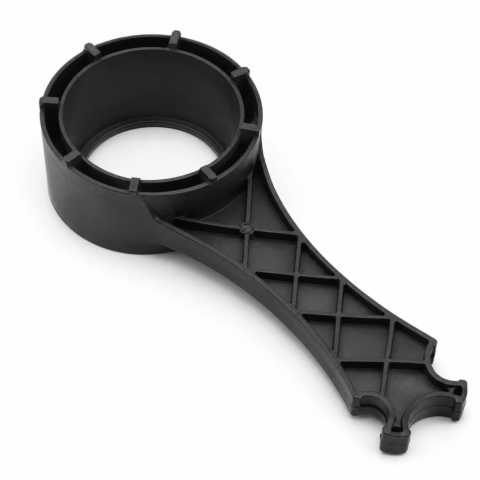
- Valve wrench: The special wrench needed to open the valve without damaging it. WS1 Clack Valve Wrench 3,186.20 TL.
Checking these three items before buying a new valve brings the cost down to a tenth in most cases.
Common Valve Faults
| Symptom | Likely cause | Part to check |
|---|---|---|
| The system runs water to drain continuously | The valve has stuck in position, the piston is worn | Piston, O-ring kit |
| Leak around the valve | O-ring is tired or has come out of its seat | O-ring kit |
| Regeneration does not happen at all | Program lost, motor or meter faulty | Valve settings, meter |
| Hard water despite regeneration | Salt has run out, the draw line is blocked or the duration is too short | Brine tank, draw line, program |
| Salt consumption has risen sharply | Regeneration more often than needed | Valve program, meter |
| Water has collected in the brine tank | The draw has failed, the refill setting is wrong | Draw line, valve program |
| Pressure has dropped seriously | The resin bed is compacted or the valve is partly closed | Backwash setting, valve position |
5 Points to Check When Choosing a Valve
- 1 — Connection size. 3/4″ and 1″ can be confused. Reducing the size limits the flow rate of the line directly.
- 2 — Match to the tank diameter. The riser tube and the seating thread of the valve must match the tank diameter.
- 3 — Type of application. A filter valve and a softener valve are different; the softener valve has a brine draw circuit.
- 4 — Capacity and flow rate. The valve must be able to meet the peak flow of the system. An undersized valve causes a pressure drop.
- 5 — Spare part availability. O-ring and piston kits for widely used brands are easy to find, which shortens downtime in the long run.
Valve Fault or Resin Problem
When a complaint of hard water comes in, the valve is the first thing that comes to mind; yet the same symptom can also come from the resin. Telling the two apart prevents an unnecessary valve change.
If the valve starts the cycle, consumes salt and completes the steps, there is no problem on the mechanical side. If hardness still continues at the outlet despite this, suspicion moves to the resin: the bed may be broken down, fouled or at the end of its capacity. Conversely, if the salt never goes down and no cycle sounds are heard, the problem is most probably in the valve.
A practical way to check is to start regeneration by hand and follow the steps one by one. If each step can be seen to happen, if water can be seen going to the drain line and if the draw from the brine tank can be observed, the valve is working. On the resin side, the solution is to renew the bed.
After How Many Years Should a Valve Be Replaced
It would not be right to give a fixed life for the valve body; what decides it is the operating conditions. In a system where the pressure and the temperature stay within the range of the manufacturer and the earlier stages do their job, the body serves for many years without trouble. Over that period what is renewed are the moving parts such as the O-rings and the piston. Cases that call for the body to be changed are rare: a crack, thread damage, or the capacity of the system no longer being enough. In the second case there is in fact no fault; the need has grown, and the valve is resized together with the tank.
Valve Prices 2026
The prices below are the current values on the product pages and include VAT.
| Product | Type | Price |
|---|---|---|
| Manual Valve | Manually operated | 1,470.55 TL |
| Clack WS1 Valve Piston | Spare part | 3,186.20 TL |
| WS1 Clack Valve Wrench | Tool | 3,186.20 TL |
| Runxin Bypass Valve 3/4″ | Bypass | 3,921.47 TL |
| Clack WS1 Valve O-Ring Kit | Spare part | 6,372.39 TL |
| Time-Controlled Softener Valve 5600 | Time-controlled | 9,803.68 TL |
| Runxin F67Q1 Filter Valve | Filter valve | 9,803.68 TL |
| 5600 Timer Filter Valve | Time-controlled | 10,293.86 TL |
| Runxin Digital Flow-Controlled Valve | Flow-controlled | 14,705.52 TL |
| BNT1650T Digital Flow-Controlled Valve | Flow-controlled | 19,607.36 TL |
| WS1 TC Clack Filter Valve | Filter valve | 49,018.40 TL |
| Clack Volumetric Softener Valve | Flow-controlled | 58,822.08 TL |
| F111B1 Runxin Filter Valve | Filter valve | 88,233.12 TL |
| Clack WS1 EI Twin Valve | Twin-tank | 98,036.80 TL |
| F111A3 Runxin Water Softener Valve | Softener valve | 98,036.80 TL |
| 9100 Fleck Valve | Industrial | 176,466.24 TL |
| 9500 Fleck Valve | Industrial | 441,165.60 TL |
Buying a Valve from Water Point
- A 2-year warranty applies; misuse is not covered.
- CE certified products — we work with products that fall within the scope of certification.
- ETBİS-registered e-commerce — we are registered in the Ministry of Trade system.
- Invoiced sales — a legal invoice is issued with every order.
- Spare part support — we supply Clack O-ring and piston kits separately; replacing the whole valve is not always necessary.
- Free site survey available — we determine on site whether the fault is in the valve or in the resin. see the details
- Service network across Türkiye for industrial systems — for domestic units we serve İstanbul and the surrounding provinces (such as Kocaeli and Tekirdağ).
Address: Mehterçeşme Mah. 1919 Sk. No: 54/B Esenyurt / İstanbul. This category lists valves and valve spare parts.
Cannot find the spare part you are looking for?
Send us the brand and model of your unit and let us decide on the right filter, membrane, valve or resin together. If the unit is purchased from us the site survey is free; if only a site survey and measurement is requested, a site survey fee of 2,000 TL is charged.
0850 304 95 25WhatsApp[email protected]Control Valves: frequently asked questions
Should I buy a time-controlled valve or a flow-controlled valve?
If your water consumption runs at a similar level from week to week, a time-controlled valve is enough and the initial cost is low. If your consumption varies, or if reducing salt and water consumption is your priority, a flow-controlled valve should be preferred; because it only starts regeneration once capacity is used up, it prevents unnecessary cycles and earns back the difference through the running cost.
What is regeneration and how long does it take?
Regeneration is the process of renewing saturated resin with brine. It consists of the backwash, brine draw, slow rinse, fast rinse and brine tank refill steps. It varies with the capacity of the system, but it typically takes one to two hours and is usually programmed for the night hours.
My valve runs water to drain continuously, what should I do?
This usually comes from the valve sticking in one position, and the most common cause is a worn piston. The O-ring kit and the piston must be checked. Looking at these two parts before replacing the whole valve cuts the cost markedly in most cases.
The softener is not working, has the valve failed?
The first thing that should be checked is the brine tank. Salt running out or a salt bridge forming makes regeneration ineffective even when the valve is sound. If the salt level is in order, the draw line, the program settings and the condition of the resin are assessed in turn.
Is a bypass valve essential?
It is not compulsory, but it is strongly recommended. With a bypass you can pass water straight through during maintenance, a fault or a resin change, and you do not leave the home or the business without water. On a system with no bypass fitted, even the smallest intervention requires the mains water to be shut off.
Are a filter valve and a softener valve the same?
No. A softener valve has a brine draw circuit and pulls from the brine tank during the regeneration steps. A filter valve only backwashes and rinses; it has no brine circuit. If a filter valve is fitted to a softener tank, the resin cannot be renewed.
What is the difference between Clack, Fleck and Runxin?
All three address different budget and capacity ranges. Runxin is widely used at entry and mid level, and its spare parts are easy to find. Clack is preferred in commercial and industrial applications, particularly in twin-tank systems where uninterrupted water is needed. Fleck is for high-flow industrial lines. What decides the choice is the flow rate of the system, the tank diameter and how continuous the use is.
How often does a valve need replacing?
The valve body works for many years when it is used correctly. What changes is usually the sealing elements inside it; the O-ring kit is typically renewed every two to three years. Symptoms such as leaking, sticking in position or running water to drain continuously show that it is usually the O-ring and piston kit that needs changing, not the whole valve.