
Boiler Feed Water: Requirements and Preparation Methods
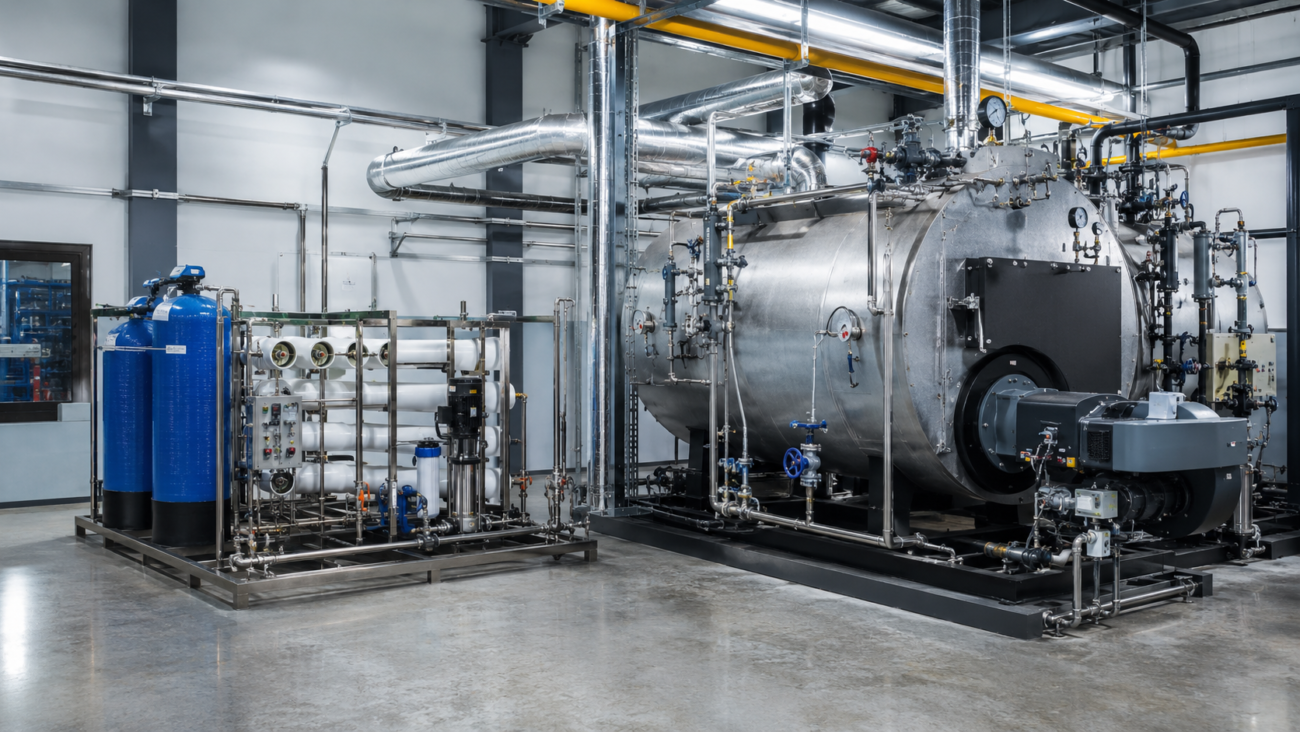
A steam boiler can run for years without trouble, or it can stop production with an unexpected shutdown; the difference is usually decided by a single factor: the quality of the water. Untreated water first forms scale that coats the heat transfer surfaces inside the boiler, then corrosion that eats into the metal. The result is rising fuel consumption, falling efficiency, frequent maintenance and unplanned stoppages. That is why boiler feed water is a critical engineering subject that should not be overlooked in industrial plants.
Even a few millimetres of boiler scale seriously reduces heat transfer and raises the fuel bill; corrosion thins and perforates tubes and shortens the life of the equipment. In this guide we take up the damage untreated water causes in a boiler, the parameters that have to be controlled, and the correct water preparation stages, in a technical but readable framework.
What Is Boiler Feed Water?
Boiler feed water is the water fed into a steam boiler to replace the water consumed as steam. It generally consists of a mixture of returning condensate and fresh make-up water. To protect the integrity of the boiler it has to be treated for hardness, dissolved oxygen and mineral content.
In practice boiler feed water has two components: the relatively clean condensate returning from the steam circuit, and the raw make-up water that replaces what the system loses. Because the quality of the make-up water depends directly on the mains or well source, it must be treated before it enters the boiler. Otherwise the hardness components, dissolved gases and minerals in the water build up inside the boiler and threaten both efficiency and safety.
What Does Untreated Water Do to a Boiler? Scale and Corrosion
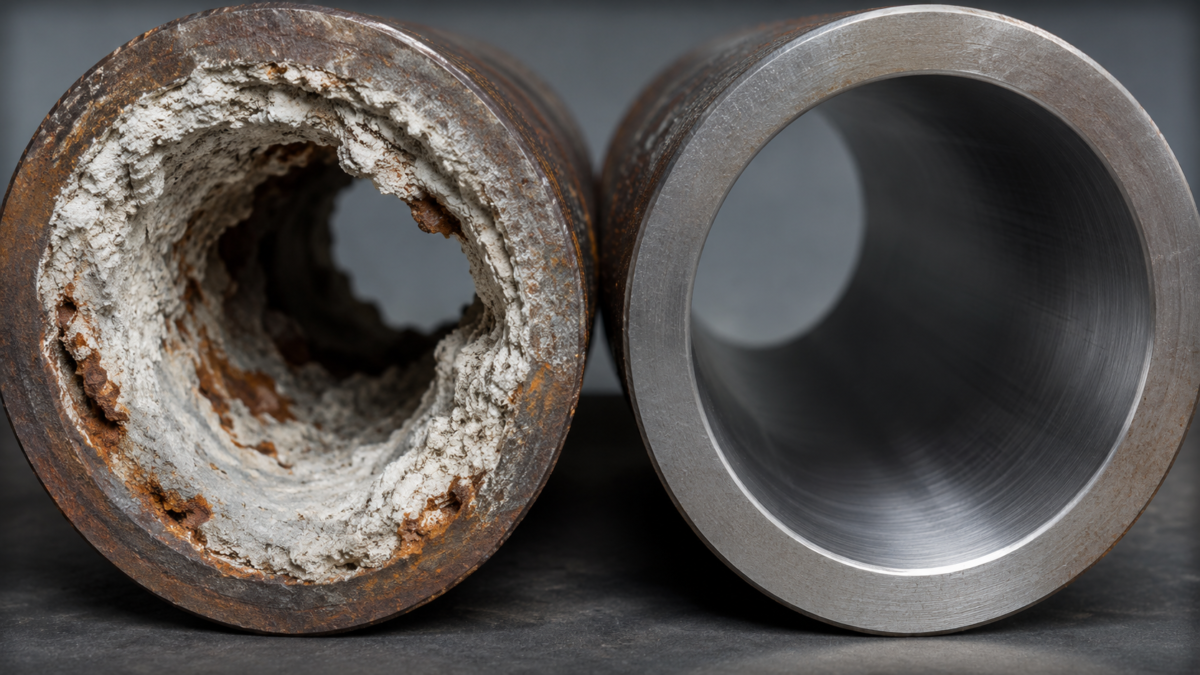
Untreated water causes two basic kinds of damage in a boiler: scale and corrosion. The calcium and magnesium in the water precipitate with heat and form an insulating layer of boiler scale on the heating surfaces; dissolved oxygen pits the metal surface and can progress as far as perforation. Both lower efficiency and safety.
Scale coats the heat transfer surface like a blanket. Because that layer stops heat passing into the water, the boiler burns more fuel to produce the same steam; every millimetre of scale shows up directly on the fuel bill. Overheated points on the metal also raise the risk of local stress and damage.
Corrosion is more insidious. Dissolved oxygen and an unsuitable pH start electrochemical attack on the metal surface. Pitting from dissolved oxygen corrosion in particular opens small but deep cavities in the tube wall and can lead to perforation without any visible loss of thickness. Scale and corrosion often advance together, multiplying the maintenance cost and the downtime.
The Parameters Controlled in Boiler Feed Water
The most critical boiler feed water parameters are hardness, dissolved oxygen, pH, conductivity/TDS, silica and iron. These values are directly decisive for scale, corrosion and steam quality. The target ranges vary with the pressure class of the boiler; as pressure rises the requirements tighten markedly.
The importance of boiler water chemistry is stressed carefully by boiler manufacturers too; the Babcock & Wilcox resource on boiler water and steam chemistry, for instance, states that feed water should at the least be softened at low pressure and demineralised at high pressure, and freed of oxygen and hardness components. The table below sums up the basic parameters to monitor:
| Parameter | Why It Matters | Target Direction |
|---|---|---|
| Hardness (Ca/Mg) | The main cause of boiler scale | As low as possible, close to zero |
| Dissolved Oxygen | The trigger for pitting corrosion | Close to zero (by deaeration) |
| pH | Corrosion control and material protection | Balanced in the slightly alkaline range |
| Conductivity / TDS | Deposits, foaming and carryover with steam | Limited according to the pressure class |
| Silica | The risk of hard scale and turbine deposits | Low; very low at high pressure |
| Iron | Deposits and the transport of corrosion products | Should be kept at a low level |
These parameters are not independent of one another; when one goes out of control it affects the rest. For that reason boiler feed water requirements rest not on a single value but on an understanding of overall balance.
Controlling Hardness and Scale
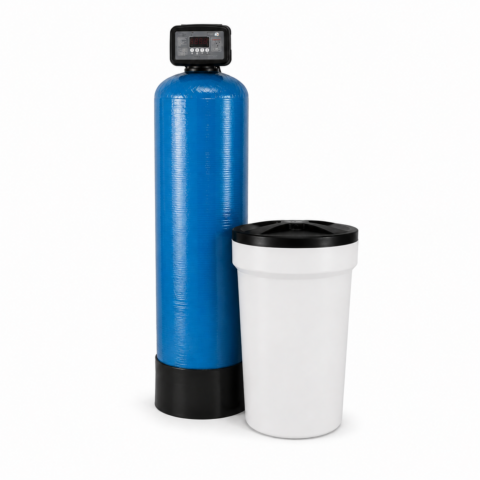
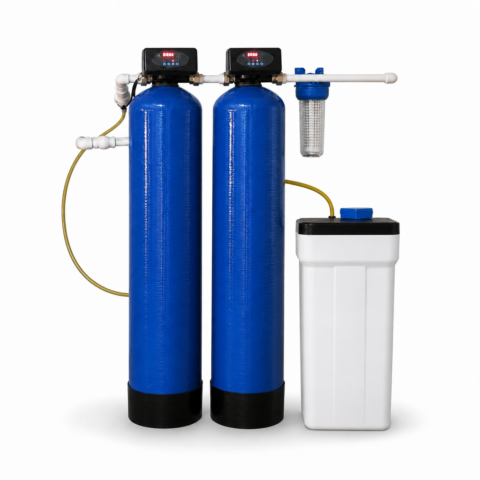
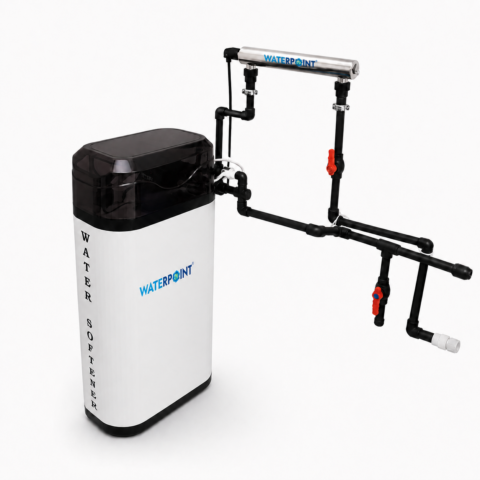
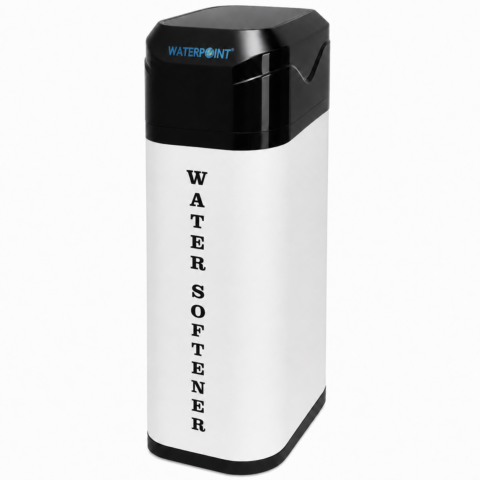
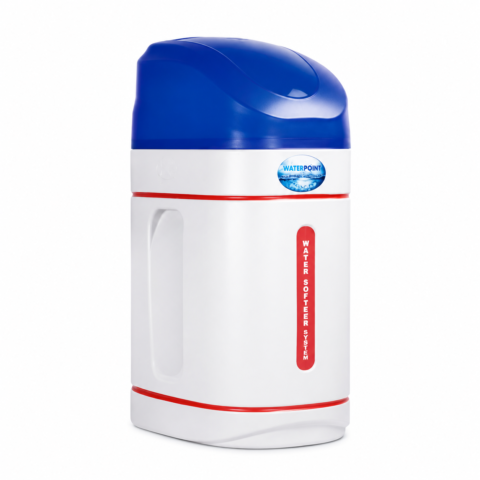
Controlling hardness is the first step in preventing boiler scale. The calcium and magnesium in the water are removed by water softening systems working on the ion exchange principle. On many low-pressure boilers softened water is a basic requirement; where hardness is not removed, scale inevitably builds up on the heating surfaces.
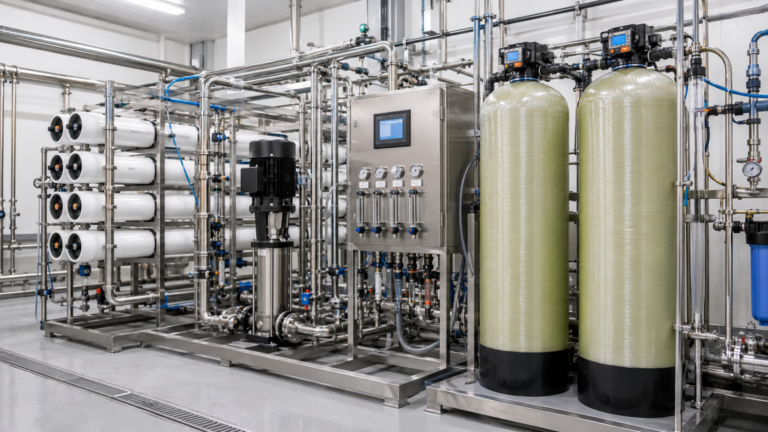
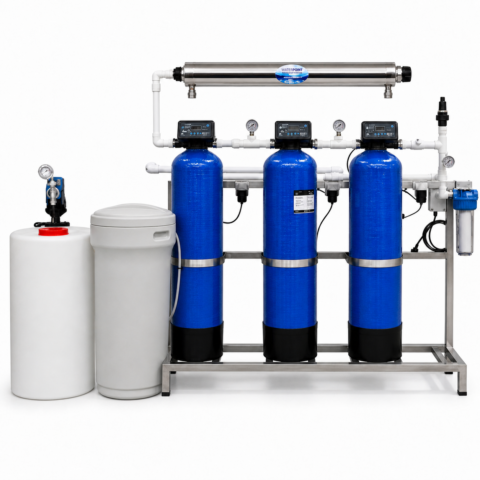
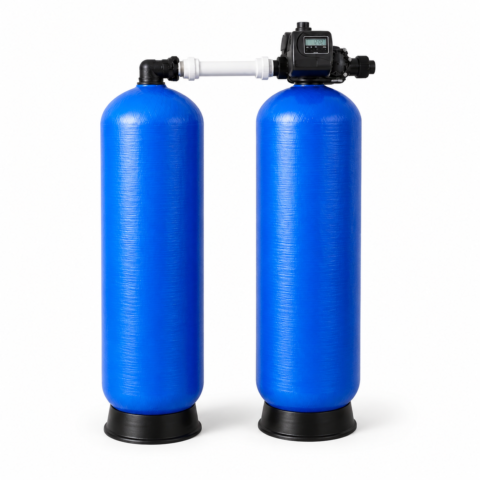
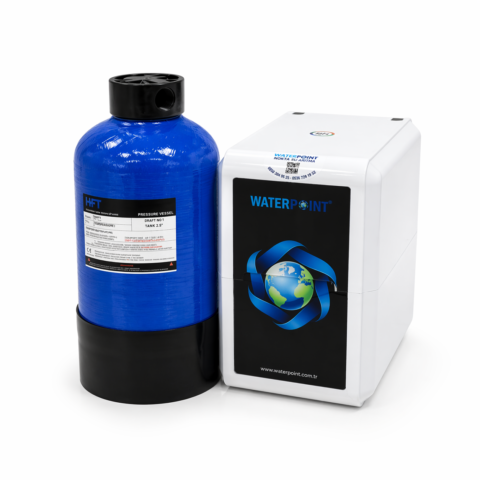
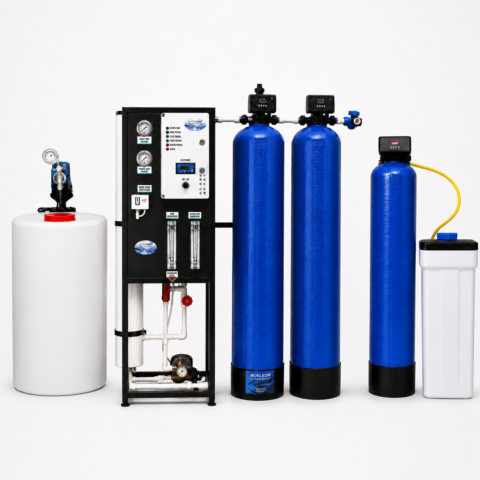
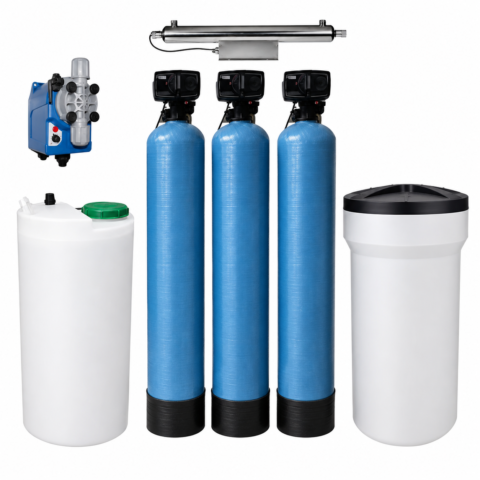
At industrial scale, hardness removal is generally done with high-capacity ion exchange systems. Once boiler water hardness is under control, scale is prevented and the load on the stages behind it (reverse osmosis, deaerator) is reduced. Built for that purpose, industrial water softening systems are the cornerstone of a boiler protection strategy.
In some plants, different approaches may come up according to the source water and the operator’s preference. For alternative builds in the fight against hardness, industrial-type limescale treatment solutions can also be considered. Which method suits should be established together with the raw water analysis and the operating conditions of the boiler.
Dissolved Oxygen and Corrosion Prevention (Deaeration)
Dissolved oxygen is the main cause of boiler corrosion and has to be removed from the water physically. That process is called deaeration; by heating the water and lowering the solubility of gases, it drives oxygen and carbon dioxide out of the system. The trace oxygen that remains is then bound with chemical oxygen scavengers.
A deaerator generally heats the feed water by bringing it into contact with steam; because the solubility of gases in water falls as the temperature rises, oxygen and carbon dioxide are released and vented. That mechanical removal is extremely effective at preventing pitting corrosion. Even so, because trace oxygen can remain in the water, that residue is neutralised by chemical conditioning.
Water whose hardness has been removed but whose oxygen has not does not protect a boiler from corrosion. Scale and corrosion are two separate threats; one is handled by softening, the other by deaeration and conditioning. When the two are not managed together, the protection is incomplete.
The Need for Demineralisation in High-Pressure Boilers
In high-pressure boilers softening on its own is not enough; the mineral and conductivity load of the water has to be lowered as well. This is where reverse osmosis and demineralisation come in. As pressure rises so does the purity required; in the highest classes, water that is almost mineral-free and of very low conductivity becomes essential.
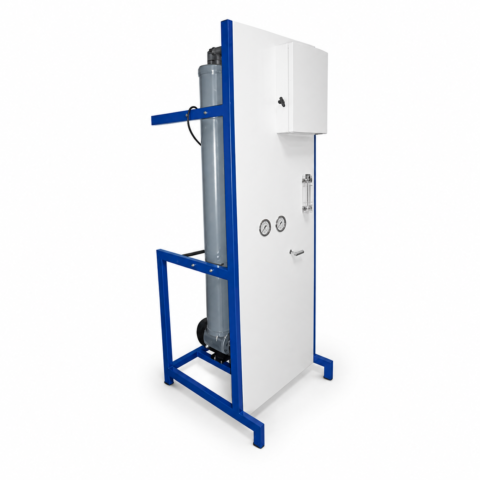
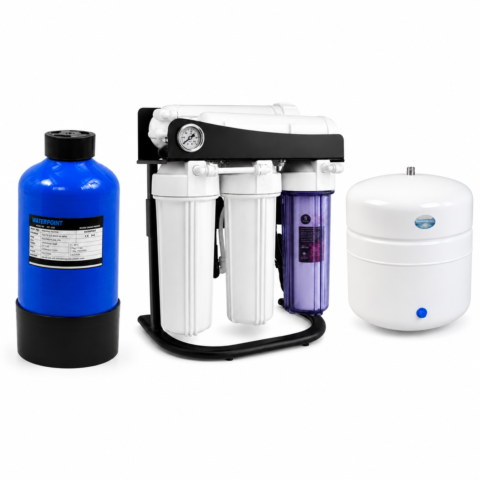
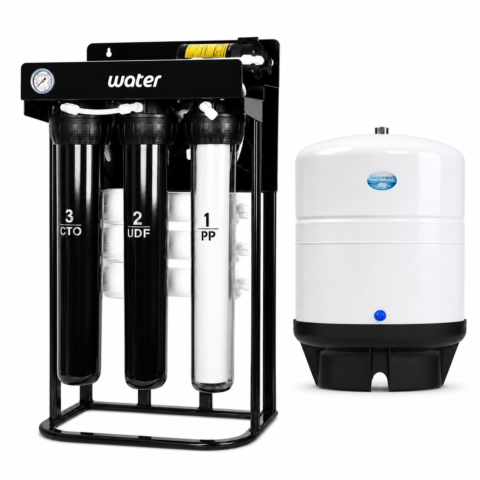
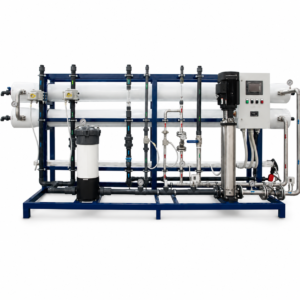
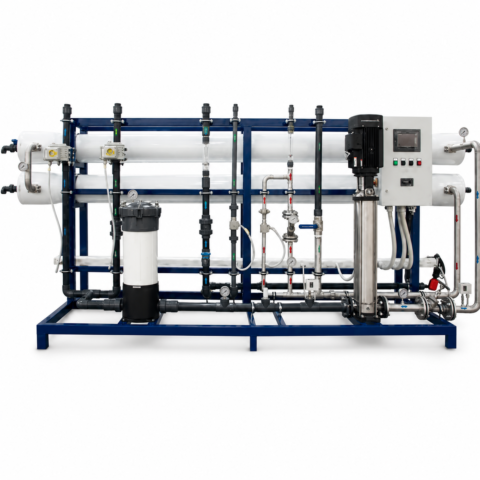
Softening removes hardness alone; it leaves other dissolved substances such as sodium, silica and chloride in the system. Yet at high pressure those substances create a risk of both deposits and carryover with the steam. To lower the mineral load in bulk, reverse osmosis technology is therefore used as a first stage; demineralisation by ion exchange then completes the job where necessary.
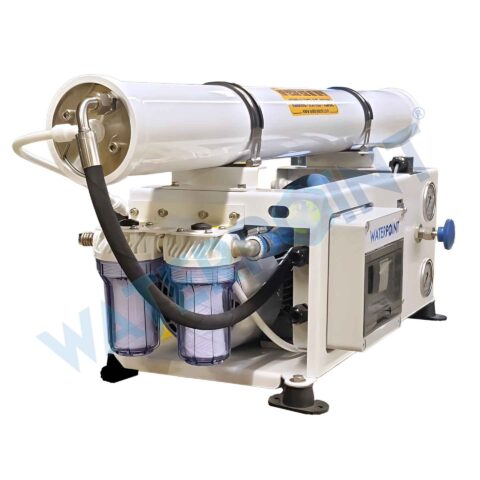
In applications requiring the highest purity, the boiler feed water preparation chain ends with the production of demineralised or pure water. For needs at that level, industrial deionised pure water systems provide the low-conductivity water high-pressure boilers require.
The Stages of Boiler Feed Water Preparation
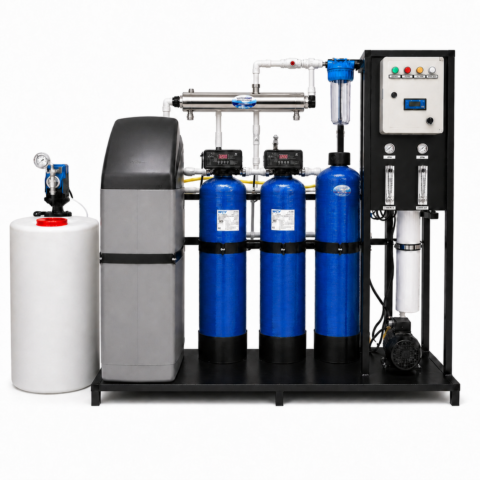
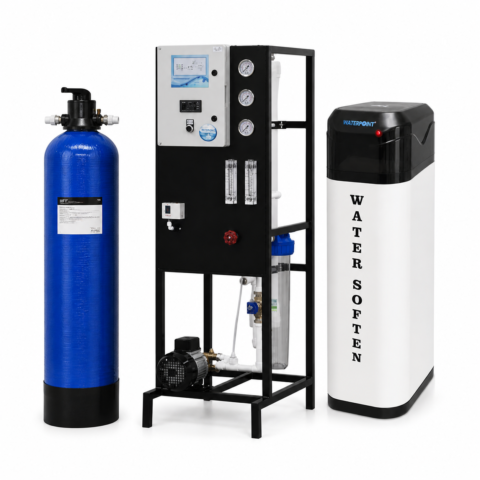
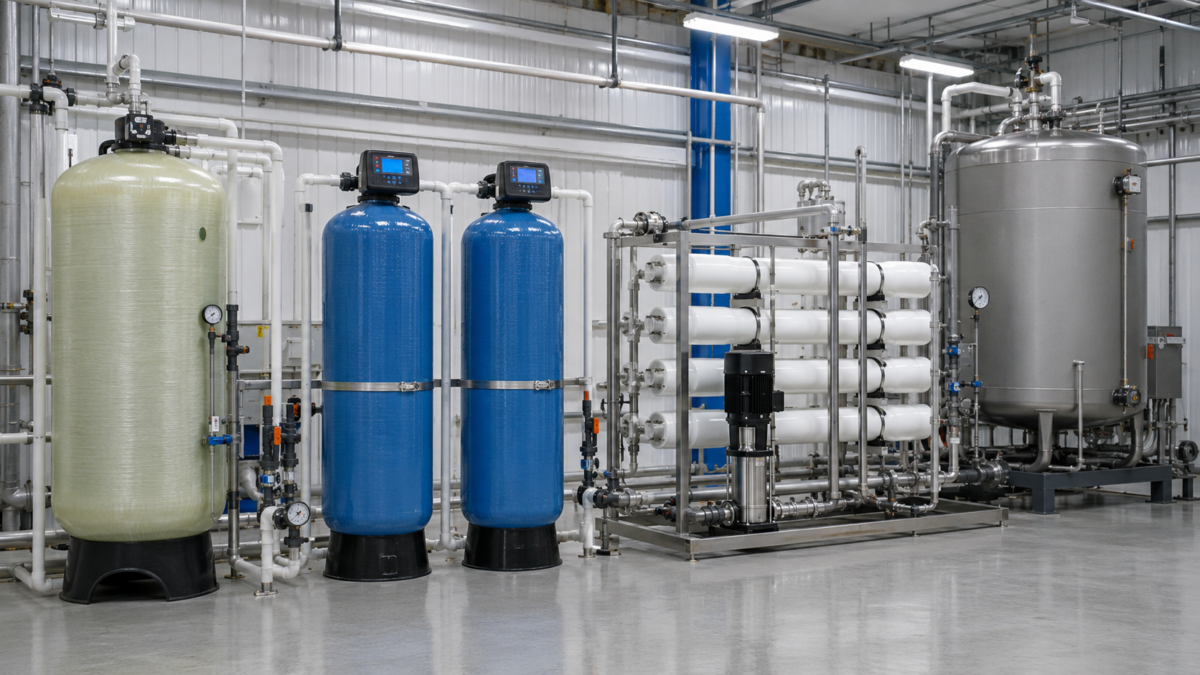
Preparing boiler feed water is a staged process: pre-filtration, water softening, reverse osmosis or demineralisation, deaeration and finally chemical conditioning. Each stage reduces the load on the one before and carries the water entering the boiler step by step to the quality wanted. Which stages are needed depends on the pressure class.
A typical industrial preparation line takes the water from source to boiler through these stages:
Pre-Filtration
Sediment, sand and suspended solids are held back; the sensitive stages behind are protected.
Softening
Hardness is removed by ion exchange; the main cause of boiler scale is eliminated.
Reverse Osmosis / Demineralisation
The mineral and conductivity load is lowered; the purity needed for high pressure is provided.
Deaeration
Dissolved oxygen and carbon dioxide are removed physically.
Chemical Conditioning
The pH is balanced, trace oxygen is bound and lasting protection is provided.
Not all of these stages are needed in every plant; on a low-pressure boiler, for example, pre-filtration, softening, deaeration and conditioning are often enough, while on high-pressure systems the demineralisation stage becomes essential. The right chain is designed around the type of boiler and the raw water quality.
Would you like to build your boiler feed water line properly?
From the raw water analysis to a staged system design, you can engineer a solution suited to the pressure class of your boiler together with Water Point’s experience in industrial water treatment.
See the Industrial SolutionsWater Quality Requirements by Pressure Class
The water quality requirement tightens in direct proportion to the pressure class of the boiler. On low-pressure fire-tube boilers softened water is generally enough, while high-pressure water-tube boilers need demineralised water of very low conductivity and free of oxygen. As pressure rises, the margin for error narrows.
That distinction is one of the most important criteria in deciding which treatment stages are needed. The comparison below sums up the typical water approach for the two main boiler types:
| Criterion | Low Pressure (Fire-Tube) | High Pressure (Water-Tube) |
|---|---|---|
| Typical Approach | Softened water | Demineralised / pure water |
| Hardness | Removed (low) | Almost zero |
| Conductivity / Minerals | Limited tolerance | Must be very low |
| Sensitivity to Silica | Medium | High (risk of carryover) |
| Stages Required | Filtration + softening + deaeration | + Reverse osmosis / demineralisation |
As you can see, there is no single “standard boiler water” recipe. The right build is established by assessing the pressure and design of the boiler, the steam purity required and the quality of the source water together. A boiler feed water investment is therefore not an off-the-shelf product choice but an engineering decision made for the plant.
Frequently Asked Questions
Are boiler feed water and boiler water the same thing?
Not exactly. Boiler feed water describes the water entering the boiler (condensate plus make-up). Boiler water describes the water inside the boiler, in which minerals have concentrated through evaporation. The two are related, but their chemical properties and control criteria differ.
Why is softening alone not always enough?
Softening removes hardness (calcium and magnesium) only; it does not lower dissolved oxygen, silica or the total mineral load. Preventing corrosion calls for deaeration and conditioning, and at high pressure demineralisation is needed to remove minerals. Softening is therefore often only one link in the chain.
Why is dissolved oxygen so dangerous?
Dissolved oxygen starts pitting corrosion on the metal surface. That corrosion opens deep, localised cavities in the tube wall and can lead to perforation without any general loss of thickness. Removing oxygen from the feed water is therefore critically important.
Is demineralised water needed for every boiler?
No. The need for demineralisation rises essentially with pressure. On many low-pressure boilers softened water may be enough, while high-pressure water-tube boilers require demineralised water of very low conductivity. The decision is made from the operating conditions of the boiler.
How often should boiler feed water parameters be monitored?
The frequency varies with the type of boiler and how heavily it is run; but regular monitoring of critical parameters such as hardness, conductivity, pH and dissolved oxygen is essential. Continuous monitoring keeps both scale and corrosion risks under control at an early stage.
Conclusion
The efficiency and life of a steam boiler depend largely on the quality of the water it is fed. Untreated water raises fuel costs through scale, shortens equipment life through corrosion, and puts production at risk with unplanned stoppages. A properly built boiler feed water preparation line brings hardness, dissolved oxygen and mineral load under control and makes all of those risks manageable. Establishing the parameters suited to the pressure class, designing the staged treatment chain correctly and monitoring the process regularly is the soundest way to secure both energy efficiency and continuity of operation.
Let’s plan a water treatment solution for your boiler together
From the raw water analysis to a staged system design suited to your pressure class, you can run the whole process with Water Point and its expertise in industrial water treatment. Get in touch for a survey and engineering.
Industrial Water Treatment Solutions