
Water Treatment System Prices: Reading a Quotation

You get two quotations. Both say they will do the same job, both talk about a similar number of stages; and yet there is a serious difference between them. For the buyer the real difficulty starts there: what that difference corresponds to cannot be seen from outside. And whether the cheap one is really cheap is often only understood years later. Water treatment system prices — the only way to understand the distance between them is to open up the items that make up the price one by one.
You will find no figures in this article, and that is a deliberate choice. In this sector prices move with the exchange rate; a figure written into an article becomes wrong information within a few months. Instead we give you something lasting: water treatment system prices — what items they consist of, how quotations are compared and how the total cost is worked out. The current figures are always on the product pages.
Why Do Water Treatment System Prices Differ So Much?
Water treatment system prices vary with the capacity of the system, the quality of the components used, the number of stages, whether installation falls within the scope and the structure of the consumables. Two systems that look the same can carry different membranes, valves or cartridges; the difference comes from the sum of those items.
What that means in practice is this: a price is not a label but a total. The volume a unit takes up or its outward appearance gives no idea about that total. Two bodies of the same size can hold entirely different components inside.
Most of the items that create the price difference are invisible at the moment of purchase. The manufacturer of the membrane, the structure of the valve, whether the cartridge size is standard and the quality of the fittings are all inside the body. So when water treatment system prices are compared, the question to ask is not “which is cheaper” but “what does this price cover”.
The second determining factor is time. The real cost of a system emerges not on the day it is bought but over its working life. Filter renewal, possible service and spare parts spending spread across the years and can easily exceed the difference in the label price in total.
The Main Items That Make Up the Price
A quotation contains five main items: the price of the unit, the installation labour, the initial installation materials, the periodic consumables spend and the possible service charge; membrane replacement and the scope of the warranty should be compared too. Which of those items are included varies from firm to firm; a comparison only means something when it is made on the same scope.
Knowing the items makes reading a quotation easier. The table below sums up what each item is and what it affects:
| Item | What It Covers | Its Effect on the Price |
|---|---|---|
| The price of the unit | The body, the stages, the membrane, and the pump and tank if there are any | It varies with the quality of the components and the capacity |
| Installation workmanship | Installation, connection and commissioning | Whether it is included affects the quotation directly |
| Installation materials | The valve, tap, hoses and fittings | In some quotations it appears as a separate item |
| Consumables | Filter cartridges and periodic renewal | The most decisive spending, spread across the years |
| Membrane renewal | Module changes at longer intervals | It makes an item felt in one go |
| The service charge | Maintenance, attending to faults and the site survey | The charging structure varies by firm |
| The warranty cover | What is included and what is excluded | It bears directly on the possible cost of repairs |
The most critical row in that table is the one most buyers never ask about: consumables. The price of the unit is paid once; filter renewal repeats throughout the working life. So when water treatment system prices are assessed, looking only at the first item means seeing a small part of the picture.
The installation item is often left unclear too. In some quotations installation falls within the price, in others it is worked out separately. When comparing two quotations that difference has to be clarified; otherwise the comparison has not been made on the same scope.
How Do Capacity and Type of Use Affect the Price?
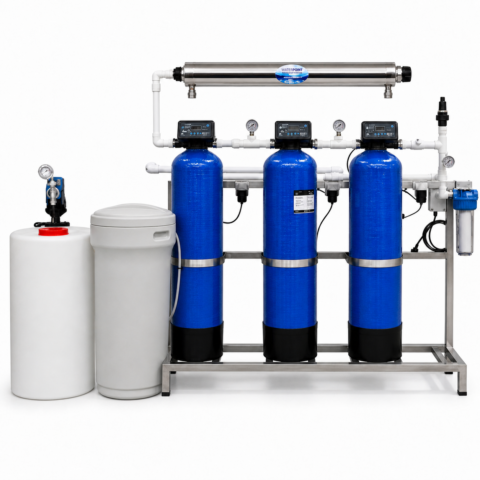
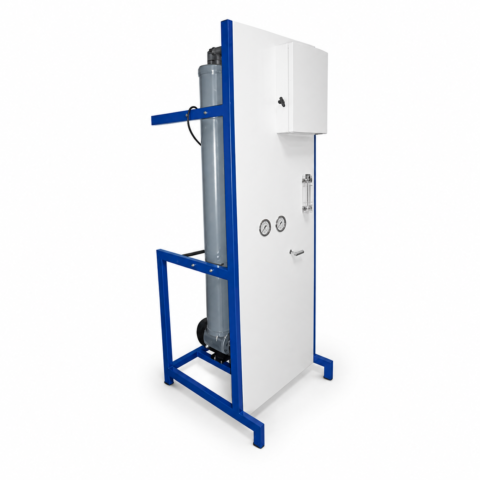
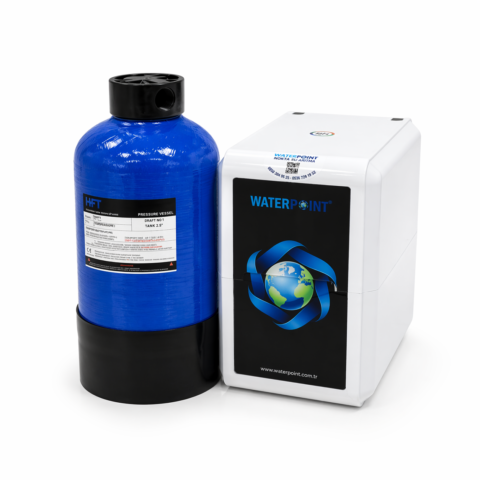
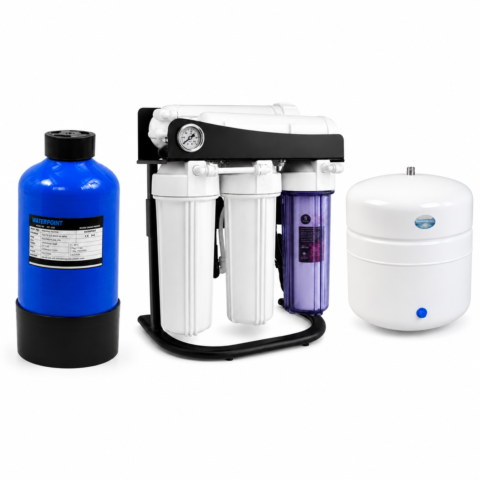
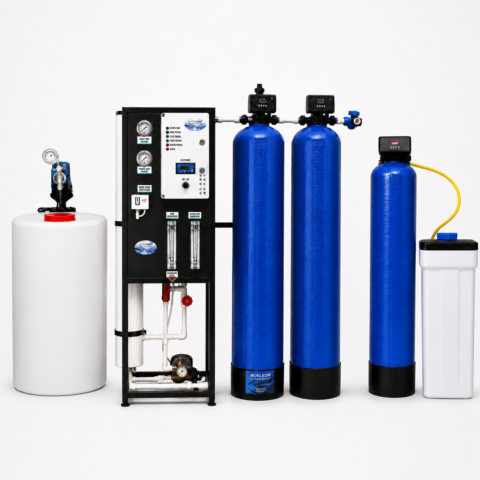
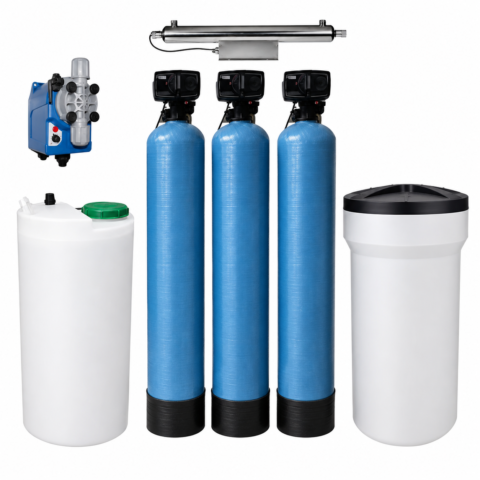
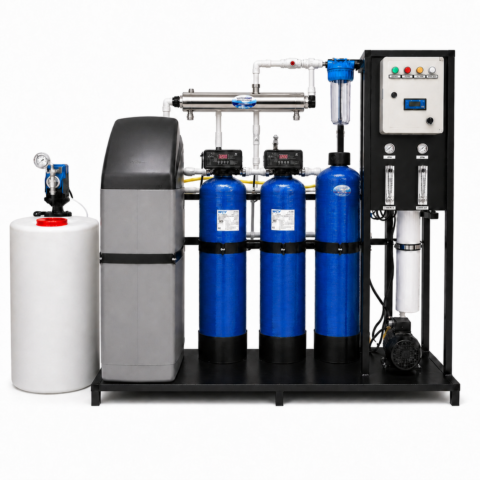
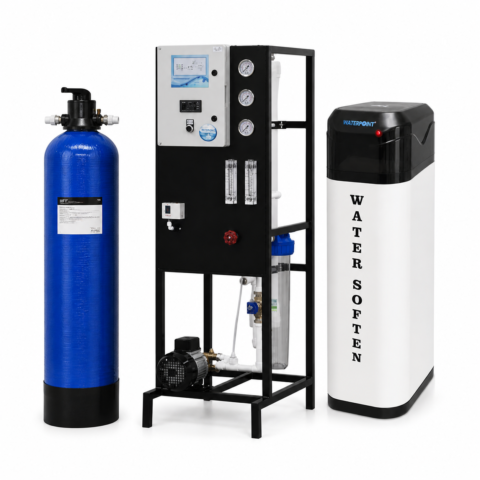
Capacity is the most concrete variable setting the price. A domestic system and one installed at a business or a production plant are designed at different scales. As the flow requirement rises, so do the body volume, the level of automation and the strength of the components; and that shows up directly in the cost.
The difference is not merely a matter of “big and small”. A domestic system is designed to produce a limited amount of water at particular hours of the day and to rest in between. In a business, demand runs all day; the system works for hours without a break. Those two scenarios create entirely different engineering requirements.
The items that come into play as the scale grows are these:
The Body and the Tank
At high flow, a larger volume and more durable material are needed.
Automation
An automatic valve and programmable control reduce the operating load.
Uninterrupted Running
Where the flow has to continue during maintenance, the build widens.
The Number of Stages
As the number of problems in the analysis result rises, the chain grows longer.
Engineering
On industrial installations a design and site survey process comes into play.
Infrastructure
The drain connection, the power supply and adapting the space can make an extra item.
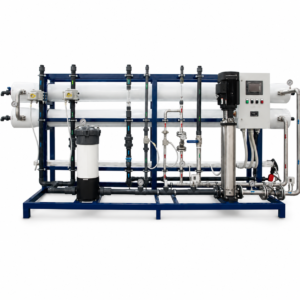
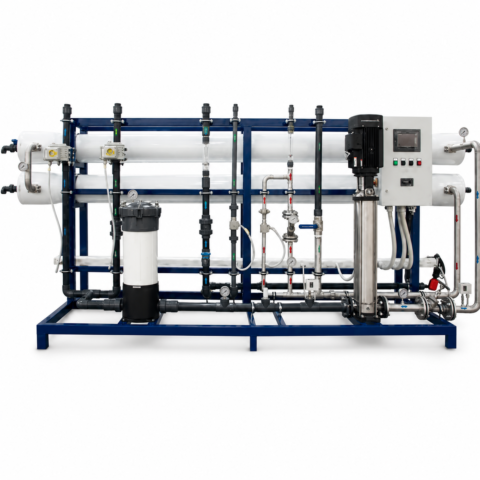
So putting two quotations of different scales side by side does not produce a meaningful comparison. Water treatment system prices only give information when they are compared within the same type of use and a similar capacity. For solutions at industrial scale, the industrial treatment category calls for an assessment separate from domestic systems.
Which capacity suits you is a separate subject; we took up the criteria for technical configuration in our unit selection guide.
Where Does Component Quality Sit in the Price?
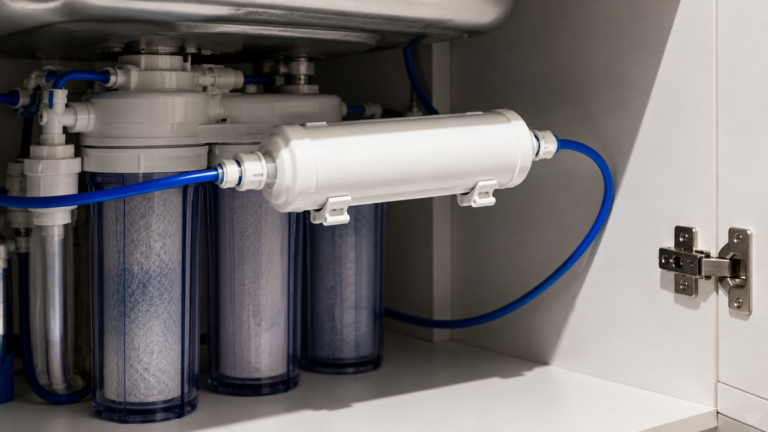
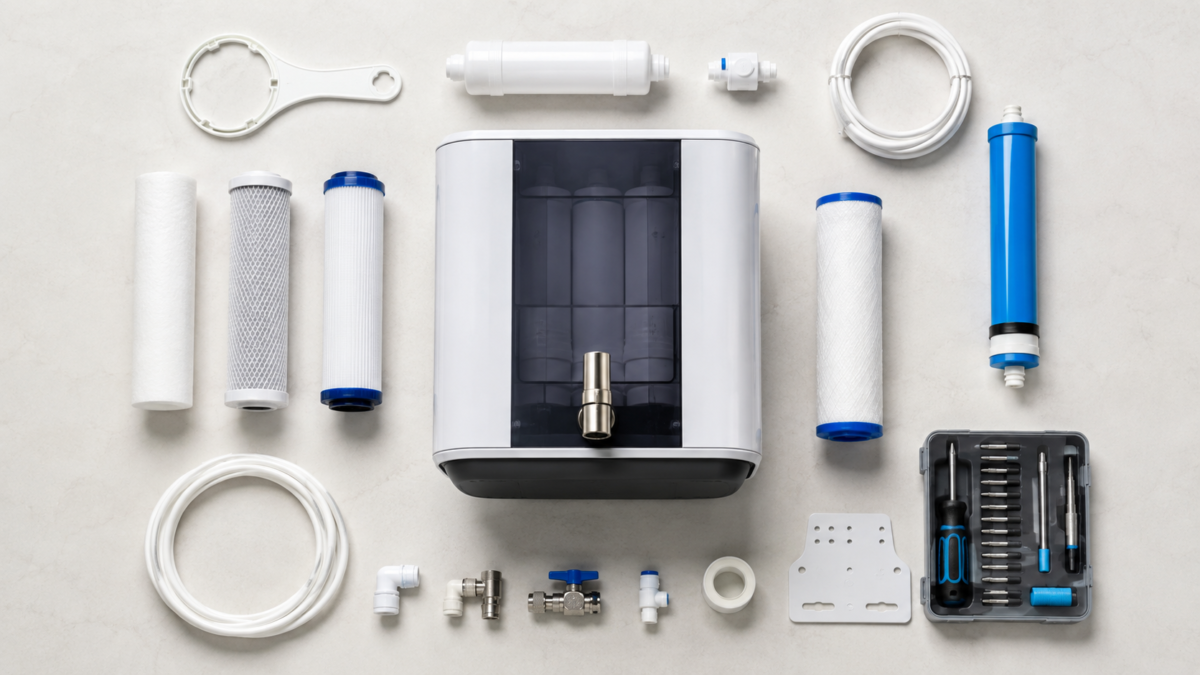
A significant part of the price of a unit consists of the components inside it. The membrane, the control valve, the pump, the cartridge housings and the fittings settle both the performance and the working life. Low-quality components bring the initial price down; but they come back over the long run as early renewal and failures.
That item is the least visible but most decisive part of the price difference. From outside two units look similar; the difference is hidden inside the body.
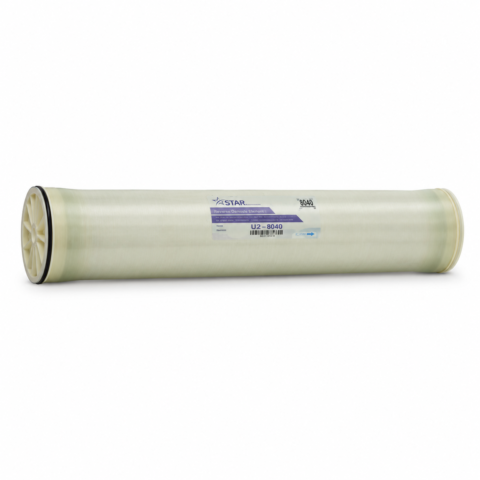
Using components from known manufacturers shows up in the cost in two ways. The first is the production standard; the second is continuity of supply. Among the components widely used in the sector are, on the valve side, Clack, and on the membrane side Toray, LG, STAR and TechFlow are the manufacturers most often seen.
We took up what each component does and what should be looked at in each in a separate article; for the details you can look at our component guide. What matters here is this observation: a significant part of the difference between water treatment system prices comes from that item.
If which membrane and which valve are used can be asked about a quotation and an answer given, what the price corresponds to also becomes clear. On a quotation where the component information is not shared, the comparison is made on the figure alone.
The Item You Cannot See: The Consumables Spend
Most of the total cost usually consists of consumables. Filter cartridges are renewed periodically; that spending repeats throughout the working life. On systems using standard-size cartridges the annual spend stays predictable; on systems tied to a special size, a risk of supply and price arises.
Because that item is invisible at the moment of purchase it is not taken into account. Yet the price of the unit is paid once and the consumables spend is continuous. Looked at over a total of a few years, the initial difference between two quotations can easily reverse.
Standard sizing is decisive here. On a system using common cartridge sizes, spare parts are easy to find and prices can be compared. On a system using special, one-off sizes the user becomes dependent on a single channel of supply; that dependence creates a risk both in price and in continuity.
A staged filter set made to standard sizes lets the whole line be renewed in one go. We took up how the renewal period is set and how the signs are read in our filter change guide.
The question to ask when getting a quotation is clear: what items make up the annual consumables spend, and are those items predictable? If no answer can be had to that question, the comparison of water treatment system prices is being made on incomplete data.
Installation and Service Charges
Whether installation falls within the price varies from quotation to quotation. Whether a site survey is carried out before installation, whether the initial installation materials fall within the scope and how the service charge is set should all be clarified in advance. In transparent quotations those items are shared in writing.
Installation is an operation that looks simple from outside but can have serious consequences. A single connection that is not fully seated can turn into a leak that goes unnoticed inside a cabinet for days. So the installation charge is not an “extra item” but a service that reduces the risk.
We took up in detail the steps of the installation process and the mistakes most often made in our installation guide. The headings to clarify when assessing a quotation are these:
- Is the installation included? Is the installation included in the price or worked out separately?
- Installation materials: Are the valve, tap and fittings within the scope?
- Is a site survey carried out? Are the conditions assessed on site before installation?
- The service charge: How is it set, and is it made known in advance?
- The approval process: Is the customer’s approval taken before the work?
- Commissioning: Is the test after installation within the scope?
Sharing those headings in writing removes the items that appear later. Water treatment system prices A good share of the dissatisfaction around it arises not from the price being high but from the scope not being made clear from the outset.
Ask for the quotation in writing. If the unit, the installation, the installation materials and the consumable items can be seen separately, the comparison can be made soundly. A scope conveyed verbally can be interpreted differently at the next stage.
Total Cost of Ownership Instead of Water Treatment System Prices
The right comparison is made not on the label but on the total cost of ownership. The price of the unit, the installation, the annual consumables spend and the possible service cost are all brought into the calculation and then totalled over a set period of use. That method brings out the difference you cannot see at first glance.
The logic of the calculation is simple and needs no figures; all it needs is for the same items to be filled in for both quotations:
The Price of the Unit
A one-off item; the current value on the product page is taken as the basis.
Installation
The installation labour and the installation materials are added.
The Annual Consumables
The filter renewal spend is multiplied by the period of use.
Service
Planned maintenance and the possible cost of attending to a fault are taken into account.
Total Cost
The real comparison is made over the period of use decided on.
It is essential to choose the same period of use for both quotations when making that calculation. A three-year total cannot be compared with a five-year one. Once the period is fixed, the real difference between water treatment system prices becomes clearly visible.
There is one more item easily forgotten in the calculation: downtime from a fault. The system cannot be used while a spare part is awaited; in domestic use that is a loss of comfort, in a business a direct operational cost.
Total cost is only one of the seven criteria for assessing a unit. We took up all of them in our unit assessment framework; this article focuses on the cost side in particular.
The current figures are on the product pages
To look at the current information by model and assess the option that suits your own use, you can go to the product pages.
See the Products and Current Prices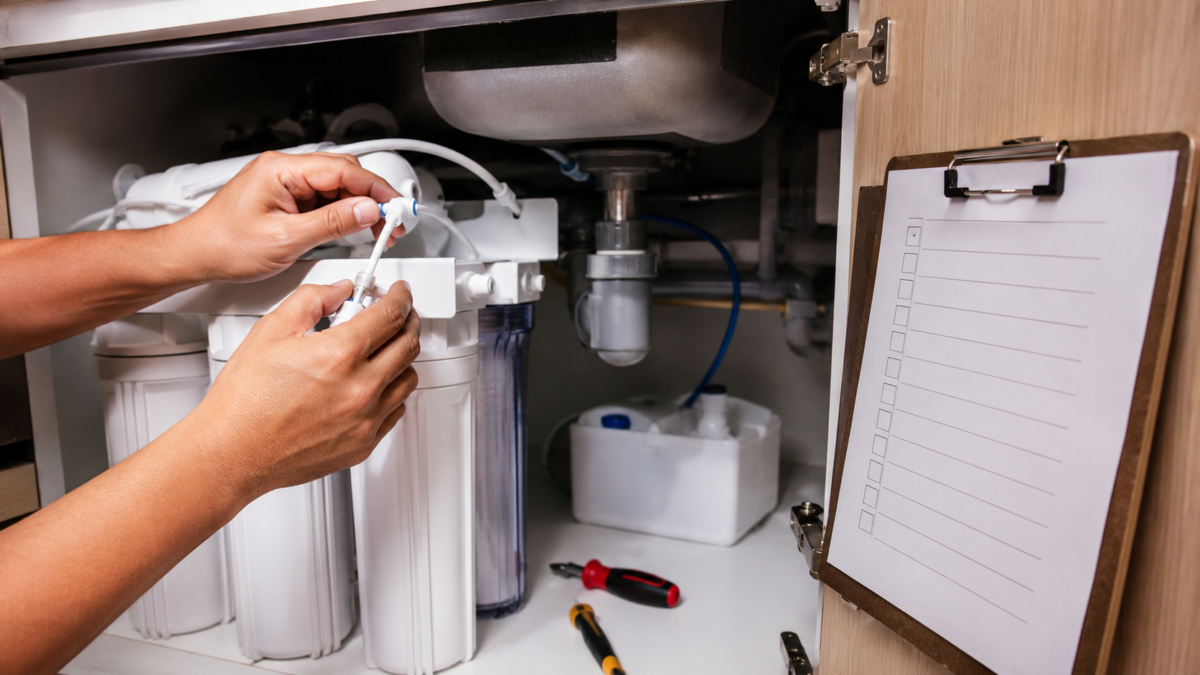
Why Does the Cheapest Unit Usually Turn Out the Most Expensive?
On a low-priced system the saving is generally made on the components and on the scope. A unit whose spare parts cannot be found, which fails early or which has no service support soon becomes unusable. A second purchase is then needed and the total spending rises from the start.
This section is not a scare but the report of a pattern observed. A low price is not the problem in itself; the problem is not knowing which items it was made up by cutting.
The typical scenarios experienced are these:
Parts Not Being Found
On a system using special-size cartridges, the unit goes out of service when the supply stops.
Early Failure
A low-quality pump or valve causes trouble before completing the working life expected.
No Service
Where the seller cannot be reached after the sale, the option of repair disappears.
Damage From a Leak
Poor-quality fittings can create indirect damage exceeding the price of the unit.
Buying Again
A system that has become unusable brings a second investment onto the agenda.
A High Consumables Spend
Cartridges tied to a single source make the annual spend unpredictable.
What those scenarios have in common is that none of them is visible at the moment of purchase. So when water treatment system prices are assessed, asking which item the low price was cut from directly raises the quality of the decision.
The reverse is true too: a high price is no guarantee of quality on its own. What is decisive is which components, which scope and which service structure are offered in return for that price. Price is an indicator; scope is proof.
What Should Be Looked At When Comparing Quotations?
A sound comparison calls for three conditions: comparing systems of the same capacity, including the same items in the scope, and calculating over the same period of use. A comparison made without those three means putting different things side by side.
The mistake made most often in practice is assessing two quotations of different scope on the figure alone. If one includes the installation and the other does not, or one uses standard cartridges and the other is tied to a special size, the comparison is wrong from the start.
A Checklist for Comparing Quotations
- Were the two quotations prepared for the same capacity and type of use?
- Is the installation labour included in the price or separate?
- Are the installation materials (valve, tap, fittings) within the scope?
- Are the filter cartridges a standard size, and is the annual spend predictable?
- Is the information on the membrane and valve used shared?
- Is the scope of the warranty stated in writing?
- Is it explained how the service charge is set?
- Is a site survey carried out, and if so is it charged for?
- Is an invoice issued, and are the sales conditions in writing?
- Can a total be worked out over the same period of use?
When you can get an answer to all ten of those items, what you have is not two figures but two scopes. And only at that point does the comparison mean anything.
We took up separately which headings should be verified on the seller’s side — including legal identity, reachability and after-sales conditions — in our firm assessment article. When those two assessments are made together, the comparison of water treatment system prices rests on a complete picture.
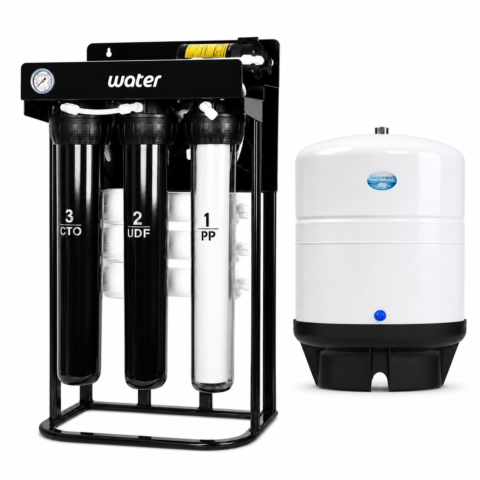
On the general framework of reverse osmosis systems and the headings users should watch for, the US Environmental Protection Agency point-of-use reverse osmosis systems resource offers general information.
Where Can Current Water Treatment System Prices Be Found?
The current figures are on the product pages; those pages are updated by model and capacity. Where a capacity specific to the need is involved, a build suited to the point of use is established after a water analysis and a site survey. That approach gives a more accurate result than choosing from a standard list.
Writing a figure into an article looks practical in the short term; but because prices move with the exchange rate, that figure soon loses its validity. So the right place for current information is always the product pages.
Water Point Su Arıtma Teknolojileri operates from Esenyurt, İstanbul, under its founder Ali Genç, with more than 20 years of experience in the sector. The information below sets out the concrete answers to the cost headings taken up in this article.
Site Survey and Assessment
The site survey is free if the unit is purchased from us; where only a survey and measurement are wanted, a survey fee of ₺2,000 applies. A capacity specific to the need is established by that assessment.
Service Charging
The service charge is set according to the work and the materials; no charge is made without the approval of the customer.
Warranty
Units, valves, pumps and tanks carry a 2-year warranty and taps a 1-year warranty. Filters, membranes, resin and salt are consumables and fall outside the warranty.
Spare Parts Cover
Filters, membranes, resin and salt are consumables; valves, pumps and tanks are durable spare parts.
Commercial Transparency
The Distance Selling Contract, the Cancellation and Return Conditions, the KVKK and the Privacy policies are published on the site.
Contact
For questions and quotation requests, 0850 304 95 25 and [email protected] can be used.
That the spare parts cover is not limited to filters matters for the consumables spend. Being able to source parts such as the membrane, the valve, the pump, the resin and the tank separately makes the annual cost predictable.
The aim here is not to present a claim about price. The cost items defined in this article can be put to every supplier in the sector; the comparison and the assessment are the reader’s own to make. For current figures the product pages can be followed.
Frequently Asked Questions
What do water treatment system prices depend on?
The capacity, the quality of the components used, the number of stages, whether installation falls within the scope and the structure of the consumables are what decide. Two systems that look the same can carry different membranes, valves or cartridges. For current figures the product pages should be followed.
How much is a water treatment system?
The figures vary with the model, the capacity and the stage structure, and are updated with the exchange rate. So giving a fixed figure would not be the right approach. The current information is on the product pages; for a capacity specific to the need, a site survey and an analysis can be arranged.
Is a cheap unit worth buying?
A low price is not the problem in itself; the real question is which items it was made up by cutting. A system whose spare parts cannot be found, or which has no service support, can become unusable in a short time. The assessment should be made on total cost of ownership.
Is the installation included in the price?
That varies from quotation to quotation and should always be clarified in advance. Whether installation falls within the price, whether the installation materials fall within the scope and whether a site survey is carried out should be asked in writing. Otherwise the two quotations have not been compared on the same scope.
How much does it cost a year?
The annual spend consists mainly of filter renewal and varies with the intensity of use and the quality of the inlet water. On systems using standard-size cartridges that spend stays predictable. Current consumables information can be followed from the product pages.
Can it be bought in instalments?
The payment options vary with the sales channel and with conditions at the time. So it would not be right to give fixed information here; the current payment options are stated on the product pages and during the sales process. The sales conditions are defined in the distance selling contract.
Is an expensive unit always better?
No. A high price can give an idea about component quality but does not guarantee it on its own. What is decisive is which components, which scope and which service structure are offered in return for that price. The comparison should be made on scope.
How do I compare two quotations correctly?
Three conditions are needed: systems of the same capacity should be compared, the same items should be included in the scope, and the calculation should be made over the same period of use. When the price of the unit, the installation, the annual consumables and the possible service cost are added together, the real difference appears.
Does the warranty cover affect the price?
Yes, indirectly. The term and the scope of the warranty settle who will carry the possible cost of a repair. So when comparing, what the warranty covers should be found out in writing.
Conclusion
The difference between two systems said to do the same job is hidden not in the label but in the scope. Water treatment system prices are made up by the capacity, the quality of the components, the number of stages, whether installation falls within the scope and the structure of the consumables. Some of those items are visible at the moment of purchase, and a significant part is spread across the years. The right method is clear: compare systems of the same capacity, on the same items, totalled over the same period of use. When that calculation is made, an option that looked cheap at first glance can turn out expensive, and one that looked high can turn out balanced. And the current figures are always on the product pages; for a capacity specific to the need, a site survey and an analysis can be arranged.
Current prices are on the product pages — get in touch for a quotation
The site survey is free if the unit is purchased from us; where only a survey and measurement are wanted, a survey fee of ₺2,000 applies. For a capacity and a quotation specific to your need you can reach us on 0850 304 95 25 or at [email protected].
View the Current Prices