

Freight delivery
Product Category
Pure Water Systems
Pure water is water whose dissolved ions have been removed and whose conductivity has been brought close to zero. Reverse osmosis separates the bulk of the dissolved salts; deionisation then holds the remaining ions in a resin bed and brings the water down to the purity level required.
- Free Shipping · across Türkiye
- 2-Year Warranty · on systems
Filter
Daily capacity
The daily treatment capacity stated by the manufacturer.
Not sure which one is right for you?
Products
Freight delivery
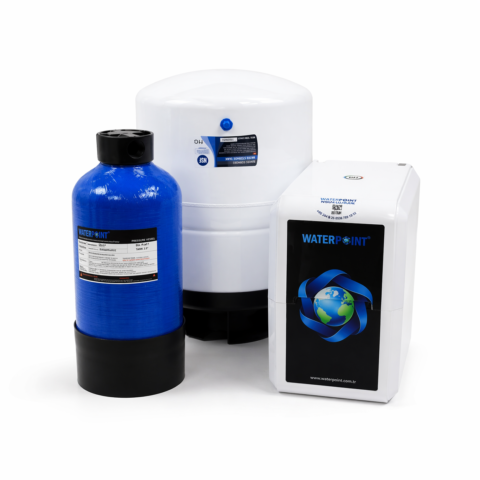
Freight delivery
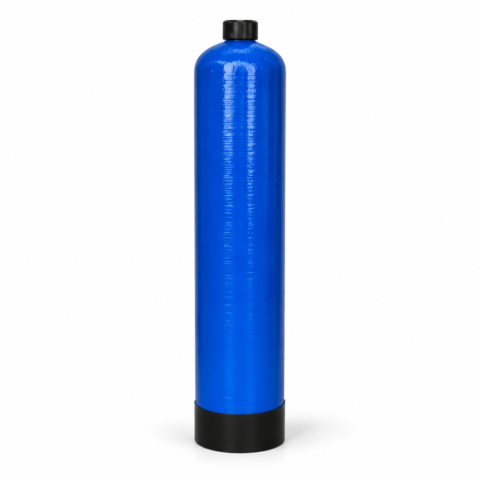
Freight delivery
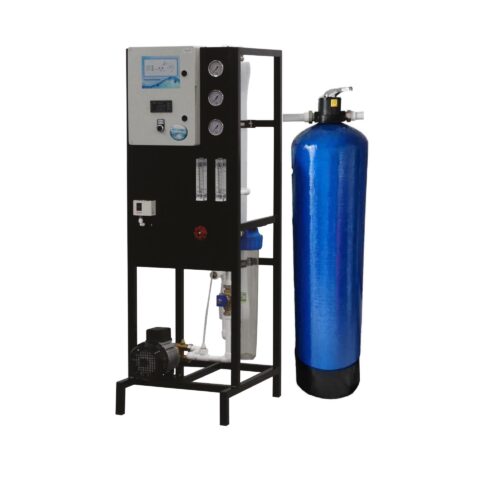
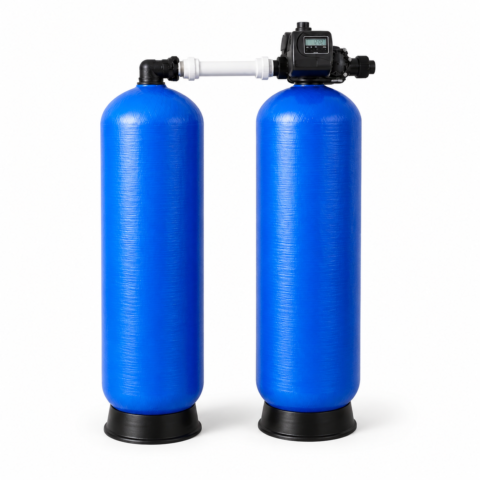
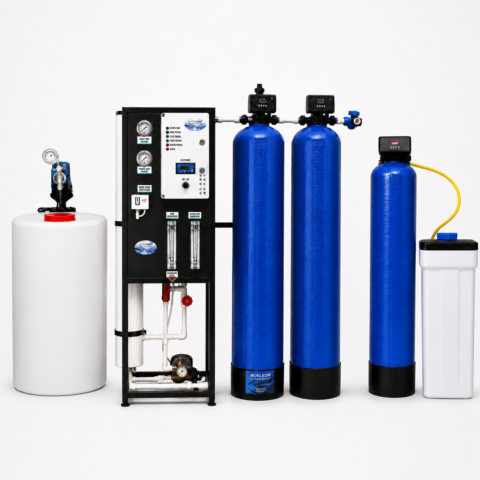
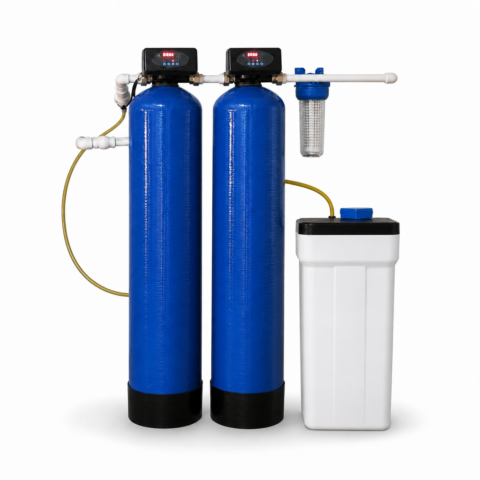
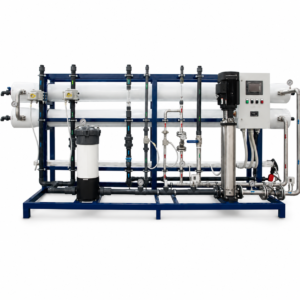
Deionised Pure Water Unit, 5 Tonnes/Day
5 Tonnes (in 24 Hours)
25 L · 10×35 Tank
₺196,073.60
VAT included
Freight delivery
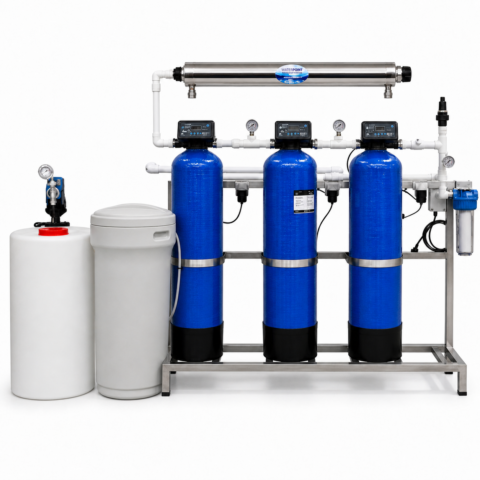
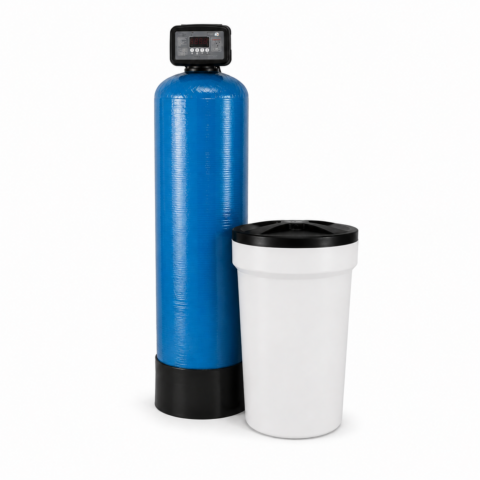
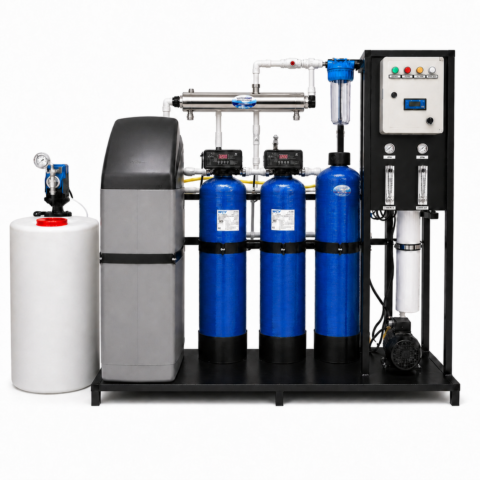
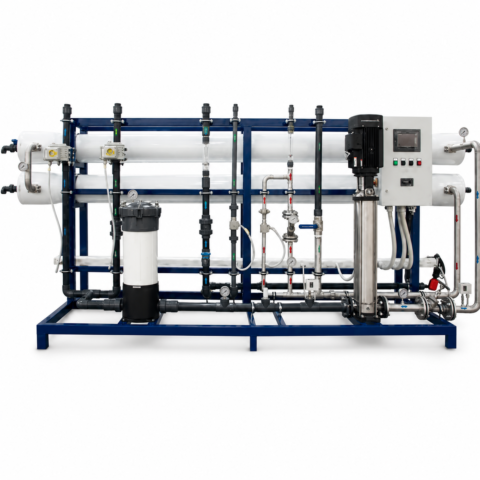
Industrial Deionised Pure Water Unit, 250 L/h
5 Tonnes
Mid-Capacity Industrial
₺220,582.80
VAT included
Freight delivery
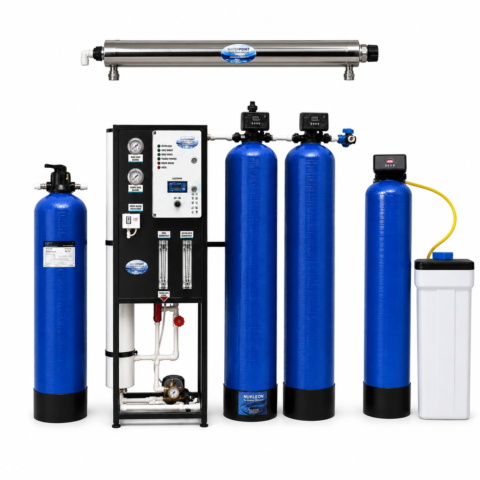
Free Shipping
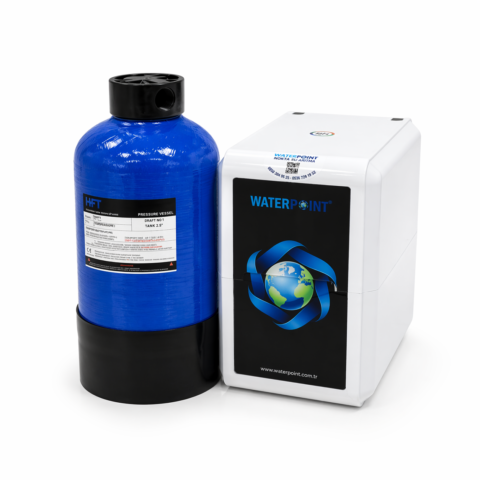
Pure Water Unit, 5 L/h
Pure Water (Deionised) System
Reverse Osmosis + Deionisation
₺31,861.96
VAT included
Freight delivery
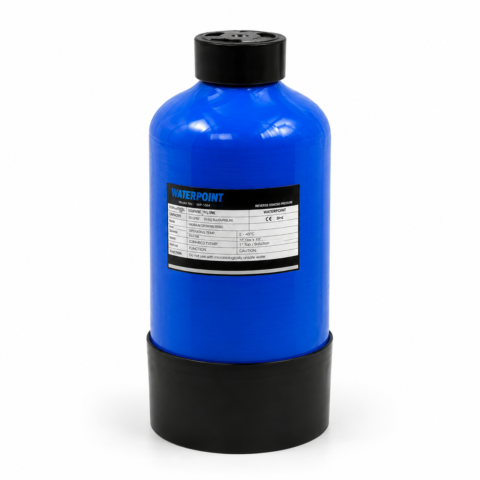
Freight delivery
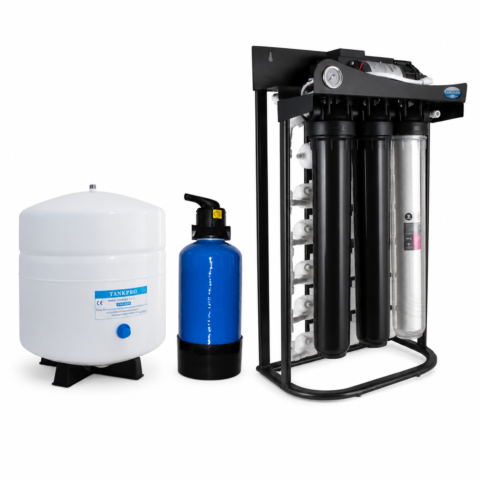
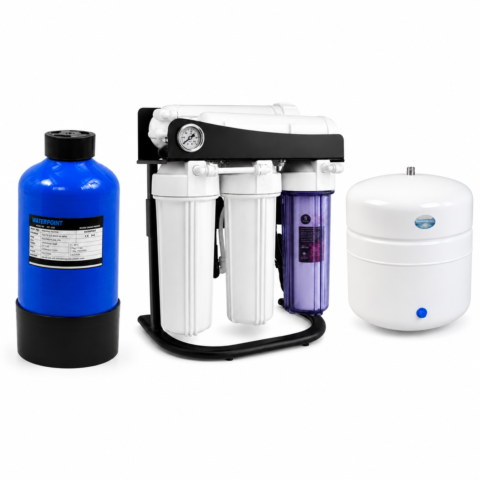
Pure Water System, 1,000 L/day (500 GPD)
1,000 Litres (in 24 Hours)
5 L · 8"×17" Vessel
₺58,822.08
VAT included
Freight delivery
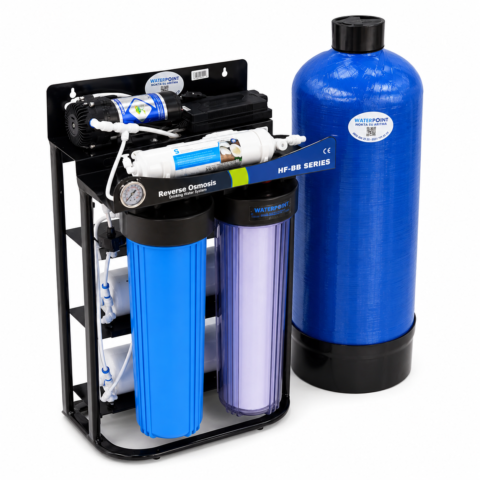
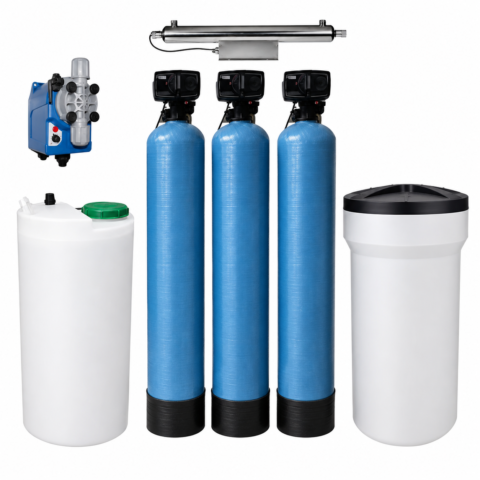
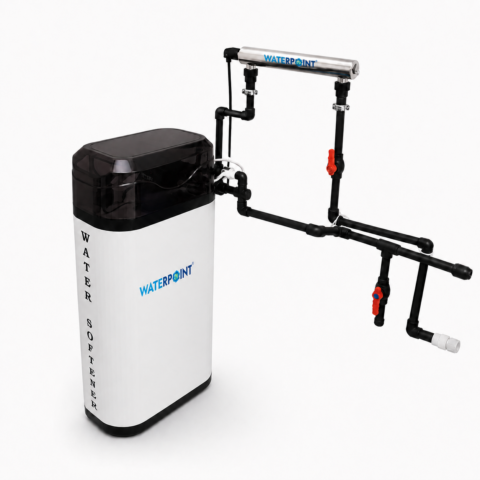
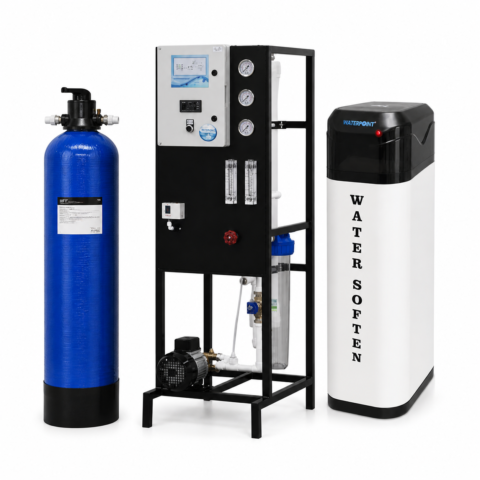
Water Point Pure Water System
Engineered to Requirement
Reverse Osmosis + Deionisation
₺107,840.48
VAT included
Freight delivery
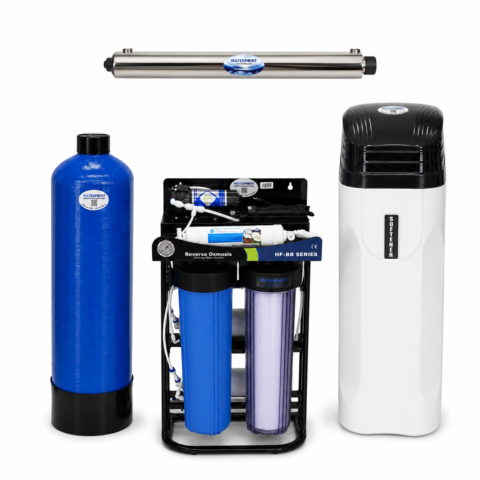
About Pure Water Systems
A pure water system (pure water machine) is a system that removes the dissolved ions and minerals in water through advanced stages and brings conductivity close to zero. In many applications — from laboratory analysis to pharmaceutical production, from metal plating to battery water — what is decisive is not the water itself but its purity. Where measurable and repeatable purity is not achieved, results cannot be trusted. Pure water system and pure water machine prices vary with output capacity, the conductivity level required and tank volume; the current list is given in the price table below.
Pure water is water whose dissolved ions have been removed and whose conductivity has been brought close to zero. Reverse osmosis separates the bulk of the dissolved salts; deionisation then holds the remaining ions in a resin bed and brings the water down to the purity level required.
What Is Pure Water and How Is It Produced?
Pure water is water from which most of the dissolved salts and ions have been removed. Producing it is not a single-stage job; two complementary stages are normally used.
First stage — reverse osmosis: Water is passed through a semi-permeable membrane under pressure. The membrane holds back most of the dissolved salts, heavy metals and organic compounds. This stage lowers conductivity considerably, but does not take it to zero.
Second stage — deionisation: The ions remaining at the reverse osmosis outlet are held in a mixed bed of combined cation and anion resin. This stage brings conductivity down to near-zero values.
Using deionisation on its own is technically possible but not economical: the entire ion load of the raw water falls on the resin, the resin saturates quickly and the cost of regeneration rises. Reverse osmosis is therefore used as a pre-stage, and the life of the resin is extended considerably.
Conductivity, Resistivity and Purity Measurement
The quality of pure water is expressed in two units, and each is the inverse of the other.
- Conductivity (µS/cm): This is the ability of water to conduct electricity. It rises as the amount of ions in the water increases. In pure water the aim is for this value to approach zero.
- Resistivity (MΩ·cm): This is the inverse of conductivity. The purer the water, the higher the resistivity. Laboratory applications mostly use this unit.
Measurement must be continuous. In pure water systems, conductivity is the first signal that the resin is saturated or the membrane is tiring. When the value starts to climb steadily it is time to intervene; if you wait, the water produced falls below the target purity, and this is usually noticed only once the process runs into trouble.
Temperature also affects the measurement. When comparisons are made, readings should be taken under similar conditions and a temperature-compensated instrument should be used; this makes the result more reliable.
Where Is Pure Water Used?
| Application | Why Pure Water Is Needed |
|---|---|
| Laboratory analysis | Ions in the water distort the result directly; repeatability depends on purity. |
| Pharmaceutical and cosmetics production | Water that goes into the product must have a known and constant profile. |
| Metal plating and rinsing | Minerals in the rinse water leave spots and marks on the surface. |
| Battery and electrolyte preparation | Ion content affects battery performance. |
| Autoclaves and clean-area equipment | Limescale build-up damages the equipment and raises maintenance costs. |
| Electronics and optics cleaning | Water that leaves no marks after drying is required. |
| Steam boilers (high pressure) | Controlling conductivity and hardness is critical to boiler life. |
| Chemical and paint production | The repeatability of the formulation depends on water quality. |
How Is Capacity Selected?
Capacity in pure water systems is expressed in two different units, and confusing them leads to the wrong choice.
- Litres per hour (L/h): Used for small and medium-scale systems. In laboratory and workshop applications it shows the instantaneous demand.
- Tonnes/day: Used for industrial systems; it is calculated on the assumption of 24 hours of uninterrupted operation.
The following steps are followed when making the selection:
- Determine the total daily demand. All points of use are added together.
- Work out the peak demand. How many points draw water at the same time matters.
- Assess storage. Using a tank allows the system to run at a lower flow rate and brings the cost down.
- Add a safety margin. Output falls as the membrane ages and as the water gets colder; the system must not be selected right at the limit.
A few litres per hour is enough in a small laboratory, while a plating or pharmaceutical plant may need tonnes of pure water a day. The points of use must therefore be listed first and the capacity calculated afterwards.
System Components
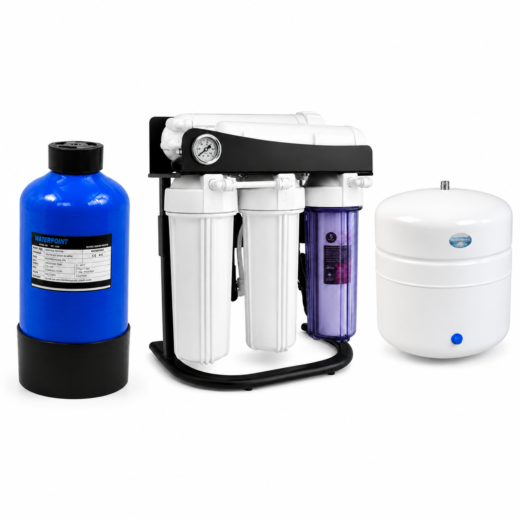
- Pre-filtration: A sediment filter and activated carbon protect the membrane from particles and chlorine. If this is skipped, membrane life is shortened.
- Reverse osmosis membrane: Separates the bulk of the dissolved salts. It is the most valuable component in the system.
- Pressure pump: Provides the pressure the membrane needs in order to work; it must be selected to match the capacity.
- Mixed bed resin column: Holds the remaining ions and brings conductivity close to zero.
- Conductivity meter: Monitors outlet quality continuously and warns when the resin is saturated.
- Storage tank: Balances the difference between production and consumption. In pure water applications the tank material must be of a grade that will not release substances into the water.
- Circulation: Pure water can deteriorate when it stands still; circulation, or draining before use, is applied.
- UV (ultraviolet) treatment: Used as an additional barrier in applications where microbiological risk is assessed.
Resin Regeneration and Replacement
Mixed bed resin loses its function once it is saturated with the ions it has held. At that point there are two routes:
- Regeneration: The resin is renewed with acid and alkali. Because it involves chemical handling and waste management, it is usually carried out at competent facilities.
- Cartridge replacement: In small and medium-scale systems the saturated resin cartridge is replaced as a whole. Operationally this is simpler.
The only reliable way to tell when the resin is saturated is monitoring conductivity. Estimating by elapsed time is misleading, because the life of the resin varies greatly with raw water quality and with the performance of the reverse osmosis stage. If the reverse osmosis is working well, the resin lasts far longer.
Maintenance of Pure Water Systems
| Component | Work to Be Done | Frequency |
|---|---|---|
| Pre-filters | Cartridge replacement | According to raw water quality, usually every 6 months |
| Activated carbon | Renewal | According to chlorine removal performance |
| Reverse osmosis membrane | Conductivity and flow rate monitoring, cleaning if required | When performance drops |
| Mixed bed resin | Regeneration or cartridge replacement | When outlet conductivity rises |
| Conductivity meter | Calibration check | Periodic |
| Storage tank | Cleaning and vent filter check | Periodic |
| UV lamp | Replacement | Once a year |
At Water Point, filters, membranes, resin and salt are consumables; valves, pumps and tanks are durable spare parts. For industrial systems the service network covers the whole of Türkiye, and for domestic units it covers İstanbul and the surrounding provinces; technical service is provided for units of all domestic and foreign brands.
Are Pure Water and Deionised Water the Same Thing?
In everyday use the two terms are often interchanged, but there is a nuance between them. Deionised water describes water whose ions have been removed by passing it through ion exchange resin. Pure water is a more general expression and denotes high purity regardless of the method by which the water was purified.
What matters in practice is not the name of the method but the measured value. When you request a quotation from a supplier, the right question should not be “is it deionised or pure water” but “what conductivity value is guaranteed at the unit outlet, and how is that value measured”. A measurable commitment is far more binding than a label.
How It Differs From Distilled Water
Distilled water is obtained by evaporating water and condensing it again. The method is effective, but energy consumption is high and the production rate is limited. Because the combination of reverse osmosis and deionisation reaches the same purity with far less energy and at a higher flow rate, it is widely preferred in industrial and laboratory applications.
The questions to ask when making the choice are these: what purity level is needed, how much is required per day, how important is the energy cost, and who will take on the maintenance of the system.
Common Mistakes
- Not measuring conductivity: In a system that is not measured, resin saturation is only discovered once the process goes wrong.
- Skipping pre-treatment: If the reverse osmosis stage is weakly configured, the resin saturates quickly and the cost multiplies.
- Using deionisation on its own: The entire ion load of the raw water falls on the resin; this is not economical.
- Disregarding tank and pipe materials: Unsuitable material releases substances into the water and spoils its purity.
- Letting pure water stand for a long time: Pure water that stands still deteriorates over time.
- Selecting capacity right at the limit: Output falls as the membrane ages and as the water gets colder.
- Not asking about spare part continuity: The supply of resin and membranes directly determines the downtime.
How Raw Water Quality Affects the Cost of Pure Water
The cost of producing pure water depends largely on how dirty the raw water is. The same unit produces a different running cost in two different cities.
- If conductivity is high: The ion load remaining at the reverse osmosis outlet increases, the mixed bed resin saturates faster and the replacement frequency rises.
- If hardness is high: The tendency to scale on the membrane surface increases; pre-softening or antiscalant dosing is needed.
- If chlorine is present: An activated carbon stage is mandatory; if it is skipped the membrane is chemically damaged, and that damage is irreversible.
- If sediment and turbidity are high: Pre-filter replacement frequency increases and the membrane fouls sooner.
- If iron and manganese are present: They coat both the membrane and the resin; a dedicated removal stage is needed.
For this reason, when a quotation for a pure water system is requested, not only the price of the unit but also the projected consumable use based on the raw water analysis must be asked about. A system that looks cheap can turn out far more expensive within a few years because of badly configured pre-treatment.
The Effect of Temperature and Pressure on Output
The efficiency of the reverse osmosis stage is not fixed; two variables affect output directly.
Temperature: As water gets colder its viscosity rises and it passes through the membrane less easily. In the winter months the output of the same system drops noticeably compared with the summer. The lowest water temperature condition must be taken into account when the capacity of the system is selected; otherwise the demand cannot be met in winter.
Pressure: If the pressure the membrane needs in order to work cannot be supplied, output falls and separation performance weakens. Where mains pressure is inadequate, a pressure pump is used. Keeping the pressure higher than necessary is not right either; it both wastes energy and tires the membrane sooner.
These two variables explain a large share of “the unit has lost capacity” complaints. Checking water temperature and feed pressure before looking for a fault saves time.
Measuring Instruments and Calibration
In a pure water system, measurement matters as much as the system itself. A purity that is not measured does not count as a commitment.
- Conductivity meter: Mounted in line for continuous monitoring. Its calibration must be checked periodically.
- Temperature compensation: A compensated instrument is preferred so that the reading is not affected by temperature.
- Portable meter: Used to verify readings at the point of use; it is compared with the in-line measurement.
- Record keeping: Recording measurements with their dates shows when the drop in performance began.
In laboratory applications water quality is usually defined by classification systems, and each class has its own acceptance criteria. Which class is required is determined by the analysis carried out and the relevant method; the requirements of the methods the laboratory works with must therefore be clarified before a system is selected.
Specific Applications
Laboratory Pure Water Unit
The range expected of analysis and instrument feed water varies with the application: a few µS/cm is enough for general glassware washing and feed water, while for sensitive analysis the resistivity is taken up to 18.2 MΩ·cm. The second decisive heading in choosing a laboratory pure water unit is the pattern of use: where draw-off during the day is intermittent and in small volumes, production with a tank suits better; where it is continuous and in high volumes, direct production suits better. For small-scale laboratories you can look at the Pure Water Unit, 5 L/h model.
Battery Water
The ions present in battery electrolyte affect the performance and the life of the battery. Low conductivity is therefore required in battery top-up water. Mains water or bottled water is not suitable for this purpose; its ion content can lead to deposits on the plates.
Autoclaves and Steam Equipment
When hard water is used in steam-producing equipment such as autoclaves, limescale build-up accelerates. This build-up both lowers heating efficiency and leads to equipment failure. Using pure water extends the maintenance interval of the equipment.
Plating and Surface Treatment Rinsing
Minerals in the final rinse water leave marks on the surface when the part dries. Such a mark can be grounds for rejection in quality control. Monitoring conductivity continuously on the rinse line is the most practical way of preventing defective production.
Expanding the System Later
Demand for pure water grows over time at most facilities. Designing for growth at the first installation therefore protects you from the cost of rebuilding the system from scratch later.
- Leaving space: Space in which an additional column or membrane line can be added must be planned.
- Main line diameter: If the pipe diameter is chosen for the future flow rate, the line does not have to be changed when capacity increases.
- Tank volume: Choosing somewhat more storage capacity covers increased consumption for a while.
- Automation: Choosing a panel able to manage additional equipment makes later additions easier.
- Modular design: When the system is designed so that it can grow in stages, the investment can be spread over time.
These items raise the initial investment somewhat, but they prevent a complete rebuild of the system when capacity has to be increased.
Signs of a Fault in a Pure Water System
Faults in pure water systems are usually gradual rather than sudden. If they are noticed early, the intervention is both easy and cheap.
- Outlet conductivity is rising: This is the most common sign. Check first whether the mixed bed resin is saturated, then check reverse osmosis performance.
- Output has slowed: The pre-filters may be blocked, the feed pressure may have dropped or the water temperature may have fallen.
- Higher pressure is needed for the same output: This is the classic indicator of membrane fouling; cleaning or replacement is considered.
- The wastewater ratio has increased: The membrane may be tired or the pre-treatment may have become inadequate.
- The value differs at the point of use: If the system outlet is good but the point of use is poor, the problem is in the distribution line; a dead leg or unsuitable material should come to mind.
- Quality is poor after a long standstill: Pure water that stands still loses quality; a certain amount must be drained off before use.
If these checks give no result, a fault in the pump, the valve or the measuring instrument is considered. In systems where measurement records are kept, the point at which the problem started can be seen, so diagnosis is much faster.
What to Settle Before Requesting a Quotation
- Target purity: Which conductivity or resistivity value is required?
- Daily volume: How many litres or how many tonnes of pure water are consumed in total?
- Instantaneous demand: How many points draw water at the same time?
- Raw water analysis: Hardness, conductivity, chlorine and iron values.
- Purpose of use: Laboratory, plating, batteries, autoclave or production.
- Storage: Will a tank be used, and what volume?
- Measurement: Are conductivity monitoring and record keeping required?
Once these seven headings are clear, the quotations that come in can be compared on the same basis. Expressing the target purity as a number in particular heads off later disagreements.
Energy and Water Efficiency in Pure Water Production
Pure water is a more expensive resource than raw water; it involves both energy and water loss. The practices that improve efficiency are these:
- Making use of the concentrate: Reverse osmosis drain water can be used at points with low quality requirements. Pre-washing, garden irrigation or cooling use, for example, prevents all of the water being thrown away.
- Two-stage reverse osmosis: In applications that need high purity, the outlet of the first stage is fed to a second stage; the load on the resin falls and the regeneration frequency drops.
- Buffer tank: Allows the system to run steadily instead of stopping and starting; this is an advantage for both energy and membrane life.
- Correct pump selection: A pump that is not selected for the actual flow rate runs permanently throttled and wastes energy.
- Heat recovery: At facilities where the water temperature is low, heating the feed water can increase output; this needs to be assessed together with the energy cost.
Not every one of these improvements will suit every facility. When deciding, the gain must be weighed together with the extra investment and the added operating complexity.
8 Questions to Ask When Choosing a Pure Water System
When you assess a supplier, it is possible to judge how serious a system is without going into technical detail. The questions below can be put in the same way to whichever firm you talk to, and the answers can be compared.
- What conductivity value is committed to at the outlet? A commitment given without a number is not binding.
- How and where will that value be measured? The system outlet and the point of use can give different results.
- How was the pre-treatment configured? Pre-treatment that is not based on a raw water analysis is guesswork.
- How often will the resin and the membrane be replaced? The projected consumable use determines the running cost.
- What water temperature was the capacity calculated for? A system calculated for summer conditions falls short in winter.
- How quickly are spare parts supplied? The supply time directly determines the downtime.
- Are the cartridge and resin sizes standard? Equipment in non-standard sizes creates dependency later on.
- Will a measurement record be provided after commissioning? Without a starting reference, performance cannot be discussed later.
The answers to these eight questions also explain, to a large extent, where the price difference between two quotations comes from.
Installation and Commissioning
Installing a pure water system takes more preparation than an ordinary treatment unit, because the quality of the water produced depends not only on the unit but also on the line after it.
- Raw water analysis: Hardness, conductivity, chlorine and iron values are measured; the pre-treatment is configured accordingly.
- Listing the points of use: The amount of water and the purity needed at each point are determined.
- Layout plan: The unit, the tank and the distribution line are positioned; access for servicing is left.
- Infrastructure: The drain line, the electrical supply and, where needed, a feed pump are prepared.
- Installation: The hydraulic and electrical connections are made and the measuring instruments are commissioned.
- Flushing and commissioning: The system is flushed and the first water produced is not used; it is sent to drain until the conductivity reaches the target value.
- Verification: The outlet conductivity is measured to confirm that the target has been met, and the result is recorded.
- Training: Daily checks, alarm conditions and the resin replacement procedure are handed over.
Recording the values measured during commissioning is important; when a drop in performance is discussed later, that record is the starting reference.
Pure Water Storage and Distribution
Keeping the quality of pure water after it has been produced is as much a part of the design as producing it. Pure water is an aggressive solvent; it tends to pick up substances from the surfaces it touches.
- Tank material: It must be chosen so that it will not release substances into the water.
- Vent filter: Used on closed tanks so that the air drawn in from outside does not carry particles.
- Leaving no dead legs: Water stands still in unused blind lines and the quality deteriorates.
- Circulation or draining: On lines that have not been used for a long period, some water must be drained off before use.
- Point-of-use measurement: Quality must be verified not only at the unit outlet but at the point where the water is actually used.
Why Water Point Pure Water Systems?
- Analysis-based engineering: If the unit is purchased from us, the site survey is free of charge; the system proposal is shaped by the measurement results.
- A wide capacity range: Options run from laboratory units of 5 litres per hour to industrial systems producing tonnes per day.
- Component quality: Toray, LG, STAR and TechFlow membranes are among the components used.
- Brand-independent technical service: Technical service is provided for units of all domestic and foreign brands.
- Spare part continuity: Filters, membranes, valves, pumps, resin and tanks are covered as spare parts.
- Units carry a 2-year warranty; misuse is outside cover. Consumables such as filters, membranes and resin are outside cover.
- Certification: CE certification is held for the activities carried out.
Professional Pure Water Systems for Businesses
In manufacturing businesses, an interruption in pure water means a direct halt in production. On critical lines a buffer tank, a spare resin cartridge and a bypass arrangement are therefore planned together. If capacity may increase later, the system must be designed for expansion; space must be left so that an additional column or membrane can be added.
At multi-line facilities there is no need to supply water of the same purity to every point. When the lines that need high purity are separated and the rest are fed from a more economical stage, both the initial investment and the running cost fall.
Technical Support for Pure Water Systems
Water Point provides technical support covering installation, commissioning, scheduled maintenance, resin replacement and fault response. For industrial systems there is a service network across Türkiye; for domestic units, service is provided in İstanbul and the surrounding provinces (such as Kocaeli and Tekirdağ). The service fee is set according to the work and the materials; no charge is made without the customer’s approval.
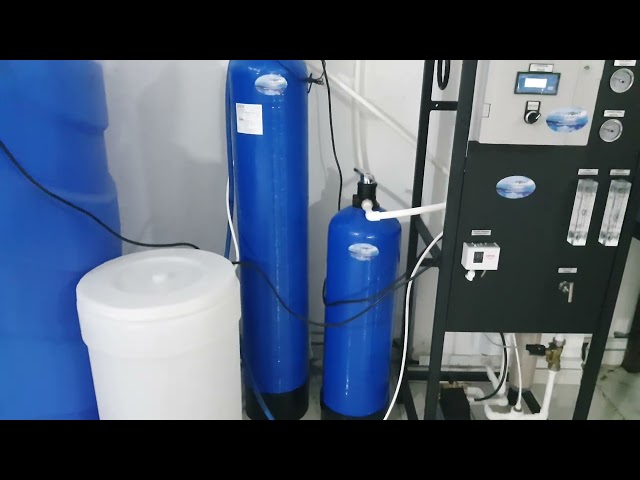
Pure Water System and Pure Water Machine Prices
Pure water system prices vary with capacity, stage configuration, automation and measuring equipment. The prices below are the current list prices on the relevant product pages. Pure water treatment systems scale from laboratory size up to pure water treatment system configurations for factories; as the conductivity target falls, deionised pure water treatment units come into play.
| Product | Price | Description |
|---|---|---|
| Compact Pure Water Unit | 9,803.68 TL | Entry-level pure water unit for small-scale use. |
| Pure Water Unit, 5 L/h | 31,861.96 TL | RO + DI system with a capacity of 5 litres per hour for laboratory and medical applications. |
| Deionised Pure Water Treatment Unit | 34,312.88 TL | Compact unit producing deionised water. |
| 40 Litre Tank Pure Water System | 49,018.40 TL | Pure water system with a tank, working with storage and suited to intermittent use. |
| 30 L/h Deionised Pure Water System | 53,920.24 TL | Deionised pure water system with a capacity of 30 litres per hour. |
| Pure Water System, 1,000 L/day (500 GPD) | 58,822.08 TL | RO + pure water unit with a capacity of 1,000 litres per day and 5×100 GPD membranes. |
| Water Point Pure Water System | 107,840.48 TL | Multi-stage pure water production system for medium-sized businesses. |
| Semi-Industrial Pure Water System | 147,055.20 TL | System providing continuous pure water production at semi-industrial scale. |
| Deionised Pure Water Unit, 5 Tonnes/Day | 196,073.60 TL | RO + DI system with a capacity of 5 tonnes per day that brings conductivity close to zero. |
| Industrial Deionised Pure Water Unit, 250 L/h | 220,582.80 TL | 3-stage industrial deionised system with a capacity of 250 litres per hour. |
| Industrial Pure Water Treatment System | 318,619.60 TL | High-capacity industrial pure water production system. |
The prices are for the standard configuration; they change with capacity, measuring equipment and the storage option chosen. The right system is determined by assessing the raw water analysis and the points of use together.
For a pure water system suited to your facility and a firm price, you can reach us on 0850 304 95 25 or at [email protected].
Let's determine the right system together
If the unit is purchased from us, the site survey is free of charge; if only a site survey and measurement are requested, a survey fee of 2,000 TL applies. The capacity and the treatment stages are determined by the measurement results.
0850 304 95 25Ask on WhatsAppSend an e-mailPure Water Systems: frequently asked questions
Where are pure water systems used?
They are used in laboratory analysis, pharmaceutical and cosmetics production, metal plating and rinsing, battery and electrolyte preparation, autoclaves, electronics cleaning, chemical and paint production, and high-pressure steam boiler applications.
What quality standards does a pure water system meet?
Quality is measured by the outlet conductivity (µS/cm) or the resistivity (MΩ·cm). When reverse osmosis and deionisation are used together, conductivity can be brought down to near-zero values. The target value is set by the application and confirmed by measurement.
Do pure water systems need maintenance?
Yes. Pre-filter replacement, activated carbon renewal, membrane monitoring and regeneration or replacement of the mixed bed resin are carried out periodically. The most reliable indicator of when maintenance is due is the outlet conductivity.
What is the difference between reverse osmosis and deionisation?
Reverse osmosis separates most of the dissolved matter with a membrane under pressure. Deionisation then holds the remaining ions in a resin bed and brings conductivity close to zero. When the two are used one after the other, high purity is achieved and the life of the resin is extended.
Are pure water and deionised water the same thing?
Deionised water describes water whose ions have been removed by passing it through ion exchange resin; pure water is a general expression for high purity regardless of the method. What is decisive is not the name but the measured conductivity value.
What is the difference from distilled water?
Distilled water is obtained by evaporation and condensation; it is effective, but energy consumption is high and the production rate is limited. The combination of reverse osmosis and deionisation reaches the same purity with less energy and at a higher flow rate.
When is the resin replaced?
This is decided by the outlet conductivity, not by elapsed time. When the value starts to climb steadily, the resin is saturated. If the reverse osmosis stage is working well, the life of the resin is extended considerably.
What is the warranty period?
Units carry a 2-year warranty; misuse is outside cover. Consumables such as filters, membranes and resin are outside cover.
How much do a pure water system and a pure water machine cost?
The price varies with output capacity, the conductivity level required, the stage configuration and tank volume. Current list prices are given in the price table on this page. For a choice suited to your laboratory or production line you can reach us on 0850 304 95 25.