
Water Treatment in Restaurants and Hotels: Equipment and Flavour
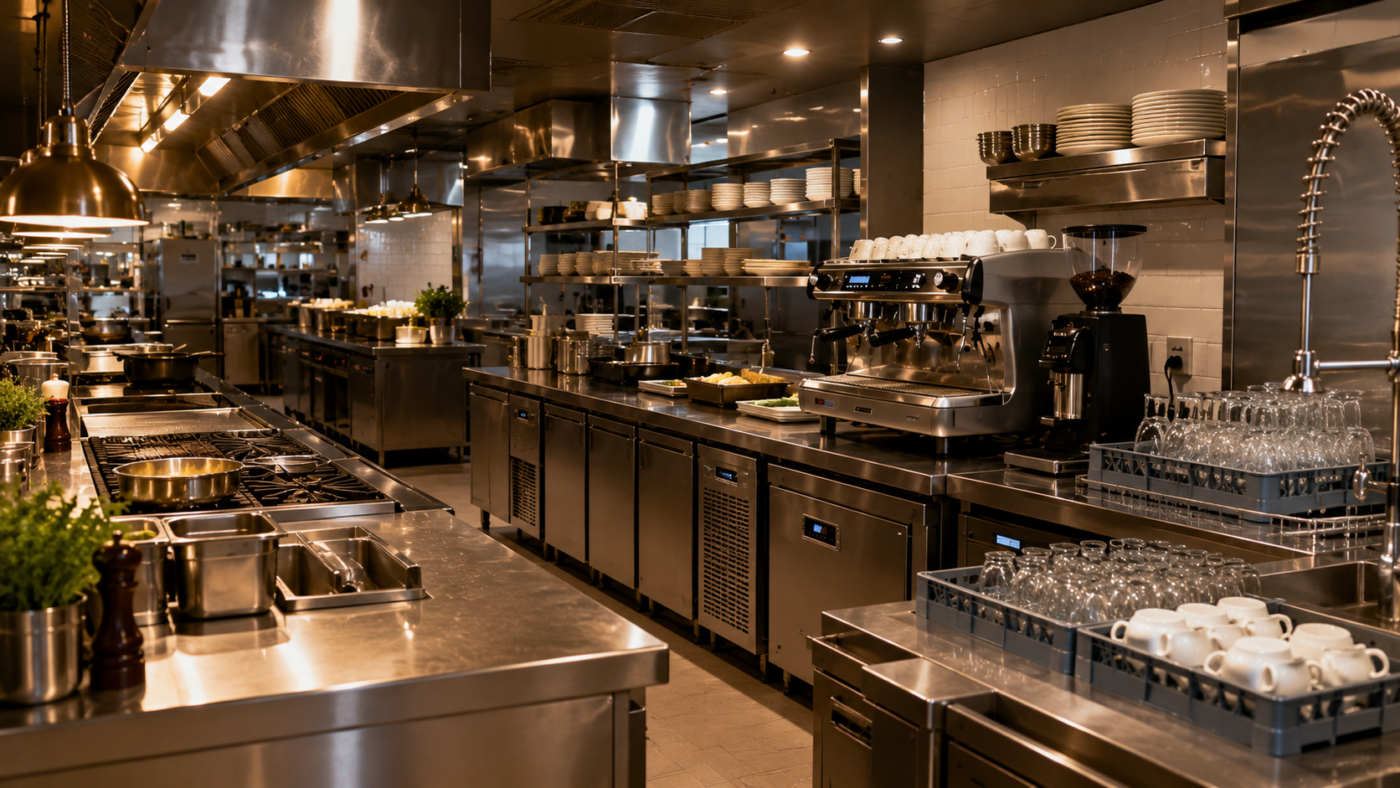
The glasses coming out of the dishwasher are marked; the coffee machine needs descaling every month; espresso brewed from the same beans tastes one way today and another tomorrow, and the steam equipment fails without warning. These complaints look unrelated, but in a kitchen they usually come back to one common cause: the quality of the water used. That is where restaurant water treatment stops being a matter of comfort and becomes a business decision.
In this guide we take up the effect of water on the economics of the business and on product quality: the invisible cost of limescale on equipment, the direct relationship between water and the flavour of coffee and tea, how glass spotting shows up in service, and how the right treatment build is established. The aim is to make the source of recurring problems in your kitchen visible.
Why Is Water Critical in Restaurants and Hotels?
Water plays two roles in a business: it is an ingredient of the product and a working condition for the equipment. It goes into the coffee, the tea and the food; it also passes through the dishwashing, steam and ice equipment. Restaurant water treatment is therefore decisive for both flavour and equipment life.
That dual role sets the subject apart from other business costs. In a kitchen the quality of raw materials is checked carefully; yet water, the most heavily used input of all, is usually treated as something that is simply there. You open the tap, it runs, it does the job. But the minerals it carries leave a trace on every surface they touch.
The effect builds in two directions. In the first there is the product: the character of the water shows in the cup, the glass and the plate. In the second there is the equipment: limescale coats heating surfaces, efficiency falls and failures become more frequent. Both touch the business result directly — one through customer satisfaction, the other through the maintenance budget.
The relationship between water use in commercial buildings and operating performance is taken up in official sources too; the US Environmental Protection Agency’s water management in commercial buildings resource offers a general framework on the role of water quality and consumption in running a site.
Limescale: The Kitchen’s Invisible Cost
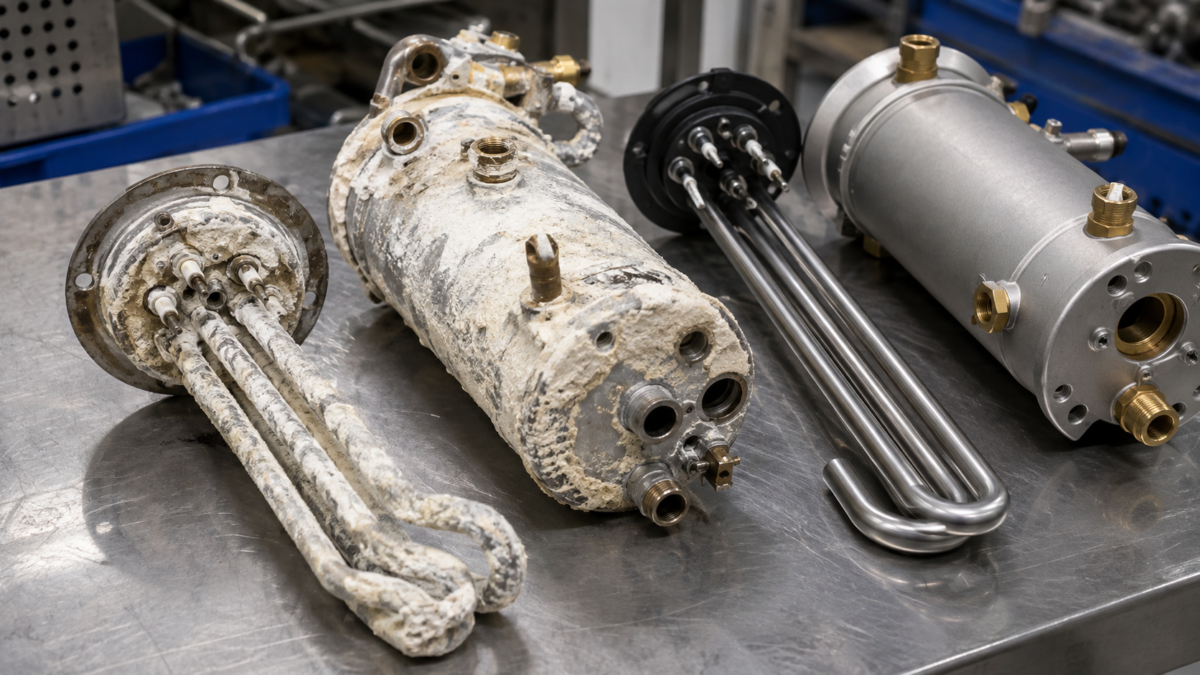
The calcium and magnesium in water precipitate on every heated surface and form a layer of limescale. That layer blocks heat transfer; equipment does the same job with more energy, fails more often and lasts less time. The most expensive problems in a kitchen often come from that silent build-up.
The most dangerous thing about limescale is that it advances not as a sudden failure but as a gradual loss of efficiency. The equipment keeps working; but it strains a little more each day. By the time the problem is noticed, the repair cost has usually already appeared.
Dishwasher
Limescale on the heating element slows heating; washing performance falls and the risk of failure rises.
Coffee Machine
Limescale in the boiler and lines upsets the temperature balance; frequent maintenance is needed.
Steam Equipment
Minerals concentrate in steam-producing machines; efficiency is lost and blockages form.
Ice Machine
Limescale lowers the production rate and shortens the working life of the machine.
Boiler and Water Heater
Heat transfer surfaces are coated; energy consumption rises markedly.
Plumbing Lines
Deposits on the inside wall of the pipe narrow the bore; flow and pressure fall.
Add an indirect cost to that table: descaling. Every descale means the equipment is out of service for a while; in service hours that is lost revenue directly. Chemical descalers also tire the internal surfaces of the equipment over time.
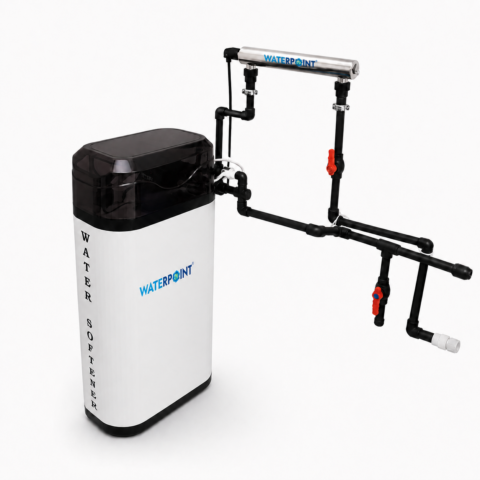
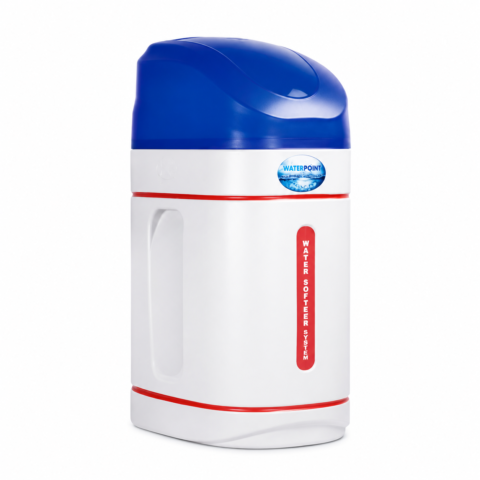
The source of the problem is hardness, and so is the answer. Which type and capacity of softening is needed is softening system selection guide. In a restaurant water treatment build, the softening stage is almost always the first thing considered.
The Flavour of Coffee and Tea Depends Directly on the Water
Most of a cup of coffee and a glass of tea is water. The mineral balance of the water and any chlorine residue therefore affect the aroma directly. Drinks made with the same beans and the same technique give a different result when the character of the water changes; consistency comes only from controlled water.
That is the problem baristas and chefs meet most often: the recipe is fixed, the equipment is the same, but the result moves. What the variable is often goes unnoticed; yet water can change character with the time of day and with the season.
The effect comes on two fronts. The first is chlorine residue: it leaves a sharp taste and smell that gets ahead of the aroma and suppresses the finer notes of the extraction. We took that subject up in a separate article; our piece on removing chlorine taste and odour explains the method in detail.
The second front is the mineral balance. Water is a solvent that carries the aroma; the mineral profile in it affects extraction directly. Water that is too hard both suppresses the taste and deposits limescale in the machine’s boiler. In a business kitchen, therefore, a restaurant water treatment build targets not only the equipment but the result in the cup.
In tea service the picture is clearer still; water is the highest-proportion component in brewing. The character of the water shows directly in the colour, the clarity and the taste of the brew. A film forming on the surface of tea brewed in hard water is a presentation problem businesses meet often.
Marks on Glasses and Plates
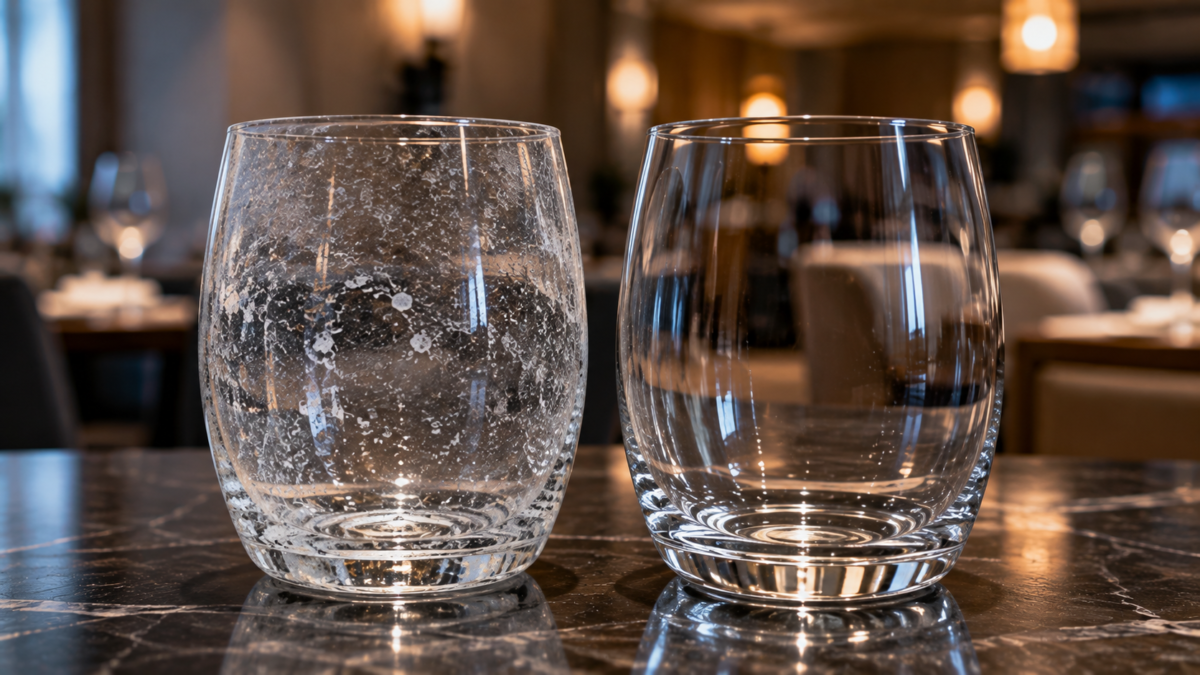
Hard water leaves mineral residue on surfaces when dishes are washed. Drying droplets form whitish marks on glasses and plates. That is not a hygiene problem but a presentation one; yet it affects the guest’s perception of cleanliness directly and raises chemical consumption.
Detail matters in service quality. A marked glass creates a poor impression regardless of the quality of the food. To solve it, staff generally take one of two routes: drying glasses by hand or using more rinse aid. Both cost money.
Hand drying means labour; that extra load is felt at busy service times. More rinse aid and detergent shows up directly in consumables. Because detergent foams less in hard water, consumption naturally rises; without realising it, the business spends extra chemical on every wash.
Washed in softened water, the drying droplet leaves no mineral behind. Glasses come out bright, the need to dry them falls and chemical consumption drops. Taken together, those three gains make the return on a restaurant water treatment investment concrete on the dishwashing side.
Glass marks are the fastest-noticed indicator of water quality in a kitchen. When softening is brought in, the change is usually visible from the first wash cycle.
Ice Machines and Drink Lines
Ice carries the taste and clarity of the water it froze from into the drink. Ice made from mineral-laden water looks cloudy and changes the taste of the drink as it melts. Limescale also lowers the production performance of the ice machine and raises how often it needs servicing.
Ice machines are among the equipment in a kitchen that contacts water most heavily, and they run continuously. That continuity accelerates limescale build-up. When the production rate falls, the ice runs out during service; that is an operational problem directly.
The visual side matters too. Clear, hard ice raises the perception of quality in cocktails and cold drinks; cloudy ice does the opposite. Given that ice dilutes the drink as it melts, the effect on taste cannot be ignored either.
The same logic applies to drink lines. On vending machines, soda lines and drink dispensers, water quality shows in both the taste and the internal lines of the equipment. All of these points are assessed as separate points of use in a hotel water treatment or restaurant build.
The Guest Experience in Hotels
In hotels water goes beyond the kitchen and touches the guest experience directly. Limescale and chlorine felt in the shower, marks on bathroom fittings, towels going stiff and lost efficiency in the laundry are all about water quality. In hotels, therefore, the scope spreads across the whole building.
In hospitality, satisfaction is the sum of small details. One of the first things a guest notices is the bathroom: limescale marks on the shower head, spots on the mirror and dulled fittings all form an impression of how the room is kept. These are not oversights by the cleaning staff but the result of the character of the water.
On the shower side two complaints stand out: the dry feeling hard water leaves on skin and hair, and the smell of chlorine that becomes more noticeable with hot water. Both are matters of comfort, but decisive enough to show up in guest reviews.
The laundry is one of the biggest water consumers in a hotel. Hard water makes towels and sheets stiffen over time, dulls colours and raises detergent consumption. When textile life shortens, a replacement cost appears; in most hotels that is an item nobody has counted.
Guest Bathrooms
Limescale marks on fittings and shower heads; the perception of cleanliness is affected directly.
Shower Comfort
A dry feeling on the skin and an odour that becomes noticeable with hot water show up in guest reviews.
Laundry
Textiles stiffen, detergent consumption rises and product life shortens.
Pool and Spa
Surface marks and deposits on equipment raise the maintenance load.
Which Stages Are Used?
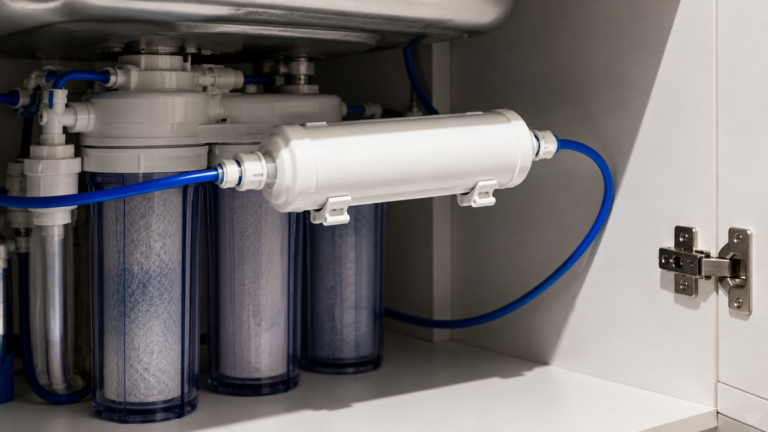
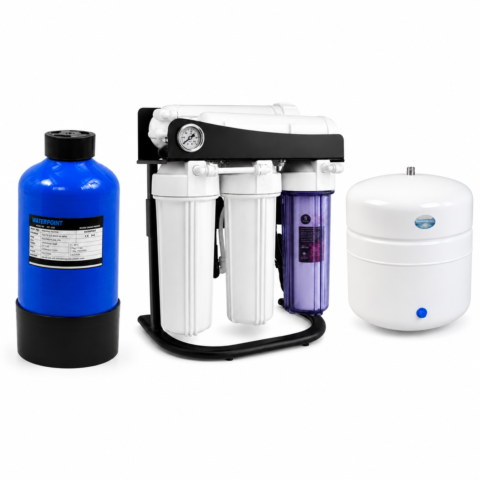
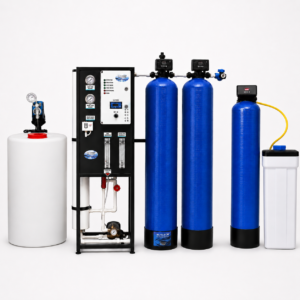
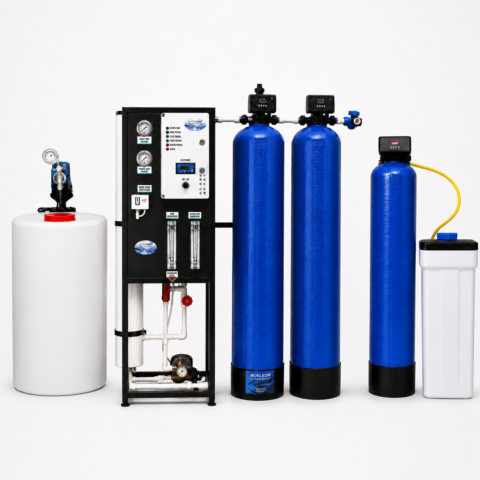
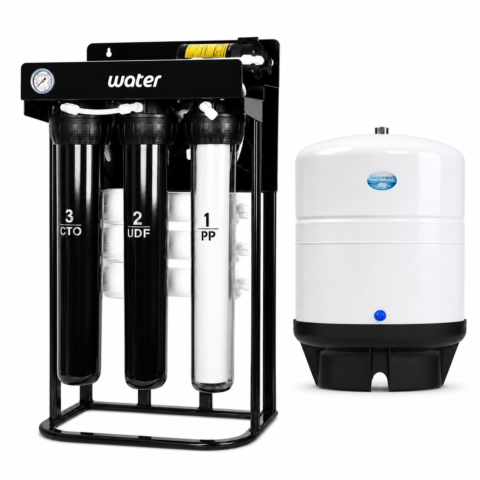
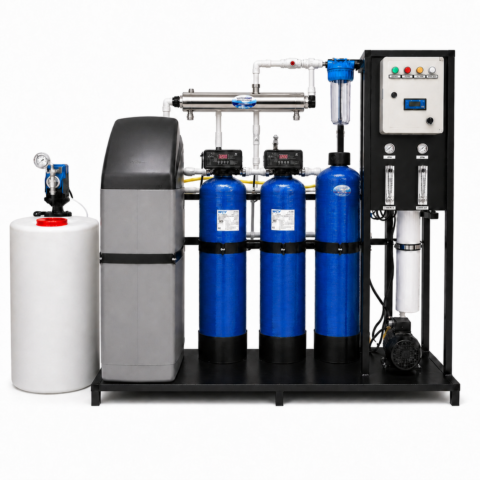
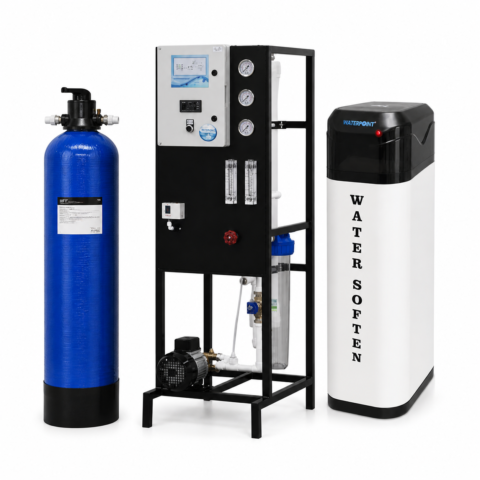
The typical stages in a business build are these: sediment filtration, activated carbon, water softening and, where needed, reverse osmosis. Sediment handles particles, carbon handles chlorine and taste, softening handles limescale and reverse osmosis handles the dissolved solids load. Which stages are needed is established by a water analysis.
The table below matches the problem met in the kitchen with the right stage:
| The Problem in the Kitchen | The Stage That Handles It | The Result It Gives |
|---|---|---|
| Sediment, sand, rust | Pre-filtration | Holds back particles, protects the equipment |
| Chlorine taste and odour | Activated carbon | Brings out the aroma of drinks |
| Limescale and glass marks | Water softening | Prevents build-up, keeps glassware bright |
| High dissolved solids | Reverse osmosis | Raises the quality of drinking and drinks water |
| The need for uninterrupted water | Tandem build | Keeps the flow going during regeneration |
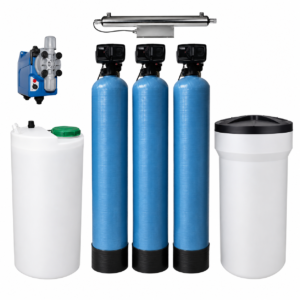
The first link in the chain is pre-filtration; it protects the sensitive stages behind it. Used for that purpose, industrial-type pre-filter sets frees the water entering the kitchen of its particle load.
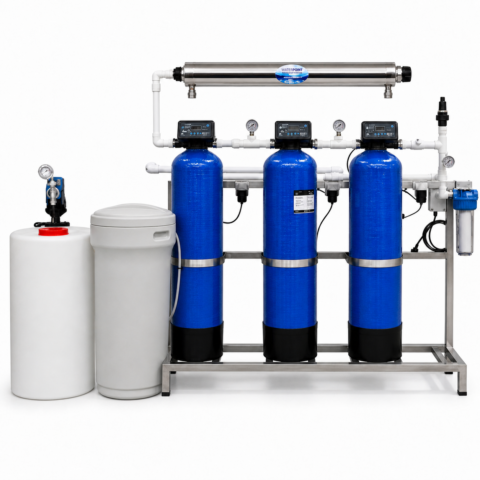
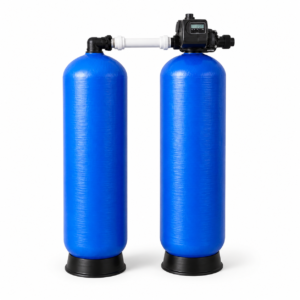
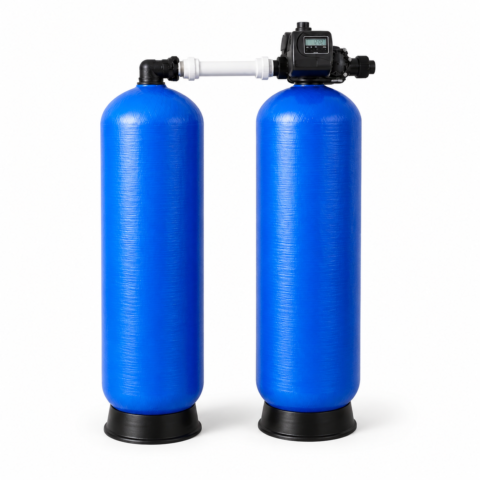
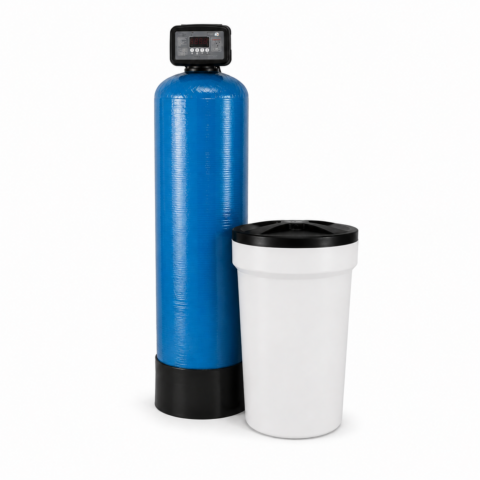
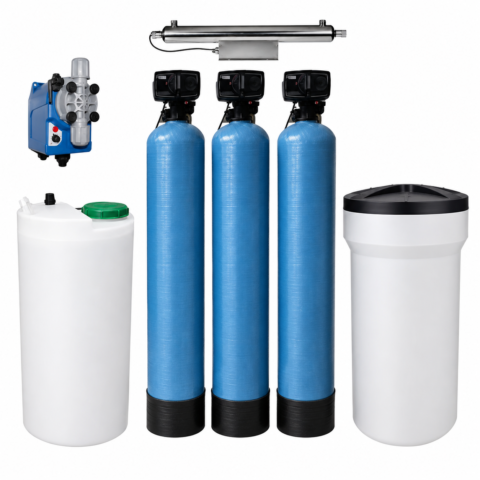
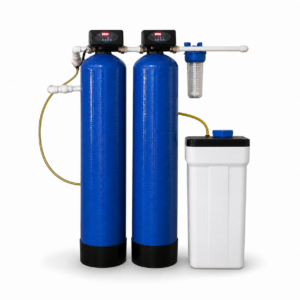
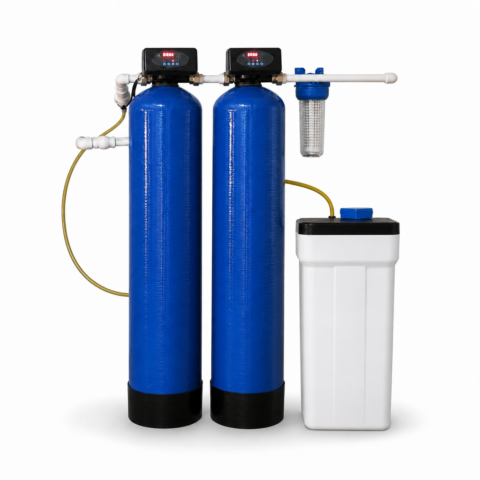
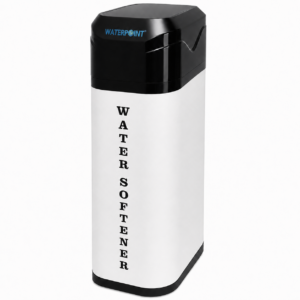
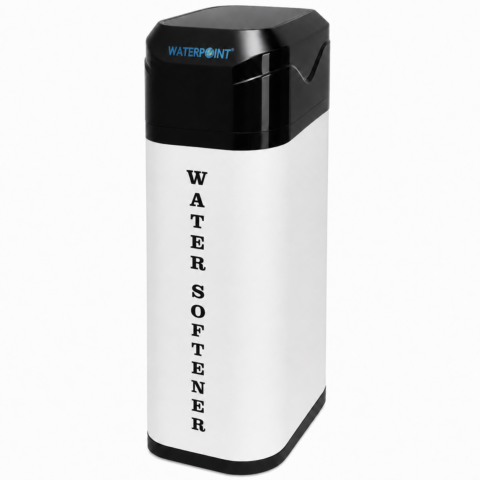
On the limescale side the softening stage is decisive. For medium-sized businesses, larger-volume cabinet softening systems offer an adequate solution. In hotels and catering kitchens running twenty-four hours, interruption is unacceptable; in that case twin-tank tandem systems are preferred, one tank staying in service while the other regenerates.
A restaurant water treatment build, the order of the stages matters as much as the choices. When pre-filtration is skipped the softening resin is fouled; when the carbon stage is missing the membrane is damaged. The chain has to be designed as a whole.
Let’s establish the stage build that suits your kitchen
You can look at the solutions to clarify which stages you need from your water analysis and how busy your service is.
See the Business SolutionsThe Drinking Water Side: Bottles or a Dispenser?
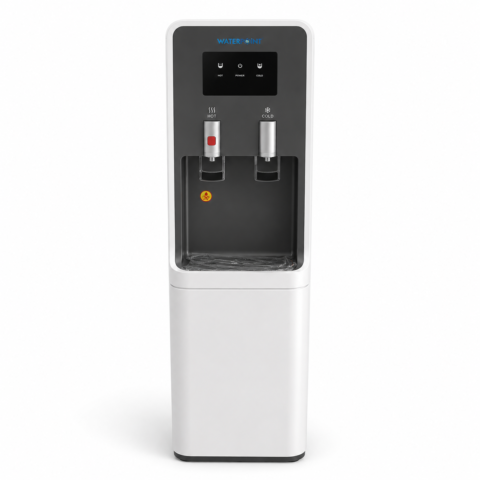
The water served to guests and staff is a separate heading. A bottled-water arrangement brings ordering, carrying and storage; a treating dispenser connected to the mains removes that cycle and provides water without interruption. The decision follows the level of consumption and the conditions of the space.
Managing water bottles in a business involves more work than it appears: stock tracking, waiting for delivery, carrying full bottles and returning empties. In a busy service that operation takes staff time and occupies storage space.
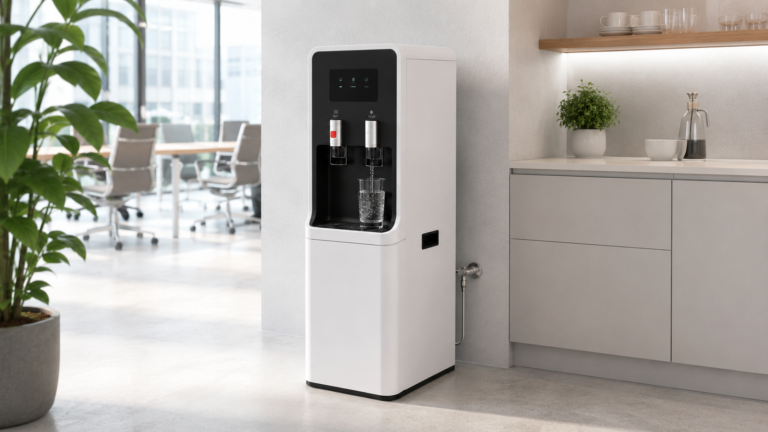
With a mains-connected solution, because the water comes from the line, there is no risk of running out. Used in staff areas and at service points, stainless-bodied dispensers suit business conditions both for hygienic cleaning and for durability.
We took up a detailed comparison of the cost and logistics of the two options in a separate article; you can read the arithmetic and which is advantageous when in our bottled water versus a treating dispenser comparison.
Capacity and Installation: What Changes with the Business?
The capacity is established by assessing the number of covers, the peak load at service times, the number of pieces of equipment in the kitchen and the need for uninterrupted water together. The system should be chosen not for the daily average but for demand at the busiest hour. The kitchen space and plumbing conditions shape the installation too.
Priorities differ by type of business:
Café and Patisserie
The flavour of coffee and tea comes first; the carbon and softening stages stand out.
Restaurant
Peak demand at service times; the dishwashing area and kitchen equipment are protected.
Hotel
The scope spreads across the whole building; guest bathrooms and the laundry are included.
Catering Kitchen
High flow and continuous running; an uninterrupted build is needed.
The most common mistake in a capacity calculation is to look at total daily consumption and ignore the peak hour. A restaurant’s daily water use may look reasonable; but most of that consumption is concentrated in the lunch and dinner service. A system chosen on the average falls short at exactly the most critical hour.
We took up the logic of establishing capacity and the sizing criteria in detail in a separate article; you can read the approach in our industrial-type system selection guide. The final capacity is always established from the water analysis and how busy the business is.
In the installation, the kitchen space is decisive. Enough room for the tank bodies, a drain connection, access for topping up salt and a bypass line so that work can be done without cutting the water should all be planned in advance. In a restaurant water treatment installation, these details are settled at the survey stage, not afterwards.
The Maintenance Plan and Running Costs
Once the system is installed, continuity depends on maintenance. Filter renewal, salt checks and periodic service have to be carried out regularly. The cost of planned maintenance is far below the price of a service stoppage caused by equipment failure; maintenance is therefore not a cost but an insurance.
The most common reason maintenance slips in a business is uncertainty over responsibility. When who checks what, and when, is not settled, filter changes are put off and the system does not perform as expected. Maintenance should therefore be tied to a service plan.
The headings to follow regularly are these:
-
The Filter Renewal Calendar
The sediment and carbon stages are renewed when saturated; the interval is set by the inlet water quality and consumption.
-
Checking the Salt Level
When the salt in the softening stage runs out the system cannot renew itself and the water hardens; regular checking is essential.
-
Watching the Outlet Quality
The brightness of the glassware, the taste of the coffee and the look inside the equipment are practical signs that the system is working.
-
Periodic Service
Valve settings, connections and the state of the stages are checked regularly by a specialist.
On the cost side, the right calculation is the total cost of ownership. The price of the unit is paid once; against it, energy lost to limescale, rising chemical consumption, frequent service calls and stoppages are continuous. Taken together, those items make the return on a restaurant water treatment investment clearly visible in most businesses.
A service stoppage is the most expensive item of all. A dishwasher out of service during the lunch sitting does not only bring a repair cost; it disrupts the operation, strains the staff and lowers guest satisfaction. Preventive maintenance exists precisely to stop that scenario.
The right build starts with a water analysis. A system chosen without one either falls short or contains stages that were never needed. We explained step by step how to take a sample and how to read the report in our water analysis guide.
Frequently Asked Questions
What problems does a restaurant water treatment system solve?
It prevents limescale damage to equipment, removes the marks on glasses and plates, brings out the aroma of coffee and tea and raises ice quality. It also reduces chemical consumption and service stoppages caused by failures.
Can I use a domestic unit in my kitchen?
It is not sustainable. Domestic systems are designed for intermittent use; under continuous load in a business the stages fill quickly, frequent maintenance is needed and they fall short at peak hours.
Is the taste of coffee really affected by the water?
Yes. Most of what is in the cup is water; chlorine residue and the mineral balance affect extraction directly. When the water is brought under control, the same beans give a more consistent result.
Will my business lose its water supply during maintenance?
Not if a bypass line has been planned. Where uninterrupted soft water is needed a twin-tank build is preferred; one tank stays in service while the other regenerates and the flow continues.
How much space does the system take?
The space needed varies with the capacity and the number of stages. As well as the tank bodies, room should be left for working on them, for access to the salt and for the plumbing connections. The final layout is planned during the survey.
When does the investment pay for itself?
The period varies with the hardness of the water, the number of pieces of equipment and how busy the service is. When lost energy, chemical consumption, service calls and the cost of stoppages are calculated together, the return appears clearly in most businesses.
Why is the scope wider in hotels?
Because water is used not only in the kitchen but in guest bathrooms, the laundry and the communal areas. In hotels, therefore, the build usually spreads across the whole building and calls for a central approach.
Conclusion
In a business, water is an input that does not show on the bill but is always felt in the result. Limescale shortens equipment life and raises energy consumption; chlorine residue suppresses the aroma of coffee and tea; hard water leaves marks on glasses and lowers the quality of service. In hotels the effect goes beyond the kitchen and touches the guest experience directly. The answer is clear: a water analysis first, then stages matched to the problem and built in the right order, then a capacity chosen for peak-hour demand, and finally the discipline of regular maintenance. Approached in that framework, a restaurant water treatment investment stops being a cost item and becomes infrastructure that protects product quality, equipment life and continuity of business together.
Let’s plan the solution for your business on site
To establish a build suited to the equipment in your kitchen, how busy your service is and your water analysis, you can get in touch with the Water Point expert team.
Discover the Solution That Suits You