
Water Treatment in Hairdressing and Beauty Salons
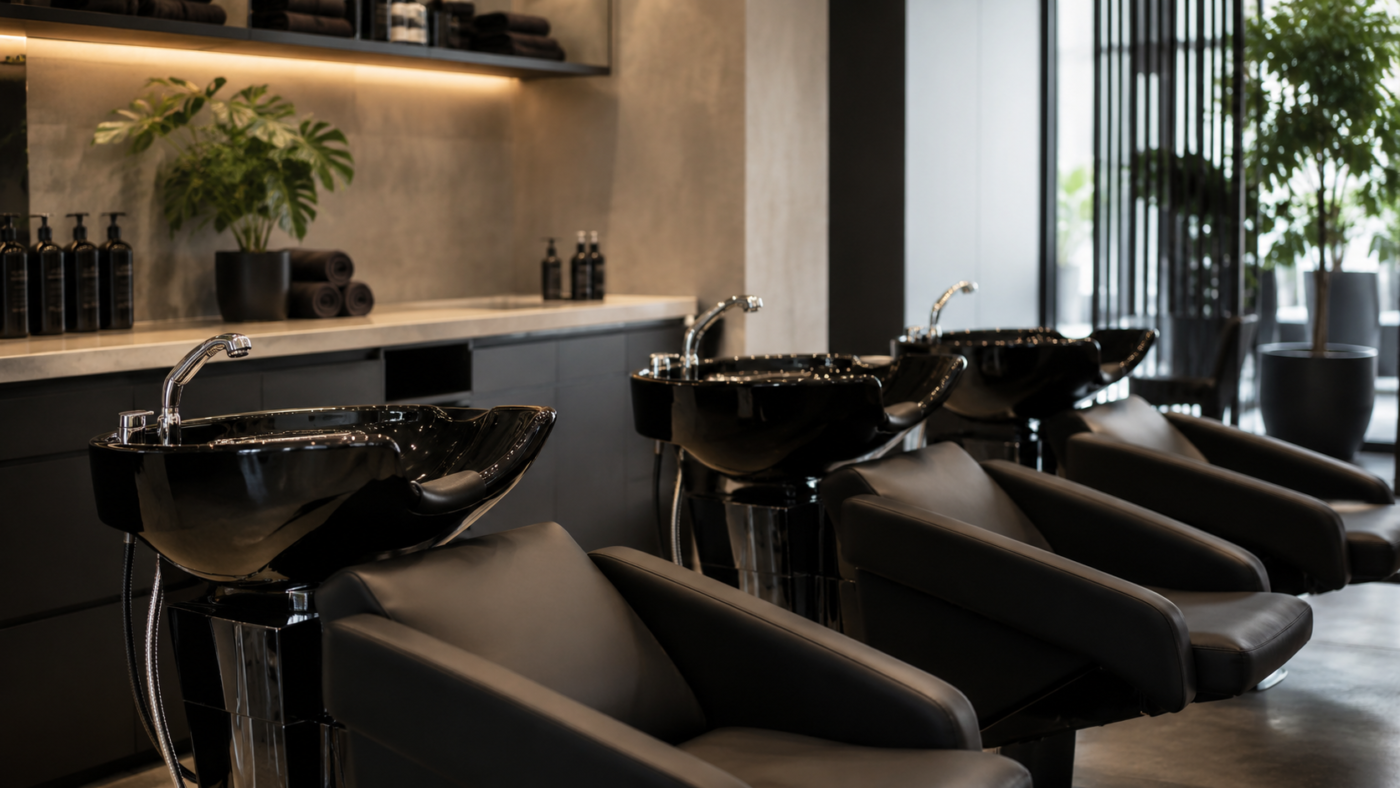
White marks that keep appearing around the washing unit, heating equipment that fails every few years, shampoo running out faster than expected, stains that will not come off the tiles… A salon owner usually sees these as separate problems and looks for a separate answer to each. Yet behind that picture there is often a single common variable, and salon water treatment comes up at exactly this point.
In this guide we take up the role of water in a salon under three headings: equipment life, chemical consumption and consistency of process. The aim is not to make claims about cosmetic outcomes but to show concretely how water quality affects running costs and the continuity of equipment.
Why Does Water Quality Matter in a Salon?
Water plays two roles in a salon: it is a working condition for the equipment and a common ingredient in every treatment. Hard water deposits limescale on heated surfaces, lowers the foaming performance of cleaning products and can make equipment failures more frequent. Water quality is therefore an operating parameter.
That dual role sets the subject apart from other cost items. In a salon, products are chosen carefully and equipment is picked with care; yet water, the most heavily used input of all, is usually treated as something that is simply there.
Meanwhile the minerals in the water leave a trace on every surface they touch. They build up in heated areas, narrow the bore in fittings and leave residue on tiles. All of these are measurable results with a calculable cost.
A salon water treatment assessment is therefore not a matter of comfort but a business decision. How often the equipment fails, how predictable product consumption is and how heavy the cleaning load runs all depend directly on this heading.
What Does Hard Water Do in a Salon?
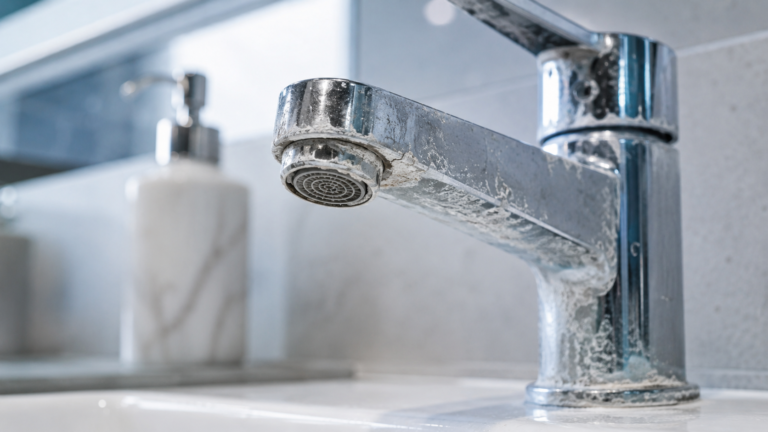
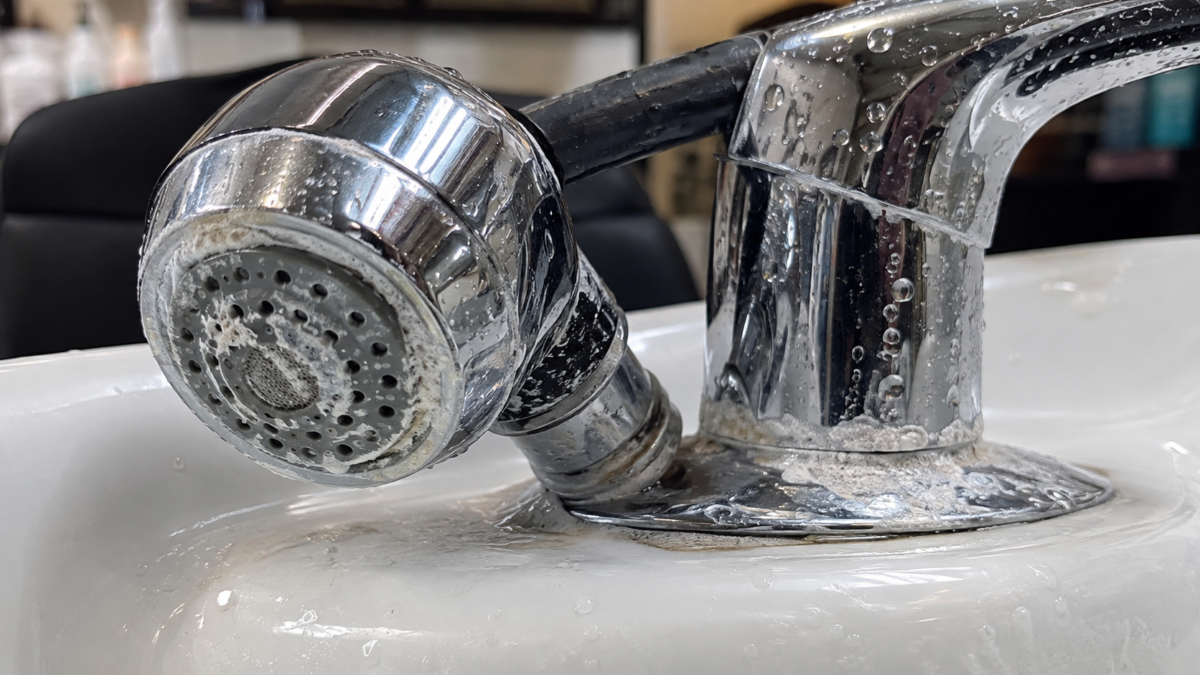
Hard water carries a high load of calcium and magnesium. These components form deposits in the washing unit and the fittings, lower the foaming performance of soap and shampoo, and can call for more product to be used. They also leave marks on ceramic and chrome surfaces and add to the cleaning load.
The effect shows itself in different ways at different points in the salon:
Washing Unit
White residue builds up around the basin and the fittings; cleaning becomes more frequent.
Shower Head
The holes partly block; the spray pattern is spoiled and the flow weakens.
Foaming Performance
In hard water, products may not give the foam expected; consumption can rise.
Ceramic Surfaces
Drying droplets leave lasting marks; keeping surfaces looking right becomes harder.
Tap Internals
Deposits on moving surfaces cause leaks and stiff operation.
Towels and Textiles
Mineral residue left after washing can reduce the softness of the fabric.
Foaming matters particularly from a business point of view. Hard water interacts with the active ingredients of cleaning products and lowers their performance. Because staff do not get the result they expect, they increase the dose; that turns into a cost item that repeats endlessly.
We took up what water hardness is, how it is measured and what symptoms show it in a separate article; for the details you can read our piece on water hardness and the signs of limescale. For a general technical framework on water hardness, the US Geological Survey’s water hardness resource can be consulted.
Limescale in Heated and Steam Equipment
Water is heated in equipment such as water heaters, boilers, steamers and towel warmers. Minerals precipitate on the heated surfaces and form an insulating layer; because heat transfer falls, the equipment runs longer and harder. That raises both energy consumption and the frequency of failures.
Hot water has to be available continuously in a salon. Heating equipment going out of service is not only a repair cost but a direct loss of service. This group is therefore the most critical heading in a salon water treatment assessment.
The equipment affected and the consequences are these:
| Equipment | What Happens | What It Means for the Business |
|---|---|---|
| Water heater / boiler | A layer forms on the heating surface | Heating takes longer, energy consumption rises |
| Steamer | Deposits form in narrow channels | Steam output falls, the risk of blockage rises |
| Towel warmer | Scaling is seen on the internal surfaces | Heating performance falls |
| Service pipework | The bore of the pipe narrows over time | Pressure loss and a fall in flow occur |
| Mixer taps | Deposits collect on the internal parts | Setting the temperature becomes harder, leaks start |
Steam-producing equipment holds a special place on this list. Because the water evaporates completely, all the minerals in it stay inside the machine; the rate of build-up is markedly higher than in other equipment.
We took up the effect of limescale on heat transfer and how it advances in equipment in detail in a separate article; you can read the mechanism in our piece on what hard water does to equipment.
How Does Variability in Water Quality Affect the Process?
Water quality can vary with the season, with mains conditions and with the plumbing. At different hardness and mineral loads, treatment conditions can differ too. Water quality that is under control and predictable supports processes being carried out repeatably.
Measured language is needed in this section. We make no firm claims about the effect of water quality on treatment outcomes; those are matters that require proof. What can be said is this: a variable input makes standardising a process harder.
Consistency matters in running a salon. A treatment carried out with the same product, the same technique and the same timing is expected to run under similar conditions. If one of the inputs varies through the day or with the season, that variability can carry through to the process.
One of the inputs that can be fixed is water. When hardness is reduced at source, the water the salon uses becomes largely independent of seasonal fluctuation in the mains. That is one of the most concrete business benefits a salon water treatment build provides.
This article makes no claims about treatment outcomes. What it takes up is equipment protection, the predictability of chemical consumption and continuity of operation. Technical assessments relating to treatments should be made in line with the manufacturer’s information for the products you use.
Chemical and Product Consumption
In hard water the foaming performance of products such as soap and shampoo falls; more product may be needed to get the same result. When hardness is reduced, consumption becomes more predictable. That has a direct effect on a cost item that repeats constantly in a salon.
This can be explained by basic water chemistry. The hardness ions in the water interact with the active ingredients of cleaning products and bind part of them. Because the foaming portion of the product is reduced, the effect expected is not obtained.
On the business side that creates a rise in costs that is hard to notice. Staff increase the dose, it becomes a habit, and annual consumption rises quietly. The problem is blamed on the quality of the product; the source, though, is the water.
The items affected are these:
- Shampoo and soap: Because foaming falls, the amount used can rise.
- Cleaning products: Extra product is needed to deal with residue on surfaces and equipment.
- Towel washing: Detergent consumption on the laundry side can rise.
- Limescale remover: A regularly repeating item appears in equipment maintenance.
- Staff time: Extra cleaning and drying create a labour load.
The last item is often left out of the calculation. In a busy salon, the time staff spend on extra cleaning comes straight out of service capacity. When a salon water treatment investment is assessed, therefore, not only the product cost but the effect on labour should be taken into account.
Which Stages Are Used in a Salon Water Treatment System?
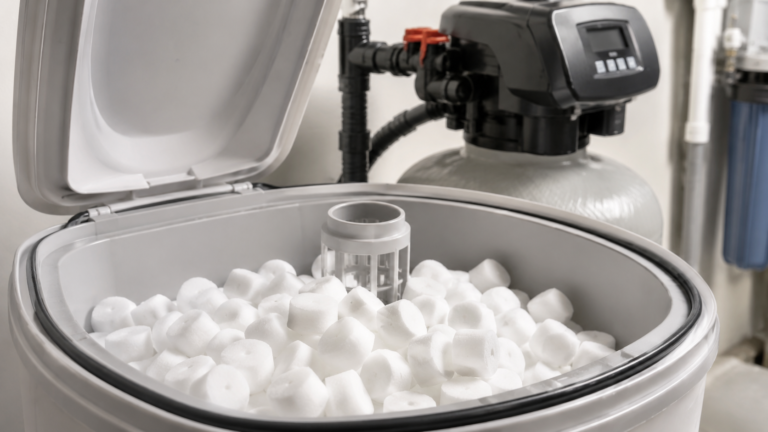
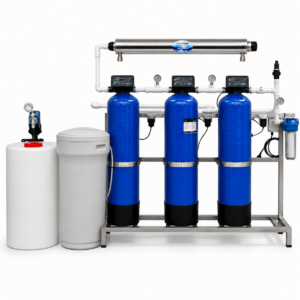
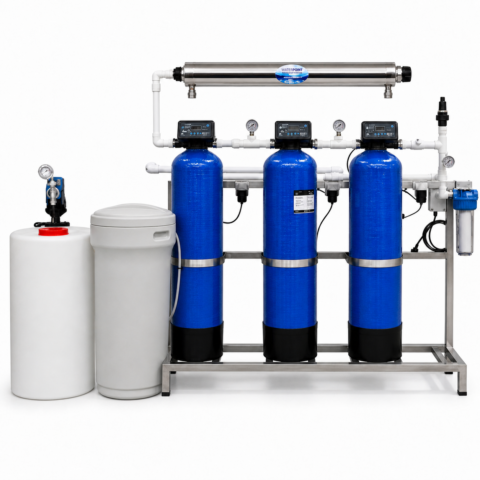
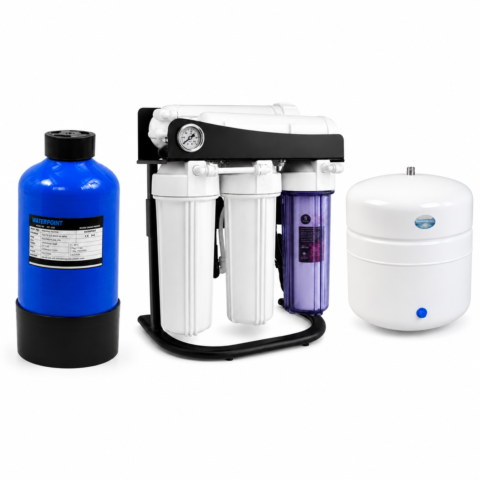
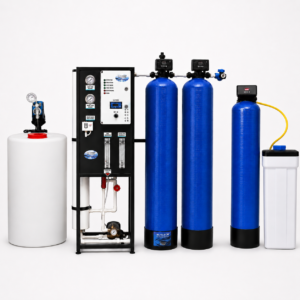
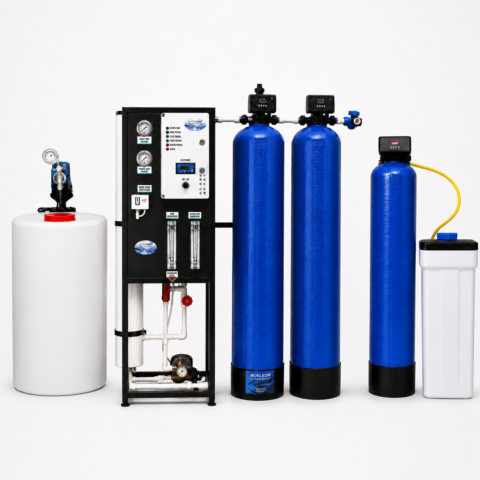
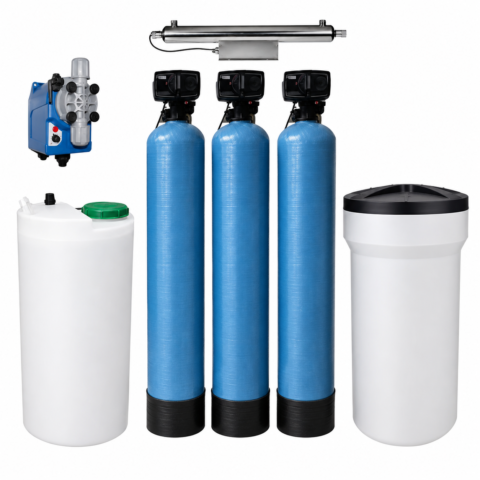
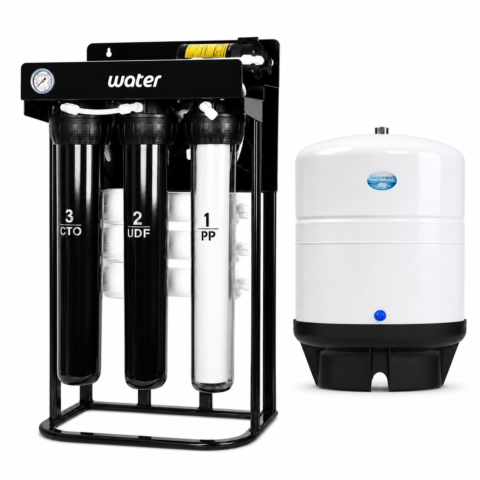
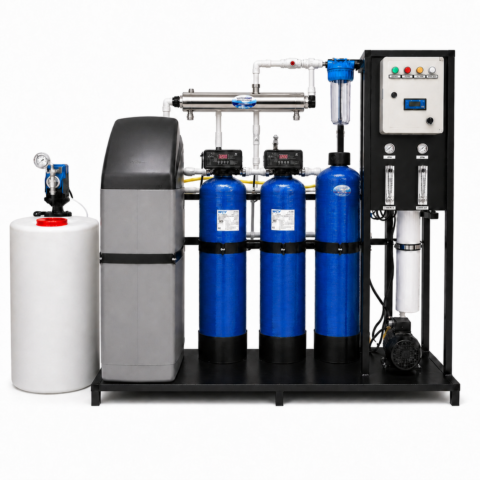
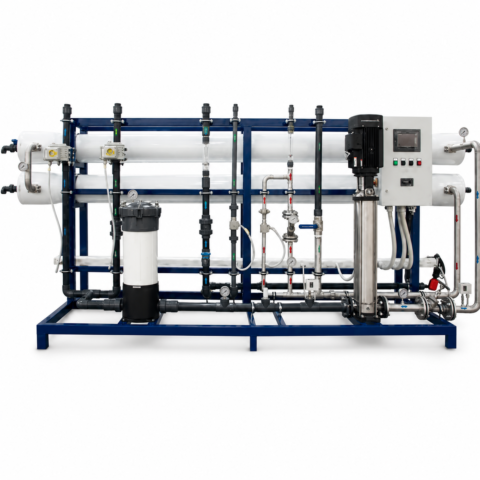
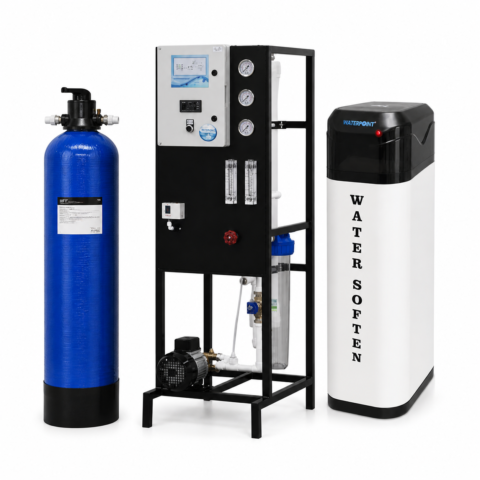
A typical salon build contains these stages: sediment filtration, activated carbon and water softening. Where a special treatment water is required, reverse osmosis is added. Which stages are needed is established from the water analysis result; the same chain is not built in every salon.
The table below matches the problem seen in the salon with the right stage:
| The Problem Identified | The Stage That Handles It | The Result It Gives |
|---|---|---|
| Sediment, sand, rust | Pre-filtration | Holds back particles, protects fittings and equipment |
| Chlorine odour and taste | Activated carbon | Improves sensory quality, protects the line |
| Limescale and hardness | Water softening | Prevents build-up on heated surfaces |
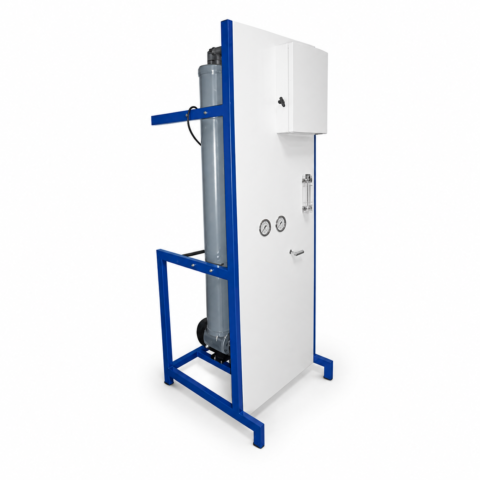
| High dissolved solids | Reverse osmosis | Lowers the mineral load for special treatment water |
| Microbiological risk | UV (ultraviolet) treatment | Reduces microbiological risks |
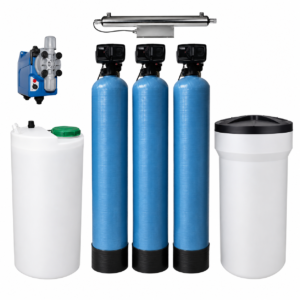
The first link in the chain is pre-filtration; it protects the stages behind it from particle load. Used for that purpose, staged filter sets free the water entering the system of coarse dirt.
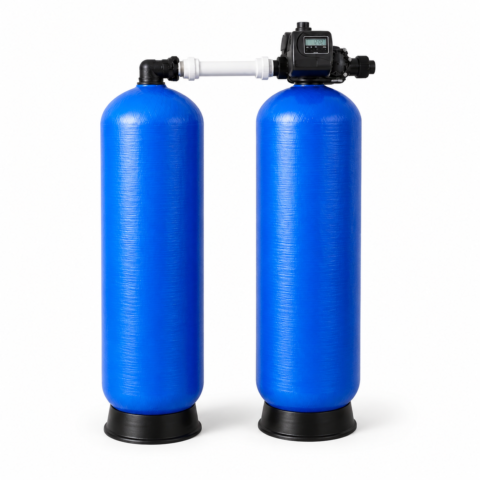
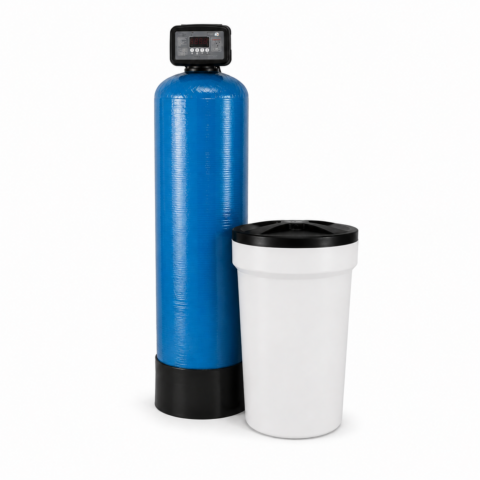
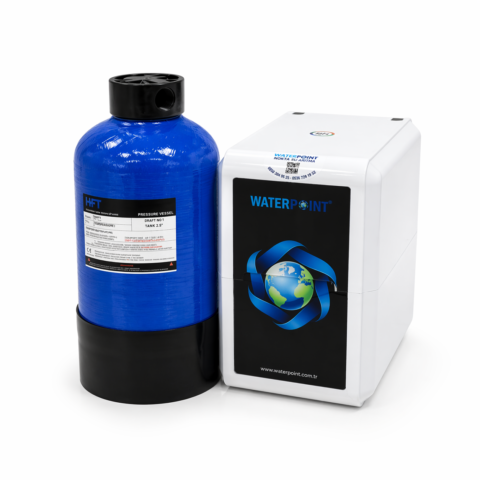
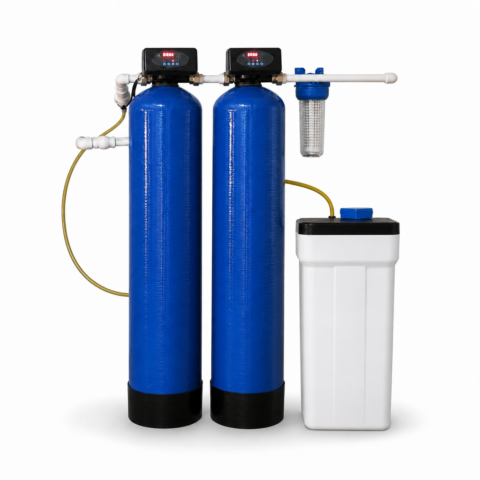
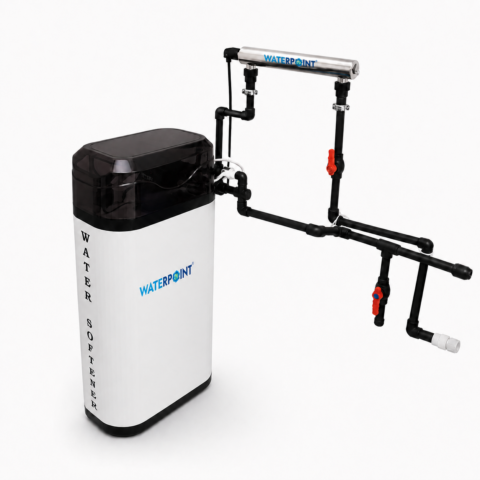
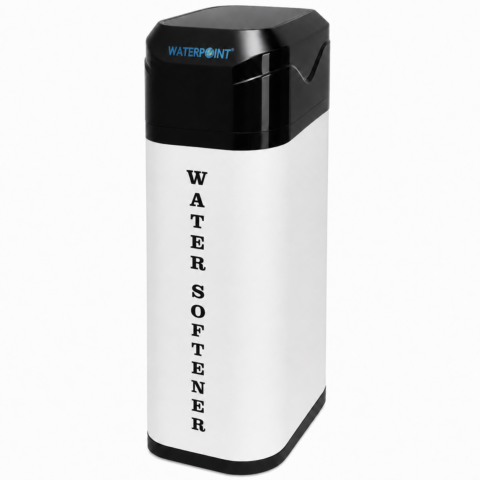
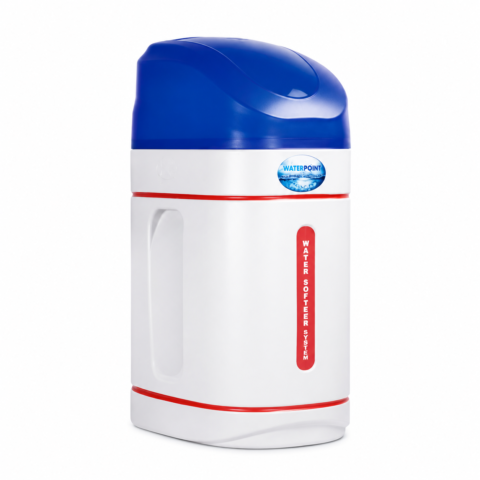
The decisive stage, though, is softening, because most of the problems in a salon come from hardness. In small and medium salons a compact mini cabinet softening system may be enough, while businesses with high consumption prefer larger-volume cabinet systems.
The order of the stages matters too; each stage protects the next. When pre-filtration is skipped, the softening resin is fouled by sediment and efficiency falls.
Softening or Reverse Osmosis?
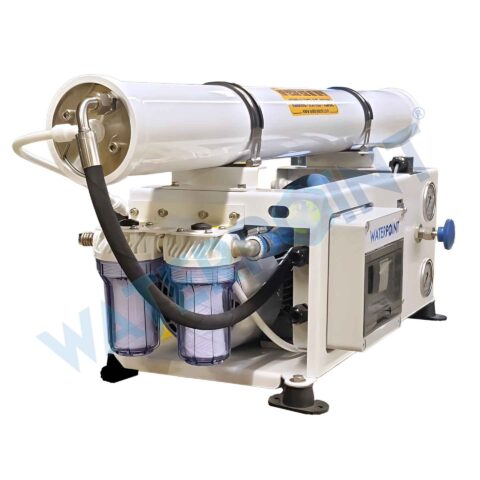
In most salons the real problem is hardness, and a softening stage meets the need. Reverse osmosis comes into play in special applications where the dissolved solids load has to be lowered. Reaching for an advanced stage without an analysis can mean an investment that was never needed.
This section is about avoiding unnecessary investment. The two technologies address different problems and are not alternatives to one another.
Softening is enough
Hardness-related deposits and foaming problems are solved by this stage.
- Heating equipment is protected
- Marks on fittings and tiles are reduced
- Product consumption becomes predictable
- Running costs are brought into balance
Reverse osmosis may be needed
It is considered in applications where the dissolved solids load has to be lowered.
- It is justified by the analysis result
- A separate point of use is built
- It works together with pre-treatment
- Investment and space requirements rise
The right approach is to deal with hardness first. If a need is still unmet after softening is in service, an advanced stage is considered then. That order protects both the budget and the space.
Which type and which capacity suits is a separate assessment; we took up the selection criteria in detail in our softening system selection guide. In a salon water treatment project, the decision comes not from a catalogue but from the analysis result.
Let’s establish the stages that suit your salon
You can look at the solutions to clarify which stages are needed for your water analysis and how busy your business is.
See the Softening Solutions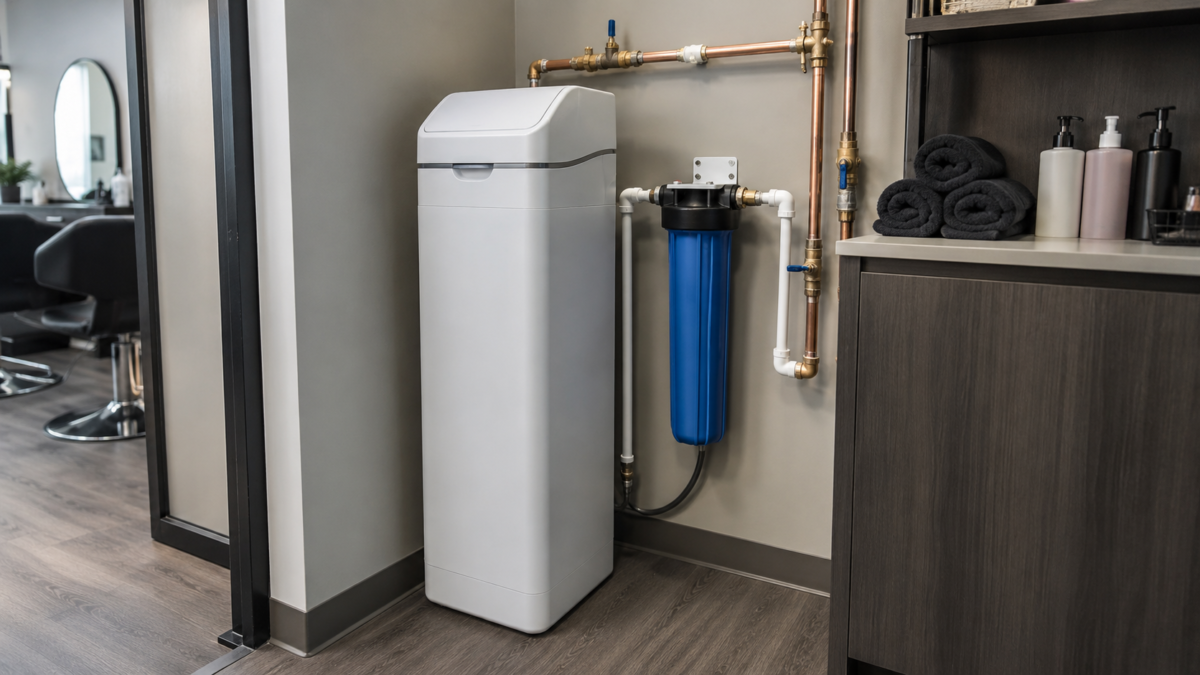
How Is the System Sized?
Sizing takes the number of washing units, daily customer volume, simultaneous use at peak hours, the capacity of the heating equipment and the installation space into account together. The system should be chosen not for the daily average but for demand at the busiest hour.
Demand in a salon is not spread evenly through the day. Evenings, weekends and special periods raise it markedly. A system chosen on the average falls short at exactly those hours.
The headings to assess are these:
Washing-led use
Demand concentrates at the washing units; continuity of hot water is the priority.
- The number of units is decisive
- Peak-hour demand is calculated
- The water heater capacity is taken into account
Various points of use
Water use is spread across different rooms and treatment areas.
- There are more points
- Steam equipment may be present
- The need is assessed room by room
High and continuous consumption
Hot water and steam consumption is high; interruption is unacceptable.
- High flow capacity is needed
- An uninterrupted build is considered
- Heating equipment is used intensively
We took up the general logic of a capacity calculation and what to watch for at business scale in a separate article; you can read the approach in our industrial-type system selection guide. The final capacity is always established from the water analysis and how busy the business is.
The installation space is part of the decision too. Enough room for the unit body, access to the salt tank, the drain connection and room to work on it should be planned in advance. Because space is usually limited in salons, this detail should be settled at the survey stage.
Maintenance and Continuity of Operation
Once the system is installed, continuity depends on maintenance. The softening stage needs its salt level watched, the pre-filters renewed on time and periodic checks carried out. Because a water interruption in a salon means lost business directly, maintenance should be tied to a service plan.
The most common reason maintenance slips is uncertainty over responsibility. When who checks what, and when, is not settled, the salt runs out, the filter change is put off and the system does not perform as expected.
The headings to follow are these:
-
Checking the Salt Level
When the salt in the softening stage runs out, the system cannot renew itself and the water becomes hard again. Regular checking is the most basic requirement.
-
Renewing the Pre-Filters
The sediment and carbon stages are renewed when saturated; the interval is set by the inlet water quality and how heavily the system is used.
-
Watching the Outlet Quality
Marks starting to appear on fittings and a fall in foaming show that the system needs checking.
-
Periodic Service
Valve settings, connections and the state of the stages are reviewed regularly by a specialist.
-
Planning Interruptions
Maintenance is planned for the salon’s quieter hours so that service is not disrupted.
We took up how the system renews itself and how that cycle works in a separate article; the details are in our piece on the regeneration cycle. What matters here is keeping that cycle running without interruption.
A salon water treatment installation is one where continuity is as decisive as the unit itself. A system that is installed but not followed up soon stops delivering the benefit expected.
A water interruption in a salon means cancelled appointments. So that the water is not cut during maintenance, a bypass line should be planned at the installation stage. That detail is settled before installation, not afterwards.
Where Should You Start? The Water Analysis
The solution starts with a water analysis. Without knowing the hardness and the other parameters, which stages are needed and which capacity suits cannot be established. A system chosen without an analysis either fails to meet the need or contains stages that were never required.
The process runs in this order: a sample is taken and analysed, then the salon’s pattern of use is established, then the stages and capacity are set, and finally the installation space and plumbing conditions are confirmed.
We took up step by step how to take a sample and how to read the report in our water analysis guide. On the salon side it matters that the sample is taken at the point of use; that way the real state of the water reaching the equipment is measured.
Water Point Su Arıtma Teknolojileri operates from Esenyurt, İstanbul under its founder Ali Genç, with more than 20 years of experience in the sector. The information below is the concrete counterpart of the headings taken up in this article.
Survey and Analysis
The site survey is free if the unit is purchased from us; where only a survey and measurement are wanted, a survey fee of ₺2,000 applies, and the capacity is established from that assessment.
Service Network
For industrial systems there is a service network across Türkiye; for home units service is provided in İstanbul and the neighbouring provinces such as Kocaeli and Tekirdağ.
Warranty
Units, valves, pumps and tanks carry a 2-year warranty and taps a 1-year warranty; consumables such as filters, membranes and resin fall outside it.
Spare Parts Cover
Filters, membranes, resin and salt are consumables; valves, pumps and tanks are durable spare parts.
Contact
For questions and survey requests, 0850 304 95 25 and [email protected] can be used.
Broad spare parts cover means continuity for a salon. When maintenance is due, being able to obtain the part keeps the system running without interruption.
Frequently Asked Questions
Is a softening system essential in my salon?
The need depends on the hardness of the water. In an area of low hardness the need may be limited; in salons using hard water it brings a clear benefit in protecting heating equipment and in product consumption. The decision is made from the water analysis result.
Which capacity is needed?
The capacity is established by assessing the number of washing units, daily customer volume, simultaneous use at peak hours and the capacity of the heating equipment together. The system should be chosen not for the average but for demand at the busiest hour.
Is using a limescale remover enough?
It reduces the existing build-up but does not remove the cause. As long as the hardness of the feed water is unchanged, the build-up returns and the treatment has to be repeated regularly. A lasting result calls for hardness to be reduced at source.
How long does installation take, and does the salon have to close?
The time varies with the scope of the installation and the plumbing conditions. Giving a firm figure would not be right; it is planned during the survey. When a bypass line is built in, there is no water interruption during maintenance.
How is it maintained?
Regular salt checks, renewing the pre-filters on time and periodic service are needed. In salons, tying these to a service plan is recommended; that removes uncertainty over responsibility and keeps things running.
Does a softening system affect product consumption?
In hard water the foaming performance of cleaning products falls and more may be needed. When hardness is reduced, consumption becomes more predictable. The size of the effect varies with the hardness of the water and how busy the business is.
Is reverse osmosis needed too?
In most salons the real problem is hardness, and a softening stage meets the need. Reverse osmosis is considered in special applications where the dissolved solids load has to be lowered. Reaching for an advanced stage without an analysis can mean an investment that was never needed.
Can a system be installed in a small salon?
Yes. Compact cabinet-type systems are built to work in limited spaces. What is decisive is not the size of the salon but the hardness of the water and how heavily it is used. Space conditions are assessed during the survey.
Will equipment failures stop once the system is installed?
The wear caused by build-up that has already formed cannot be undone; but once hardness is reduced at source, the build-up stops advancing. If there is advanced build-up in existing equipment, whether cleaning is needed before the system is commissioned is assessed.
Conclusion
Most of the problems in a salon that look unrelated come back to the same source. Hard water builds up on heated surfaces and strains the water heater, the steamer and the towel warmer; it leaves marks on fittings and tiles and adds to the cleaning load; it lowers the foaming performance of cleaning products and can raise consumption. The chain of solutions is clear: pre-filtration protects the line, activated carbon corrects sensory quality, and softening deals with hardness at source. Where a special treatment water is required, an advanced stage is assessed separately. The right order is clear too — water analysis first, then capacity and the stage build, then regular maintenance. Taken that way, a salon water treatment investment stops being a cost item and becomes infrastructure that protects the continuity of the business.
Let’s plan the solution for your salon on site
The site survey is free if the unit is purchased from us; where only a survey and measurement are wanted, a survey fee of ₺2,000 applies. To establish a build suited to your number of washing units, how busy you are and your water analysis, you can get in touch on 0850 304 95 25 or at [email protected].
Discover the Solution That Suits You