
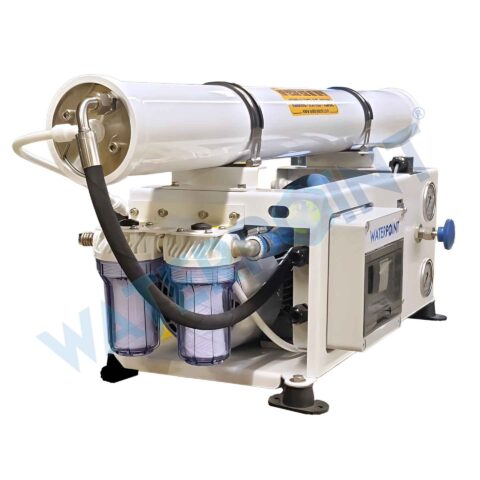
Where Pure Water Is Used: Which Sector Needs It, and Why
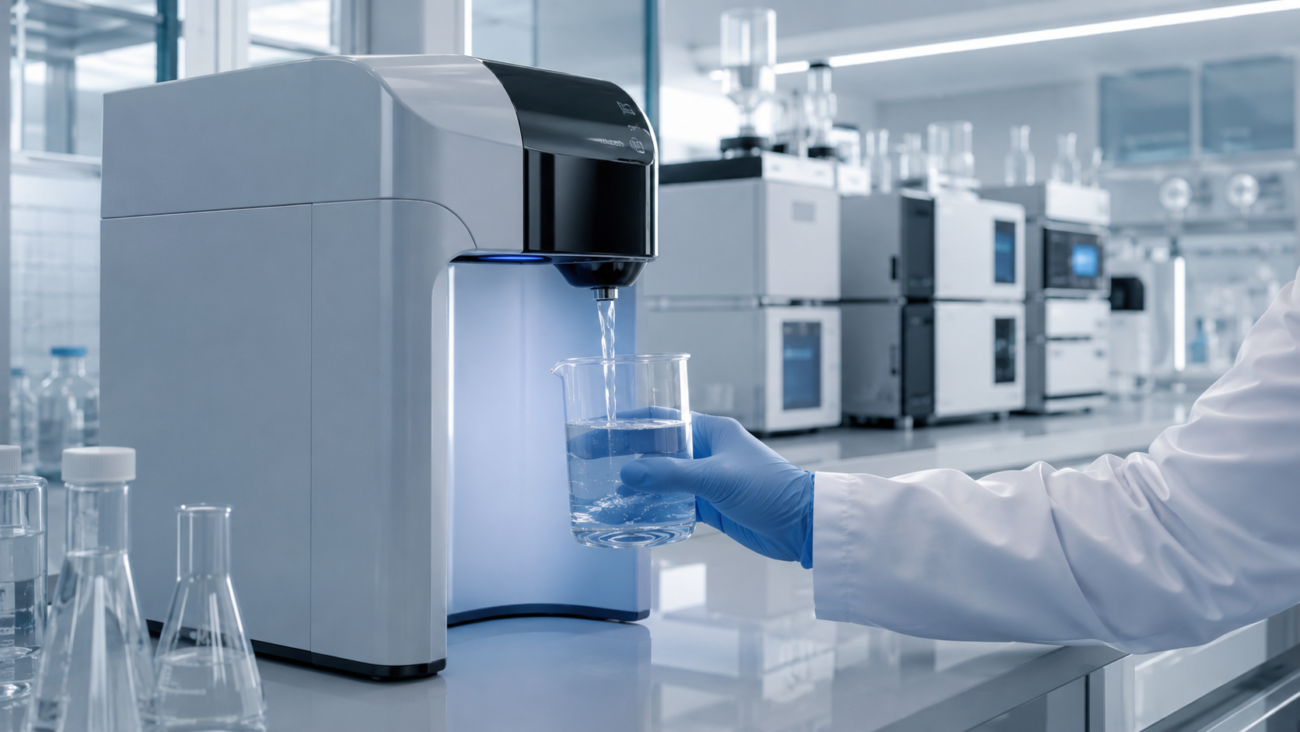
Many businesses set out assuming that tap water is “clean enough” for their production or analysis processes. The result is usually the same: unexplained limescale on equipment surfaces, marks in a coating, inconsistent analysis results or product formulations that separate on the shelf. The common cause of these problems is the dissolved minerals and ions in the water that the eye cannot see. That is where uses of pure water comes in; because some work cannot carry the invisible load ordinary water brings with it.
So which sector genuinely needs pure water, and where is normal water enough? In this article the uses of pure water are taken up sector by sector: from the laboratory to medical applications, from cosmetics to food, and from electronics to paint and coating, we examine why pure water is essential in each field, with concrete consequences. By the end you will know clearly whether pure water is critical in your own field and which technology produces it.
What Is Pure Water and How Does It Differ from Normal Water?
Pure water is water from which the dissolved minerals, salts and ions have largely been removed. The uses of pure water cover sectors such as laboratory, medical, cosmetics, food, electronics and industrial processes, where the content of the water affects the result directly. In these fields normal water creates a risk of residue, conductivity and contamination.
Water from the tap, even where it is suitable for drinking, is not chemically “empty”. It contains dissolved ions such as calcium, magnesium, sodium, chloride and sulphate. Unnoticed in daily use, that content skews the result of a sensitive analysis, spoils a surface in a coating bath and weakens the stability of a formulation. What pure water is, in practical terms, is exactly this: a predictable, repeatable raw material freed of those ions to the level the work requires.
The most measurable difference between normal water and pure water is conductivity. Dissolved ions raise the water’s capacity to conduct electricity; as the ions fall, so does the conductivity. Purity is therefore tracked largely by measuring conductivity. If you want the detail of that idea, our article on dissolved solids and the concept of TDS explains it from the ground up.
There is one more important distinction: pure water is not a single product but a target. Deionised water is the most common way of reaching that target, by ion exchange. As the uses of pure water widen, each field’s expectation of purity differs too; and that brings us to the next heading.
Why Does the Purity Required Vary with the Application?
There is no single definition of “pure water”; the purity needed varies with how critical the work is. In international standards, laboratory water is generally divided into classes such as Type I, Type II and Type III. The highest purity is used in the most sensitive work; for more general work a lower class is enough.
That classification logic is the key to understanding the difference between the uses of pure water. Washing glassware and running a trace element analysis do not call for the same water. Standards bodies such as ASTM and ISO therefore divide laboratory water into graded classes; the most critical applications use the top class, routine work the lower ones.
That graded approach has two practical consequences. The first is economic: producing the highest purity for every operation creates unnecessary cost; the right approach is to establish the class the work requires. The second is technical: as purity rises, producing, storing and distributing the water becomes more delicate too, because very pure water quickly dissolves ions and gases from whatever it touches and begins to lose its purity.
Before “do we need pure water” comes the question “at what level do we need pure water”. Among the uses of pure water each sector’s answer is different; let us look at those answers one by one.
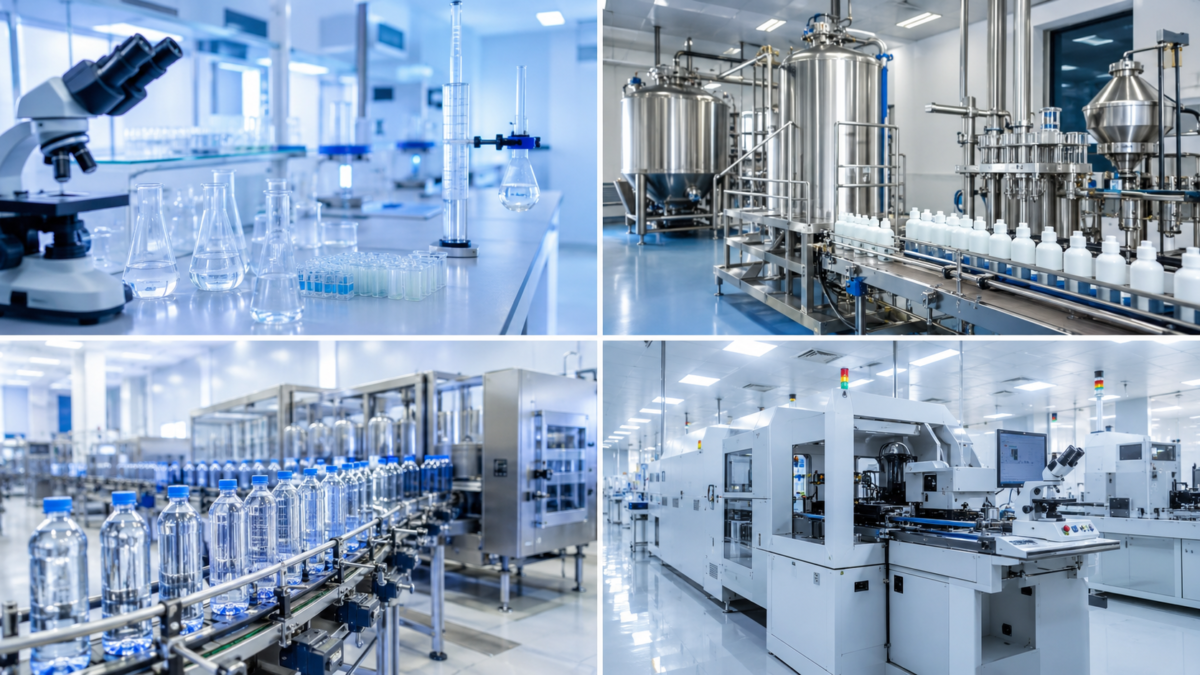
Laboratory and Analysis
The laboratory is the most critical of the uses of pure water. In preparing reagents, feeding instruments, calibration and rinsing glassware, water affects the result directly. Ions in the water skew analytical values, form deposits in instruments and destroy the repeatability of a measurement.
In an analytical laboratory, water is the most heavily consumed “reagent”. It is used at every step, from diluting samples to preparing buffer solutions, from producing mobile phases to the final rinse. The quality of laboratory water is therefore directly connected to the reliability of the result. Even trace-level ions in the water can appear as a “ghost peak” in a sensitive measurement and invalidate the analysis.
The institutional framework here is clear too: the report on laboratory water and its applications prepared within the US National Institutes of Health sets out comprehensively the decisive role of water quality in laboratory results and the need for different purity classes for different applications.
On the laboratory side, the uses of pure water concentrate under these headings:
- Preparing reagents and solutions: Ions in the water change the concentration and skew the result.
- Feeding analytical instruments: Deposits shorten the life of sensitive instruments and raise maintenance costs.
- Calibration and verification: Repeatability depends on the water’s consistent purity.
- Rinsing glassware: Any ion trace left in the final rinse contaminates the next analysis.
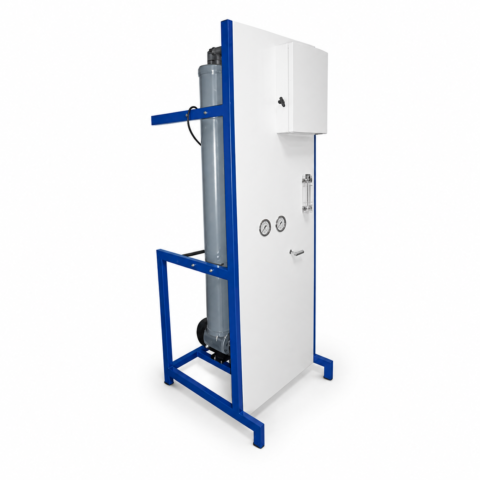
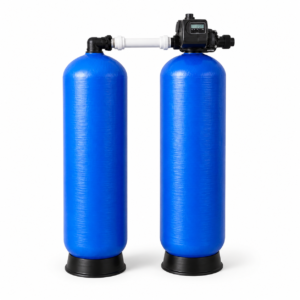
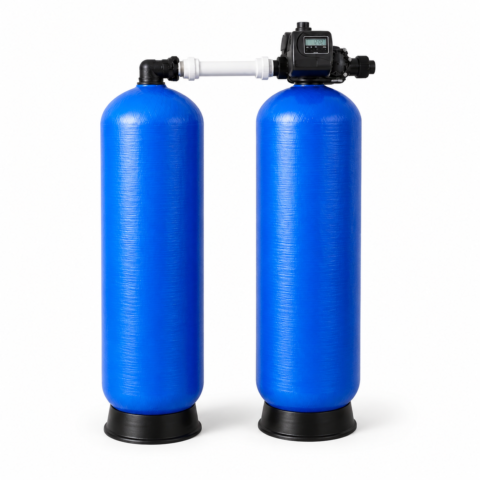
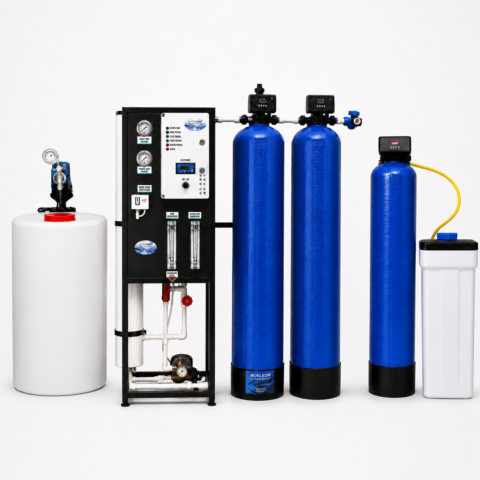
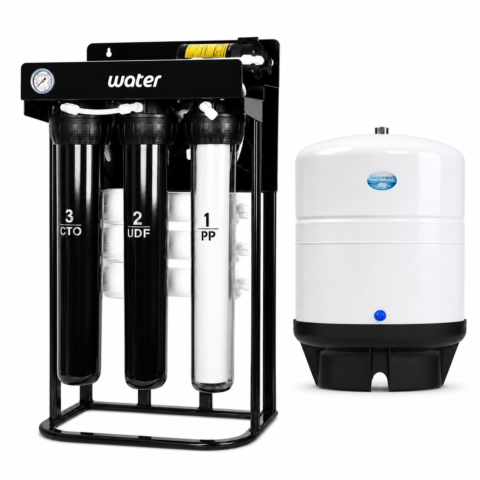
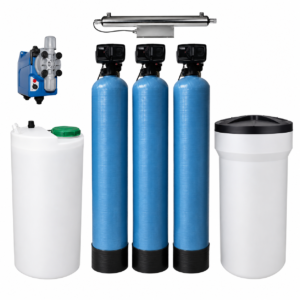
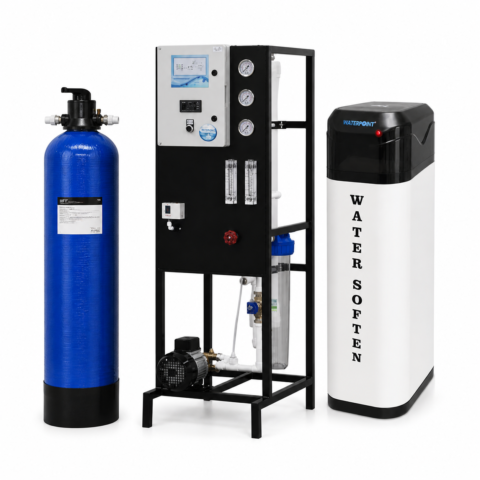
Built for these needs, deionised pure water systems are sized from the laboratory’s daily consumption and the purity class aimed for.
Medical, Dental and Healthcare Applications
On the healthcare side, pure water appears as a water quality requirement in autoclave feed, instrument rinsing and preparing medical equipment. The minerals in water form deposits in steam-producing machines, leave residue on the surfaces of sensitive equipment and shorten equipment life.
In a medical setting, the uses of pure water are directly about the reliability of equipment and processes. Autoclaves work with steam; if the water fed to them contains minerals, those minerals stay inside the machine as solid deposits during evaporation. Over time the heating surfaces are coated, valves block and the machine cannot produce the performance expected. Medical pure water is needed first of all for that reason: steam quality cannot be independent of water quality.
In dental clinics, unit waterlines, rinsing intraoral instruments and maintaining handpieces carry a similar sensitivity. In advanced applications such as dialysis, water quality is defined in detail in the relevant health standards and accepted as an inseparable part of the process. In these fields the subject is not a preference but a defined requirement.
The common denominator on the healthcare side is this: water is the invisible component of the process, and when its quality falls the effect returns as equipment failure, residue and repeated maintenance. Medical applications therefore always sit high on the list of uses of pure water.
Cosmetics and Personal Care Manufacturing
In cosmetics manufacturing, water is the main component of the formulation; in many products it is the raw material present in the highest proportion. The ions and minerals in the water upset emulsion stability, weaken the effectiveness of preservative systems and shorten the shelf life of the product. Without purifying the production water, a consistent formulation cannot be achieved.
In a cream, lotion or shampoo formulation, water is usually the first ingredient. That means every fluctuation in the quality of the water is carried straight into the product. Cosmetics manufacturing is therefore among the uses of pure water at the very heart of formulation: two batches made to the same recipe can give different results with different water qualities.
The technical side of the problem works at several levels. Hardness ions such as calcium and magnesium interact with some surfactants and set the stage for an emulsion separating. Metal ions can cause unwanted changes in fragrance and colour components. Water that is not microbiologically controlled raises the load on the preservative system and causes problems in product safety testing.
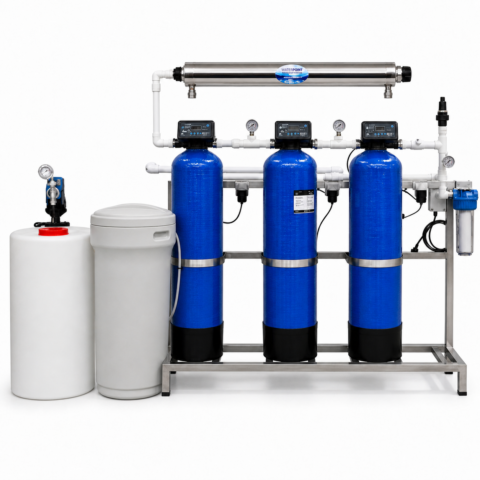
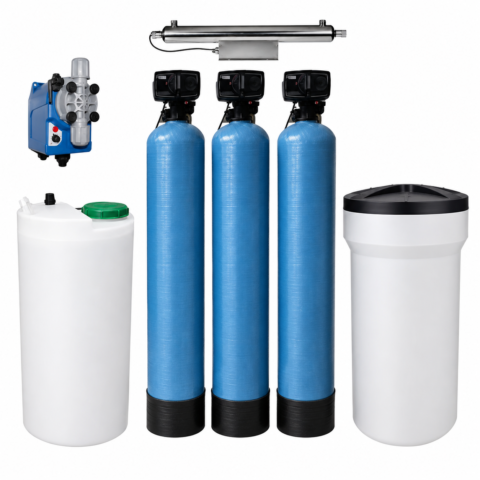
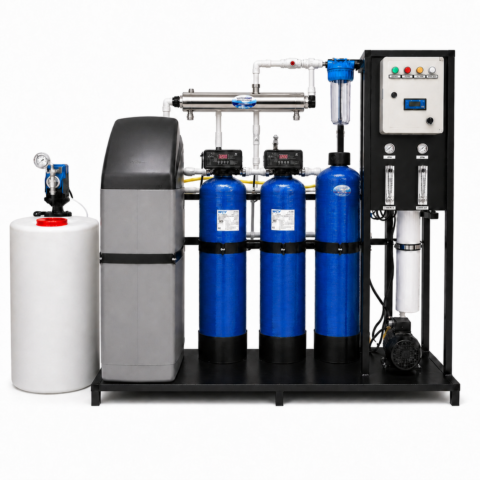
In cosmetics plants, therefore, the water line is built as a complete system of pre-treatment, reverse osmosis and deionisation stages. For medium-scale production, semi-industrial pure water systems offer a balanced solution in both capacity and investment.
Food and Beverage
In food and beverage production, water determines taste, clarity and the consistency of the process. Minerals in the water change the flavour profile of the product, create cloudiness in drinks and lead to limescale build-up on equipment. Purified water is the guarantee of the same taste and the same quality in every batch.
In beverage production, water is the product itself; in soft drinks, fruit juice and ice its proportion is unquestionably the highest. A trace of chlorine spoils the taste, iron leaves a metallic feel, and hardness affects both taste and appearance. Food and beverage uses of pure water are therefore tied directly to product quality: consistent taste is possible only with consistent water.
On the process side the picture is industrial. Steam boilers, pasteurisation lines and bottle and tank washing systems run on water continuously. Hard water deposits limescale in those lines; heat transfer falls, energy consumption rises and cleaning the surfaces that matter for hygiene becomes harder. Water droplets drying after washing leave marks on bottles and equipment because of their mineral content.
Two separate water qualities are therefore managed together in a food business: high purity for the water going into the product, and controlled hardness and mineral balance for process and washing water. The build of the system is engineered around the type of production and the flow.
Let’s establish the purity level your production needs together
You can consult the Water Point expert team to plan a pure water build suited to your sector, your daily consumption and the quality you are aiming for.
See the Pure Water SolutionsElectronics, Paint, Coating and Industrial Processes
In industrial processes, pure water is needed to leave no marks or residue on a surface, to preserve coating quality and to free boiler and cooling lines of mineral load. Ions in the water create a conductivity risk on a circuit board, a surface defect in paint, and scale and lost efficiency in a boiler.
In electronics manufacturing the job of water is rinsing; but the quality of that rinse can decide whether the product works. An ordinary drop of water drying on a circuit board leaves a conductive mineral trace behind. On sensitive circuits that trace can create unwanted conduction paths and cause the product to fail. On the electronics side, therefore, the uses of pure water concentrate in the final and most critical rinsing steps of production.
The same logic applies in paint and coating. When surface preparation baths, phosphating lines and final rinse waters contain minerals, paint adhesion weakens, visible defects form on the surface and coating thickness becomes inconsistent. Industrial process water quality is directly related to the surface quality of the finished product.
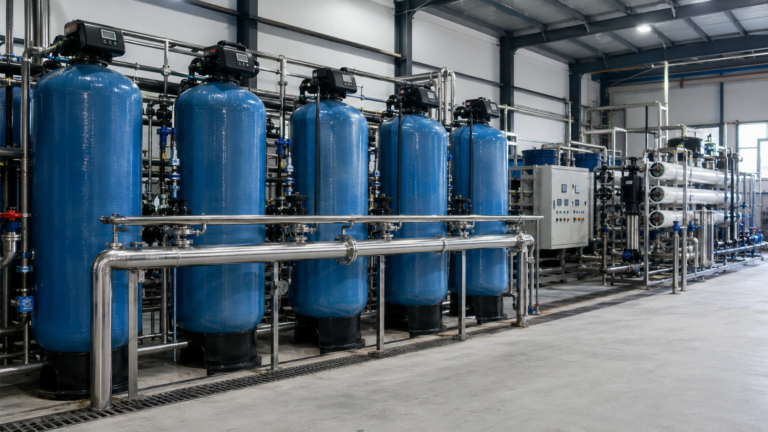
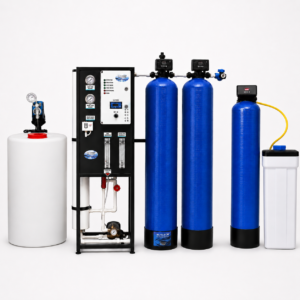
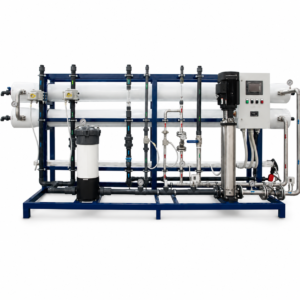
On the boiler and cooling side the problem is efficiency. Mineral-laden water forms scale on heat transfer surfaces; energy consumption rises and the risk of an unplanned stoppage grows. In high-flow plants, purified feed water has therefore become standard. For needs at that scale, industrial-scale deionised water systems are sized project by project.
The common denominator is this: water is not an “auxiliary material” but a production input in its own right. In every sector among the uses of pure water, the content of the water shows one to one in the quality of the product and the life of the equipment.
Laboratory
The highest purity class is needed for accuracy and repeatability of analysis.
Medical
Autoclave and instrument feed call for mineral-free water quality.
Cosmetics
Formulation stability and shelf life depend on the purity of the production water.
Food & Beverage
Consistency of taste and process hygiene call for purified water.
Electronics
An ion trace in the final rinse creates a risk of product failure.
Paint & Coating
A flawless surface rests on mineral-free rinse water.
How Is Pure Water Produced?
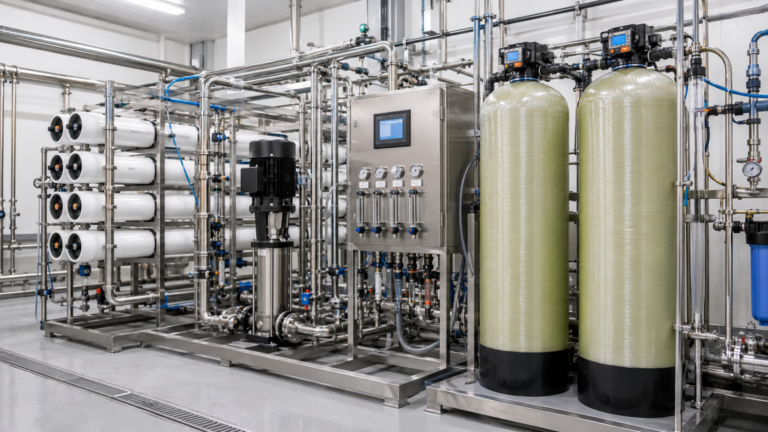
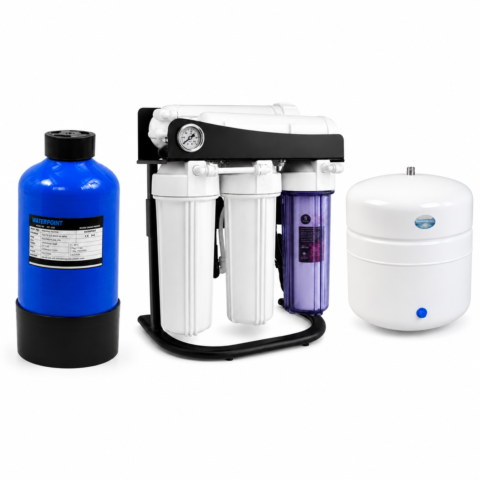
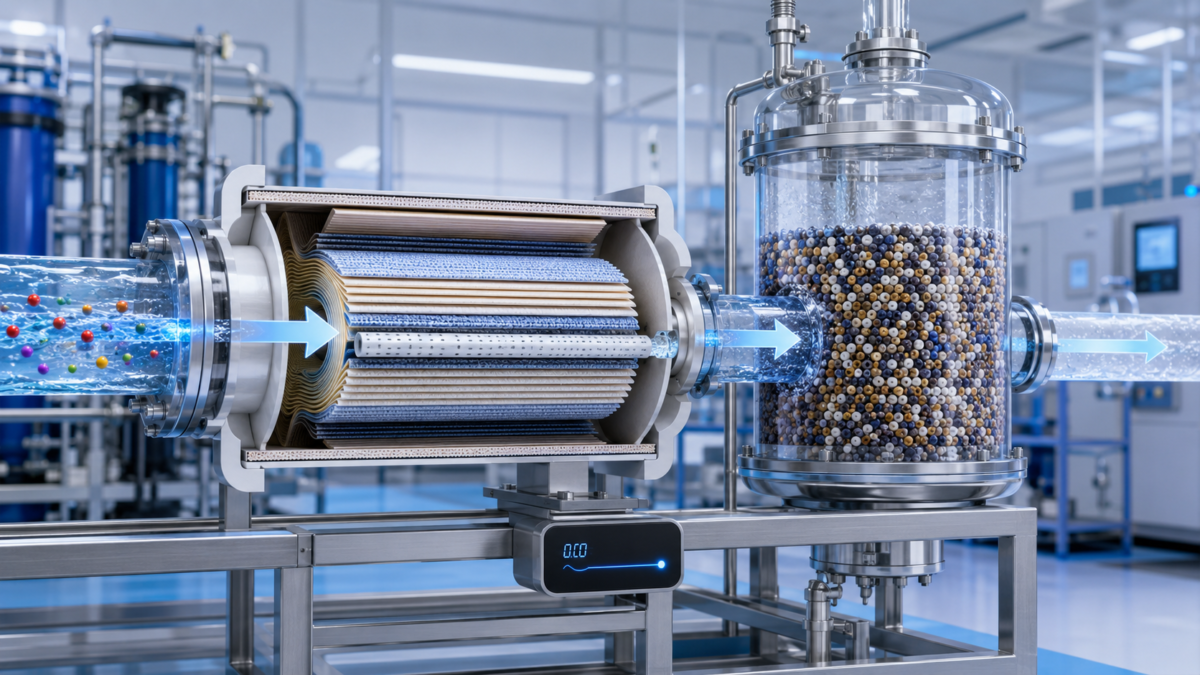
Producing pure water is a staged process: pre-treatment prepares the water first, then reverse osmosis separates most of the dissolved substances, and finally deionisation holds back the remaining ions and brings conductivity to a minimum. That three-part structure produces the quality the uses of pure water require, consistently.
The first link in the process is pre-treatment: sediment and chlorine are removed and the membrane is protected. The second link is the reverse osmosis stage; the water is passed under pressure through a semi-permeable membrane and up to 99% of the dissolved ions are separated. We explained the detail of that mechanism step by step in our article on how reverse osmosis works.
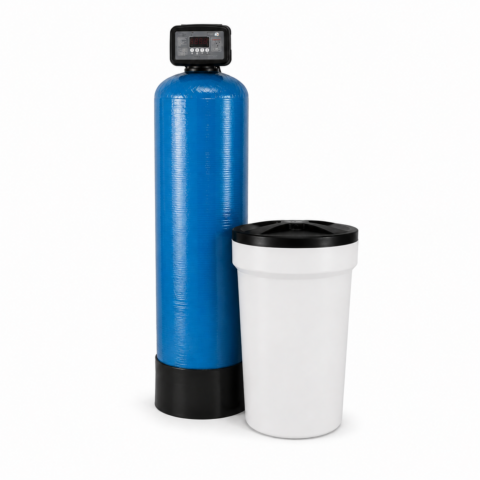
The third link is deionisation. The trace ions left in the water at the membrane outlet are removed by passing it through special resins that hold cations and anions. Working in a mixed-bed arrangement, mixed bed pure water resin is the component that brings conductivity to its lowest level at this final stage. The resin reaches saturation over time and has to be renewed; that means the system calls for planned operation.
Pre-Treatment
Sediment and chlorine are removed; the membrane is protected and system life extended.
Reverse Osmosis
Most of the dissolved ions are separated at the membrane.
Deionisation
The remaining ions are held on the resin; conductivity falls to a minimum.
Which stages are used depends on the purity class aimed for. Some work runs on the reverse osmosis outlet alone, while fields such as laboratory and electronics require the full chain. As the uses of pure water widen, the production build becomes more flexible accordingly.
How Is the Right System Determined?
The right system is established by four questions: which purity class is needed, how much is consumed daily, at which point will the water be used, and is the need continuous or intermittent? Once those are answered, the capacity, the number of stages and the storage build become clear. The system is engineered for the need of each business.
The first question is the purity level; because purity higher than necessary means unnecessary investment, and purity that is too low means process risk. The second is consumption: the daily requirement determines the production capacity and the storage volume of the system. The third is the point of use: will the water feed a single machine or the whole line? The fourth is the pattern of use: is consumption continuous through the day, or are there peaks concentrated at particular hours?
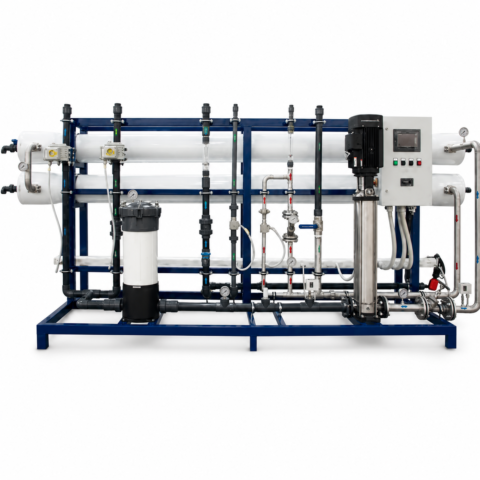
Once those four headings are clear, your place among the uses of pure water and the class of system you need emerge on their own. A compact unit is enough for a small laboratory, while a plant running three shifts needs a high-flow build with storage. To see the general picture, a comparison can be made across pure water systems of different capacities; the final sizing is done from the water analysis and consumption data.
The idea that “the purest water is the best” is not always right. Purity higher than necessary means extra investment, more delicate operation and higher consumable costs. The right aim is to establish the purity class your work requires and build the system for it.
Frequently Asked Questions
In which sectors are the uses of pure water most concentrated?
Laboratory and analysis, medical and dental applications, cosmetics manufacturing, food and beverage, electronics and paint and coating lead the way. What they have in common is this: in all of them the content of the water directly affects the quality of the product or the outcome of the process.
Why is pure water needed instead of normal water?
Normal water carries dissolved minerals and ions. In sensitive processes that content creates problems of residue, marks, conductivity and stability. Pure water removes that variability; it gives the same predictable result in every batch, every analysis and every rinse.
Are pure water and deionised water the same thing?
Deionised water is the kind of pure water produced by ion exchange. Pure water is the general target; deionisation is the common technology for reaching it. In practice most systems use reverse osmosis and deionisation together to reach the purity class wanted.
Does every business need the same level of purity?
No. The purity needed varies with how critical the work is. The top class is needed in a laboratory, while a more general class may be enough for process washing. Before choosing a system, therefore, which purity class is needed for which application should be made clear.
Does a pure water production system need maintenance?
Yes, planned but manageable maintenance. The pre-filters and the membrane are checked periodically; the deionisation resin is renewed when it reaches saturation. Following conductivity regularly is the most practical way of confirming that the system is still producing the purity aimed for.
What determines the capacity of the system?
The purity class needed, daily consumption, the number of points of use and the pattern of consumption are assessed together. Sharp peaks in demand point to a build with storage, continuous consumption to high production capacity. The final sizing is done from the water analysis and consumption data.
Conclusion
The uses of pure water bring together sectors that look unrelated at first glance around a single truth: the invisible ions in water turn into visible problems in critical processes. A skewed analysis in a laboratory, a formulation separating in cosmetics, a faulty board in electronics, a changed taste in food and scale building in a boiler — behind all of them there is often the same cause. The answer is common too: establish the purity class the work requires and build a system that produces that class consistently. The staged structure in which reverse osmosis and deionisation work together is the proven answer to that need. If your own sector is among the uses of pure water, the first step is clear: have your water analysed and define your need with a specialist.
Let’s plan the purity and capacity your sector needs together
To establish the purity class and daily capacity your application requires, you can consult the Water Point specialists and have your system engineered for your need.
Discover the Pure Water System That Suits You