
Water Treatment in Car Washes: Pure Water for Spot-Free Drying

The car was washed carefully, the foam sat perfectly, the rinse was faultless. Yet a few minutes later, as the surface dries, white marks appear. Staff have to hand-dry every car, the job takes longer, and the customer comes back saying the car was left marked. The source of that picture is not the washing technique or the product used but the content of the water — and the answer runs through a car wash water treatment build.
In this guide we take up how water spotting forms, how hard water lowers operating efficiency, what spot-free rinsing means technically, and which treatment stages deliver that result. The aim is to make the source of a recurring quality complaint visible and to show the right solution.
What Causes the White Marks Left on a Car?
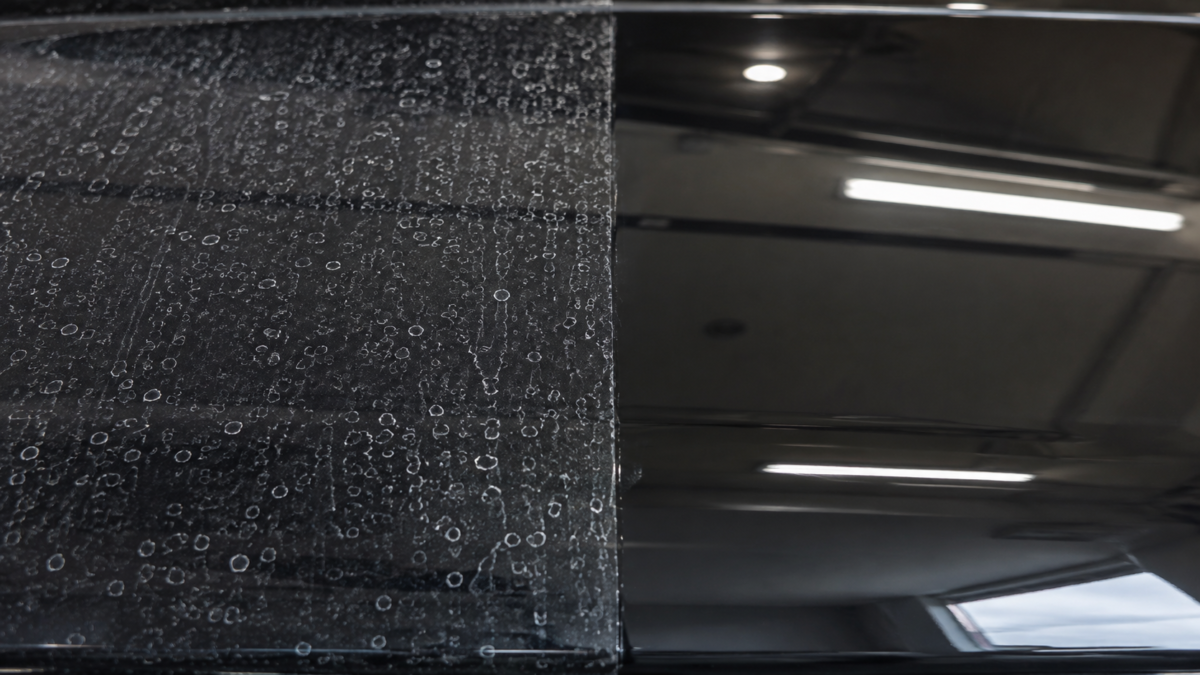
When water dries on a surface, only the water evaporates; the calcium, magnesium and other minerals dissolved in it stay behind. That residue shows as a white mark on paint and glass. The spot is not a cleaning error but a direct result of the mineral content of the water.
The mechanism is extremely simple, and that is exactly why the answer is clear too. A drop of water left on a car surface evaporates over time; what it leaves behind is the solids that were dissolved in it. The more minerals the drop carries, the more obvious the mark.
Two businesses working with the same washing technique can therefore get completely different results because of their water sources. Where the hardness and dissolved solids load of the water is high, even the best wash ends in spotting.
A car wash water treatment system comes in at exactly this point: by lowering the mineral load of the water used in the final rinse, it provides water that leaves no trace behind when it dries.
How Does Water Spotting Form?
As long as the drop stays on the surface, evaporation continues and the mineral concentration rises. A hot surface and sunlight accelerate the process; because the water goes off faster, the residue builds up more densely. On dark paint, on glass and on wheels the mark shows far more clearly.
Temperature is the factor felt most on site. On cars washed in summer and in the sun, spotting rises markedly, because the water dries and leaves its minerals before staff have a chance to towel it off.
Visibility varies with the surface too:
Dark Paint
On black and navy surfaces the white residue shows at the highest contrast.
Glass Surfaces
On the windscreen and side windows the marks stand out further in the light while driving.
Wheels
On polished and chrome surfaces the residue is both visible and hard to clean.
Chrome Detailing
On trim and mouldings, spotting lowers the overall look of the car directly.
Mirror Surfaces
In hard-to-reach areas drying cannot be done fully and the mark looks permanent.
Door Shuts
Drops of water collecting there leave streaks as they dry.
Add time pressure to that picture. In a busy business it is not possible to hand-dry every car perfectly; beyond a certain point you have to choose between speed and quality. A properly built car wash water treatment system removes that choice.
There is one more detail: spotting is not only a cosmetic problem. Mineral residue left on the surface for a long time, in the sun in particular, can harden into a layer that is harder to remove. That means extra labour on the detailing side.
Why Is Hard Water a Problem in a Car Wash?
Hard water creates problems on two fronts. The first is visible: limescale marks and residue. The second is operational; in hard water shampoo and chemicals foam less, consumption rises, drying takes longer and the workload on staff rises markedly.
Chemical efficiency goes unnoticed in most businesses. Hard water interacts with the active ingredients of cleaning products and lowers their performance. The result: using more product to get the same clean.
That is an item that shows up directly in consumables and builds up quietly through the year. The business says “chemical consumption has gone up” but usually looks for the reason in the product; the source, though, is the water.
The concrete effects hard water has on a car wash operation are these:
- Rising chemical consumption: Shampoos and cleaning products do not give the foam expected and more is used.
- Longer drying: Extra drying time is needed for every car; daily capacity falls.
- Limescale on equipment: Pressure washers, nozzles and lines are worn by limescale build-up.
- Requests to rewash: Cars handed over marked come back; both time and reputation are lost.
- Load on staff: Hand drying raises the labour needed and creates a bottleneck at busy times.
We took up a detailed framework on the source of hardness and the ways of controlling it in our softening system selection guide article. On the car wash side, hardness is the first link that has to be dealt with.
What Is Spot-Free Rinsing?
Spot-free rinsing means doing the final rinse with water largely freed of its minerals. Because there is no residue left behind when the water dries, no mark forms on the surface. The car can then dry on its own, and the need for hand drying falls markedly.
The logic is direct: if minerals leave the spot, then removing them from the water removes the spot. The answer therefore lies not in the washing technique but in the quality of the final rinse water.
In practice this approach is added to the end of the wash chain as a separate line. Normal (or softened) water is used in the main wash and foam stages, while the final rinse is made from the treated water line. That keeps water consumption under control and makes the result consistent.
The gain for the business runs two ways. The first is quality: every car is handed over to the same standard. The second is speed: the drying stage shortens, the time a car takes to leave the line falls and daily capacity rises.
Using treated water through the whole wash is unnecessary and raises the cost. The right build is a separate line that brings treated water in only at the final rinse. A car wash water treatment project is designed on that logic.
Which Stages Does the System Contain?
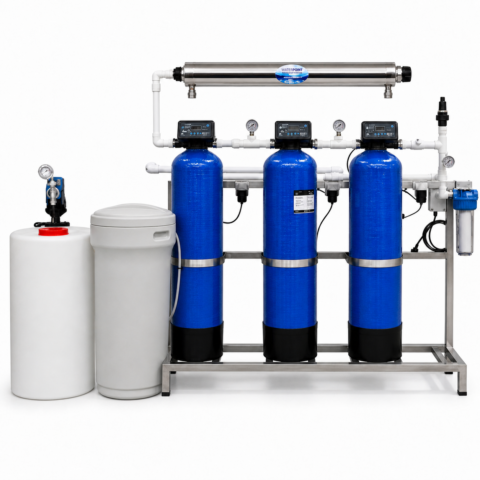
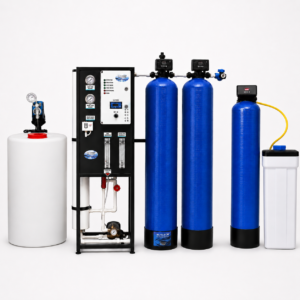
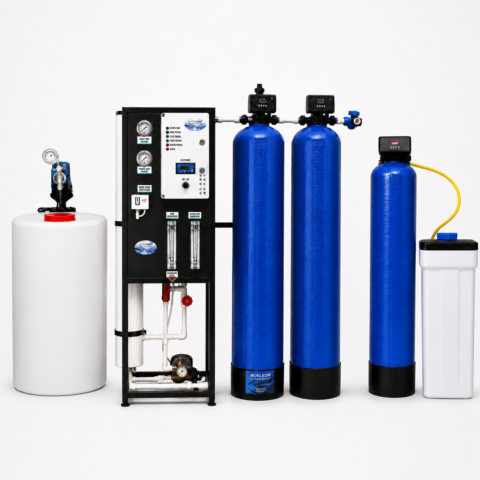
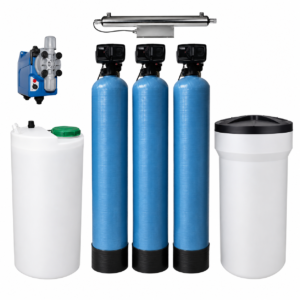
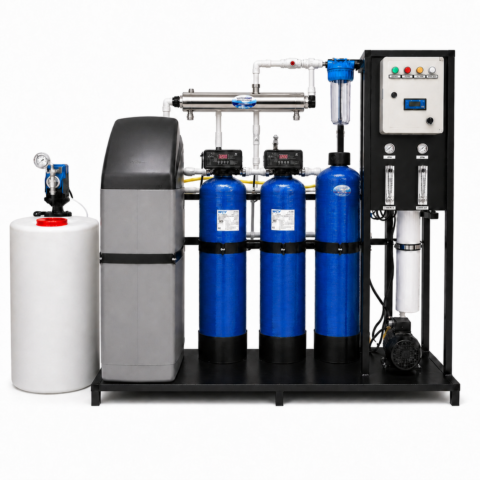
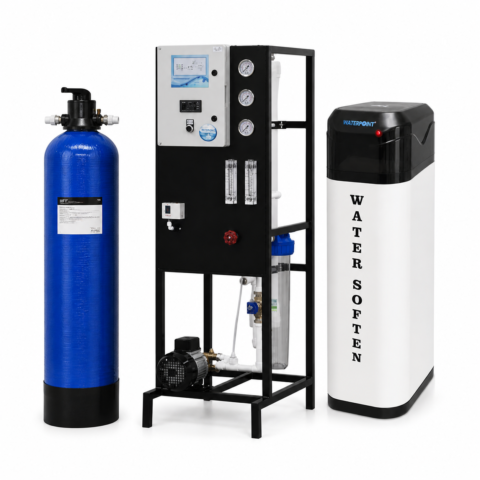
A typical build consists of these stages: sediment filtration, activated carbon, water softening, reverse osmosis and, where needed, deionisation. Each stage targets a different problem and protects the next. Which stages are needed is established from the water analysis result.
The table below matches the problem seen on site with the right stage:
| The Problem Identified | The Stage That Handles It | The Result It Gives |
|---|---|---|
| Sediment, sand, rust | Pre-filtration | Holds back particles, protects nozzles and the line |
| Chlorine, odour, organic load | Activated carbon | Protects the membrane, reduces chemical interaction |
| Hardness and limescale marks | Water softening | Prevents limescale build-up, raises chemical efficiency |
| Dissolved solids (the source of spotting) | Reverse osmosis | Produces the water needed for spot-free rinsing |
| Trace ion residue | Deionisation | The highest purity; preferred in detailing work |
The first link in the chain is pre-filtration; it protects the stages behind it from particle load. Used for that purpose, industrial-type pre-filter sets free the water entering the system of coarse dirt.
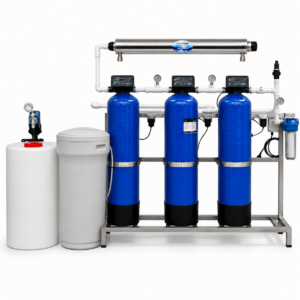
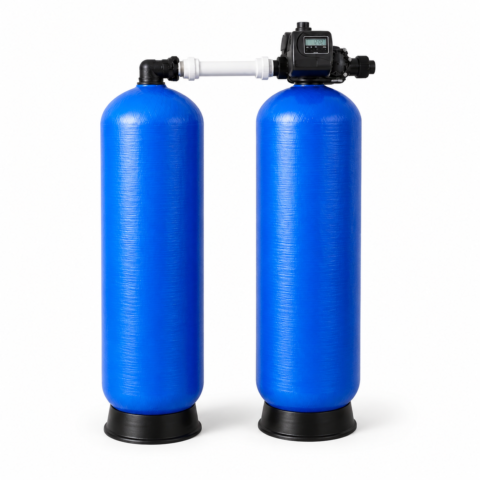
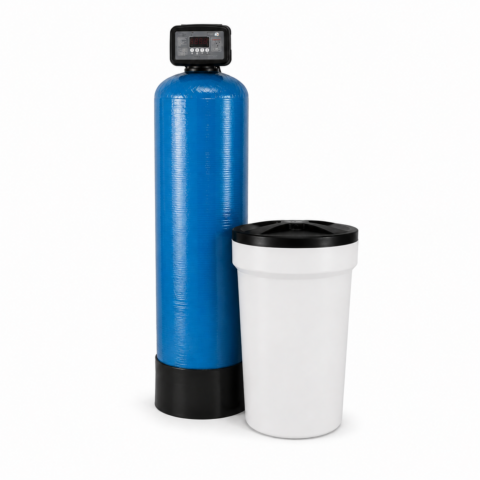
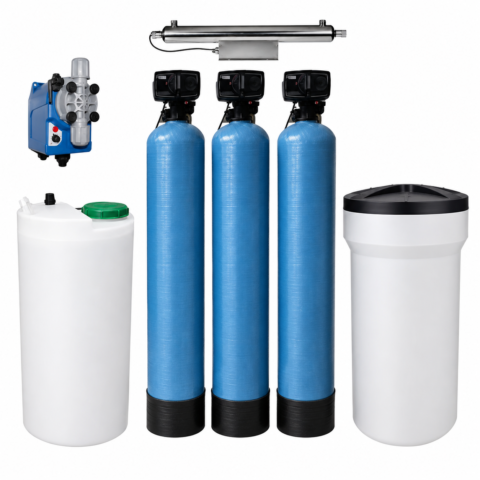
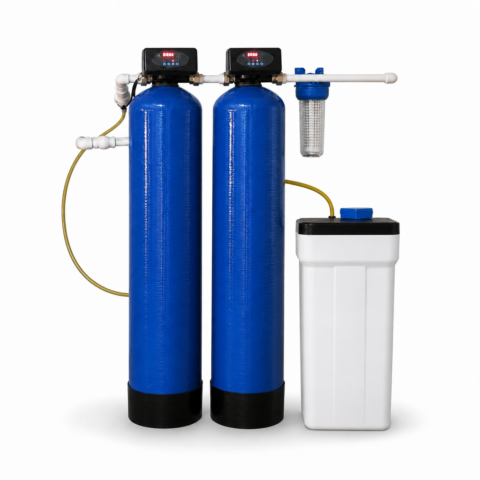
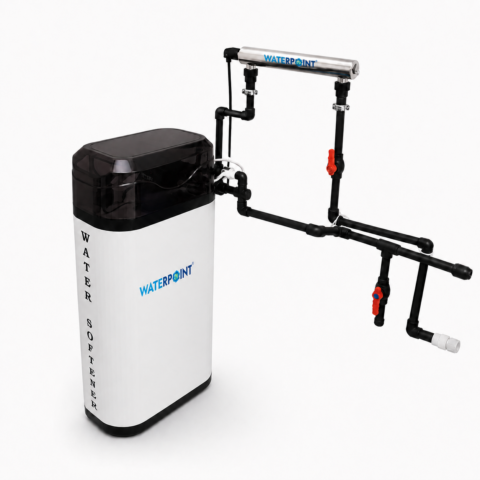
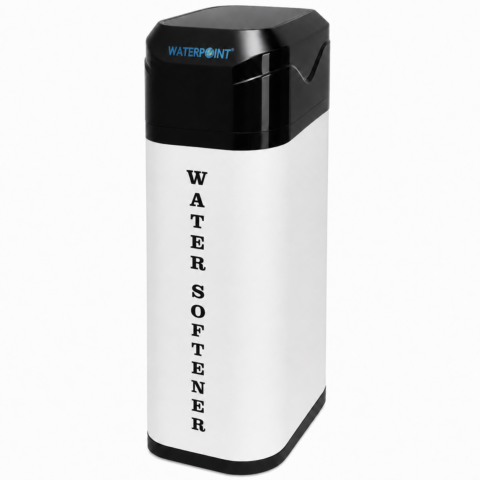
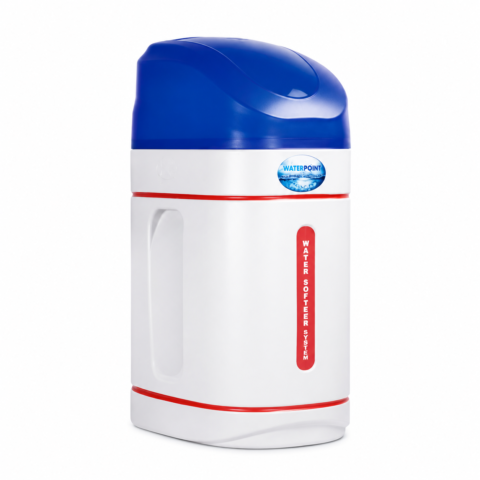
On the hardness side the softening stage comes in. In plants running continuously, industrial softening systems are preferred for that stage; in busy businesses where interruption is unacceptable, twin-tank tandem builds are used, one tank staying in service while the other regenerates.
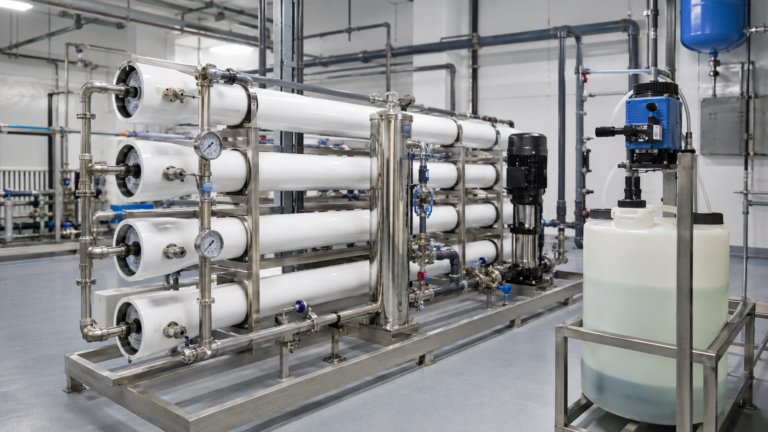
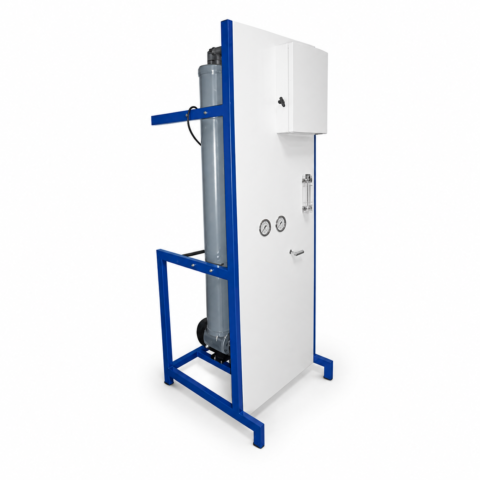
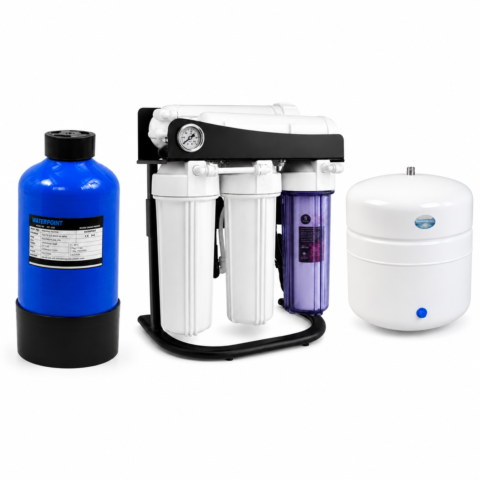
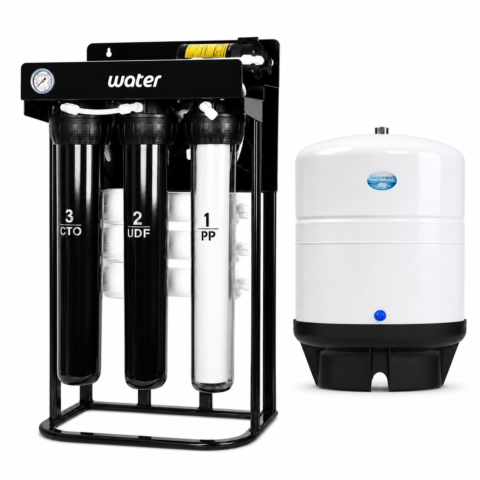
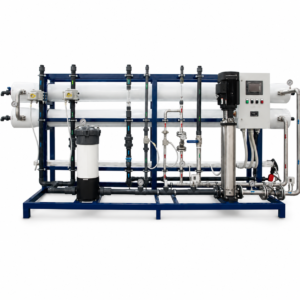
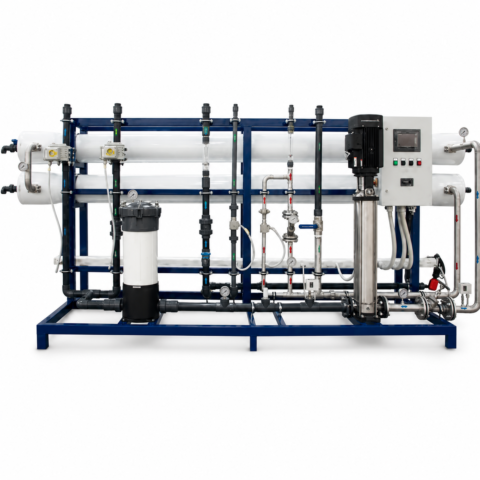
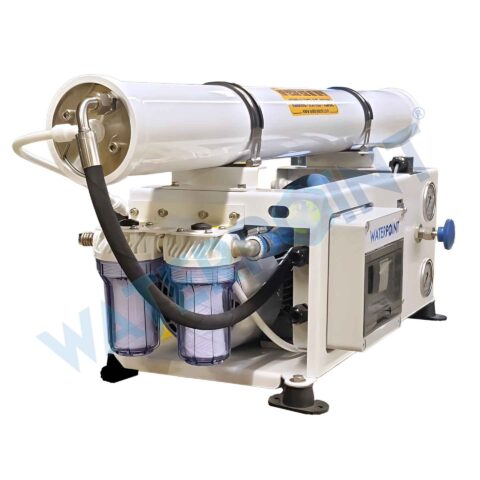
The stage that actually delivers a spot-free result is reverse osmosis. For needs at this scale, high-capacity reverse osmosis systems are sized from the daily number of cars and the peak-hour load.
Is Softening Enough, or Is Reverse Osmosis Essential?
Softening prevents limescale build-up and raises chemical efficiency; but dissolved solids remain in the water. On its own it therefore does not give a spot-free result. A rinse that leaves no trace at all calls for reverse osmosis or deionised water at the final stage. The most efficient build uses the two together.
That distinction is the source of the disappointment businesses meet most often. A softening system is installed, the limescale problem falls markedly, chemical consumption improves — but the spots do not disappear entirely. The reason is simple: softening takes the hardness ions out of the water but leaves sodium in their place. The water still carries dissolved solids and leaves a trace when it dries.
Limescale and chemical efficiency
Removes hardness ions; protects equipment and improves product performance.
- Prevents limescale build-up
- Raises shampoo foaming
- Lowers chemical consumption
- On its own it does not end spotting
Spot-free rinsing
Separates up to 99% of the dissolved solids load and produces water that leaves no trace.
- Provides suitable water for the final rinse
- Allows the car to dry on its own
- Shortens the drying time
- It works together with pre-treatment
The right build uses the two together, and there is a technical reason for it: the softening stage protects the reverse osmosis membrane from limescale build-up and extends its life. Softening is therefore needed not only for the quality of the wash but for the system itself.
In a car wash water treatment project, then, the question should not be “which one” but “in which order”. When the chain is arranged correctly, both a spot-free result is achieved and the equipment is protected.
Installing softening alone and expecting a spot-free result is a widespread error. Equally, installing reverse osmosis directly without pre-treatment wears the membrane out quickly. The two stages complement one another.
Final Rinsing with Deionised Water
Deionised water is water in which dissolved ions have been brought to the lowest level by ion exchange. In work where the highest surface quality is expected — detailing, preparation before a ceramic coating, glass applications — the final rinse is made with this water. It is positioned as a stage after the reverse osmosis outlet.
In a standard wash operation the reverse osmosis outlet is usually enough. On the detailing side, though, expectations rise: no trace at all should be left on the surface, and a completely neutral surface is needed before coating. Purity is then taken one stage further.
We took up how deionisation works and which stages it consists of in detail in our deionised water article. We looked at which sectors prefer this water and why in our piece on the uses of pure water.
On the application side, the industrial deionised pure water systems built for this stage takes the water from the reverse osmosis outlet to a higher purity. The build is planned around the surface quality the site is aiming for.
Balance is needed here: not every business needs this stage. For a site offering a standard wash service the reverse osmosis outlet gives an adequate result, while for a business offering premium detailing, deionisation can be what makes the difference. The decision follows the standard of the service offered.
How Is the System Sized?
Sizing is done by assessing the number of cars washed daily, the peak-hour load, the total water consumption of the site and the storage tank required, together. The system should be chosen not for the average but for demand at the busiest hour. The final capacity is engineered from the water analysis and the number of cars.
Demand at a car wash is not spread evenly through the day. Weekends, the end of the working day and periods after a change in the weather multiply the load. A system chosen on the average falls short at exactly those hours.
A storage tank is therefore a critical component in most installations. The system produces through the day, the treated water produced is collected in the tank, and that reserve is drawn on at the peak hour. Instantaneous demand is thereby met independently of the production capacity.
The headings to assess are these:
-
Daily Number of Cars
The number of cars on an average day and on the busiest day is established; it forms the basis of the total water requirement.
-
Peak-Hour Load
How many lines run at the same time? That is the real load the system has to meet.
-
Type of Service
Standard wash or detailing? The surface quality aimed for determines the stage build.
-
Storage Requirement
The tank capacity is planned for the treated water to be used at the peak hour.
-
Inlet Water Quality
The hardness and dissolved solids load directly affect the number of stages and the scale of the system.
-
Space and Infrastructure
The equipment layout, drain connection and power supply should be confirmed in advance.
We took up the general logic of a capacity calculation and the sizing criteria in detail in a separate article; you can read the approach in our industrial-type system selection guide. Every car wash water treatment installation is engineered for the site from these data.
For anyone wanting to compare the water use profiles of different types of site, the US Environmental Protection Agency’s water use by facility type resource offers a general framework on sectoral consumption.
Let’s establish the rinsing build that suits your site
You can look at the solutions to clarify which stages you need from your daily number of cars and your water analysis.
See the Reverse Osmosis Systems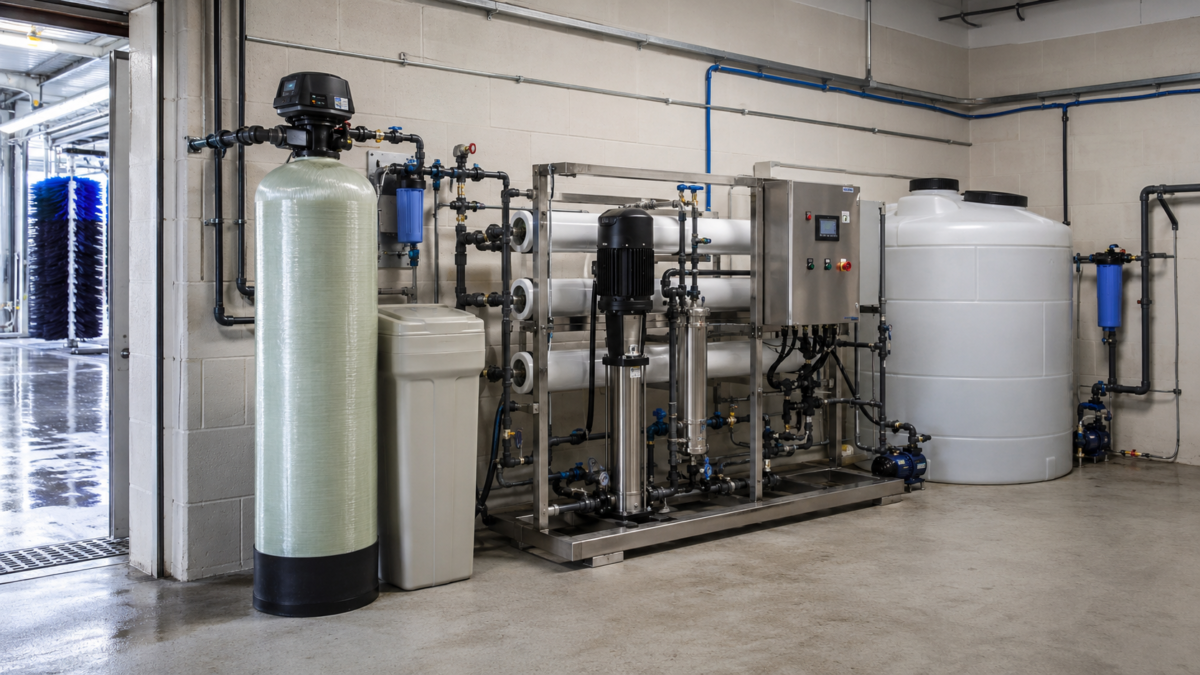
Water Recovery and Consumption
A car wash is a water-intensive business. Treating the wash water through suitable stages and reusing it lowers the cost of buying fresh water. But that is a different subject from the final rinse water; the recovery line and the treated rinse water are planned separately.
Separating the two headings matters. Final rinse water is produced with a quality target; recovery is built with a cost and sustainability target. Both can be present at a site but they are designed as separate lines.
Recovered water is generally used at stages such as the pre-wash and the underbody wash, while the treated water line serves the final rinse. That separation protects quality and economy together.
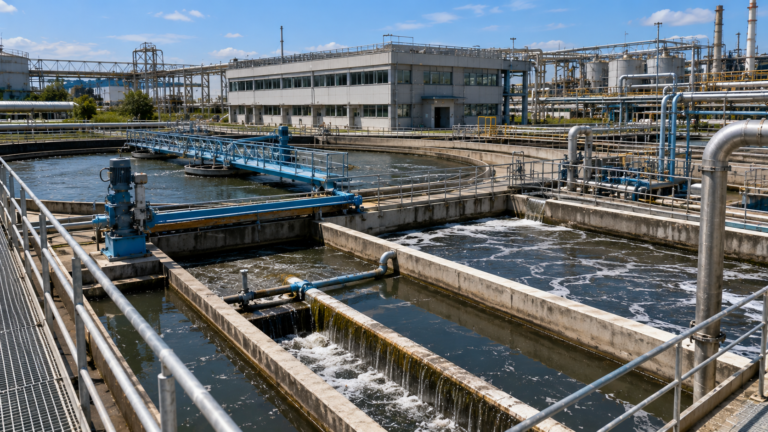
We took up how the wastewater side is handled, which stages it consists of and how recovery is built in detail in our wastewater treatment article; for car wash sites this is a separate engineering heading.
In newly built sites, planning the recovery line at the design stage is far more efficient in both infrastructure and cost. In existing sites, a phased build can be considered after a survey.
The Business Gain: Time, Chemicals and Quality
A properly built system brings gains in three areas: drying time shortens and daily capacity rises, chemical consumption falls, and rewash complaints diminish. To those can be added longer equipment life and higher customer satisfaction.
The most concrete gain is time. With spot-free rinsing the car can dry on its own; staff do not have to dry every surface one by one. That means less time per car and more cars handled with the same number of staff.
The second gain is on the chemical side. In softened water, cleaning products perform as expected; less product is used to get the same result. That is an improvement in a cost item that repeats constantly.
Shorter Times
The drying stage lightens; the time spent per car falls.
Higher Capacity
More cars are handled with the same team; queues at peak hours shorten.
Lower Chemical Use
Because product efficiency rises, the amount consumed falls markedly.
Protected Equipment
Pressure washers and nozzles are protected from limescale build-up.
Fewer Complaints
Requests to rewash fall; both time and reputation are protected.
Consistent Quality
Every car is handed over to the same standard; the result becomes predictable.
The third and perhaps most valuable gain is reputation. A car handed over marked is not only repeat work; it lowers the perception of quality in the customer’s eyes. A consistent result, on the other hand, creates loyal customers.
The size of these gains varies from site to site; the daily number of cars, the hardness of the inlet water and the existing operation are decisive. Giving a percentage promise here would not be right. The return on a car wash water treatment investment should be calculated from the site’s own data.
The same sensitivity applies to other businesses where water spotting is a problem. Firms offering glass and surface cleaning services, fleet washing operations and some maintenance sites use treated rinse water on the same logic.
Frequently Asked Questions
What causes the white marks left on a car?
When water dries on a surface, only the water evaporates; the dissolved minerals in it stay behind and show as white marks. The spot is not a washing error but a result of the mineral content of the water used.
Does a softener end spotting completely?
No. Softening prevents limescale build-up and raises chemical efficiency; but dissolved solids remain in the water. A result that leaves no trace at all calls for reverse osmosis or deionised water at the final rinse.
Should I use treated water through the whole wash?
It is not necessary and raises the cost for nothing. The right build is a separate line that brings treated water in only at the final rinse. Softened water gives an adequate result at the main wash stages.
At what capacity should the system be chosen?
The daily number of cars, the peak-hour load and the inlet water quality are assessed together. The system should be chosen not for the average but for demand at the busiest hour. The storage tank is a decisive component in meeting instantaneous demand.
Is an extra stage needed for detailing?
In a standard wash the reverse osmosis outlet is usually enough. In work where the highest surface quality is expected, such as detailing and preparation before coating, a deionisation stage is added and purity is taken one step further.
How much maintenance does the system need?
Regular but manageable maintenance is needed: renewing the pre-filters, watching the salt in the softening stage and monitoring membrane performance. Planned maintenance secures the continuity of the system and the consistency of the spot-free result.
How is the return on the investment calculated?
The shortening of drying time, the fall in chemical consumption, the loss from rewashing and equipment life are assessed together. Because these items vary from site to site, the calculation should be made with the business’s own car numbers and water data.
Conclusion
The white marks left on a car surface are not a washing error but a direct result of the dissolved minerals the water carries. Hard water also lowers chemical efficiency, lengthens drying and leads to limescale build-up on equipment. The chain of solutions is clear: pre-filtration protects the line, activated carbon safeguards the membrane, softening puts the limescale and chemical side right, and reverse osmosis produces the water needed for a spot-free rinse. In detailing work, where the highest surface quality is expected, a deionisation stage takes it one step further. A properly sized car wash water treatment system both ensures every car is handed over to the same standard and creates concrete gains in time, chemicals and labour.
Let’s plan the spot-free rinse build for your site
To engineer a system suited to your daily number of cars, your peak-hour load and your water analysis, you can get in touch with the Water Point expert team.
Discover the Industrial Solutions