
Freight delivery
New
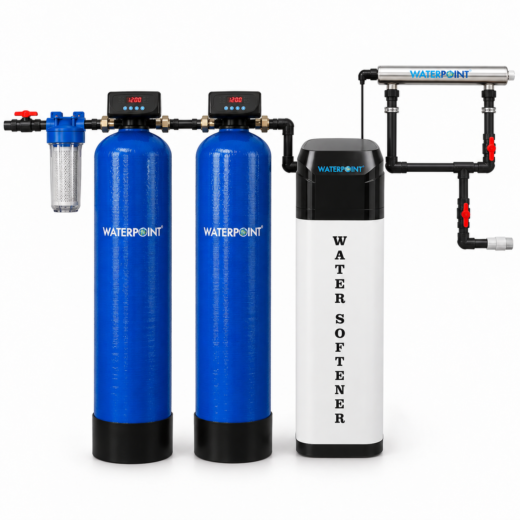
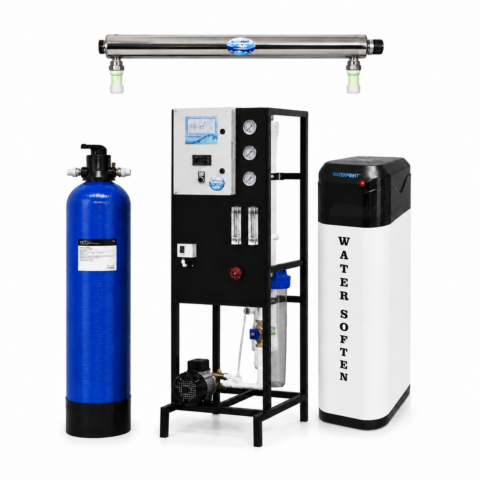
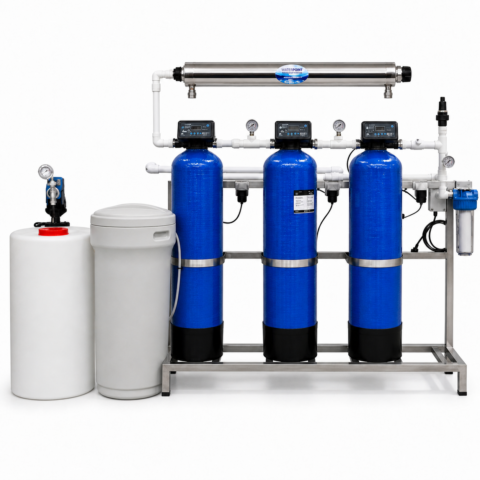
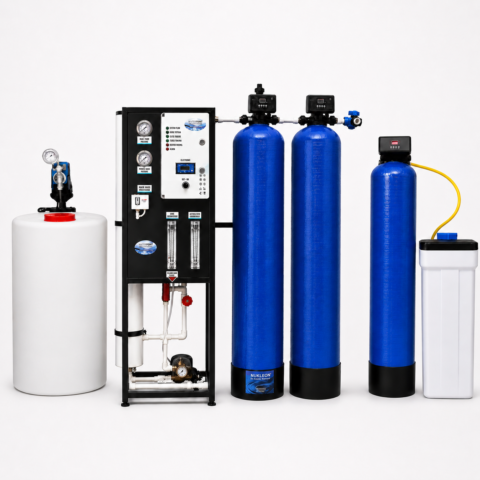
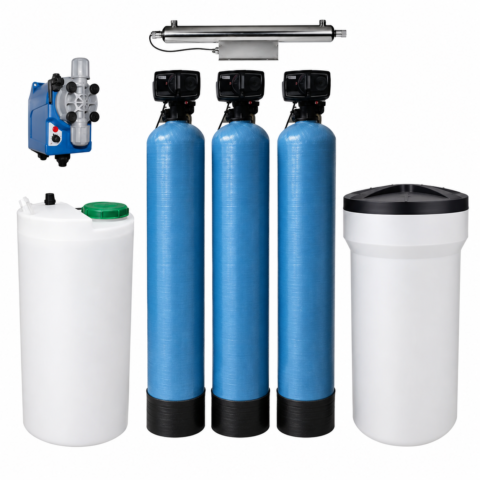
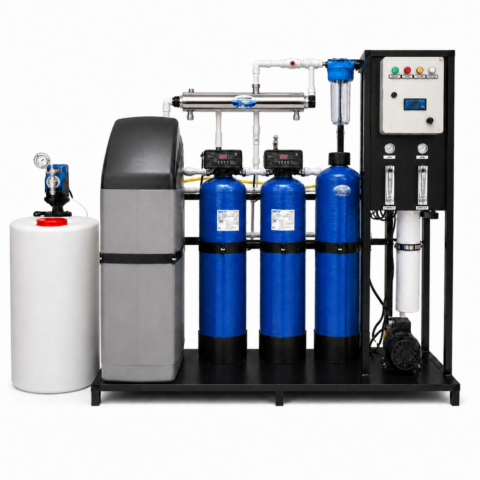
Industrial Water Treatment System 5-10 Tonnes/Day – Sand, Carbon, Softening and UV
5 – 10 Tonnes
Premium Cationic
₺117,644.16
VAT included

Categories
Solutions
Process water, line feed and sizing by flow rate.
Systems and units Industrial Water Treatment Read the guideTreatment that stops limescale and corrosion before they reach the boiler.
Systems and units Water Softeners Read the guidePure water of low conductivity and repeatable quality.
Systems and units Pure Water Systems Read the guideRemoving the salts and sediment that clog drip lines.
Systems and units Well Water Treatment Read the guideThe right hardness for equipment life and drink flavour.
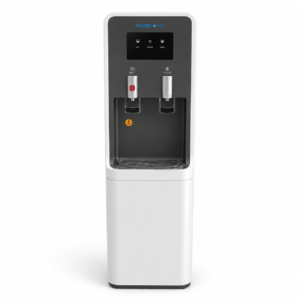
Systems and units Filtered Water Dispensers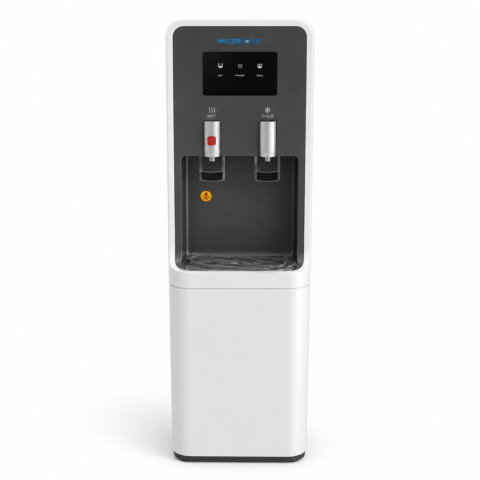 Water Point Filtered Water Dispenser
₺63,723.92
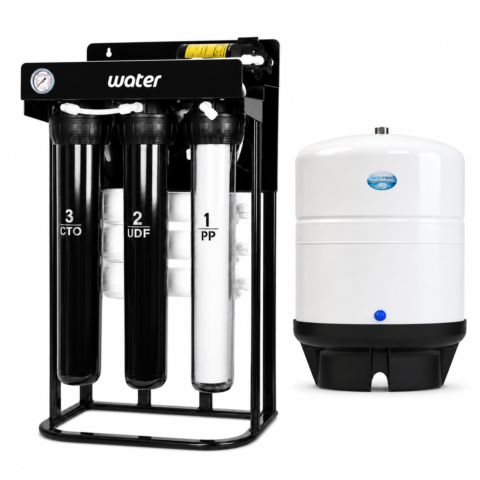 Restaurant Water Purifier, 500 GPD with 40 Litre Tank
₺49,018.40
A main line that filters the water entering your plumbing at a single point.
Systems and units Whole House & Building Inlet Systems Read the guideA staged system for iron, manganese and turbidity.
Systems and units Well Water Treatment Read the guideLow-conductivity rinse water for spot-free drying.
Systems and units Reverse Osmosis Systems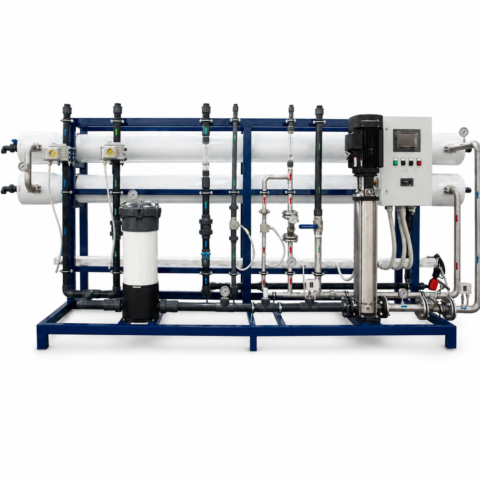 95 Tonne Reverse Osmosis System
₺980,368.00
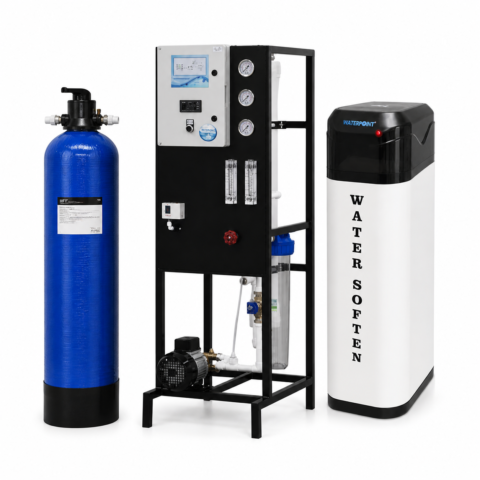 Industrial Deionised Pure Water Unit, 250 L/h
₺220,582.80
The problems hard water causes in hair and skin care.
Systems and units Water Softeners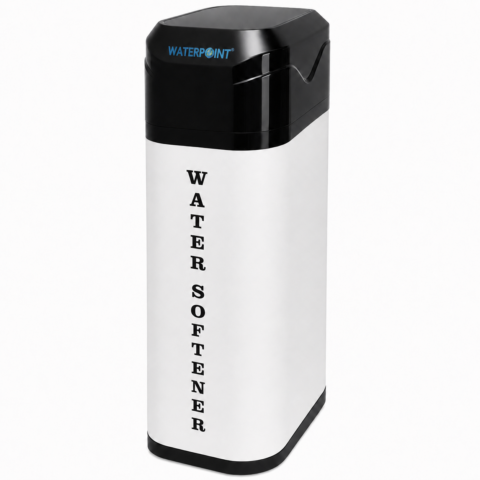 Maxi Cabinet Water Softener, 5 Tonnes/Day
Original price was: ₺49,018.40.₺34,312.88Current price is: ₺34,312.88.
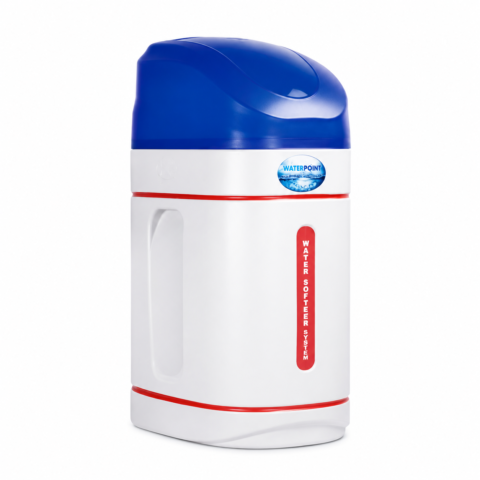 Mini Cabinet Water Softener, 2 Tonnes/Day
₺44,116.56
Drinking water from seawater with high-pressure reverse osmosis.
Systems and units Reverse Osmosis Systems Read the guideCompany
Product Category
Industrial water treatment means systems that continuously deliver the water quality a production process requires. Not every line wants the same quality; the stages are ordered from the raw water analysis, and capacity is chosen against peak flow rather than the daily average.
Filter
The daily treatment capacity stated by the manufacturer.
Not sure which one is right for you?
Industrial water treatment means systems that continuously deliver the water quality a production process requires. Not every line wants the same quality; the stages are ordered from the raw water analysis, and capacity is chosen against peak flow rather than the daily average.
In industrial treatment the first question is not “which unit should we buy” but “where is the water going”. Different lines in the same facility want different qualities, and trying to fit a single system to all of them is both expensive and inefficient.
| Point of Use | Critical Parameter | Typical Configuration |
|---|---|---|
| Steam boiler feed | Hardness must be close to zero | Twin-tank softening + conditioning |
| Cooling tower | Cycles of concentration control | Softening + dosing + blowdown management |
| Production / process water | Conductivity and particles | Pre-treatment + reverse osmosis |
| Rinsing (plating, metal) | Conductivity close to zero | Reverse osmosis + deionisation |
| Laboratory and pharmaceutical | High purity, repeatability | Reverse osmosis + mixed bed |
| Food and beverage | Taste, odour, microbiological control | Carbon + reverse osmosis + UV treatment |
| Greenhouse and agricultural irrigation | Salinity and sodium balance | Reverse osmosis, controlled by blending |
| Seawater (boat, coastal facility) | High salinity | High-pressure seawater reverse osmosis |
This table explains why more than one line is built in the same facility. Feeding the boiler line at laboratory purity is unnecessary cost; feeding the rinse line with softening alone falls short.
Industrial systems are named by their capacity. The tonnes/day or m³/h figure shows what scale of facility a system suits.
The distinction is one of scale and configuration: for standard-capacity, ready-configured solutions look at the Industrial Packaged Systems category; for solutions engineered for a specific facility with automation built around the process, look at this page. The decision is made on measured flow rate and quality requirement, not on a catalogue.
Industrial quotations use two different units, and confusing them leads to serious error.
The right approach is this: first the total daily requirement of the facility is established, then the number of hours over which that requirement will be met is clarified, and the necessary m³/h is calculated. Using a storage tank lets the system run for longer at a lower flow rate, which lowers the initial investment.
In reverse osmosis systems, moreover, production capacity is not fixed: output falls when the water temperature drops, when feed pressure decreases and as the membrane ages. The system must therefore be selected with some margin, not exactly on the calculated requirement. For a first estimate you can use our water treatment capacity calculator.
Water is both a raw material and a cleaning medium. In water that goes into the product, taste and odour decide the outcome; chlorine removal therefore comes first. In bottling and beverage production, reverse osmosis brings conductivity into a set range, after which the target mineral profile is built by blending where needed. On cleaning and rinsing lines hardness becomes critical; hard water leaves spots and limescale on equipment.
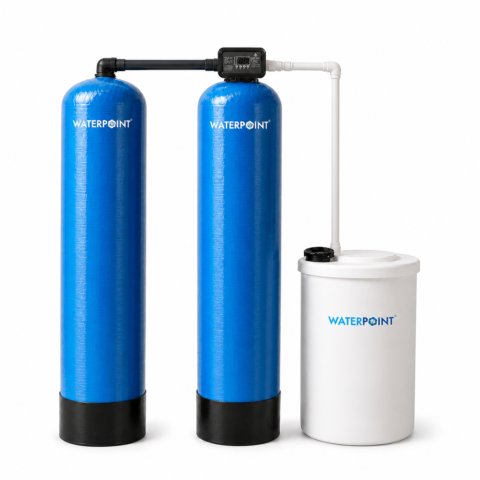
In dye baths, hard water causes colour inconsistency and increases chemical consumption. The same recipe gives a different result in water of different hardness, which means reprocessing and waste. Softening is close to standard in this sector, and twin-tank or header-lateral systems are preferred in high-flow facilities.
Minerals in the rinse water leave drying spots and marks on the surface of the part. Plating quality depends directly on the conductivity of the rinse water. Deionisation is therefore used after reverse osmosis, and outlet conductivity is monitored continuously.
High purity and repeatability are essential. Reverse osmosis on its own is not enough; mixed bed deionisation brings conductivity close to zero. In these applications, measurement and record-keeping are an inseparable part of the system.
In irrigation water, salinity and the sodium balance affect the plant directly. Reverse osmosis lowers salinity, after which the nutrient solution is prepared under control. The aim here is not to purify the water completely but to create a known and repeatable starting point.
The salinity of seawater is far above the operating range of standard reverse osmosis membranes. Seawater treatment systems therefore run at high pressure and with special membranes. In boat applications, space, weight and energy consumption add further constraints.
In industrial facilities, water is a cost item not only at the inlet but at the outlet too. The water leaving the process must meet discharge criteria; rising water costs have also made recovery attractive.
The headings weighed up in recovery:
What is decisive in recovery projects is less the technical possibility than compliance with regulation and with the process. Which water can be reused where must be assessed together with the relevant regulations and the production requirements. The stages of the wastewater treatment process are explained in our guide, and for smaller flows there is a containerised packaged wastewater treatment plant.
Installation time varies with capacity and site conditions; it can be completed quickly on compact systems, while large multi-stage systems may take longer.
In industrial systems, measurement is not a convenience but operating safety. In a system that is not monitored, a fault is noticed only when production runs into trouble.
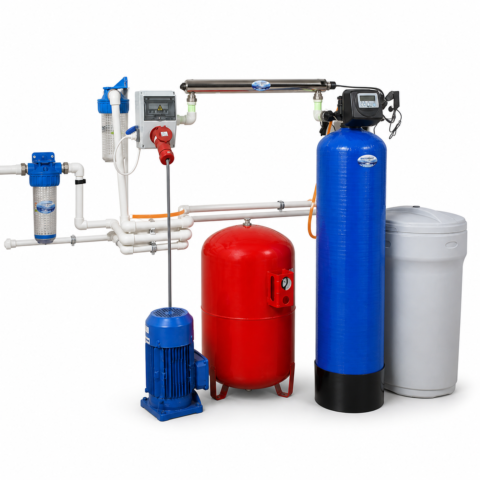
A significant proportion of the facilities outside organised industrial zones use well water. Well water differs from mains water on three basic points, and those differences change the system layout directly.
Microbiological risk is also assessed in well water; where necessary, a UV (ultraviolet) treatment stage is added. The fact that well flow can fall seasonally must also be taken into account, and the system must be checked against the lowest flow condition.
Reverse osmosis membranes foul over time. Different types of fouling call for different cleaning approaches, and a wash applied without a correct diagnosis can do harm rather than good.
The first sign of fouling is output falling at the same pressure, or the pressure having to be raised to hold the same output. Logging these values makes it possible to set the washing time correctly.
In industrial treatment, energy is a noticeable cost item, especially on high-pressure systems. The headings that affect consumption are these:
Even the best-configured system does not give the expected result if it is not followed. The subjects that must be passed on to the operating staff during commissioning are these:
It matters that this knowledge does not stay with one person. In facilities working shifts, having at least one person per shift who knows the system means faults are noticed before they grow.
These seven headings will be asked whichever supplier you talk to. Once they are ready, quotations become comparable with one another, and a system with the wrong capacity is prevented from being proposed in the first place.
The greater part of the investment made in industrial treatment goes on sensitive components such as membranes and resin. The stage that protects those components is the relatively cheap pre-treatment. Cutting back on pre-treatment means putting the most expensive part at risk.
The jobs pre-treatment takes on:
Whether pre-treatment is adequate can be measured. The SDI (silt density index) value, used to judge whether reverse osmosis feed water is suitable, shows whether pre-treatment is doing its job. A high value means the membrane will clog quickly, and the pre-treatment must be strengthened before the system is commissioned.
Producing treated water matters, but so does preserving its quality afterwards. When the storage and distribution line is neglected, the benefit of the treatment investment is lost before it reaches the point of use.
In applications that call for high purity, the distribution line is designed as part of the treatment system; it is not treated as a detail added afterwards.
An industrial treatment investment should be assessed like an investment in production equipment. The outcome is sound when these questions are settled during the decision process:
Once these questions are answered, comparing quotations becomes possible on the real requirement of the facility rather than on price alone.
In industrial systems the purchase price is one part of the total cost. These items should be assessed together when making a comparison:
Most of these items fall when the pre-treatment is configured correctly. Feeding water with its chlorine still in it to a membrane, or running without a sediment filter, looks like a saving in the short term, but it shortens membrane life and raises the total cost.
| Component | Work to Be Done | Frequency |
|---|---|---|
| Cartridge filters | Replacement based on pressure differential | According to raw water quality |
| Sand and carbon bed | Backwash check, bed renewal | Scheduled service |
| Reverse osmosis membrane | Conductivity and flow-rate tracking, chemical washing | On a drop in performance |
| Softening resin | Capacity check, renewal if needed | According to outlet hardness |
| Deionisation resin | Conductivity tracking and regeneration | According to saturation |
| Dosing pump | Calibration and chemical level | Periodic |
| UV lamp | Replacement | Once a year |
| Valves and automation | Step verification and parameter check | Scheduled service |
On the Water Point side, filters, membranes, resin and salt are consumables; valves, pumps and tanks are durable spare parts; the service network covers Türkiye as a whole for industrial systems and İstanbul and the surrounding provinces for domestic units, and technical service is provided for units of all domestic and foreign brands.
In a system feeding a production line, the most critical property is not efficiency but continuity. The main approaches used for uninterrupted operation are these:
Water Point provides technical support covering site survey, engineering, installation, commissioning, scheduled maintenance and fault response. For industrial systems there is a service network across Türkiye; for domestic units, service is provided in İstanbul and the surrounding provinces (such as Kocaeli and Tekirdağ). The service charge is set according to the work and the materials; no charge is made without the customer's approval.

Industrial water treatment prices vary with capacity, the number of stages, the level of automation and raw water quality. The prices below are the current list prices on the relevant product pages. Industrial treatment systems are not a single unit; depending on the raw water values, an industrial water treatment unit, industrial water softening systems and a pure water stage are configured together on the same line.
| Product | Price | Description |
|---|---|---|
| Ultrafiltration System | 147,055.20 TL | Pre-treatment system ahead of reverse osmosis that separates suspended solids and turbidity with a membrane. |
| Semi-Industrial Pure Water System | 147,055.20 TL | Pure water production system for medium-sized businesses. |
| 5 Tonne Reverse Osmosis System | 171,564.40 TL | Industrial reverse osmosis system with a daily capacity of 5 tonnes. |
| Industrial Water Softener | 171,564.40 TL | Industrial softening system providing hardness removal on high-flow lines. |
| Deionised Pure Water Unit 5 Tonnes/Day | 196,073.60 TL | System that uses reverse osmosis and deionisation together to bring conductivity close to zero. |
| Industrial Deionised Pure Water Unit 250 L/h | 220,582.80 TL | 3-stage industrial deionised system with a capacity of 250 litres per hour. |
| 15 Tonne Reverse Osmosis System | 245,092.00 TL | Industrial reverse osmosis system with a daily capacity of 15 tonnes. |
| Greenhouse Water Treatment Systems | 294,110.40 TL | Reverse osmosis system for salinity control in soilless farming and greenhouse irrigation. |
| Industrial Pure Water Treatment System | 318,619.60 TL | High-capacity industrial pure water production system. |
| Industrial Well Water Treatment System | 343,128.80 TL | Multi-stage system for removing sediment, iron and turbidity from well water. |
| Boat Watermaker – Seawater Treatment System | 490,184.00 TL | System producing drinking and utility water from seawater with high-pressure membranes. |
| Activated Carbon Filter System | 392,147.20 TL | Removal of chlorine, odour and organic compounds on high-flow lines. |
| 95 Tonne Reverse Osmosis System | 980,368.00 TL | Reverse osmosis system with a daily capacity of 95 tonnes, for large-scale facilities. |
| Wastewater Treatment System | 1,053,895.60 TL | System that brings the water leaving the process to discharge criteria or prepares it for recovery. |
Prices are for the standard configuration; they change when capacity, automation and extra stages are selected. Systems are engineered taking into account the raw water analysis results and the real flow profile of the facility.
For a system suited to your facility and firm price information, you can reach us on 0850 304 95 25 or at [email protected].
Let's decide on the right system together
The site survey is free if the unit is purchased from us; if only a survey and measurement are wanted, a survey fee of 2,000 TL applies. Capacity and treatment stages are set from the measurement results.
0850 304 95 25Ask on WhatsAppSend an e-mailThe models below differ by capacity and treatment stage; the choice is made on the raw water analysis and peak flow.
Food and beverage, textiles and dyehouses, metal processing and plating, pharmaceuticals and cosmetics, laboratories, greenhouses and soilless farming, marine, and every production facility that uses a steam boiler.
It varies with capacity and site conditions. On compact systems it can be completed quickly, while on large multi-stage systems the infrastructure preparation and commissioning can take longer.
Yes. Cartridge replacement, bed renewal, membrane tracking, resin checks and automation verification must be carried out periodically. In a system left unmaintained, efficiency falls first and component damage follows.
Tonnes/day is the total amount a system would produce if it ran 24 hours; m³/h is the flow rate it can meet at any instant. What is decisive at busy moments such as the start of a shift is the m³/h figure.
The salts and minerals the membrane holds back are carried away with the concentrate water; without this they would build up on the membrane surface and clog it. The recovery rate varies with pressure, raw water quality and the quality of the pre-treatment.
It is possible in many facilities. Segregation at source, putting reverse osmosis concentrate to use and the staged use of rinse waters are common methods. Feasibility must be assessed together with the process requirements and the relevant regulations.
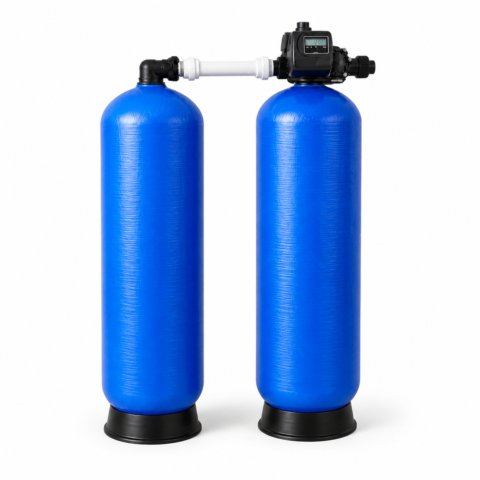
A twin-tank arrangement is preferred; while one column is in regeneration the other stays in service. A buffer tank, a bypass line and a stock of critical spare parts are also important for continuity.
Units carry a 2-year warranty; misuse is outside cover. Consumables such as filters, membranes and resin are outside cover.
The price is engineered according to capacity, treatment stages, the level of automation and the raw water analysis. Current list prices are in the price table on this page. For engineering specific to your facility you can reach us on 0850 304 95 25.
Questions? Talk to our specialist directly.
WaterAI