
Deionised Water and Pure Water: Four Terms Compared
You asked for “pure water” when getting a quote and were offered deionised water. Or you wanted distilled water for the laboratory and the supplier sent demineralised water. These four terms are used interchangeably in everyday speech but do not mean the same thing technically. The difference between deionised water and pure water is not a choice of words; misunderstood, it is a distinction that can cost you an unnecessary investment, extra running costs or a spoiled production batch.
This article compares the four terms in a single table: deionised water, pure water, distilled water and demineralised water. It also answers the three questions asked most often under separate headings: is deionised water considered pure water, is boiled water pure water, and can deionised water be drunk? Our what is deionised water article, where we take up deionised water itself, how it is produced and where it is used, is the continuation of this piece.
What Is the Difference Between Deionised Water and Pure Water?
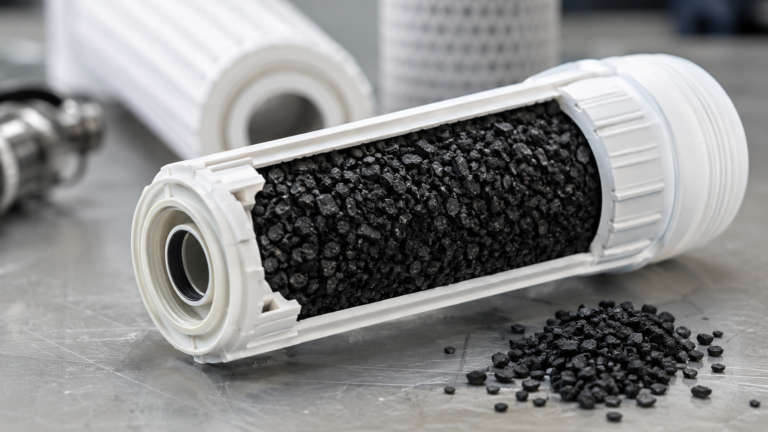
The short answer: pure water is a result, while deionisation is one of the methods of reaching it. “Pure water” is the umbrella term describing water freed of unwanted components; it says nothing about the technology used. “Deionised water” describes water whose mineral ions have been removed by ion exchange resins. Every deionised water is a kind of pure water, but not every pure water is deionised.
That one-sentence distinction solves most of the confusion. When a supplier says “pure water unit”, you have to ask which technology they mean; because distillation, reverse osmosis and deionisation produce very different profiles of cost and purity.
The difference in scope matters too. Deionisation targets only ions: charged particles such as sodium, calcium, magnesium, chloride and sulphate. Bacteria, dissolved gases and non-ionic organic matter can pass through the process. Where high purity is wanted, therefore, deionisation is used not on its own but as the last link in a staged chain.
The purity of water is measured by conductivity; as ions fall, so does conductivity. The US Geological Survey’s page on measuring conductivity in water offers a good technical background on what that measure tells you.
The Four Terms in One Table
To see the difference between deionised, pure, distilled and demineralised water it is enough to look at a single table. Two are the names of methods (deionised, distilled), one is the name of a result (pure), and one is a synonym for deionisation (demineralised). That is exactly the source of the confusion: terms that are not on the same level are used side by side.
| Term | What It Describes | Method | What It Removes |
|---|---|---|---|
| Pure water | A result, the umbrella term | Any one or several | It varies with the purpose |
| Deionised water | The name of a method | Ion exchange (resin) | Dissolved ions |
| Demineralised water | A synonym for deionised | Ion exchange | Dissolved mineral ions |
| Distilled water | The name of a method | Evaporation and condensation | Ions, most organics, microorganisms |
| Reverse osmosis water | The name of a method | A semi-permeable membrane | Most of the dissolved substances |
As the table shows, the difference between deionised water and pure water is not a difference of quality but of category. “Which is better, deionised or pure water?” is therefore a wrongly framed question; the right one is “which level of purity and which method does this job need?”
Is Deionised Water Pure Water?
Yes, deionised water is a kind of pure water; but that does not make it “the purest” water. Deionisation removes ions very effectively, while having a limited effect on bacteria, dissolved gases and non-ionic organic compounds. In fields such as laboratory and pharmaceutical work, therefore, deionisation is used not on its own but together with stages such as reverse osmosis and ultraviolet.
Missing that distinction leads to this mistake in practice: looking only at the conductivity and concluding that “the water is very pure”. Conductivity measures only the ion load. If there is a non-ionic contaminant, the conductivity reads low but the water may not suit the purpose.
So when difference between deionised water and pure water is asked, the right answer is this: deionised water solves the ion side of purity; not the whole of it.
We listed which parameters should be measured in our how a water analysis is done article. For following the dissolved solids load day to day, a simple TDS meter is enough.
The Difference Between Distilled and Deionised Water
Distillation evaporates water and condenses it; ions, most organic matter and microorganisms are left behind. Deionisation passes the water through a resin bed and holds only the ions. Distilled water is wider in scope but its energy cost is high; deionisation is faster and more economical, but narrower in scope.
It separates by a change of phase
The water evaporates, the contaminants stay in the vessel and the vapour is condensed.
- It removes ions, organics and microorganisms
- Energy consumption is high
- The rate of production is low
- It suits small volumes
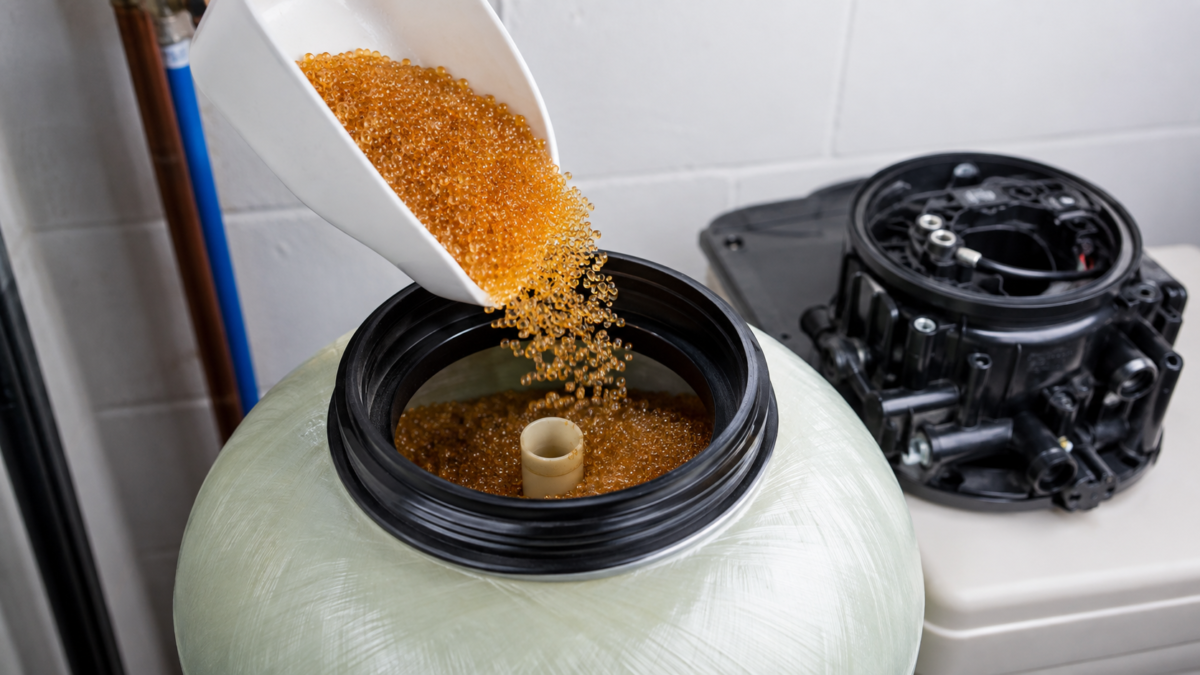
It separates by ion exchange
The resin bed holds the ions and gives hydrogen and hydroxyl in return.
- It removes only ions
- Energy consumption is low
- It can produce at high flow
- The resin is renewed periodically
In practice the two are not rivals but methods with different job descriptions. Where very high purity is needed they are used in sequence: reverse osmosis first, then deionisation, and ultraviolet if required. We explained why that chain is built in that order in our how reverse osmosis works article.
What Is Demineralised Water? Is It Different from Deionised?
In practice there is no difference. “Demineralised water” and “deionised water” describe the same process, the removal of minerals by ion exchange. The only difference is in habit of language: “demineralised” is more common in industrial plants and boiler houses, “deionised” in laboratory and electronics work.
The difference in terms sometimes confuses a comparison of quotes. When one firm offers a “demineralised water system” and another a “deionised water system”, it does not mean different technologies are being proposed. The comparison should be made not on the term but on the outlet water conductivity and the capacity.
We took up why demineralisation is needed in boiler feed water and which values have to be met in our boiler feed water article. For managing water quality in production processes, see our process water piece.
Ask not for the term but for the value: “What will the conductivity of the outlet water be in µS/cm, and at what flow can that value be sustained?” Once those two figures are clear, the difference between deionised water and pure water debate closes on its own.
Is Boiled Water Pure Water?
No. Boiling renders microorganisms inactive but does not remove dissolved minerals, ions or heavy metals. As the water evaporates, the concentration of those components in the liquid left behind rises. Boiled water is therefore water of reduced microbiological risk, not pure water.
That misconception is widespread outside laboratory settings in particular. The white deposit appearing in the bottom of a boiling pan gives the impression that something has been “removed”; yet that deposit is simply the mineral that was dissolved in the water, having changed place.
We took up point by point what boiling removes and what it does not in our is boiling tap water enough article. We explained the mechanism on the limescale side in our why does limescale form in water piece.
Can Deionised Water Be Drunk?
Deionised water is not produced as drinking water and is not recommended for that purpose. Because the mineral load is brought down to almost zero, its taste is flat; and its production and storage conditions are built to industrial standards rather than to drinking water regulations. So it should not be used as drinking water.
Deionised and demineralised water lines are separate from the drinking water line; there is no chlorine residue in those lines and microbiological monitoring is not carried out to a drinking water regime. Drinking water needs should be met by planning a separate staged drinking water treatment.
We took up which stages do what on the drinking water side in our how to choose a water purifier guide, and what taste depends on in our what determines the taste of water piece.
Which Water for Which Job? A Selection Table
The right choice starts not with a term but with a need. The three decisive questions are these: what conductivity is being aimed for, how much water is needed each day, and what is the raw water quality? Once those three are clear, which method will do becomes obvious on its own.
| Use | The Approach Needed | A Suitable Solution |
|---|---|---|
| Laboratory, small volume | High purity, low flow | A 5 L/hour pure water unit |
| Clinics and analytical instruments | Stable conductivity | A deionised pure water unit |
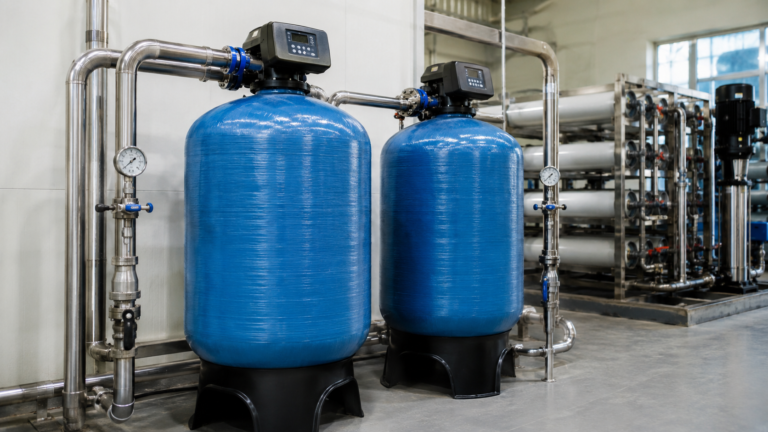
| A production line, medium volume | Continuous production | A deionised pure water treatment unit |
| Boiler feed, high volume | High flow and continuity | An industrial deionised system |
| Renewing an existing system | Refreshing the resin bed | Mixed bed pure water resin |
You can compare all the options in the pure water unit category. How the resin is renewed and how the salt cycle works is covered in our what is regeneration article.
Let’s establish your conductivity target together
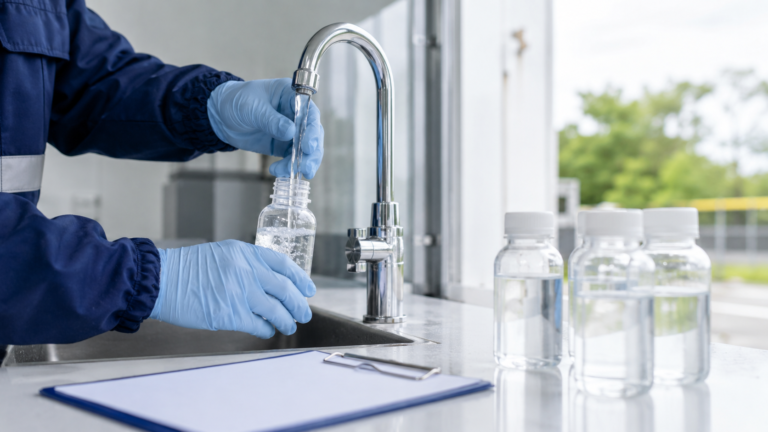
Which method will do becomes clear from the conductivity you are aiming for and your daily consumption. The survey and measurement are free if the unit is purchased from us.
See the Pure Water UnitsPurity Classes: Which Job Calls for Which Conductivity?
Purity is defined not by a term but by a number. While the conductivity of mains water is typically in the hundreds of µS/cm, at the reverse osmosis outlet that value drops into the tens; after deionisation it can fall below 1 µS/cm. Knowing which band a job calls for prevents both unnecessary investment and an inadequate system.
The table below shows approximate bands. The exact limits vary with the sector and the relevant standard; the aim is to see the order of magnitude:
| Type of Water | Approximate Conductivity | Typical Use |
|---|---|---|
| Mains water | Hundreds of µS/cm | Drinking and household use |
| Softened water | Similar to the mains | Limescale control; conductivity does not fall |
| Reverse osmosis outlet | Tens of µS/cm | General process, drinking water treatment |
| Deionised water | Below 1 µS/cm | Laboratory, boiler feed, electronics |
| Ultra-pure water | Around 0.1 µS/cm | Semiconductors, advanced analysis |
The row to note in that table is the second: softening does not lower conductivity. Water softening exchanges calcium and magnesium for sodium; the total ion load largely stays where it was. The limescale problem is solved, the purity is unchanged. That distinction is confused as often as difference between deionised water and pure water.
We took up why hardness and purity are different things in our what is water hardness article. We examined why pure water is essential in which sectors in our uses of pure water piece.
5 Practical Mistakes Caused by Confusing the Terms
The five mistakes seen most often are these: taking softening for purity, treating conductivity as the only measure, choosing a system without a raw water analysis, installing deionisation with no pre-stage, and using industrial pure water as drinking water. All five arise from confusing the terms and all five can be prevented by measurement.
Taking softening for purity
Softening solves limescale but does not lower conductivity. If purity is needed, a separate stage is essential.
Looking at a single measure
Conductivity sees only ions. Organic matter and microbiological load are measured separately.
Choosing without an analysis
A system bought without knowing the raw water either falls short or costs more than it should.
Installing with no pre-stage
Deionisation on its own exhausts the resin quickly; reverse osmosis first lowers the cost.
The fifth mistake is the most expensive: using an industrial pure water line as drinking water. There is no chlorine residue in those lines and the monitoring regime is different. Where there are two needs, two separate lines are planned.
What those mistakes have in common is this: the decision is made on a term rather than on a measurement. Once The difference between deionised water and pure water is clear, so is the right question: not “which term do I want?” but “which value do I have to meet?”
We explained step by step how a raw water analysis is done and which parameters to request in our water analysis guide.
What Is Monitored Once the System Is Installed?
Two values are watched: the outlet conductivity and the production flow. A permanent rise in conductivity shows that the resin is saturating, while a fall in flow shows that the pre-stages are blocking. When those two indicators are recorded regularly, a fault is noticed before production stops.
The monitoring load is not heavy; but without records the problem is only understood once product quality has been spoiled. That is the most common mistake.
What the User Can Do
- Measuring and recording the outlet conductivity regularly
- Watching changes in the production flow
- Observing the pre-filter pressure difference
- Putting the resin change dates in the calendar
- Renewing the raw water analysis once a year
- Checking that the storage tank is closed
What Technical Service Will Do
- Assessing and renewing the resin bed
- Adjusting the regeneration cycle
- Measuring membrane performance
- Calibrating the conductivity sensor
- Reviewing the chemical dosage
- Rebalancing the system to the target value
The work in the right-hand column is done on a system under pressure and calls for calibration; it should be left to an authorised service. The monitoring in the left-hand column needs no equipment and markedly extends the life of the system.
Frequently Asked Questions
What is the difference between deionised water and pure water in one sentence?
Pure water describes the result to be reached, while deionised water describes one of the methods used to reach it. Every deionised water is a kind of pure water; but pure water can also be produced by distillation or reverse osmosis. The two are not terms on the same level.
Are demineralised and deionised water the same thing?
Yes, in practice they describe the same process: the removal of minerals by ion exchange. The only difference is habit of terminology. “Demineralised” is more common in industrial plants, “deionised” in laboratories. Compare quotes not on the term but on the outlet conductivity and the capacity.
Which is purer, distilled or deionised water?
In scope, distillation is wider; as well as ions it separates most organic matter and microorganisms from the water. In terms of ion removal, on the other hand, a well-built deionisation can give a far lower conductivity. The answer to “which is purer” depends on which contaminant matters.
Is boiled water considered pure water?
No. Boiling reduces microbiological risks; it does not treat the water. Minerals and ions stay in it, and evaporation even raises their concentration a little. Boiled water can be safe to drink but is not pure water in the technical sense.
Can deionised water be drunk?
It is not produced for that purpose and is not recommended as regular drinking water. Because the mineral load is very low its taste is flat; and its production and storage conditions are not built to drinking water regulations. A separate staged treatment should be planned for drinking water.
How do I measure purity?
The most common measure is electrical conductivity (µS/cm), or its inverse, resistivity (MΩ·cm). As ions fall, so does conductivity. But conductivity sees only ions; organic matter and microbiological load call for separate analysis.
Is reverse osmosis water pure water?
Reverse osmosis separates most of the dissolved substances and provides enough purity for many applications. Where very low conductivity is needed it is not enough on its own; a deionisation stage is added behind it. That sequence is the most common solution in industry.
What is the running cost of a deionised water system?
The main item is renewing the resin. The life of the resin depends on the ion load of the raw water and the daily output; the more loaded the incoming water, the faster the resin saturates. In most plants, therefore, reverse osmosis is installed first, lightening the load on deionisation and extending resin life.
When is deionisation not needed?
If the conductivity aimed for can be met by reverse osmosis, adding deionisation creates unnecessary cost. The decision should be made not on terms but on measurement: a raw water analysis first, then the target value, then the choice of method.
Conclusion
The difference between deionised water and pure water is not a difference of quality but of category: pure water describes the result to be reached, deionised water one of the routes to it. Demineralised water is a synonym for deionised; distilled water is a separate method resting on a change of phase and is wider in scope. Boiled water is in no case considered pure water; boiling reduces microbiological risks, it does not treat. Deionised water is produced for industrial purposes and is not designed to be used as drinking water. The right choice is made not by debating terms but with three figures: the target conductivity, the daily consumption and the raw water quality. Once those three are clear, which method will do becomes obvious on its own.
Let’s establish by measurement which method will do
The survey is free if the unit is purchased from us; where only a survey and measurement are wanted, a survey fee of ₺2,000 applies. For your pure water needs you can reach us on 0850 304 95 25 or at [email protected].
Discover the Solutions