
How Does Reverse Osmosis Work? The Principle and Its Stages
Water from the tap can look clear, have no smell and give nothing away at first glance. Yet the same water can contain dissolved salts, minerals, nitrate and traces of heavy metals that the eye cannot see. Classic sediment and carbon filters cannot hold those dissolved substances, because they work at particle size. The technology that comes in at this point is called reverse osmosis, and the answer to how reverse osmosis works is also the key to understanding what stays in the water.
In this article we take up, starting from osmosis as it occurs in nature, how the process is reversed, the logic by which the semi-permeable membrane separates the water, the role of pressure, the path the water follows step by step through the system, and what the RO water that comes out of it actually is. Our aim is to show clearly exactly what happens inside the unit and to set out an understandable framework for what to look at when choosing the right system.
What Is Reverse Osmosis and How Does Its Basic Logic Work?
Reverse osmosis is a treatment method in which water is passed under pressure through a semi-permeable membrane and separated from the dissolved substances in it. As the water molecules pass the membrane, components such as salts, minerals and heavy metals are largely held back. On one side there is treated water, on the other concentrated water.
The logic of the process is borrowed from nature. In natural osmosis, water passes of its own accord from the side with the lower concentration of dissolved substances to the side with the higher one; the aim is to balance the difference between the two. Reverse osmosis turns that flow around with pressure applied from outside. The water is forced from the concentrated side to the dilute side and is freed of the dissolved substances it leaves behind.
That principle is used not only in domestic units but in large plants where seawater is made drinkable. The US Geological Survey’s desalination resource describes reverse osmosis as one of the basic methods used in treating salt water. The same physical logic, in other words, works from a unit under a kitchen counter to an industrial plant, changing only in scale.
In short, reverse osmosis does not “strain” water; it separates it at molecular level. That distinction is the most basic difference from conventional filtration and explains why the technology is so effective.
The Difference Between Osmosis and Reverse Osmosis
Osmosis is a natural, spontaneous event; water passes from the dilute side to the concentrated side to balance the difference. In reverse osmosis, pressure applied from outside turns that flow around. The water reaches the other side of the membrane treated, leaving the dissolved substances behind.
Natural osmosis is one of the cornerstones of living systems. Plant roots take up water from the soil by that mechanism, and cell membranes work in a similar way. No outside energy is needed in the process, because the force driving the system is the natural difference in concentration between the two sides. The driving force that difference creates is called osmotic pressure.
In reverse osmosis the exact opposite of that natural tendency is the aim. To move water in the reverse direction, an outside pressure exceeding the osmotic pressure has to be applied. The moment the applied pressure crosses that threshold, water starts to be forced through the membrane and the dissolved substances stay behind. The basic differences between the two processes can be summed up as follows:
| Criterion | Osmosis (Natural) | Reverse Osmosis |
|---|---|---|
| Direction of Flow | From dilute to concentrated | From concentrated to dilute |
| Driving Force | The natural difference in concentration | Pressure applied from outside |
| Energy Required | It happens on its own | It requires a source of pressure |
| Conclusion | The concentrations are balanced | Treated water is separated |
| Typical Field | Biological systems | Water treatment, salt removal |
Once you understand that table you have grasped the essence of how reverse osmosis works: using pressure to reverse what nature does on its own.
How Does a Semi-Permeable Membrane Separate Water?
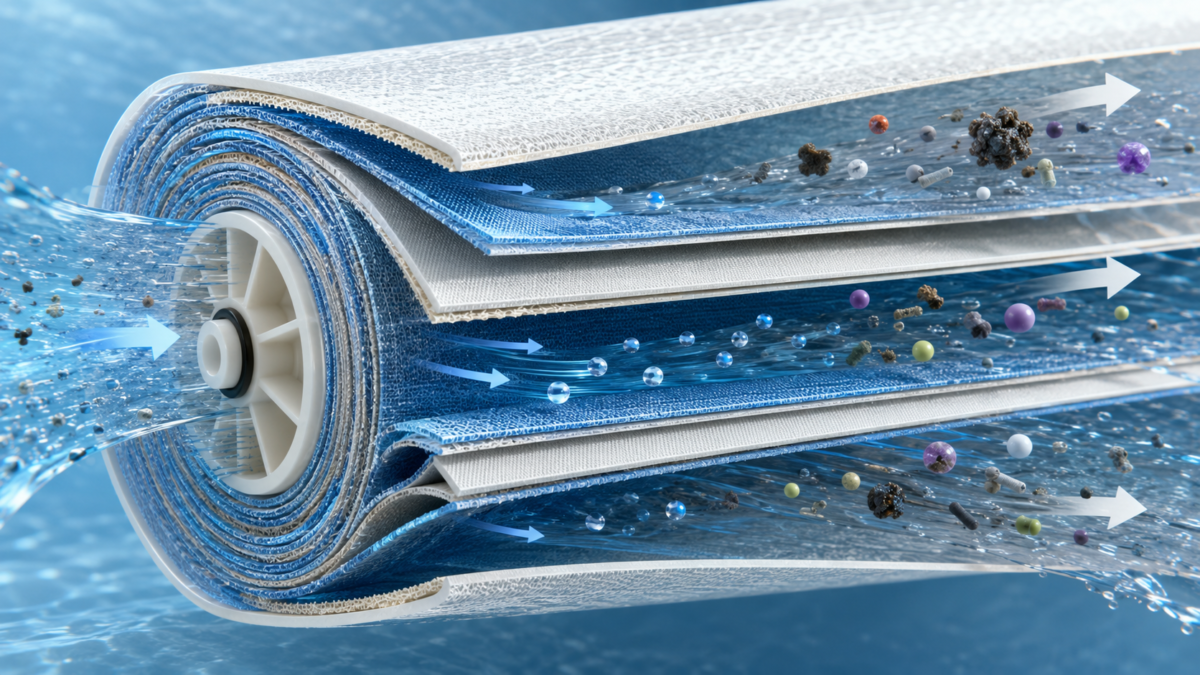
A semi-permeable membrane is a special layer that lets water molecules through while holding back most of the dissolved salts, minerals and heavy metals. The separation takes place through molecular size and charge interaction. In the right conditions, removal of dissolved substances can reach up to 99%.
The heart of the system is the RO membrane, the layer it is also known by. A classic filter holds particles larger than its pores mechanically; a membrane works at a far finer level. Unlike the dissolved salt ions, which are far larger and electrically charged, a water molecule can pass through the membrane structure. The components left behind are directed to the concentrate line.
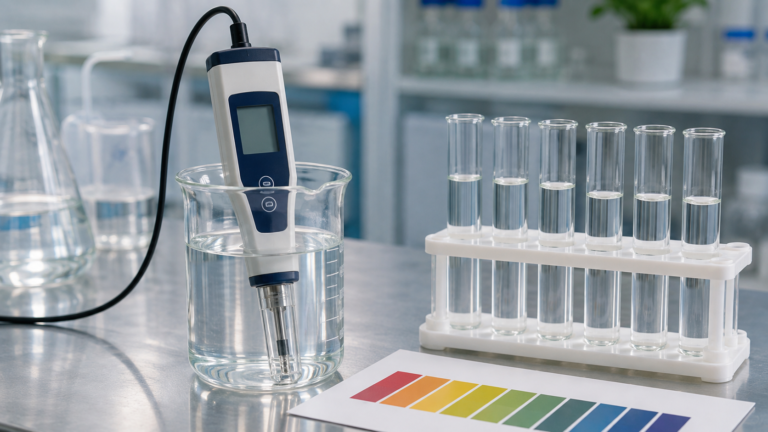
The most concrete indicator of that separation is the fall in the water’s TDS (total dissolved solids) and conductivity values. High in the inlet water, those values drop markedly after passing the membrane. When measured, the difference between them is the most reliable proof of whether the system is genuinely working.
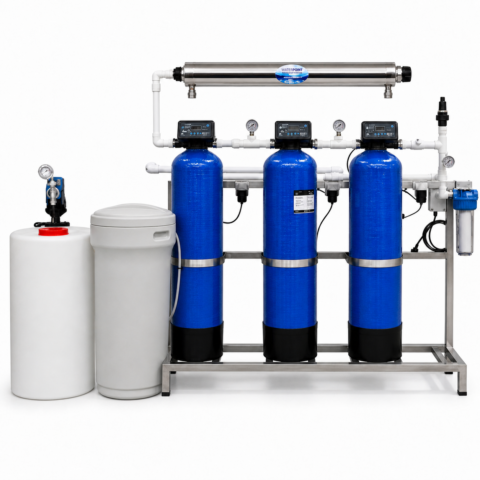
The removal performance that can be reached is not a fixed value; it varies with the quality of the inlet water, the pressure applied, the temperature and the state of the membrane. In laboratory or production applications calling for far higher purity, reverse osmosis is used as a first stage with further treatment stages added behind it. For needs of that kind, pure water systems takes the water at the membrane outlet to a higher level of purity.
Pressure: The Force That Drives the System
Pressure is the basic factor that makes a reverse osmosis system work. For water to pass the membrane, a force exceeding the natural osmotic pressure has to be applied. When the pressure falls short, water efficiency drops, treated water production slows and removal performance stays below the level expected.
In domestic and office systems part of that pressure comes from the mains. But mains pressure is not always sufficient; on upper floors, on long lines or at hours when the pressure drops, performance falls visibly. Most systems therefore include a pressurising pump that provides the condition the membrane needs, steadily.
The role of pressure is not only to “push the water”. Enough flow at the membrane surface also stops the substances held back building up there. When the pressure falls, that cleaning flow weakens; build-up at the surface rises and the membrane tires faster. Pressure therefore directly affects both immediate efficiency and long-term life.
If you notice a sudden drop in the unit’s production rate, one of the first things to check is the inlet pressure. A pressure problem is often the real cause behind performance losses taken for a membrane failure.
The Path of the Water, Stage by Stage
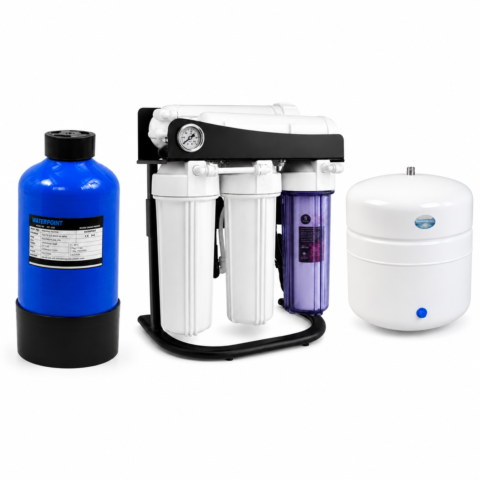
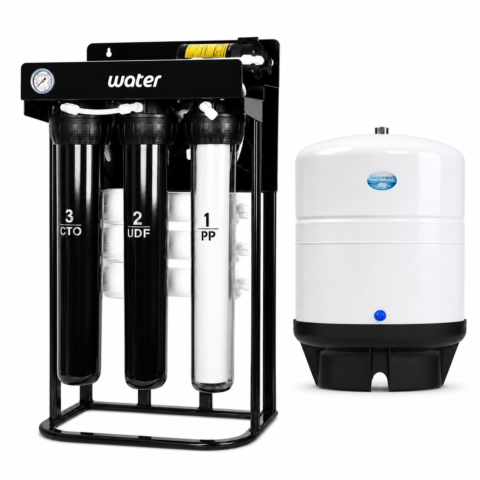
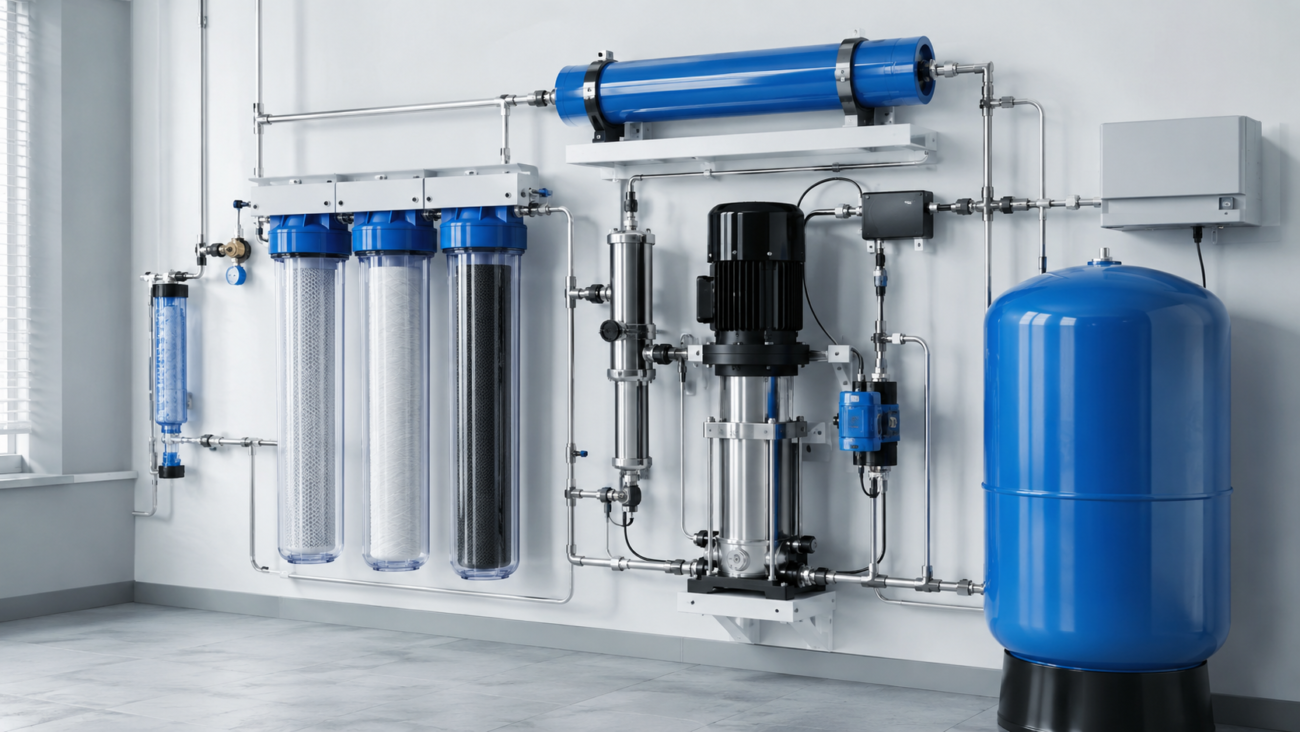
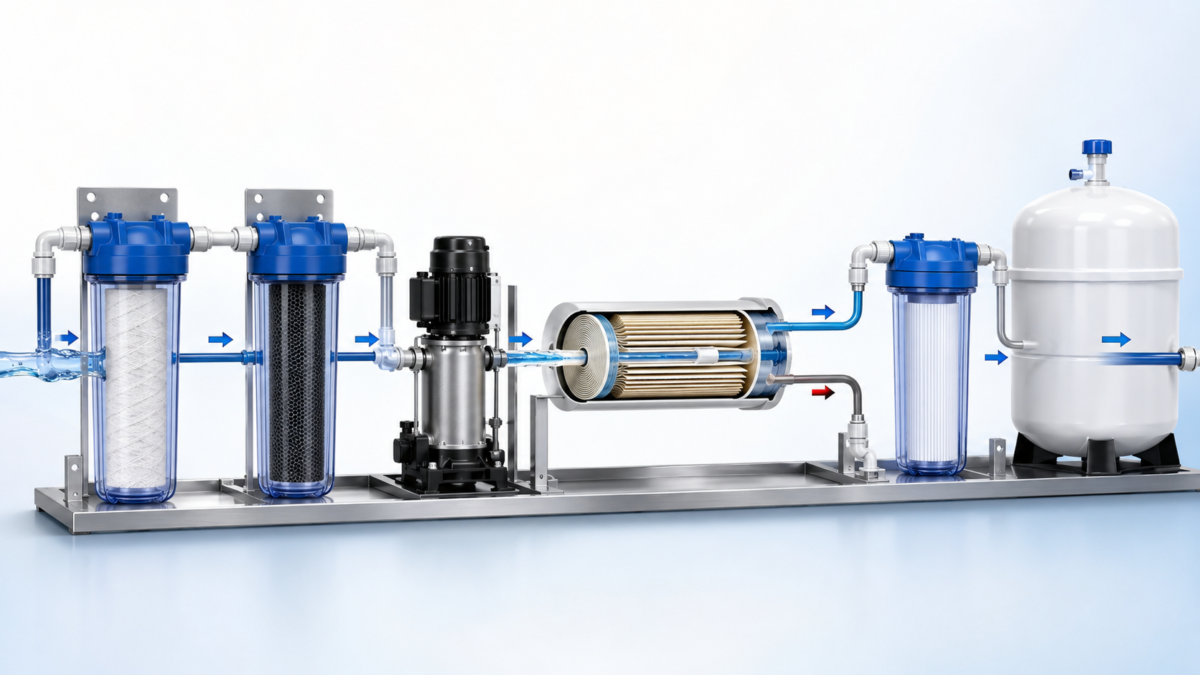
The water’s journey through the system is staged: inlet, pre-filtration, pressurisation, separation at the membrane, the parting of treated water and concentrate, and the final filter and storage. Each stage feeds and protects the next. The number of stages varies with the intended use and the quality of the inlet water.
The flow below shows step by step the path water follows in a typical system:
-
Raw Water Inlet
Water from the mains, a tank or a well is taken into the system. The quality of the water at that point is the starting point of the whole process.
-
Pre-Filtration
Sediment and particles are held back, and chlorine and organic components are removed at the carbon stage. That step protects the membrane.
-
Pressurisation
The water is brought to the pressure the membrane needs. This stage provides the driving force of the system.
-
Separation at the Membrane
Water molecules pass the membrane; most of the dissolved salts, minerals and heavy metals are held back.
-
Separating Treated Water and Concentrate
The water that passes the membrane is directed to the treated line, while the concentrate carrying the substances held back is sent to the waste line.
-
Final Filter and Storage
The treated water waits in the tank and is passed through a final carbon stage before use to balance its taste and odour.
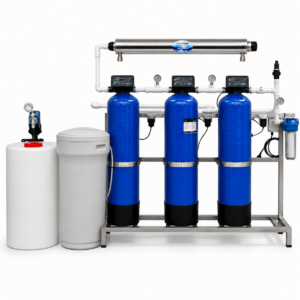
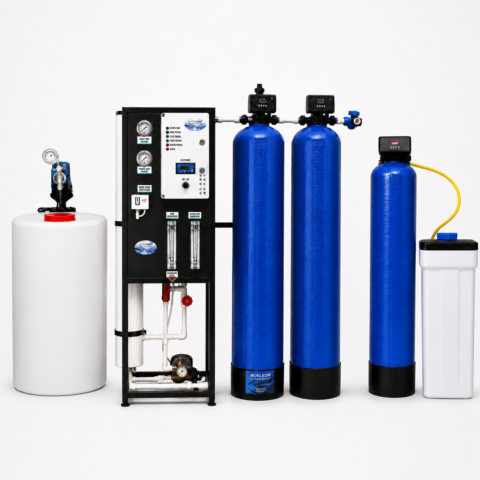
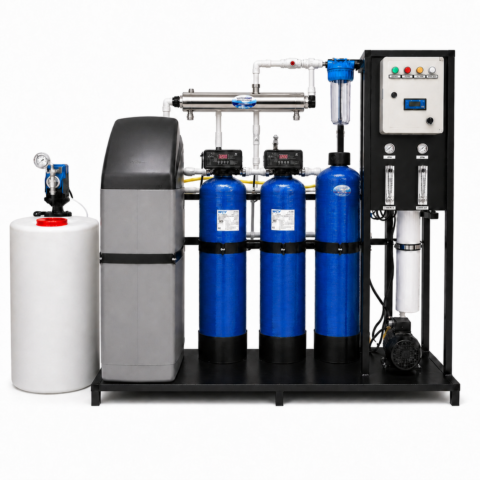
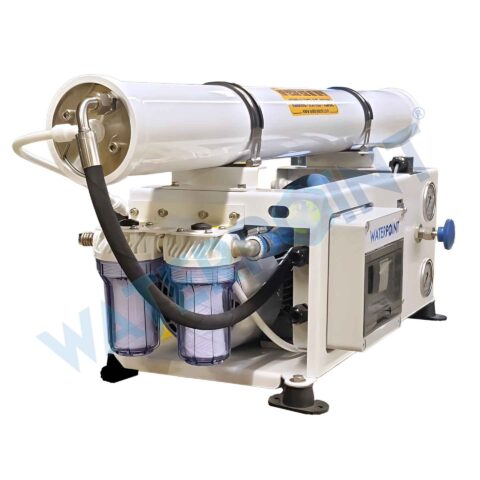
No stage in that chain is enough on its own; they all work together. In domestic and office installations the structure is gathered into a compact body, while in industrial applications each stage is engineered as a separate unit.
Would you like to establish the capacity that suits your need?
To establish the right build for the quality of your inlet water and your daily use, you can look at our reverse osmosis systems and compare the capacities.
See the Reverse Osmosis SolutionsWhat Is RO Water (Reverse Osmosis Water)?
RO water, or reverse osmosis water, is the permeate that leaves the membrane: water from which most of the dissolved salts and minerals have been separated. Its clearest measurable difference from the inlet water is a much lower TDS and conductivity reading.
What changes can be checked with simple measurements:
- TDS and conductivity: Both fall sharply after the membrane; the difference between inlet and outlet is the most reliable sign that the system is working.
- pH: It can read slightly lower than the inlet water, because dissolved carbon dioxide passes the membrane while the minerals that buffer it are held back.
- Taste: With fewer dissolved solids the taste becomes softer; the final carbon stage keeps it balanced after storage.
- Minerals: Calcium and magnesium are largely held back too. Where a different taste balance is wanted, a mineral filter can be added after the membrane.
RO water is not the same as distilled water. Distillation evaporates the water and condenses it, while reverse osmosis separates it at the membrane under pressure. Where a laboratory or production line needs an even higher purity, the permeate is taken on to deionisation.
Why Is Pre-Filtration Essential?
Pre-filtration is an essential stage that protects the membrane from sediment and chlorine. Coarse particles block the membrane surface, while free chlorine does permanent damage to the membrane structure. Where the pre-filter stage is neglected, membrane life shortens markedly and treatment performance falls quickly.
The membrane is the most sensitive and most expensive component of the system. The protective stages placed ahead of it are therefore not an “extra feature” but an inseparable part of the system. A typical pre-filtration chain takes on these jobs:
- The sediment filter: Holds sand, rust and suspended solids; prevents the membrane surface blocking mechanically.
- The activated carbon stage: Removes free chlorine and organic components; prevents the membrane being worn chemically.
- Fine filtration: Separates the remaining fine particles and delivers clean inlet water to the membrane.
These stages inevitably reach saturation; they need changing periodically. A pre-filter neglected when the time comes can no longer do its protective job and leaves the whole load on the membrane. The system’s chain of protection is maintained by renewing the stages with suitable pre-filter sets.
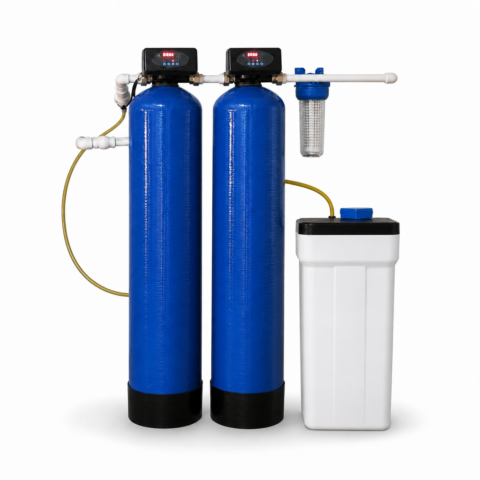
Where the inlet water is high in hardness, hardness control comes into play as well as pre-filtration; limescale collecting on the membrane surface is one of the most common causes of lost efficiency.
Why Is There Waste Water?
In reverse osmosis, waste water arises so that the dissolved substances held back by the membrane are carried out of the system. That line, called the concentrate, continuously carries away the salts and minerals collecting at the surface. The waste water ratio is not fixed; it varies with the inlet water quality, the pressure and the conditions of use.
Most users see waste water as a loss; yet it is a natural consequence of how the system works. The membrane has to send the substances it holds somewhere. If those components were left to collect at the surface, the membrane would block within a short time and treatment would stop altogether. The concentrate line sweeps that build-up away continuously and keeps the membrane working.
The amount of waste water varies with the salt load of the inlet water, the pressure applied, the temperature and the build of the system. On a source with high TDS the membrane has more to remove, so the flow in the concentrate line rises too. When the pressure and the pre-treatment are optimised, the system works more evenly. What the ratio looks like on a home unit is explained in our article on the water purifier waste water ratio.
Restricting or closing the waste water line does not “save water”; it causes rapid build-up at the membrane surface and directly lowers the treatment performance and the life of the system. That line is necessary for the system to work.
The Factors Affecting Efficiency and Membrane Life
System efficiency is determined by the inlet water quality, hardness, pressure, temperature and filter maintenance. When one of those factors goes wrong, both treated water production and removal performance fall. Membrane life is not a fixed period; it varies markedly with operating conditions and regular maintenance.
In practice, how reverse osmosis works comes down largely to managing those variables. The main factors affecting the system are these:
Inlet Water Quality
As the TDS and contaminant load rise, the membrane’s job gets harder and efficiency falls.
Hardness
Calcium and magnesium form limescale build-up on the membrane surface.
Pressure
Inadequate pressure slows production and lowers removal performance.
Temperature
The water temperature affects the rate of passage through the membrane and the amount produced.
Filter Maintenance
Pre-filters not changed on time leave the whole load on the membrane.
Intensity of Use
The amount consumed daily determines how fast the stages tire.
What these factors have in common is that none of them can be taken on its own. On a system running on high hardness, for example, the pressure may look normal while limescale build-up at the surface lowers efficiency. Performance problems should therefore be assessed by looking at the whole chain together. For more detail on purity levels and the concepts involved, you can also read our article on the difference between pure and deionised water.
Which Scale Is Needed for Which Use?
The right scale is established from the intended use and the daily water requirement. Compact builds are enough for domestic and office use, while businesses, production and plant scale call for high-flow systems. In making the choice, the inlet water quality, the amount consumed and the water quality aimed for are assessed together.
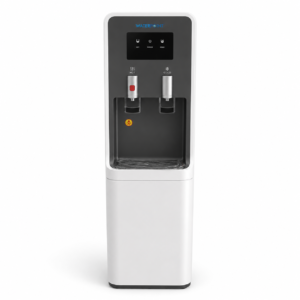
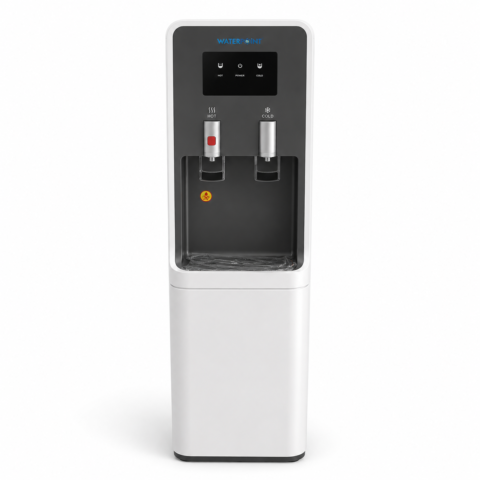
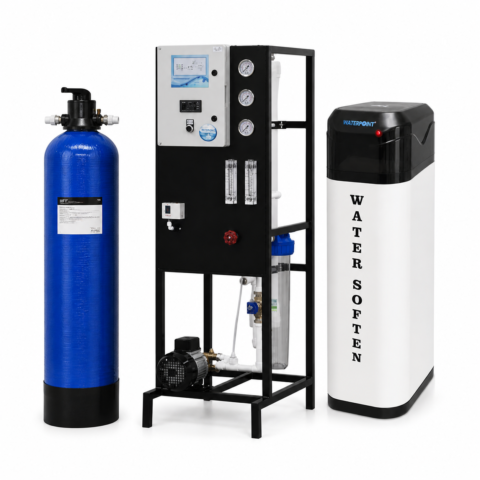
The same physical principle applies at every scale; what changes is the capacity, the durability of the equipment and the level of automation. In domestic and office use the priorities are a compact body, quiet running and easy filter changes. For needs of that kind, domestic and office RO water purifiers meet daily drinking and kitchen use comfortably.
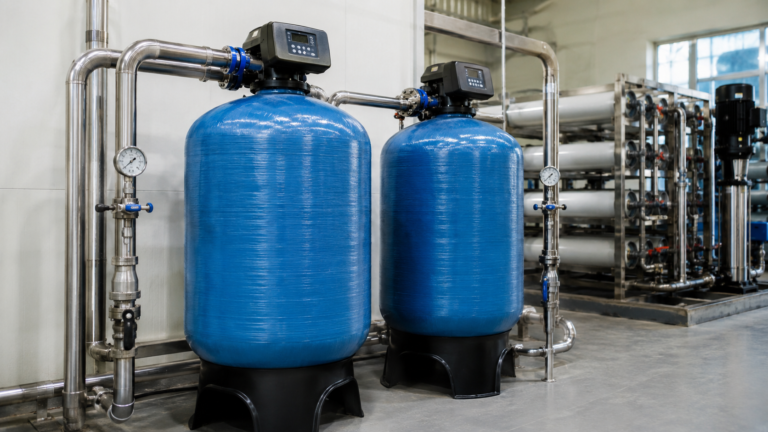
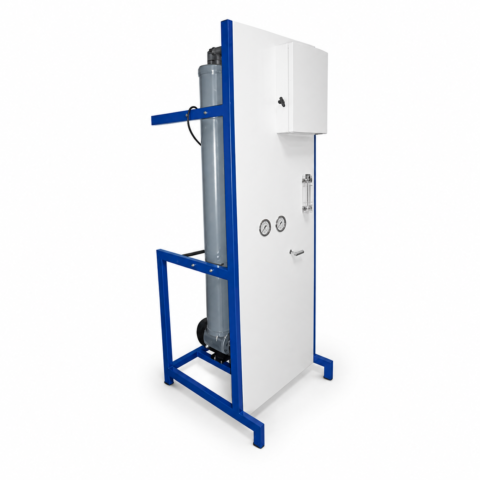
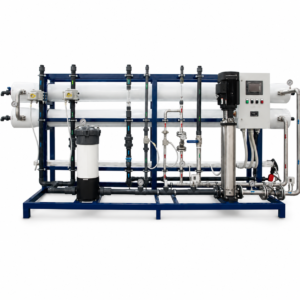
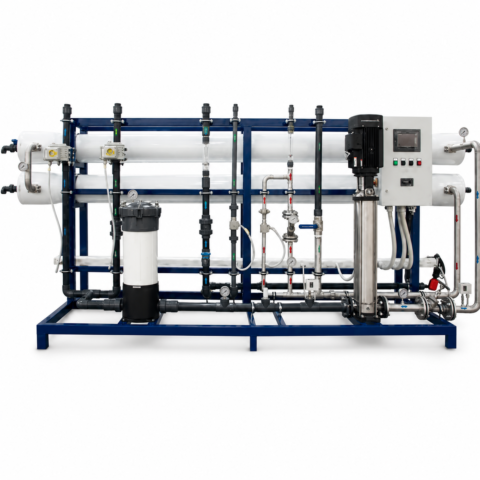
In businesses, production plants and areas of heavy use the picture changes. Because continuous production, high flow and uninterrupted water quality are needed, the system is sized project by project. For needs at that scale, high-capacity reverse osmosis units are assessed against the consumption profile of the site.
The most common mistake in choosing capacity is to look only at the amount produced and ignore the inlet water quality. Yet on a source with high TDS a stronger build is needed for the same output. The right choice should therefore always be made together with a water analysis and real consumption data.
Frequently Asked Questions
Can you sum up briefly how reverse osmosis works?
Water is passed under pressure through a semi-permeable membrane. As the water molecules pass, most of the dissolved salts, minerals and heavy metals are held back. The water that passes goes to the treated line and the substances held back to the concentrate line. Two separate flows of water are thereby created.
Does reverse osmosis change the taste of the water?
Yes; because the dissolved solids load falls, the taste of the water becomes markedly softer. Odour and taste from chlorine are also removed at the pre-carbon stage. The carbon filter at the final stage is used to preserve the taste balance after storage.
When should the membrane be replaced?
Membrane life is not a fixed period; it varies with the inlet water quality, hardness, pressure and pre-filter maintenance. The most reliable indicator is the TDS or conductivity of the treated water rising over time and the production rate falling.
What happens if the pre-filter is not changed?
Pre-filters that reach saturation can no longer do their protective job. Sediment blocks the membrane surface, and free chlorine does permanent damage to the membrane structure. Treatment performance falls and the working life of the membrane shortens markedly.
Why is the waste water ratio not fixed?
Because the flow in the concentrate line depends on how much the membrane has to remove. The salt load of the inlet water, the pressure applied, the temperature and the build of the system all affect that ratio directly. A different balance is therefore reached for every installation.
Does reverse osmosis handle microbiological risks too?
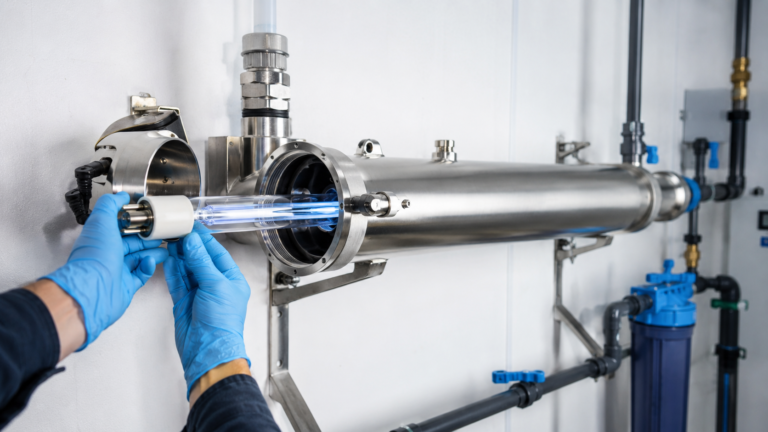
The membrane holds back a great many components at a high rate. But where a microbiological load has been found in the source water, a UV (ultraviolet) treatment stage is added to the system and microbiological risks are reduced. Which stages are needed is established by a water analysis.
Conclusion
The answer to how reverse osmosis works fits into a single sentence: using pressure to reverse the movement of osmosis that nature carries out on its own. In practice, though, what determines the result is the chain built around that principle. Pre-filtration protects the membrane, pressure drives the system, the concentrate line carries away the build-up and the final stage prepares the water for use. The inlet water quality, hardness, temperature and regular maintenance shape both efficiency and membrane life directly. Choosing the right system means looking at the capacity, the intended use and the real content of the water together. Assessed that way, a long-lasting and steady water quality becomes possible.
Let’s establish the system that suits you together
To plan the build best suited to the quality of your inlet water, your daily consumption and your intended use, you can consult the Water Point expert team.
Explore the Reverse Osmosis Systems