
What Is an Activated Carbon Filter? Its Job, Types and Replacement
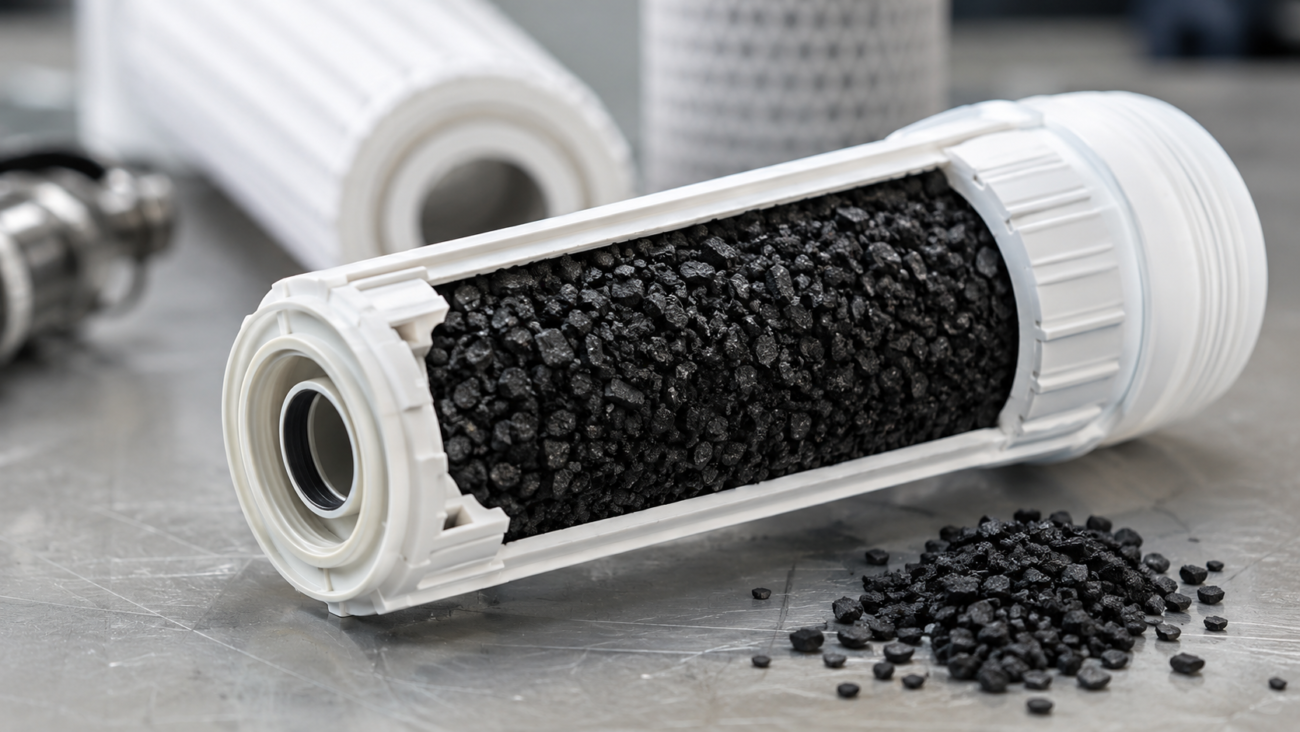
The water in the glass looks clear but you do not want to drink it. That smell of chlorine, like a swimming pool, the metallic taste in the tea, or the strange feeling the water leaves in the mouth… The source of these complaints is usually not visible dirt but chlorine and organic compounds dissolved in the water. Classic sediment filters cannot touch those substances; the stage that separates them from the water is the activated carbon filter.
In this guide we take the activated carbon filter up from beginning to end: how it works, what it removes and what it does not, which types there are, why it protects the membrane and when it should be changed. By the end you will know which type suits your own water and will base the decision to change it on the signs rather than on guesswork.
What Is an Activated Carbon Filter and What Does It Do?
An activated carbon filter is a treatment stage that holds the chlorine, odour, taste and some organic compounds in water on its surface, thanks to its porous carbon structure. It works on the principle of adsorption. It improves the drinkability and the sensory quality of the water; it also protects the membrane behind it from chlorine damage and extends the life of the system.
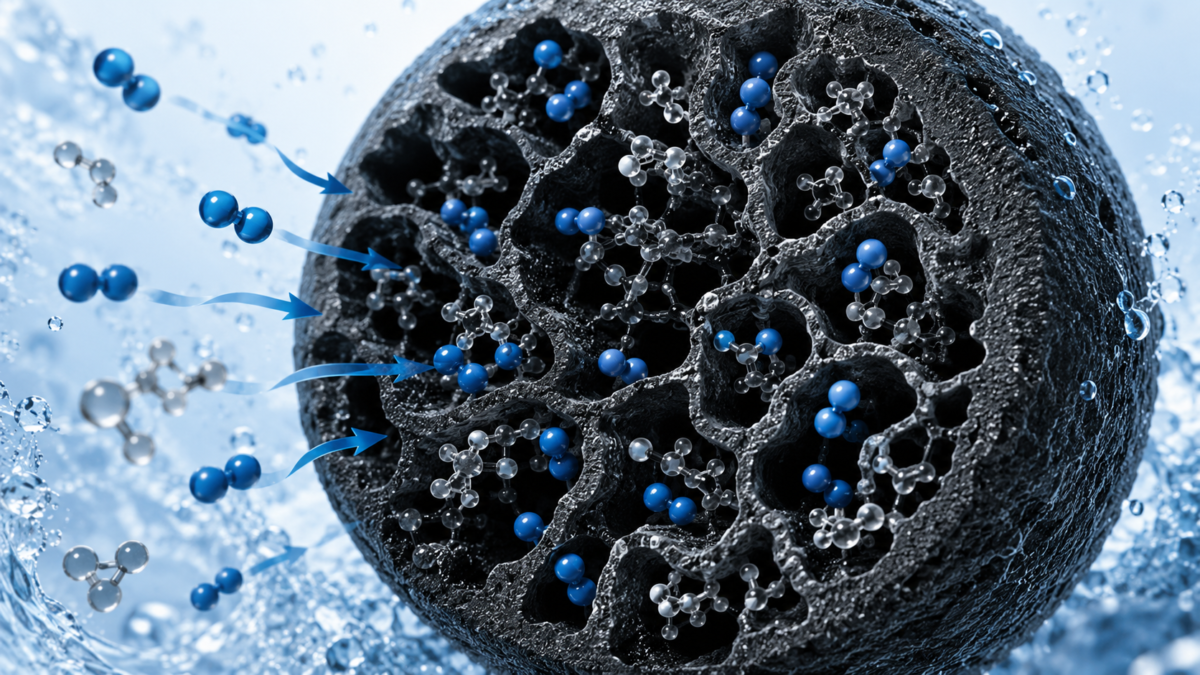
The word “activated” in its name comes from the carbon being made porous by a special process. As a result the material gains an extremely large internal surface area for its volume. That is the secret of its holding capacity: as water passes, the dissolved components attach to that porous surface and are separated from the water.
In a treatment system an activated carbon filter does two jobs at once. The first is for the user: it improves the taste and odour of the water and makes it more drinkable. The second is for the system: by holding aggressive components such as chlorine, it protects the sensitive stages behind it. Most users do not know about that second job, but technically it is the more critical of the two.
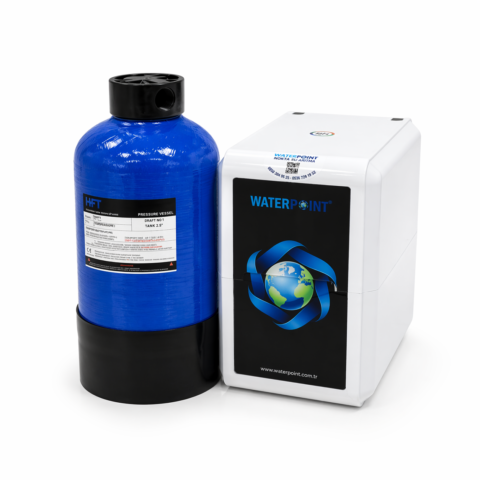
In domestic units it is generally used in cartridge form, and in industrial applications as beds inside tanks. The scale changes but the principle is the same: water passes through the carbon bed and the substances to be removed stay on the surface.
How Does Adsorption Work?
Adsorption is the separation of substances from water by their attaching to a surface. In mechanical straining, particles are stopped because of their size; in adsorption, dissolved molecules stick to the porous surface of the carbon. An activated carbon filter can therefore remove dissolved components the eye cannot see.
Understanding the difference matters. A sediment filter works like a sieve: what is larger than its pore cannot pass, what is smaller can. In adsorption it is not size but the molecule’s tendency to attach to the surface that is decisive. Even compounds dissolved in the water and invisible to the eye can therefore be held.
The porous structure of carbon provides an enormous area for that process. Because the pores are of different sizes, different molecules are held in different regions. As the water moves through the bed the contact time rises and the holding efficiency improves. When an activated carbon filter is designed, therefore, not only the amount of carbon but the time the water spends in the bed is taken into account.
That mechanism has a natural limit: the surface is not infinite. As the pores fill, the holding capacity falls and at a certain point the material reaches saturation. A saturated activated carbon filter can hold no more; that is why the stage is not permanent but a consumable renewed periodically.
What Does an Activated Carbon Filter Remove?
An activated carbon filter removes chlorine, bad odour, unwanted taste, colour and some organic compounds from water. It markedly improves the sensory quality of the water and makes it more drinkable. Because it also holds oxidising components such as chlorine, it takes on a protective role for the membrane stage behind it.
The stage’s area of responsibility is clearly defined:
- Chlorine: The most common source of taste and odour in mains water; held effectively on the carbon surface.
- Odour: Unpleasant components such as earthy, musty or sulphurous smells are adsorbed.
- Taste: The strange, metallic taste in water is markedly reduced.
- Colour: Slight colouring of organic origin is removed.
- Organic compounds: Part of the dissolved organic matter is held on the surface.
The effect noticed fastest by the user is taste and odour. After a new activated carbon filter is fitted, even the aroma of tea and coffee changes; water is the carrier of those drinks and traces of chlorine in it affect the aroma directly.
The role of filtration technologies in domestic water quality is taken up in official sources too; the US Environmental Protection Agency’s water filtration fact sheet explains that different filtration methods work on different groups of contaminants.
What Does It Not Remove? The Limits of the Stage
An activated carbon filter does not markedly remove hardness, limescale, salt or dissolved minerals. It does not lower the TDS value. Water softening is needed for a limescale problem and reverse osmosis for the dissolved solids load. Knowing that distinction prevents choosing the wrong unit and wasting money.
This section corrects the point users get wrong most often. When the taste of the water improves, many people assume “the water is fully treated”. Yet taste and mineral content are separate headings. Water passing through the carbon stage can still carry high hardness and a high dissolved solids load.
| Problem | The Activated Carbon Stage | The Solution Needed |
|---|---|---|
| Chlorine taste and odour | It removes | The carbon stage |
| Bad odour and colour | It removes | The carbon stage |
| Organic compounds | It holds part of them | The carbon stage |
| Limescale and hardness | It does not remove | Water softening |
| TDS and dissolved salts | It does not remove | Reverse osmosis |
| Sediment and sand | Not its main job | Sediment filter |
| Microbiological load | It does not remove | UV (ultraviolet) treatment |
The misconception about TDS in particular needs clearing up. Your meter will show a similar value after the carbon stage too; that is not a fault but a natural consequence of how the stage works. We took up in detail what that measurement tells you article explaining TDS.
Buying an activated carbon filter to solve a limescale problem is a choice that misses the target. The carbon stage works on taste and odour; limescale build-up calls for hardness control. The right stage has to be matched to the right problem.
Types of Activated Carbon Filter
There are two basic builds: granular activated carbon (GAC) and carbon block. GAC uses granular carbon as a bed and has a low resistance to flow. A carbon block, with its pressed structure, provides denser contact. By form of use they are also divided into cartridge type and tank type.
The difference between the two builds is about how the water meets the carbon:
A bed of granules
The carbon granules form a loose bed and the water passes through it.
- The resistance to flow is low
- It suits high-flow applications
- It is widely used in tank systems
- The bed can be renewed by backwashing
A dense pressed structure
The carbon is pressed into a solid body; the contact is more controlled.
- It gives tighter, more uniform contact
- It also holds some fine particles
- It is common in cartridge systems
- Its resistance to flow is relatively high
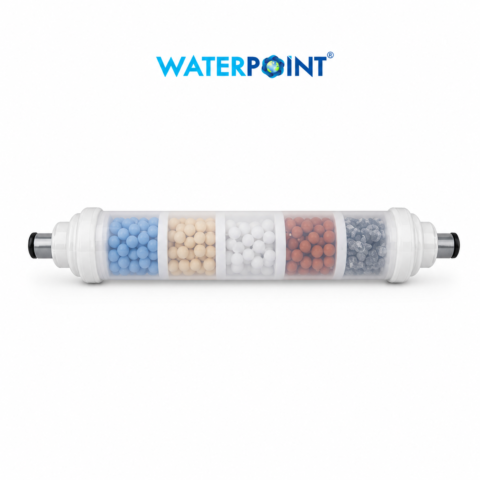
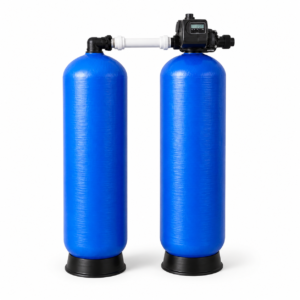
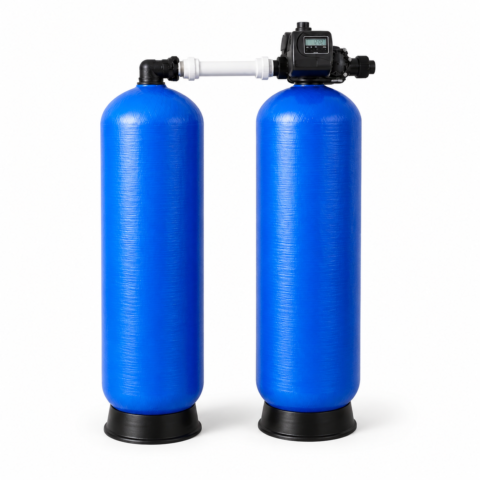
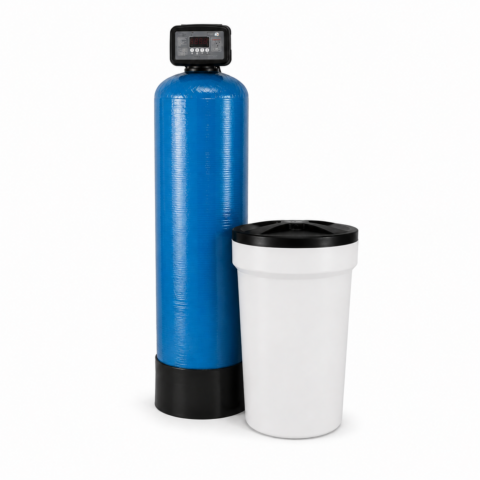
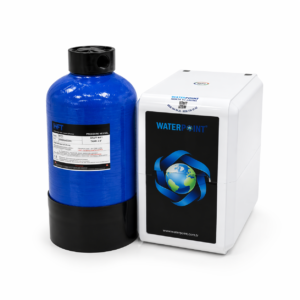
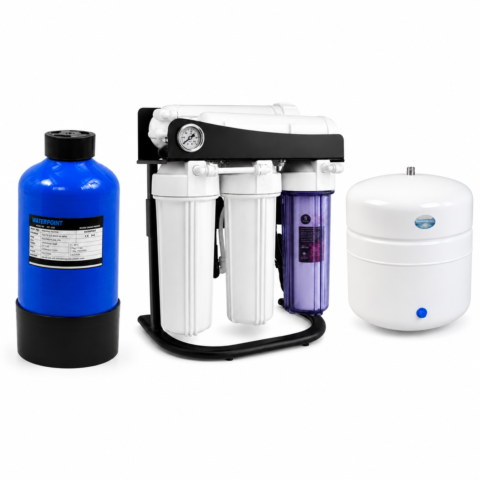
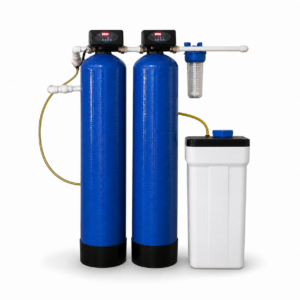
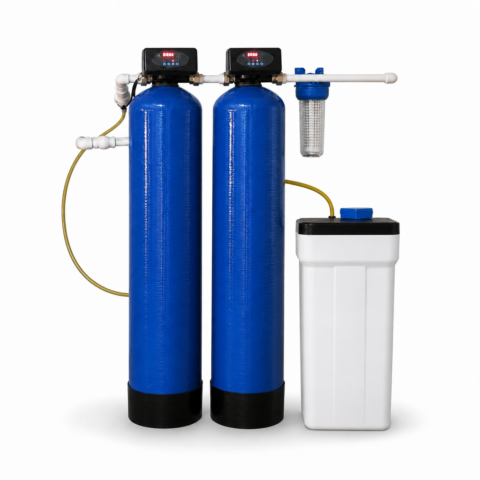
In terms of form, two formats stand out. A cartridge-type activated carbon filter is a replaceable part fitted into standard housings in domestic and office units. The tank type has the carbon bed inside a large body, usually with automatic backwashing, and is preferred in high-flow use.
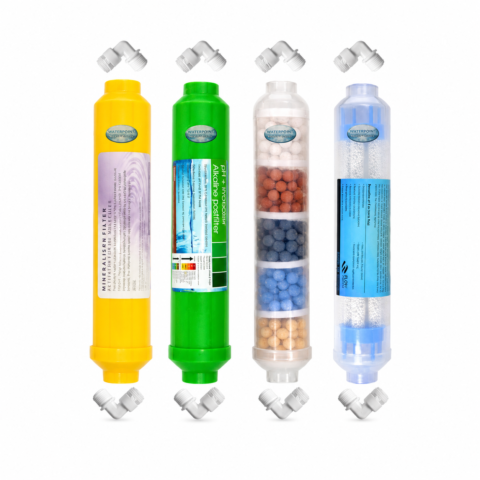
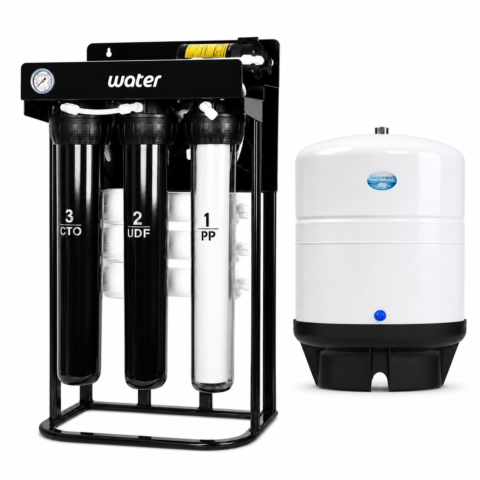
For those wanting to renew all the stages at once in a domestic system, a five-piece filter set is a practical answer; the carbon stages are included in the set. At points needing a higher flow, tank-type carbon units are used.
The Difference by Raw Material: Coal-Based and Coconut-Based
Activated carbon is made from different raw materials. Coal-based carbon, with its wide pore distribution, stands out on organic compounds and in industrial applications. Coconut shell based carbon, with its finer pores, is widely preferred for removing chlorine, taste and odour.
The raw material directly determines the pore structure, and the pore structure affects which molecules are held most effectively. The general distinction between the two is this:
Coal-Based
Offers a wide pore distribution; widely used on organic compounds and in industrial pre-treatment.
Coconut-Based
With its fine pore structure it stands out on chlorine, taste and odour; preferred in drinking water applications.
In Common
Both work by adsorption and have to be renewed once they reach saturation.
The choice is made according to the problem to be removed. Where a chlorine odour and taste problem comes first in drinking water, coconut-based activated carbon is a suitable choice. In industrial pre-treatment or where the organic load is high, coal-based activated carbon comes to the fore.
It would not be right to rank one as better here; the two raw materials serve different needs. The right activated carbon filter is chosen by looking not at the name of the raw material but at the problem in your water.
Why Is It Used Before the Membrane?
Free chlorine does permanent damage to the structure of a reverse osmosis membrane. An activated carbon filter holds that chlorine, protects the membrane and markedly extends its working life. The carbon stage is therefore always positioned before the membrane; its protective role is even more critical than removing taste and odour.
This is one of the most important rules of system design. The membrane is the most valuable and most sensitive part of the treatment chain. Chlorine is its greatest enemy; the effect is not immediate but cumulative, and the damage is irreversible. When a saturated carbon stage starts letting chlorine through, the membrane wears quietly and the problem is noticed months later as a fall in performance.
That relationship is also the basis of the economics of maintenance: by changing an inexpensive activated carbon stage on time, you protect the far more expensive membrane stage for years. We took up the structure of the membrane and why it is so sensitive in our membrane filter article.
The carbon stage should be changed before it reaches saturation. “The water is still flowing” does not show that the stage is working; a saturated bed can go on passing water while it has stopped holding chlorine.
The Difference Between Domestic and Industrial Use
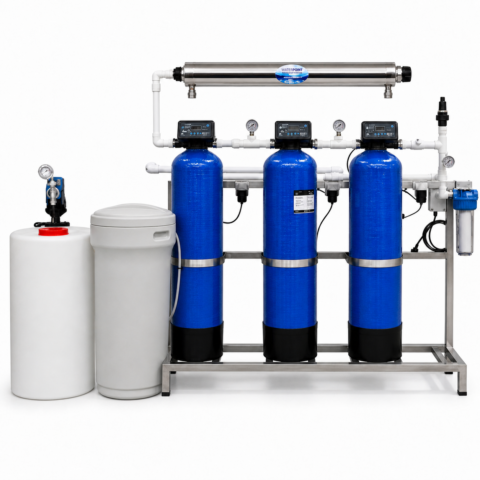
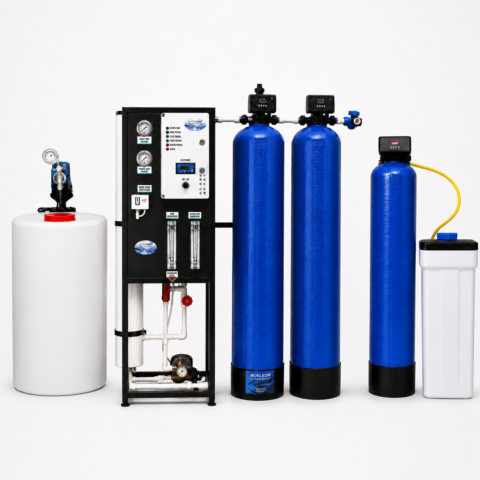
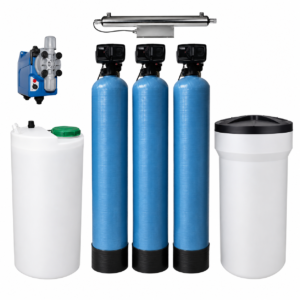
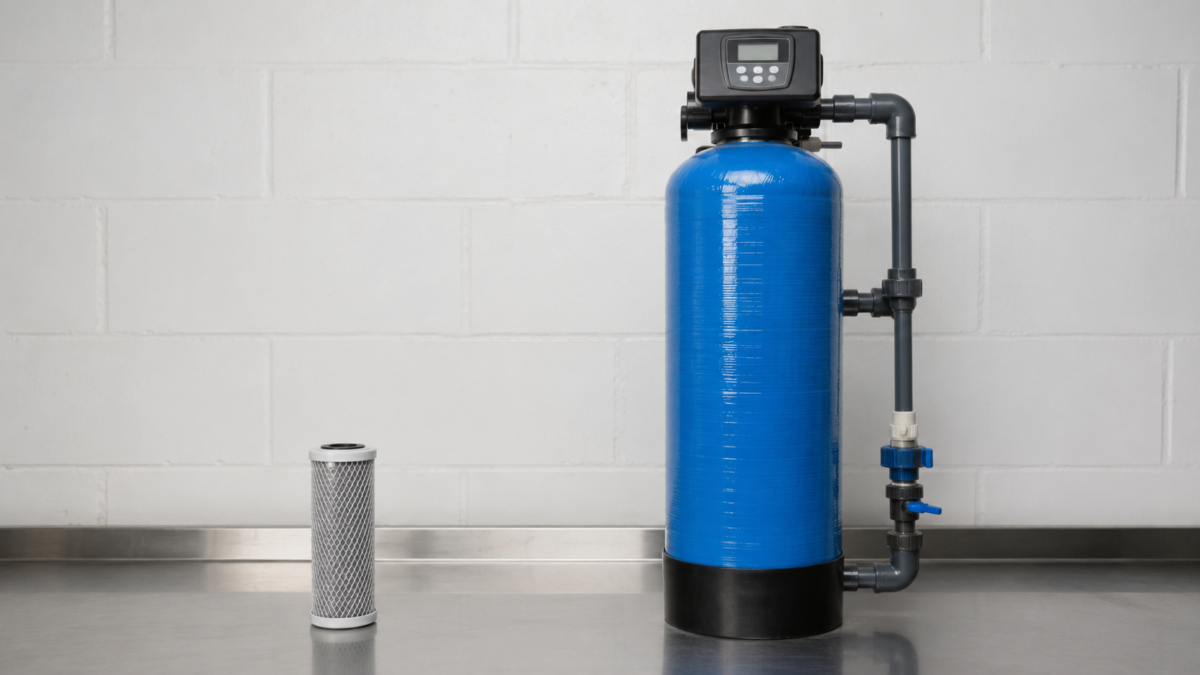
In domestic systems an activated carbon filter is used as a cartridge fitted into a standard housing and replaced entirely when saturated. In industrial applications the carbon bed sits in large tanks and is cleaned by automatic backwashing. At high flow the tank build is preferred.
The difference in scale also changes the logic of maintenance. In cartridge systems the answer is simple: the saturated part is taken out and a new one fitted. In tank systems the bed stays in place and the sediment collecting in it is removed by periodic backwashing, while the carbon bed itself is renewed at longer intervals.
| Criterion | Domestic (Cartridge) | Industrial (Tank) |
|---|---|---|
| Build | A cartridge in a standard housing | A carbon bed in a large body |
| Flow | Low and medium | Suited to high flow |
| Maintenance | Cartridge replacement | Backwashing + bed renewal |
| Installation | The user can do it | Technical service is needed |
| Where It Is Used | Home, office, small business | Plant, production, heavy consumption |
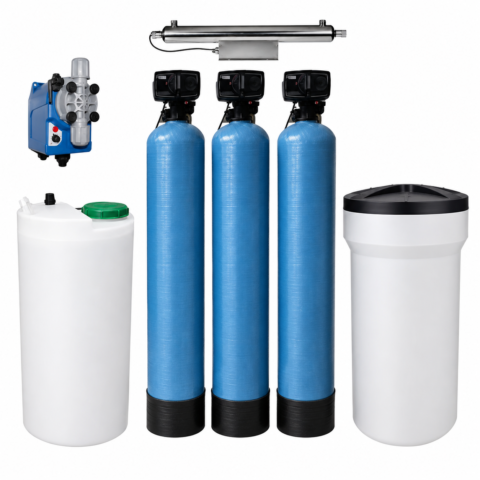
The reason a tank build is preferred in high-flow plants is simple: cartridge systems cannot provide the contact time that flow needs and would call for very frequent changes. For needs of that kind, industrial-scale carbon units offer a suitable answer in both capacity and ease of operation.
Whatever the scale, the principle stays the same: an activated carbon filter is a consumable and its holding capacity is limited. In industrial systems that limit is delayed by backwashing, but it does not disappear.
When Is an Activated Carbon Filter Changed?
The time to change is set by use, not by the calendar. The return of a chlorine taste, an odour becoming noticeable again and a fall in flow are the clearest signs. The interval varies with the inlet water quality, the chlorine load and the amount consumed. A stage left too long brings a risk of blockage and biological build-up.
The most deceptive thing about the carbon stage is that it does not show its saturation from the outside. While a sediment filter visibly darkens, a saturated activated carbon filter looks the same. Reading the signs therefore matters:
The Chlorine Taste Is Back
If a taste like a swimming pool is noticeable in the water again, the bed has reached saturation.
An Odour Has Appeared
The return of an odour that had been removed shows that the holding capacity is exhausted.
The Flow Has Fallen
A slowing flow points to the bed being blocked with sediment.
The Period Is Up
Even where there is no sign, the stage should be renewed when the period in the manual is reached.
The consequences of delay fall under two headings. The first is technical: a saturated stage lets chlorine through and the membrane is left unprotected. The second is hygienic: a damp, saturated bed left unchanged for a long time can provide a suitable ground for biological build-up. Changing an activated carbon filter is therefore a maintenance item that should not be put off.
We took up the whole maintenance routine and the order in which each stage is renewed, step by step, in our filter change guide. For the exact period, the recommendation in your unit’s manual should be taken as the basis and interpreted according to your own water conditions.
How Is the Right Activated Carbon Filter Chosen?
The choice is made on four criteria: the real problem in your water, the flow needed, the type of unit and the compatibility of the cartridge size. Where chlorine and taste come first, a coconut-based build stands out; where the organic load is high, a coal-based one. A mismatch in size causes leaks and lost performance.
The most practical way of running the decision is in this order:
-
Define the problem
A chlorine odour, a taste problem or an organic load? The main complaint determines the choice of raw material.
-
Establish the flow
A cartridge is enough for domestic use, while a tank build is needed at high flow.
-
Check the type of unit
The stage build of your existing system determines which format of carbon you will use.
-
Confirm the size
The cartridge size has to match the housing; a mismatched part creates a risk of leaks and lost efficiency.
Once those four steps are complete, the activated carbon filter that suits your need is largely defined. Where you are not sure, the safest route is to have compatibility checked by stating your unit model. A cartridge of the wrong size means both a risk of leaks and lost treatment.
One last reminder: an activated carbon filter is not a treatment system on its own. It is one link in the chain and makes sense together with the other stages. Where your water has hardness or a high dissolved solids load, other solutions should be planned alongside the carbon stage.
Let’s establish the carbon stage that suits your water together
You can look at the options to choose a stage suited to your type of unit, your flow and the real problem in your water.
See the Treatment SolutionsFrequently Asked Questions
What exactly does an activated carbon filter do?
It separates the chlorine, odour, taste, colour and some organic compounds in water by holding them on its porous surface. It works on the principle of adsorption. Because it also holds chlorine, it takes on a protective role for the membrane stage behind it and extends the life of the system.
Does it solve a limescale problem?
No. Limescale comes from the calcium and magnesium in water, and those ions are not held on the carbon surface. Water softening solutions are needed for limescale build-up. The carbon stage works on taste, odour and chlorine.
Does it lower the TDS value?
Not markedly. The dissolved salt and mineral load is largely unaffected by the carbon stage. Lowering TDS calls for advanced stages such as reverse osmosis.
Should I buy coal-based or coconut-based?
It depends on your problem. Where a chlorine odour and taste problem comes first in drinking water, a coconut-based build is widely preferred. Where the organic load is high and industrial pre-treatment is needed, coal-based carbon comes to the fore.
How do I know when to change it?
The clearest sign is the return of the taste and odour that had been removed. A fall in flow also points to blockage. There is no fixed period; it varies with the inlet water quality and consumption. The period in the manual should be taken as the basis and interpreted for your own conditions.
What happens if I do not change it?
A saturated stage stops holding chlorine and the membrane is left unprotected; that can lead to permanent damage. A damp bed left unchanged for a long time also brings a risk of biological build-up. The change should therefore not be put off.
Is an activated carbon filter enough on its own?
It is not a treatment system on its own. It is effective on taste, odour and chlorine; but sediment, hardness, dissolved solids and microbiological load call for separate stages. The right result comes from the stages working together.
Conclusion
An activated carbon filter is both the most noticeable and the most misunderstood stage of a treatment system. Working on the principle of adsorption, it removes chlorine, odour, taste and some organic compounds from water and markedly improves its drinkability. It does not, on the other hand, remove limescale, hardness or the dissolved solids load — those call for different stages. Its most critical job is usually invisible: by holding chlorine it protects the membrane and extends the life of the most expensive part of the system. In choosing a type, the raw material and the build should be settled by the real problem in your water. The time to change is read not from a calendar but from the signs: the return of taste and odour shows that the stage has done its work. An activated carbon filter renewed on time protects both the quality of your water and the life of your unit.
Let’s plan the carbon stage that suits your unit
For a carbon solution suited to your water quality, your flow and your type of unit, and for planning the maintenance, you can consult the Water Point expert team.
Discover the Solution That Suits You