
What Is Deionised Water? How It Is Made and Where It Is Used
In a laboratory working to the same method, results move from batch to batch; unexplained marks appear on surfaces coming off a coating line; a cosmetic formulation made to the same recipe does not stay stable this time. Behind those three apparently unrelated problems there is often the same variable: the ions dissolved in the water. Water from which those ions have been removed is called deionised water, spelt deionized in American English and often shortened to DI water.
In this guide we take up how deionisation works, how it differs from the ideas of pure water and distilled water, what it removes and what it cannot, and why it is usually built together with reverse osmosis, from an engineering point of view. By the end you will know clearly which level of purity your own process needs and how the system is engineered.
What Is Deionised (DI) Water?
Deionised water is water from which the dissolved ions have been removed by ion exchange. Charged particles such as calcium, magnesium, sodium, chloride and sulphate are held by special resins. Because the ion load falls, the electrical conductivity of the water drops to very low levels; that is the basic indicator of purity.
The key idea in that definition is the “ion”. Mineral salts dissolved in water break down into particles carrying an electrical charge. Those particles are invisible, do not cloud the water and often do not even change its taste; but they are decisive in sensitive processes. Deionisation is a treatment method targeting exactly those charged particles.
The deionised water obtained is, chemically, water that has been “emptied”. No ion is left to interfere in an analysis, no mineral is present to create an unwanted reaction in a coating bath, and no salt is left to mark a surface when it dries. In that sense deionised water is an input quality defined for industrial and laboratory processes.
One point should be made at the outset: deionised water is produced for technical and laboratory applications. It is not intended to be considered as drinking water; its field of use is industrial processes, analysis and production lines.
How Does Deionisation Work?
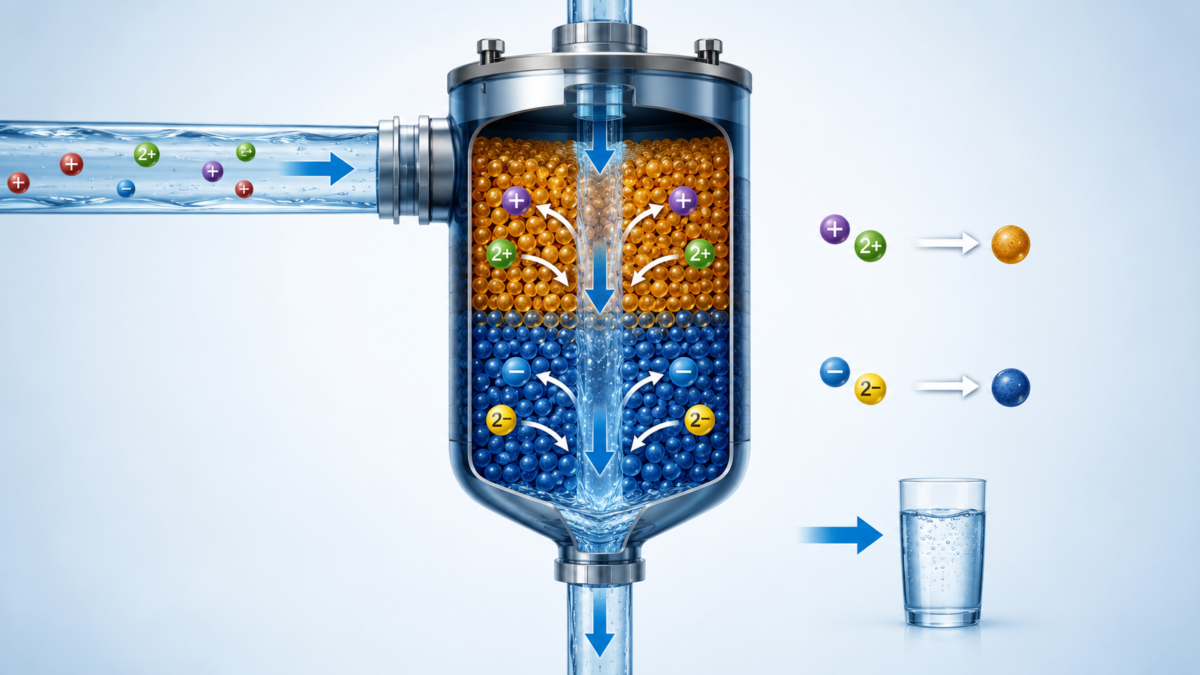
Deionisation takes place through cation and anion resins working together. The cation resin holds positively charged ions and releases hydrogen in their place; the anion resin holds negatively charged ions and releases hydroxyl. The hydrogen and hydroxyl released combine to form water; what is left is deionised water.
The process works as a two-way exchange. As the water passes through the resin bed, cations such as calcium and sodium attach to the resin and a hydrogen ion is released in their place. At the same time anions such as chloride and sulphate are held and a hydroxyl ion given in return. When those two free ions combine, what appears is not a new contaminant but water itself.
What determines the efficiency of that exchange is how the resins are arranged. There are two main approaches:
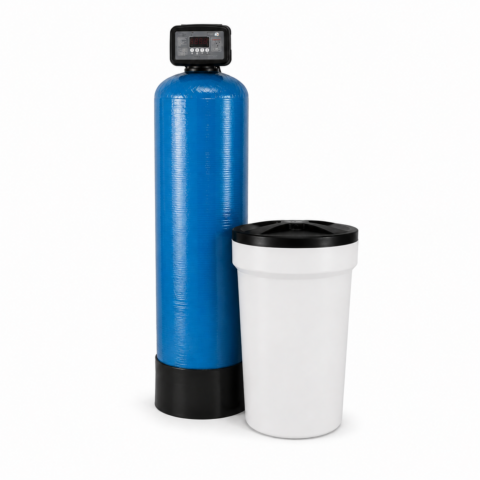
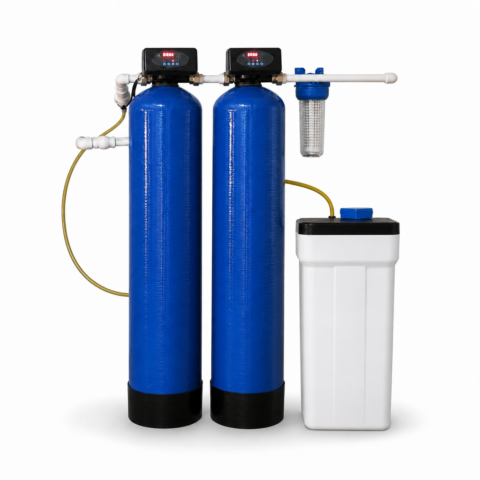
Cation and anion in separate tanks
The water passes first through the cation and then the anion bed; each resin sits in its own tank.
- The resins can be renewed separately
- It is an advantage at high ion loads
- It is generally used as a first stage
- The outlet purity is lower than a mixed bed
A mixed bed build
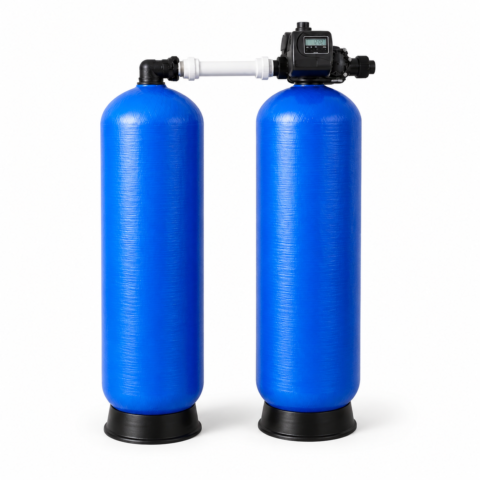
The cation and anion resins are mixed evenly inside the same tank.
- The exchange is repeated millions of times
- It provides the lowest conductivity level
- It is positioned as the final stage
- It is the standard for high-purity applications
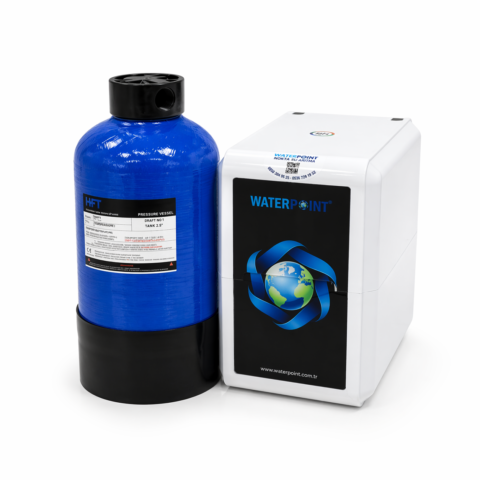
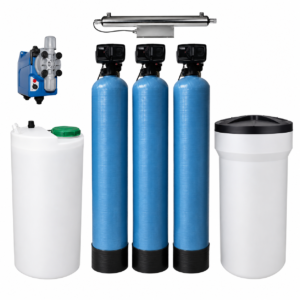
Mixed bed resin is the solution giving the highest purity in producing deionised water. Because the cation and anion beads are intermingled, the water undergoes countless exchanges as it moves through the bed. That means a far lower level of residual ions in a single pass. Used at the final stage of the system, mixed bed pure water resin is the component taking on that job.
Resins reach saturation over time; once they are full of the ions they have held, they can no longer exchange. At that point they are either regenerated or renewed. The only indicator of the moment of saturation is conductivity.
Why Is Conductivity Measured?
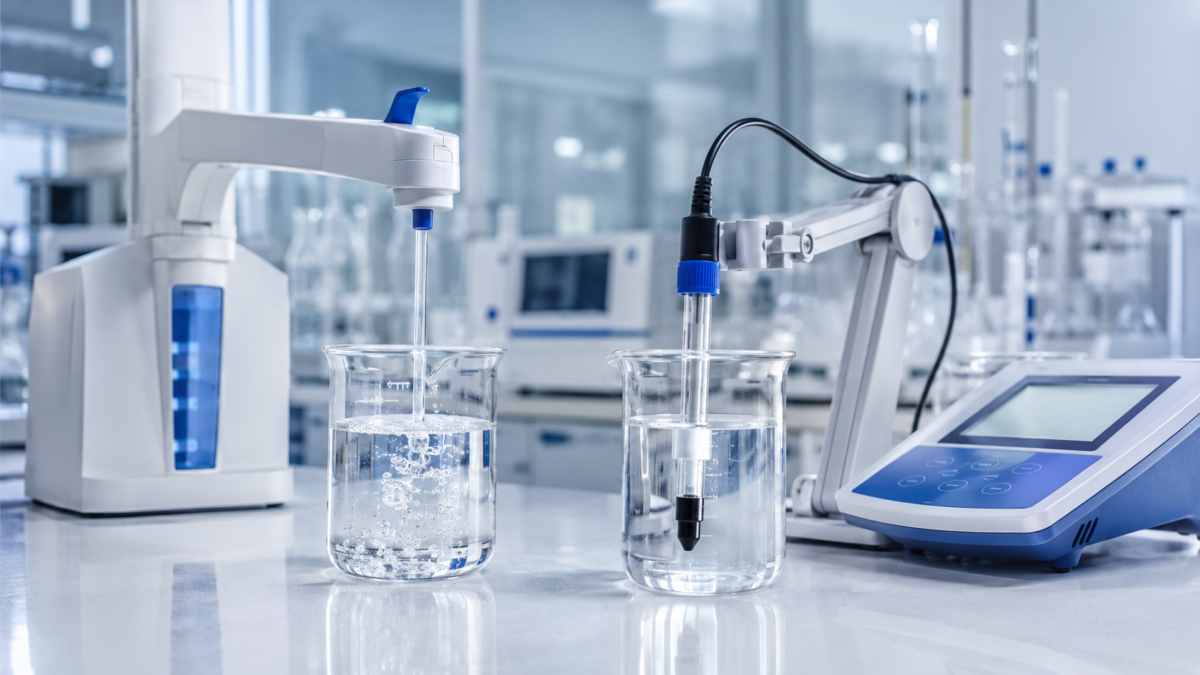
The capacity of water to conduct electricity is directly proportional to the amount of ions in it. As ions fall, so does conductivity; measuring conductivity is therefore the most practical and reliable indicator of the quality of deionised water. That resins have reached saturation is also first understood from a rise in that value.
The logic of the measurement is simple: pure water conducts electricity very poorly, because there are almost no charged particles to carry the current. As the ion concentration rises, conduction becomes easier. Thanks to that relationship, purity can be followed instantly and continuously without a chemical analysis.
In industrial systems conductivity is generally monitored continuously on the line. When the value rises above a set limit the system gives a warning or starts the resin renewal process. That automatic monitoring stops the quality of the deionised water depending on the operator’s attention.
We took up the basis of the measurement and its relationship with dissolved solids article on TDS and conductivity in detail. The exact limit values are established from the application and the relevant standards; bodies such as ASTM and ISO define that framework by dividing laboratory water into graded classes.
In producing deionised water, following the conductivity is not a preference but an operating necessity. Because resin saturation advances gradually, without regular measurement a loss of quality is only noticed once the process has been spoiled.
Are Deionised Water and Pure Water the Same Thing?
Not exactly. Pure water is the umbrella term describing water from which unwanted substances have been removed and does not state the method used; deionised water is a sub-type reaching that aim by ion exchange. In short, every deionised water counts as pure water, but not every pure water is deionised.
We took up that distinction in detail, comparing it with the terms distilled and demineralised water in a single table, in our difference between deionised water and pure water article. The rest of this piece focuses on deionised water itself, how it is produced and where it is used.
The Difference Between Deionised and Distilled Water
Distillation treats water by evaporating and condensing it; non-volatile salts and minerals are left behind. Deionisation removes ions by holding them on resin. The two methods are strong on different groups of contaminant, and in modern applications producing deionised water offers a more common and more economical solution.
The working logic of the two technologies is fundamentally different:
| Criterion | Distilled Water | Deionised Water |
|---|---|---|
| Method | Evaporation and condensation | Ion exchange (resin) |
| Target | All non-volatile components | Dissolved ions |
| Ion Removal | It is effective | It is effective to a very high degree |
| Volatile Organics | Some can be carried with the vapour | It does not remove them on its own |
| Energy Required | High (it requires heating) | Low (a chemical exchange) |
| Production Rate | Relatively slow | Fast in continuous flow |
Distillation was the standard laboratory method for many years and is still used in certain applications. But because of its high energy consumption, slow rate of production and maintenance load, it has largely given way today to systems producing deionised water.
One important detail: during distillation, some organic compounds that can evaporate with the water may be carried into the condensate. In deionisation there is no such risk; but this time non-ionic components cannot be held. The blind spots of the two methods are different, and that is the subject of the next section.
What Does Deionised Water Not Remove?
Deionisation targets only charged particles. It does not on its own remove non-ionic organic compounds, bacteria and microorganisms, particles or dissolved gases. Producing deionised water is therefore always built together with suitable pre-treatment stages.
This section draws the honest limits of the technology. To hold something, the resin needs an electrical charge; a molecule carrying no charge does not interest the resin and passes freely through the bed. The table below makes those limits clear:
| Contaminant | Deionisation | The Stage Needed |
|---|---|---|
| Dissolved ions (salts, minerals) | It removes | Cation-anion resin |
| Hardness ions | It removes | Cation resin |
| Particles and sediment | It does not remove | Pre-filtration |
| Non-ionic organics | It does not remove | Activated carbon, reverse osmosis |
| Bacteria and microorganisms | It does not remove | UV (ultraviolet) treatment |
| Chlorine | It damages the resin | Activated carbon (a first stage) |
Chlorine is the most important thing that damages the structure of the resin. Where it is not removed at a first stage, resin life shortens markedly. On a deionised water line, therefore, a carbon stage is not an option but essential protection.
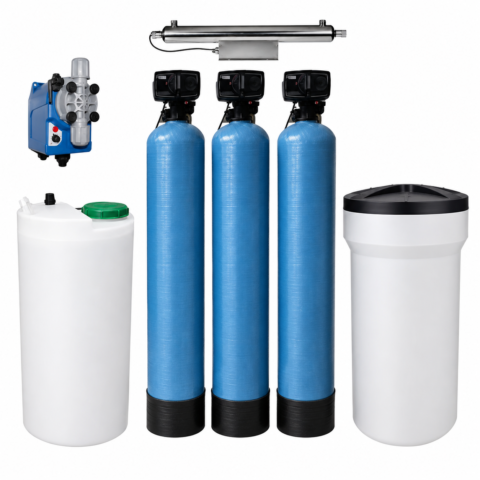
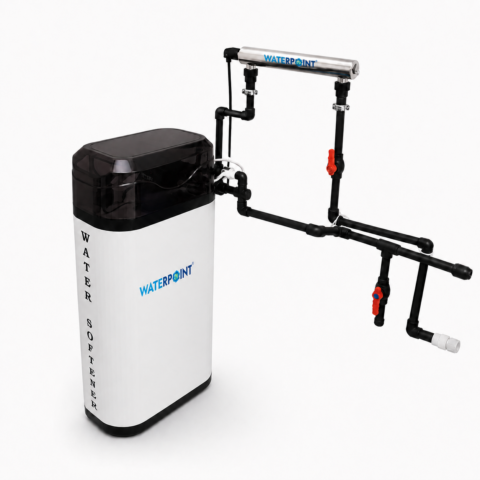
Microbiological load is a separate heading. In suitable conditions a resin bed can provide ground for microbiological growth. Where that risk is present, a UV (ultraviolet) treatment stage is added to the line and microbiological risks are reduced. Which stages are needed is established from the purity class aimed for and the application.
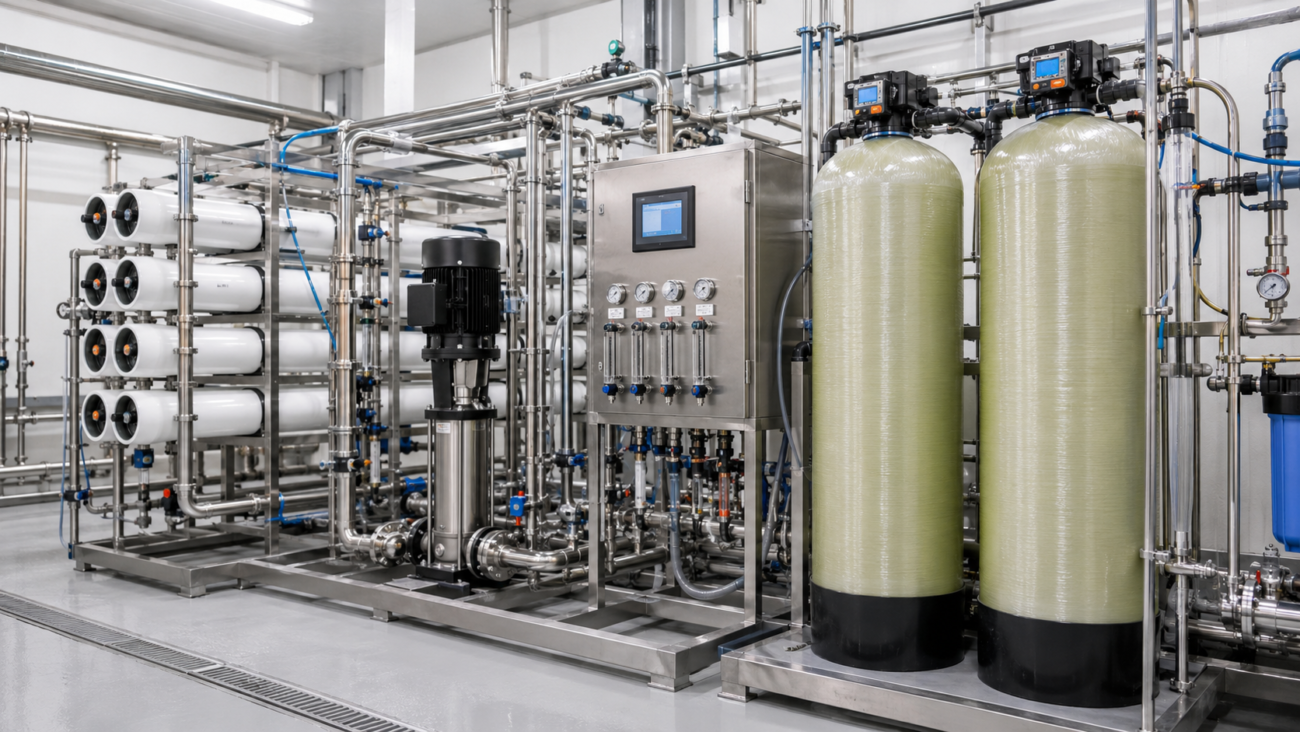
Why Reverse Osmosis First, Then Deionisation?
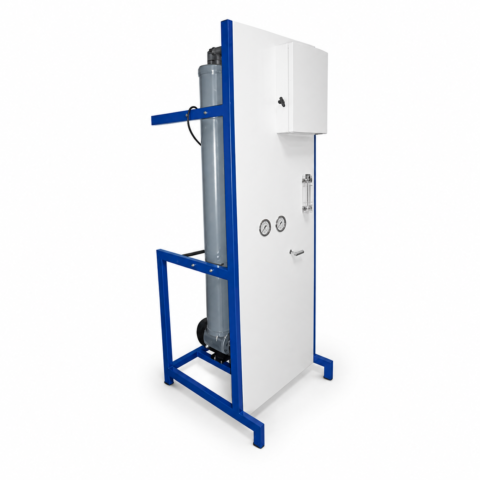
Reverse osmosis separates up to 99% of the dissolved load in water. Deionisation then holds the trace ions that remain. That sequence markedly reduces the load on the resin, extends its life and lowers the running cost. The two technologies are therefore built together almost always.
The logic is economic. The holding capacity of resin is limited, and every ion it holds comes out of that capacity. Feeding raw water straight to the resin exhausts the capacity very quickly and calls for frequent renewal. When the reverse osmosis stage takes most of the ion load first, only the “finishing work” is left for the resin.
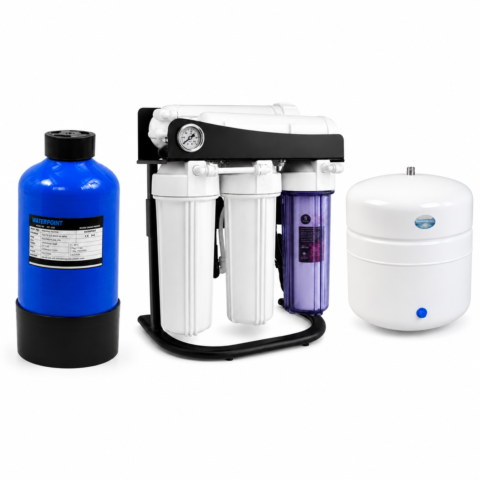
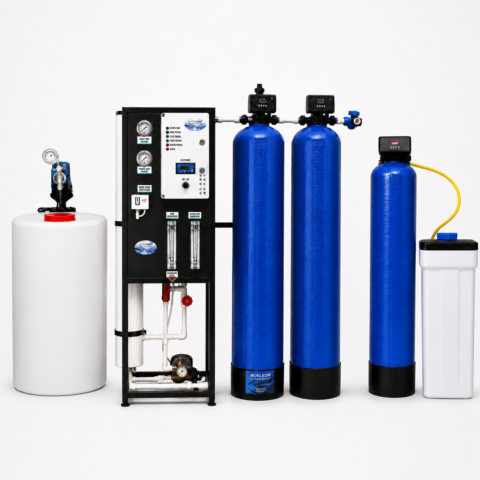
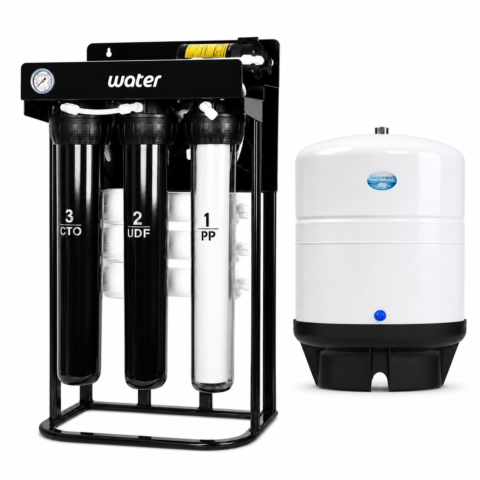
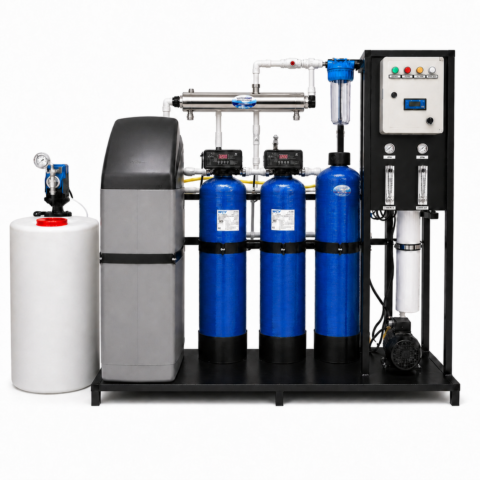
A typical deionised water production line works in this order:
Pre-Filtration
Sediment and particles are held back; the membrane and the resin are protected from mechanical load.
Activated Carbon
Chlorine and organic components are removed; the membrane and the resin are protected from chemical damage.
Reverse Osmosis
Most of the dissolved load is separated at the membrane; the load going to the resin falls.
Deionisation
The remaining trace ions are held in the mixed bed; conductivity drops to its lowest level.
We took up step by step how the membrane stage works and why it is so effective in our how reverse osmosis works article. In systems where those two technologies are built together, deionised water is produced both steadily and economically.
Reversing that sequence is a serious design error. Putting the resin first means wasting capacity and multiplying the running cost. In engineering, therefore, the order of the stages is as critical a heading as the choice of equipment.
Let’s establish the level of purity your process needs
You can look at the solutions to plan a build suited to your target conductivity, your flow and your point of use.
See the Deionised Water SystemsWhere Is Deionised Water Used?
Deionised water is used in fields such as laboratory and analytical work, feeding medical devices, cosmetics and chemical production, electronics and coating, automotive paint rinsing and boiler feed. What they have in common is sensitive processes where the ions in the water directly affect the result.
In short, the main points of use are these:
- Laboratory and analysis: Ion interference is prevented in preparing reagents, feeding instruments and rinsing glassware.
- Medical applications: Mineral residue is prevented in feeding and rinsing devices.
- Cosmetics and chemicals: Because water is the main component of a formulation, consistency between batches is secured.
- Electronics and coating: Water leaving no ion trace at the final rinse preserves surface quality.
- Automotive paint lines: Minerals in the rinse water create marks and defects on the surface.
- Boiler feed: Water of low conductivity is needed in high-pressure systems.
- Car washes: DI water in the final rinse lets bodywork dry without mineral spots; see car wash water treatment.
- Window and facade cleaning: Water-fed poles use deionised water so that glass dries without marks; see pure water for window cleaning.
We took up in detail in a separate article why each of those fields needs which level of purity and what changes by sector; for details specific to your sector see uses of pure water.
Resin Life and Running Costs
Resin life is not fixed; it is determined by the ion load of the inlet water, the amount consumed and the quality of the pre-treatment. A high ion load exhausts the capacity quickly. Well-built pre-treatment extends resin life and markedly lowers the running cost of producing deionised water.
Three factors shape the economics of operation. The first is the inlet water quality: the fewer ions reaching the resin, the longer the bed lasts. The second is the amount consumed; as the daily flow rises, so does the total ion load. The third is the purity aimed for — a lower conductivity target means taking the resin out of service earlier.
There are two approaches to resin that has reached saturation:
Regeneration in Place
The resin is renewed in place with suitable chemicals. It is preferred on large-scale systems; it calls for infrastructure and expertise.
Cartridge / Bed Replacement
The saturated resin is taken out and replaced with new. It is a practical and quick answer at small and medium scale.
Protection by Pre-Treatment
The reverse osmosis and carbon stages reduce the load reaching the resin and lower how often it has to be renewed.
The most important engineering decision here is the investment in pre-treatment. A deionised water system running without a reverse osmosis stage may look cheaper in the short term but costs far more over time because of how often the resin has to be renewed. Calculated on total cost of ownership, the picture changes clearly.
For approaches to water efficiency and good practice at plant scale, the US Environmental Protection Agency’s resource on good practice in facility water management offers a general framework on optimising water use in laboratories and production plants.
How Is the Right Deionised Water System Chosen?
The choice is made on five criteria: the level of purity aimed for, the daily flow requirement, whether use is continuous or intermittent, the number of points of use and the pre-treatment required. Once those headings are clear, the capacity and the stage build of the deionised water system are established for the plant.
The decision runs in this order:
-
Define the target purity
Establish the conductivity your application requires; purity higher than necessary creates unnecessary cost.
-
Calculate the flow
Daily consumption and instantaneous demand determine the production capacity and the storage requirement.
-
Establish the pattern of use
Continuous consumption points to a high production capacity, sharp peaks in demand to a build with storage.
-
List the points of use
Will a single instrument be fed, or several points along a line?
-
Plan the pre-treatment
Filtration, carbon and reverse osmosis stages are added to the build in line with the raw water analysis.
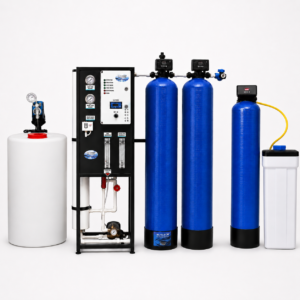
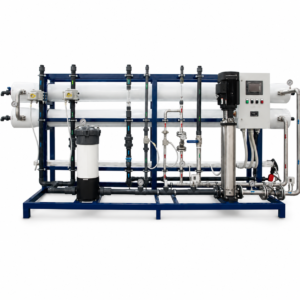
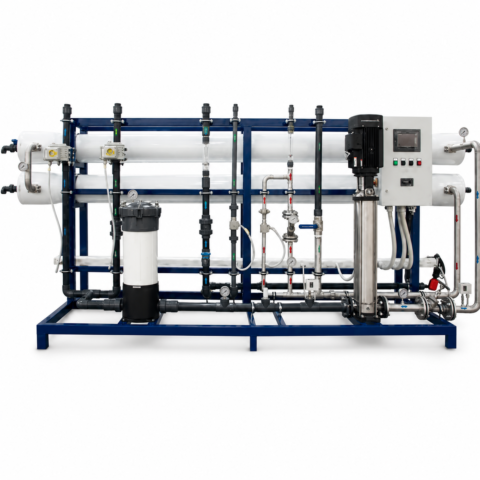
Scale is a critical factor too. There is a great difference between the daily need of a laboratory and that of a production plant running three shifts. For medium-scale production, semi-industrial systems offer a balanced solution, while on high-flow sites industrial-scale deionised water systems are sized project by project.
Where a compact solution is wanted to feed a particular line, modular deionised water units offer an option that can be integrated into an existing system. The right build is established in every case from the water analysis and real consumption data.
Deionised water has to be protected after it is produced too. Where the storage and distribution line is not made of suitable material, very pure water can dissolve ions from the surface it touches and lose its purity. The design of the line is part of the system.
Frequently Asked Questions
What is deionised water, in short?
It is water freed of its dissolved ions by ion exchange. Cation and anion resins hold the charged particles in the water; the result is water of very low conductivity, suited to industrial and laboratory processes.
Are deionised and distilled water the same?
No. Distillation rests on evaporation and condensation, deionisation on ion exchange. Both provide purity but are strong on different groups of contaminant. In modern applications deionisation is more common because of its energy efficiency and rate of production.
Does deionisation remove bacteria and organic matter?
Not on its own. The resin holds only charged particles; non-ionic organics, particles and microorganisms call for separate stages. The system is therefore always built together with suitable pre-treatment.
Why is it used together with reverse osmosis?
Reverse osmosis separates most of the ion load first and far less work is left for the resin. That sequence extends resin life, reduces how often it has to be renewed and markedly lowers the total running cost.
When is the resin renewed?
There is no fixed period; the ion load of the inlet water, the amount consumed and the purity aimed for are what decide it. The most reliable indicator is following the conductivity: when the value starts to rise, the resin is approaching saturation.
At what capacity should the system be chosen?
The capacity is established by assessing the target purity, the daily flow, the pattern of use and the number of points together. Sharp peaks in demand call for a build with storage, continuous consumption for a high production capacity.
How should the water produced be stored?
A closed storage and distribution line made of suitable material should be used. Because very pure water can dissolve substances from the surfaces and the environment it touches, the conditions of storage play a direct part in preserving purity.
Conclusion
Deionised water removes the invisible variable of sensitive processes: the ions dissolved in the water. Working on the exchange logic of cation and anion resins, that method brings conductivity to its lowest level and gives consistency in analysis, repeatability in production and flawlessness in surface work. But knowing its limits matters just as much; non-ionic components, particles and microbiological load call for separate stages. The right build is therefore almost always a whole chain supported by pre-filtration, carbon and reverse osmosis stages. The way to establish the right system is clear: define the target purity, calculate your flow, and plan the build around the raw water analysis.
Let’s plan a system suited to your target purity and your flow together
To establish the level of purity and the capacity your application requires, you can consult the Water Point expert team and engineer the build together with your raw water analysis.
Discover the Pure Water Solutions