
What Is a Sand Filter? Depth Filtration and Backwashing
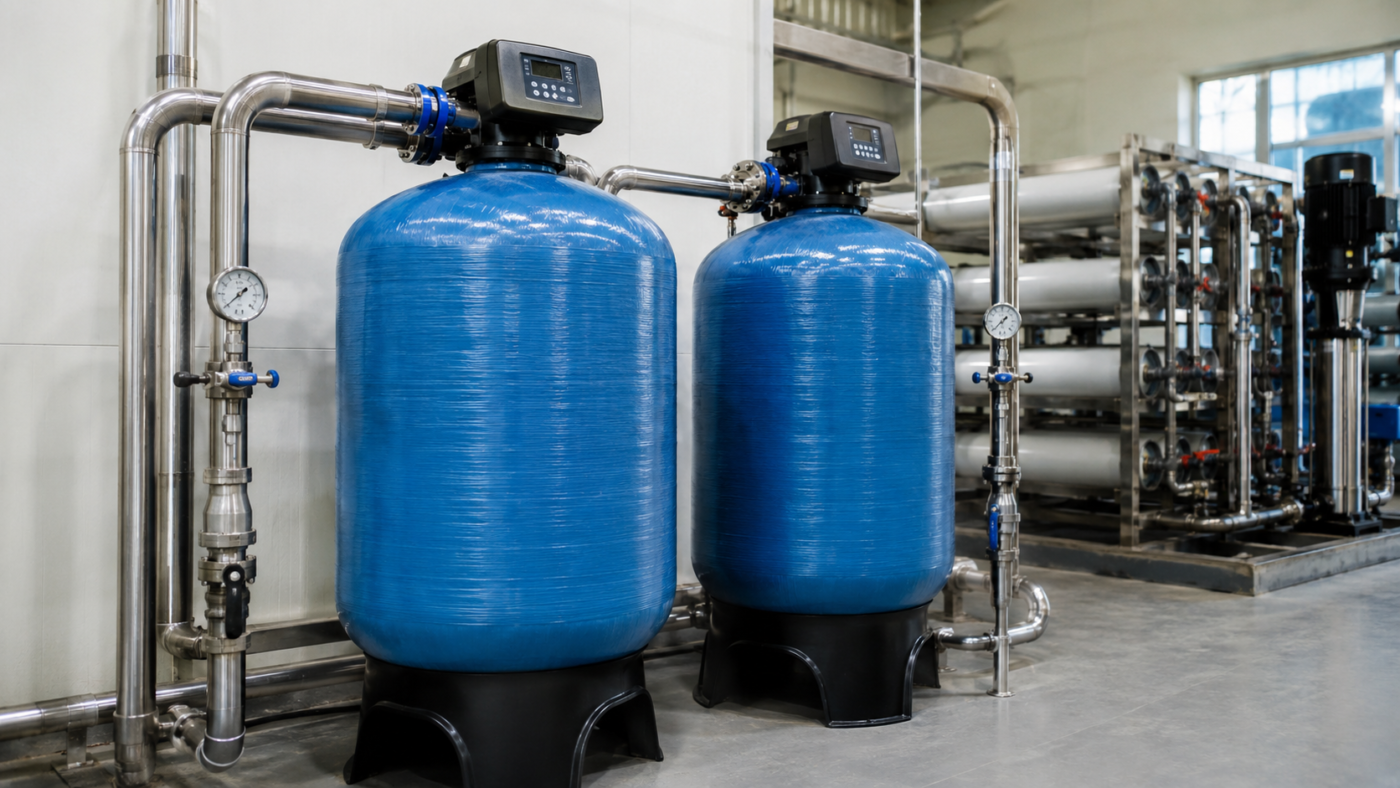
Water coming from a well or a tank looks cloudy when it is poured into a glass; a fine layer of sand collects in the tap aerators and the cartridge filter you fitted only weeks ago blocks up. That picture shows that something is missing at the very start of the treatment chain. The stage that can hold suspended solids at high flow, the sand filter, fills exactly that gap.
In this guide we take up how sand filtration works, why the layers of the bed are made of different materials, why backwashing is essential, and what the system does and does not remove. By the end of the article you will be able to judge clearly whether this stage is needed for your own water source.
What Is a Sand Filter and What Does It Do?
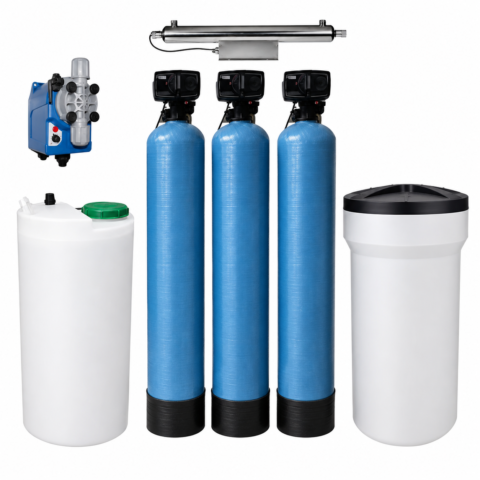
A sand filter is a pre-treatment stage in which water is passed through a bed made up of layers of quartz sand and gravel and freed physically of sediment and suspended solids. The particles are held inside the bed and the water leaves clear from below. The sediment collected is then carried out of the system by backwashing.
The key word here is “physically”. No chemical is added to the water at any point in the process; the separation is entirely mechanical. As the water moves through the bed, particles are held in the spaces between the grains and on the grain surfaces.
In a treatment chain this stage generally comes first. Its job is not only to clear the water but to protect the sensitive and costly stages behind it. In that respect a sand filter is one of the unseen but most decisive links in the system.
Its basic difference from cartridge filters is capacity. A cartridge collects the dirt it holds inside itself and is replaced when it is full. A sand bed, on the other hand, can be renewed again and again by backwashing; and that offers a sustainable answer on sources with a high particle load.
How Does a Sand Filter Work?
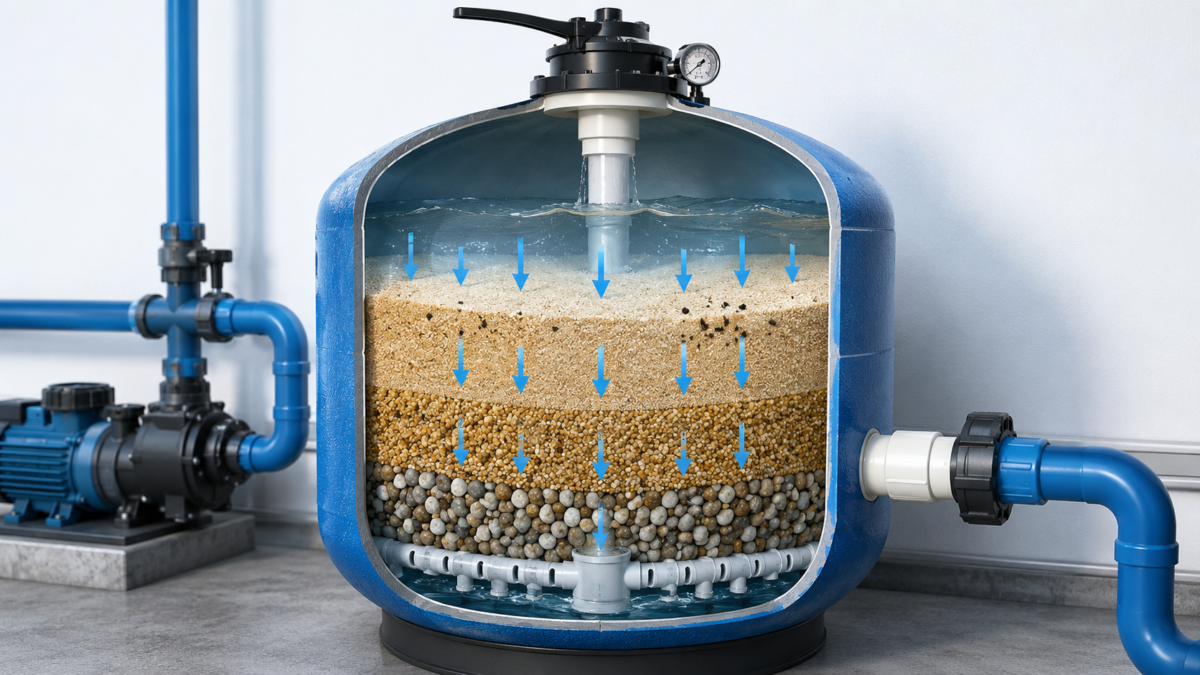
Water enters at the top of the tank and moves down through the bed. Particles are held in stages in the depth of the bed; the water leaves clear through the collection system at the bottom. That approach is called depth filtration, and by delaying surface blinding it gives a long running time.
The logic of depth filtration is the most important technical feature of a sand filter. A screen holds at the surface; a sand bed holds throughout its volume. As the water moves on, particles of different sizes stay at different depths and the whole capacity of the bed is used.
The process works on this logic: coarse particles are held in the upper part of the bed, finer ones move down and stay in the narrow spaces between the grains. Some particles attach to the grain surfaces. Because those three mechanisms work together, a marked clearing is achieved in a single pass.
Over time the bed fills and the flow becomes harder. The difference between the pressure at the inlet and the pressure at the outlet starts to rise; that is the most reliable indicator of saturation for a sand filter. At that point backwashing comes into play and the bed is brought back into service.
The technical basis of conventional filtration is set out in detail in official training sources too; the Pennsylvania state environmental agency conventional filtration training document offers a comprehensive framework on bed structure and operating principles.
What Is in the Filter Bed?
The bed generally has a layered structure. Lighter, finer material sits on top, with heavier and coarser gravel layers below. Structures using materials of different densities together are called multimedia filters; that arrangement markedly raises the holding capacity.
The reason for the layered arrangement is simple: every layer works in a different size range. As the water moves down, it passes through progressively finer filtration. A typical bed is built like this:
The Top Layer
Lighter, more porous material; it holds the coarse particles and delays the top surface of the bed blinding quickly.
The Middle Layer (Quartz Sand)
This is where the real filtration happens; medium and fine suspended solids are held here.
The Support Layer
Coarser-grained material; it stops the layers above mixing into the collection system below.
The Gravel Base
It lets the water spread and be collected evenly at the base of the tank; it keeps the flow balanced.
Quartz sand is the material most widely used in that structure; it is hard, resistant to wear and chemically stable. When a sand filter is designed, it is not only the type of material that is decisive but the proportion of the layers and the order in which they are arranged.
In multimedia structures, materials of different densities are used together. The advantage of that is that after backwashing the layers settle back into their own order thanks to the difference in density. So the bed keeps its structure through every cycle.
The layer thicknesses and grain sizes are set by the particle load of the inlet water and the flow of the system. So there is no standard recipe; the design of the bed is always shaped by the water analysis and the flow data.
What Is Backwashing, and Why Is It Essential?
Backwashing is the operation of reversing the flow and sending the sediment collected in the bed to the drain. The bed is lifted, the particles held in it are released and carried out. Without that cycle the bed blocks; the pressure loss rises, the flow falls and filtration efficiency drops markedly.
Backwashing is not a maintenance operation but a normal part of running the system. A sand filter collects the dirt it holds inside itself, so it has to be emptied regularly. The cycle generally consists of these stages:
-
Leaving the Service Position
The valve leaves the service position and the system goes into backwash mode. No water is sent to the outlet line during this time.
-
Backwash
Water is fed from below and the bed is lifted. The grains separate from one another, the sediment held is released and sent to the drain.
-
The Bed Settling
The flow is slowed and the grains sort themselves again by density. In multimedia structures the layers settle back into their own order.
-
Fast Rinse
Water is passed in the normal direction to clear the fine residue left in the bed; it continues until the outlet water runs clear.
-
Return to Service
The valve is put back into the service position and the system goes into its normal filtration regime again.
The frequency of that cycle is not fixed; it varies with the particle load of the inlet water, the amount of water used and the volume of the bed. On a source with high cloudiness the cycle grows more frequent, on a clean source less so.
A sufficient flow of water and a suitable drain connection are essential for backwashing. Where those two conditions are not met the bed cannot lift properly; the sediment is not fully discharged and packs down over time, leading to permanent blockage.
When backwashing is neglected, the consequences appear in stages. First the pressure difference rises, then the flow falls, and in the final stage the sediment in the bed packs down and forms channels. The water then passes through those channels without being filtered; the system looks as though it is working but is not doing its job.
Manual, Time-Controlled and Automatic Valve Systems
How the backwash is started depends on the type of valve. On manual valves the operation is carried out by the user. Time-controlled valves start the cycle automatically at a set interval. Advanced automatic valves, with their programmable structure, keep the operating load to a minimum.
The difference between the three approaches is decisive for ease of operation and for continuity:
User-controlled
The backwash is started and followed by hand, using the valve levers.
- It is economical and simple in structure
- It needs no power supply
- Regular attention is essential
- When it is neglected, blocking speeds up
A programmed cycle
The backwash starts automatically when the set interval comes round.
- It needs no intervention from the user
- It works consistently where consumption is steady
- It follows the same calendar even when use changes
- It is common at house and building inlets
Advanced control
A programmable structure allows the cycle parameters to be adjusted.
- The stage durations can be adjusted
- It suits industrial use
- It keeps the operating load to a minimum
- It is preferred on multi-tank builds
The valve is chosen to suit the pattern of use. On sites running without a break, manual control is not practical; the risk of it being neglected is high. On installations of that kind, automatic management is the standard. Working on a time basis, a programmed filter valve offers a balanced solution in buildings and at medium scale.
As the level of automation rises, a sand filter stops being “a piece of equipment that has to be managed” and becomes infrastructure you install and forget. That is a decisive advantage in housing-estate and business installations in particular.
What Does a Sand Filter Remove?
A sand filter removes sediment, sand, silt, particles of rust, cloudiness and suspended solids. It markedly raises the visual clarity of the water. Components that have turned into a solid form, such as oxidised iron, can also be held as particles.
The groups it holds are these:
- Sand and gravel particles: Coarse particles carried up by the well pump are held in the bed.
- Silt and mud: The fine sediment that rises after rainfall is removed.
- Particles of rust: Pieces of metal breaking away from old plumbing stay in the system.
- Cloudiness: Visual clarity rises markedly.
- Suspended solids: Fine solids that do not settle are held in the depth of the bed.
- Oxidised iron and manganese: Metals turned into a solid form can be separated out as particles.
The last item calls for care: iron in solution passes straight through a sand filter. But once it has been oxidised into a solid form it is a particle, and it can be held. So on wells with an iron problem, an oxidation stage is built ahead of the bed or into it.
On sources carrying very coarse particles, a rough separation is made first to protect the bed. The separator filter systems used for that purpose separate the heavy particles by centrifugal effect and lighten the load on the bed. Where the particle load is more limited, bag filter solutions make an alternative first stage.
What Does a Sand Filter Not Remove?
A sand filter works only on the particle side. It does not remove hardness and limescale, chlorine, odour, the TDS value or dissolved minerals. Those needs call for water softening, activated carbon and reverse osmosis stages respectively. A wrong expectation is the source of the most common installation mistake.
This section corrects the point users get wrong most often. When the water clears, many people assume “the treatment is complete”; yet clarity has to do only with suspended solids. The chemical content of the water has not changed.
| Problem | Sand Filtration | The Stage Needed |
|---|---|---|
| Sediment, sand, silt | It removes | The sand bed |
| Turbidity | It removes | The sand bed |
| Particles of rust | It removes | The sand bed |
| Hardness and limescale | It does not remove | Water softening |
| Chlorine, odour, taste | It does not remove | Activated carbon |
| TDS and dissolved salts | It does not remove | Reverse osmosis |
| Microbiological load | It does not remove | UV (ultraviolet) treatment |
The expectation that “I have had a sand filter fitted, so my limescale problem will end” has no technical basis. The bed does not hold dissolved hardness ions; a separate softening stage has to be planned for limescale.
Those limits are not a shortcoming but the defined field of the technology. A sand filter is the first link in the chain and takes on meaning together with the other stages. We took up in detail which problem in well water is solved by which stage in our treatment stages for well water article.
Where Are Sand Filters Used?
Sand filters are used on well water sources, on systems with storage, at building and housing-estate inlets, in industrial pre-treatment and as a protective stage ahead of reverse osmosis. What they have in common is applications with a high particle load calling for continuous filtration.
The main fields of use are these:
Well Water
The sand and sediment carried up by the pump are held in the bed and stopped from reaching the plumbing.
Systems With Storage
Sediment settling in the tank is kept out of the line; the clarity is preserved.
Building and Estate Inlets
Installed on the main line, it protects the whole plumbing system from particle load.
Industrial Pre-Treatment
The suspended solids load of the water entering the process line is lowered from the start.
Ahead of the Membrane
On reverse osmosis systems it is the stage that keeps the membrane from fouling.
Ahead of Softening
It prevents the resin bed being fouled by sediment and channelling.
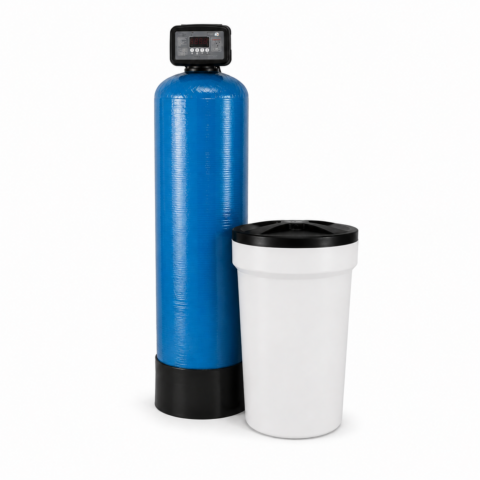
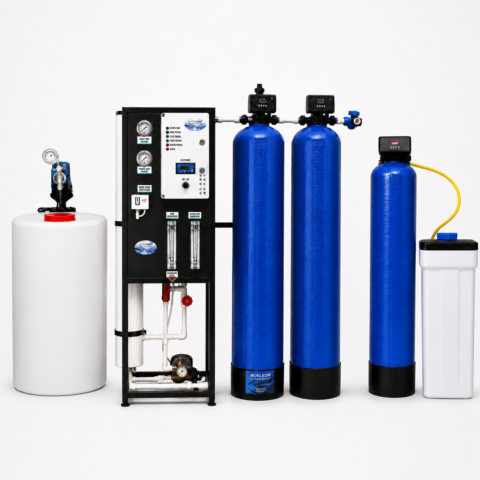
The scale varies with the field of use. In building and medium-scale installations, automatic backwash sand units are widely preferred. On high-flow sites, industrial-scale sand units are sized project by project.
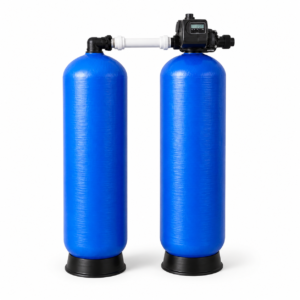
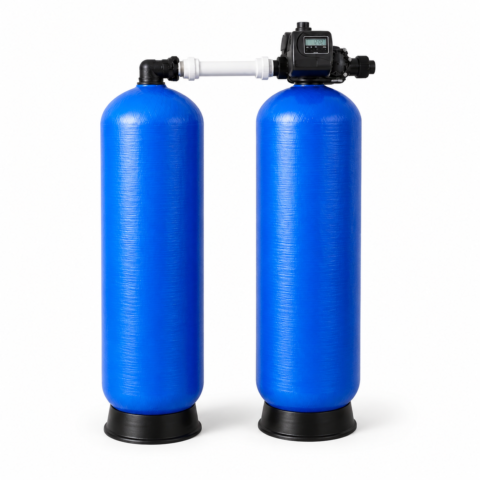
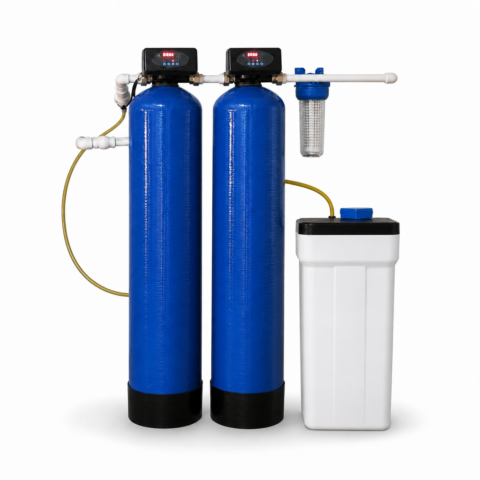
In applications calling for very high flow, the distribution structure inside the tank changes too; in installations of that kind, surface-piped sand filter systems spread the flow evenly along the bed. The tank is chosen according to the structure of the stage; for different beds, sand, carbon and softening tanks can be chosen from the same body family.
We took up in detail the scope of systems installed at the building inlet and the logic of installing them in our building inlet treatment systems article.
Let’s establish the filtration stage that suits your water source
To plan the tank and valve structure that suits your particle load and your flow, you can look at the options.
See the Sand Filtration Systems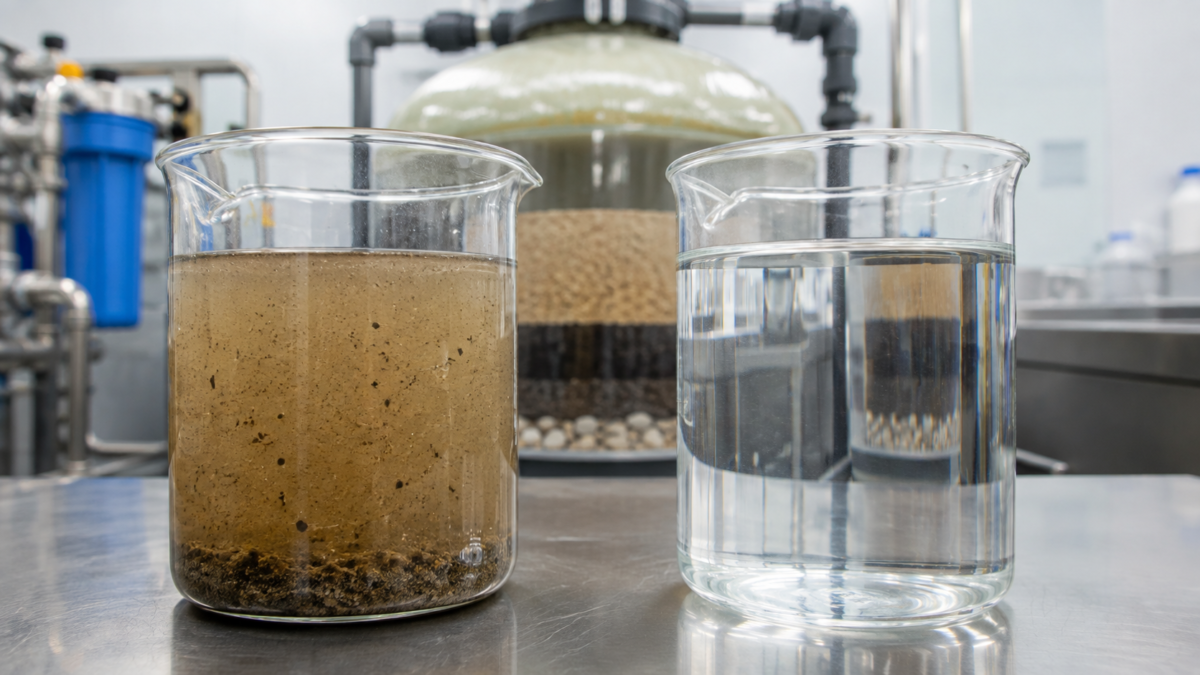
Why Is It Needed Ahead of Reverse Osmosis and Softening?
Sediment blocks the reverse osmosis membrane and the softening resin directly. A sand filter holds those particles from the start and lightens the load on the main stages. On systems installed without pre-treatment the membrane life shortens, the resin is fouled and maintenance grows markedly more frequent.
This is one of the basic rules of system design. The membrane and the resin are the most valuable components of a treatment chain, and both are defenceless against particle load. When the membrane surface fouls, output falls; when the resin bed is fouled, channelling begins and softening efficiency drops.
The economics are clear: a relatively low-cost sand filter protects far more expensive stages for years. Saving on pre-treatment may look like a gain in the short term, but in the medium term it comes back as the cost of replacing the membrane and the resin.
We explained in detail why the membrane is so sensitive and how fouling affects performance in our membrane filter article. The chain logic applies here too: every stage protects the next.
Fouling of the Membrane
Particles collecting on the surface make the flow harder; output falls and cleaning grows more frequent.
Fouling of the Resin
Sediment settles into the bed; channelling forms and softening efficiency drops.
Cartridge Consumption
Without pre-treatment, cartridge filters fill very quickly and need changing often.
Wear on the Valve
Particles cause wear on the valve and gasket surfaces, leading to leaks.
What to Watch in Choosing and Maintaining It
In choosing, the flow, the tank size, the bed material and the type of valve are assessed together. There should also be a sufficient flow of water and a suitable drain connection for backwashing. In maintenance, periodic checks of the bed and following the pressure difference are essential. The exact sizes are set by the flow and the water analysis.
For a sound choice the following headings are clarified in order:
- Flow requirement: The instantaneous flow the system has to meet sets the tank size directly.
- The particle load: The cloudiness and the amount of sediment in the inlet water shape the structure of the bed.
- The bed material: A decision is made between a single-layer sand bed and a multi-layer multimedia structure.
- The type of valve: A manual, time-controlled or automatic structure is chosen to suit the pattern of use.
- The backwash conditions: A sufficient wash flow and a drain connection should be confirmed in advance.
- The space: Room is needed for the height of the tank, for filling the bed and for working on the unit.
On the maintenance side the most important indicator is the pressure difference. If the difference between inlet and outlet is rising over time and does not fall despite backwashing, it may be time to renew the bed. A sand bed is long-lived but not endless; over time the grains wear and the holding efficiency drops.
The checks to be made periodically are these: the clarity of the outlet water after a backwash, the valve positions working correctly, the drain line not being blocked, and the level of the bed being maintained. When those checks are done regularly, a sand filter runs for many years without trouble.
It would not be right to give a general formula for the exact tank size, the bed volume and the wash parameters; those are set by the flow and the water analysis. Those data are brought together during the site survey and the system engineered from them.
No water passes through the system during a backwash. On installations calling for uninterrupted flow, the cycle is planned for the hours of low use or a multi-tank build is preferred.
Frequently Asked Questions
What is a sand filter, and what does it do in short?
It passes water through a bed made up of layers of quartz sand and gravel and physically holds sediment, sand, silt and suspended solids. It raises the clarity of the water and protects the sensitive stages behind it from particle load.
How often should backwashing be done?
There is no fixed period; it varies with the particle load of the inlet water, the amount of water used and the volume of the bed. A rise in the pressure difference is the most reliable indicator that a backwash is needed.
Does it solve a limescale problem?
No. The bed holds only suspended solids; calcium and magnesium ions in solution pass through. A separate water softening stage is needed for limescale build-up.
Can it be used instead of a cartridge filter?
They work at different scales. Cartridge filters are practical at a low particle load and a low flow; at a high sediment load they fill very quickly. A sand bed, being renewable again and again by backwashing, offers a sustainable answer.
When is the sand bed replaced?
The bed is long-lived, but over time the grains wear and the holding efficiency drops. Where the pressure difference does not fall despite backwashing and clarity cannot be achieved in the outlet water, renewing the bed comes onto the agenda.
Is a separate drain essential for backwashing?
Yes. A suitable discharge line is needed for the sediment collected in the bed to be carried out of the system. A sufficient wash flow is also needed for the bed to lift properly.
Do I need a sand filter if I already have a reverse osmosis system?
If there is a particle load in the inlet water, it is definitely needed. Sediment blocks the membrane surface, lowering output and shortening the life of the module. Pre-treatment is the most economical way of protecting the membrane.
Conclusion
The success of a treatment chain is usually settled at the very first stage. A sand filter works on the principle of depth filtration, holding sediment, silt, rust and the suspended solids that cause cloudiness inside the bed; and thanks to backwashing it renews itself again and again. Its limit is clear: hardness, chlorine, odour and the dissolved solids load pass through this stage, and softening, activated carbon or reverse osmosis are needed for those. Its real value lies in its protective job — by keeping the membrane and the resin clear of fouling it extends the life of the whole system. Three things are needed for a sound choice and sound running: sizing to suit the flow, regular backwashing and periodic checks of the bed.
Let’s establish the sand filter build that suits your flow
To plan the tank and valve structure that suits your water analysis, your particle load and your flow, you can consult the Water Point expert team.
Discover the System That Suits You