
How to Choose a Water Purifier: A Model Guide for the Home
Dozens of models, names that resemble one another, boxes that look the same and are priced differently… Almost everyone who starts researching water purifiers gets stuck at the same point, and in the end the decision comes down to a single criterion: price. What follows is familiar too — the tank fills too slowly, the pressure is not enough, or the unit bought is too much for the home. Yet the answer to how to choose a water purifier lies not on the label but in your own water and your habits of use.
This guide does not compare brands; it offers you a clear route to a decision. First you get to know your water, then you establish where you will use it and what capacity you need, and only at the end do you move on to the type of system. Follow that order and how to choose a water purifier stops being a guessing game and becomes a measurable match.
How to Choose a Water Purifier: What Data Does the Decision Rest On?
The answer to how to choose a water purifier rests on four pieces of data: the quality of your water, your daily consumption, your mains pressure and your installation space. Once those four are clear, the right capacity, system type and pump requirement emerge on their own. Price is not the start of the decision but its result.
Think of those four as an equation. Water quality determines which stages the unit will need. The amount consumed sets out the capacity required. Mains pressure tells you whether to go for a pumped or unpumped system. The installation space limits which body will physically fit.
When one of those variables is missing the choice becomes guesswork, and the result usually ends at one of two extremes: either you wait constantly for water from a unit whose capacity falls short, or you invest unnecessarily in a system far beyond your needs. On how to choose a water purifier, therefore, the order must not be broken — measurement first, then calculation, and the product last.
In the sections below we open that order step by step. Each heading builds on the one before, so reading them without skipping will markedly shorten your decision.
The First Step: Get to Know Your Water
The right choice starts with knowing the water. Whether the source is mains or a well, the degree of hardness, the sediment load, the amount of chlorine and any taste or odour problem should be established. Those data show which filter stages are needed; without a water analysis the type of system cannot be established correctly.
Mains water and well water are two completely different starting points. On mains water, chlorine, hardness and taste problems generally come to the fore; on well water, sediment, iron, manganese and microbiological load. The same unit does not provide the protection those two sources need to the same degree.
These questions have to be answered first:
- What is the source? Mains, a tank or a well; each calls for a different stage build.
- How high is the hardness? The limescale load affects both the unit and the plumbing.
- Is there sediment? Turbidity and particles determine the need for pre-filtration.
- Is chlorine noticeable? A taste and odour problem raises the importance of the carbon stage.
- What is the TDS value? The dissolved solids load shows whether advanced treatment is needed.
The most practical of those measurements is following the dissolved solids; we took up how to interpret it in detail in our article explaining TDS. For a general framework on domestic water quality, the US Environmental Protection Agency’s guide to drinking water at home also stresses that users should assess their own water sources.
In short, this is the first and indispensable step in how to choose a water purifier: do not choose without measuring. Every choice made without an analysis is a guess based on incomplete information.
How Do the Place of Use and the Number of People Determine Capacity?
Capacity is established by assessing the number of users, daily consumption and the intensity of use together. The demand profile in a home, an office and a small business is different. Inadequate capacity creates waiting, while an oversized system means extra investment and lost space.
The number of people is not a sufficient criterion on its own. In a family of four consumption is spread through the day, while in an office of the same size demand concentrates at lunchtime. When looking for an answer to how to choose a water purifier, therefore, both total daily consumption and peak-hour demand have to be considered together.
Three typical use profiles separate as follows:
Home Use
Drinking and kitchen water come first. Consumption is spread through the day; a compact body and quiet running stand out.
Office Use
Demand concentrates at particular hours. A capacity that can keep up at the peak hour is needed.
Small Business
Service and production use are added. Continuous flow and durability become decisive.
The logic of a capacity calculation is simple: the number of users, the average consumption per person and demand at the busiest hour of the day are brought together. The exact figures are established from the water analysis and the conditions of use, because the same capacity produces different performance depending on the inlet water quality.
One common mistake is worth pointing out: the “let’s buy big and be safe” approach is not always right. A system larger than necessary takes more room, calls for a higher investment and, at low consumption, can leave the water standing in the tank for a long time. The right unit is not the biggest but the one that fits your use.
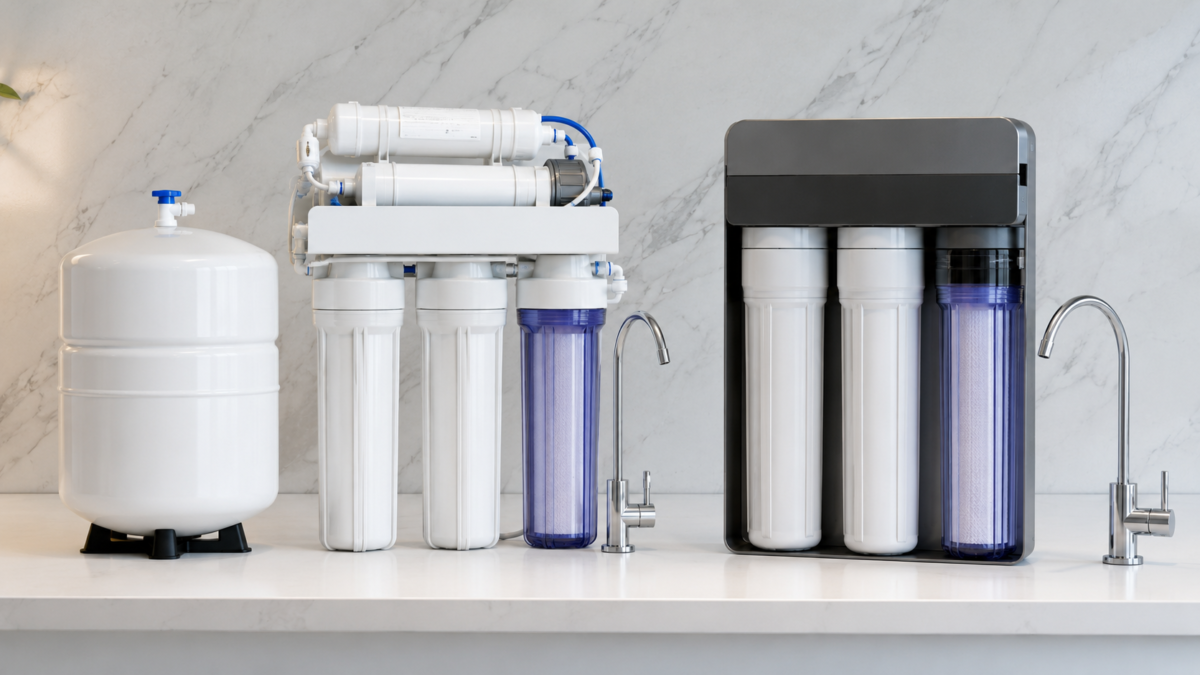
Under-Sink, Countertop and Central Solutions
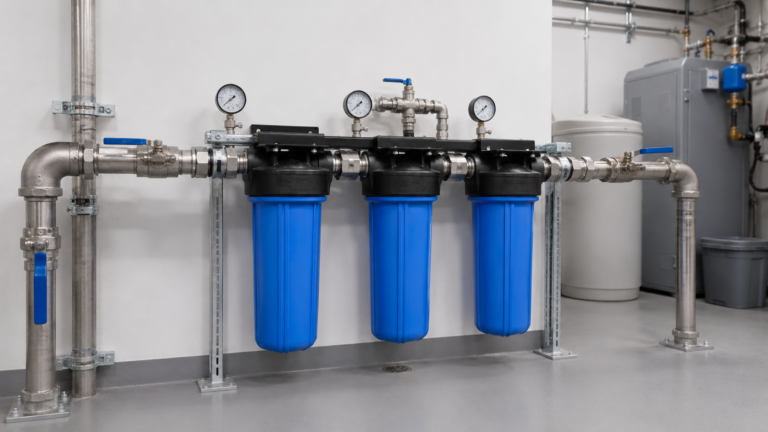
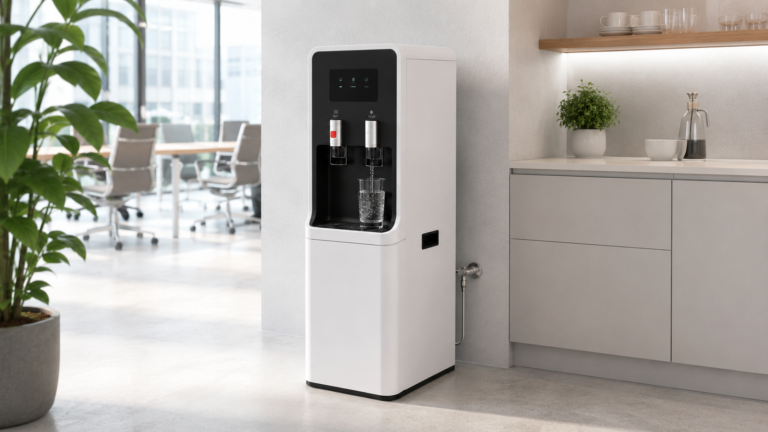
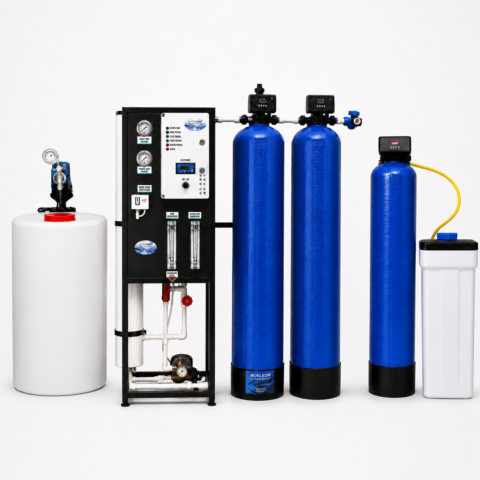
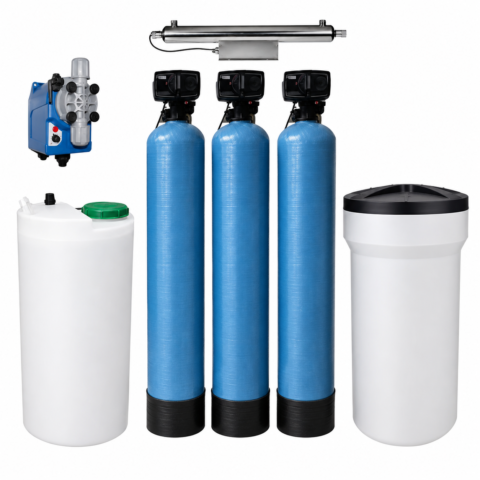
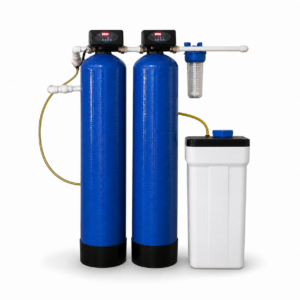
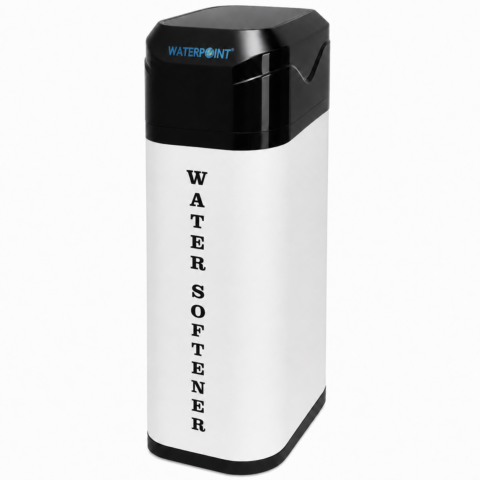
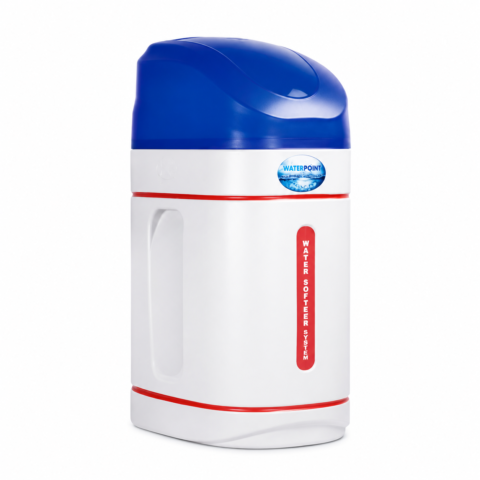
The point of use determines the type of system directly. Under-sink systems stay hidden in the kitchen and are ideal for drinking water. Countertop solutions are practical options needing no installation. Central systems feed the whole plumbing system and protect the building as a whole from limescale and sediment.
Choosing a unit without making that distinction is the source of the most common mismatch. Buying a drinking water unit for a limescale problem, or installing a central system for drinking water alone, both miss the target.
| Type of Solution | Scope | Where It Suits |
|---|---|---|
| Under-Sink | Kitchen drinking and cooking water | Permanent use, for those who prefer a hidden installation |
| Countertop | Drinking water at a single point | Rented homes, spaces where installation is not possible |
| Central System | The whole building’s plumbing | The need to protect against limescale, sediment and plumbing damage |
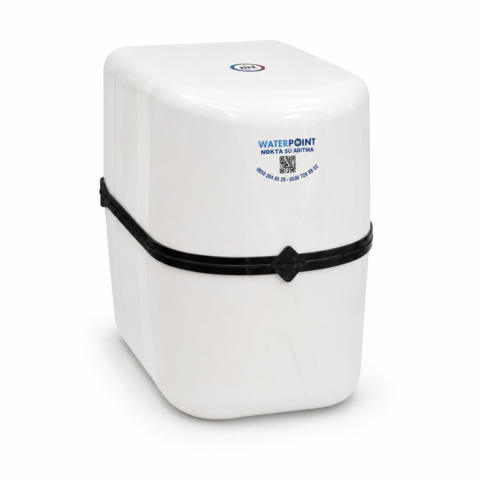
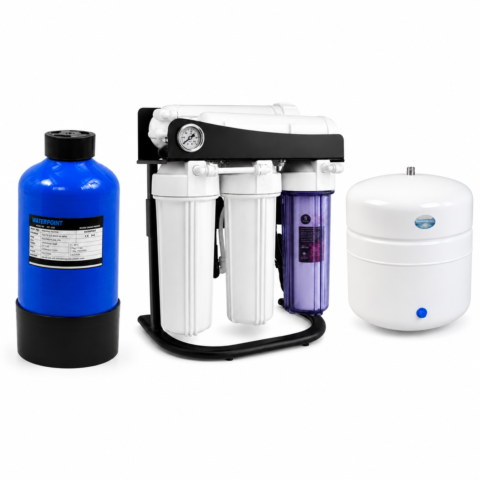
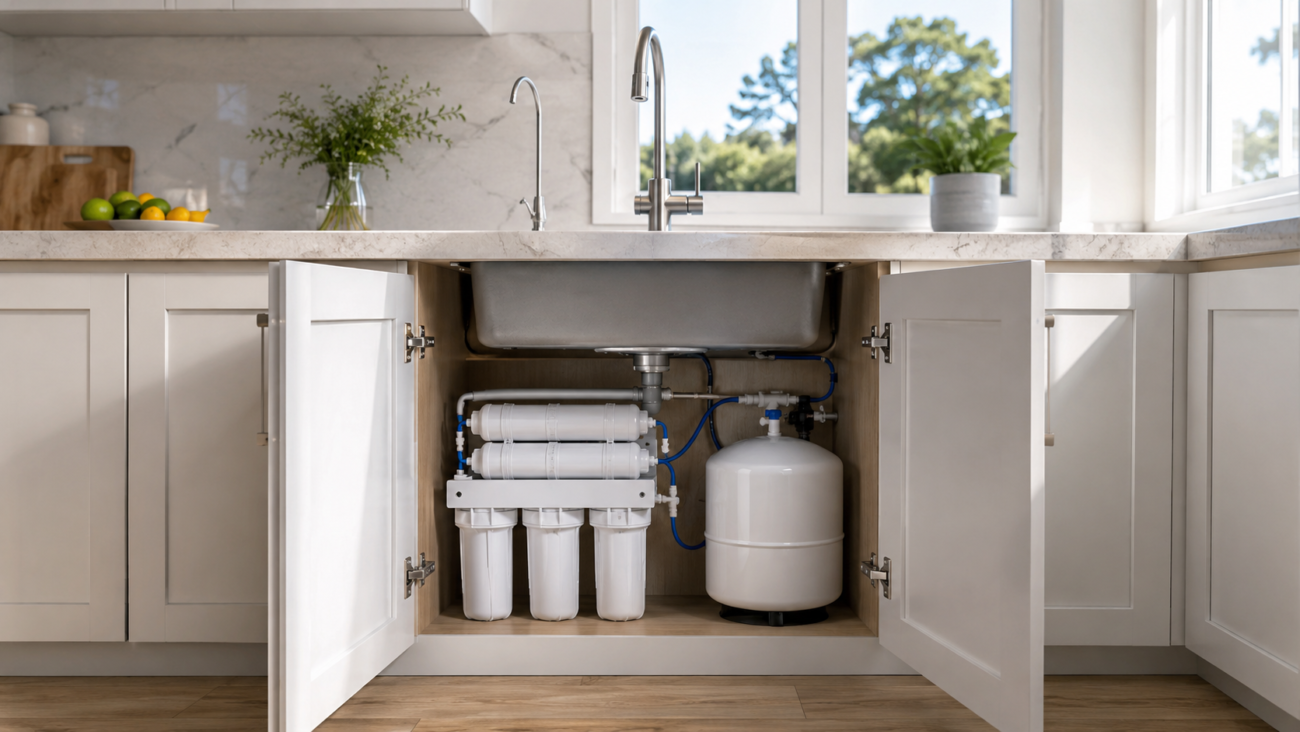
For most domestic users the right starting point is an under-sink system. This type sits inside the kitchen cupboard, only the tap remains visible, and it meets the need for drinking and cooking water. Under-sink water treatment solutions therefore stand out as the most widely chosen option.
If limescale build-up, the life of white goods and marks on bathroom and kitchen surfaces are your real problem, the table has to be read differently; in that case a separate solution at the building inlet should be considered alongside a drinking water unit. In answering how to choose a water purifier, the question “which problem do I want to solve” always comes first.
A Tanked System or a Direct-Flow System?
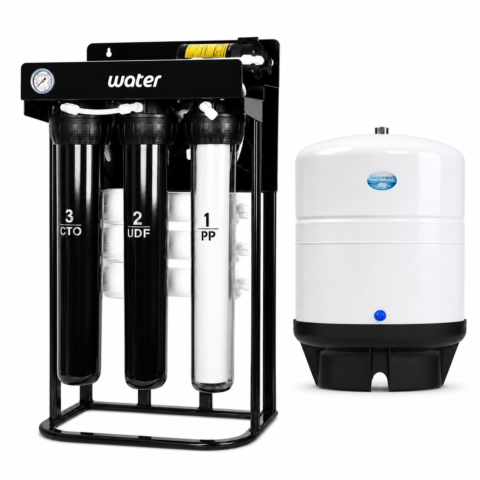
Tanked systems collect the treated water in a reservoir and deliver it from there when the tap is opened. Direct-flow systems have no tank; the water is treated on demand and delivered at a high flow rate. Tanked solutions are more common and more economical, while direct-flow systems save space and give a fast flow.
The difference between the two architectures is felt clearly in daily use:
The classic build with storage
The treated water waits in the tank; it is ready when the tap is opened.
- It is a common and economical solution
- It meets instantaneous demand from the tank
- Room is needed in the cupboard for the tank
- The tank fill time depends on the capacity
Tankless and fast
The water is treated on demand; it flows at a high rate with no waiting.
- With no tank it saves space
- It gives fresh water with no standing time
- It provides uninterrupted flow under heavy use
- It generally works at a higher capacity
The choice depends largely on two things: the space in your cupboard and what you expect of the flow. If your kitchen cupboard is tight, or you do not want the water standing in a tank, direct-flow systems are an advantage. If you are looking for a classic, economical installation, a tanked build is still the most common solution.
At this point how to choose a water purifier becomes a question of preference; technically both work on the same treatment principle. If you are curious about how the reverse osmosis mechanism works, our how reverse osmosis works article explains it step by step.
The Difference Between Pumped and Unpumped Units
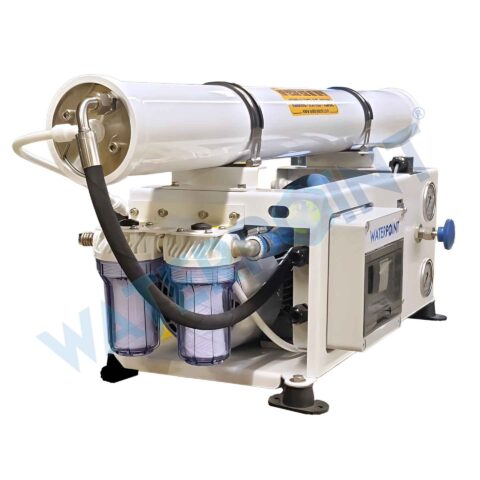
Unpumped units work on mains pressure; they offer a quiet, economical build that needs no electricity. Where the pressure falls short, a pumped system is essential. The pump provides the pressure the membrane needs and makes the production rate and treatment performance steady.
This is the heading most often skipped in the choice and the one that causes the most problems afterwards. If the mains pressure is sufficient, an unpumped unit is an advantage in every respect: it uses no electricity, runs quietly and, having fewer components, is less likely to fail. In homes that meet that condition, unpumped models are a sensible choice.
But where the pressure is low the picture changes. On upper floors, on long plumbing runs or in areas where the pressure varies through the day, an unpumped system produces slowly and its treatment performance falls below expectations. In those cases pumped systems are needed for steady operation.
Buying an unpumped unit without checking the pressure is a decision that is a nuisance to put right later. When answering how to choose a water purifier, always assess your mains pressure beforehand.
If you are not sure about the pressure, having it confirmed before installation is the most practical route. And for those who want to follow the working state on a display, models with a digital readout make filter and performance monitoring easier.
Filter Stages and the Need for a Mineral Filter
The filter stages work in order: the sediment filter holds back particles, the carbon stages remove chlorine along with odour and taste, and the membrane separates up to 99% of the dissolved substances. The mineral filter at the last stage balances the taste of the water and is added as a matter of preference.
The number of stages is not on its own an indicator of quality; what matters is which stage solves which problem. A typical build follows this logic:
-
Sediment stage
Holds back sand, rust and suspended particles; protects the sensitive stages behind it.
-
Carbon stages
Remove chlorine, odour and taste; protect the membrane from chlorine damage.
-
Membrane stage
Separates dissolved salts and minerals; lowers the TDS value of the water.
-
Final stage
Preserves the taste balance of the water coming from the tank and makes it ready to use.
The mineral filter is a matter of preference. Because the water at the membrane outlet contains very few minerals, some users find the taste “flat”. In that case a mineral filter added at the last stage balances how the water drinks. It is not a compulsory stage; the decision follows your palate.
The summary on stages in how to choose a water purifier is this: rather than counting stages, check which stages solve the problems in your own water. If you have no chlorine problem an extra carbon stage, and if you have no hardness an unnecessary protective stage, will bring you no added benefit.
Installation Space, the Tap and Planning the Plumbing
Installation planning covers four headings: the usable space in the cupboard, the type of tap to be fitted to the worktop, the drain and water line connections, and a power supply for pumped models. When these conditions are not settled in advance, extra labour and unexpected costs appear at the installation stage.
Physical conditions are often thought about at the last minute, and that leads to mistakes that are a nuisance to put right. These should be checked before deciding:
- Volume inside the cupboard: There must be enough space for the unit body and the tank, if there is one.
- Access to the water line: A suitable point is needed for the inlet connection.
- The drain connection: Discharge of the waste water line has to be planned.
- A power socket: A supply point is essential on pumped and digital models.
- A tap hole: A hole may have to be drilled in the worktop for an extra tap.
The choice of tap directly affects comfort in use too. Standard models are enough for those who want to draw treated water from a separate tap, while those wanting different water options from a single point prefer solutions such as a three-way tap. That detail looks small but is felt often in daily use.
If your cupboard is tight, or you do not want to drill the worktop, tankless builds and compact bodies come to the fore. The physical side of how to choose a water purifier can often be more decisive than the technical side; because a unit that does not fit, however good it is, cannot be used.
Are you looking for a model that suits your water and your kitchen?
You can compare the options to establish a system suited to your water quality, your consumption and your installation space.
See the Treatment SolutionsLong-Term Cost: Filters and Maintenance
The total cost is not only the price of the unit. Periodic filter changes, membrane renewal and service support make up the long-term expense. The availability of spare parts and ease of maintenance are more decisive than the initial price, because those items repeat throughout the life of the unit.
Answering how to choose a water purifier with the label price alone is the most common assessment error. The price of the unit is paid once; filter and maintenance costs run for years. A system that looks cheap can cost more over time if its spare parts are expensive or hard to find.
Three headings stand out in the assessment. The first is filter availability: stages in standard sizes make spare parts easy to find. The second is ease of maintenance; on a unit where the stages are hard to reach, maintenance slips, and maintenance that slips turns into lost performance. The third is service support: technical help you can reach when something goes wrong extends the life of the unit directly.
We took up in detail how to plan a maintenance routine and how often each stage is renewed in our filter change guide. The change intervals are not fixed; they are set by the inlet water quality and the conditions of use.
Make the comparison on the total annual cost of ownership. The price of the unit plus the annual filter cost plus any service cost, taken together, reveal the real difference.
Is There a Universal “Best Model”?
No, there is no single model that suits everyone. The best unit is the one that matches your water quality, your consumption, your pressure and your installation space. A system that works perfectly in one home can fall short in another with different water conditions.
The “best unit” lists you often meet online ignore that fact. A system’s performance comes not from the label on it but from which water, which pressure and which consumption it works with. The same product can give completely different results in two different households.
Make your assessment, therefore, not on model names but on these questions:
- What is the problem with my water, and does this unit solve it?
- Is the capacity enough for my daily consumption and my peak hour?
- Is my mains pressure sufficient for this system to work?
- Are my installation space and plumbing conditions suitable?
- What is access to filters and spare parts like, and what about service support?
A user who can answer those five questions clearly has already largely defined the right unit. That is the honest answer to how to choose a water purifier: the right unit is not discovered but defined by your own data. If you are offered a ready-made “best” list on how to choose a water purifier, that list does not know your water.
Put the Decision Steps in Order
The right order is this: analyse your water, establish your consumption, check your mains pressure, measure your installation space, choose the type of system, and compare prices last. Followed in that order, how to choose a water purifier becomes a decision based on arithmetic.
The flow below reduces the whole guide to a single decision route:
-
Get to know your water
Establish the source, hardness, sediment, chlorine and TDS values; clarify the problem.
-
Calculate your consumption
Assess the number of people, daily use and peak-hour demand together.
-
Check your pressure
This step determines whether you need a pumped or unpumped unit; changing it later is a nuisance.
-
Measure your space
Confirm the cupboard volume and access to the water line, drain and power in advance.
-
Choose the type of system
Tanked or direct flow, under-sink or central; decide according to your need.
-
Compare prices last
Compare models in the same class together with their annual filter cost.
When those six steps are complete, what you have is not a guess but a definition of requirements. Ask how to choose a water purifier with that definition and the number of options in front of you falls on its own, and the decision becomes clear.
Frequently Asked Questions
How to choose a water purifier — what is the shortest answer?
Analyse your water first, then establish your consumption and your mains pressure. Those data define the capacity and the type of system. Then choose a body suited to your installation space. Comparing prices is the last step and should include the annual filter cost.
Should I buy a pumped or an unpumped unit?
If your mains pressure is sufficient, an unpumped model offers a quiet, economical solution that needs no electricity. If the pressure is low or varies through the day, a pumped system is needed; otherwise production slows and treatment performance falls below expectations.
Which is better, a tanked system or a direct-flow system?
The two serve different needs. If the space in your cupboard is limited, or you do not want the water standing, a direct-flow build is an advantage. If you are looking for a classic, common and economical installation, a tanked system is a suitable choice.
Is a mineral filter essential?
It is not compulsory; it is a matter of preference. It is added at the last stage for users who find the taste of the water at the membrane outlet “flat” and balances how it drinks. If you have no expectations about taste, the system works without that stage too.
How many stages should the unit have?
The number of stages is not on its own an indicator of quality. What matters is which stages solve the problems in your own water. If you have no chlorine problem an extra carbon stage, and if you have no hardness problem an extra protective stage, will bring you no added benefit.
Can the same unit be used on well water?
Using it directly is not recommended. Well water brings sediment, iron, manganese and microbiological load into play; extra pre-treatment stages are then needed. Which stages are needed must be established by a water analysis.
Should the choice be made on brand or on criteria?
On criteria. How to choose a water purifier is answered not through model names but through water quality, capacity, pressure, installation space and service support. Because the same product gives different results in different conditions, the comparison should be made criterion by criterion.
Conclusion
The answer to how to choose a water purifier is found not in product catalogues but in your own data. Your water quality determines which stages are needed, your consumption the capacity, your mains pressure the need for a pump, and your installation space the type of body. Tanked or direct flow, pumped or unpumped, all follow from those four; additions such as a mineral filter are left to your palate. In assessing the long-term cost, look not at the label price but at the annual filter and maintenance expense. Taken in that order, there is no search for a “best model” left; in its place comes a clear definition of what you need, matched to your water and your use. That is the soundest answer to how to choose a water purifier: measure first, calculate next, compare last.
Let’s establish the unit that suits your water and your use together
To plan a model suited to your analysis result, your consumption and the conditions in your kitchen, you can consult the Water Point expert team.
Discover the Unit That Suits You