
Free Shipping
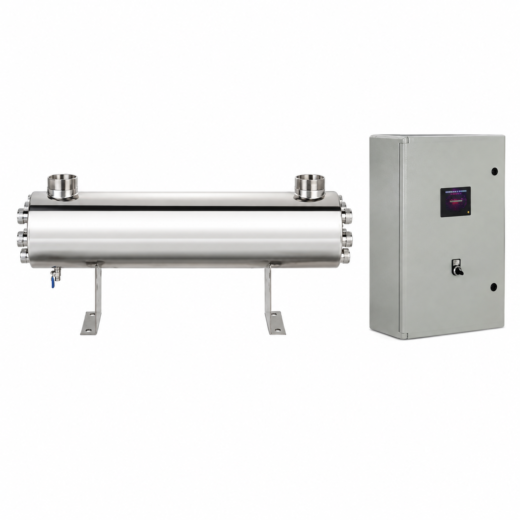
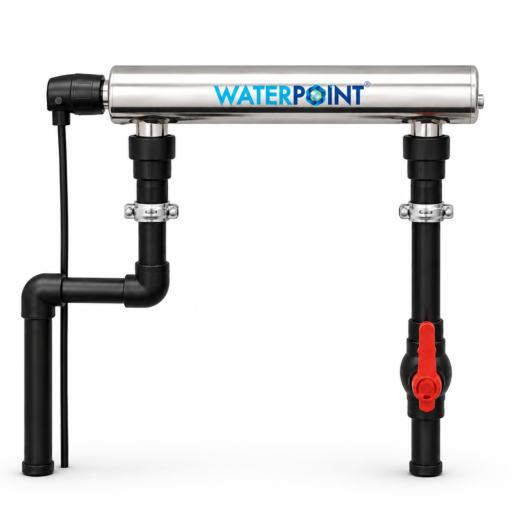
6-Lamp UV Water Treatment Unit 390 Watt
30 m³/hour
304 Grade Stainless Steel
₺147,055.20
VAT included
Your cart is empty.
Browse productsCategories
Solutions
Process water, line feed and sizing by flow rate.
Systems and units Industrial Water Treatment Read the guideTreatment that stops limescale and corrosion before they reach the boiler.
Systems and units Water Softeners Read the guidePure water of low conductivity and repeatable quality.
Systems and units Pure Water Systems Read the guideRemoving the salts and sediment that clog drip lines.
Systems and units Well Water Treatment Read the guideThe right hardness for equipment life and drink flavour.
Systems and units Filtered Water Dispensers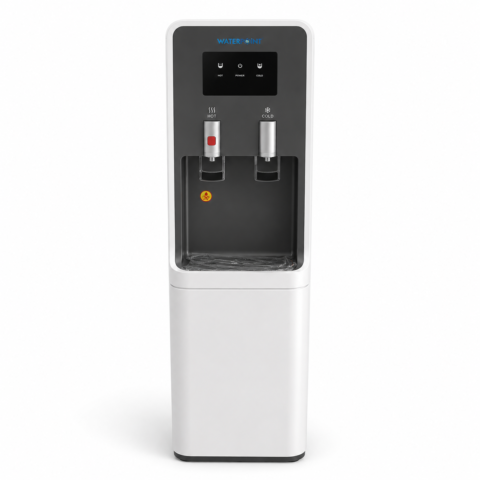 Water Point Filtered Water Dispenser
₺63,723.92
Water Point Filtered Water Dispenser
₺63,723.92
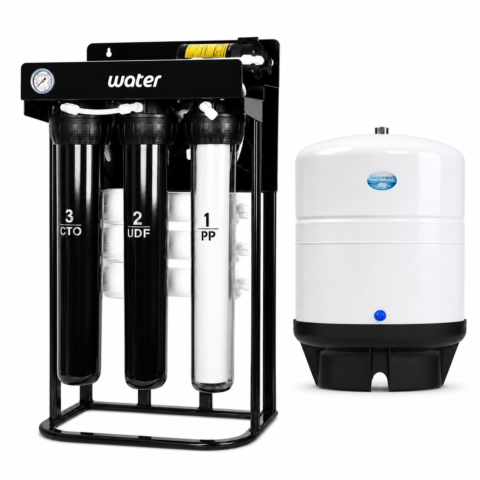 Restaurant Water Purifier, 500 GPD with 40 Litre Tank
₺49,018.40
Restaurant Water Purifier, 500 GPD with 40 Litre Tank
₺49,018.40
A main line that filters the water entering your plumbing at a single point.
Systems and units Whole House & Building Inlet Systems Read the guideA staged system for iron, manganese and turbidity.
Systems and units Well Water Treatment Read the guideLow-conductivity rinse water for spot-free drying.
Systems and units Reverse Osmosis Systems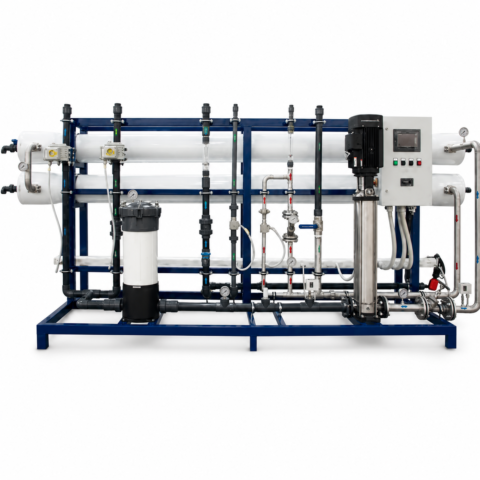 95 Tonne Reverse Osmosis System
₺980,368.00
95 Tonne Reverse Osmosis System
₺980,368.00
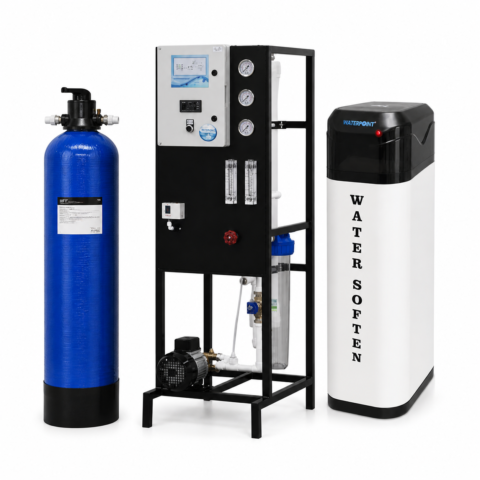 Industrial Deionised Pure Water Unit, 250 L/h
₺220,582.80
Industrial Deionised Pure Water Unit, 250 L/h
₺220,582.80
The problems hard water causes in hair and skin care.
Systems and units Water Softeners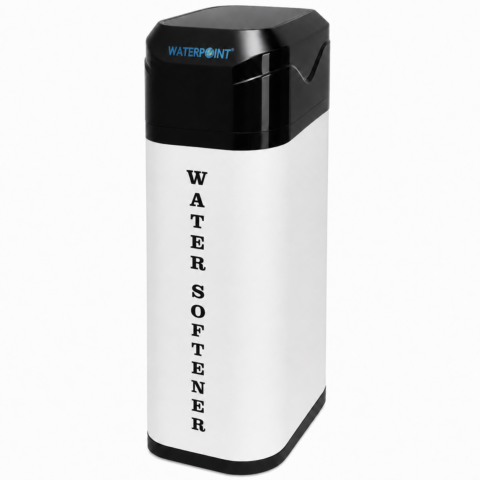 Maxi Cabinet Water Softener, 5 Tonnes/Day
Original price was: ₺49,018.40.₺34,312.88Current price is: ₺34,312.88.
Maxi Cabinet Water Softener, 5 Tonnes/Day
Original price was: ₺49,018.40.₺34,312.88Current price is: ₺34,312.88.
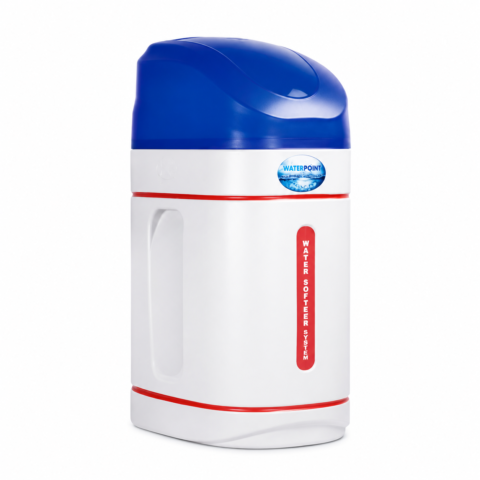 Mini Cabinet Water Softener, 2 Tonnes/Day
₺44,116.56
Mini Cabinet Water Softener, 2 Tonnes/Day
₺44,116.56
Drinking water from seawater with high-pressure reverse osmosis.
Systems and units Reverse Osmosis Systems Read the guideCompany
Product Category
Flat and building inlet treatment meets the water on the main line before it is distributed through the installation. A flat inlet feeds a single independent unit, while a building inlet feeds the whole riser; the stages are chosen according to the sediment, limescale and chlorine load, and capacity…
Filter
The daily treatment capacity stated by the manufacturer.
The length of the cartridge you have. If you are unsure, take the old one with you.
How much water is waiting ready when you open the tap.
Not sure which one is right for you?
Flat and building inlet treatment meets the water on the main line before it is distributed through the installation. A flat inlet feeds a single independent unit, while a building inlet feeds the whole riser; the stages are chosen according to the sediment, limescale and chlorine load, and capacity is set by instantaneous flow rate.
All three applications work on the same principle; the difference is where the system is installed and how many users it feeds.
| Criterion | Flat Inlet | Building Inlet | Complex / Villa Inlet |
|---|---|---|---|
| Scope | The flat itself only | All flats in the block | Several blocks or detached buildings |
| Capacity | Small, sized to household consumption | Sized to the peak flow rate of the block | High flow rate, engineered per project |
| Initial investment | Low | Medium–high, shared | High |
| Decision | Made by one person | Requires a management decision | Management or facility operator decision |
| Maintenance | With the flat owner | With the management, through the service charge | Technical team or a service contract |
| Not covered | Shared risers are not protected | — | — |
A flat inlet solution is quick and independent; it protects your own plumbing, but limescale keeps building up in the main risers of the building. A building inlet solution lowers the cost per person and protects the whole installation, but it calls for a shared decision, a shared budget and shared responsibility for maintenance.
Mains water passes through many points before it reaches your home, and each point carries its own risk.
A central system deals with these items at the point where the water enters the building. Protection is therefore provided from a single point instead of fitting a separate unit to every tap.
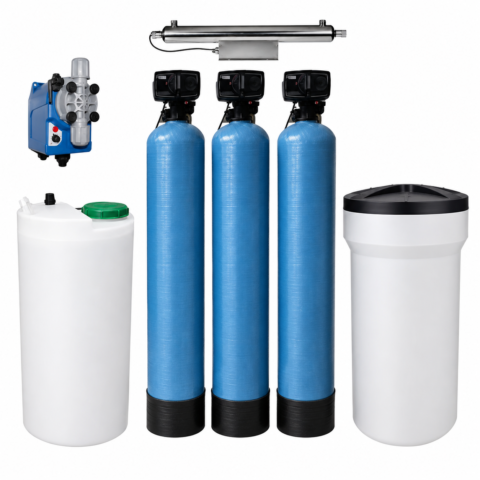
In central treatment the stages are chosen according to the condition of the raw water. The typical chain is as follows:
| Stage | What It Does | When It Is Needed |
|---|---|---|
| Sediment / Big Blue filter | Holds back sand, rust and suspended solids | The first stage in almost every application |
| Washable steel filter | Holds back coarse particles; cleaned and reused | On lines with a high sediment load |
| Automatic sand filter | Lowers turbidity, cleans itself by backwashing | On well water and where sediment is high |
| Activated carbon unit | Removes chlorine, odour and taste compounds | On mains water and ahead of softening |
| Water softening | Lowers hardness, prevents limescale | Essential where hardness is high |
| UV (ultraviolet) treatment | Reduces microbiological risk | On systems with a storage tank and on well water |
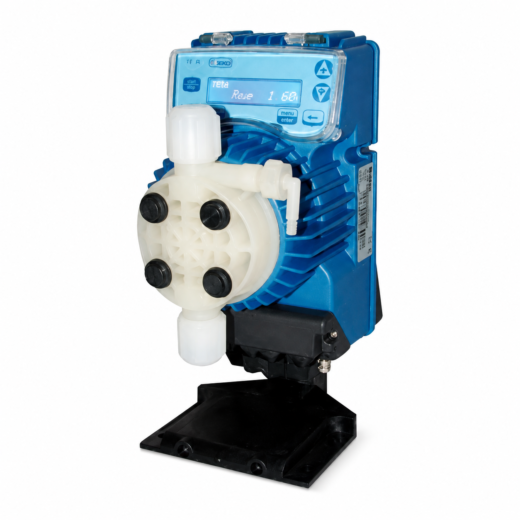
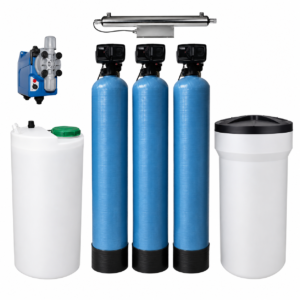
| Dosing pump | Feeds chemicals in a controlled way | On lines that need specific conditioning |
The order of the stages matters: coarse filters come first and protect the sensitive equipment behind them. Activated carbon is usually placed before softening, because it protects the softening resin from chlorine.
At a flat or building inlet the most common starting solution is the filter sets named after the number of housings.
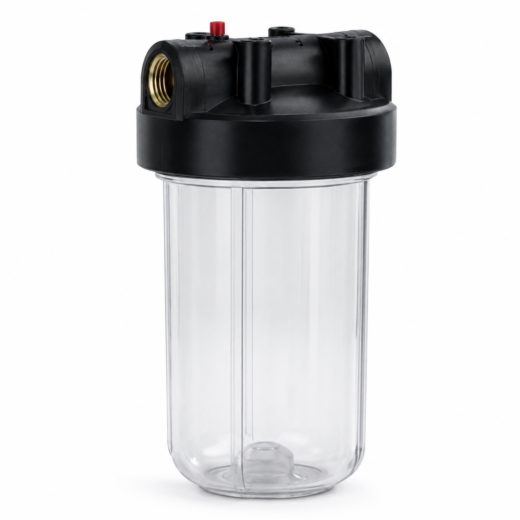
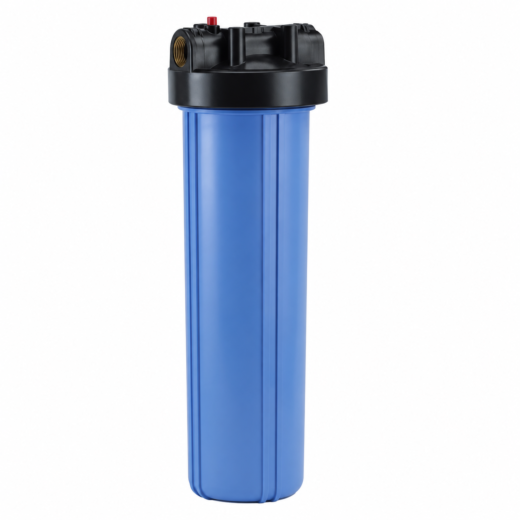
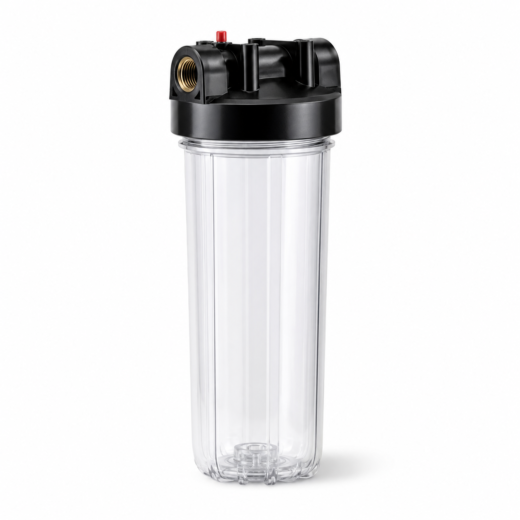
These sets are built with the large-volume housings known as Big Blue. The advantage of a large housing is a low pressure drop at high flow rate and a longer cartridge life. Because cartridges in standard sizes are widely available, there is no supply problem later on.
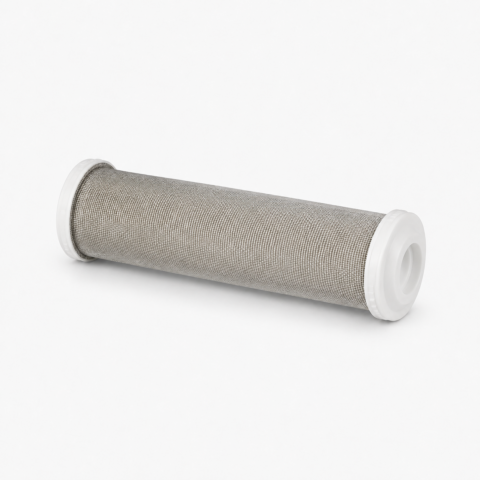
Washable steel filters, on the other hand, are removed and cleaned instead of having the cartridge replaced, and are then reused. On lines with a high sediment load they lower the consumables cost, but they need regular cleaning.
In central systems capacity is set by peak flow rate rather than by total daily consumption. In an apartment block, several flats drawing water at the same time in the morning is the hardest moment the system has to meet. If that moment is not met, pressure drops and the water weakens on the upper floors.
The headings taken into account in the calculation:
Choosing the capacity too small leads to a pressure drop and to frequent regeneration in softening. Choosing it too large means an unnecessary initial investment. The decision must therefore be made with measured hardness and real flow rate data; on the Water Point side the site survey is free of charge if the unit is purchased from us.
In detached buildings the picture differs from an apartment block. The decision belongs to one person, finding a place for the system is usually easier, and additional consumption items such as garden irrigation come into play.
The points that stand out in villa inlet applications:
Our guide to villa water treatment follows the whole chain from the source to the tap.
A central system is placed immediately after the point where the water enters the building. The following conditions must be met before installation:
After installation, the hardness and sediment condition of the outlet water must be measured to verify that the target values are met.
In building inlet applications, management decisions are as decisive as the technical choice. The following must be clarified before the system is installed:
When these headings are not settled from the outset, even a system installed correctly from a technical point of view is left unmaintained and soon loses its function. In practice the problem seen most often is not equipment failure but salt top-ups and cartridge changes being forgotten. The decisions a building management faces are set out in our guide to building inlet water treatment systems.
| Component | Task | Frequency |
|---|---|---|
| Big Blue cartridges | Replacement | According to the sediment load, usually every 6 months |
| Washable steel filter | Removed and cleaned | Scheduled; more often where sediment is heavy |
| Activated carbon | Bed renewal | According to chlorine removal performance |
| Softener salt | Level check and top-up | Regularly, according to consumption |
| Outlet hardness | Measurement with a test kit | Scheduled |
| Automatic sand filter | Backwash check | Scheduled service |
| UV lamp | Replacement | Once a year |
| Pressure check | Inlet and outlet pressure gauges | Scheduled |
A rising pressure difference across the filter housings is the clearest sign that the cartridge is blocked. When a noticeable drop in water pressure is felt, this is the first place to check.
In most multi-storey buildings the water is first taken into a storage tank and pumped from there to the floors by a booster pump set. This arrangement has a direct effect on where the treatment system is placed.
In buildings with no storage tank, fed directly from mains pressure, the system is placed immediately after the water meter, and a pressure measurement must always be taken before installation.
In buildings put up many years ago, galvanised or iron pipe is common. These pipes corrode from the inside over time; rust and iron compounds pass into the water.
The typical signs seen in such buildings are these:
Central treatment holds these particles back and stops them reaching the taps. There is one point to watch, however: a treatment system protects the line downstream of itself. When the system is installed at the building inlet, the main riser and the plumbing inside the flats are protected, while the section of pipe ahead of the system remains unaffected. This is why the system is preferably installed at the earliest possible point.
The results of central treatment show themselves in stages; some immediately, some within weeks.
Setting the expectation correctly matters: a central system does not strip out limescale formed in the past, it stops new build-up. Existing deposits still need separate cleaning or maintenance.
In some applications filtration and softening alone are not enough; the water needs a controlled chemical feed. This is done with a dosing pump.
Dosing systems are set up according to the analysis results and need regular monitoring. The choice of chemical, the dose and the point of use must always be determined by a technical assessment.
In the market the terms "limescale treatment", "scale inhibitor" and "water softening" are often used interchangeably, but their operating principles can differ.
Water softeners work by ion exchange: calcium and magnesium are actually taken out of the water and replaced by sodium. The hardness of the outlet water drops measurably and can be verified with a test kit.
Industrial-type limescale treatment systems differ in capacity and vessel construction; they are designed for limescale control on high flow rate lines. Which solution is suitable is determined by the measured hardness value and the flow rate of the line.
The most practical question to ask when deciding is this: when hardness is measured at the outlet of the unit, does the value drop? A system that gives a measurable result is always more dependable than one that relies on a claim alone.
Because central systems can be installed outdoors, in a basement or in a cold space such as a shelter, winter conditions must be assessed separately.
Short holidays need no special procedure; flow-controlled softeners do not regenerate, because there is no consumption.
Having the following information ready speeds up the process and lets you obtain an accurate, comparable quote:
These seven headings will be asked whichever supplier you talk to. Preparing the answers in advance makes the quotes you receive comparable with one another and prevents a capacity unsuited to you being proposed in the first place.
In buildings where a central system is installed, new lines are added to the service charge. Knowing them in advance prevents arguments later.
Against these items, what the building gains is a longer life for the heating equipment, fewer blockages in the plumbing and fewer faults in the appliances inside the flats. When deciding, it is sound to discuss both sides in figures; for that reason, when a system proposal is requested, the annual running cost should be asked for as part of the quote as well.
The housing size met most often in central systems is the Big Blue type. The advantage of these housings is the large surface area of the cartridge: at the same flow rate the pressure loss is lower and the cartridge can be used for longer.
What to watch when choosing a housing:
No, the two serve different purposes. A central system improves the water used throughout the property: it holds back sediment, removes chlorine, lowers hardness and protects the plumbing. It does not carry out the dissolved-solids separation that drinking water quality calls for.
The common and correct arrangement is this: a central system is installed for the building or the flat, and a separate reverse osmosis water purifier is used in the kitchen for drinking and cooking water. This arrangement has two benefits. First, the whole installation and the appliances are protected from limescale. Second, because the central system has taken out the sediment and the chlorine, the pre-filters of the kitchen unit last longer and the membrane is under less strain.
In regions where hardness is high, using these two systems together lowers the filter cost of the kitchen unit noticeably.
In buildings that use well water, central treatment comes close to being a necessity. Unlike mains water, well water carries a high load of sediment, turbidity and dissolved iron; microbiological risk must be assessed separately as well.
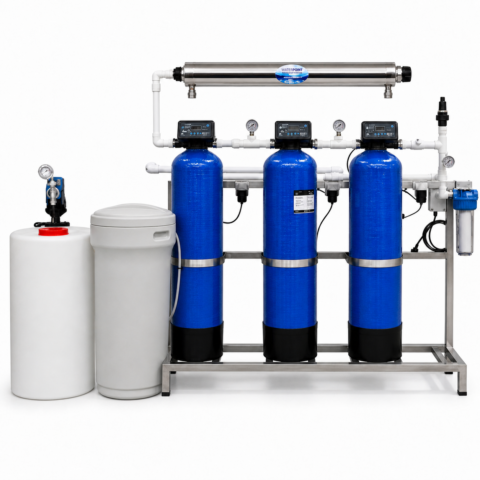
In such applications the chain gets longer: it starts with an automatic sand filter, an iron removal stage is added where needed, activated carbon and softening follow, and UV (ultraviolet) treatment is placed at the end. Because well water can change with the seasons, the analysis must be repeated periodically rather than once only.
Water Point offers technical support covering site survey, engineering, installation, commissioning, scheduled maintenance and fault response. For industrial systems there is a service network across Türkiye; for domestic units service is provided in İstanbul and the surrounding provinces (such as Kocaeli and Tekirdağ). The service charge is set according to the work and the materials; no charge is made without the customer's approval.

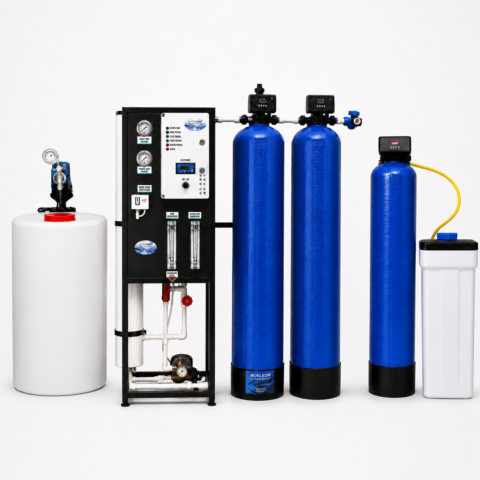
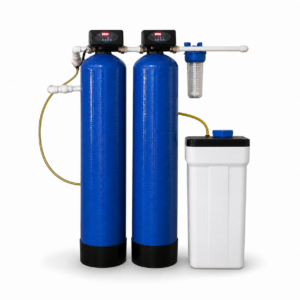
Flat and building inlet water treatment prices vary with the number of stages, the capacity, the housing type and the level of automation. The prices below are the current list prices on the relevant product pages. The table below lists the building inlet and flat inlet water treatment models with their stage structure and current prices. The difference between a building inlet water filter and a flat inlet water filter is the housing size and the flow rate; if limescale is the main problem, a building inlet water softener can be built into the same line.
| Product | Price | Description |
|---|---|---|
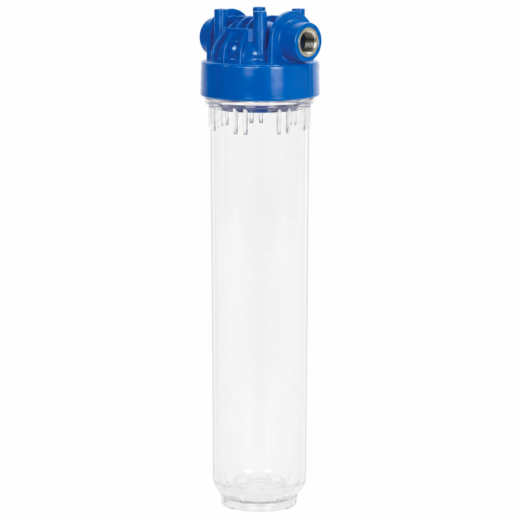
| 10 inch Washable Steel Filter | 1,470.55 TL | Steel filter that holds back coarse sediment and can be removed, cleaned and reused. |
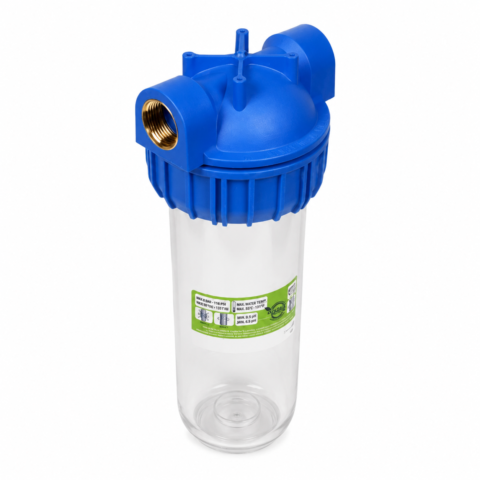
| Single Building Inlet Filter | 1,960.74 TL | Single-stage sediment filter; an entry-level solution for lines with a sand and rust problem. |
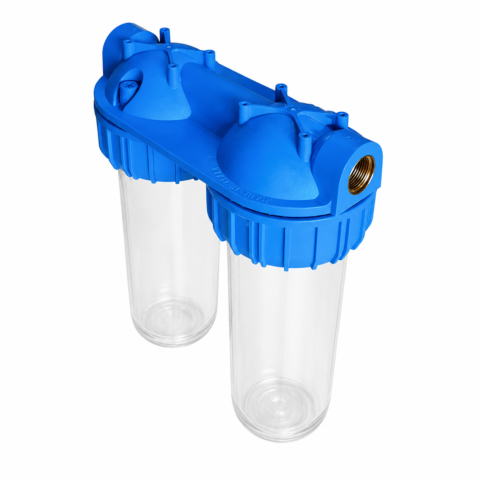
| Twin Building Inlet Filter | 3,921.47 TL | Twin set with activated carbon added to the sediment filter; it also deals with chlorine odour and taste. |
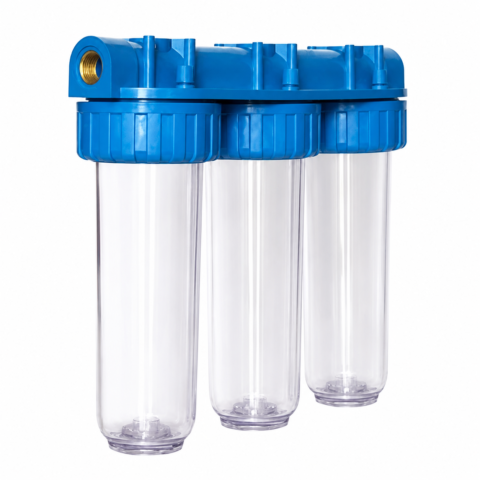
| Triple Building Inlet Filter | 6,372.39 TL | Three-stage set; it gives added protection alongside sediment and chlorine. |
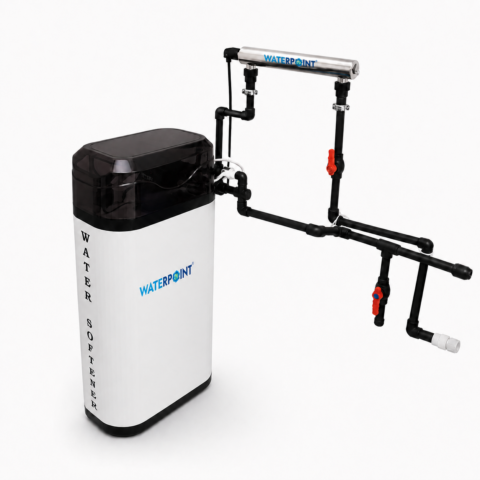
| Building Inlet Ultraviolet Water Treatment Unit | 24,999.38 TL | A UV (ultraviolet) treatment stage to reduce microbiological risk. |
| Automatic Sand Unit | 25,489.57 TL | Automatic sand filter that cleans itself by backwashing and lowers turbidity. |
| Activated Carbon Unit | 31,861.96 TL | Tank-type activated carbon system that removes chlorine, odour and taste compounds. |
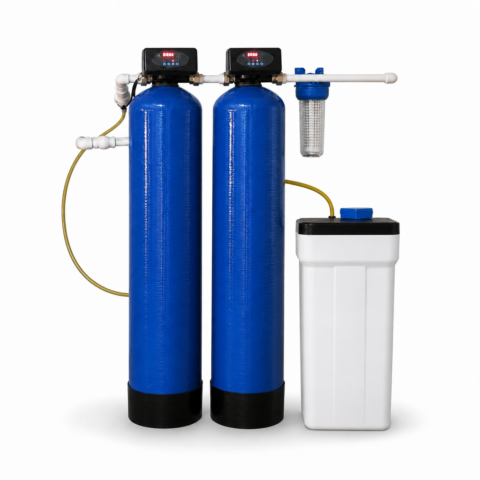
| Maxi Cabinet Water Softener 5 tonnes/day | 34,312.88 TL | Cabinet-type central softening for villas and flats with high consumption. |
| Flow-Controlled Water Softener | 49,018.40 TL | Regenerates according to the volume of water passed, lowering salt and water consumption. |
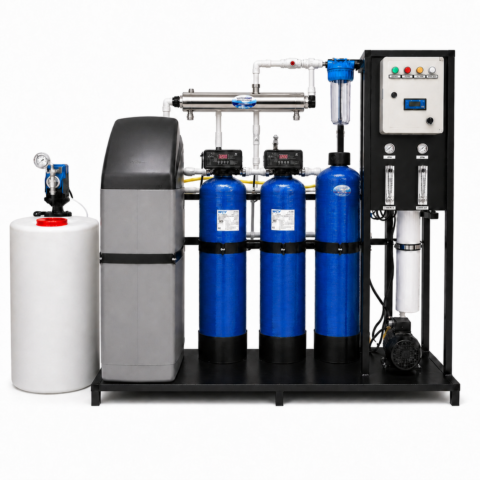
| Complex Inlet Water Treatment System | 98,036.80 TL | High flow rate central treatment system feeding more than one block. |
| Villa Inlet Water Treatment System | 107,840.48 TL | Central system for detached buildings, covering garden and multiple bathroom consumption. |
| Whole-House Water Treatment System | 245,092.00 TL | High-capacity, multi-stage treatment system for a detached house inlet. |
Prices are for the standard configuration; they vary with capacity, the number of stages and the choice of automation. The right system is determined with measured hardness and real flow rate data.
For a system suited to your building or flat and a firm price, you can reach us on 0850 304 95 25 or at [email protected].
Let's determine the right system together
The site survey is free of charge if the unit is purchased from us; if only a survey and measurement are requested, a survey fee of 2,000 TL applies. Capacity and treatment stages are determined from the measurement results.
0850 304 95 25Ask on WhatsAppSend an e-mailIt treats the water at the point where it enters the building and protects the whole installation and the heating equipment. Problems caused by limescale, sediment, rust and chlorine are dealt with at a single point; there is no need to fit a separate unit to every tap.
A flat inlet protects your own flat only, the decision is made by one person and the initial investment is low; the main risers of the building, however, are not protected. A building inlet protects all the blocks and lowers the cost per person, but it calls for a management decision and shared responsibility for maintenance.
Yes, and in regions where hardness is high it is the core stage of the central arrangement. The capacity is set by the peak flow rate of the building and the measured hardness value; in buildings that need an uninterrupted supply a twin-tank (duplex) arrangement is preferred.
No. A central system improves the water used throughout the property; it deals with sediment, chlorine and hardness. For drinking water a separate reverse osmosis water purifier is used in the kitchen. When the two are used together, the filter life of the kitchen unit is longer.
The number of flats and users, the simultaneous use factor, the building height, the raw water hardness and the storage tank situation are assessed together. The system is chosen by peak flow rate rather than by the daily average.
It is needed so that the water is not cut off during service or a fault. In an apartment block application with no bypass, even a filter change leaves the whole building without water.
Big Blue cartridges are usually changed every six months, depending on the sediment load. Washable steel filters are removed, cleaned and reused. A rise in the pressure difference is the clearest sign that it is time for a change.
Units carry a 2-year warranty; misuse falls outside cover. Consumables such as filters, membranes and resin are outside cover.
The price varies with the number of stages, the flow rate of the line and the housing size. Current list prices, from the single filter set to complex inlet systems, are in the price table on this page. For an arrangement suited to your building type you can reach us on 0850 304 95 25.
Questions? Talk to our specialist directly.
WaterAI