

Free Shipping
Product Category
Water Purifiers
The choice of unit is set by the treatment stages, pumped or pump-free operation, the difference between a tank system and a direct-flow system, and the filter replacement intervals.
- Free Shipping · across Türkiye
- 2-Year Warranty · on systems
Filter
Tank volume
How much water is waiting ready when you open the tap.
Filter size
The length of the cartridge you have. If you are unsure, take the old one with you.
Not sure which one is right for you?
Products
Free Shipping
Free Shipping
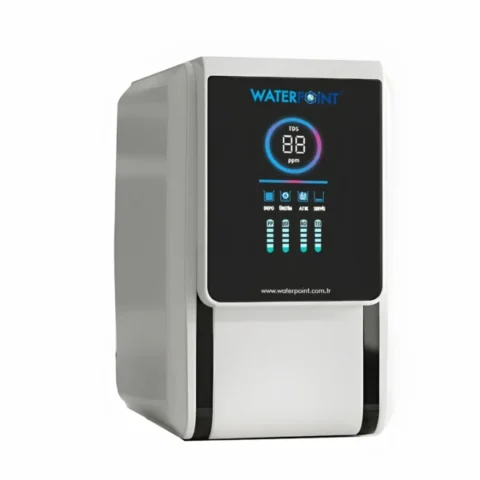
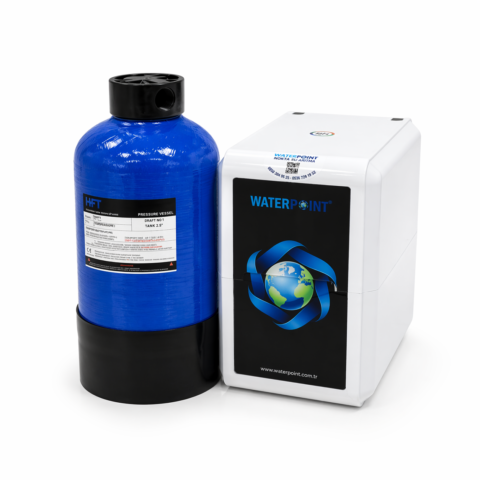
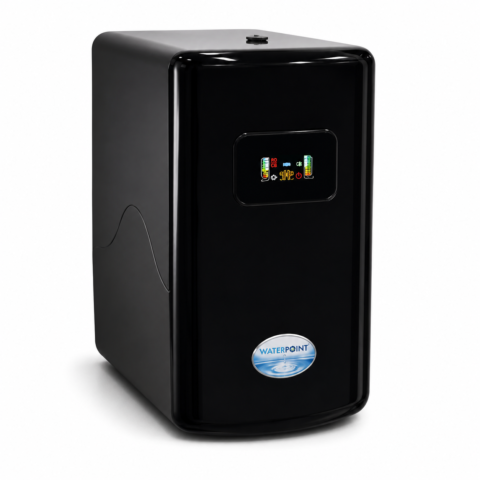
Digital Water Purifier
Domestic RO (Digital)
Digital Panel + Alarm
5.00 out of 5, 1 review
₺82,596.00
VAT included
Free Shipping
Free Shipping
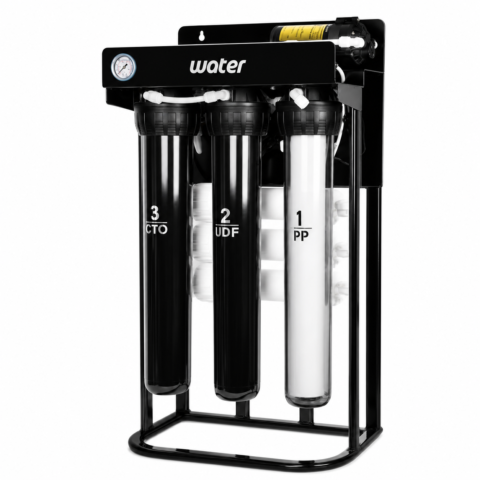
Free Shipping
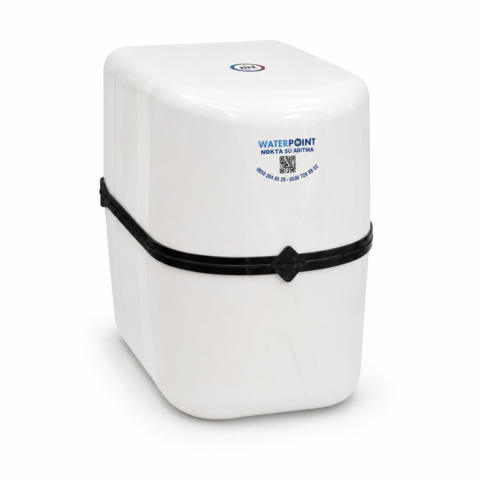
Free Shipping
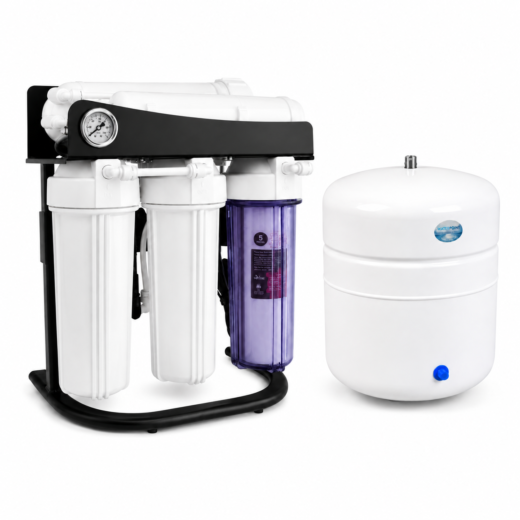
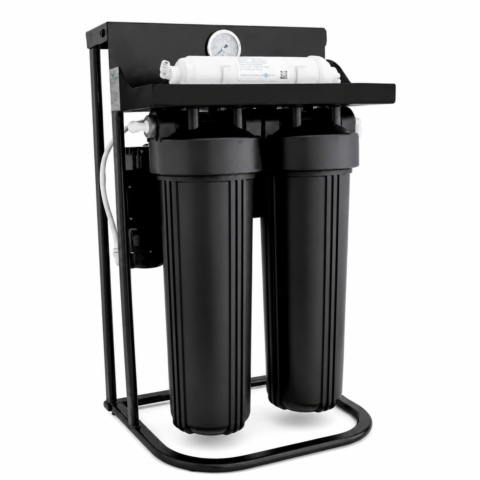
Café Water Purifier, 300 GPD with 12 Litre Tank
~500-1000 L
Direct Flow RO + Tank
₺31,861.96
VAT included
Free Shipping
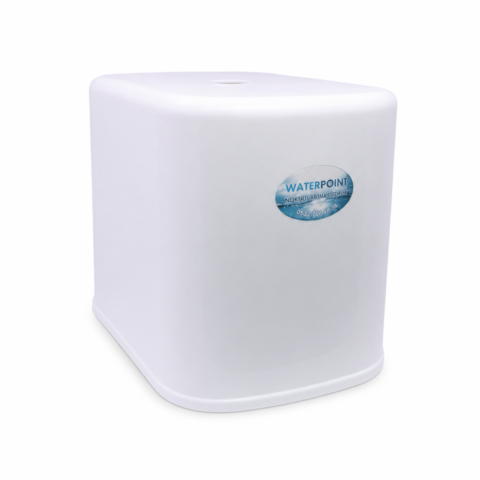
Free Shipping
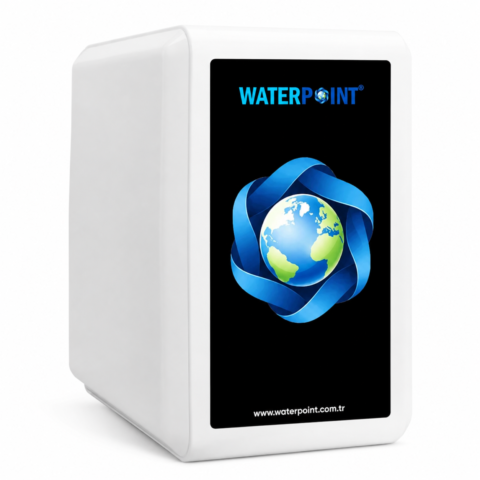
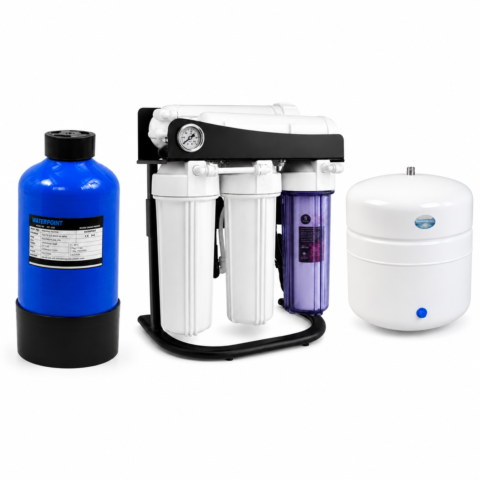
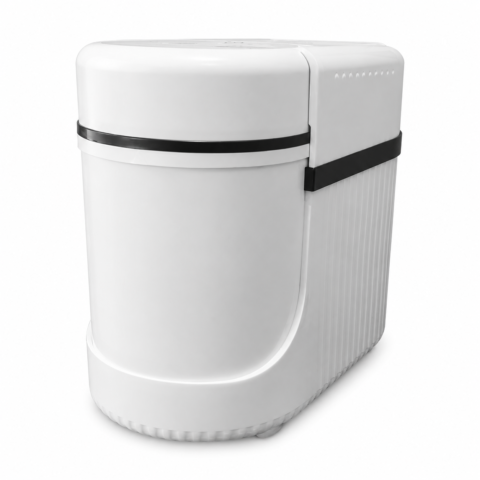
8 Litre Pumped Water Purifier
8 Litres
Domestic RO (Pumped)
5.00 out of 5, 1 review
₺19,117.18
VAT included
Free Shipping
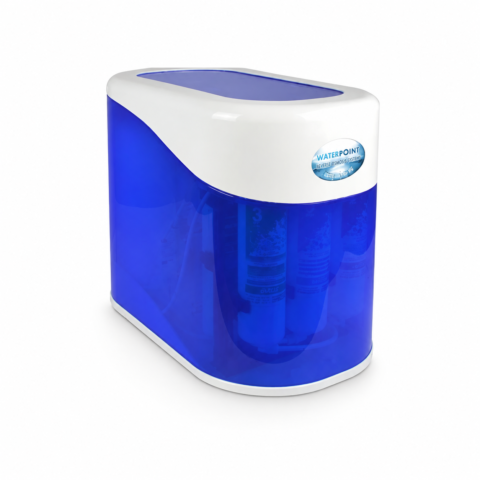
Free Shipping
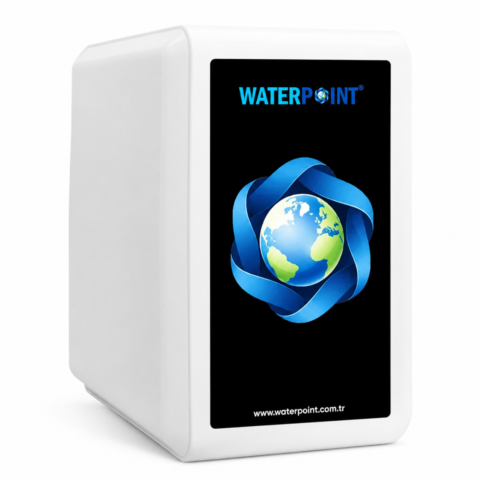
Free Shipping
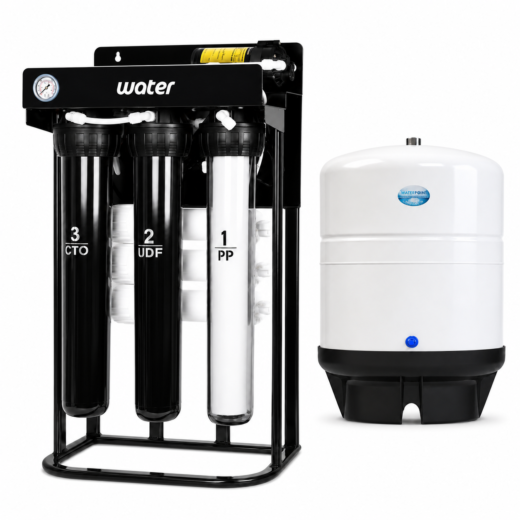
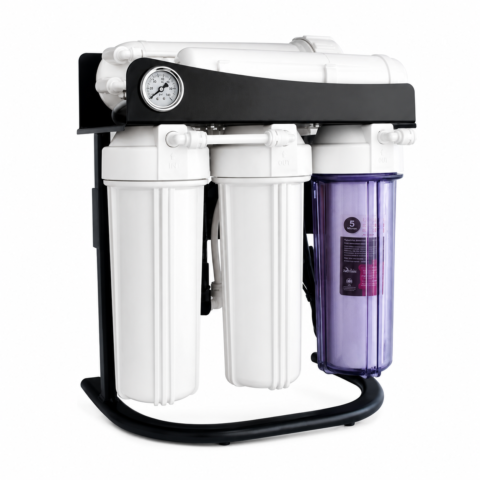
Restaurant Water Purifier, 500 GPD with 40 Litre Tank
~1000-1500 L
Direct Flow RO + Tank
₺49,018.40
VAT included
Free Shipping
Free Shipping
Freight delivery
Water Point Filtered Water Dispenser
Stainless Dispenser with Treatment
A Five-Stage Filter System
₺63,723.92
VAT included
Freight delivery
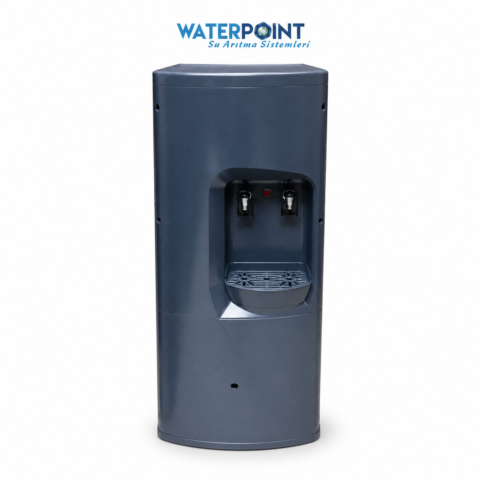
Water Point Tegra Water Dispenser
Stainless Steel
Stainless Dispenser with Treatment
₺63,723.92
VAT included
About Water Purifiers
A water purifier is a system that brings mains or well water up to drinking and cooking quality at home and at work. Most models for the home sit under the kitchen sink and work on reverse osmosis, which is why they are also known as under-sink water filters or RO water purifiers. Sediment, chlorine, heavy metals and dissolved salts in the water are separated out by passing it through staged filters. A correctly chosen unit removes dependence on carboy deliveries and lets you draw water of continuous, measurable quality from the tap.
The choice of unit is set by the treatment stages, pumped or pump-free operation, the difference between a tank system and a direct-flow system, and the filter replacement intervals.
How Does a Water Purifier Work?
Most domestic water purifiers work on the reverse osmosis (RO) principle. Water first passes through pre-filters that hold back coarse contaminants; it is then forced under pressure through a semi-permeable membrane. The membrane lets water molecules through while holding back most of the dissolved salts, heavy metals and organic compounds. The contaminants held back are sent to drain with the concentrate water, while the treated water goes to the tank or straight to the tap.
In this chain every stage protects the next one. Without pre-filters the membrane blocks quickly; without chlorine removal the membrane is damaged chemically. The order of the stages is therefore not random, and carrying out filter replacements on time directly determines the life of the unit.
Treatment Stages: What Do 5, 6, 7, 8 and 10 Stages Mean?
In the market, units are referred to by "how many stages" they have. The number of stages is not on its own an indicator of quality; what matters is which stage is present. The common stages are as follows:
| Stage | Function |
|---|---|
| 1. Sediment filter | Holds back sand, rust, silt and suspended solids. Protects the stages behind it. |
| 2. Granular activated carbon (GAC) | Removes free chlorine and odour and taste compounds. |
| 3. Carbon block (CTO) | Holds back remaining chlorine and organic compounds; protects the membrane from chemical damage. |
| 4. Reverse osmosis membrane | Separates dissolved salts, heavy metals and nitrate. It is the heart of the system. |
| 5. Post-carbon filter (inline) | Gives a final correction to the taste and odour of water standing in the tank. |
| Mineral filter | Used to add minerals back to the treated water. |
| Alkaline filter | A stage aimed at raising the pH value of the water. |
| UV (ultraviolet) treatment | Reduces microbiological risk; used particularly after storage. |
A unit becomes "10-stage" through the addition of mineral, alkaline, detox or similar extra cartridges on top of the first five stages. When deciding, it is sounder to look not at the number of stages but at the quality of the reverse osmosis membrane, whether the cartridge sizes are standard and the continuity of spare parts.
Pumped or Pump-Free?
A reverse osmosis membrane needs a certain inlet pressure in order to work. If the pressure is insufficient the membrane cannot separate adequately, production slows down and the wastewater ratio rises.
- Pump-free units run on mains pressure. They suit places where mains pressure is sufficient and stable; they run more quietly, consume no electricity and cost less.
- Pumped units supply the membrane with the pressure it needs through their built-in pressure pump. They are preferred where mains pressure is low or variable, on upper floors and in plumbing fed from a tank. Production speed is higher and the wastewater ratio is usually lower.
To decide, you must first have your water pressure measured. If the pressure is borderline, a pumped model gives a more stable result; if the pressure is high, a pump-free model is sufficient and does not create unnecessary cost.
Tank or Direct Flow?
The second basic distinction is whether or not the water is stored.
| Feature | Tank System | Direct-Flow System |
|---|---|---|
| Operation | Treated water is collected in the tank and delivered to the tap from the tank. | Produces on demand when the tap is opened; uses no tank. |
| Flow | Fast while the tank is full, slower as it empties. | Provides continuous and stable flow. |
| Space | Extra volume is needed under the counter for the tank. | Takes up less space. |
| Standing water | Water stands in the tank; this is why the post-carbon stage matters. | Water does not stand; it is produced fresh. |
| Capacity | Instant demand is limited by the tank volume. | Models with a high GPD rating suit heavy use. |
In kitchens, cafes and offices with heavy use, direct-flow systems come to the fore. In homes where use is limited, tank systems offer an economical solution.
Unit Types: Under-Sink Water Filters, Dispensers and Digital Models
- Under-sink units: Placed inside the kitchen cabinet and used with a separate filter tap. This is the most common domestic solution.
- Digital models: Filter life, water quality and fault warnings can be followed on the display. This reduces the risk of forgetting a filter replacement.
- Filtered water dispensers: Combine the treatment unit with a hot and cold water dispenser. Preferred in shared areas such as offices, waiting rooms and shops.
- Glass tank models: The storage tank material is different; they offer an option for users who are sensitive about the taste of water standing in the tank.
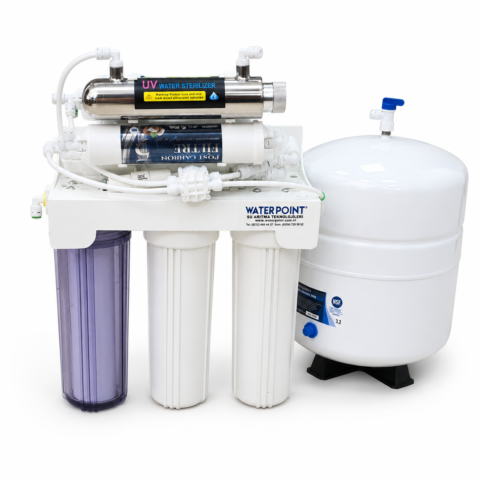
- Models with a UV stage: Add a UV (ultraviolet) treatment stage after reverse osmosis; used where a reduction in microbiological risk is wanted.
These models serve the kitchen point. If the whole plumbing system needs to be protected, the set-up changes: sediment, chlorine and limescale are dealt with on the main line. For detail you can look at the whole house and building inlet systems category.
What Does GPD Mean?
The capacity of reverse osmosis membranes is expressed in GPD (gallons per day). One gallon is about 3.785 litres. On that basis a 300 GPD membrane can produce roughly 1,135 litres of treated water per day under ideal conditions, and a 500 GPD membrane roughly 1,890 litres.
The phrase "ideal conditions" matters here. Real output varies with inlet pressure, water temperature, the contaminant load of the raw water and the age of the membrane. Output falls in cold water, it slows when pressure drops, and capacity decreases as the membrane ages. For this reason the GPD figure should be read as an upper limit, and the unit should be chosen somewhat above your daily requirement rather than close to it.
Wastewater Ratio
In reverse osmosis systems, alongside the treated water a certain amount of concentrate water goes to drain. This is not a fault in the system but a requirement of how it works: the contaminants held back by the membrane are carried away with this water; otherwise they build up on the membrane surface and block it.
Factors that affect the wastewater ratio:
- Inlet pressure: As pressure rises, efficiency increases and the waste ratio falls. This is one advantage of pumped systems.
- Raw water quality: If the hardness and dissolved solids load are high, the membrane has to be flushed more.
- Membrane age: Efficiency falls in an ageing membrane and the waste ratio rises.
- Pre-treatment: If sediment and chlorine have been removed properly, the membrane works more easily.
There is no reverse osmosis system that removes wastewater altogether; but with correct installation and timely filter replacement the ratio can be brought down noticeably. Some users put the drain water to use at points with low quality requirements, such as garden watering or preliminary cleaning. Why a home unit sends water to drain, and what decides the ratio, is explained in our article on the water purifier waste water ratio.
Filter Replacement Intervals
Filter replacement is the most critical maintenance item determining the performance of the unit and the quality of the water. The intervals below are a general guide; raw water quality and the amount consumed can shorten these periods.
| Component | Function | Approximate Replacement |
|---|---|---|
| Sediment filter | Holds back sediment | Every 6 months |
| Granular activated carbon | Removes chlorine and odour | Every 6 months |
| Carbon block | Protects the membrane | Every 6 months |
| Reverse osmosis membrane | Separates dissolved solids | Depending on performance, every few years |
| Post-carbon filter | Corrects taste and odour | Once a year |
| Mineral / alkaline cartridge | Additional stage | Once a year |
| UV lamp | Reduces microbiological risk | Once a year |
When filter replacement is delayed, the taste of the water and the flow rate deteriorate first; then the membrane is strained because of the blocked pre-filters and permanent capacity loss occurs. The membrane is a far more expensive part than the pre-filters, so putting off pre-filter replacement is not economical.
What to Check When Choosing a Unit
- Your water pressure: The answer to the pumped-or-pump-free question comes from here.
- Your daily consumption: Household size and usage habits determine the choice between a tank system and a direct-flow system.
- Raw water quality: If hardness is high, softening may be needed; if there is a lot of sediment, extra pre-filtration may be needed.
- Cartridge size: Standard-size cartridges are widely available; a special size creates supply dependence later on.
- Membrane brand: It directly affects separation performance and service life.
- Continuity of spare parts: Are filters, membranes, pumps and taps available?
- Technical service: Is installation and scheduled maintenance provided?
- Warranty: Are its term and scope in writing?
Our guide on how to choose a water purifier takes these points step by step, and if you are comparing brands in search of the best water purifier for your home, our seven-criteria guide shows what to verify before you buy.
How Is Installation Done?
Under-sink units are placed inside the kitchen cabinet. The steps carried out during installation are as follows:
- A feed is taken from the cold water line with an isolating tap.
- A separate filter tap is fitted to the sink or the counter; this may require drilling a hole in the counter.
- The wastewater line is connected to the sink drain.
- On pumped models an electrical supply is provided.
- The system is commissioned, the first water produced is discarded and a leak check is carried out.
Under-sink installation takes roughly 1–1.5 hours and countertop installation 30–45 minutes; a water test is carried out afterwards. On the Water Point side, the site survey is free of charge if the unit is purchased from us.
Fault Symptoms and First Checks
- Water flow has slowed: The pre-filters may be blocked; on tank systems the tank air pressure may have dropped.
- The taste of the water has changed: The post-carbon filter may have reached the end of its life.
- Wastewater runs continuously: There may be a fault in the shut-off valve or the check valve.
- There is noise from the unit: On pumped models the cause may be the pressure setting or air in the system.
- No water at all: The inlet valve may be closed, the filter completely blocked or the electrical supply cut.
- Water pooling underneath: There may be a leak at a fitting or a hose connection; the unit must be shut off and a service engineer called.
If these checks give no result, the membrane or the valve needs to be assessed. Water Point provides technical service for water purifiers of all domestic and foreign brands.
Treated Water and the Question of Minerals
While reverse osmosis separates dissolved solids, it also holds back part of the minerals naturally present in the water. For this reason many units use a mineral or alkaline cartridge; the aim is to add minerals back to the treated water and to balance the taste.
A mineral cartridge is a preference, not a requirement. Whether or not the cartridge is used is decided by expectations about the taste of the water and by the intended use. When choosing a unit, if this stage is present it is worth asking about the replacement interval and the availability of the cartridge.
The Difference Between Mains Water, Well Water and Tank Water
The most important input determining the choice of unit is where the water comes from. The same model of unit gives three different results on three different sources.
Mains water arrives having been through a certain amount of treatment. Turbidity is usually low, but it contains free chlorine. Because chlorine damages a reverse osmosis membrane, the activated carbon stage is mandatory here. The second issue with mains water is hardness; if hardness is high, the membrane scales up faster and its life is shortened.
In well water the sediment and turbidity load is greater. Dissolved iron and manganese may be present; on contact with air these precipitate and block the filters and the membrane. In well water applications the pre-filtration chain gets longer, and where required an iron removal stage and a UV (ultraviolet) treatment stage that reduces microbiological risk are added. With well water the analysis must not be a one-off; it must be repeated periodically, because values can change during the year depending on the rainfall pattern.
With tank water, the standing of the water is a risk item. Sediment builds up in tanks that are not maintained and the microbiological load rises. Because pressure is usually low as well in plumbing fed from a tank, a pumped model is preferred. Scheduled cleaning of the tank matters as much as the performance of the unit.
Where Is a Water Purifier Installed?
With under-sink units the choice of location determines the problems that will be met later. The following must be assessed when choosing the installation location:
- Service access: The filters will be changed at least twice a year; a gap must be left where the cartridges can be removed comfortably.
- Proximity to the drain: The wastewater line is connected to the sink drain; if the distance is long, hose length and the risk of blockage increase.
- Electricity: A socket is needed on pumped models and on models with a UV stage; it must be positioned away from wet flooring.
- Base: A position should be chosen where a possible leak can be noticed and which will not wet the wooden cabinet base directly.
- Tank position: On tank systems the tank must be placed upright and in a way that it will not be knocked about.
Checking the connections within the first 24 hours after installation is recommended; most leaks appear in the first few days.
Can a Water Purifier and Water Softening Be Used Together?
Yes, and in hard water areas this set-up is quite common. The two do different jobs: the water softener removes hardness and protects the plumbing; the water purifier raises drinking water quality.
When they are used together the order is as follows: softening after the water inlet, and a reverse osmosis purifier in the kitchen. This arrangement has two benefits. First, all the plumbing and heating equipment is protected from limescale. Second, because softened water places less load on the membrane, membrane life is extended and filter costs fall.
In areas where hardness is low, softening may not be needed; this decision must be made on the basis of a measurement result. Buying both systems without having the hardness measured can create unnecessary cost.
Information to Prepare Before Buying a Unit
Clarifying a few pieces of information in advance shortens the process of getting the right recommendation and makes the quotations you receive comparable.
- Water source: Mains, well or tank.
- Water pressure: This is the basis of the pumped or pump-free decision.
- Household size or number of users: It determines daily consumption and tank volume.
- Intensity of use: Whether the water demand is spread over the day affects the choice between a tank system and a direct-flow system.
- Hardness value: It shows whether softening is needed.
- Installation location: The under-sink space and the state of the drain and the socket.
You will be asked about these six points whichever supplier you talk to. Having the answers ready prevents a model that does not suit you from being recommended in the first place.
Carboy, Bottle and Water Purifier Compared
There are three common options for drinking water at home and in the office. The difference between them is not only cost; continuity, carrying load and the amount of waste are decisive as well.
| Criterion | Carboy | PET Bottle | Water Purifier |
|---|---|---|---|
| Access | You wait for an order and a delivery | Carried from the shop | Instant from the tap |
| Carrying | A 19 litre carboy is carried | Constant carrying is needed | No carrying |
| Space | Space for the dispenser and spare carboys | Storage space is needed | Hidden under the counter |
| Packaging waste | Returnable container | High plastic waste | No packaging waste |
| Continuity | Interruption when stock runs out | Interruption when stock runs out | Uninterrupted as long as there is mains water |
| Maintenance | Dispenser cleaning | None | Scheduled filter replacement |
The clear advantage of a water purifier is continuity: order tracking, carrying and stock management disappear. In return, filter replacement comes in as a responsibility; when this maintenance is not done, the benefit the unit provides falls away quickly.
TDS Measurement and Unit Performance
TDS expresses the total amount of dissolved solids in water and can be measured with a small TDS meter. The most practical way to tell whether the unit is working is to compare the TDS value of the inlet water with that of the outlet water.
The following points must be watched during measurement:
- The sample must be taken after the tap has run for a while; water standing in the pipe is misleading.
- The comparison must always be made under the same conditions; a temperature difference affects the result.
- In units that use a mineral or alkaline cartridge the outlet TDS value is raised deliberately; this is not an indication of a fault.
- A gradual rise in the outlet value over time is the earliest sign that the membrane is tiring.
TDS on its own does not describe the whole quality of the water; hardness, chlorine and microbiological parameters are measured separately. But it is a simple and useful indicator for following the separation performance of the unit.
Office and Workplace Use
Water demand in offices behaves differently from at home: consumption concentrates at certain hours of the day and the number of users varies. For this reason, when making a choice, as well as the daily total consumption, the demand at peak hours must also be taken into account.
- Small offices: An under-sink tank unit is usually sufficient.
- Medium-sized offices: Direct-flow systems provide continuous flow without water standing in a tank.
- Shared areas and waiting rooms: Filtered water dispensers meet hot and cold water needs at a single point.
- Cafes and restaurants: In feeding tea, coffee and ice machines, water quality directly affects the taste of the product; if hardness is high, the set-up is designed together with softening.
In businesses, putting filter replacement on a calendar is recommended. When no responsible person is named, maintenance is easily put off and unit performance falls without being noticed.
First Use After Installation
On a newly installed unit, or one whose filter has been changed, the first water produced is not used. Carbon dust from the cartridges and manufacturing residues are carried away with this water. In practice:
- On tank systems the tank is filled once and emptied completely; this is usually repeated twice.
- On direct-flow systems the tap is left open for a few minutes.
- Slight cloudiness or bubbles may be seen in the first water; this comes from air and disappears shortly.
- The same procedure must also be repeated on units that have not been used for a long time.
Unit Life and Total Cost
The life of a water purifier is determined far less by its housing and fittings than by maintenance discipline. A unit whose filters are changed on time, which runs within the right pressure range and whose pre-treatment is set up correctly can work for many years without trouble.
When the total cost is calculated, the following items must be considered together:
- Initial investment: The cost of the unit and the installation.
- Consumables: A pre-filter set twice a year, a post-carbon filter once a year and a mineral cartridge where fitted.
- Membrane: The most valuable part of the system, renewed every few years.
- Electricity: Applies only to pumped models and models with a UV stage.
- Wastewater: The amount of water that goes to drain in reverse osmosis systems.
Once these items are known, the comparison between units can be made not only on the ticket price but on the real cost that builds up over the period of use.
Common Mistakes With Water Purifiers
- Putting off filter replacement: A blocked pre-filter strains the membrane; delaying the cheap part burns out the expensive one.
- Buying a pump-free model without measuring the pressure: At low pressure membrane efficiency falls and wastewater increases.
- Not asking about the cartridge size: A special-size cartridge can turn into a supply problem a few years later.
- Being taken in by the number of stages: What is decisive is not the number of stages but which stages are present and the quality of the membrane.
- Not connecting the wastewater line correctly: A wrong connection can create back-siphoning and an odour problem.
- Putting a unit that has been unused for a long time straight back into service: On returning from a holiday the first water produced must be discarded.
- Never checking the tank air pressure: This is the most frequent cause of weakening flow on tank systems.
Why Water Point Water Purifiers?
Water Point works on the principle that home and office water purifiers are chosen according to the point of use and the water quality.
- Analysis-based recommendation: If the unit is purchased from us the site survey is free of charge; the recommendation is shaped by the measurement result.
- Component quality: Toray, LG, STAR and TechFlow membranes are among the components used.
- Standard-size cartridges: Standard-size cartridges that are widely available are used.
- Brand-independent technical service: Technical service is provided for units of all domestic and foreign brands.
- Continuity of spare parts: Filters, membranes, resin and salt are consumables; valves, pumps and tanks are durable spare parts.
- Units carry a 2-year warranty; misuse is outside the cover. Consumables such as filters, membranes and resin are outside the cover.
- Certification: The activities carried out are covered by the CE certificate.
Installation and Technical Support
Water Point offers technical support covering installation, commissioning, scheduled filter replacement and fault response. For industrial systems there is a service network across Türkiye; for domestic units service is provided in İstanbul and the surrounding provinces (such as Kocaeli and Tekirdağ). The service fee is set according to the work and the materials; no charge is made without customer approval.

Water Purifier Prices
Water purifier prices vary according to the number of stages, the membrane capacity (GPD), whether a pump is fitted and the housing type. The prices below are the current list prices on the relevant product pages.
| Product | Price | Description |
|---|---|---|
| Eco Model Water Purifier | 9,803.68 TL | Economical entry-level under-sink water purifier with the basic stages. |
| 12 Litre Pump-Free Water Purifier | 12,254.60 TL | Pump-free model with a 12 litre tank for places where mains pressure is sufficient. |
| 12 Litre Pumped Water Purifier | 15,685.89 TL | Pumped model with a 12 litre tank for plumbing where the pressure is low or variable. |
| 8 Litre Pump-Free Water Purifier | 15,685.89 TL | Pump-free under-sink model with an 8 litre tank for compact use. |
| 8 Litre Pumped Water Purifier | 19,117.18 TL | Model that provides stable output with an 8 litre tank and a pressure pump. |
| 300 GPD Direct Flow Water Purifier | 25,489.57 TL | Model with a daily capacity of 300 GPD that produces on demand without using a tank. |
| Under-Sink Digital Water Purifier | 26,960.12 TL | Digital under-sink model on which filter life and water quality can be followed from the display. |
| Under-Sink Ultraviolet Water Purifier | 26,960.12 TL | Under-sink model with UV (ultraviolet) treatment added to the reverse osmosis stages. |
| Glass Tank Water Purifier | 35,293.25 TL | Under-sink model with a different storage tank material. |
| 500 GPD Direct Flow Water Purifier | 36,763.80 TL | Direct-flow model with a daily capacity of 500 GPD for heavy use. |
| 1000 GPD Water Purifier | 58,822.08 TL | High flow rate direct-flow reverse osmosis system. |
| Digital Water Purifier | 82,596.00 TL | Upper-segment model with a digital control panel and monitoring features. |
Prices are for the standard configuration; they can vary with extra stages and installation conditions. Which model suits you must be assessed together with your water pressure and your daily consumption.
How stages, the membrane, installation and consumables affect the price is broken down item by item in our article Water Treatment System Prices: Reading a Quotation.
For help with choosing a unit and for exact price information you can reach us on 0850 304 95 25 or at [email protected].
Let's decide on the right system together
If the unit is purchased from us the site survey is free of charge; if only a survey and measurement are requested, a 2,000 TL survey fee is charged. Capacity and treatment stages are set according to the water analysis result.
0850 304 95 25Ask on WhatsAppSend an e-mailWater Purifiers: frequently asked questions
When is a pumped water purifier preferred?
It is preferred where mains pressure is low or variable, on upper floors and in plumbing fed from a tank. By supplying the pressure the reverse osmosis membrane needs, the pump increases production speed and lowers the wastewater ratio.
In which situations can a pump-free water purifier be used?
It can be used where mains pressure is sufficient and stable. It consumes no electricity, runs more quietly and costs less. Measuring the water pressure before deciding is recommended.
When are water purifier filters replaced?
Sediment and carbon filters are generally replaced every 6 months, and post-carbon and mineral cartridges once a year. The reverse osmosis membrane is renewed every few years depending on performance. Raw water quality and the amount consumed can shorten these periods.
What does GPD mean and how many litres does it correspond to?
GPD means gallons per day; one gallon is about 3.785 litres. Under ideal conditions a 300 GPD membrane can produce roughly 1,135 litres per day and a 500 GPD membrane roughly 1,890 litres. Real output varies with pressure, temperature and raw water quality.
What is the difference between a tank system and a direct-flow system?
Tank systems collect the treated water in a tank; direct-flow systems produce on demand when the tap is opened and use no tank. Direct-flow models provide continuous flow and take up less space.
Why does a water purifier produce wastewater?
The contaminants held back by the reverse osmosis membrane are carried away with the concentrate water; without this they would build up on the membrane surface and block it. The waste ratio varies with inlet pressure, raw water quality and membrane age.
How many stages should the unit I buy have?
The number of stages is not on its own an indicator of quality. What matters is which stages are present, the quality of the membrane, whether the cartridge sizes are standard and the continuity of spare parts.
What is the warranty period on a water purifier?
Units carry a 2-year warranty; misuse is outside the cover. Consumables such as filters, membranes and resin are outside the cover.
Why do water purifier prices differ so much?
The price is set by the number of stages, the membrane capacity (GPD), the pump and tank design, and features such as direct flow or digital monitoring. The yearly filter change also adds to the total cost. The items are explained in detail in our article “Water Treatment System Prices: Reading a Quotation”.