
12 Misconceptions About Water Treatment, Corrected

When you start looking into it you meet claims on the same subject that flatly contradict one another. One source says your water is unusable, another argues that nothing at all is needed; some accounts frighten, some exaggerate. In the end you cannot tell who to believe. Misconceptions about water treatment spread in exactly that atmosphere of uncertainty and make deciding harder.
This article is a guide to putting things right. It takes up twelve common claims one by one and assesses each briefly and clearly, in the form of “the common belief” and “the truth”. We do not go deep into any item here; for those who want the detail we point to the article concerned. The aim is not to put anyone in the wrong but to let you rest your decision on verifiable information.
Why Are Misconceptions About Water Treatment So Widespread?
In water treatment, technical knowledge and marketing language are tangled together. So many claims spread without being verified and in time become generally accepted. A sound decision rests not on a claim but on a measurement; without knowing what is in the water, no assessment can be made soundly.
There are several reasons for that. The first is that the subject is technical: ideas such as the membrane, ion exchange and dissolved solids have no everyday equivalent. The second is invisibility: water runs clear and what is in it cannot be judged by eye.
The third reason is the emotional dimension. Water is a subject in the daily use of every household; and that prepares the ground for accounts built easily on anxiety. And an account based on anxiety spreads faster than information.
That is why misconceptions about water treatment are taken up here with a single measure: can the claim be verified? We ask that question in every one of the items below.
1. “Mains water is not fit to drink”
“Mains water cannot be used; everyone has to use bottled water or a unit.”
Mains water is produced to the criteria defined in the relevant regulations and is monitored regularly by the competent authorities. So there is a defined quality framework on the source side.
The differences met with in practice generally arise not at the source but along the way the water travels before it reaches the user: the age of the building’s plumbing, the condition of the tank if there is one and how long the water stands. So the right question is not “is mains water good or bad” but “what is in the water running from my own tap”.
The assessment can only be made by analysing a sample taken at the point of use. We took the subject up in detail in our article on whether mains water is safe.
2. “If the TDS is low the water is of good quality”
“If the meter shows a low value the water is of good quality; if it shows a high one it cannot be used.”
That measurement shows the total amount of dissolved solids in the water; it does not state which substances are present. So it gives a total, not a list of contents.
It is therefore not a measure of quality on its own. A high reading can equally show a source rich in minerals; and a low reading gives no assurance against every risk. The measurement is a valuable tool for following system performance; but it does not define whether the water is suitable.
A full assessment is made with an accredited laboratory analysis. We took up what the measurement says and what it does not show in our TDS article.
3. “Reverse osmosis leaves water with no minerals”
“Reverse osmosis takes all the minerals out of the water; so it should not be chosen.”
It is true that while the membrane separates dissolved substances it separates most of the minerals too. That is not a fault but a result of the working principle of the technology; the same mechanism that holds back the unwanted components holds back the minerals.
Against that, the greater part of daily mineral intake comes from food; what water contributes is one part of that picture. So the subject is taken up not as a deficiency but as a choice about taste and balance.
Those who care about the drinking character can choose a cartridge containing minerals at the final stage. That is not compulsory; we took the subject up in a balanced way in our mineral filter article.
4. “If the unit sends water to the drain it is faulty”
“If water is running to the drain the unit has broken; a sound system does not send water away.”
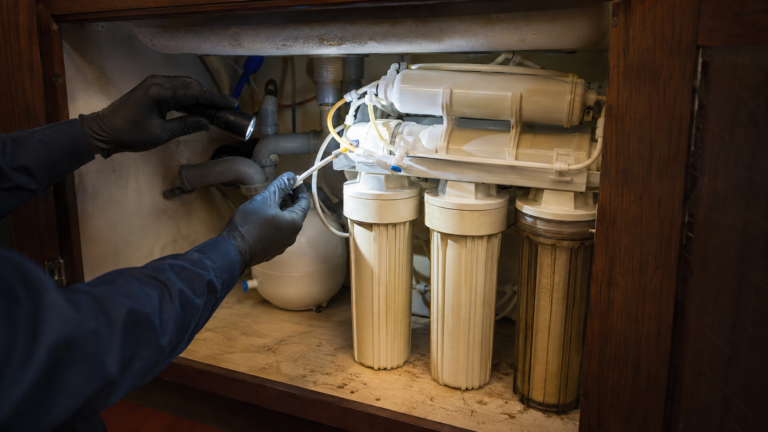
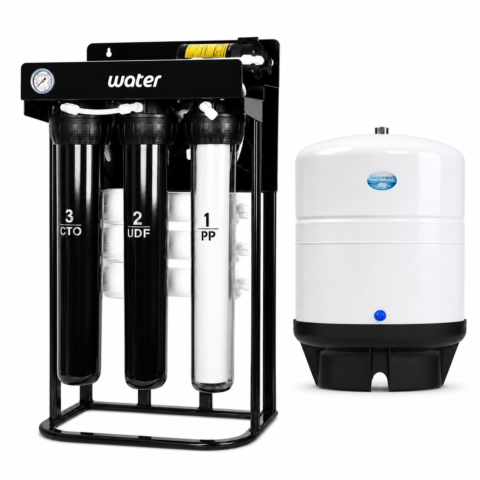
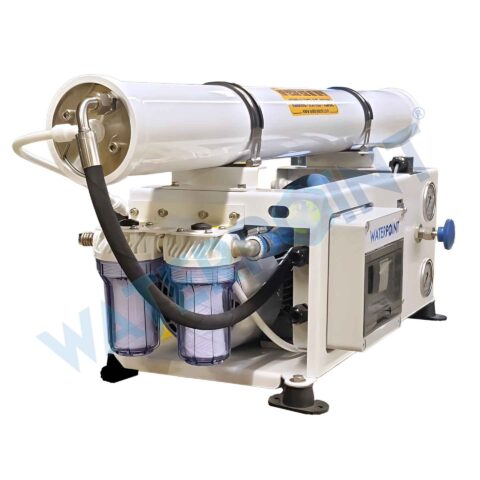
A reverse osmosis membrane separates the water into two streams: the treated water that passes through and the concentrate carrying the dissolved substances that cannot. The water going to the drain is that concentrate, and it keeps the membrane surface clean. Without that stream the surface would block in a short time.
So waste water is not a sign of a fault but part of the working principle. There is one distinction, though: on systems with storage, the flow is expected to stop once the tank is full. If the flow never stops, that can point to a different situation and calls for a check.
We took up the factors affecting the ratio and the ways of improving it in our waste water ratio article.
5. “A filter is changed when it breaks”
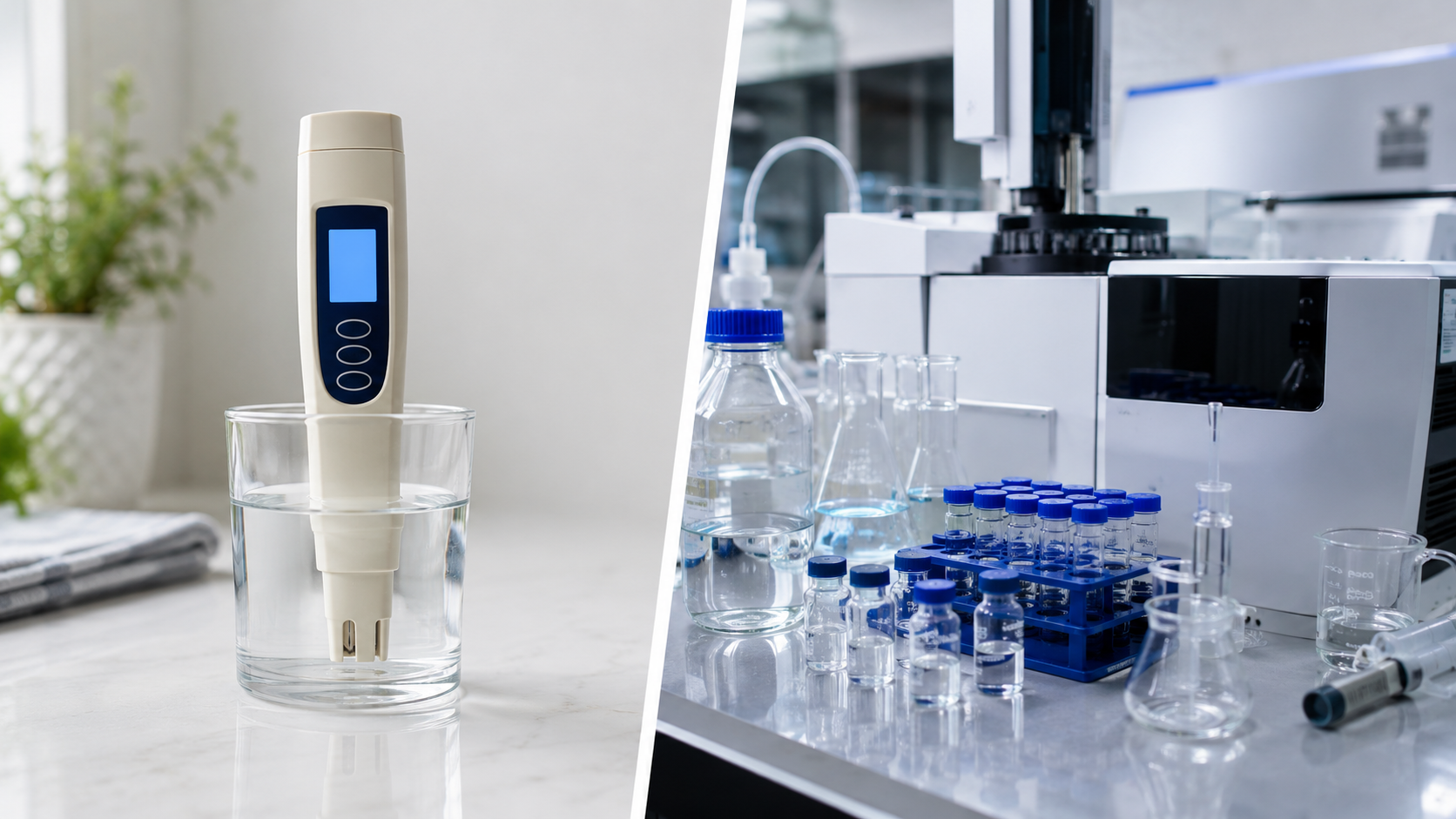
“If the water keeps flowing the filter is working; when it breaks it will be obvious anyway.”
Filter stages do not break; they reach saturation. A saturated stage keeps letting water through but stops doing its holding job. So the observation “the water is flowing” does not show that the stage is still doing its work.
Waiting has a second effect too: blocked stages raise the resistance to flow and lower the pressure reaching the membrane. That both slows production and prepares the ground for the module tiring early.
The interval for changing is not fixed; the quality of the inlet water and the amount consumed are what decide. We took up how to read the signs in our filter change guide.
6. “A descaler takes the place of softening”
“When a descaler is used regularly there is no need for a softening system.”
Descaling products can reduce build-up that has formed and give relief in the short term. But they do not change the hardness of the water; as long as the feed water stays the same, the build-up forms again.
The two approaches serve different jobs: cleaning is a maintenance operation, removing hardness is a preventive measure. They are not alternatives to one another but answers at different stages. Aggressive applications repeated often can also tire the internal surfaces of the equipment over time.
We took up the effect of limescale on equipment and why the lasting answer lies at the source in our hard water article.
7. “Magnetic products remove hardness”
“Magnetic or electronic products fitted to the pipe remove the hardness of the water.”
Those products do not take the calcium and magnesium out of the water. So the hardness value in an analysis report stays the same before and after the application. That is a measurable and verifiable fact.
On the effects of such products on build-up behaviour, independent scientific assessments set out differing results and the debate continues. So we give no definite verdict here; what can be said is that the hardness value does not change.
The method that actually lowers hardness is ion exchange. We took up how that approach works and how it is chosen in our softening selection guide.
8. “Boiling water means treating it”
“When you boil water it is freed of everything; there is no need for a unit.”
Boiling is a practice aimed at reducing microbiological risks. Against that, it does not remove the hardness of the water, its dissolved salts, its metal content or its chemical components.
And because of evaporation, the concentration of dissolved solids in the water left behind can rise a little. So boiling does not take the place of full treatment; it serves a different purpose.
We explained which filter stages a point-of-use unit needs in our how to choose a water purifier guide. For the general framework of domestic treatment methods, the US Environmental Protection Agency filtration fact sheet can be consulted.
9. “Clear water is clean water”
“If the water looks clear and does not smell there is no need to worry about what is in it.”
Clarity gives an idea only about suspended solids. The components in solution in the water cannot be seen; hardness, dissolved salts and metal content cannot be judged visually.
The same holds for smell. Some components are odourless and give no taste; so a sensory assessment produces no full result.
So the decision is rested on a measurement rather than a visual impression. We took up how to take a sample and how to read a report in our water analysis guide.
10. “A demonstration done at home measures the quality of water”
“If the colour changes in a demonstration with a device dipped into the water, the water is dirty.”
The colour and sediment that appear in such demonstrations come largely from the material of the electrodes used. So the result observed has more to do with the process itself than with what is in the water.
Every water containing dissolved solids also gives that reaction; a source rich in minerals can produce a similar picture. So a demonstration is not accepted as a method of analysis.
The real measurement of water quality is made with an accredited laboratory analysis. We took up what to look at when assessing a supplier in our firm assessment article.
No firm, product or seller is singled out in this article. What is assessed is the claim itself; the aim is to let the reader decide with verifiable information.
11. “Softened water is drinking water”
“If a softening system has been installed there is no need for another unit in the kitchen.”
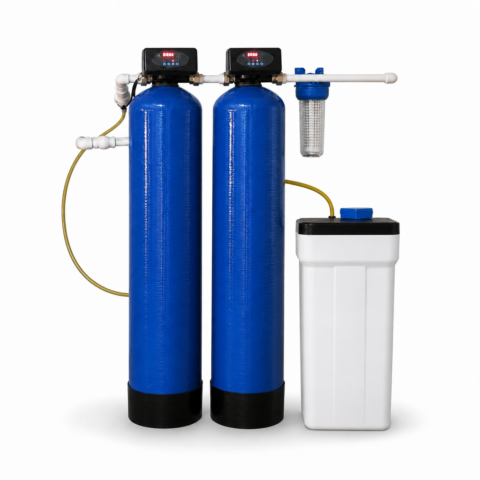
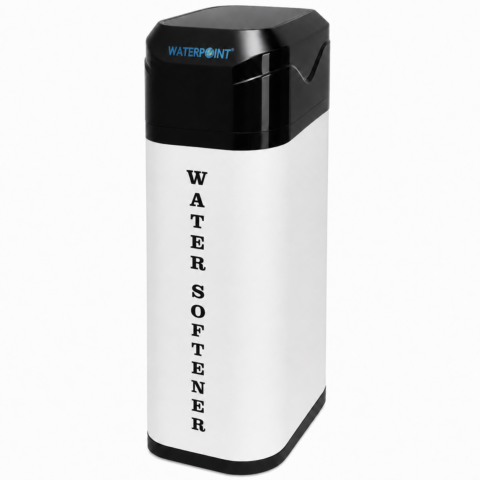
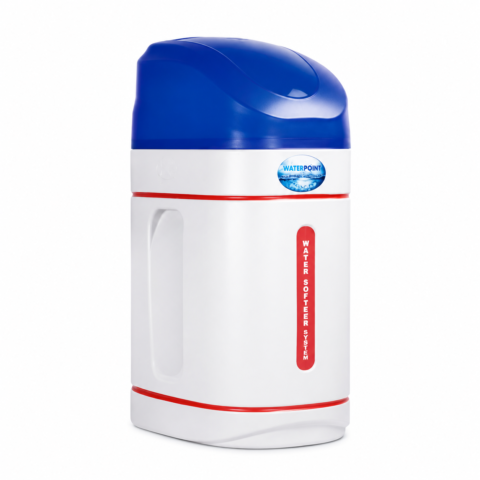
Softening removes the hardness ions in water by ion exchange and prevents limescale build-up. Its aim is to protect the plumbing and the equipment; drinking water quality is not the purpose of that stage.
In softened water the dissolved solids load is largely preserved; only the hardness-forming components have changed. So building a separate treatment line in the kitchen is a common approach.
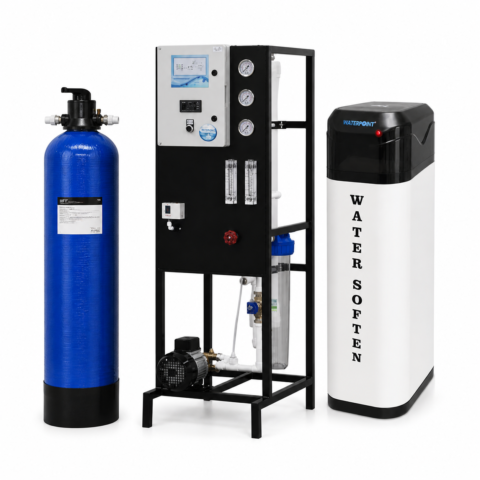
The right build generally has two layers: softening protects the plumbing, while the stage in the kitchen treats the drinking and cooking water. The two systems do not take each other’s place.
12. “An expensive unit is always better”
“The higher the price the better the quality; a cheap one is bound to be bad.”
Price can give an idea about component quality but is not a sufficient indicator on its own. Three headings are what decide: how well the unit suits your water, the quality of the components inside it, and the service and continuity of spare parts behind it.
Money paid for a problem your water does not have produces nothing in return. In the same way a system whose spare parts cannot be found becomes unusable in a short time, however much it cost.
We took up the assessment criteria in our unit assessment framework, and the items that make up the price in our price guide.
What Does a Sound Decision Rest On?
A sound decision rests on three grounds: the analysis result for the water, defining the real need, and verifiable information. When those three are in place the claims lose their importance; in their place comes a clear definition of need resting on your own data. The order is clear too: measure first, then decide.
What the twelve items above have in common is this: all of them try to answer through claims questions that could be settled by measurement. Yet once what is in your water is known, most of those debates end by themselves.
The practical road map is short:
- Have it measured: Have an analysis done from a sample taken at your point of use.
- Define the need: Which parameter is a problem and which is not — make that clear.
- Match them: Choose the stages that suit the problem identified, and no more.
- Verify: Ask that the information you get from a seller can be checked.
- Keep track: Put the maintenance interval on record and do not let it slip.
When those five steps are followed, misconceptions about water treatment no longer affect your decision. Because what you have in your hands is no longer a claim but a report.
Water Point Su Arıtma Teknolojileri operates from Esenyurt, İstanbul, under its founder Ali Genç, with more than 20 years of experience in the sector. The information below is verifiable.
An Approach Based on Analysis
The survey is free if the unit is purchased from us; where only a survey and measurement are wanted, a survey fee of ₺2,000 applies. The solution proposed is established from the water analysis.
Certification
CE certification is held for the activities carried out.
ETBIS Registration
The ETBIS registration can be verified through the Ministry of Trade system.
Contact
For your questions, 0850 304 95 25 and [email protected] can be used.
What those headings have in common is that they can be verified. The same questions can be put to every supplier in the sector; the comparison and the assessment are the reader’s own to make.
When you meet a claim, ask one question: how can this information be verified? If an analysis report, a certificate number or a source can be shown, bring it into your assessment. A claim that cannot be verified carries no information, however boldly it is presented.
Rest your decision on an analysis, not on a claim
To establish the stages that suit your water analysis, you can look at the options.
See the Treatment SolutionsFrequently Asked Questions
Why are misconceptions about water treatment so widespread?
Because the subject is technical and what is in the water cannot be judged by eye, claims spread easily. And because water is part of daily use, accounts are often built on anxiety. The right approach is to assess every claim by the measure of verifiability.
Can mains water really be used?
Mains water is produced to the criteria defined in the relevant regulations and is monitored regularly. The position at your own tap can vary with the plumbing, the tank and the conditions at the point of use. The definitive assessment is made with an accredited laboratory report.
Is buying a meter enough?
Those devices are practical for following system performance; but they do not show which substances are in the water. They give a total, not a list of contents. A laboratory analysis is needed for a full assessment.
What should I do if the treated water is left without minerals?
That is entirely a matter of preference. Those who care about the drinking character can use a cartridge containing minerals at the final stage; those who prefer the plain character use the system without that stage. Both preferences are valid.
What happens if I change the filter late?
Saturated stages stop doing their holding job and raise the resistance to flow. The water keeps flowing but the performance expected is not provided; and because the pressure reaching the membrane falls, the module tires faster. So the interval should be kept track of.
Do magnetic products lower hardness?
Those products do not take the calcium and magnesium out of the water; the hardness value in an analysis report does not change. On their effects on build-up behaviour, independent assessments are in dispute. The method that actually lowers hardness is ion exchange.
Should I trust demonstrations done at home?
The colour and sediment that appear in such demonstrations come largely from the electrode material; they are no measure of what is in the water. To decide, an analysis carried out at an accredited laboratory should be taken as the basis.
I have a softening system — do I need another unit in the kitchen?
Softening removes hardness and protects the plumbing; drinking water quality is not the aim of that stage. So building a separate treatment line in the kitchen is a common approach. The two systems serve different purposes.
How do I tell whether a claim is true?
The only measure is verifiability. If an analysis report, certificate information or a source can be shown, the claim can be brought into your assessment. A statement whose scope and grounds are not given carries no information, however boldly it is presented.
Conclusion
Misconceptions about water treatment spread easily in a field where technical knowledge cannot be verified by eye. Accounts that condemn mains water wholesale and approaches that treat a single measured value as a measure of quality share the same weakness: they have no verifiable grounds. A shared conclusion emerges from the twelve items taken up in this article — waste water is not a fault but a working principle, a filter does not break but saturates, a descaler does not change the hardness, clarity says nothing about content, and price is no indicator of quality on its own. And the way to decide is clear too: first have an analysis done from a sample taken at your point of use, then choose the stages that suit the problem identified. Once you have a report in your hands, all the claims lose their importance.
For a sound decision, get to know your water first
The site survey is free if the unit is purchased from us; where only a survey and measurement are wanted, a survey fee of ₺2,000 applies. The solution proposed is established from the water analysis. For details you can reach us on 0850 304 95 25 or at [email protected].
Discover the Solution That Suits You