
Changing Water Treatment Filters: When, How and Why

Having the unit installed is the easy part; the real business starts afterwards. Many users forget the filters entirely once their system is in and assume all is well as long as the water keeps running. Yet a filter past its time does not merely stop treating; it can give the dirt collected inside it back to the water and damage the membrane, the most valuable part of the unit. Changing the filters on a water treatment system is therefore not “accessory maintenance” but a basic routine that directly settles the quality of the water you drink.
This guide answers the most critical questions about changing the filters on a water treatment system one by one: what does each filter do, what sets the time to change it, what happens if you are late, which operation can you do yourself, and how is the right replacement filter chosen? By the end of the article you will be able to set your unit’s maintenance calendar to your own use and renew your filters at the right time with the right part.
Why Does Changing the Filters Matter So Much?
Changing the filters on a water treatment system is the most basic maintenance there is for preserving the treatment performance of the system. Filters fill over time with the sediment, chlorine and contaminants they hold; a full filter stops treating and can give the load it has collected back to the water. Regular changing preserves both the water quality and the life of the unit.
A filter fills by doing its job every day it works; that is its nature. The sediment filter holds sediment, the carbon filter chlorine and odour, the membrane dissolved substances. Everything held collects inside the filter, and when the capacity is full two things happen: the filter can no longer hold new contaminants, and the build-up inside it starts to carry a risk of mixing into the water flowing through.
That is where changing the filters comes in. The change is like “resetting” the unit: every stage starts working at full capacity again and the treatment chain recovers its integrity. The importance of filter maintenance is stressed by official authorities too; indeed the US Environmental Protection Agency guide to water filter maintenance states clearly that filters not changed regularly in line with the manufacturer’s instructions cannot provide the treatment performance expected.
In short the question is not “should the filter be changed” but “when and how should it be changed”. The rest of this guide sets out exactly that.
Which Filters Does Your Unit Have and What Do They Do?
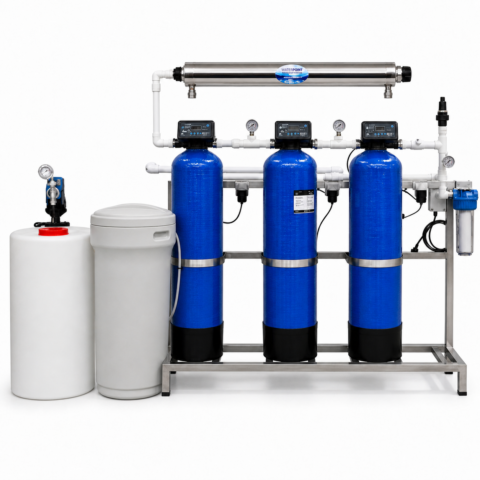
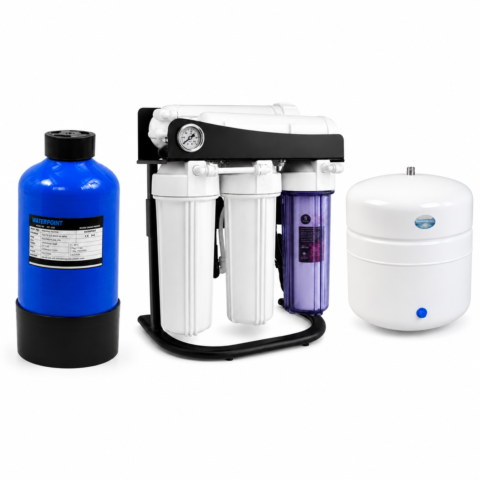
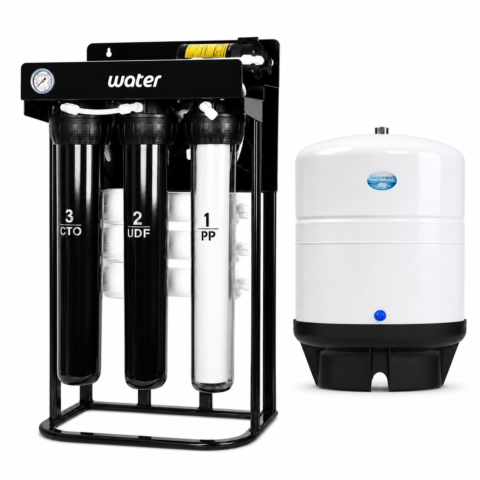
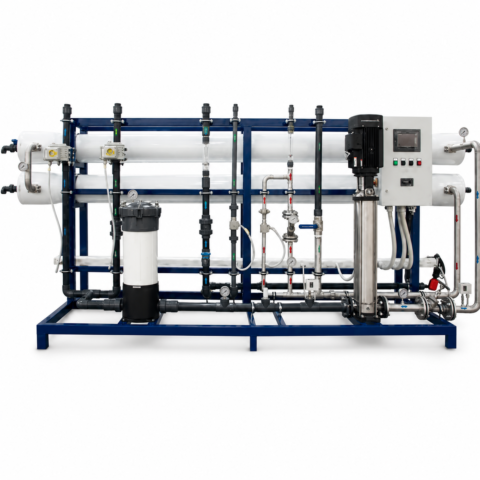
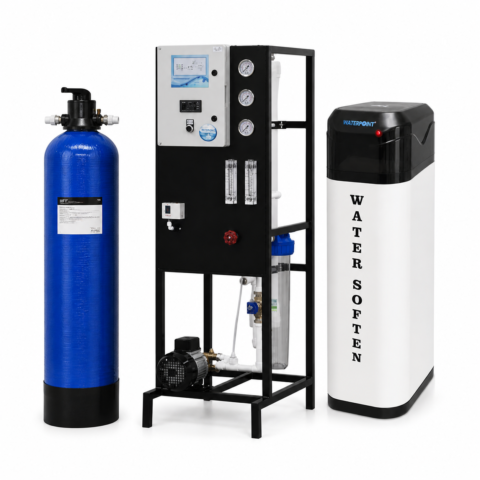
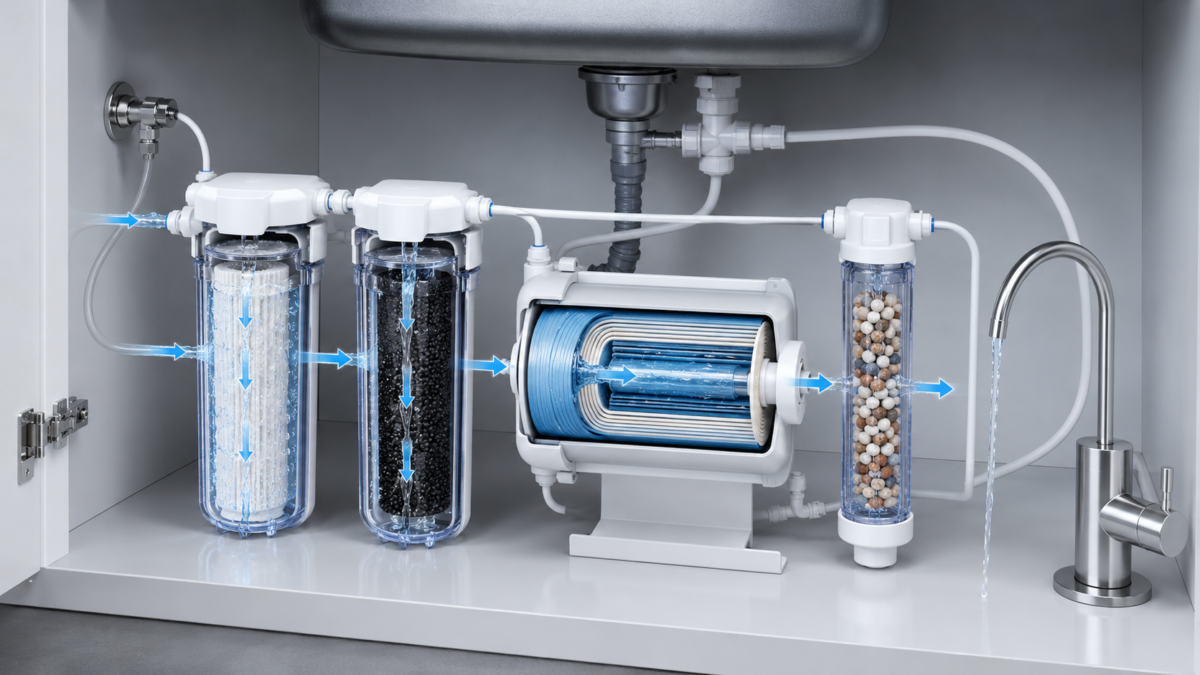
A typical system has four main stages: the sediment filter holding sediment, the activated carbon filter removing chlorine along with odour and taste, the RO membrane separating dissolved substances, and the mineral or final filter preparing the water for use. When changing the filters on a water treatment system is planned, the job of each stage is assessed separately.
Every stage is a link in the chain and protects the next:
Sediment
It holds sand, rust and suspended particles; it protects the stages that follow from mechanical blocking.
Activated Carbon
It removes chlorine, odour, taste and organic components; it protects the membrane from chlorine damage.
The RO Membrane
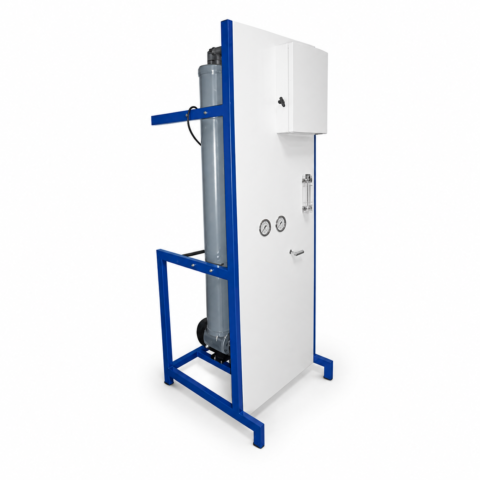
It separates dissolved salts and minerals; it is the treating heart of the system.
The Mineral / Final Filter
It balances the taste of the water coming from the tank and adds the final touch before use.
The sediment filter is the gatekeeper of the chain; it is the first to meet the visible dirt in the inlet water. The activated carbon filter does two jobs at once: it corrects the taste and odour profile of the water and it holds back free chlorine, the most dangerous substance there is for the membrane. The RO membrane is the most sensitive and most valuable part of the system; it is the stage that actually separates the dissolved load. The mineral filter and the final carbon stage complete the drinking quality of the water that has been stored.
Knowing that division of work matters, because changing the filters on a water treatment system is not a single operation but a plan repeated at different intervals for different stages.
What Sets the Time to Change a Filter?
The time to change a filter is set not by the calendar but by use. The quality of the inlet water, the sediment and chlorine load, the hardness and the daily consumption all bear directly on how fast the filters fill. The same filter can fill in very different times in two different homes. So the change should be planned to the conditions.
The most common mistake is thinking of filter life as a fixed period. Yet a filter is like a bucket: how fast it fills depends on how fast contaminants flow into it. The main factors that set the interval are these:
- Inlet water quality: Water carrying sediment, limescale or a high chlorine load fills the filters far faster.
- Daily consumption: A crowded household or a busy office uses the same filter up in a far shorter time.
- Hardness: The limescale load raises the rate at which both the stages and the membrane tire.
- The stage structure of the unit: The number and order of the stages changes the load falling on each filter.
Even so, a relative order can be given: the sediment and carbon filters are the stages changed most often; the membrane and the final filters are renewed at longer intervals. For the exact period the recommendation in your unit’s manual should be followed, and that recommendation interpreted according to your own water conditions. A plan for changing the filters on a water treatment system is built at the intersection of those two pieces of information: the manufacturer’s recommendation plus your real use.
The Signs That It Is Time to Change
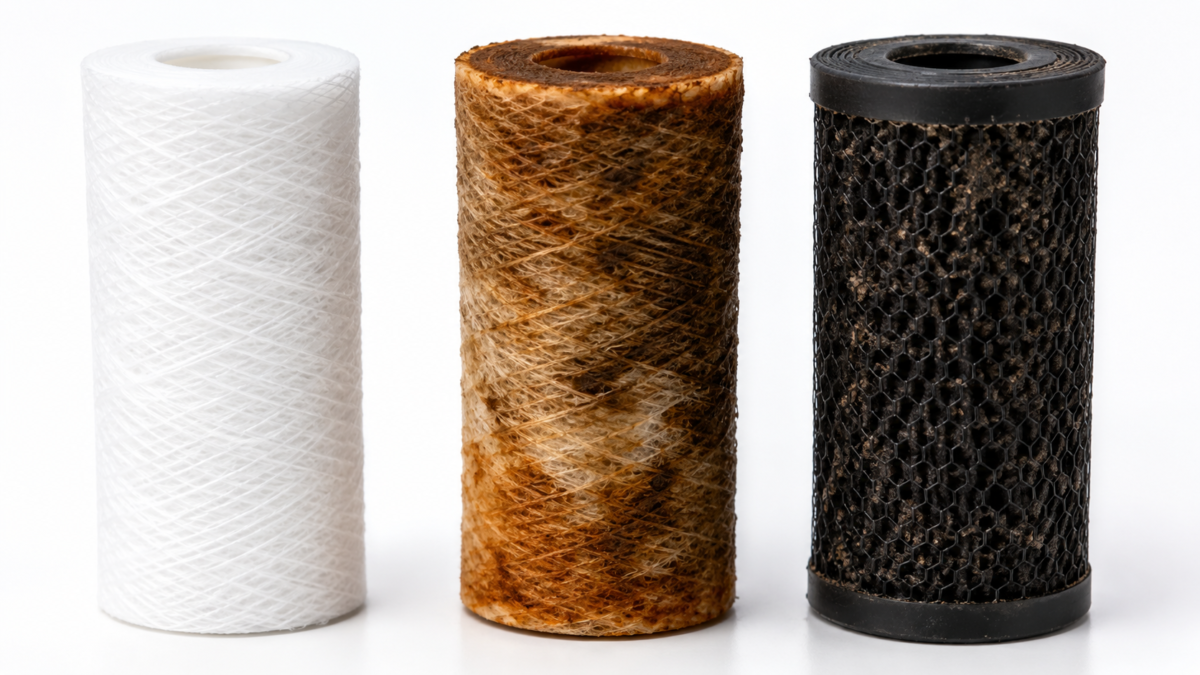
Four signs show that it is time to change the filters on a water treatment system: a drop in the flow and the pressure, a change in taste and odour, a rise in the TDS reading of the treated water, and a visible change of colour in the filter body. When even one of those signs is seen, the stages should be checked.
Your unit actually talks to you; you only have to read the signs:
The Flow Has Slowed
If a glass takes longer to fill from the tap than it used to, one of the stages has started to block.
The Taste and Odour Have Changed
A taste of chlorine, a foreign smell or a sense of “stale water” points to the carbon stage being full.
The TDS Has Risen
If the reading of the treated water is rising over time, the membrane has started to fail at its job.
A Change of Colour
On filters with a transparent body, darkening and yellowing are visible proof of the capacity filling.
The most objective of those signs is a measurement. Measuring and comparing the inlet water and the treated water regularly takes the state of the membrane out of guesswork and turns it into data. We took up in detail how to interpret that measurement in our article explaining TDS. If the difference between them has started to close, there is no need to wait to change the filters.
No signs does not mean a filter can be used forever. Some stages reach saturation without making the loss of performance felt. The signs are a warning system; they do not take the place of planned changing.
Sediment and Activated Carbon: The Pair Changed Most Often
Because the sediment and activated carbon filters work at the front of the chain, they are the stages that fill fastest. Their job is not only to clean the water but to protect the membrane behind them. Renewing that pair on time directly extends the life of the most expensive part of the system.
The pre-filters changing often is not a fault but a requirement of the design. Cheap, easily changed stages protect the expensive and sensitive one; that is the logic. The sediment filter takes on all the visible load in the inlet water, which is why its body is the part that gets dirty fastest. The carbon stage saturates as it holds chlorine, and saturated carbon starts letting chlorine through to the membrane — a quiet and irreversible process of damage.
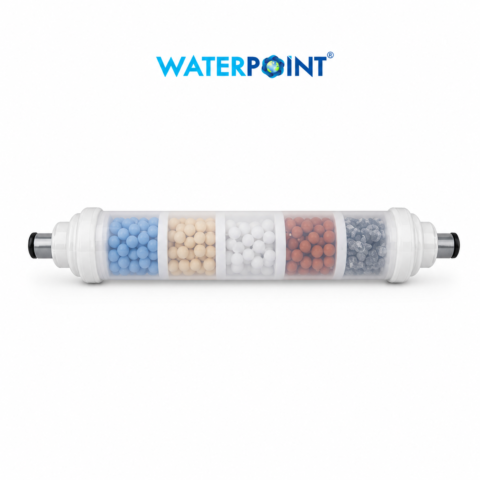
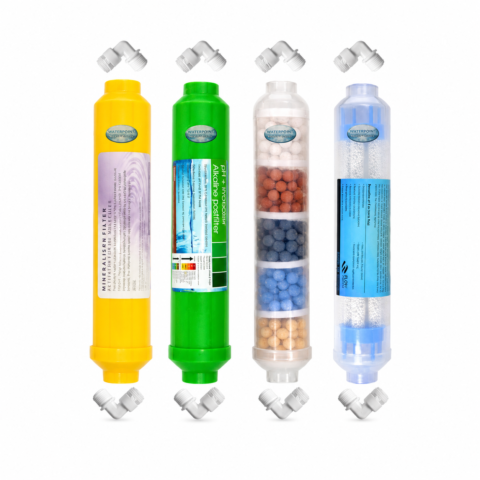
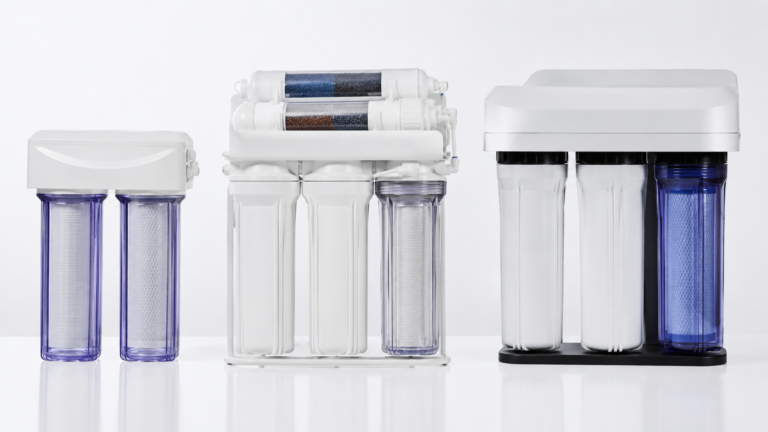
Changing those two stages is usually done together in practice, because their loads run in parallel. For those who want to renew the front stages in a single package for convenience, a five-piece filter set makes it possible to refresh the whole line in one go; on units with a simpler stage structure a three-piece filter set does the same job. Where the carbon stage has to be renewed separately, coconut-based activated carbon is chosen when chlorine, taste and odour are the main problem, and coal-based activated carbon when colour and organic load are.
That pair is the backbone of the routine: as long as the pre-filters are changed regularly, the rest of the system is protected.
When Is the RO Membrane Changed?
The membrane is the longest-lived but most critical part of the system. The clearest data showing when to change it is a lasting rise in the TDS value of the treated water. If the pre-filters are not renewed on time the membrane is used up early; chlorine getting past the carbon stage in particular does permanent damage to the structure of the membrane.
Changing the membrane is planned on a different logic from the other stages. The pre-filters complete their life by “filling”; the membrane is used up by “wearing”. Its surface is covered over time by limescale and deposits, the rate of production falls and its ability to separate weakens. That process is gradual, not sudden; so it is hard to notice without regular measurement.
The real enemy of the membrane is neglected pre-stages. When a saturated carbon filter starts letting chlorine through, the membrane is damaged quietly; and a saturated sediment filter leads to the membrane surface fouling quickly. So the early death of a membrane is usually not its own fault but the result of the late changing of the filters in front of it. Discipline in changing the filters is therefore the economics of the membrane itself: changing the cheap stages on time protects the expensive one for years.
When the time comes, the stage is renewed with a membrane filter suited to the body structure of your unit; the measurement is then repeated to confirm the performance of the new membrane.
The Consequences of Delaying the Change
Delaying the change of filters on a water treatment system has four consequences: the treatment performance falls, the full stages can give contaminants back to the water, the membrane is used up early, and a risk of biological build-up can form in stagnant stages. The cost of the delay is always higher than the cost of a new filter.
The first consequence is silent: the unit looks as though it is working but is not treating. Because the water keeps flowing the user does not notice the problem; yet the full stages are no longer doing their job. The second consequence is more unpleasant: the load collected inside the filter can mix back into the water when the flow changes. The third is economic: the membrane, left unprotected, is used up before it has completed its normal life and the most expensive part of the system has to be renewed early.
The fourth consequence has to do with hygiene. A damp, saturated filter bed left unchanged for a long time can make suitable ground for biological build-up. In that case the treatment performance does not merely fall; the filter carries the risk of turning into a source that affects water quality adversely. So on units left unused for a long time (a summer house, a seasonal business) the stages should be reviewed before they are used again.
Think of the cost of a filter not as “spending” but as “insurance”. Changing the filters on time secures the membrane, the unit and the quality of the water you drink, all at once.
Should You Change Them Yourself or Call a Service Engineer?
Changing a simple pre-filter can safely be done by most users. For changing the membrane, valve and connection work, leaks or pressure problems and industrial systems, technical service is advised. Matching the right part and a leak-free fit are the two most critical points in the operation.
Two situations have to be told apart. Changing the pre-stages with transparent bodies (sediment and carbon) consists of turning off the water, opening the body and fitting the new cartridge; a user who is handy can do that by following the manual. The points to watch are clear: turn off the water inlet before the change, make sure the gaskets are seated, and run off the first water for a while afterwards to rinse the system.
The situations calling for service are these:
- Changing the membrane: It calls for taking the body apart, fitting it the right way round and confirming the performance afterwards.
- Leaks and pressure problems: The source of the problem may be not the filter but the valve, a connection or a check valve.
- If a taste or odour problem persists: A problem continuing despite a filter change is a sign of a fault at a different stage.
- Industrial and high-capacity systems: On those systems maintenance should be carried out under a planned service arrangement.
In short: a routine filter change is a job the user can do; every situation calling for a diagnosis is the work of a service engineer. Not confusing the two protects both the unit and the budget.
How to Change Water Treatment Filters: 6 Steps
Changing the pre-filters takes six steps: close the valve, release the pressure, remove the housings, replace the cartridges, check the O-ring and run off the first water. These steps are for the transparent sediment and carbon housings; changing the membrane is a job for a service engineer.
Close the Valve
Close the unit’s inlet valve and, if there is one, the tank valve; unplug pump models.
Release the Pressure
Open the treated-water tap and wait until the flow stops; a housing without pressure opens more easily.
Remove the Housings
Put a bowl or towel underneath, loosen the filter housing with the spanner and unscrew it by hand.
Replace the Cartridges
Take out the old cartridge, rinse the housing and fit the new cartridge in the right stage and the right way round.
Check the O-Ring
The O-ring must sit fully in its groove without cracks or dents; tighten the housing by hand first, then with the spanner without overdoing it.
Run Off the First Water
Open the valve slowly, check the connections for leaks and let the first water run for a few minutes; on tank units, empty the first tankful.
Inline (ready-bodied) cartridges connect differently and have a flow direction; fit them following the arrow on the body. If a leak continues after the change, the cause is usually an O-ring that has not fully seated: open the housing, seat the O-ring in its groove and tighten again.
How Is the Right Replacement Filter Chosen?
The right replacement filter has to suit the type of unit, the number of stages and the body structure. A wrong size or an incompatible cartridge causes a sealing problem and a loss of treatment. The safest approach is to renew in a set suited to the unit and to use original or verified compatible parts.
Three questions are enough when choosing a replacement filter. First: how many stages does my unit have and which stages am I changing? Second: which cartridge type is compatible with my body and connection? Third: is the part one recommended or verified by the manufacturer of my unit?
Renewing in a set solves most of those questions from the outset, because a set is made up of parts matched to the stage structure. When buying single parts, checking compatibility is left to the user. Where you cannot be sure, the most practical route is to give your unit model and ask for support. When renewing the final stage, a mineral filter that completes the drinking balance of the water can be preferred; that way the taste profile is preserved after the change too.
If your unit has aged and throws up more than one problem at every change, updating the system may be more economical than renewing the filters. To see the current options you can look at the domestic and office treatment solutions.
How Much Does a Filter Change Cost?
The cost of a filter change has two parts: the price of the replacement filters and, if a service engineer does the job, the service fee. If you change the pre-filters yourself you only pay for the set; in years when the membrane is also renewed, the cost is higher.
For home units the most common purchase is a ready-made set. For a yearly renewal including the membrane the 5-piece water filter set is used; for the pre-filters only, the 3-piece pre-filter set. Current prices are shown on the product pages; because amounts change with the exchange rate, we do not quote figures in this article.
If you would like a service engineer to do the change, you can fill in the service request form. The service fee depends on the work done and the materials used, and is paid when the job is finished. For industrial systems there is a service network across Türkiye; for home units service is provided in İstanbul and the neighbouring provinces such as Kocaeli and Tekirdağ.
Let’s establish the filter set that suits your unit together
To choose the replacement filter that suits your model, to assess the state of your membrane or to plan a service visit, you can consult the Water Point team.
See the Treatment SolutionsFrequently Asked Questions
How often should the filters on a water treatment system be changed?
There is no fixed period; the interval is set by the quality of the inlet water, the sediment and chlorine load and the daily consumption. The relative order is this: sediment and carbon filters are renewed more often, the membrane and the final filters at longer intervals. The period in your unit’s manual should be taken as the basis and interpreted to your own conditions.
If the filter is not changed, does the water keep flowing?
In most cases yes, but that is misleading. A full filter can keep letting water through but stops treating; it can even give the load it has collected back to the water. The flow continuing shows not that the system is working but only that the water is passing through.
What should be watched while changing the filters?
Turning off the water inlet, making sure the body gaskets are seated, fitting the cartridges in the right order and running off the first water afterwards to rinse the system are the basic steps. At every step you cannot be sure of, the manual should be consulted or service support taken.
How do I know the membrane is finished?
The most reliable method is a measurement: if the TDS value of the treated water is rising permanently and the rate of production is falling markedly, the membrane has done its job. A change in taste and the tank taking longer to fill are supporting signs.
Does using a cheap generic filter cause problems?
Incompatible or poor-quality cartridges can create a sealing problem, low treatment performance and a mismatch between stages. What matters is not price but verified compatibility: parts suited to your type of unit, recommended by the manufacturer or of known quality, should be preferred.
Should the filters be changed on a unit left unused for a long time?
Yes, the stages should be reviewed before it is used again. In damp filter beds left standing for a long time there can be a risk of biological build-up. In places used seasonally, the safest approach is to renew the pre-filters and rinse the system before opening the unit up.
Conclusion
Changing the filters on a water treatment system is no less important than installing it; on the contrary, it is the real factor settling the quality of the water you drink over the years. The rule in short is this: the change is set by use, not by the calendar; the sediment and carbon stages are renewed often and the membrane at longer intervals; the signs (a drop in flow, a change in taste, a rise in TDS, a darkening of colour) are warnings but do not take the place of planned maintenance. Renewing the pre-filters on time protects the membrane; and protecting the membrane lowers the total cost of the system. You can carry out the simple changes yourself and call a service engineer in every situation calling for a diagnosis. A filter change made at the right time with the right part for your unit is the shortest route to protecting both your water and your investment.
Let’s set up your filter calendar so your unit treats as it did on the first day
To establish the replacement filter set that suits your unit model and to draw up your maintenance plan, you can get in touch with the Water Point expert team.
Discover the Solution That Suits You