
How to Choose a Water Softener: Capacity and Model Guide
There are dozens of different models on the market; the body sizes look alike, the technical terms run into one another, and in the end the decision usually comes down to a single criterion: price. Yet most units bought on price either regenerate constantly because their capacity falls short, or cost money for nothing because they were chosen larger than needed. How to choose a water softener is a question whose answer lies not on the product label but in the hardness of your own water and your daily consumption.
This guide does not compare brands. Instead it offers you a clear route to a decision: first what to measure, then which criteria to look at, and finally which type of body and which valve build suits your use. All the framework needed to answer how to choose a water softener correctly is taken up in order in the sections below.
How to Choose a Water Softener: What Data Does the Decision Rest On?
The answer to how to choose a water softener rests on four pieces of data: the hardness of the water, daily water consumption, the instantaneous flow required and whether use has to be uninterrupted. Once those four are clear, the right capacity, body type and valve build emerge on their own. Price is not the start of the decision but its result.
It helps to think of those four as an equation. Hardness determines how much work the unit does in every litre of water. Daily consumption shows the total volume of that work. The instantaneous flow reveals whether the unit will be strained at peak hours. The need for uninterrupted water tells you whether a single-vessel or a twin-tank build is required.
When any of those data is missing the choice becomes guesswork. A unit bought on a guess may look fine for the first few months but in time either loses its softening performance or makes itself felt in running costs. When looking for an answer to how to choose a water softener, therefore, the order must not be broken: measurement first, then calculation, and the product last.
In the sections below we open that order step by step. Each heading is built on the one before, so reading them without skipping markedly shortens the decision.
The First Step: Measure the Hardness of Your Water
The right choice starts with measuring the hardness. In Türkiye, hardness is commonly expressed in French degrees (°Fr) and varies markedly from area to area. Without knowing the hardness the capacity cannot be calculated, because that value directly determines the size of the job the unit has to do.
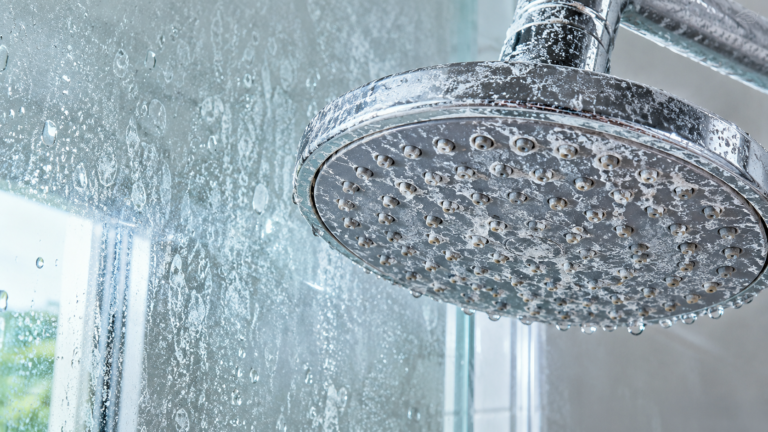
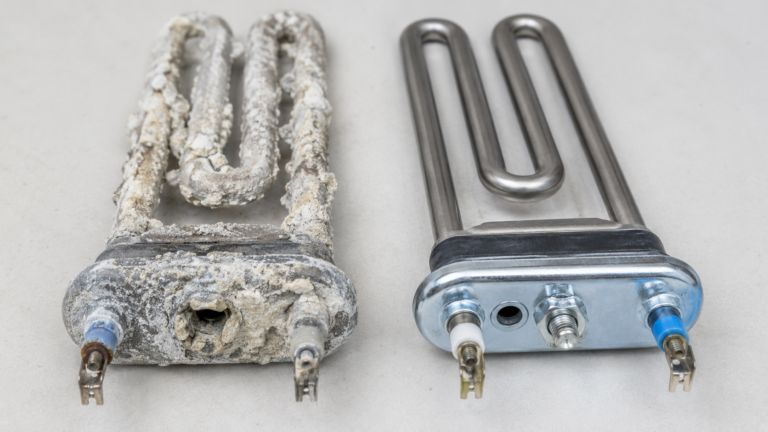
Scientifically, water hardness expresses the amount of calcium and magnesium dissolved in water; the US Geological Survey’s definition of water hardness likewise explains it through the concentration of those two minerals. Those minerals precipitate on heated surfaces to form limescale and build up in plumbing and appliances.
There are two practical ways of measuring it. The first is to look at the analysis data published by the water authority in your area; but those figures are an average and your building’s tank or supply line can change the result. The second and more reliable way is to measure directly from your own tap. For a quick indication at home you can measure it with a limescale test kit; that gives a solid starting point for the capacity calculation.
If you want to look more closely at why hardness is so decisive and what signs it shows, our article on water hardness and the signs of limescale takes the subject up from the ground. This is the first and indispensable step in how to choose a water softener: do not choose without measuring.
How Do Daily Consumption and the Number of Users Determine Capacity?
Capacity is established by assessing hardness and daily water consumption together. Hardness shows the load per unit of water, consumption the total volume. Multiplying the two gives the total softening load the unit has to meet in a day. That load shapes the regeneration interval and the size of system needed directly.
The logic is intuitive. Imagine two households with the same consumption: one has soft water, the other very hard. The unit in the second house has to hold far more ions to process the same amount of water, and its resin reaches saturation far faster. Even with equal consumption, the capacity needed is not equal.
On the consumption side, the number of users is not a sufficient indicator on its own. How often people shower, use of the washing machine and dishwasher, garden watering, and in businesses the intensity of production or service, all change the picture. Daily water use in a café can be many times that of an office of the same size.
The third variable is the instantaneous flow. Even where the total daily consumption looks sufficient, taps opened at the same time in the morning can strain the unit. Inadequate flow capacity returns as a drop in pressure and water that has not been fully softened. In answering how to choose a water softener, therefore, daily volume and instantaneous flow have to be assessed together. The final capacity is established from the water analysis and real consumption data.

A Cabinet Type or a Twin-Tank Build?
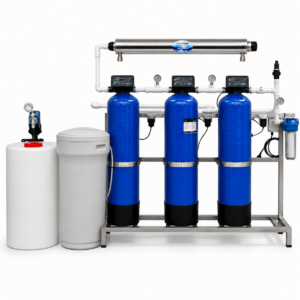
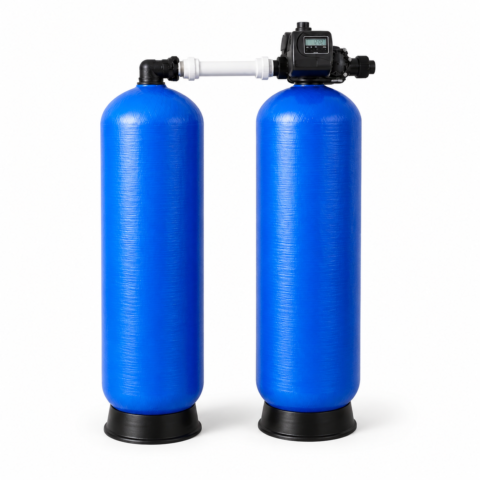
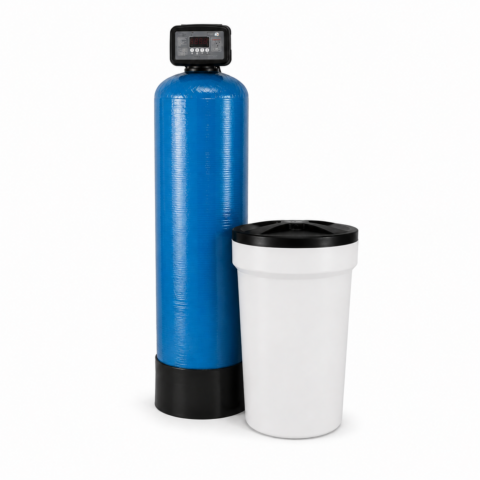
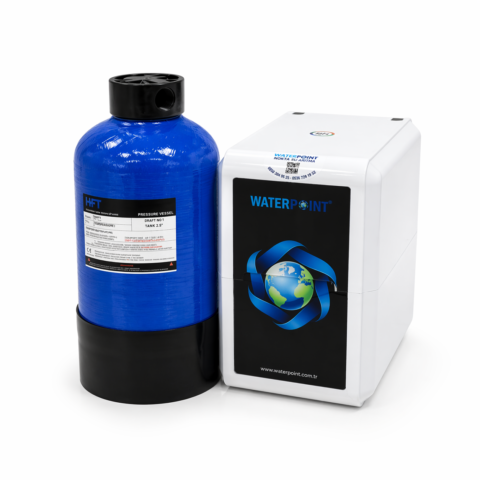
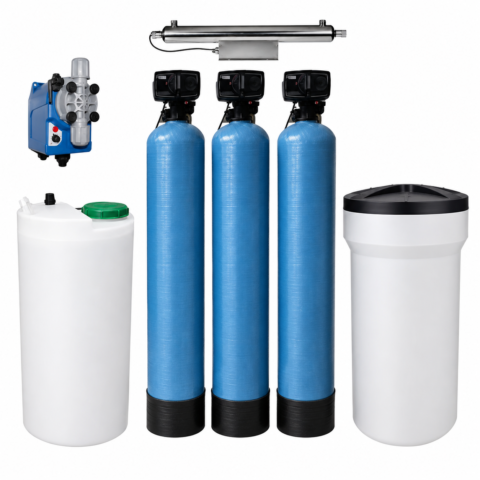
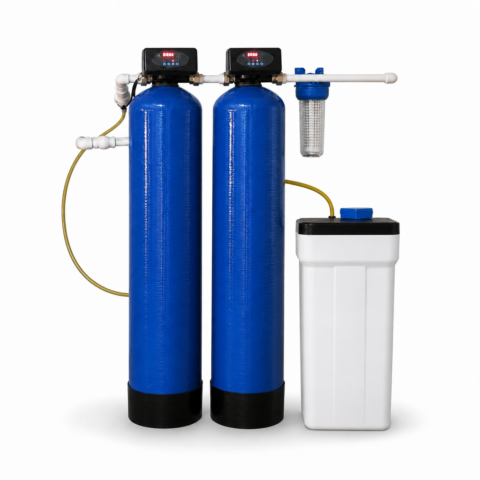
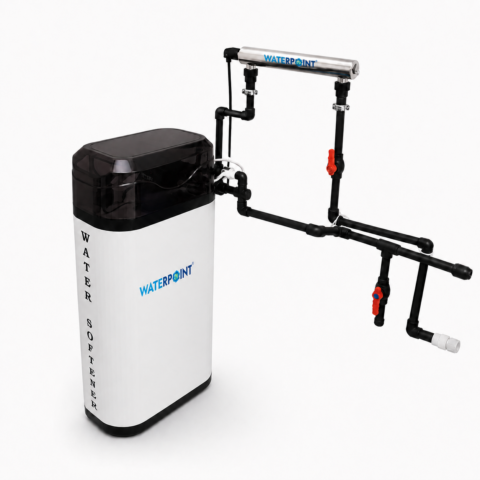
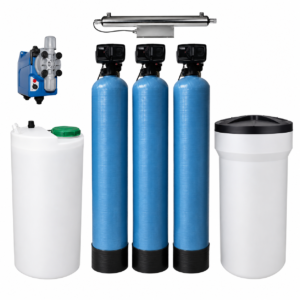
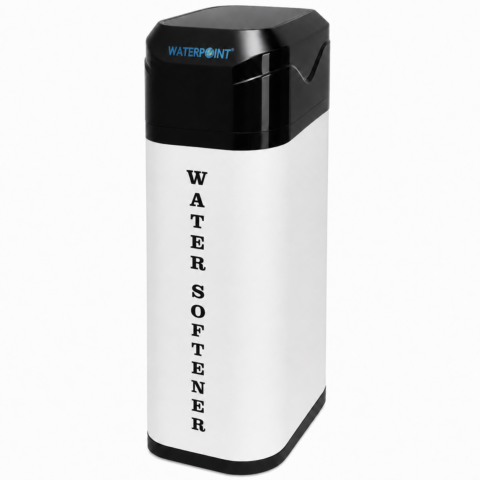
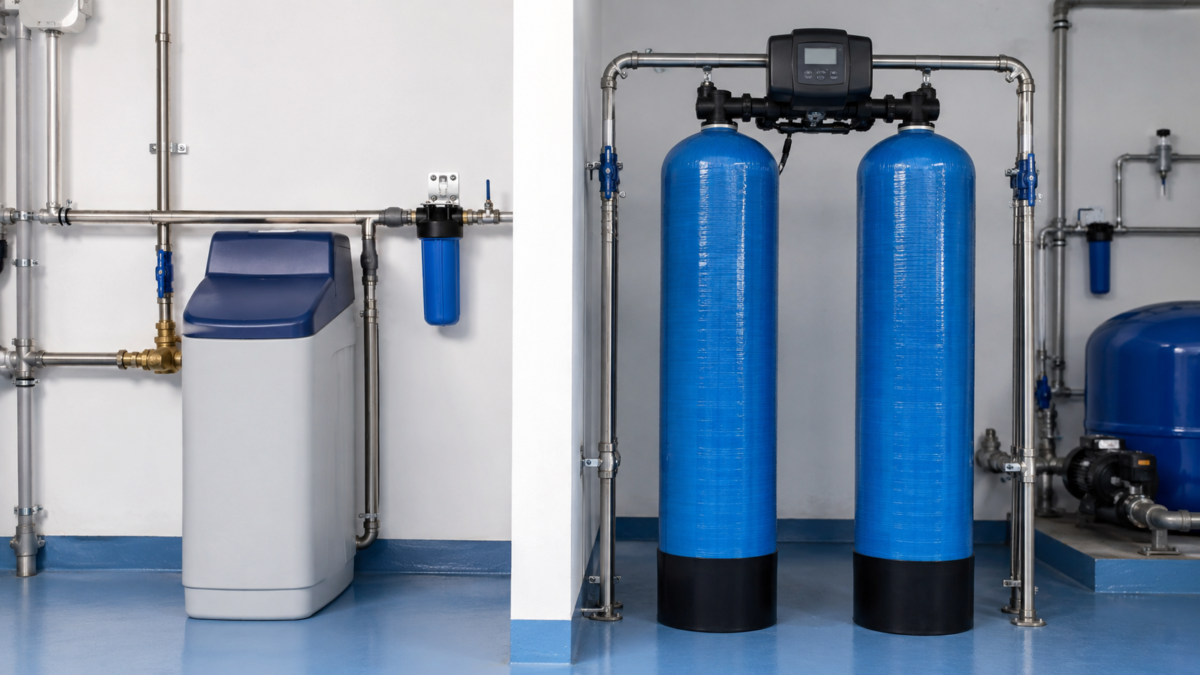
Cabinet-type systems combine the resin tank and the salt reservoir in a single body and offer a compact layout. In twin-tank (tandem) builds, one tank regenerates while the other keeps working. Where uninterrupted softened water is needed, tandem stands out; where space is limited and use varies, the cabinet does.
That distinction is one of the choices felt most in daily use. When a single-vessel system regenerates, unsoftened water passes through the line for that period. In domestic use it is usually planned for the night and ceases to be a problem. But in a hotel, a production plant or a busy business running twenty-four hours, the same interruption is not acceptable.
| Criterion | Cabinet Type | Twin-Tank (Tandem) |
|---|---|---|
| Layout | A single body, compact | Two tanks, more space |
| During Regeneration | A short interruption occurs | The other tank stays in service |
| Where It Suits | Flat, home, small office | Hotel, business, production plant |
| Planning | Regeneration is set for a low-use hour | No planning needed |
| The Priority | Saving space and simplicity | An uninterrupted flow of water |
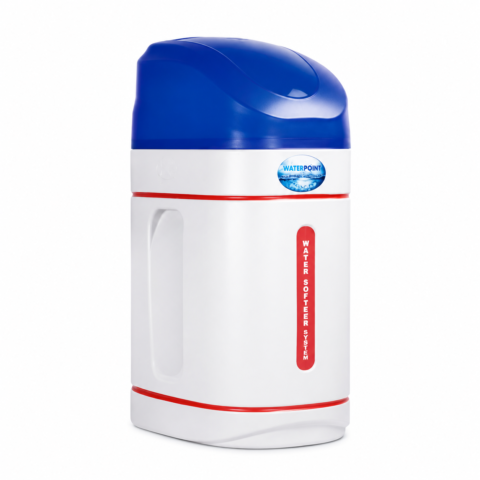
In flats and small spaces needing a compact layout, compact cabinet solutions offer a practical option; in villas and detached houses, higher-volume larger-capacity cabinet models come to the fore. In buildings where an uninterrupted flow is essential, twin-tank tandem systems makes the right build. The answer to how to choose a water softener on the body side is largely about how much interruption you can tolerate.
The Valve Difference: By Time or by Consumption?
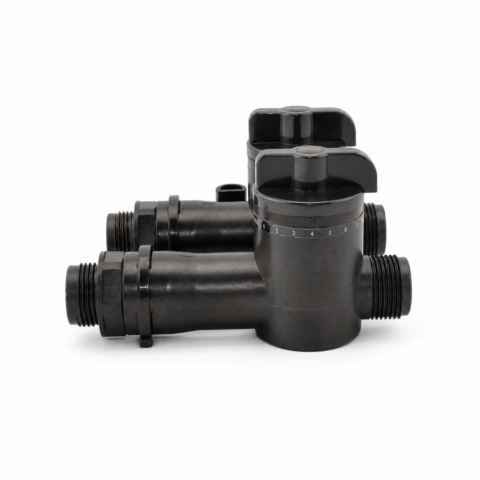
Time-controlled valves start regeneration at fixed intervals; they follow the same calendar whatever the consumption. Flow-controlled valves watch the volume of water passing with a meter and regenerate when the need actually arises. That difference directly affects salt and water consumption over the long term.
The valve is the brain of the system. Because it is the component that decides when the resin is renewed, your choice determines both the continuity of water quality and the running cost. The difference between the two approaches can be summed up as follows:
It works to a fixed calendar
Regeneration starts automatically at the set interval. Its build is plain and predictable.
- It gives a consistent result where consumption is regular
- It is simple to install and set
- It regenerates unnecessarily in quiet periods
- It risks early saturation on busy days
It follows real consumption
The water passing through the meter is measured; regeneration is triggered only when needed.
- It brings a clear advantage where use varies
- It removes unnecessary regeneration
- It lowers salt and water consumption
- It is efficient during holidays and quiet periods
In homes where use changes from day to day, in seasonal businesses and anywhere consumption cannot be predicted, a consumption-led build is markedly more advantageous. Systems working on that logic, with valves that follow consumption, lower running costs over the long term. That is exactly why, in how to choose a water softener, the valve is a heading to ask about as much as the body.
Installation Space, Plumbing and Planning the Bypass
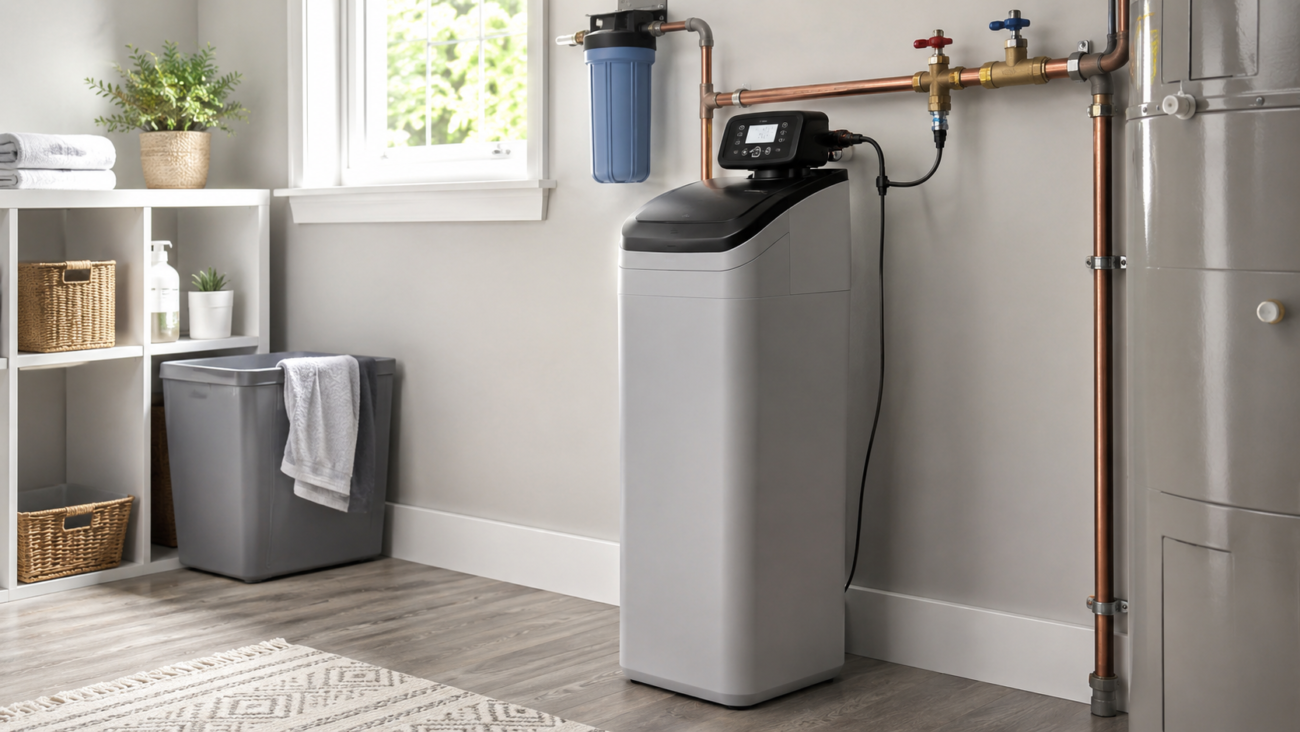
The unit is positioned on the main line where water enters the building. Correct installation calls for a suitable space, a drain connection and a bypass valve. The bypass allows the system to be taken out of service without cutting the water during maintenance or a fault, and is an indispensable part of the installation.
Installation planning is often thought about at the last minute, and that is among the leading mistakes that create cost later. Before choosing, the physical conditions have to be settled:
- The space: As well as the body of the unit, room to manoeuvre for topping up salt and for servicing has to be counted.
- The main line connection: The system is connected at the point where water first enters the building, so that the whole plumbing system is fed with softened water.
- Drainage: A suitable drain connection has to be available for the regeneration waste water.
- The bypass valve: It allows the system to be bypassed without cutting the water to the building during maintenance.
- Power and access: A supply point for the valve and easy access for regular checks are needed.
In new buildings, when the system is planned at the design stage both the siting and the plumbing become far more practical. Installation in existing buildings is of course possible; but the space, the drainage and the suitability of the inlet line should be assessed in advance.
Changing Needs for Homes, Villas, Businesses and Industry
The need changes class with the intensity of use. In a flat, compactness and quiet running come first. In a villa, higher volume and garden use come into play. In businesses, an uninterrupted flow is decisive; in industry, high flow and durability. Each segment calls for a different approach to capacity and body.
The same technology works at every scale; what changes is the size, the level of automation and how much interruption can be tolerated. The framework below offers a starting point for placing your own use:
Flat
Limited space, moderate consumption. A compact body and easy salt topping-up come to the fore.
Villa
High volume and garden use. Greater capacity and flow are needed.
Café and Hotel
Uninterrupted water all day. A tandem build and a consumption-led valve make sense.
Industry
High flow and continuous running. A durable body and sizing project by project are essential.
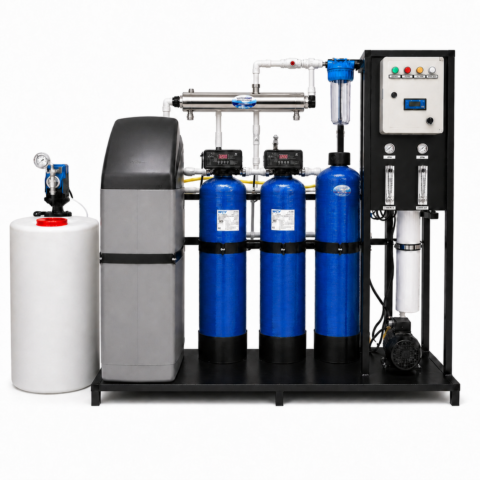
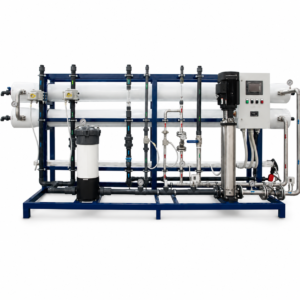
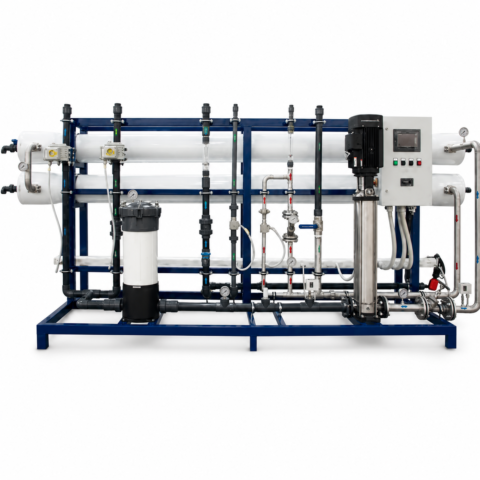
For high-flow plants and buildings in continuous production, the system is sized project by project; needs at that scale are assessed through high-capacity industrial systems. Where whole-building protection is the aim at apartment block or estate scale, we took up the logic of the subject in detail in our article on central softening at the building inlet. The answer to how to choose a water softener changes shape with the segment you are in.
Would you like to establish the system that suits your hardness figure?
You can get support from the Water Point expert team to plan a capacity suited to the hardness of your water and your real consumption.
See the Softening SolutionsRunning Costs: Salt and Water Consumption
The main item of running cost is the salt and the washing water used in regeneration. A unit chosen too small regenerates more often and, over the long term, uses more salt and more water. Correct sizing markedly lowers the total cost of ownership, regardless of the initial investment.
This is the heading most often overlooked in the selection. The label price of the unit is a one-off expense, while salt and water consumption continue for years. A system of inadequate capacity produces the same fixed cost at every regeneration but repeats it far more often. By the end of a year the difference can more than swallow the saving on the initial purchase.
The reverse is true too: a system chosen larger than necessary is an unnecessary investment and takes up extra space. The aim is not to buy the biggest unit but the one that fits your load. That balance is exactly where the economics of how to choose a water softener sit.
The second factor affecting salt consumption is the valve build. A system working to a fixed calendar regenerates even in a week when nobody is at home. A build that follows consumption waits through that period. If your use is irregular, that difference becomes a serious item in the annual cost.
Is There a Universal “Best Model”?
No, there is no single model that suits everyone. The best unit is the one sized correctly for your hardness figure and your consumption. A system that works perfectly for one household can fall short in another with different hardness. The comparison should therefore be made not between models but on criteria.
The “best unit” lists you often meet online ignore that fact. A system’s performance comes not from the label written on it but from which water, which consumption and which valve logic it works with. The same product can give completely different results in two different homes.
Make your assessment, therefore, not on model names but on these questions: does the capacity suit my hardness figure and my consumption? Does the valve build suit my pattern of use? Do I need uninterrupted water? Are my installation space and drainage conditions adequate? Are spare parts and service support within reach?
A user who can answer those five questions clearly has already largely defined the right unit. That is the honest answer to how to choose a water softener: the right unit is not discovered but defined by your own data. If you are offered a ready-made “best” list on how to choose a water softener, that list does not know your water.
Comparisons made on price alone are misleading. Two units can be the same price while their capacities, valve builds and service support are completely different. Always make the comparison on the same criterion.
Put the Decision Steps in Order
The right order is this: measure the hardness, work out your consumption, clarify whether you need uninterrupted water, establish the body type and valve build, check the installation conditions, and compare prices last. Followed in that order, the choice stops being a guess and rests on arithmetic.
The flow below reduces the whole guide to a single decision route:
-
Measure the hardness
Take the measurement from your own tap; work from your real figure rather than the regional average.
-
Work out your consumption
Assess the number of users, habits and, where relevant, the intensity of business use together.
-
Establish your tolerance for interruption
Is a short interruption during regeneration acceptable, or is a tandem build needed?
-
Choose the body and valve build
Cabinet or twin tank according to the space; a time-led or consumption-led valve according to the pattern of use.
-
Confirm the installation conditions
Settle the space, the main line connection, the drainage and the bypass planning in advance.
-
Compare prices last
Compare options in the same capacity and valve class; do not compare different classes.
When those six steps are complete, what you have is no longer a guess but a definition of requirements. Ask how to choose a water softener with that definition and the number of options in front of you falls on its own, and the decision becomes clear.
Frequently Asked Questions
How to choose a water softener — what is the shortest answer?
Measure the hardness of your water first, then establish your daily consumption and the instantaneous flow you need. Those data define the capacity. Then choose the body type according to your need for uninterrupted water and the valve build according to your pattern of use. Comparing prices is the last step.
Can I buy a unit without knowing my hardness?
You can, but your chances of getting the right result fall. Hardness is the basic figure determining the size of the job the unit has to do. Without it the capacity is chosen on a guess, and that leads either to inadequate performance or to unnecessary investment.
Which is better, a cabinet type or a tandem system?
The two serve different needs. If space is limited and regeneration can be planned for a low-use hour, a cabinet is enough. If softened water is needed twenty-four hours without interruption, a twin-tank build is the right choice. The decision depends on how much interruption you can tolerate.
Does a flow-controlled valve really save money?
If your use is irregular, markedly so. A system working to a fixed calendar regenerates even in periods when no water is used. A build that follows consumption comes in only when needed; that lowers salt and washing water consumption.
Is a larger-capacity unit always better?
No. A system chosen larger than necessary means unnecessary investment and extra space. The aim is not the biggest but the one that fits your hardness and consumption load. Correct sizing optimises both performance and running costs.
Should the choice be made on brand or on criteria?
On criteria. How to choose a water softener is answered not through model names but through capacity, valve build, body type and service support. Because the same product can give different results in two homes with different hardness, the comparison should always be made criterion by criterion.
Conclusion
The answer to how to choose a water softener is found not in product catalogues but in your own data. The degree of hardness determines the size of the job, daily consumption the total volume, the instantaneous flow the strain at peak hours, and your tolerance for interruption the body type. The valve build shapes the long-term cost of salt and water; the installation conditions ensure the work goes smoothly. Taken in that order, there is no search for a “best model” left; in its place comes a clear definition of requirements, sized for your water and your use. That is the soundest answer to how to choose a water softener: measure first, calculate next, compare last.
Let’s establish the right capacity for your hardness figure together
To plan a body type and valve build suited to your measurement result and your pattern of use, you can consult the Water Point specialists and look at the model options.
Discover the System That Suits You