
What Is TDS? What the Number on the Meter Really Says
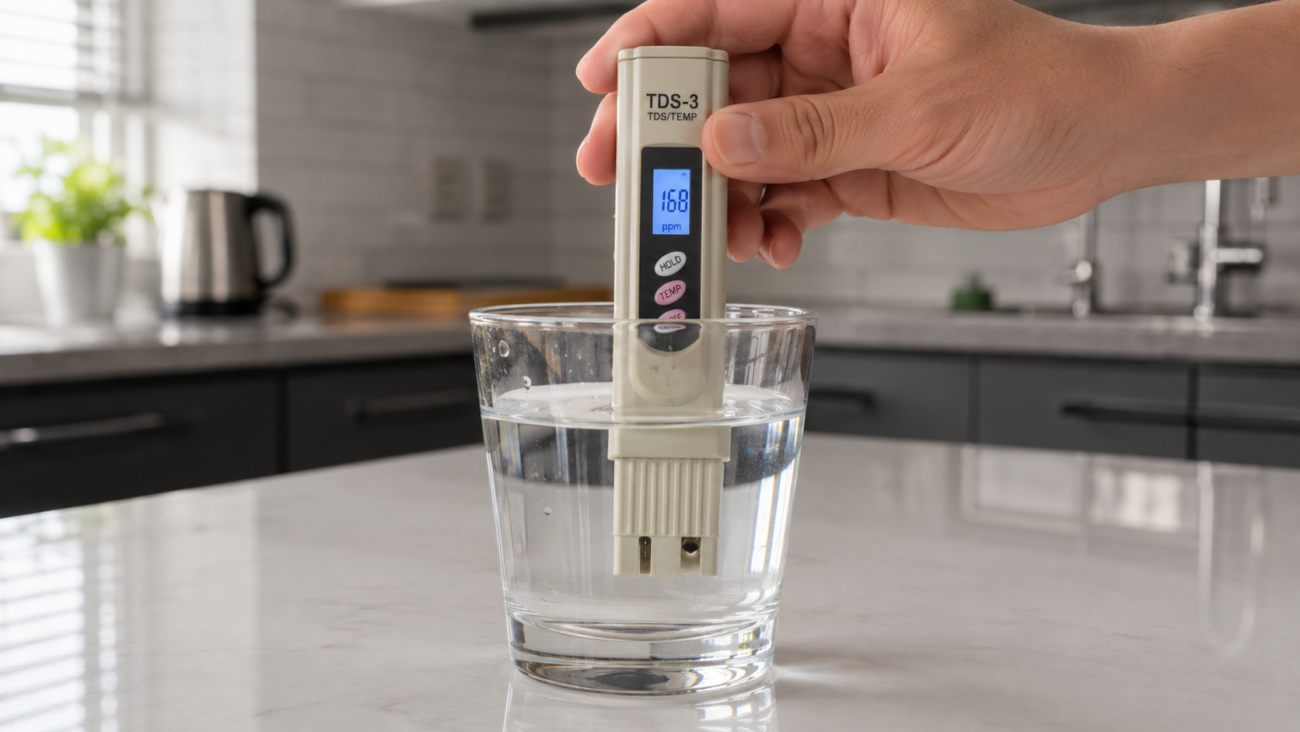
You dip the meter in your hand into the water and a number appears on the screen. Sometimes 120, sometimes 480… So what does that figure actually tell you? Whether the water is clean or dirty, or something else entirely? what is TDS is the question that comes in exactly here; because the number on that little screen gives very valuable information, but on its own it does not tell you whether the water is safe.
That distinction is far more important than it looks. A low reading does not mean the water is faultless in every respect; nor does a high reading automatically mean "this water cannot be drunk". Answering the question of what TDS is correctly lets you read the data in your hand correctly and turn to the right technology when you need to. In this guide we take up step by step what the measurement actually covers, what it does not cover, where the reference value comes from and by which methods that value is lowered.
What Is TDS and in Which Unit Is It Expressed?
TDS (Total Dissolved Solids) expresses the total amount of substances present in dissolved form in water. It covers all the ions such as calcium, magnesium, sodium, chloride, sulphate and nitrate. It is generally shown in ppm or mg/L. The technical answer to the question of what TDS is: the total dissolved solids load of the water.
The key word here is "dissolved". The turbidity, sand or sediment you can see in water falls outside that definition; those are suspended solids and are held by mechanical filters. Total dissolved solids describes the components dissolved within the water that the eye cannot pick out. That is why even perfectly clear water can give a high value.
The source of those substances is largely geological. As water moves underground it dissolves minerals from the rock and soil layers it passes through. Agricultural activity, industrial influence and contributions from the plumbing can be added to that. So seeing different readings in the same city, and even in the same neighbourhood, is entirely ordinary.
As a unit of measurement, ppm (parts per million) and mg/L are used interchangeably in practice; in aqueous solutions the two units are taken as equivalent. So if your meter says "ppm", you can read the same result as mg/L. That is how simple the unit side of the question is; the real complication starts in how the number is interpreted.
What Does This Measurement Show, and What Does It Not?
A TDS measurement shows the total amount of substances dissolved in water; but it does not show the identity of those substances. The meter gives you the answer to "how much", not to "which substance". For identifying contaminants such as lead, arsenic, nitrate or pesticides one by one, a laboratory analysis is needed.
That is the most critical and most misunderstood point on the subject. In answering what TDS is, that line has to be drawn clearly: the measurement is a total, not an inventory. The value of 250 you see on the screen can come from entirely harmless calcium and magnesium, or it can be made up with the contribution of a component worth worrying about. The meter cannot tell the two apart.
What is more, some contaminants do not show in that measurement at all. Heavy metals present at very low concentrations, compounds of the PFAS kind, pesticide residues or microbiological loads such as bacteria may not change the total value appreciably. So a low reading is no proof that those risks are absent.
The inference "my meter reads low, so my water is entirely safe" is wrong. The measurement is a screening tool, not a certificate of safety. Microbiological load and chemical contaminants at trace level come to light only through an accredited laboratory analysis.
So is the measurement useless? Saying so would be quite wrong. It is an extremely practical indicator for following change, confirming whether a treatment system is working and quickly comparing two different water sources. What matters is not expecting an answer from it beyond its capacity. The honest answer to what TDS is: an indicator of quality, but not on its own a measure of safety.
What Should the TDS Value in Water Be?
The most common reference is the 500 mg/L value the US Environmental Protection Agency (EPA) set for drinking water. But that is not a health limit; it is an advisory secondary standard put in place for aesthetic reasons such as taste, colour and scaling. Exceeding it does not mean the water is harmful.
The EPA Secondary Drinking Water Standard That value is defined in the EPA’s guide to secondary drinking water standards as a threshold advised for effects arising from aesthetics and use. It is not a binding health limit; it aims to limit troublesome effects such as taste, appearance and scaling.
Grasping that distinction is the backbone of reading the question correctly. Primary standards relate directly to health and are mandatory; secondary standards relate to the comfort of using the water and are advisory. The 500 mg/L threshold belongs to that second group.
So when your reading comes out above that value the right reflex is not to panic but to ask: which substances is that height coming from? If the dominant component is calcium and magnesium the result is generally a limescale problem. If sodium and chloride dominate, salinity and a taste problem come to the front. If a component such as nitrate is involved, the situation calls for an entirely different assessment. Only a detailed water analysis brings that distinction out.
In short there is no single figure that "ought to be". The suitable level changes with the purpose of use, the source and the content of the water. In drinking water the expectation of comfort is decisive, while in laboratory and production processes the measure changes completely.
What Problems Does a High Reading Point To?
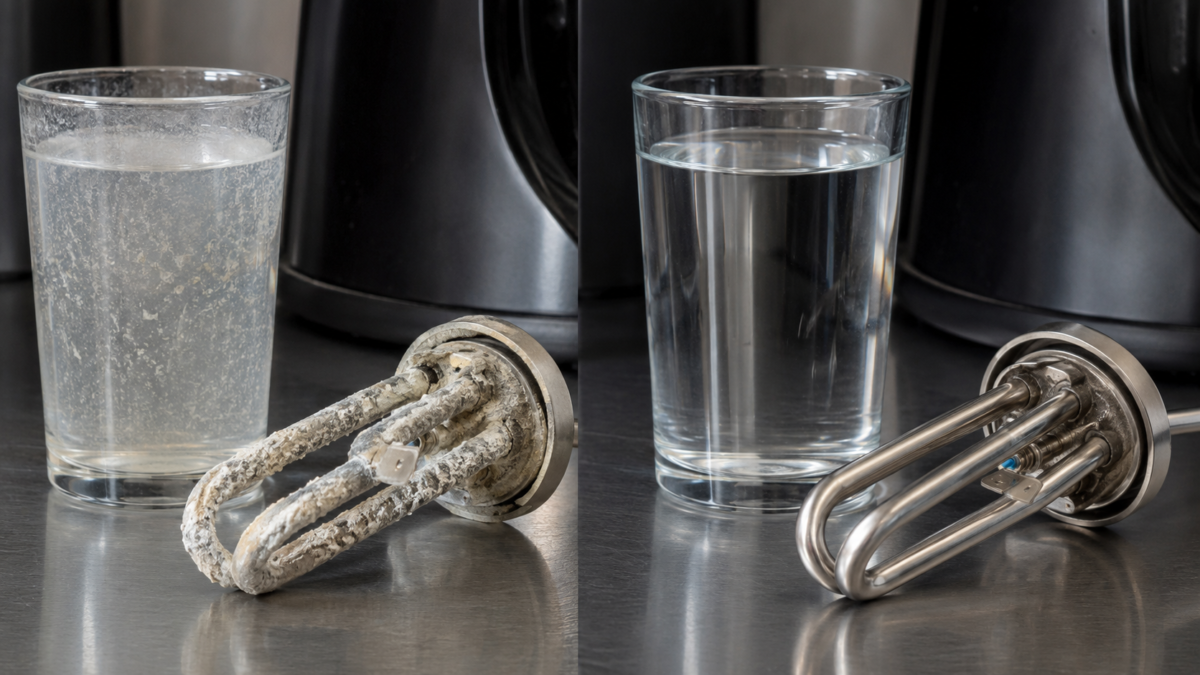
A high dissolved solids load creates a salty or metallic taste in the water, scaling on taps and heaters, a loss of efficiency in appliances and quality problems in production processes. The severity of the effect depends on which ions have caused the height. So establishing the source directly changes the result.
In daily use the first thing noticed is generally the taste. Water dominated by sodium and chloride can leave a salty impression; water carrying traces of iron and manganese a metallic one. In drinks such as tea and coffee that difference becomes more marked still, because water is the carrier of aroma.
The second group of effects is scaling and build-up. In water dominated by calcium and magnesium every heated surface takes limescale: the base of the kettle, the boiler exchanger, electric heaters and the elements of white goods. Because that build-up blocks heat transfer it raises energy consumption and shortens the life of the appliance. The practical meaning of the question in most homes becomes visible exactly there — in the bill and in the frequency of failures.
On the production side the picture is more critical still. In processes such as plating, dyeing, steam raising and electronics assembly, dissolved solids come back as staining, a faulty surface and wear on equipment. In those fields water is not an auxiliary material but directly an input to production.
Does a Very Low Value Create a Problem?
A very low dissolved solids level is assessed according to the application. In laboratory, pharmaceutical, cosmetic and electronics manufacture that level is deliberately targeted. In drinking water a scarcity of minerals can make a difference in taste for some users; that is a matter of preference and does not remove the water’s usability.
Here two different worlds need separating. In technical applications dissolved solids are something unwanted: they create conductivity, leave residue and spoil the repeatability of a process. So as purity rises the value falls, and that is an entirely desired result.
In drinking water the expectation is different. Some people find water with a very low mineral load "flat" or "plain"; others prefer its soft drinking character exactly for that. That is not a measurable defect of quality but a preference of the palate. The right answer to the question requires that those two contexts are not mixed up.
How Is TDS Measured?
The measurement is made through the electrical conductivity of the water. Dissolved ions raise the water’s capacity to conduct electricity; the meter measures that conductivity and converts it with a coefficient into a value in ppm or mg/L. For a correct result a clean sample, a suitable temperature and regular calibration are needed.
So the meter does not in fact weigh substances directly; it measures conductivity and converts it with a conversion coefficient into a readable number. That indirect method is practical and quick, but its limits need knowing: because non-ionic dissolved substances do not change the conductivity markedly, they do not show fully in the measurement.
For a reliable reading a few points should be watched:
-
Take a clean sample
Run the tap for a while and make the measurement in a clean vessel; a glass with residue in it spoils the result.
-
Take the temperature into account
Water temperature affects conductivity. If you are going to compare, measure the samples at similar temperatures.
-
Calibrate the meter
A meter whose calibration has drifted produces values that look consistent but are wrong.
-
Compare under the same conditions
If you are measuring the incoming water and the treated water, measure both by the same method and one after the other.
Making that measurement regularly is a valuable habit, especially for those using a treatment system. The difference between inlet and outlet is the quickest indicator that the system is really working. For that following a practical TDS meter can be used; but the result should be interpreted within the frame in this article.
Do you really want to lower the value you are reading?
To establish the technology that suits the content of your water and your purpose of use, you can look through the systems that lower the dissolved solids load.
See the Reverse Osmosis SolutionsHow Is the Value Lowered? Which Technology Really Works?
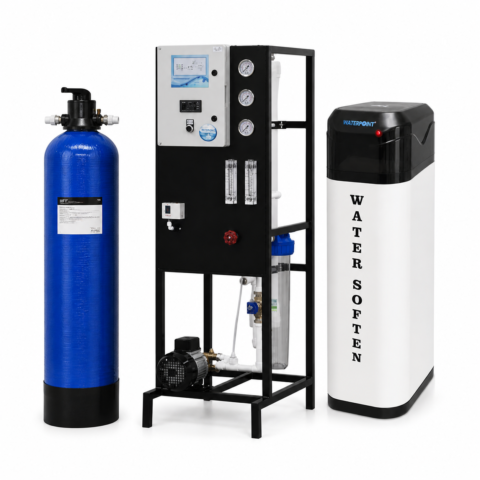
There are two technologies that markedly lower the dissolved solids load: reverse osmosis and deionisation. Sediment and carbon filters remove particles, chlorine and odour but do not lower the total value. Water softening removes hardness; because of the ion exchange it does not markedly reduce the total amount of dissolved solids.
This section is where the wrong choice of unit is prevented. There are many products on the market that give the impression of "solving every problem"; yet every technology works to a different target. Understanding the question correctly also makes clear which unit solves which problem.
| The Technology | The Problem It Targets | The Effect on the Total Value |
|---|---|---|
| The sediment filter | Sand, rust, suspended solids | No marked effect |
| Activated carbon | Chlorine, odour, taste, organic components | No marked effect |
| Water softening | Hardness (calcium, magnesium) | It does not lower it markedly |
| Reverse osmosis | Dissolved salts and minerals | It removes up to 99% |
| Deionisation | The remaining ionic load | It brings it to the lowest level |
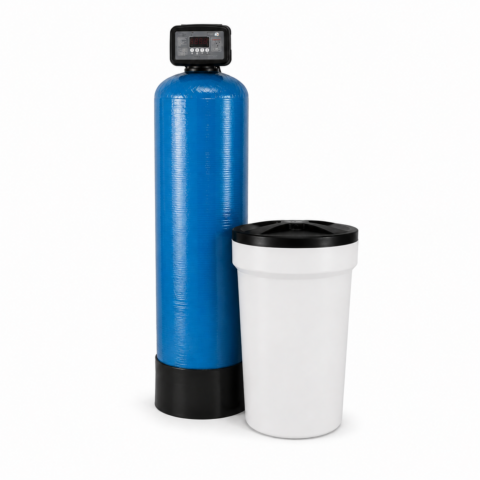
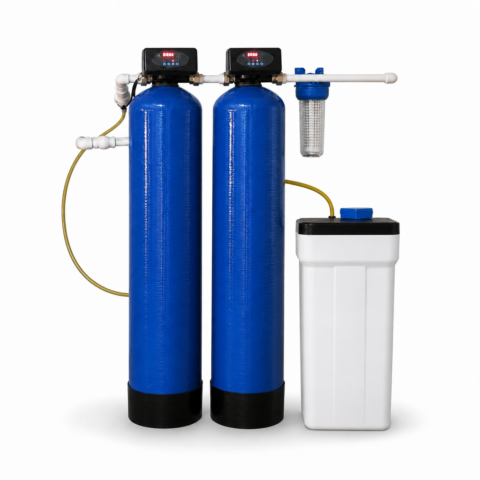
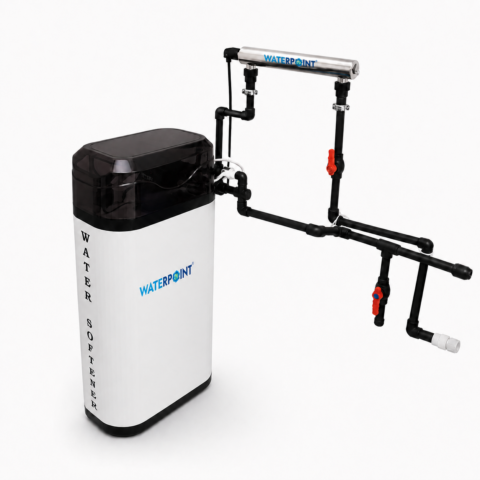
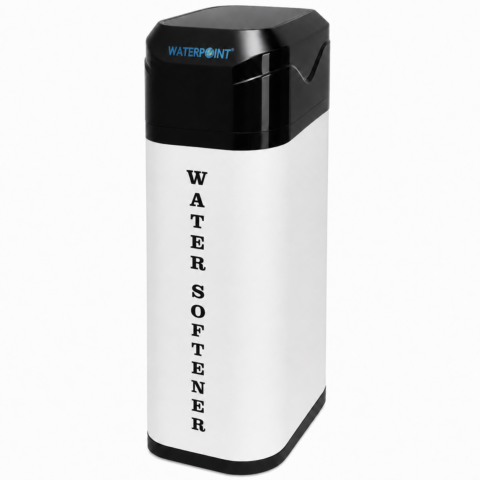
A water softening unit holds the calcium and magnesium by ion exchange and gives sodium in their place. The hardness falls and the limescale problem is solved; but because one substance leaves the water and another enters in its place, the total amount of dissolved solids does not fall markedly. It is the right unit for limescale, not for lowering the value.
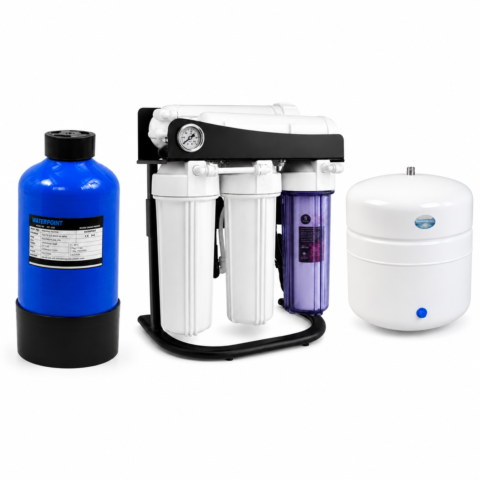
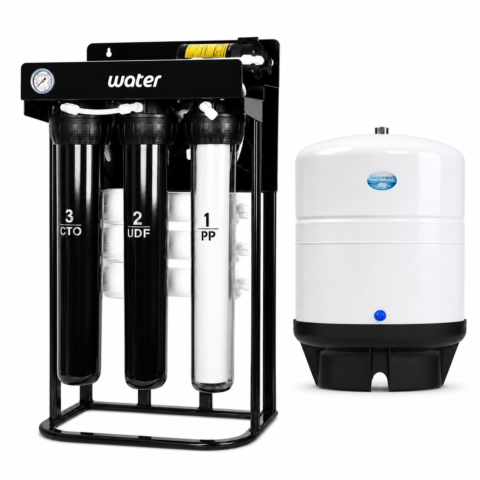
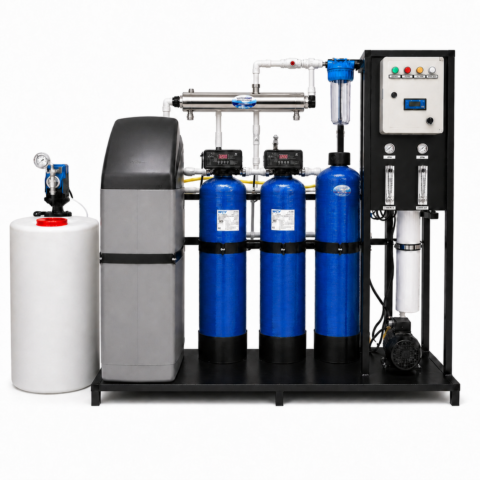
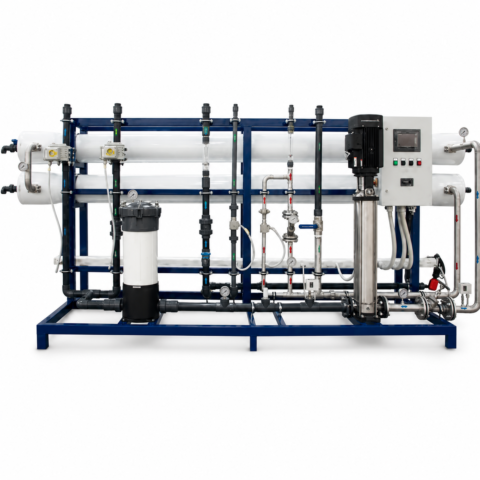
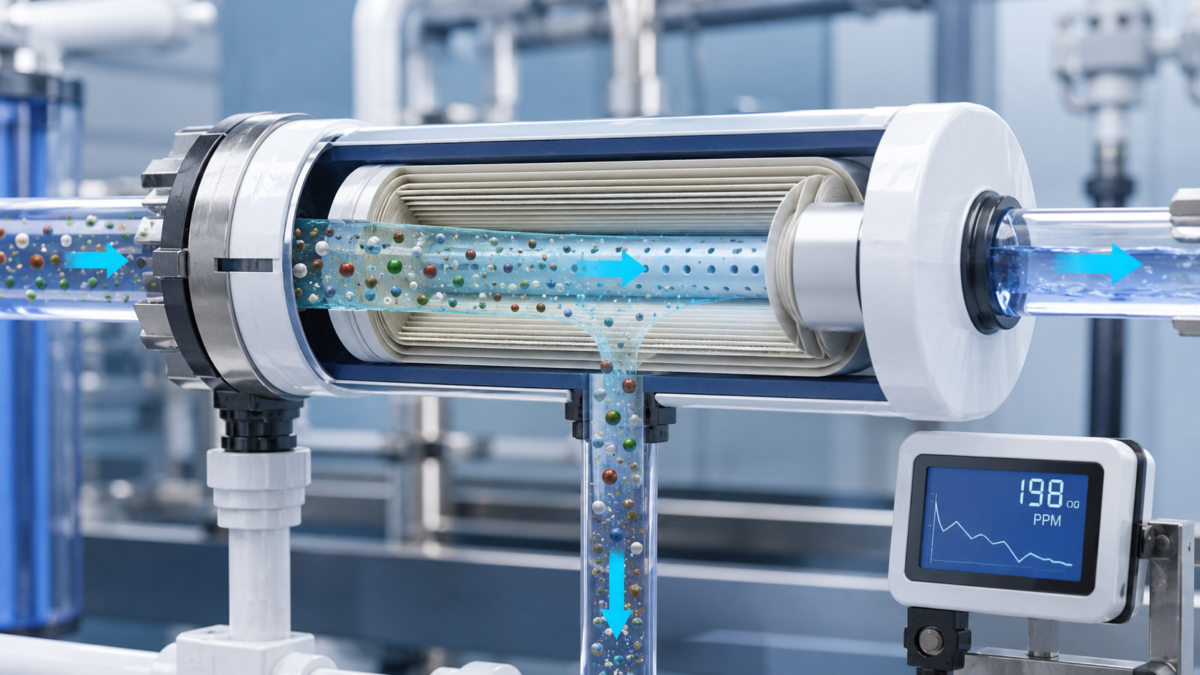
When the total load really has to be lowered, the basic method that comes in is reverse osmosis. The water is passed under pressure through a semi-permeable membrane; the water molecules pass while the greater part of the dissolved ions is held and directed to the concentrate line. We took up the detail of that mechanism step by step in our article on how reverse osmosis works.
When a lower level still is needed, a deionisation stage is added. The ions remaining in the water at the membrane outlet are held by special resins and the conductivity comes down to a minimum. The pure water systems built for laboratory and precision production processes is the result of that staged structure. And in work such as analysis, calibration and reagent preparation, units producing deionised water are preferred directly.
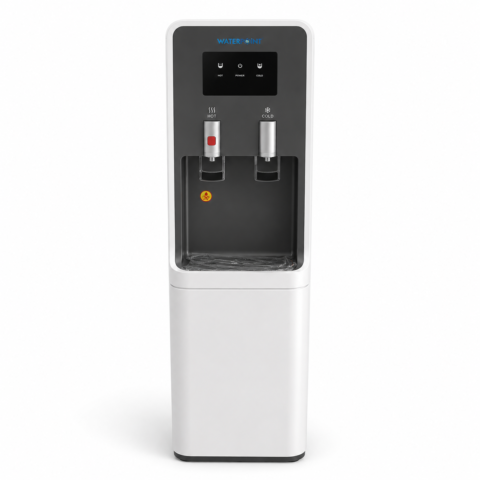
On the home and office side the expectation is different: for drinking and kitchen use, the balance of taste, odour and dissolved solids becomes the priority. For that profile of use the domestic and office water purifiers offers a suitable starting point.
Is It the Same Thing as Water Hardness?
No, it is not the same thing. Water hardness expresses only the amount of calcium and magnesium. Total dissolved solids is the sum of all the dissolved components, including sodium, chloride, sulphate and nitrate. Hardness is a part of that sum; so the two ideas cannot be used in place of one another.
Those two ideas are the headings most often confused in the field, and the confusion leads directly to the wrong choice of unit. Separating the question from hardness clarifies the question of "limescale or salinity".
| Criterion | Water Hardness | Total Dissolved Solids |
|---|---|---|
| Scope | Calcium and magnesium | All the dissolved ions |
| The Typical Unit | °fH or °dH | ppm / mg/L |
| The Main Effect | Limescale and scaling | Taste, conductivity, process quality |
| The Method of Measurement | A test kit or an analysis | Measurement through conductivity |
| The Approach to the Answer | Water softening | Reverse osmosis, deionisation |
A practical example makes that difference clear: in water passing through a softening system the hardness comes down to almost zero, but your meter can keep showing a similar value. That is not a fault; it is exactly the work the system does. A user who knows the answer to the question is not surprised on seeing that picture.
Which Approach Is Right for Which Use?
The right approach is settled by the purpose of use. In drinking and kitchen use, taste and comfort are the priority. In a limescale problem, hardness control is needed. And in laboratory and precision production the lowest possible conductivity is targeted. Every scenario calls for a different combination of technologies.
The short frame below offers a starting point when deciding:
Drinking and the Kitchen
The balance of taste, odour and dissolved solids comes to the front; builds based on reverse osmosis are preferred.
A Limescale Problem
If the problem comes from hardness the answer is softening; do not expect it to lower the total value.
Laboratory
In analysis and reagent preparation the lowest conductivity is targeted; deionisation is needed.
A Production Process
In processes such as plating, steam and electronics, water is an input to production; the standard of purity is what decides.
When adapting that table to your own situation the order is this: first measure, then establish the source, and last choose the technology. Having understood the question makes the first step of that order solid; the second step needs a detailed analysis and the third a system design suited to the profile of use.
Frequently Asked Questions
What is TDS, put briefly?
It is the total amount of substances present in dissolved form in water. It covers all the ions such as calcium, magnesium, sodium, chloride and sulphate and is expressed in ppm or mg/L. It sums up the total mineral and salt load of the water in a single number.
Does a meter detect contaminants such as lead or arsenic?
No. The meter shows the total amount; it does not establish the identity of the substances. Heavy metals, pesticides and microbiological loads do not show reliably in that measurement. To detect those components a water analysis should be had at an accredited laboratory.
If the value is above 500 mg/L can the water not be drunk?
That inference is not correct. 500 mg/L is an advisory secondary standard the EPA set on aesthetic grounds; it is not a binding health limit. What should be done when it is exceeded is to investigate by analysis which substances have caused that height.
Does a water softening unit lower this value?
It does not lower it markedly. Softening holds calcium and magnesium by ion exchange and gives sodium in their place. The hardness disappears and the limescale problem is solved; but the total amount of dissolved solids can stay at a similar level. To lower the value, reverse osmosis is needed.
How do I know whether my treatment system is working?
The most practical method is to measure and compare the incoming water and the treated water under the same conditions. A marked difference between them shows the system is working. That difference closing over time points to filter or membrane maintenance being due.
How often should the measurement be made?
If you use a treatment system, measuring at regular intervals is enough for following the performance. And the measurement should be repeated whenever you notice a change in the taste or appearance of the water or in the performance of the unit. Knowing the answer to the question is what makes that following meaningful.
Conclusion
The answer to what TDS is fits in a single sentence: the total amount of substances dissolved in water. But interpreting that number correctly is more important than the answer itself. The measurement gives you the answer to "how much"; the answer to "which substance" comes to light only through a laboratory analysis. The EPA’s 500 mg/L reference is not a health limit but an advice on aesthetic grounds; when it is exceeded it calls not for panic but for investigation. When the value really has to be lowered, reverse osmosis and deionisation come in; water softening solves hardness but does not markedly reduce that total. The right order is clear: first measure, then analyse, and last choose the technology.
Let’s establish the answer that suits the content of your water together
To make clear which components your reading comes from and to plan the system that suits your purpose of use, you can consult the Water Point expert team.
Discover the Pure Water and Treatment Solutions