
Reliable Water Treatment Firms: 6 Checks You Can Verify
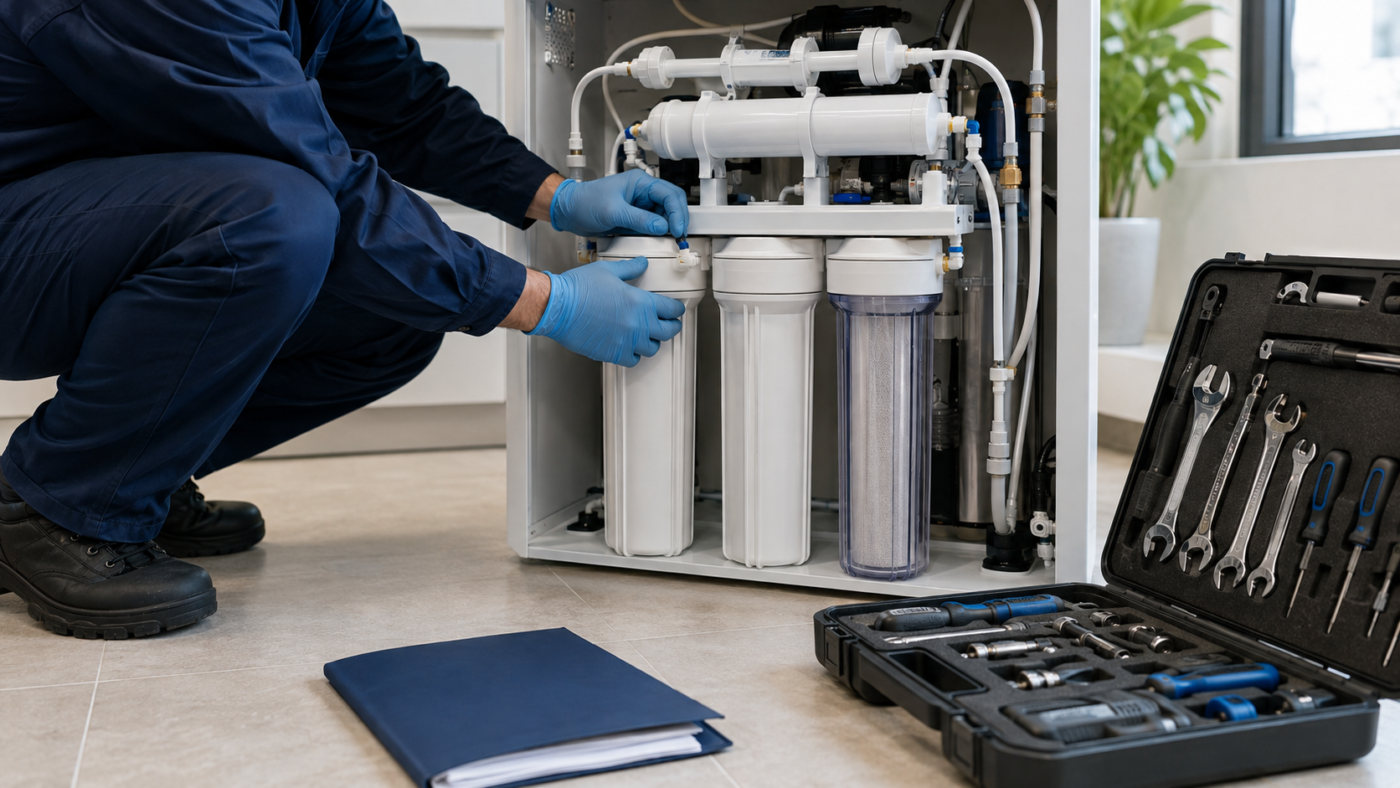
When you start looking, dozens of listings come up that look almost identical to one another. The images are alike, the descriptions are alike; but there are serious differences in price. The real problem shows up a year later: the filter for the unit that was bought cannot be found, the number called cannot be reached, and because no invoice was issued there is nothing to fall back on. So the question to ask is not “which unit” but “who am I buying from” — and reliable water treatment firms part company at exactly that point.
This article offers no ranking of firms. What it gives you instead is a method of verification you can apply: under each item it sets out what to look at and how to check it. The aim is to rest your decision on verifiable information rather than on advertising copy.
How Are Reliable Water Treatment Firms Told Apart?
Reliable water treatment firms are the ones that publish their legal identity openly, have a physical address and a fixed channel of contact, share the contents of their products transparently, provide continuity of spare parts and have technical service capacity of their own. The assessment rests not on advertising promises but on those verifiable items.
The importance of that definition is this: every item in it can be checked. A firm saying it is “reliable” is a claim; publishing its legal title, its address and its sales conditions is an indicator. The second is the one that can be verified.
The trust problem in the sector usually arises not from the product but from the process. The unit works on the day it is installed; the difference appears when the time comes for a filter change or when a fault occurs. So the assessment should be made by looking not at the moment of purchase but at the years that follow.
In the sections that follow, six headings of verification are taken up. Each is a set of concrete items you can check in a few minutes before buying.
Verification 1: Legal Identity and Transparency
The first check is whether the firm publishes its legal identity. The site should carry the full legal title, an open address, tax details, the distance selling contract and the cancellation and return conditions. For businesses trading online, the ETBIS registration is a verifiable indicator too. And an invoiced sale is the basis of every later claim.
That information is not decoration; it is content that consumer legislation expects to be published. The absence of those headings from a site does not settle anything on its own, but it is a gap to be weighed carefully.
The things to check are these:
- The full legal title: Not only the brand name but the trading title too is expected to be written openly.
- Tax details: Publishing the tax office and the tax number is an indicator of transparency.
- A distance selling contract: It defines the obligations of the parties in an online sale.
- Cancellation and return conditions: What will be done in which case should be known in advance.
- The KVKK and privacy texts: Having the data processing policy published is a mark of a proper organisation.
- An invoiced sale: It is the basic ground for invoice, warranty and return claims.
The practical approach to ETBIS is this: businesses trading online are expected to be registered with the system, and the registration details are verifiable. The state of the registration can be asked of the firm; getting a clear answer is an indicator of transparency in itself.
The invoice heading is the most concrete of all. In a purchase made without an invoice, the ground for warranty, return and service claims is weak. So in assessing reliable water treatment firms the invoice is an undisputed precondition.
Verification 2: A Real Address and Reachability
The second check is reachability. The firm should have a physical address and a landline or a corporate channel of contact. Where a business sells only through a social media account, the risk on the after-sales side rises; because once the account closes, no other channel is left to reach.
What is measured here is whether you will be able to reach the firm after the sale. Before a purchase everyone answers quickly; the real test comes months later, when a problem arises.
The headings to assess for reachability are these:
A Physical Address
Publishing an open and verifiable address points to a permanent business structure.
Fixed Contact
A corporate telephone and email provide a channel that does not depend on personal accounts.
A Contact Form
Having a channel for claims that is recorded on the site makes following up easier.
Continuity of Response
A structure that is quick before the sale and unreachable after it is an indicator of risk.
Selling through social media is not negative in itself; many businesses use those channels effectively. What is risky is a social media account being the only channel of contact. Once the account closes or access is cut, no address is left to turn to.
There is a practical way to check: ask a technical question before buying and weigh both the time taken to answer and its content. If you get a concrete, technical answer, that is a positive sign both for knowledge and for reachability.
Verification 3: Transparency of Product Information
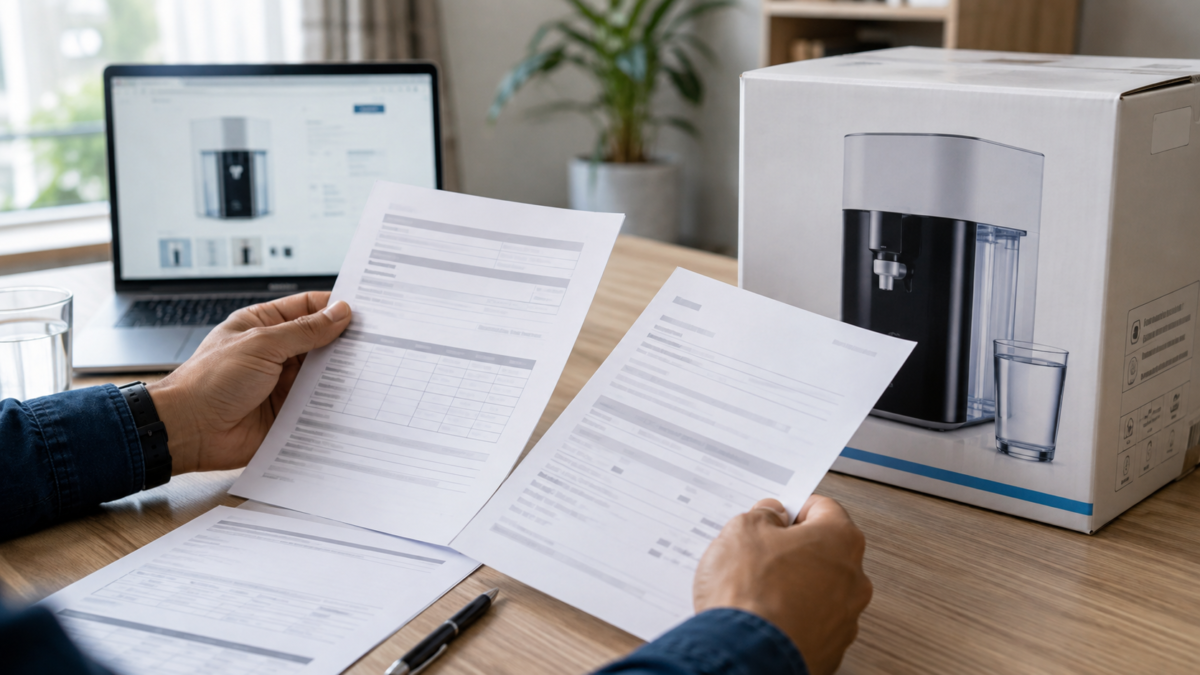
The third check is whether what is inside the unit is written out openly. A seller who shares information about the membrane, the control valve, the cartridge sizes and the fittings knows its own product. Approaches that brush technical questions aside or answer them only with general promises should be weighed carefully.
The logic of this item is simple: if a firm can write out openly which component it uses, it stands behind that component. Avoiding the sharing of information points either to a gap in knowledge or to a choice it would rather not disclose.
The concrete questions that can be asked are these:
- Which membrane is used? Can the manufacturer and the model be given?
- Which make is the control valve? On softening systems the valve is at the centre of performance.
- Are the cartridge sizes standard? It determines access to spare parts directly.
- How many stages are there, and which ones? Can it be explained which problem each stage solves?
- What are the fittings like? Sealing and durability are settled in those details.
We took up in detail how component quality determines the life of a unit, and what should be looked at, in our quality water treatment system article. We took up the whole set of assessment criteria on the unit side in our unit assessment criteria article.
Another indicator of transparency is the approach to analysis before the sale. An approach that recommends a model without assessing your water is not a technical match but a standard sales presentation. We set out how the analysis process is carried out in our water analysis guide.
Verification 4: Continuity of Spare Parts and Consumables
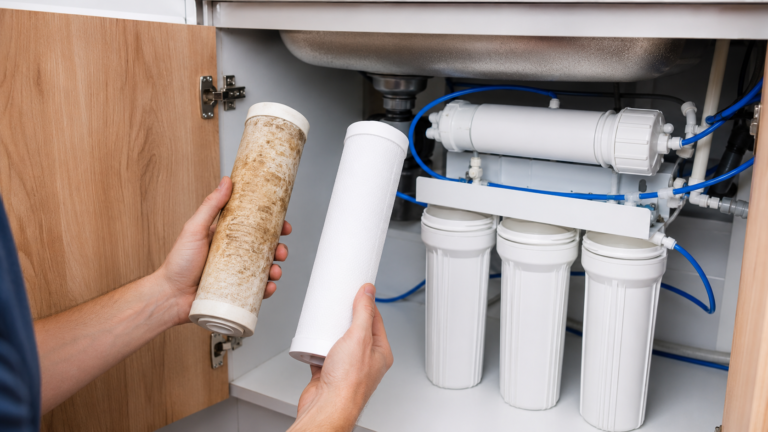
The fourth check is the heading most often overlooked. Water treatment systems run on consumables; filters and membranes are renewed periodically. On a system using standard-size cartridges, access to spare parts is easy. On systems resting on special, one-off sizes the user becomes dependent on a single supplier.
That dependence creates two risks. The first is price: with no alternative, the chance to compare disappears. The second is a risk to continuity: if the supplier stops trading, the unit can become unusable.
The questions to ask before buying are clear:
Standard Sizing
Are the cartridges in common sizes, or made only for this unit?
Continuity of Supply
Are spare parts sold from stock, and is the lead time predictable?
Range of Parts
Besides filters, can parts such as membranes, valves, pumps and tanks be found?
Predictability of Price
Can the annual consumables spend be worked out before buying?
A staged filter set made to standard sizes, with which the whole line can be renewed, is a concrete assurance for the user. We took up how the renewal period is set and how the signs are read in our filter change guide.
This item is a decisive point of difference in assessing reliable water treatment firms. The performance of a unit lasts only as long as its consumables can be renewed regularly, and that depends on the long-term supply structure of the seller.
Verification 5: Technical Service and Installation Capacity
The fifth check is the installation and service structure. Who carries out the installation, whether the process followed when a fault occurs is defined, and whether service is given in your area should all be verified. Installation quality determines whether the unit works correctly from the first day.
Installation is an operation that looks simple from outside but can have serious consequences. A single connection that is not fully seated can turn into a leak that goes unnoticed inside a cabinet for days. And choosing the wrong line can cause permanent damage to components.
We took up in detail the steps of the installation process and the mistakes most often made in our installation guide. When assessing a firm these headings should be checked:
- Who carries out the installation? Is it the firm’s own team, or is it left to the user?
- Is the fault process defined? Are the notification, survey and response steps set out?
- What is the regional coverage? Is service given where you are?
- Is a site survey carried out? Are the conditions assessed on site before installation?
- Is there brand-independent service? Are units of other makes served as well?
- Is a test carried out after installation? Is a verification step applied once the installation is complete?
It should be noted that point-of-use and point-of-entry treatment units have different installation requirements; the US Environmental Protection Agency resource on point-of-use and point-of-entry treatment units handles those two categories under separate headings. That too shows that installation is not a standard operation.
In a sales structure with no service capacity the problem appears when the unit breaks down. So in the search for reliable water treatment firms service is a criterion carrying as much weight as the product.
Verification 6: Transparency of Pricing and Contract
The sixth check is price transparency. The price of the product should be clear, the installation and service charges made known in advance, and no surprise items should appear. Heavy emphasis on discounts and “last day” style time pressure are approaches aimed at shortening the time you take to decide; a calm assessment is always sounder.
What is measured in price transparency is not the figure itself but its predictability. The buyer should be able to work out the total cost before buying.
The headings to check are these:
| Heading | What Is Checked | Why It Matters |
|---|---|---|
| The price of the product | Is it shared openly and in writing | It is the precondition for being able to compare |
| The installation charge | Is it included or separate; is it made known in advance | An item that appears later damages trust |
| The service charge | Is it explained how it is set | Approval is expected before the work |
| Consumables | Can the annual spend be foreseen | It makes up most of the total cost |
| The contract | Are there written conditions | A spoken promise is no ground in a dispute |
| Return conditions | Are the period and the scope defined | It takes the rights of the buyer out of uncertainty |
On time pressure it is worth being balanced: running a campaign is ordinary commercial practice. What to watch is not the campaign itself but whether the time allowed for you to decide is reasonable. An approach that pushes you to decide the same day is a warning sign if it stops you assessing.
Ask for the quote in writing. If the product, installation, service and consumable items can be shared in writing, transparency is verified. An approach that avoids giving a written quote is an indicator to be weighed on its own.
A Firm Verification Checklist
- Are the full legal title, the address and the tax details published on the site?
- Are the distance selling contract, the cancellation and return conditions and the KVKK texts there?
- Can the physical address and a fixed channel of contact be verified?
- Is information shared about the membrane, the valve and the cartridges used in the unit?
- Are the spare parts a standard size, and is their supply continuous?
- Does the firm carry out the installation with its own team?
- Is technical service given in the area where you are?
- Are the product, installation and service charges shared in writing in advance?
- Is a water analysis or a site survey carried out before the sale?
- Is the sale invoiced?
If you can get a clear answer to all ten of those items, what you have in your hands is not an impression but a verification. Reliable water treatment firms and the rest are usually told apart by how clear those answers are.
Put your questions directly and compare the answers
To get information about the contents of the products, continuity of spare parts and the scope of service, you can look at the options.
See the Treatment Solutions
Sales Approaches to Watch For
In some sales practices the decision process is shaped by anxiety rather than by information. Fear-based narratives, unproven health claims, home demonstrations put in the place of an analysis, and measurement results torn out of their context are among those approaches. Staying calm in the face of such methods and asking for verifiable information is the soundest attitude.
No firm is singled out in this section; the aim is to inform the consumer. The approaches below are general practices met with from time to time in the sector, and recognising them protects the buyer.
A Fear-Based Narrative
Generalisations of the “mains water is poison” kind are no sound ground for a decision. Information should rest on measurement.
Unproven Health Claims
Water treatment systems improve water quality; claims about treating or preventing illness have no basis.
Demonstration Experiments
Colour-changing demonstrations carried out at home are not a method of analysis; they do not take the place of a laboratory result.
Measurement Without Context
A single measured value presented without explanation can create a misleading impression; what it says should be asked.
Time Pressure
Restrictions of the “today only” kind narrow the time for assessment. A calm decision is always sounder.
Avoiding Technical Detail
Not giving a clear answer to questions about the membrane, the valve and the cartridges can point to a gap in knowledge.
The subject of measuring devices calls for particular clarity. Devices of that kind show the total amount of dissolved solids in water; they do not say which substances are present. So a high reading does not on its own mean “dirty water”, and a low reading gives no assurance against every risk. Knowing correctly what a measurement says, and what it does not show, is the most effective protection there is against misleading presentations.
We looked at how drinking water quality is assessed, and which rules apply, in our is mains water safe article. Sound information is the strongest filter there is against exaggerated accounts.
If you feel rushed in any sales conversation, ask for time before deciding. An approach that works with verifiable information will not shy away from giving you time to think.
Additional Criteria in Corporate Purchases
In business and plant purchases the assessment widens. A site survey being carried out, engineering capacity, reference work, a maintenance agreement and a documented sales process all come into play as additional criteria. In corporate purchases the decision is made not on the unit alone but on the whole process.
In a business, a water treatment system carries a different responsibility from personal use. When the system stops, production or service is disrupted; so the supplier’s capacity for continuity is directly an operational risk.
The additional headings to assess in corporate purchases are these:
| Criterion | What to Ask | What It Shows |
|---|---|---|
| Survey | Is an inspection carried out on site | It shows that the solution is built for the plant |
| Engineering | How is the capacity calculated | It is a concrete indicator of technical competence |
| Water analysis | Is the system chosen from the analysis result | A design based on measurement, not a standard recommendation |
| A maintenance agreement | Can periodic maintenance be planned | It secures continuity |
| Spare parts | Can the critical parts be supplied | It determines downtime directly |
| Certification | Are an invoice and written conditions provided | They are required for corporate accounting and audit |
We took up in detail the logic of establishing capacity, and what to watch at operating scale, in our industrial-type system selection guide.
On the corporate side, continuity sits at the centre of assessing reliable water treatment firms. As decisive as the quality of the unit is whether it can be supported for years.
How Does Water Point Meet These Criteria?
In this section what Water Point offers against the verification items above is set out using verifiable information only. The aim is not to present a claim of superiority but to show concretely how the items are met. The same questions can be put to every supplier and the answers compared.
Water Point Su Arıtma Teknolojileri operates from Esenyurt, İstanbul, under its founder Ali Genç, with more than 20 years of experience in the sector. The headings below are the answers to the verification items defined in this article.
Legal Identity
The legal title is Water Point Su Arıtma Teknolojileri; the registry, tax and MERSIS details are on record.
A Physical Address
The business operates at Mehterçeşme Mah. 1919 Sk. No: 54/B, Esenyurt / İstanbul; the address is shared openly.
ETBIS Registration
The electronic commerce registration of waterpoint.com.tr can be verified through the Ministry of Trade ETBIS system.
Certification
CE certification is held for the activities carried out.
Warranty
Units, valves, pumps and tanks carry a 2-year warranty and taps a 1-year warranty; consumables such as filters, membranes and resin fall outside it.
Invoiced Sales
Sales are made with an invoice issued.
Commercial Documents
The Distance Selling Contract, the Cancellation and Return Conditions, the KVKK and the Privacy policies are published on the site.
Channels for Claims
The fault and return claim form and the contact form are on the site.
Technical Service
For industrial systems there is a service network across Türkiye; for home units service is provided in İstanbul and the neighbouring provinces such as Kocaeli and Tekirdağ.
On the component side, Clack valve products and Toray, LG, STAR and TechFlow membranes are among the components used. Customer reviews are published on the site as well.
The aim here is not a claim to a ranking. The verification items defined in this article are common questions that can be put to every supplier in the sector; this section simply sets out concretely the answers on the Water Point side to those same questions. The comparison and the assessment are the reader’s own to make. For your questions the number 0850 304 95 25 and the address [email protected] can be used.
Whichever supplier you work with, ask the same questions: are the legal details published, can the address and the contact be verified, are the components disclosed, is the supply of spare parts continuous, what does the service cover, and are the conditions in writing? The decision is made by comparing those answers.
Frequently Asked Questions
Which firm should I buy from?
Giving a single name would not be the right approach. Make the assessment on verifiable items: the legal details being published, a physical address, transparency about what is in the product, continuity of spare parts, service capacity and written sales conditions. The firms to compare are the ones that answer those items clearly.
Is it safe to buy a water treatment system online?
It is safe when bought from a firm that publishes its legal details, has a distance selling contract and return conditions, issues invoices and is reachable after the sale. What carries the risk is not the channel but the level of transparency of the seller.
Is a cheap unit worth buying?
Price is not decisive on its own; the real measure is the total cost of ownership. Even where the price of the unit is low, if its spare parts cannot be found or there is no service support it works out more expensive over the long run. The comparison should be made on the annual spend.
Who should carry out the installation?
Someone experienced with plumbing can carry out a simple under-counter installation by following the manual, but the responsibility then rests with the user. For softening, industrial and mains-line installations an authorised technical service is required. Having the firm’s own team carry out the installation lowers the risk.
What does the warranty cover?
The cover varies from firm to firm, so what matters is not the length of the term but that the cover is written out clearly. What is included and what is excluded, the position on consumables and the route for claims should all be clarified before buying. Units, valves, pumps and tanks carry a 2-year warranty and taps a 1-year warranty; consumables such as filters, membranes and resin are outside the cover.
Why does the ETBIS registration matter?
Businesses trading online are expected to be registered with the system, and the registration details are verifiable. It is possible to ask the firm about the state of the registration; getting a clear answer is an indicator of transparency in itself. The Water Point ETBIS registration can be verified through the Ministry of Trade system.
What should I do if a seller recommends a unit without doing a water analysis?
A recommendation given without an analysis is not a technical match but a standard presentation. Without knowing the hardness, dissolved solids and sediment values in your water, which stages are needed cannot be established. Asking for an analysis is the soundest approach.
Are demonstration experiments carried out at home reliable?
Demonstrations of that kind are not a method of analysis and do not take the place of a laboratory result. To decide about water quality, an analysis carried out at an accredited laboratory should be taken as the basis. Asking for a measurement report in the face of a demonstration-based presentation is the right attitude.
Can a sale without an invoice be accepted?
The invoice is the basic ground for warranty and return claims. In a purchase made without one, the ground for every later claim is weak. So an invoiced sale should be treated as an undisputed precondition in the assessment.
Conclusion
In buying water treatment, the real risk usually lies not in the unit but in the continuity of the seller. The unit works on the day it is installed; the difference shows when the time comes for a filter change and when a fault occurs. So the assessment should be made with six headings of verification: legal identity and transparency, a real address and reachability, openness about the product, continuity of spare parts, technical service capacity, and transparency of price and contract. Every one of those items can be checked in a few minutes before buying. Reliable water treatment firms are the ones that can answer those questions clearly and verifiably. And the decision is made at exactly that point, by comparing the answers.
Put your questions directly, or get in touch for a site survey
The site survey is free if the unit is purchased from us; for a survey and measurement only, a survey fee of ₺2,000 applies. For questions about the products, spare parts and the scope of service you can reach us on 0850 304 95 25 or at [email protected].
Discover the Solutions