
What Hard Water Does to Boilers and White Goods

The boiler fails every few years, the washing machine no longer heats the way it used to, glasses come out of the dishwasher marked, and the gas bill quietly climbs. Each of those looks like a separate problem; an engineer is called, a part is changed, and then something else breaks. Yet behind that picture there is usually one shared variable: the water running through the plumbing is hard water.
In this article we take up the effect of limescale on equipment through the logic of heat transfer. From the boiler to the washing machine, from the dishwasher to the taps, we show concretely what happens where, how it shows up in energy and maintenance costs, and why the lasting answer lies at the source.
What Does Hard Water Do to Equipment?
Hard water leaves a layer of calcium carbonate on heated surfaces. Because that layer lowers heat transfer, the equipment spends more energy to reach the same temperature. The result is a longer heating time, higher energy consumption, more frequent failures and a shorter working life for the equipment.
The key word in that definition is “heated”. Limescale does not build up at the same rate on every surface; it collects most heavily where the water is heated. The boiler exchanger, the elements of washing machines and dishwashers, and the inner surfaces of water heaters are the components most affected for that reason.
The most dangerous thing about the effect is how quietly it advances. Equipment does not stop suddenly one day; it struggles a little more every month. The user reads that as “getting old”, yet the appliance has not aged — a layer of insulation has been laid over it.
The subject has a financial dimension too. Hard water in a plumbing system pushes cost up on three fronts: energy consumption rises, maintenance and repairs grow more frequent, and equipment is replaced earlier than expected. Worked out together, those three items make the picture clear.
Why Does Limescale Build Up on Heated Surfaces?
The solubility of the calcium and magnesium compounds dissolved in water changes with temperature. As the water heats, those components can no longer stay in solution and start to precipitate on the hottest surface. So the build-up concentrates first on elements, exchangers and heating surfaces.
The process comes in stages. First microscopic crystals form, then they bind to one another and grip the surface. Over time a hard, stone-like layer appears. Once that layer has settled, removing it is far harder than preventing it from forming.
Two factors set the rate of build-up: the hardness of the water and the working temperature. Where the hardness is high there are more minerals in the water; where the temperature is high the precipitation happens faster. Where the two come together, the build-up speeds up markedly.
We took up the idea of hardness itself, how it is measured and the signs by which it shows itself in a separate article; for the details you can look at our water hardness and the signs of limescale. The subject of this article is not the definition of hardness but hard water and the concrete results it produces on the equipment that uses it.
Loss of Heat Transfer: The Cost You Cannot See
A layer of limescale forms an insulating film between the heating surface and the water. Because the heat struggles to cross that film, the equipment runs longer and at higher power to provide the same temperature. That is the basic reason for the rise in energy consumption.
The mechanism can be seen with a simple comparison. When the heating surface is in direct contact with the water, the heat is passed on quickly. When a layer of limescale comes between them, the heat has to cross that layer first:
A Clean Surface
The heating surface is in direct contact with the water. The heat is passed on quickly and efficiently; the equipment reaches the target temperature in a short time.
A Surface With a Layer of Limescale
The layer in between makes the passage of heat harder. More energy and a longer running time are needed for the same result; the surface starts to overheat.
The second effect here is more critical than the first: the surface overheating. When the heat cannot be passed to the water, the temperature of the heating element itself rises. That speeds up material fatigue and opens the way to failures such as a burnt-out element.
The effects of water quality on heating equipment are a subject taken up in the technical literature too. The technical report on the effects of water quality on water heating equipment from Pacific Northwest National Laboratory, part of the US Department of Energy, assesses the effect of build-up on heat transfer and equipment performance comprehensively.
The reference above is given to show that the subject has been examined technically. The real effect in any one plumbing system varies with the hardness of the water, the working temperature of the equipment and the intensity of use. The definitive assessment is made with your own water analysis result.
In a system running on hard water, therefore, the rise in energy use is one issue and the risk of failure another. Both spring from the same source but turn into cost in different ways.
Limescale Build-Up in Boilers and Water Heaters
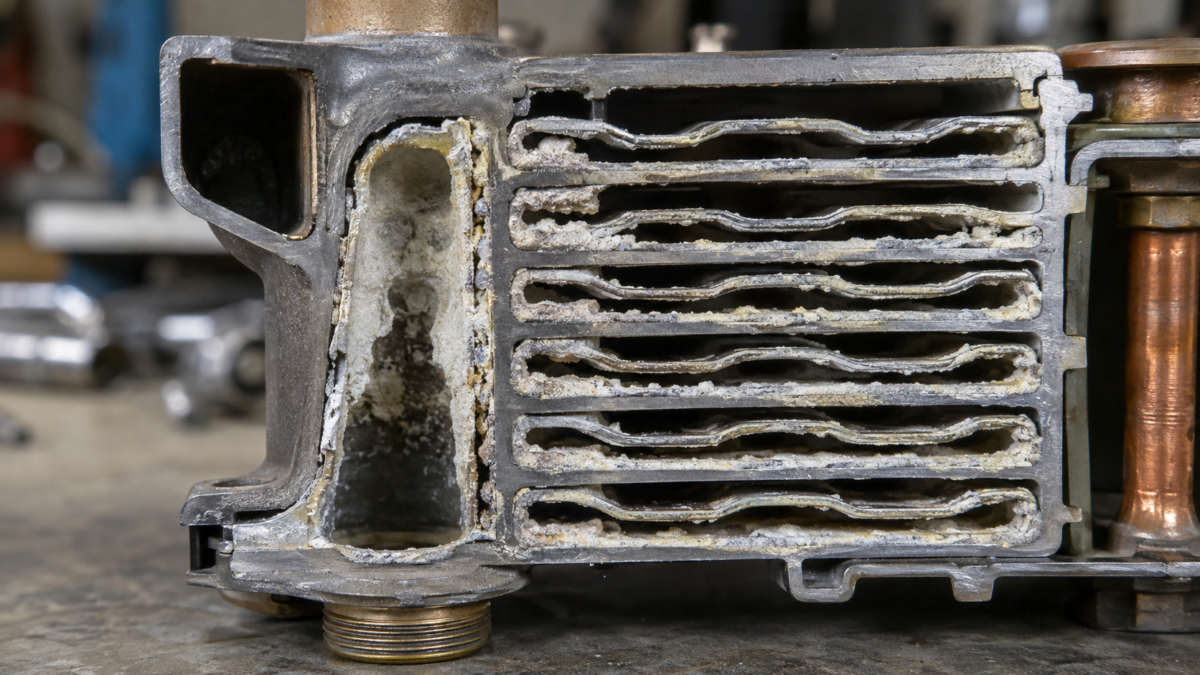
The boiler exchanger is a component where the water passes through very narrow channels and heats quickly. Those two conditions make the most favourable setting there is for build-up. As the channels narrow, the heating time lengthens, temperature swings begin and maintenance grows more frequent.
The boiler is the piece of equipment where limescale produces the most expensive consequences. The passages in the exchanger are narrow to start with; the layer building up on them narrows the bore further. That affects both the flow and the heat transfer at once.
The signs seen on the user side are these:
- A longer heating time: If hot water reaches the tap later than it used to, the build-up may have advanced.
- Temperature swings: Water in a shower suddenly going cold and hot again points to irregular heat transfer.
- Noisy running: Build-up in the exchanger can cause different noises while it is running.
- Rising gas consumption: Running longer for the same comfort shows up directly on the bill.
- More frequent maintenance: A rise in service calls is a sign of strain caused by build-up.
- A drop in pressure: A narrowing bore can create a loss of flow on the hot water line.
The mechanism is the same in water heaters and cylinders. Every surface where water is heated is suitable ground for build-up. Hard water running through a plumbing system means those pieces of equipment come to need attention more often than the maintenance interval the manufacturer allows for.
Descaling carried out during boiler maintenance gives temporary relief. But as long as the character of the feed water does not change, the build-up starts again; and that turns maintenance into a recurring expense.
Limescale in the Washing Machine
In a washing machine the build-up forms first on the heating element. Because the heating efficiency falls, the programme takes longer and energy consumption rises. In hard water, too, detergent does not perform as expected; that raises consumption and leads to stiffness and dullness in the wash.
The effect comes from two directions on this appliance. The first is technical, the second has to do with the quality of the result.
Build-Up on the Element
The layer forming on the heating element lowers heat transfer and puts the element under strain.
A Longer Programme
Because the target temperature is reached late, the wash time and the energy consumption rise.
Detergent Efficiency
In hard water there is less foaming; more product is used for the same result.
Stiffness in Fabric
Mineral residue left between the fibres reduces the softness of the textile.
Dulling of Colour
Residue building up over time makes coloured washing lose its brightness.
The Drain Line
Build-up in the hose and the internal channels raises the risk of a blockage.
The detergent question goes unnoticed in most households. Hard water interacts with the active components of cleaning products and lowers their performance. Because the user is not satisfied with the result, the dose goes up; and that makes a running expense that repeats endlessly.
Hard water is the reason element failure is one of the most common repairs there is on a machine. When the heat cannot be passed to the water, the temperature of the element itself rises and fatigue speeds up.
Limescale in the Dishwasher
In a dishwasher the build-up forms not only on the element but in the spray arms and the filters as well. As the holes narrow, the wash pressure falls and cleaning performance drops. The white marks seen on glasses are mineral residue left behind by drying water.
Marks on glassware are the most visible result on this appliance and the thing complained about most. The residue has nothing to do with hygiene; it is the mineral left behind by a drying droplet. But it is unpleasant to look at and leads to rewashing.
The first answer users reach for is usually to raise the rinse aid and detergent dose. That suppresses the symptom for a while but does not remove the source; and it raises chemical consumption permanently.
Blockages in the spray arms are a problem that advances quietly. When some of the holes close, the distribution of water is upset; the machine looks as though it is working, but not enough water reaches some areas. The result is dishes that are not clean and programmes run again.
At business scale that picture is far more costly. In restaurant, cafe and hotel kitchens dishwashers run all day; on a line fed with hard water both the frequency of faults and the chemical spend rise markedly. We took the subject up separately on the business side; the details are in our water treatment in restaurants and hotels article.
Limescale in Taps, Showerheads and Plumbing
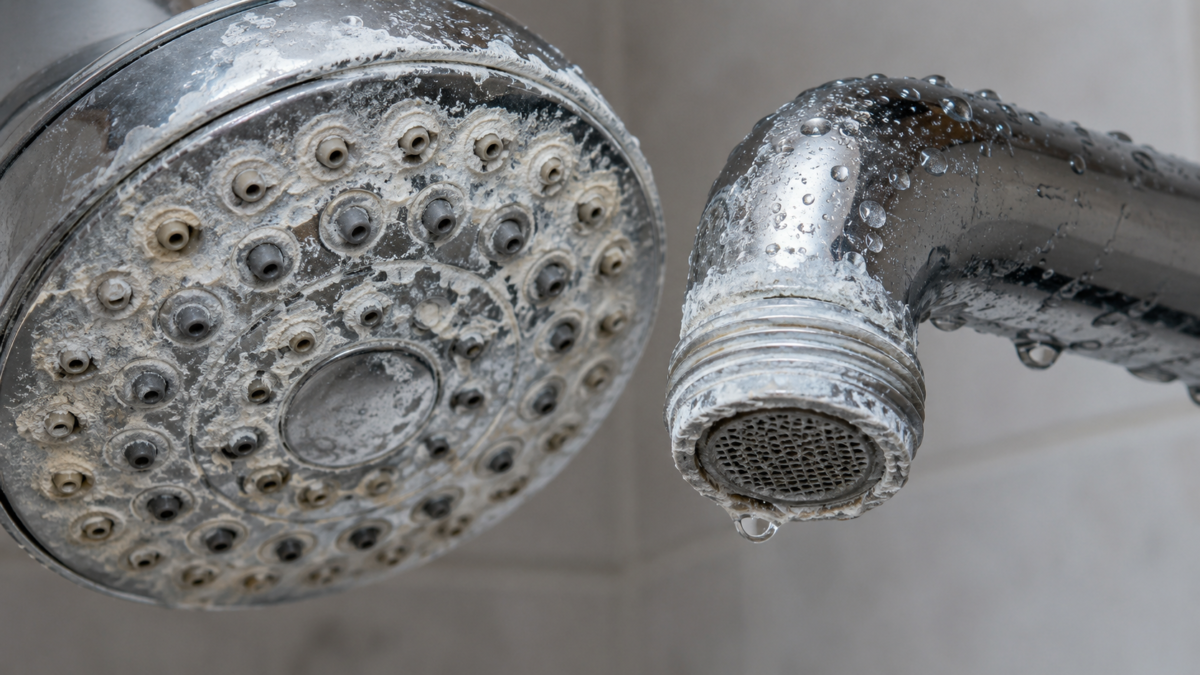
Tap aerators and showerhead holes have small openings, so they are quickly affected by build-up. As the holes narrow the flow weakens and the spread is upset. Permanent marks also form on chrome surfaces; the cleaning load rises and the appearance can be affected for good.
This group is where limescale is most visible. Almost everyone who has taken a tap aerator off to clean it has met the white layer that builds up in it. Being visible makes the problem easier to notice early.
The points affected and their consequences are these:
| The Point | What Happens | What It Means for the User |
|---|---|---|
| The tap aerator | The opening narrows and build-up takes hold | The flow weakens and frequent cleaning is needed |
| The showerhead | The holes partly block | The spread of water is upset and the direction wanders |
| Internal tap parts | Build-up forms on moving surfaces | Leaks and stiff operation |
| The inner wall of the pipe | The bore narrows over time | Loss of pressure and a drop in flow |
| Chrome surfaces | A drying droplet leaves a mark | Permanent dulling and a loss of appearance |
| Ceramic and glass | Mineral residue is left on the surface | A cleaning load that repeats endlessly |
Build-up in the plumbing line is the slowest to advance but the hardest to undo. The layer forming on the inner wall of the pipe narrows the bore, and that leads to a loss of pressure throughout the system. Past a certain point the answer is not cleaning but renewing the line.
Hard water is therefore a problem that should not be seen only as a white-goods matter. The plumbing itself is part of the same process, and its effect builds up over the years.
Are Descalers a Lasting Answer?
Descaling products can reduce existing build-up and give relief in the short term. But the source of the problem is the hardness of the water, and those products do not change the character of the water. As long as the feed water stays the same the build-up forms again; the treatment has to be repeated regularly.
It is necessary to be balanced in this section. Descalers are not useless; they have a particular function and they give a result when used correctly. The problem is their being positioned as a lasting answer.
The difference between the two approaches can be summed up like this:
| Criterion | Applying a Descaler | Removing Hardness at Source |
|---|---|---|
| The approach | It removes build-up that has formed | It prevents build-up from forming |
| How Long the Effect Lasts | It is temporary and has to be repeated | It continues for as long as the system runs |
| Scope | It is limited to the equipment treated | It covers the whole plumbing system and all the equipment |
| The Effect on Equipment | Repeated often, it can tire the surfaces | It lowers the load on the equipment from the start |
| The Operating Load | It calls for an intervention each time | It continues with regular salt checks and maintenance |
The right approach is not to see the two as alternatives to one another. Where there is existing build-up, cleaning is needed; but when the source is not dealt with afterwards, the same cycle starts again. Hard water in a plumbing system makes cleaning a maintenance operation and removing the hardness a preventive measure.
Descaling applications should be carried out in line with the manual for the equipment. Aggressive applications repeated often can tire the internal surfaces of the equipment over time. Where there is any doubt, it is right to consult an authorised service engineer.
The Lasting Answer: Lowering the Hardness at Source
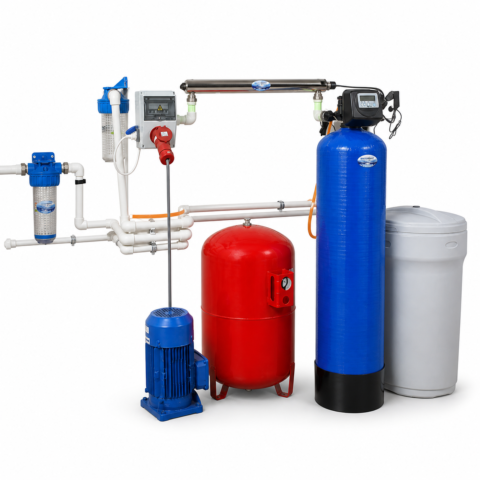
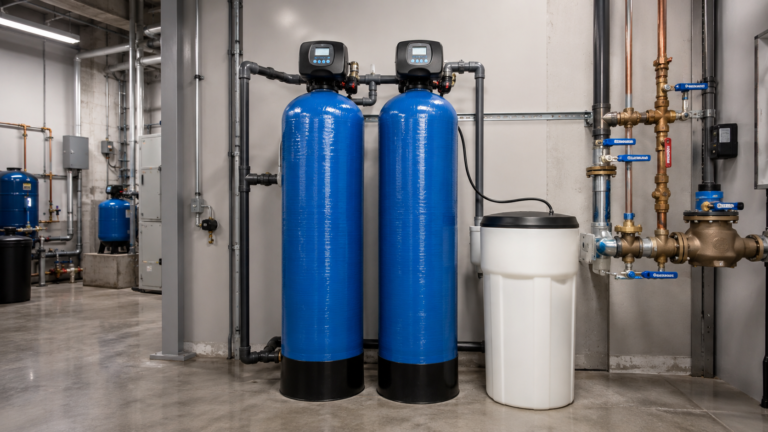
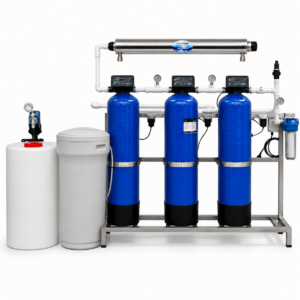
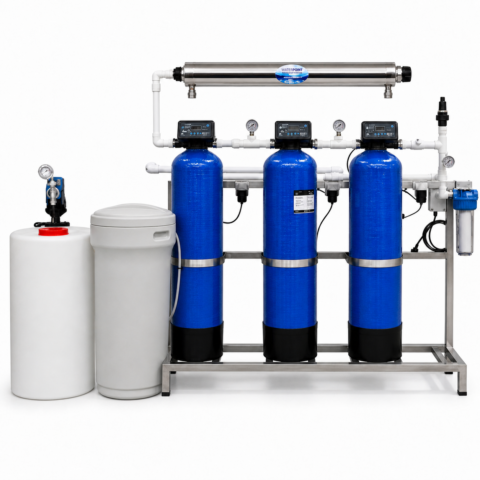
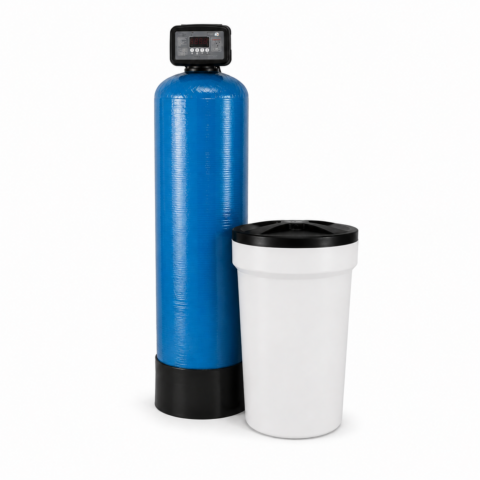
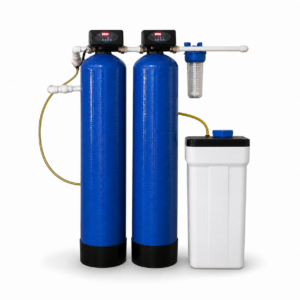
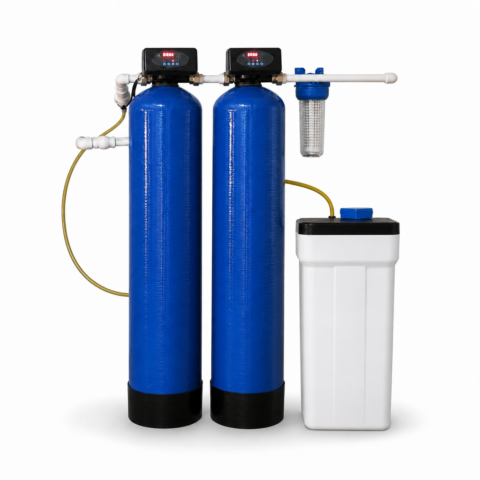
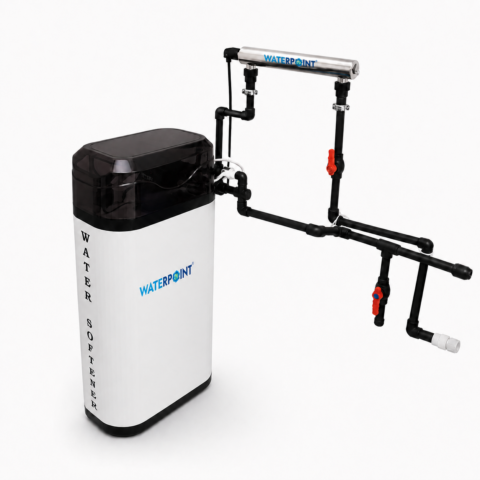
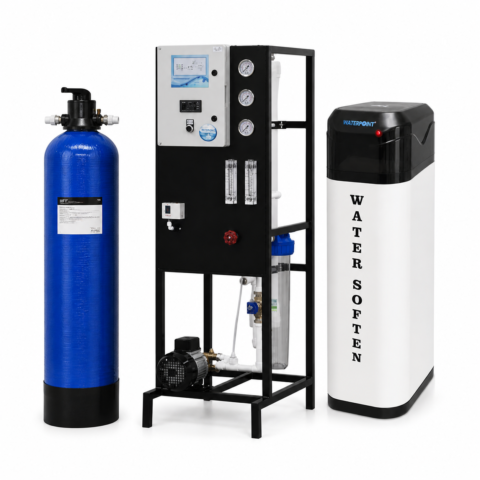
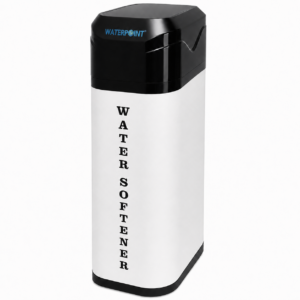
A lasting result is obtained by lowering the hardness of the water before it enters the plumbing. A central softening build protects all the equipment and plumbing beyond that point. Boiler, white goods, taps and pipework are all kept clear of build-up at once.
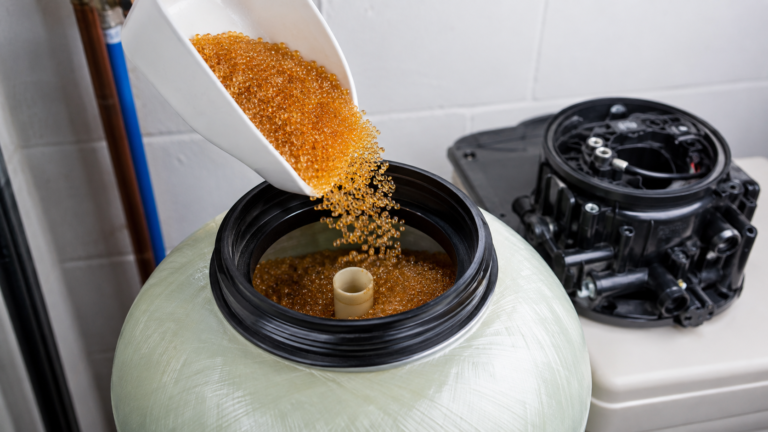
The logic is simple: if the problem is the mineral in the water, the answer is taking that mineral out of the water. A softening system works by ion exchange and separates the hardness-forming components from the water; no load is left behind to create build-up.
The point of installation settles the scope. A system installed for a single flat protects that flat, while a build on the main line of a building covers the whole structure. We took up the scope of that approach and the logic of installing it in our building inlet treatment systems article.
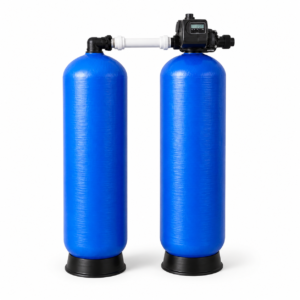
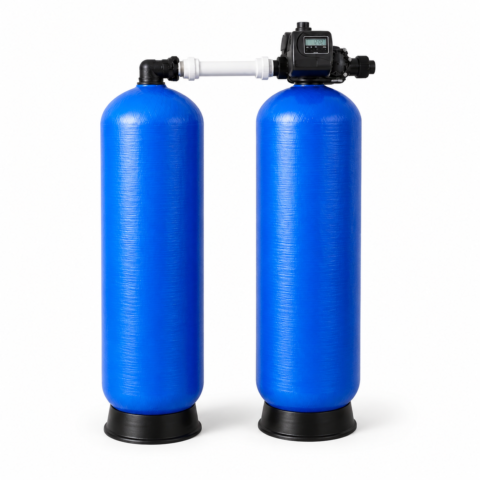
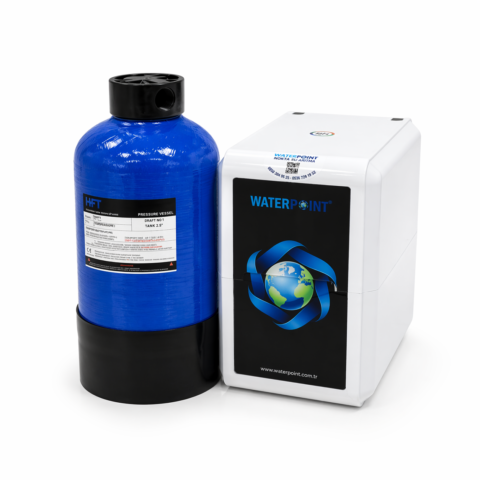
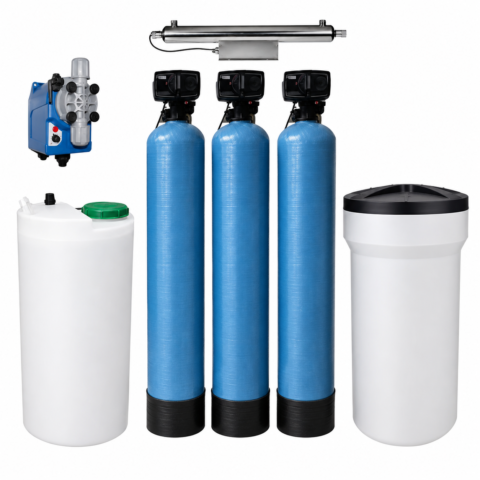
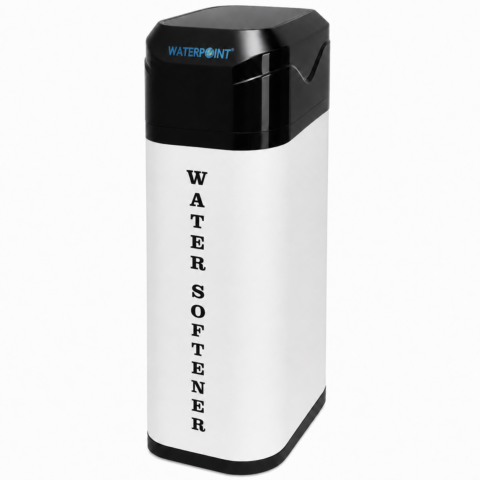
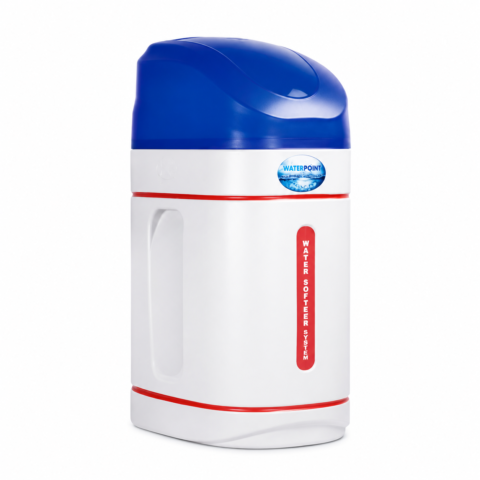
On the scale side, the intensity of use is decisive. At flat scale a compact mini cabinet softening system may be enough, while villas and households with high consumption call for larger-volume cabinet systems.
Which capacity and which type suits is a separate assessment; we took up the criteria for choosing in detail in our softening system selection guide. What matters here is this observation: the cycle on the equipment side stops only when the hard water problem is solved at source.
Protect your equipment from limescale build-up
You can look at the softening options that suit the hardness of your water and how heavily you use it.
See the Softening SolutionsWhere Should You Start? With a Measurement
The answer starts with measuring the hardness of the water. Without knowing the hardness, which capacity is needed cannot be established; a system chosen too small will not give the result expected, and one chosen larger than it needs to be is an unnecessary investment. The measurement is the only ground for correct sizing.
The process runs in this order:
-
Have the Hardness Measured
For a first impression a practical limescale test kit can be used; it shows quickly which band your water is in.
-
Have a Full Analysis Done
Where an investment in a system is involved, accredited laboratory analysis is what governs. The other parameters are assessed as well as the hardness.
-
Define the Use
The size of the household, the daily consumption and the amount of equipment make up the inputs to the capacity calculation.
-
Establish the Point of Installation
The flat inlet or the main line of the building? The scope is defined by that decision, and the space and plumbing conditions are assessed too.
-
Assess the Existing Build-Up
Where there is advanced build-up on the equipment, it is established whether cleaning is needed before the system is commissioned.
We took up step by step how to take a sample and how to read the report in our water analysis guide. Decisions made without a measurement rest on guesswork, and that is a risk both for the budget and for the result.
One last reminder: problems caused by hard water cannot be put right entirely after the event. Damage already done to equipment does not come back; but once the system is commissioned the build-up stops advancing. So the earlier the intervention, the more effective the protection.
Frequently Asked Questions
Does limescale really damage white goods?
The layer of limescale that forms on heated surfaces lowers heat transfer, and that makes the element run longer and at a higher temperature. The result is higher energy consumption, a greater risk of failure and a shorter working life for the equipment.
Is using a limescale remover enough?
It reduces existing build-up but does not remove the source. As long as the hardness of the feed water does not change, the build-up forms again. For a lasting result the hardness has to be lowered before the water enters the plumbing; cleaning and prevention are not alternatives to one another.
Is hard water harmful to health?
This article deals with the effects of limescale on equipment and plumbing; it makes no health assessment. Drinking water quality is set by the relevant regulations, and the definitive assessment is made with an accredited laboratory report. If you need an assessment for yourself, it is right to consult your doctor.
Does a softening system protect white goods?
When the hardness-forming components are separated from the water, no load is left to create build-up on heated surfaces. That means components such as elements and exchangers are protected from build-up. The point of installation settles how far that protection reaches.
Can limescale build-up be reversed?
Build-up that has formed can be reduced by suitable methods; but the material fatigue it has caused cannot be undone. When the hardness is lowered at source, the advance stops. So early intervention is decisive for protecting equipment.
Is descaling during boiler maintenance enough?
It gives temporary relief. As long as the character of the feed water does not change, build-up starts again in the exchanger and maintenance turns into a recurring expense. For a lasting result the hardness has to be dealt with before the water enters the line.
How do I find out my hardness?
Practical test kits can be used for a first impression; they show quickly which band the water is in. Where an investment in a system is involved, accredited laboratory analysis is what governs. The capacity calculation is made on that result.
Why do white marks form on glasses?
They are the mineral residue left behind by a drying droplet of water. That is not a cleaning fault but a result of what is in the water. Raising the rinse aid dose suppresses the symptom for a while; a lasting result comes from lowering the hardness.
How is the answer built in an apartment block?
A central softening build installed on the main line of the building covers all the flats; owners who want an individual answer can have a system fitted at their own flat inlet. The capacity is set by the total number of users and the demand at the peak hour.
Conclusion
Most of the failures that look unconnected trace back to the same source. Hard water forms an insulating layer on every heated surface; because heat transfer falls, equipment runs longer and under greater strain. In the boiler the heating time lengthens, in the washing machine the element tires, in the dishwasher glasses come out marked, at the taps the flow weakens and in the plumbing the bore narrows. Descalers reduce existing build-up but do not remove the source; as long as the water stays the same, the cycle starts again. The lasting result comes from lowering the hardness before the water enters the plumbing. The right order is clear too: measure the hardness first, then establish the scope and the capacity, then build the solution.
Let’s measure your hardness and establish the right answer together
The site survey is free if the unit is purchased from us; for a survey and measurement only, a survey fee of ₺2,000 applies. To plan a build that suits the hardness of your water and how heavily you use it, you can reach us on 0850 304 95 25 or at [email protected].
Discover the Solution That Suits You