
A Quality Water Treatment System: What Is Inside the Body
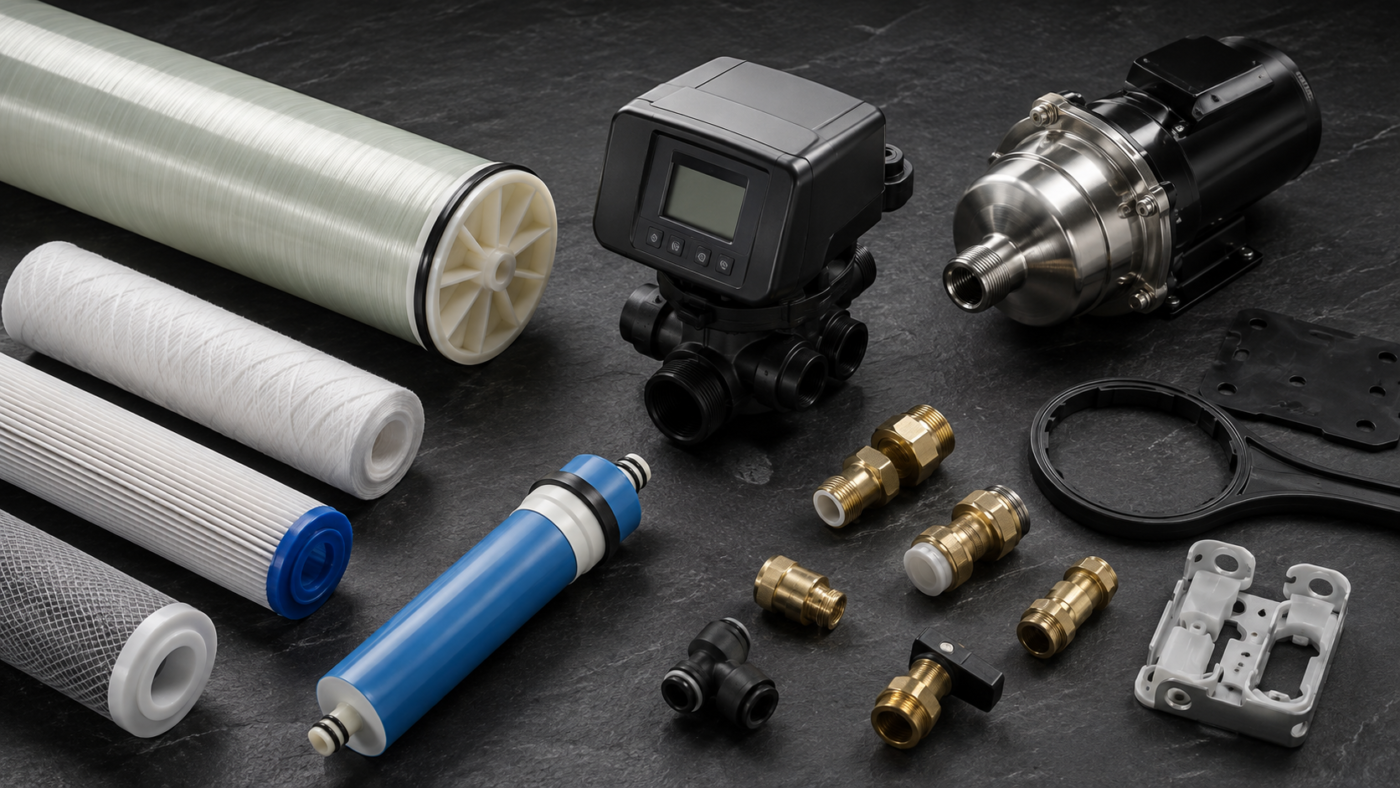
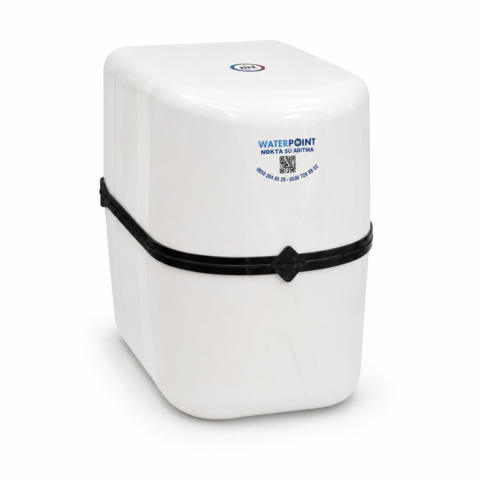
Two units standing side by side in a showroom look almost identical. The body dimensions are alike, the same number of stages is written on both, and even the tap is similar. And yet there is a serious difference in price. For the buyer the problem starts exactly there: where the difference comes from cannot be seen from outside. Yet what separates a quality water treatment system from an ordinary one is hidden precisely in those components you cannot see.
This article is not a comparison of brands. The aim is to show concretely what is inside a unit and what should be looked at in each component. From the membrane to the valve, from the pump to the fittings, we answer two questions separately under every heading: what does this part do, and how can its quality be judged?
What Determines a Quality Water Treatment System?
A quality water treatment system is determined not by its outward appearance but by the components inside it. The quality of the membrane, the control valve, the pump, the filter cartridges, the housing material and the fittings settles both the treatment performance and the life of the unit. The assessment is made on verifiable information about those components.
What that definition means in practice is this: the quality of a unit cannot be read from its box or from its advertising copy. The only place it can be read is the list of components used. If that list can be shared, an assessment is possible; if it is not shared, the buyer is left deciding on appearance alone.
A component-centred view has one more advantage: it can be measured. Instead of a relative phrase like “better”, you can ask concrete questions such as “which membrane, which valve, which cartridge size”. Those questions can be put to every unit in the same way and the answers compared.
This article focuses on the hardware of the unit. We took up headings such as service, continuity of spare parts, total cost and after-sales conditions in a separate framework; you can look at them in our unit assessment criteria article.
Why Are Two Units That Look the Same Priced Differently?
The price difference mostly comes from items that cannot be seen from outside: the manufacturer of the membrane, the structure of the valve, the quality of the pump, whether the cartridge size is standard, the housing and gasket material, and the workmanship of the installation. The outer body may be similar; what makes the difference is what is inside it.
That is not peculiar to this sector; it holds for every product built from components. But in water treatment a difference in components produces far more marked results over the life of the unit. Because the unit is under constant pressure, in constant contact with water and constantly running.
The main items that make up the price difference are these:
| Item | Why It Makes a Difference | What It Means for the User |
|---|---|---|
| Membrane | The manufacturer, the build quality and the removal performance vary | Treatment quality and the life of the module are affected |
| The control valve | The automation structure and the durability differ | The risk of the system stopping or running incorrectly |
| Pump | Quietness, efficiency and working life vary | Noise, rate of production and early failure |
| The cartridge size | A standard or a special size | Access to spare parts and independence on price |
| The housing and the gasket | Material strength and the quality of the seal | Safety under pressure and the risk of a leak |
| The fittings | The quality of the connectors and the hoses | The most common source of leaks |
| Installation workmanship | The quality of the installation and the test process | Working correctly from the first day |
What the table shows is this: none of those items is visible in a showroom. So the questions to ask in the search for a quality water treatment system should be aimed not at the outside of a unit but at its inside.
On the general framework of domestic treatment systems and what users should watch for, the US Environmental Protection Agency guide to home water treatment offers a general resource.
The Membrane: The Heart of the Unit
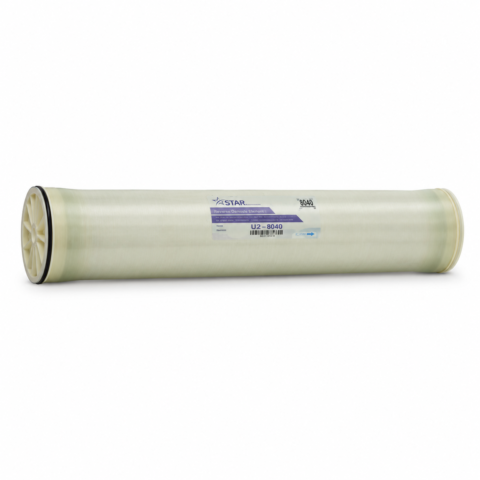
The membrane is the main component carrying out the treatment on reverse osmosis systems. Water is passed through that layer under pressure and the dissolved substances are separated at rates of up to 99%. This part determines the treatment performance of the unit and, to a large degree, its working life; that is why it sits at the centre of any assessment of components.
The importance of the membrane comes from its place in the system. The stages before it prepare the way, the ones after it refine the result; the membrane is the only stage that changes the chemical character of the water. So the quality of that part shows up directly in the outlet water.
What it does
It is a semi-permeable layer working under pressure. It lets water molecules through while holding back most of the dissolved salts, minerals and heavy metals; the treated water and the concentrate part company here.
What to look at for quality
- Is the manufacturer and model information shared
- Is the housing size standard
- Can a replacement module be supplied
- Are the protective stages ahead of it defined
Using a membrane from a known manufacturer means two things. The first is a production standard: the products of those manufacturers are put on the market with defined specifications. The second is continuity of supply; finding a replacement module and sourcing compatible parts becomes easier.
Among the membrane manufacturers widely used in the sector are Toray, LG, STAR and TechFlow. Which membrane a unit contains can be asked; being able to give a clear answer is an indicator of transparency in itself.
We took up in detail the structure of the membrane, how it tires and why it is so sensitive in our membrane filter article. The membrane filter in the standard housing size widely used on domestic systems is an advantage for access to spare parts too.
The Control Valve and Automation
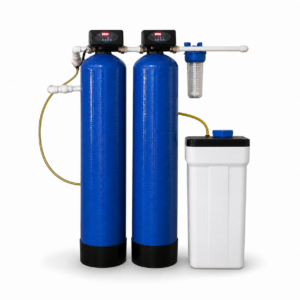
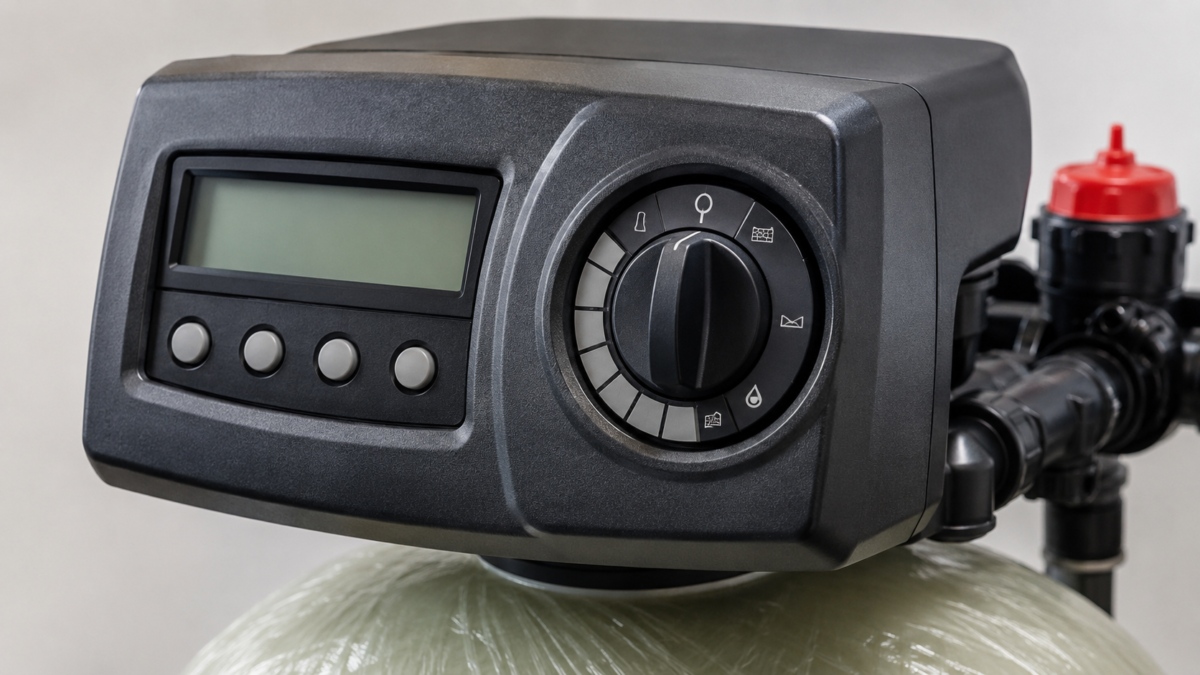
The control valve is the component that governs the flow on softening and industrial systems and starts the regeneration cycle. It is the part that decides for the system; when it fails, not one stage but the whole system goes out of service. So the valve is one of the most decisive indicators of the quality of a unit.
The job of the valve cannot be seen from outside, but its effect is continuous. From the service position to backwashing, from the brine draw to rinsing, it governs every step. Whether its settings work correctly determines both the water quality and the salt and water consumption.
What it does
It governs the direction of flow in the system, runs the regeneration steps in order and brings the unit back into service. Working on a time or a volume basis, it starts the cycle automatically.
What to look at for quality
- Is the manufacturer disclosed
- Does it work on a time or a volume basis
- Can spare parts and pistons be supplied
- Can the settings be changed by a service engineer
Among the valve manufacturers known in the sector is Clack. With products from manufacturers of that kind, being able to source components such as spare parts and pistons separately is an advantage for long-term use.
The type of valve has an effect on the running cost too. A structure working on a volume basis removes the unnecessary cycle and lowers salt and water consumption. A volumetric control valve working on that logic starts regeneration when the need actually arises.
A quality water treatment system assessment turns on this valve question: “Which valve is used in this system, and can its spare parts be found?” If it cannot be answered, information about the most critical component of the system is missing.
When the valve fails the system stops; it is not a partial loss of performance but a complete interruption. So the valve being a product of a known manufacturer, and its spare parts being available, is decisive for continuity.
The Pump and Pressure Equipment
The pump is the component providing the working pressure the membrane needs. Where the mains pressure falls short, it determines the output and the treatment efficiency directly. Pump quality shows itself under three headings: quiet running, steady pressure and working life.
The effects of a poor-quality pump are felt quickly on the user side. The running noise rises to an uncomfortable level, the pressure fluctuates and failures grow more frequent. Because it is a component running inside a kitchen cabinet, noise matters in particular.
What it does
It raises the pressure at the inlet of the unit so that the membrane works efficiently. It increases the rate of production and makes it possible for the system to run on low-pressure lines.
What to look at for quality
- Is the running noise at an acceptable level
- Does it hold the pressure steady
- Are spare parts and service available
- Does it match the capacity of the unit
Whether a pump is needed at all is a separate assessment. If the mains pressure is sufficient, a pump-free system runs quietly and economically; if the pressure is low, a pump becomes essential. We took up in detail how pressure problems are diagnosed and what the pump does in our water pressure and pump article.
The compact RO pumps used on domestic systems keep production steady and prevent unnecessary strain when they are chosen to suit the capacity of the unit. A pump that does not match the capacity strains the system and shortens its life.
There is one more point to watch with this component: a pump is not the answer to a blocked filter or a tired membrane. Trying to cover a maintenance problem with pressure does no more than put off the real problem.
Filter Cartridges and the Housing Material
Filter cartridges are consumable components renewed periodically. What is decisive in assessing quality is that the cartridges are made to a standard size. A standard size makes access to spare parts independent. The housing and gasket material, meanwhile, settles the seal and the durability under pressure.
There are two separate headings in this component: the cartridge itself and the housing that carries it. Both affect quality in different ways.
What it does
The cartridges protect the membrane by holding back sediment, chlorine and organic load. The housing carries the cartridge under pressure and provides the seal; the gasket is at the centre of that job.
What to look at for quality
- Is the cartridge a common standard size
- Is the housing material able to take the pressure
- Do the gaskets seat properly
- Does it stand up to repeated opening and closing
Standard sizing is the most practical heading in the quality debate. On a unit using common sizes, finding a replacement cartridge is easy; on a unit using special, one-off sizes the user becomes dependent on a single channel of supply. That dependence creates a risk both in price and in continuity.
A staged filter set made to standard sizes lets the whole line be renewed in one go. We took up how the renewal period is set and how the signs are read in our filter change guide.
On the housing side it is material strength that comes to the fore. The housing is under constant pressure and is opened and closed at every filter change. A housing of low strength can crack over time; a housing whose gasket has failed starts to leak. So in assessing a quality water treatment system the housing should be given as much weight as the cartridge.
Fittings and Hoses
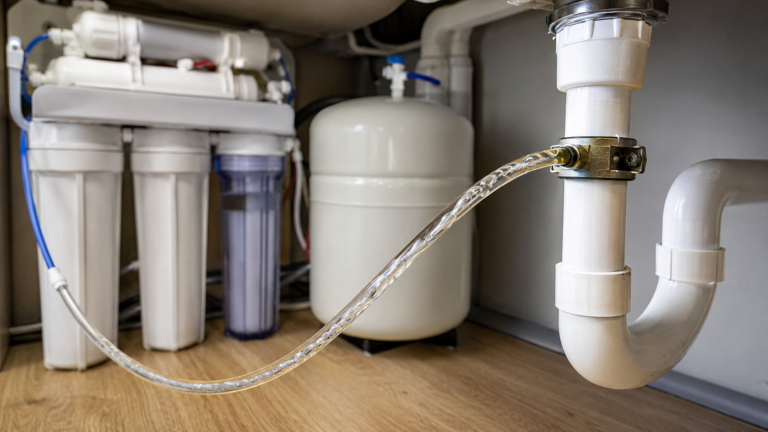
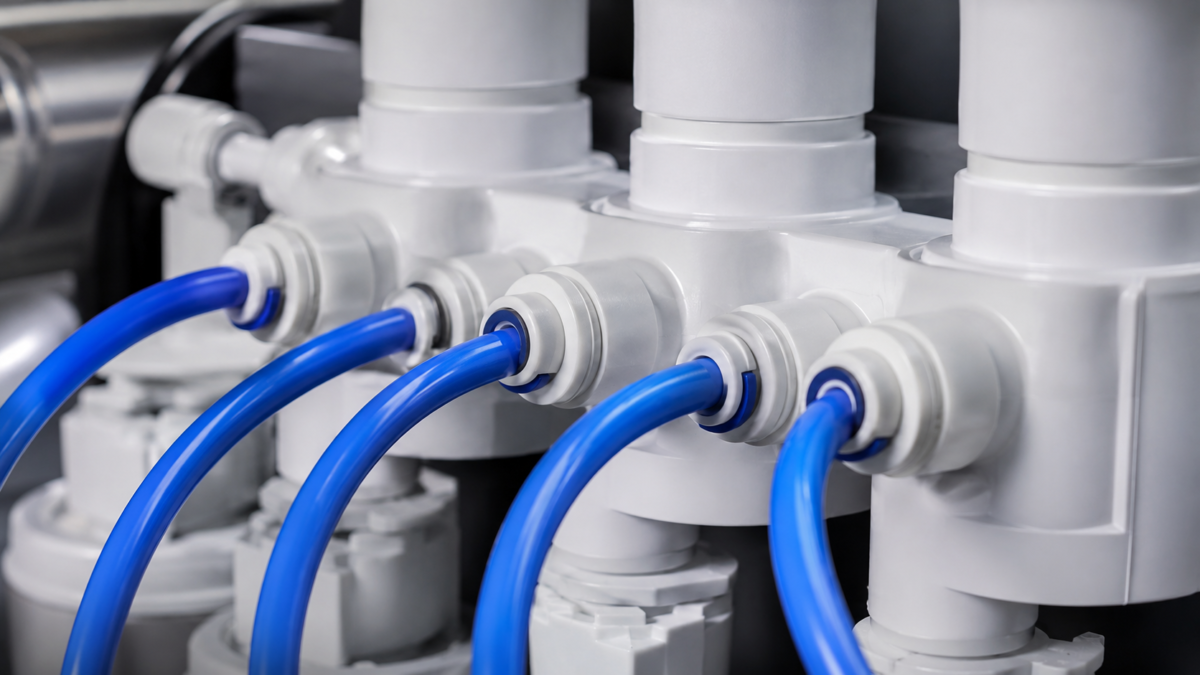
A large share of the water leaks users experience comes from the fittings. Connectors, push-fit parts and hoses work under constant pressure. So a poor-quality fitting creates a problem however good the other components of the unit are.
This group is the cheapest part of a unit but the one whose consequences cost the most. A connector costs little; but a leak that goes unnoticed inside a cabinet for days can do serious damage to a kitchen floor and to the units.
What it does
They carry the flow of water between the stages and form a line that does not leak under pressure. Push-fit parts make taking things apart and putting them back together easier.
What to look at for quality
- Do the connections seat fully and lock
- Is the hose flexible and strong enough
- Does it stand up to repeated disconnection and reconnection
- Are the connection sizes standard
Installation workmanship comes into play at this point too. Even the best fitting leaks when it is fitted incorrectly. A single hose that is not fully seated works loose once the system is pressurised and starts a slow drip.
The situations that raise the risk of a leak are these:
A Connection Not Fully Seated
It works loose under pressure over time; the leak is usually noticed days later.
A Crushed Hose
A hose trapped inside a cabinet both restricts the flow and tires the material.
A Sharp Bend
Tight turns strain the wall of the hose and create structural weakness over time.
Mismatched Sizes
Forcing parts of different sizes together breaks the seal.
A quality water treatment system is made not only of good components but of components put together correctly. So installation quality should be assessed as an inseparable part of hardware quality.
The Tank and Storage Equipment
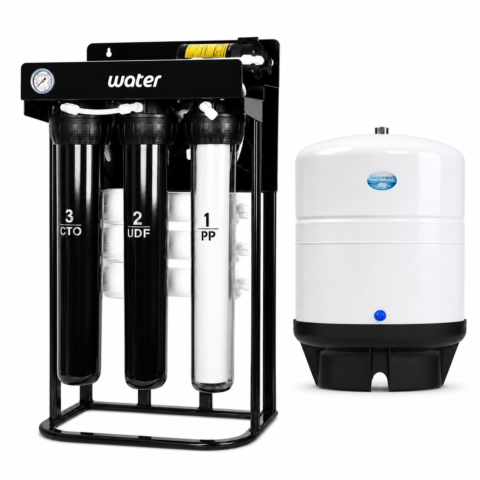
On systems with storage, the tank holds the treated water and carries the air pressure that pushes it towards the tap. In assessing quality, the internal lining material, the ability to hold the air pressure and the suitability of the surfaces in contact with water come to the fore. The tank is one of the quiet but decisive components of a unit.
The function of the tank is misunderstood by most users. A tank is not merely a store; the air cushion inside it provides the force that pushes the water to the tap. When that pressure falls over time, the flow weakens even though the tank is full.
What it does
It holds the treated water and, thanks to the air cushion inside it, pushes the water out when the tap is opened. By meeting instantaneous demand it removes the wait.
What to look at for quality
- Is the internal lining material suitable
- Can it hold the air pressure
- Is the body strong enough
- Is the connection valve sound
The internal lining matters in particular, because the inner surface of the tank is in constant contact with treated water. Surfaces in contact with water are expected to be made of material suited to that use.
The typical sign of a tank-related problem is this: when the tap is opened the water runs normally for a few seconds, then falls away quickly. Production may be normal in that case; the problem is in delivering the water to the tap. We took up that distinction and the other pressure-related signs in our pressure diagnosis article.
Measuring and working on tank pressure is a technical operation; so removing the tank and setting the air pressure should be done by an authorised service engineer.
Certification and Conformity
Conformity certificates on a unit and its components show that the product was made to defined standards. What is decisive here, though, is not the name of the certificate but that it can be verified. A claim about a certificate carries meaning if it can be presented with its number or its scope; otherwise it is no more than a statement.
It is worth being honest under this heading: certification is one of the areas where marketing copy generalises the most. Phrases such as “certified” and “documented” are used often; but which certificate, what scope and which body issued it usually go unstated.
The right approach from the buyer’s side is this:
- Ask the name of the certificate: Which certificate, and issued by which body?
- Ask about the scope: Does the certificate cover the whole unit, or a particular component?
- Ask for verifiability: Can the certificate number or a copy be shared?
- Watch for generalisation: A certificate claim whose scope is not stated carries no information.
No claim about any certificate is made in this section; the aim is to give the reader a method for assessing certificates that can be applied. In research into a quality water treatment system the subject of certificates should be brought into the decision only when it can be verified.
We took up the indicators of transparency on the firm side — legal identity, sales conditions and commercial documents — in a separate framework; you can look at those headings in our firm assessment article.
Asking a concrete question in the face of vague statements about certificates is the most effective method there is. A certificate whose scope and issuing body can be explained carries information; a claim that cannot be explained should not be brought into the assessment.
A Checklist for What Is Inside a Unit
- Which membrane is used, and is the manufacturer information shared?
- Which control valve does the softening system have?
- Is there a pump, does it match the capacity, and can its spare parts be supplied?
- Are the filter cartridges a common standard size?
- Are the housing and gasket materials able to take the pressure?
- Are the fittings and hoses a standard size?
- On a system with storage, is the internal lining of the tank suitable?
- Where a certificate is claimed, are its scope and issuing body stated?
- Who carries out the installation, and is a test applied afterwards?
If you can get a clear answer to those nine items, you know what is inside the unit. A quality water treatment system decision is built on exactly that knowledge.
Ask what is inside the unit, and compare
You can make your own assessment by looking at the systems whose membrane, valve and cartridge details can be shared.
See the Water Treatment SystemsThe Components Used in Water Point Systems
This section lists, as a matter of fact, the components used in Water Point systems. The aim is not to present a claim of superiority but to show the concrete answers to the component questions defined in this article. The same questions can be put to every supplier and the answers compared.
Water Point Su Arıtma Teknolojileri operates from Esenyurt, İstanbul, under its founder Ali Genç, with more than 20 years of experience in the sector. The component details below can be confirmed from the product pages.
The Control Valve
The Clack WS1 valve, the WS1 TC filter valve and the valve piston are among the components used.
Membrane — Toray
The Toray TM720D-400 reverse osmosis membrane is among the membranes used.
Membrane — LG
The LG 8″ RO membrane BW 400 ES is among the components used in industrial applications.
Membrane — STAR
The STAR LP8040 RO membrane is among the membrane options used.
Membrane — TechFlow
The TechFlow 8040 LP-400 membrane is also among the components used.
The Use of Standard-Size Cartridges
Standard-size filter cartridges are used in the systems; those sizes are widely available.
Certification
CE certification is held for the activities carried out.
Spare Parts Cover
Filters, membranes, resin and salt are consumables; valves, pumps and tanks are durable spare parts.
That the spare parts cover is not limited to filters matters for continuity of components. Being able to source parts such as the membrane, the valve, the pump, the resin and the tank separately is what makes a unit supportable over its working life.
The aim here is not a claim to a ranking. The component questions defined in this article can be put to every supplier in the sector; this section simply sets out concretely the answers on the Water Point side to those same questions. The assessment is the reader’s own to make. Anyone wanting to ask about component details can get in touch on 0850 304 95 25 or at [email protected].
Whichever supplier you work with, ask the same questions: which membrane, which valve, is the cartridge size standard, and can spare parts be supplied? A quality water treatment system assessment is made by comparing those answers.
Frequently Asked Questions
Is a cheap unit worth buying?
Price is not decisive on its own; what matters is which components that price corresponds to. On a low-priced unit the cartridge size may be special, or access to spare parts may be limited. The comparison should be made on the list of components.
Is an expensive unit always better?
No. A high price can give an idea about component quality but does not guarantee it. What is decisive is which membrane, valve and cartridges are inside the unit and whether that information is shared. Price is an indicator; the component list is proof.
Which membrane is of higher quality?
Recommending a single model would not be the right approach; the membrane is chosen from the inlet water quality and the capacity of the system. What is looked for in an assessment is that the manufacturer and model information can be shared and that a replacement module can be supplied.
How many years does a unit last?
It would not be right to give a fixed period; the working life varies with component quality, the inlet water conditions and the discipline of maintenance. Pre-filters renewed on time protect the membrane; a system that is protected runs markedly longer.
Does a higher number of stages mean higher quality?
The number of stages is not an indicator of quality on its own. What matters is that the stages match the problems in your water and that the components used at each stage are sound. An unnecessary stage brings no added benefit; a missing one affects the result directly.
Why does the cartridge size matter so much?
A standard size makes access to spare parts independent. On a unit using special, one-off sizes the user is left dependent on a single channel of supply, and that creates a risk both in price and in continuity. So standard sizing is directly a measure of quality.
Why do water leaks happen at the fittings?
Because those parts work under constant pressure and are subject to being taken apart and put back together. A connection that does not seat fully works loose over time once the system is pressurised. So installation workmanship is as decisive as the quality of the connectors and hoses.
What does a “certified unit” mean?
What is decisive is not the name of the certificate but its scope and its verifiability. If the questions of which certificate, issued by which body and covering what can be answered, it carries information. General statements whose scope is not given should not be brought into the assessment.
Can I judge the quality of a unit after installation?
Partly. In the first days the flow, the noise and the seal can be observed; but the real effect of component quality emerges over time. So the assessment should be made before buying, by asking about the components.
Conclusion
The difference between two units that look the same in a showroom is hidden inside the body. The membrane carries the treatment performance and the life of the module; the control valve settles the working discipline of the system; the pump provides the pressure; the cartridge size preserves independence on spare parts; the housing and the gaskets maintain the seal; and the fittings are where the risk of leaks is most concentrated. On certification the measure is single: verifiability. Every one of those components can be asked about, the answers compared, and the decision made on that comparison. A quality water treatment system is not the one with the boldest advertising copy; it is the one that can share openly what is inside it.
Ask about what is in the unit and its components
For details of the membrane, valve and cartridges used, and the scope of the spare parts cover, you can get in touch on 0850 304 95 25 or at [email protected].
Discover the Solutions