
How Is Chlorine Removed From Water? Taste, Odour and Carbon
You turn on the tap and a smell like a swimming pool spreads through the kitchen. The tea you brew does not taste as it should, the aroma of the coffee gets lost somewhere, and the household turns to bottled water instead of drinking from the tap. The reason behind that picture is usually one thing: chlorine in water — the residue and the characteristic taste and smell it leaves.
In this guide we first explain impartially why chlorine is in mains water, then take up which methods really work for improving the comfort of taste and odour. The aim is not to frighten but to show clearly the right answer for raising the drinking quality of your water.
What Is Chlorine in Water and Why Is It There?
Chlorine in water is a residue present in mains water in order to preserve microbiological safety. The water travels a long line from the treatment plant to your home; a certain level of chlorine is kept up throughout that journey so that bacteria and microorganisms are controlled. The side effect is taste and odour.
That point should be made clear from the outset: chlorine being in the mains is not a fault but a deliberate choice. Water processed at a treatment plant reaches you through kilometres of pipework and through tanks. Having a residue that will protect the safety of the water throughout that journey is a practice accepted worldwide, and its level is kept within the limits set in the relevant regulations.
So when chlorine in water is a subject to take up not as a health panic but as a matter of comfort. Almost all the complaints are about taste, odour and the ease of daily use. The component that secures the safety of the water is the same one that reduces the pleasure of drinking it; and the answer is to balance that dilemma at the point of use.
The characteristic smell of chlorine is noticed by the human nose even at low concentrations. So the smell can be markedly felt even where the measured values meet the regulations. The impression that the water is “not clean” often arises there; yet the smell is an indicator not of safety but only of the residue.
Why Is the Chlorine Smell More Marked in Some Homes?
The strength of the smell varies from home to home. Nearness to the treatment plant, the length of the line, the condition of the building tank and the conditions of the season are what decide. In positions close to the plant, chlorine in water arrives at a higher residual level; on long lines the level falls but different taste problems can arise.
Two neighbours living in the same city, even in the same neighbourhood, can have different experiences. There are several concrete reasons for that:
- Distance from the plant: In buildings close to the treatment point the residue is higher, so the smell is more marked.
- The length of the line: On long distribution lines the level falls; but different taste effects caused by the pipework can come into play.
- Seasonal change: In the hot months the practice can differ so that the residue is kept up; the smell is felt more.
- The building tank: How long the water stands in the tank and the conditions of the tank directly affect the taste.
- The plumbing structure: Old pipes and lines not used for a long time give the water a different character.
- The temperature of the water: The smell is more easily perceived in warm water; that is why the chlorine smell is more marked in the shower.
The last item catches most people’s attention: the same water smells slightly in a glass but is felt far more strongly in the shower. The reason is that temperature increases volatility. Chlorine evaporates along with the hot water and concentrates in the closed space of a bathroom. So a good share of complaints about chlorine in water come not from the kitchen but from the bathroom.
The Difference Between Chlorine and Chloramine
Two different approaches are used in water networks: free chlorine and chloramine. Free chlorine is more volatile and can fall somewhat with standing. Chloramine is more persistent and holds its effect along the line for longer; so removing it calls for a longer contact time and a more suitable carbon structure.
That distinction matters in practice, because it directly settles the effectiveness of the answer. On a network using chloramine, a simple approach designed for free chlorine may not give the result expected.
| Criterion | Free Chlorine | Chloramine |
|---|---|---|
| Persistence | More volatile, falls quickly | More persistent, kept up along the line for longer |
| The Character of the Smell | Sharp, like a swimming pool | Softer but stubborn |
| Response to Standing | Part of it can evaporate | It does not fall in practice with standing |
| Removal With Carbon | Relatively easy | It calls for a longer contact time |
| The Approach to the Answer | A standard carbon stage | Carbon of a suitable structure and sufficient volume |
It is possible to find out from the water authority which approach is used in your area. That information is decisive when choosing an answer: where there is chloramine, the volume of the stage and the contact time become more critical. Chlorine in water — knowing that distinction when solving the problem lets you reach the right result at the first attempt.
What Problems Does Chlorine in Water Cause?
The most common complaints are about taste and odour: a sharp character in the water, a loss of aroma in tea and coffee, a change of taste in cooking water. In the shower a feeling of dryness on the skin and hair is reported. And in sensitive uses such as an aquarium, water free of chlorine is preferred.
It helps to separate the effect by field of use:
Drinking Water
A sharp taste and a marked smell are felt in the water; it is noticed as you bring the glass close.
Tea and Coffee
Water is the carrier of the aroma; chlorine residue upsets the balance of the aroma in brewing.
Cooking Water
In soup, rice and baking the character of the water shows up in the result.
Shower Use
The smell becomes marked with hot water; a feeling of dryness on the skin and hair is reported.
Ice and Cold Drinks
In ice machines the water that freezes carries the taste straight into the drink.
Aquariums
Water free of chlorine is preferred for sensitive creatures; that is a common practical requirement.
Coffee and tea come to the front in businesses in particular. A coffee prepared with the same beans, the same equipment and the same technique tastes different from one water to another; because most of what is in the cup is water. Chlorine in water being removed is one of the observations business owners mention most often when the aroma becomes more marked.
The subject is not a matter of health but of comfort and flavour. The level of chlorine in mains water is kept within the limits set in the relevant regulations; the removal is aimed at improving the drinking quality and the comfort of use.
Do Simple Methods at Home Work?
Standing the water in an open vessel or boiling it lets part of the free chlorine evaporate. But those methods offer no practical, continuous or controlled answer. And on networks using chloramine their effect is markedly limited. A lasting method is needed for daily use.
Let us make an honest assessment of those methods:
It works partly
In water standing in an open vessel, part of the free chlorine goes into the air.
- It has no extra cost
- It is only effective on free chlorine
- It needs time and space
- It is not practical for continuous use
Limited and indirect
Heating increases volatility; but it uses energy and calls for the water to stand.
- It has an effect on free chlorine
- It gives no marked result on chloramine
- It has to be repeated for every use
- It cannot be applied to showers and general use
The shared limit of those methods is that they do not scale. Standing can be done for a glass of water; but daily kitchen use, shower water or the service need of a business cannot be met that way. And the result is not measurable or repeatable; the time that works today can fall short tomorrow.
So the lasting answer is passing the water through a stage that treats it at the moment of use and continuously. The name of that stage for Chlorine in water is clear: activated carbon.
Activated Carbon: The Main Method of Removing Chlorine
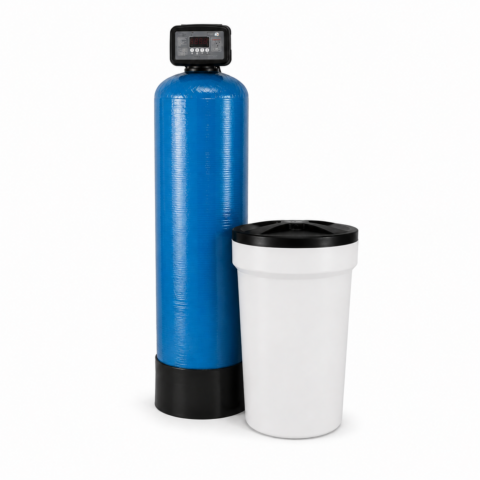
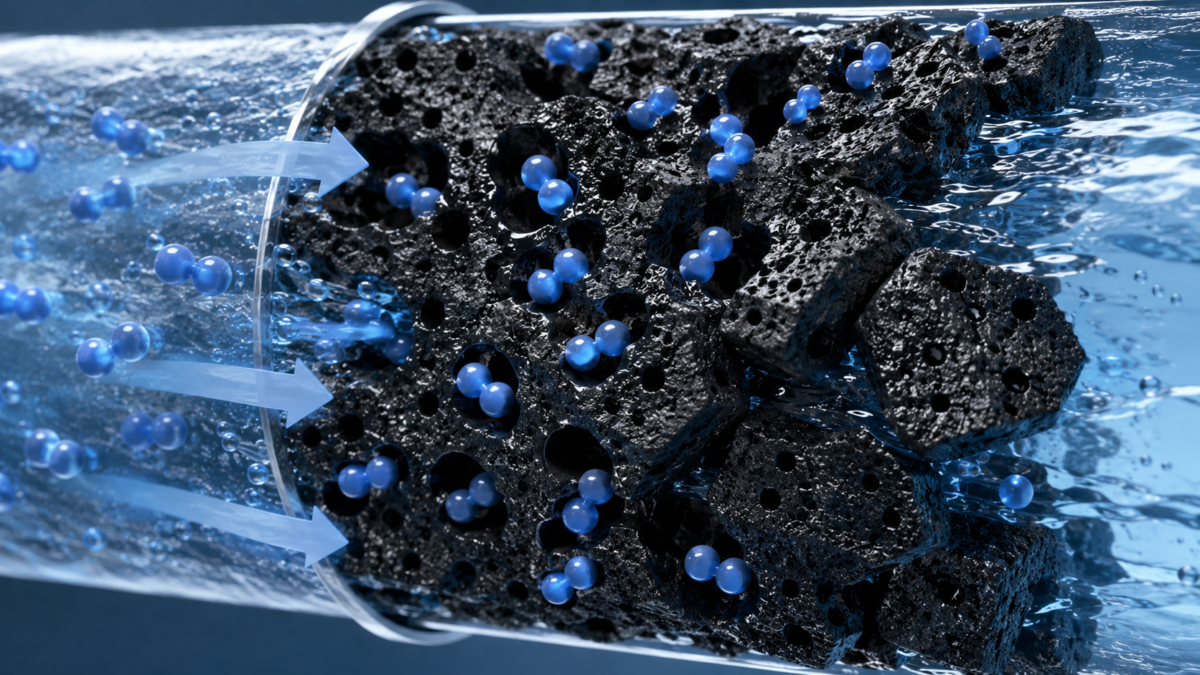
Thanks to its porous structure, activated carbon holds chlorine along with odour and taste components on its surface. That process is called adsorption. The water has to be in sufficient contact with the carbon bed; when the contact time shortens, the removal efficiency falls. So the volume of the stage and the flow rate are what decide.
The mechanism is not a mechanical straining. Chlorine molecules attach to the wide inner surface of the carbon and are separated from the water. So even a component no larger than the pore of the filter can be removed effectively. The Alaska state environmental agency resource on removing chlorine taste also treats activated carbon based solutions as among the methods recommended for that purpose.
Carbon has two basic forms and each offers a different advantage:
Granular Carbon
A grained bed structure; the resistance to flow is low and it is preferred in high-flow applications.
A Carbon Block
A dense pressed structure; it gives closer contact and is common in cartridge systems.
The Raw Material
Coconut shell based structures come to the front for taste and odour, coal based ones for organic load.
The choice of raw material affects the result too. Where taste and odour are the priority in drinking water, coconut-based activated carbon is widely preferred. In applications where the organic load is high and a wider spread of pores is needed, coal-based activated carbon comes to the fore.
We took up in detail how the stage works and what it does and does not remove in our activated carbon filter article. In short: a carbon stage is the direct answer for chlorine in water, but different stages are needed for hardness and the dissolved solids load.
Where Is It Removed? Point of Use and Building Inlet
The answer is positioned according to where the problem is felt. Under-counter stages are used for drinking and cooking water in the kitchen, special heads in the shower, and for the whole house a carbon stage installed at the building inlet. As the scope widens, so does the capacity.
The three approaches separate out like this:
An under-counter answer
It removes taste and odour in drinking and cooking water; it works with a staged filter set.
A point-of-use filter
It reduces the chlorine smell that becomes marked with hot water.
An inlet line stage
It is installed on the main line; every tap and shower is fed with treated water.
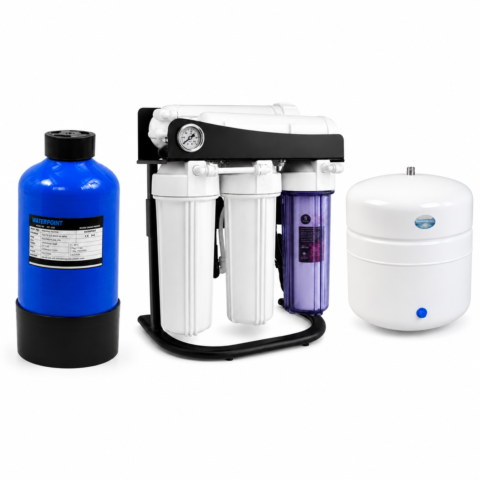
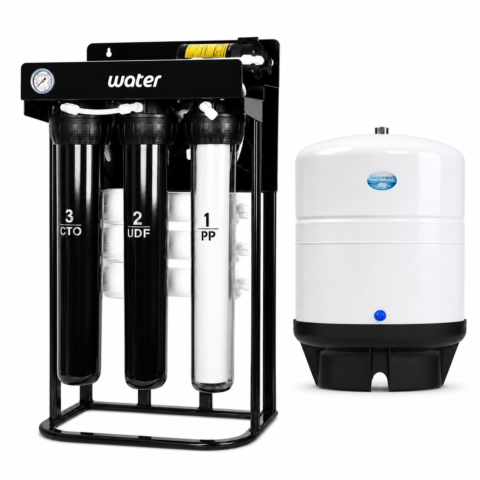
On the kitchen side the most common answer is an under-counter installation working with a staged filter set that includes carbon stages. That build removes the taste and odour problem in both drinking and cooking water.
Where the shower complaint comes first, the answer is directly at the point of use. The filtered shower heads used for that purpose improve the comfort of a shower by reducing the smell that becomes marked with hot water. They are simple to fit and call for no change to the existing plumbing.
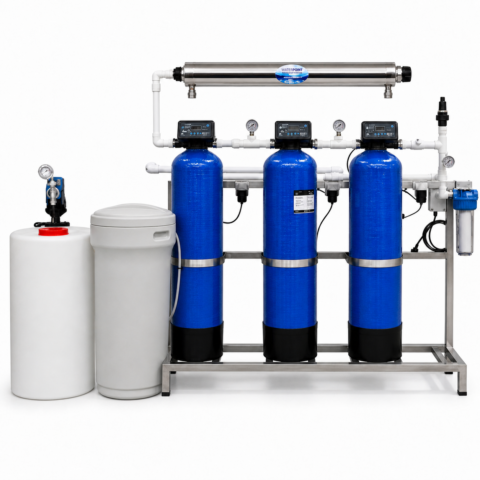
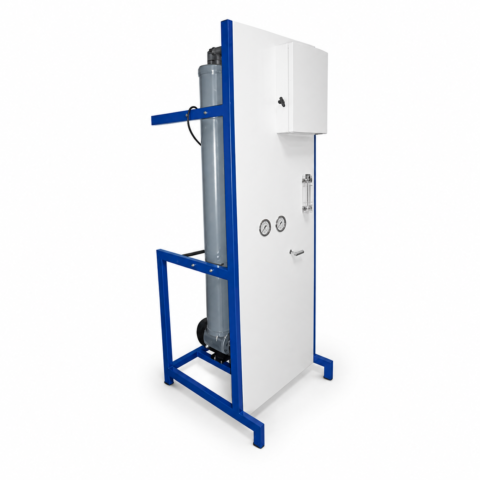
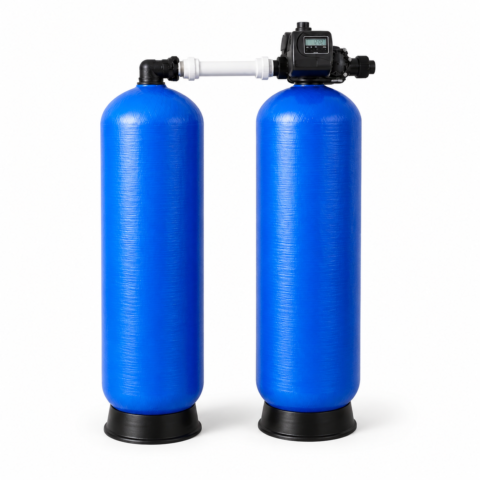
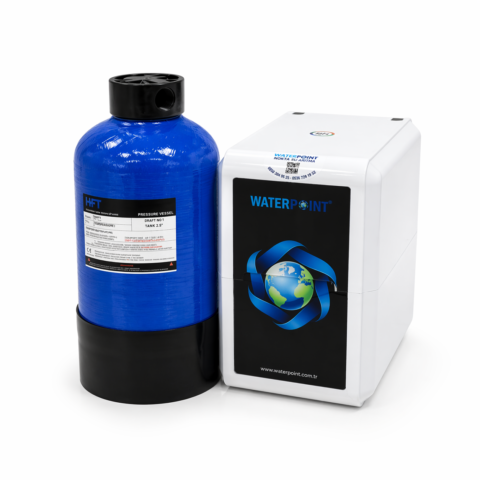
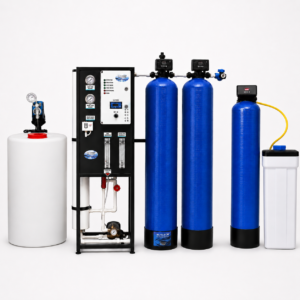
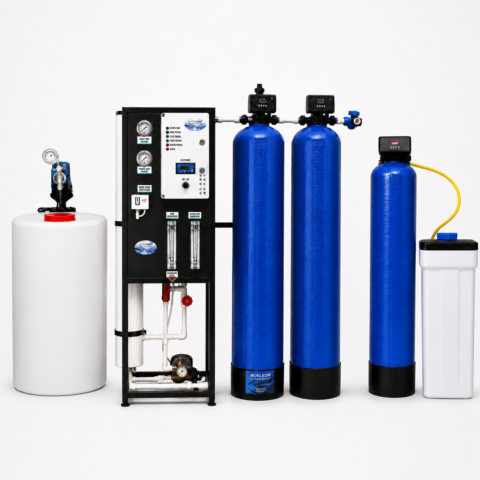
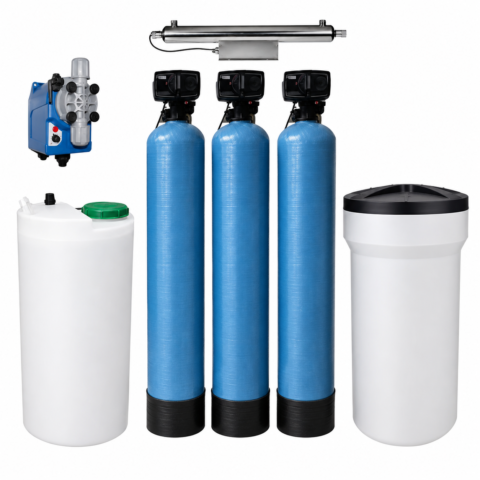
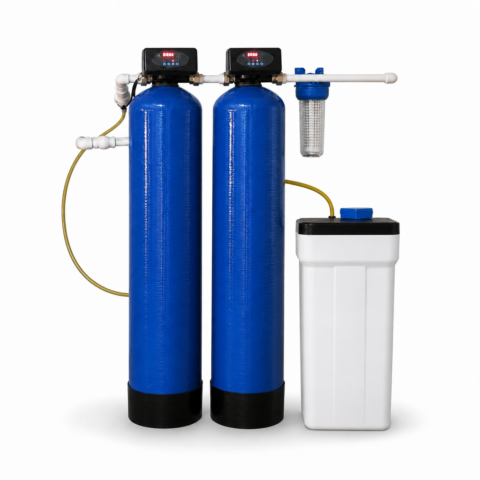
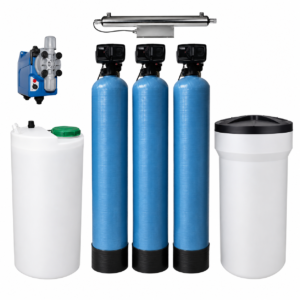
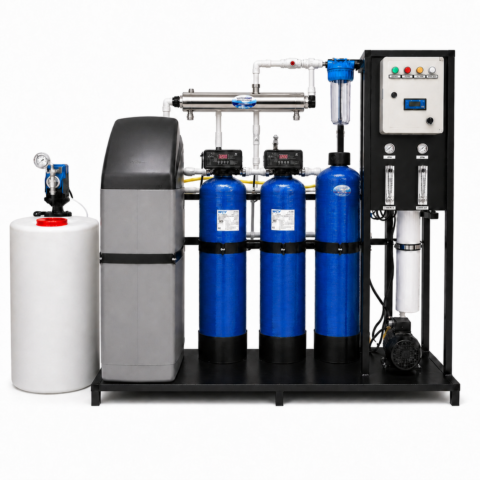
For those looking for an answer across the whole house, the stage moves to the main inlet line. We took up the scope of that approach and the installation details in our building inlet treatment systems article. And at points calling for heavy use and a high flow, tank-type activated carbon units are preferred.
Let’s establish the right stage for chlorine taste and odour
Do you want to solve the problem in the kitchen, in the shower or across the whole house? You can look at the options that suit your need.
See the Treatment Solutions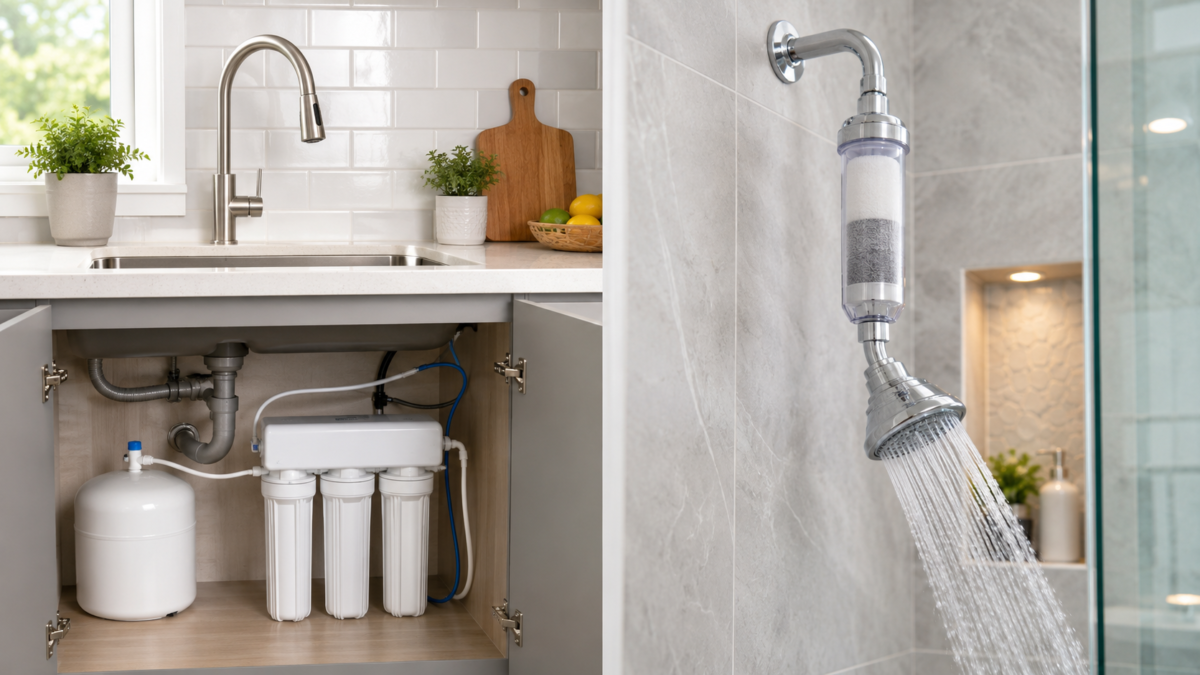
The Importance of Chlorine in Reverse Osmosis Systems
Chlorine does permanent damage to the structure of a reverse osmosis membrane. So there is always a carbon stage before the membrane, and the chlorine in water is held at that point. When the carbon is not changed on time, chlorine reaches the membrane and the module loses its performance before completing its expected life.
That is one of the most critical rules of system design and is unknown to most users. The carbon stage is there not only for taste and odour but as a protective component. The membrane is the most valuable part of the system; and what protects it is a relatively economical carbon cartridge.
The most insidious thing about the damage is that it is cumulative and invisible. When a saturated carbon stage starts letting chlorine through it gives no warning; the water keeps flowing, the system looks as though it is working. The problem is noticed months later, in a fall in the quality of the treated water, and by that point the damage cannot be undone.
We explained the structure of the membrane and why it is so sensitive in detail in our membrane filter article. The conclusion here is clear: changing the cheap stage on time protects the expensive stage for years.
The carbon stage should be changed before it reaches saturation. “The water is still flowing” does not show that the stage is working; a saturated carbon can keep letting water through while it has stopped holding the chlorine.
When Is a Chlorine Filter Changed?
The clearest sign is the taste and odour that had been removed coming back. When the carbon bed reaches saturation, the chlorine in water starts to be felt again. The interval for changing is not fixed; the chlorine load in the inlet water, the amount consumed and the volume of the stage settle that period directly.
The most deceptive thing about a carbon stage is that it does not show its saturation from outside. Where a sediment filter visibly darkens, a saturated carbon cartridge looks the same. So the signs have to be read:
- The chlorine taste is back: If a swimming-pool taste is felt in the water again, the bed has reached saturation.
- A smell has appeared: If a smell that had been removed has come back, the holding capacity is spent.
- The taste of tea and coffee has changed: A spoiling of the aroma is often the first signal noticed.
- The flow has fallen: A slowing of the flow shows that the stage has blocked with sediment.
- The period is up: Even where there is no sign, the stage should be renewed once the interval in the manual has come round.
It is not possible to give an exact period; because the same cartridge saturates far faster in an area with a high chlorine load. We took up how to plan the maintenance routine and in what order the stages are renewed in our filter change guide.
Chlorine Control for Businesses
In cafes, restaurants and hotels the water shows up directly in the quality of the product. The aroma in coffee and tea, the taste in an ice machine and the result of cooking in the kitchen are all affected by the water. When the chlorine in water is removed, the flavour profile becomes marked and consistency between batches is secured.
On the business side the subject stops being a matter of comfort and turns directly into product quality. Most of a cup of espresso is water; almost all of a pot of tea is water. When the character of the water changes, the same beans and the same technique give different results.
The points of use that come to the front in businesses are these:
Coffee Machine
The extraction of the aroma depends on the character of the water; chlorine residue suppresses the profile.
Tea Service
In brewing, water is the component in the highest proportion; the difference in taste is felt directly.
Ice Machine
The water that freezes carries the taste into the drink; the difference becomes marked as the ice melts.
Kitchen Use
In soup, dough and boiling, the character of the water shows up in the result.
At that point the scale changes for businesses too. Consumption running all day uses a domestic stage up quickly; so the carbon volume and the flow capacity are established from the peak-hour demand of the business. In heavy use, tank-type builds call for maintenance at longer intervals than cartridge systems.
The return on the investment is seen directly in the quality of the product. A customer cannot explain technically why their coffee is better; but they feel the difference. Chlorine in water control works, for a business, on a quality item that is unseen but settles the result.
Frequently Asked Questions
Why is there chlorine in water, and is removing it a problem?
Chlorine is there to preserve microbiological safety along the water distribution line, and its level is kept within the limits set in the relevant regulations. Removing it at the point of use is a common practice; the aim is to improve the taste and odour quality of the water.
Does standing the water remove the chlorine smell?
Part of the free chlorine can go into the air when it stands in an open vessel. But that method is slow, not measurable, and gives no marked result on networks using chloramine. A lasting stage is needed for daily use.
Which filter is used for removing chlorine?
An activated carbon stage is designed for that job. The porous structure of the carbon holds chlorine along with odour and taste components on its surface. Where sufficient contact time is provided the water improves markedly; that is why the volume of the stage matters.
What can be done about the chlorine smell in the shower?
Because the smell becomes marked with hot water, shower complaints are common. A filtered shower head fitted at the point of use reduces that smell. Where an answer is wanted across the whole house, the stage moves to the main inlet line.
When should a carbon filter be changed?
There is no fixed period. The most reliable indicator is the taste and odour that had been removed coming back. The chlorine load in the inlet water and the amount consumed settle that period; the interval in the manual should be taken as the basis and interpreted to your own conditions.
Does the water spoil once the chlorine is removed?
Water with the chlorine removed at the point of use is served ready for use. Not letting it stand for a long time and keeping it in clean vessels is a general recommendation for use. Because the system treats the water at the moment of use, it calls for no build based on storage.
Do I still need a carbon stage on my reverse osmosis unit?
It is absolutely necessary. Chlorine does permanent damage to the structure of the membrane; the carbon stage takes on that protective job. When the stage is not changed on time the membrane is used up early and a far more costly replacement is needed.
Conclusion
The chlorine in mains water is there to preserve the safety of the water along the distribution line; so its presence is not a fault but a deliberate practice. Against that, the taste and odour it leaves reduce the pleasure of drinking, the aroma of tea and coffee and the comfort of a shower in daily use. And that is exactly where the answer comes in: an activated carbon stage improves the character of the water by holding the chlorine residue by adsorption. The right build depends on where you feel the problem — under-counter for the kitchen, the point of use for the shower, and an inlet line solution for the whole house. And finally there is one rule not to forget: a carbon stage is a consumable and should be renewed when the taste and odour come back.
Let’s establish the chlorine removal solution that suits your water together
To clarify which stage suits for the kitchen, the shower or the whole house, you can consult the Water Point expert team.
Discover the Solution That Suits You