
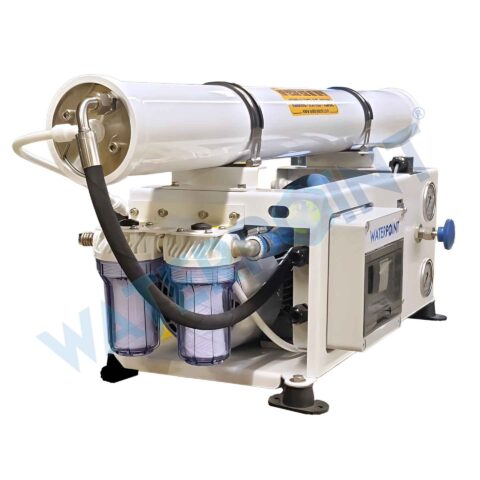
What Happens When Water Pressure Is Low? Purifiers and Pumps
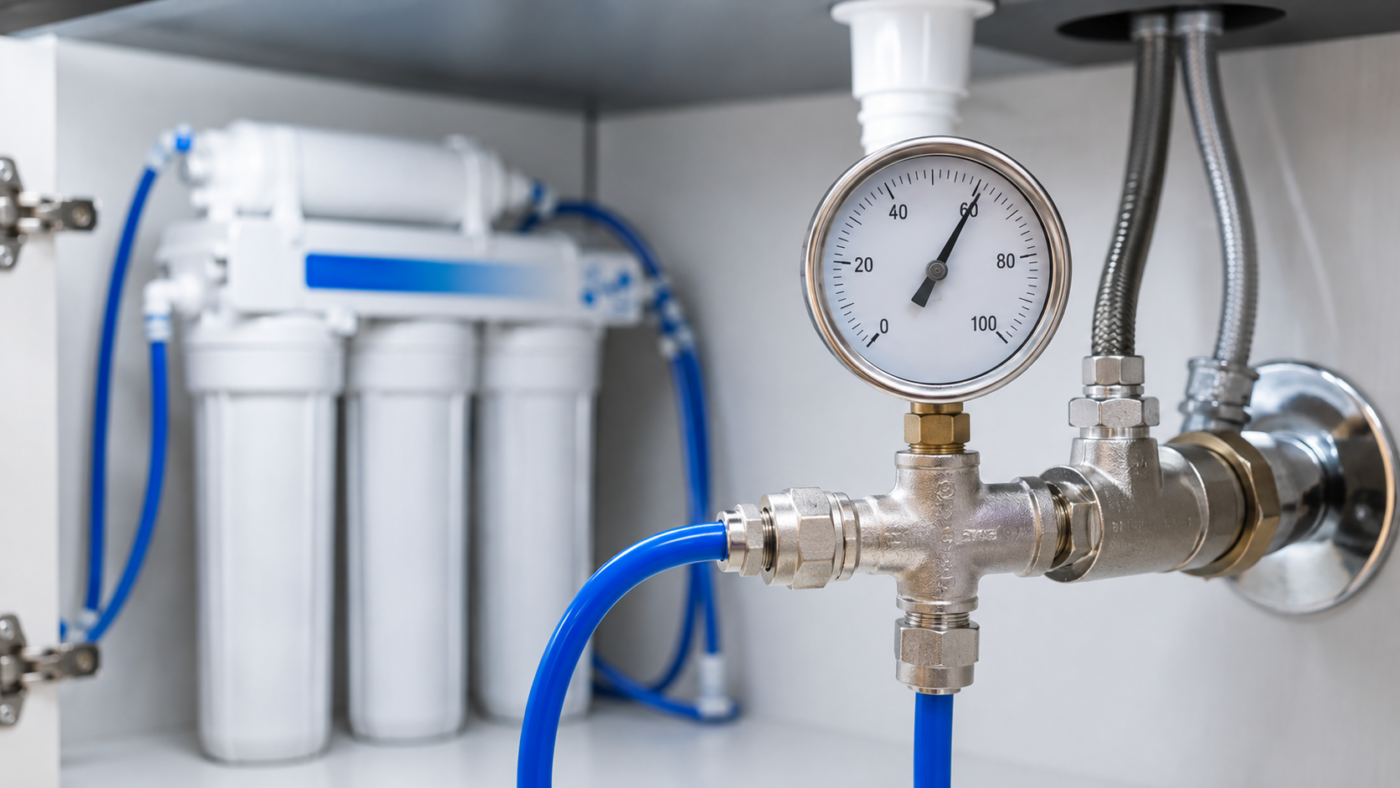
Filling a glass takes minutes, the tank never seems to fill and the unit runs almost without stopping. The first thought is usually the same: “the unit has broken down.” A service is called, the filters are checked, and the conclusion is usually this — there is no fault in the unit; the problem is with the water pressure going into the system.
This guide is diagnostic. We take up step by step why pressure is so decisive in reverse osmosis systems, what signs a shortfall shows, and how to tell whether the problem comes from the pressure, from a blocked filter, from the tank or from the membrane.
Why Does Water Pressure Matter So Much in a Purifier?
Reverse osmosis systems work on pressure; a certain driving force is needed for water to pass the membrane. When the water pressure falls, treated water production slows, the tank fills late and the waste water ratio rises. Pressure, then, is a question not only of speed but of efficiency.
That is a direct consequence of how the system works. The membrane does not pass water of its own accord; it needs a force to push it through. When that force is sufficient the water passes the membrane and heads for the treated line; when it falls short, most of the water heads for the concentrate line instead.
The user sees the result in two ways: production slows and waste water rises. Both come from the same cause. A water pressure problem, therefore, feels like an equipment failure but is really a problem with the working conditions.
For a general framework on running domestic treatment systems in the right conditions, the US Environmental Protection Agency’s guide to home water treatment can be consulted.
Reverse Osmosis Works on Pressure: The Basic Logic
In reverse osmosis, water is passed through a semi-permeable membrane under pressure. Because the natural osmotic pressure has to be overcome, the system needs a certain working pressure. Where that threshold is not met the membrane cannot make the separation expected; production falls and most of the water is sent away as concentrate.
It is worth recalling the mechanism briefly. In nature, water moves from the dilute side to the concentrated side to balance the difference. Reverse osmosis turns that flow around, and to do so it applies a force from outside. The name of that force is pressure.
When the pressure is sufficient, two things happen at once. First, the water passes the membrane; second, the flow at the surface stays live and sweeps away the salts held back. When the pressure falls, both functions weaken: production slows and build-up at the surface accelerates.
Most users do not know about that second effect. Low water pressure does not only make things slow; it also sets the stage for the membrane tiring faster. We explained the whole mechanism in our how reverse osmosis works article.
Every unit has a working range, and that range is stated in its manual. Run below it, the system does not give the performance expected; that is not a defect but a design condition.
The Signs of Low Water Pressure
The most common signs are these: a thin, weak flow from the tap, a tank that does not fill for days, a unit running almost constantly, an increase in the waste water flow and a noticeable change in the taste of the treated water. Where these signs appear together, the pressure should be checked first.
Recognising the signs is the first step of the diagnosis. The following point strongly to low pressure:
- Weak flow: The water from the treated tap has thinned and filling a glass takes longer.
- The tank does not fill: On systems with storage the tank does not fill for hours or even days.
- Constant running: The unit keeps trying to produce and the sound never stops.
- Rising waste water: The flow to drain has increased markedly.
- A change in taste: Because efficiency has fallen, the character of the treated water can change.
- A short burst of flow: When the tap is opened water comes for a while, then weakens quickly.
That last item is an important clue and usually points to the tank. If the water comes normally at first and weakens within a short time, the problem may be less about the inlet pressure than about the air pressure in the tank. We take that distinction up in a later section.
The Causes of Low Pressure
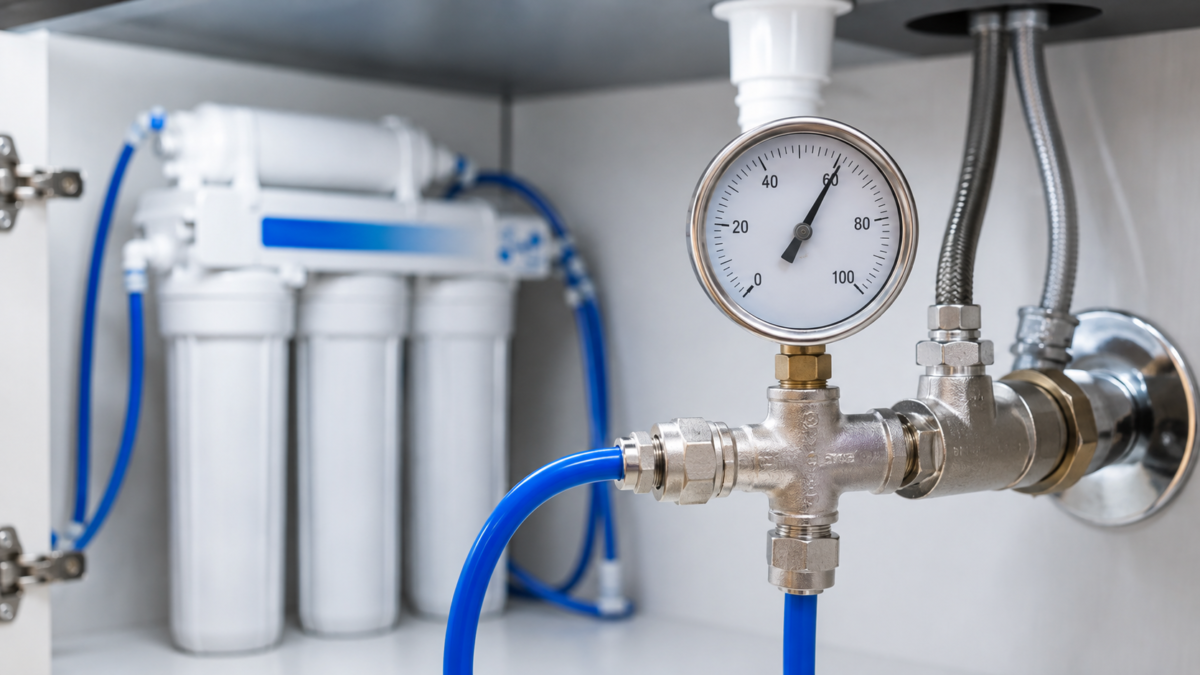
The causes fall into two groups: outside the unit and inside it. A shortfall from the mains, the height difference on upper floors and plumbing problems make up the first group. Blocked pre-filters, a partly closed valve, a crushed hose, a tired membrane and the tank air pressure are the causes on the unit side.
That distinction is the backbone of the diagnosis. The table below matches what you observe with the likely cause:
| Symptom | Likely Cause | Where to Look |
|---|---|---|
| Every tap in the house is weak | From the mains or the plumbing | Outside the unit: the main line, height difference |
| Only the treated tap is weak | A problem on the unit side | Filters, valve, hose, tank |
| Production slowing over time | The pre-filters are blocked | The sediment and carbon stages |
| A sudden and complete stop | A partly closed or closed valve | The position of the inlet valve |
| A restriction at one particular point | A crushed or kinked hose | The hose route inside the cupboard |
| Production low, TDS risen | The membrane may be tired | Membrane stage |
| Short flow, quick weakening | The tank air pressure has dropped | The pressure tank |
For users on upper floors, the height difference is a heading of its own. Even where the mains pressure is sufficient at ground level, it falls as you go up; that is not a defect of the plumbing but a physical fact. In that case the choice of unit should be made accordingly from the start.
Blocked pre-filters are the most common cause on the unit side. As the stages fill, the resistance to flow rises and the water pressure reaching the membrane falls. The problem is then not in the mains but in the maintenance.
Check These First: A Simple Diagnostic Order
A correct diagnosis works from the easy to the hard: first the valve position, then the hose route, then the age of the filters, then the other taps in the house, and last the tank and the membrane. Followed in that order, most problems are identified without needing a service call.
The checks below are at the level of looking things over and checking a valve; they call for no work on electrical components or on the pressurised line:
-
Is the Inlet Valve Fully Open?
Check that the quarter-turn valve feeding the unit is fully open. A valve left half open after cleaning or maintenance is the most commonly overlooked cause.
If that is the problem: open the valve fully and watch the flow again. -
Is Any Hose Crushed?
Check by eye that the hoses inside the cupboard are not sharply kinked, crushed under something or stretched tight.
If that is the problem: ease the hose route and straighten the kink. -
When Were the Filters Changed?
Consider how long it has been since the pre-filters were changed and how heavily they have been used. Darkening in a clear housing makes saturation obvious.
If that is the problem: renew the stages and measure the flow again. -
How Are the Other Taps in the House?
Open the ordinary taps in the kitchen and bathroom. If the flow is weak at those too, the problem is not in the unit but in the plumbing or the mains.
If that is the problem: the plumbing and the mains pressure should be assessed. -
Does the Water Weaken Quickly?
If the flow comes normally for a few seconds when the tap is opened and then drops sharply, there is a good chance of a problem on the tank side.
If that is the problem: the pressure tank should be checked by technical service. -
Is Production Low and the Quality Poor Too?
If the flow has slowed and the reading on the treated water has risen as well, the membrane stage should be assessed.
If that is the problem: the state of the membrane should be checked and renewed if necessary.
These checks are at the level of looking things over and checking a valve position. Removing the pressure tank, working on the air pressure, connecting a pump and anything involving electrical components should be done by an authorised technical service.
The value of that order is that it prevents unnecessary expense. Users who have replaced a membrane because of a half-closed valve are not rare. Working from the easy to the hard saves both time and money.
Is the Problem in the Unit or in the Plumbing?
The most practical way to tell is by comparison. If the flow is weak at the other taps in the house too, the problem comes from the plumbing or the mains. If only the treated tap is weak, the problem is on the unit side. That single check halves the field of diagnosis.
Why does that distinction matter so much? Because the two scenarios point to completely different solutions. Where the shortfall comes from the plumbing, working on the unit achieves nothing; where the problem comes from the unit, fitting a booster set is an unnecessary investment.
Weakness throughout the house
A general shortfall arising from mains pressure, height difference or the building’s plumbing.
- The shower and kitchen tap are weak too
- More noticeable on upper floors
- It can improve at certain hours
- The answer lies in a booster set or the plumbing
Only at the treated tap
The other taps work normally while only the treated water line is weak.
- A blocked pre-filter is likely
- A partly closed valve or crushed hose
- A tank air pressure problem
- The possibility of a tired membrane
Where the shortfall comes from the plumbing, the answer lies outside the unit. A booster set for the building or a change to the plumbing may be needed; that is a matter for a plumbing specialist to assess. On the unit side, the answer is either maintenance or a suitable pump build.
There is an in-between scenario too: the mains pressure may be borderline. While the other taps work “well enough”, it may fall short for the membrane. In that case the water pressure is acceptable for the plumbing but not sufficient for the unit; the answer is a pump at the unit inlet.
The Difference Between Pumped and Unpumped Units
Where the mains pressure is sufficient, unpumped units offer a quiet, economical solution needing no electricity. Where the pressure is low or varies through the day, a pumped model is needed. Otherwise production slows and treatment efficiency falls below expectations.
This is the most decisive but most often skipped criterion in choosing a unit. A user who picks an unpumped model because of the price difference starts having problems quickly if the pressure falls short.
| Criterion | Unpumped Unit | Pumped Unit |
|---|---|---|
| Working Condition | Sufficient mains pressure is needed | It works at low pressure too |
| Electricity | Not needed | A socket connection is needed |
| Noise | It runs quietly | The running sound is audible |
| Production Rate | It depends on the pressure | It is steadier |
| Waste Water | It rises when the pressure falls | It stays more balanced |
| Where It Suits | Homes where the pressure is sufficient | Upper floors, low-pressure areas |
Where the pressure is sufficient, an unpumped model is an advantage in every respect: fewer components, less chance of failure, quiet running. But at a borderline pressure those advantages lose their meaning; because the unit cannot produce, even having it comes into question.
In homes with low pressure the right choice is a pumped water purifier. We took up which criteria are assessed in choosing a unit in our unit selection guide.
Let’s establish the right build for a low-pressure problem
You can look at the pump and system options suited to your mains pressure and the build of your unit.
See the Pump OptionsWhat Does a Booster Pump Do?
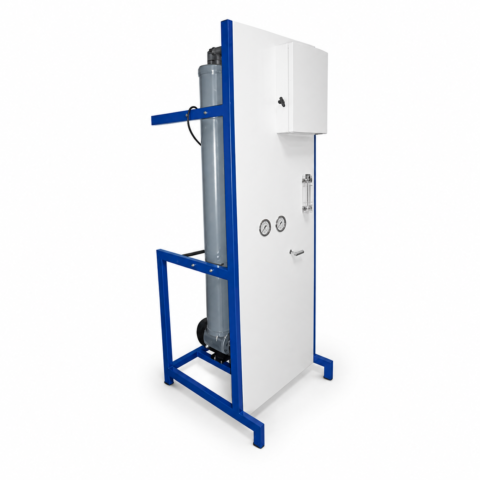
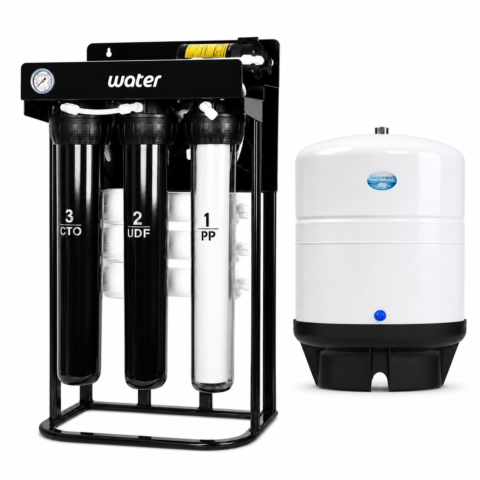
A booster pump raises the pressure at the unit inlet so that the membrane can work efficiently. Once there is enough driving force, treated water production rises, the tank fills faster and the waste water ratio improves. In homes with low pressure, therefore, a pump is not an accessory but a necessity.
The pump’s job can be summed up in one sentence: to create the condition the membrane needs. When the mains cannot provide it, the pump closes the gap and the system starts working as it was designed to.
It brings the following concrete benefits:
Higher Production
More water passes the membrane; the tank fills markedly faster.
Better Efficiency
At sufficient pressure the separation is more effective; the outlet quality becomes steady.
A Balanced Waste Ratio
The proportion going to the concentrate line improves compared with the low-pressure situation.
Protection for the Membrane
The flow at the surface stays live; build-up slows and the module lasts longer.
The choice of pump follows the capacity of the unit. For standard domestic systems, compact RO pumps are enough, while on installations with a higher flow higher-capacity pump options.
One warning is needed here: a pump is not the answer to a blocked filter or a spent membrane. Trying to cover a maintenance problem with pressure does no more than delay the real issue. A pump makes sense only where there is a genuine shortfall of water pressure.
Fitting a pump involves an electrical connection and work on a pressurised line. It should be carried out by an authorised technical service and not attempted by the user.
Tank Pressure: The Cause That Gets Missed
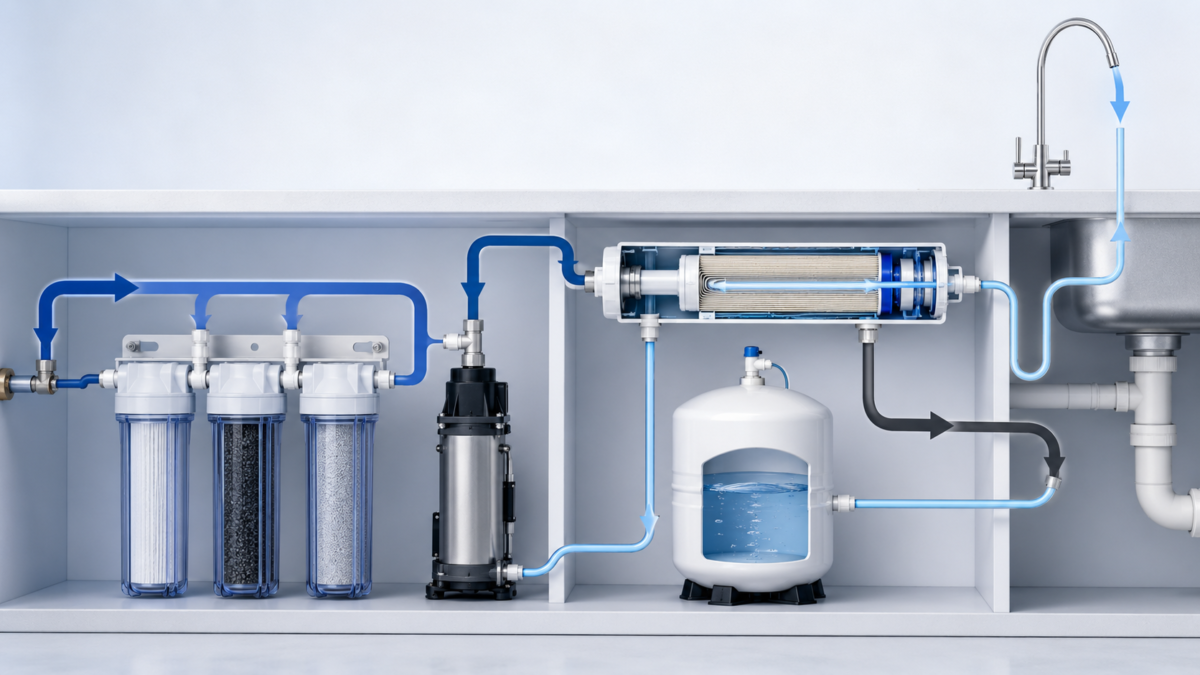
In systems with storage there is a cushion of air inside the tank, and that is the force pushing the water towards the tap. If that air pressure falls over time, the flow at the tap is weak even though the tank is full. The sign is typical: the water runs normally for a short while, then stops quickly.
This is the cause most often missed in a diagnosis. When the user lifts the tank and feels its weight, they conclude it is “full” and look for the problem elsewhere. Yet the tank may be full while the force to push that water out has weakened.
The distinctive signs of a tank pressure problem are these:
- A short burst: When the tap is opened the water comes normally for a few seconds, then drops noticeably.
- A small amount of water: Although the tank looks full, the amount of water that can be drawn has fallen.
- A heavy tank, a weak flow: The tank is heavy but the water inside it struggles to come out.
- Intermittent flow: The water comes, stops and comes again in an irregular pattern.
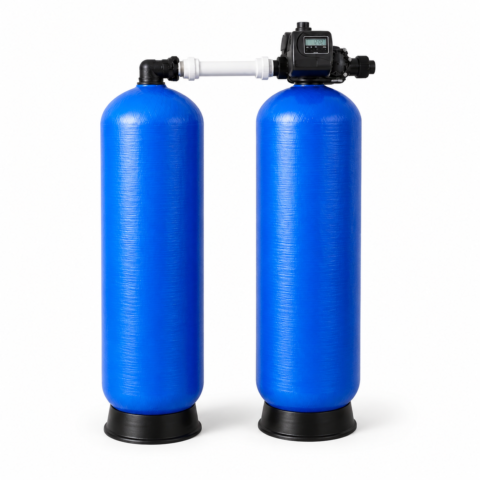
When these signs appear the tank should be assessed. But measuring and adjusting the air pressure is a technical operation; removing the tank and setting the pressure should be done by an authorised service. Where the tank has to be renewed, a water treatment tank.
An important distinction: where the problem is the tank, production can be normal. The unit produces water and the tank fills; the problem is only in getting that water to the tap. A tank problem should therefore not be confused with an inlet water pressure problem.
Pressure Loss from Filters and the Membrane
Pre-filters that fill over time raise the resistance to flow and lower the pressure reaching the membrane. A tired membrane both reduces production and spoils the outlet quality. These two situations create the effect of low pressure even when the mains pressure is normal.
This section is critical for users who say “my mains is fine but my unit is slow”. The problem is not always on the inlet side; resistance inside the system produces the same result.
When the sediment filter fills, water passes with difficulty; when the carbon stage blocks, the effect is the same. As the stages reach saturation, the pressure reaching the membrane falls step by step. The user notices it as production gradually declining.
We took up how to plan a maintenance routine and how to read the signs in our filter change guide. When the time to change comes, the whole line can be refreshed with a spare filter set suited to the stage layout.
On the membrane side, the telling indicator is the outlet quality. If only production has slowed, the problem is usually in the pre-filters or the pressure; if production has fallen and the reading has risen as well, the membrane should be assessed. We explained the structure of the module and the mechanism of ageing in detail in our membrane filter article.
A Blocked Sediment Filter
It raises the resistance to flow; production slows step by step.
Saturated Carbon
It both creates resistance and stops protecting the membrane from chlorine.
A Tired Membrane
Production falls and the reading on the outlet water rises permanently.
A Crushed Hose
A restriction at a single point lowers the flow of the whole line.
High Pressure Can Be a Problem Too
A pressure problem does not always come from a shortfall. Excessively high pressure can strain hoses and connections, raise the risk of leaks and tire the equipment. In such cases fitting a pressure reducer on the line is considered.
This section calls for a balanced view. Higher pressure is not always better; every system has a working range, and the upper limit of that range matters as much as the lower one.
The consequences high pressure can bring are these:
- Strain on connections: Hoses and fittings are left under constant high load.
- The risk of leaks: Dripping can start at the connection points over time.
- Equipment fatigue: Valves and seals can wear out earlier than expected.
- Water hammer: Opening and closing suddenly can create a hammer effect on the line.
The answer in that case is a pressure reducer fitted on the line. The water pressure is thereby brought into the unit’s working range, securing both efficiency and safety. Because it involves work on the plumbing, it should be done with technical support.
The aim is not the highest pressure but the working range stated in the unit’s manual. Below that range production falls; above it the equipment is strained. The right result comes from the balance.
Frequently Asked Questions
Will my unit not work if the water pressure is low?
It will work, but its efficiency falls. Production slows, the tank fills late and the waste water ratio rises. Because the flow at the membrane surface also weakens, build-up can accelerate. The system does not stop, but it does not give the performance expected.
My unit is producing slowly — what should I check first?
In order: is the inlet valve fully open, is any hose crushed, when were the pre-filters changed, and how are the other taps in the house? Those four checks reveal most problems without needing a service call.
How do I tell whether the problem comes from the plumbing or the unit?
Open the other taps in the house. If the flow is weak at those too, the problem comes from the plumbing or the mains. If only the treated tap is weak, the problem is on the unit side; the filters, valve, hose or tank should be assessed.
Will fitting a pump solve every problem?
Only if the problem really is a shortfall of pressure. Where a blocked filter or a tired membrane is involved, a pump masks the real problem rather than solving it. Diagnose first, then decide on a pump.
The tank is full but the water comes weakly — why?
That usually comes from the air pressure in the tank having dropped. The tank is full of water but the force to push it to the tap has weakened. The sign is typical: the water runs normally for a short while, then stops quickly. The check should be done by technical service.
Is high pressure harmful?
Excessively high pressure can strain hoses and connections and create a risk of leaks. Every unit has a working range; where it is exceeded, fitting a pressure reducer on the line is considered.
I live on an upper floor — what should I do?
Because of the height difference, pressure naturally falls on upper floors. The choice of unit should then be made on a pumped model from the start, or a booster pump suited to the existing system should be added. The decision follows the measured inlet pressure.
Conclusion
A large part of the performance complaints about purifiers comes not from a fault but from the working conditions. When the water pressure falls short, production slows, the tank fills late and the waste water ratio rises; the system is not broken, it is simply not working in the conditions it needs. The right approach is to put the diagnosis in order: first the valve and the hoses, then the age of the filters, then a comparison with the other taps in the house, and last the tank and the membrane. Followed that way, most problems are solved with a simple intervention. Where there is a genuine shortfall of pressure, the answer is a booster pump; where the pressure is too high, a pressure reducer comes in. The aim is always the same: to reach the working range stated in the unit’s manual.
Let’s establish the right answer to your pressure problem together
For a diagnosis, a pump choice or a tank check, you can get in touch with the Water Point technical service team.
Discover the Treatment Solutions