
Freight delivery
New
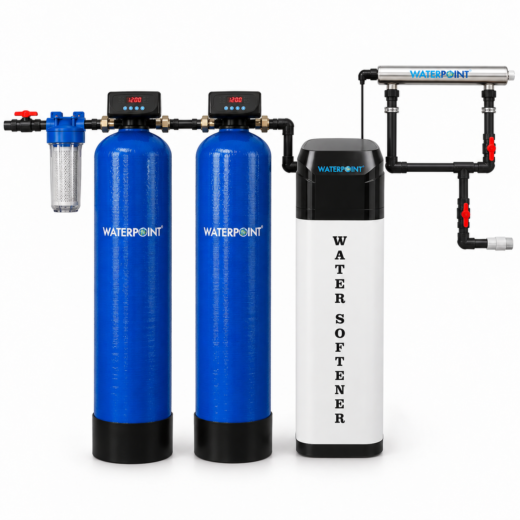
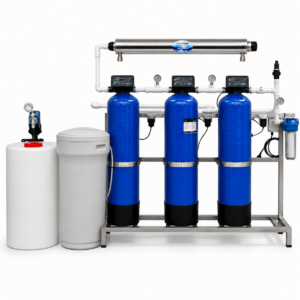
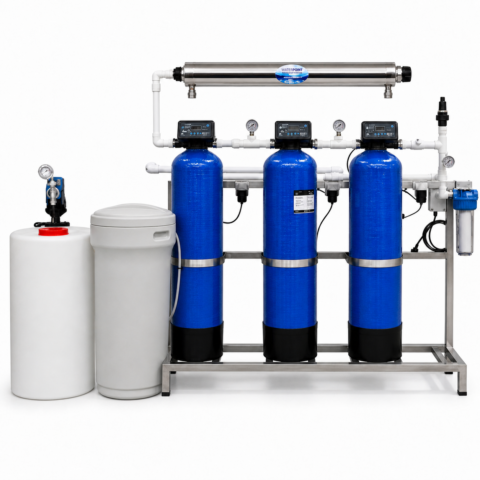
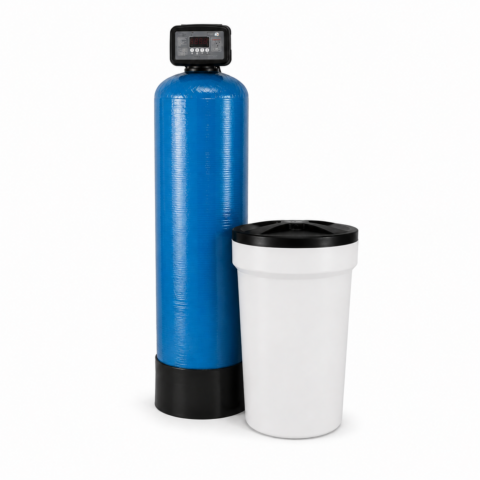
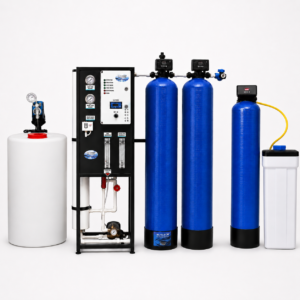
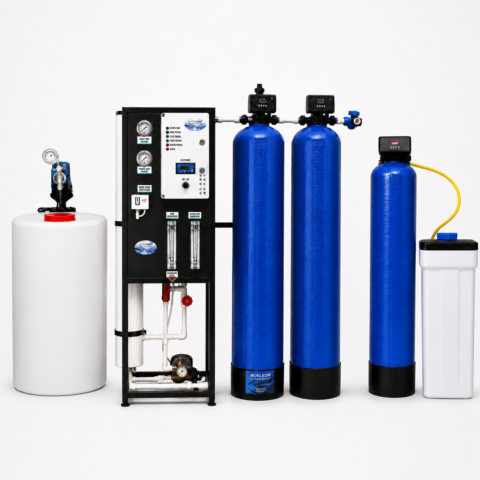
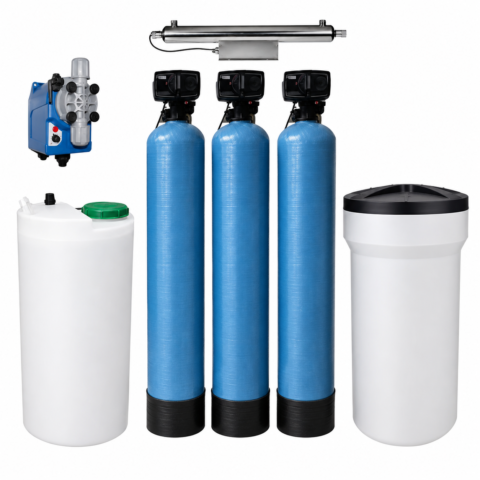
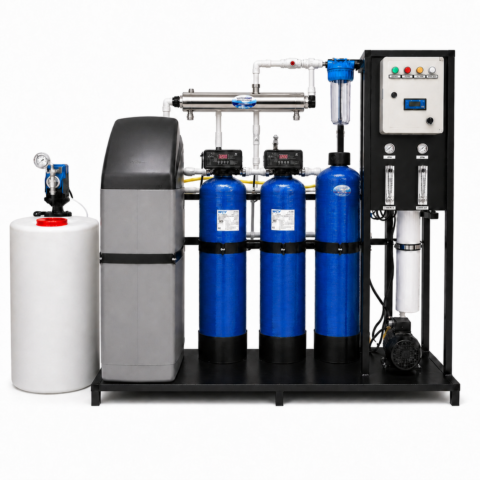
Industrial Water Treatment System 5-10 Tonnes/Day – Sand, Carbon, Softening and UV
5 – 10 Tonnes
Premium Cationic
₺117,644.16
VAT included

Categories
Solutions
Process water, line feed and sizing by flow rate.
Systems and units Industrial Water Treatment Read the guideTreatment that stops limescale and corrosion before they reach the boiler.
Systems and units Water Softeners Read the guidePure water of low conductivity and repeatable quality.
Systems and units Pure Water Systems Read the guideRemoving the salts and sediment that clog drip lines.
Systems and units Well Water Treatment Read the guideThe right hardness for equipment life and drink flavour.
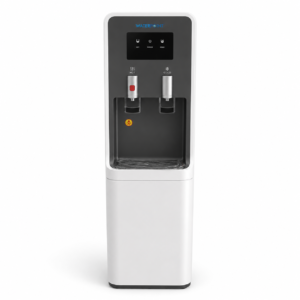
Systems and units Filtered Water Dispensers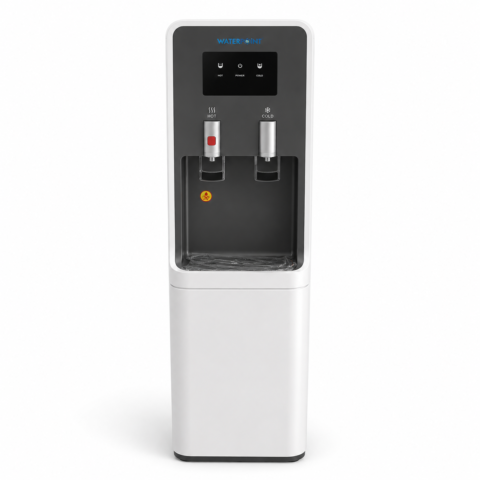 Water Point Filtered Water Dispenser
₺63,723.92
Water Point Filtered Water Dispenser
₺63,723.92
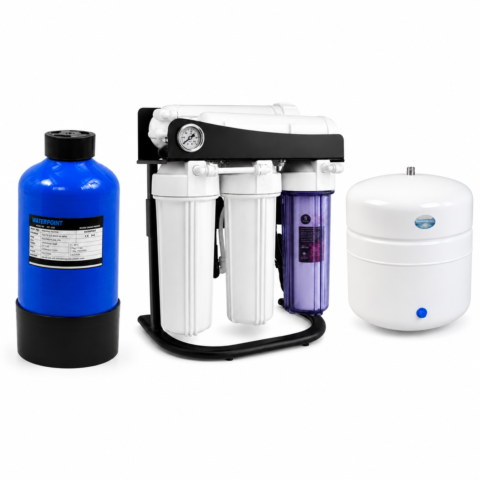
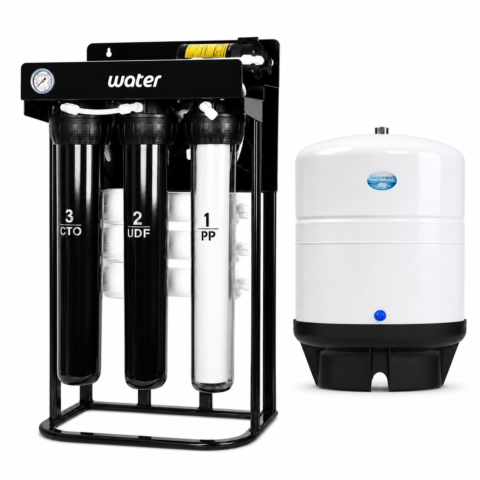 Restaurant Water Purifier, 500 GPD with 40 Litre Tank
₺49,018.40
Restaurant Water Purifier, 500 GPD with 40 Litre Tank
₺49,018.40
A main line that filters the water entering your plumbing at a single point.
Systems and units Whole House & Building Inlet Systems Read the guideA staged system for iron, manganese and turbidity.
Systems and units Well Water Treatment Read the guideLow-conductivity rinse water for spot-free drying.
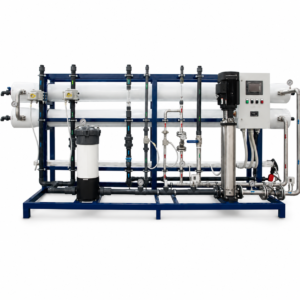
Systems and units Reverse Osmosis Systems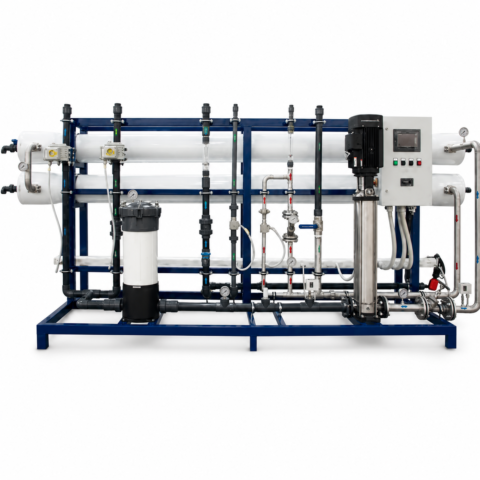 95 Tonne Reverse Osmosis System
₺980,368.00
95 Tonne Reverse Osmosis System
₺980,368.00
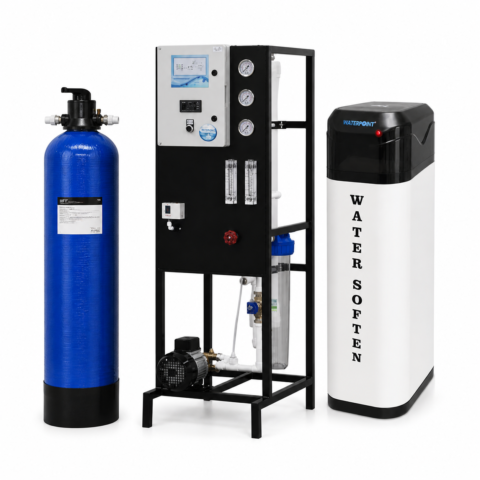 Industrial Deionised Pure Water Unit, 250 L/h
₺220,582.80
Industrial Deionised Pure Water Unit, 250 L/h
₺220,582.80
The problems hard water causes in hair and skin care.
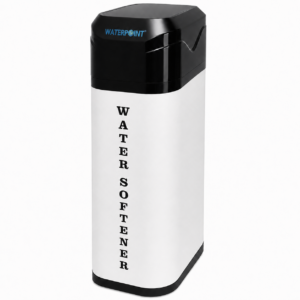
Systems and units Water Softeners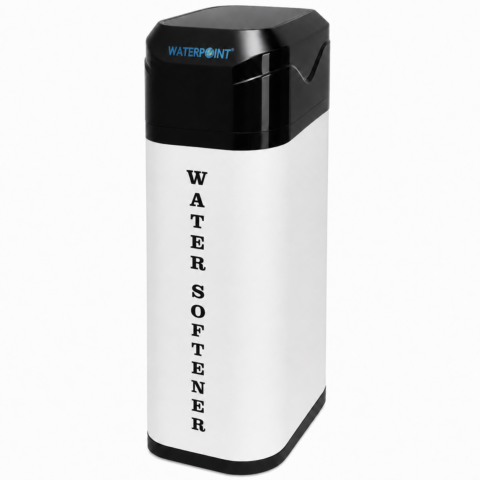 Maxi Cabinet Water Softener, 5 Tonnes/Day
Original price was: ₺49,018.40.₺34,312.88Current price is: ₺34,312.88.
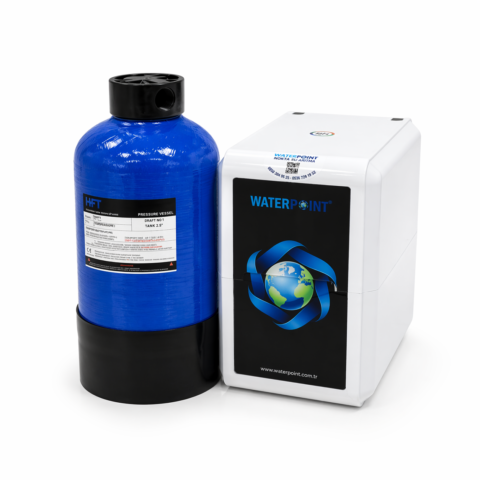
Maxi Cabinet Water Softener, 5 Tonnes/Day
Original price was: ₺49,018.40.₺34,312.88Current price is: ₺34,312.88.
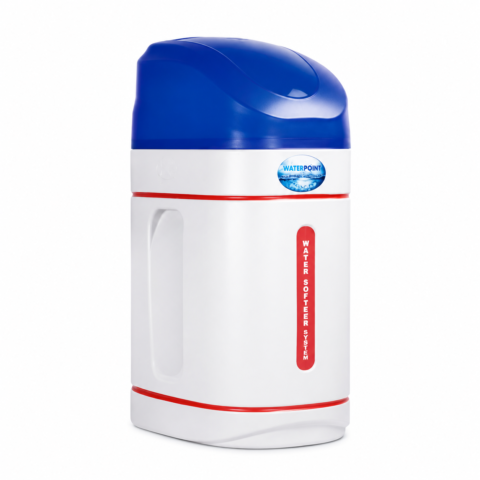 Mini Cabinet Water Softener, 2 Tonnes/Day
₺44,116.56
Mini Cabinet Water Softener, 2 Tonnes/Day
₺44,116.56
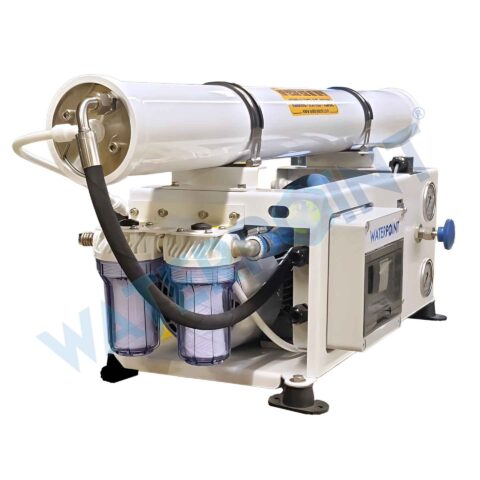
Drinking water from seawater with high-pressure reverse osmosis.
Systems and units Reverse Osmosis Systems Read the guideCompany
Product Category
UV water treatment units reduce microbiological risk by exposing water to ultraviolet light. They add no chemicals, they do not change the taste or the odour of the water, and they do not remove dissolved minerals. Their job is single and clear: to take away the ability of micro-organisms in the wat…
Filter
The daily treatment capacity stated by the manufacturer.
Not sure which one is right for you?
UV water treatment units reduce microbiological risk by exposing water to ultraviolet light. They add no chemicals, they do not change the taste or the odour of the water, and they do not remove dissolved minerals. Their job is single and clear: to take away the ability of micro-organisms in the water to reproduce.
Two things decide the outcome in UV treatment: where on the line the unit is placed, and whether lamp life is tracked. What UV systems do is set out here as plainly as what they do not do, because the most common disappointment comes from the wrong expectation.
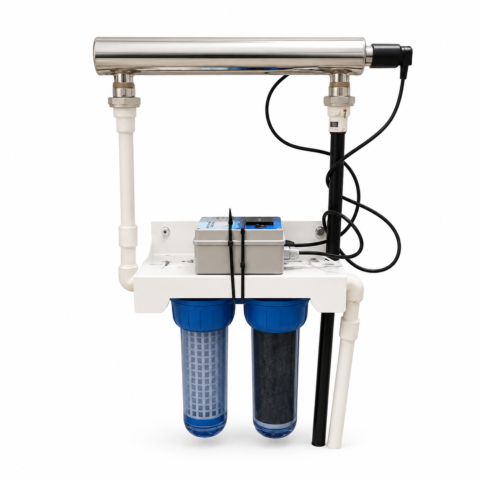
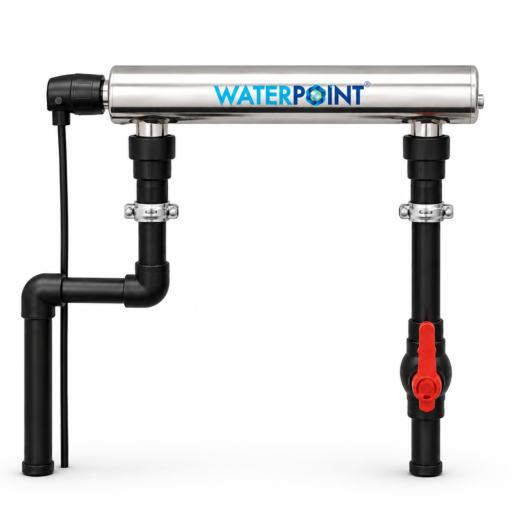
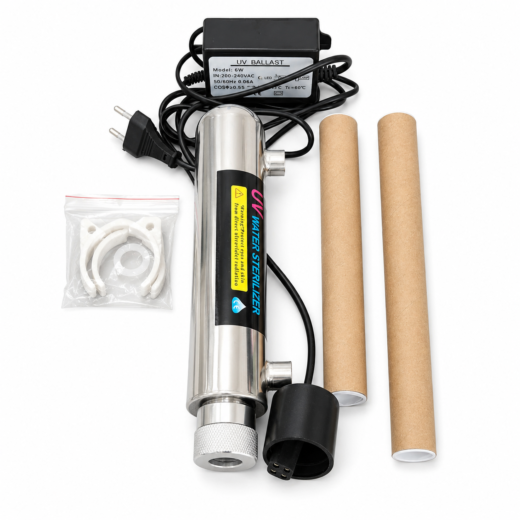
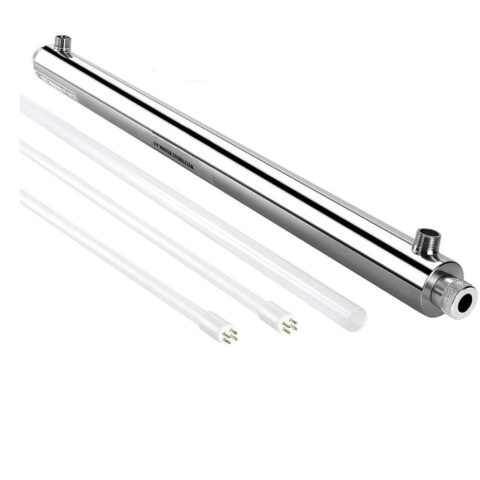
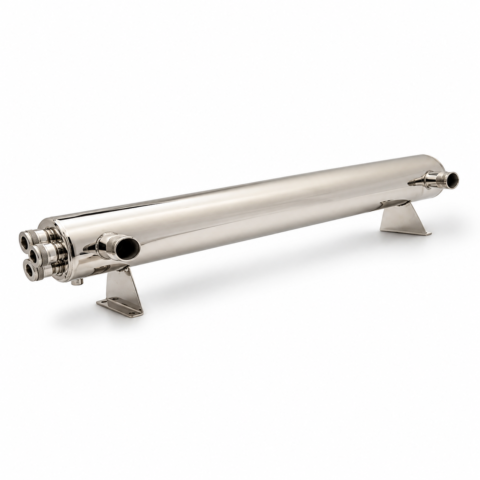
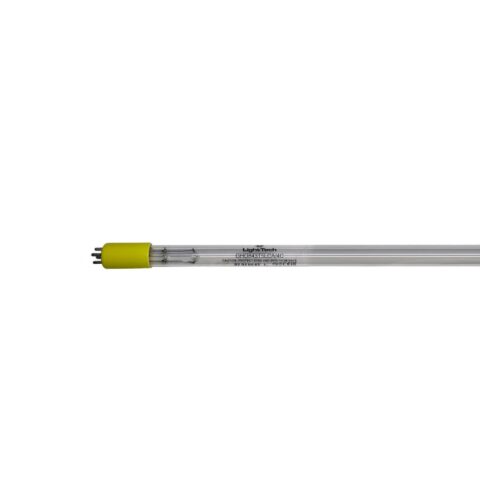
The system consists of an ultraviolet lamp positioned inside a chamber made of stainless steel or another suitable material. The lamp sits inside a transparent tube known as a quartz sleeve, so the lamp never touches the water directly while the light still passes into it.
As the water flows through the chamber it is exposed to ultraviolet light for a certain time. That exposure acts on the genetic material of micro-organisms and stops them reproducing. The process is a physical effect; nothing is added to the water and nothing is taken out of it.
Three factors decide how effective it is:
| Topic | UV Treatment |
|---|---|
| Microbiological risk | Reduces it. This is the reason the system exists. |
| Chemical addition | Adds none. Nothing passes into the water. |
| Taste and odour | Does not change them. It does not remove chlorine odour. |
| Hardness | Does not remove it. It does not solve a limescale problem. |
| Dissolved salts / TDS | Does not remove them. It does not lower conductivity. |
| Sediment and turbidity | Does not remove them; on the contrary, turbidity lowers UV performance. |
| Heavy metals | Does not remove them. |
| Lasting protection | Does not provide it. If re-contamination occurs on the line after the unit, it has no effect there. |
This table explains why a UV system is used not as a treatment solution on its own but as the last link in the chain. Turbidity and sediment must be removed first, and the UV stage must be placed at the very end.
In homes fed directly from a steady mains supply with no storage tank, UV is usually not necessary. The decision must be made by assessing the point of use and the water source.
Where the UV unit sits on the line decides its effectiveness directly. A wrongly placed UV unit does not give the expected benefit even though it appears to be running.
One point needs underlining: UV provides no lasting protection. If the water leaving the unit is at risk of re-contamination further down the line, the effect of the UV does not continue past that point. That is why keeping the line clean and leaving no dead legs matters.
UV units are selected by flow rate. As the volume of water passing through the system rises, contact time shortens and the dose received falls. For that reason the unit must be selected for the line's highest instantaneous flow rate; a selection based on average flow falls short at moments of heavy use.
The headings taken into account in the selection:
UV lamps are replaced not because they stop lighting, but because their light output has fallen. While the lamp appears to go on working, its effectiveness drops step by step. This is the maintenance item most often skipped on UV systems.
Lamps and quartz sleeves are within Water Point's spare part range.
| Component | Work to Be Done | Frequency |
|---|---|---|
| UV lamp | Replacement | Usually once a year |
| Quartz sleeve | Cleaning, replacement if needed | At lamp replacement |
| Pre-sediment filter | Cartridge replacement | According to raw water quality |
| Chamber and seals | Leak-tightness check | At scheduled service |
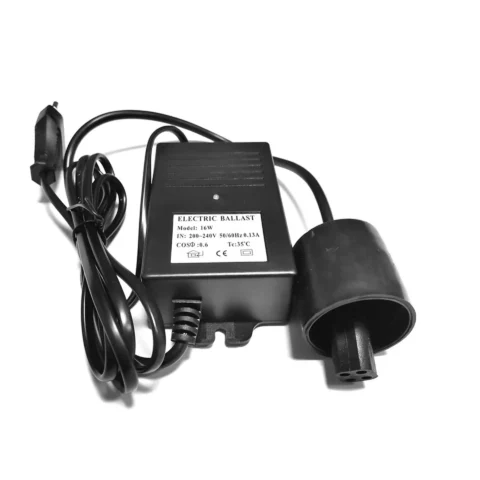
| Ballast / electronic unit | Operation and alarm check | Scheduled |
| Life counter | Reset after replacement | At every lamp replacement |
On simple UV units you can see whether the lamp is lit, but not how much light it is giving out. This is the largest source of uncertainty: the lamp may be lit while its effectiveness has already fallen.
The methods used to reduce that uncertainty:
On residential applications an operating hour counter is usually enough. On critical lines such as food production, sensor-equipped systems and an alarm arrangement must be considered.
UV units run on electricity and treatment stops during a power cut. This is the system's most important operating constraint.
The performance of UV lamps depends on operating temperature. In very cold water the lamp may not reach its ideal operating temperature and its light output falls. This is seen above all in the winter months and on cold well water.
Other factors that lower effectiveness:
This is why the filtration that comes before the UV stage matters as much as the unit itself. On a system with weak pre-treatment the UV exists on paper but in practice does not give the expected benefit.
Writing the lamp replacement date on the unit is the simplest and the most effective way of tracking it. On systems without a counter, that note stops the replacement being forgotten.
UV systems have a low running cost compared with the other treatment stages. The main items are these:
Having no chemical cost and leaving the taste of the water untouched is the most practical side of UV systems in operation. Against that, the lamp replacement must never be allowed to slip if the system is to remain worthwhile.
Once these headings are settled, the right capacity is chosen and nothing is paid for hardware that is not needed.
The two applications work on the same principle, but their scope and their sizing are entirely different. What decides the choice is not the unit itself but the area to be protected.
Under-sink UV covers only the drinking water point in the kitchen. Its flow rate is low, it has a compact chamber and it is usually placed as the final stage of a reverse osmosis system. Its advantages are low cost and easy installation; its limit is that it does not cover the bathroom, the laundry and the other points of use.
Building inlet UV sits at the point where water enters the structure and covers the line feeding the whole installation. Its flow rate is high, its chamber is large and it is usually configured together with pre-filtration. It is chosen in buildings on well water or with a storage tank. Its initial cost is higher, but it provides the protection from a single point.
The question to ask when deciding is this: where is the risk? If added assurance is wanted for drinking water alone, the under-sink solution is enough. If the supply is well water, or if water stands in a tank, the building inlet application is the sounder arrangement.
In the right conditions the chamber and the electronic unit of a UV system run for many years; the components with a real service life are the lamp and the quartz sleeve. The headings that decide the long-term health of the system are these:
When these headings are followed, the UV stage becomes one of the least troublesome links in the treatment chain. When they are neglected it turns into a component that appears to run and delivers nothing; that is why the tracking matters more than the unit itself.
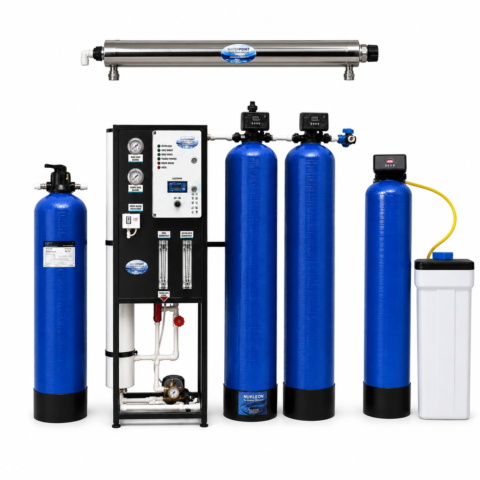
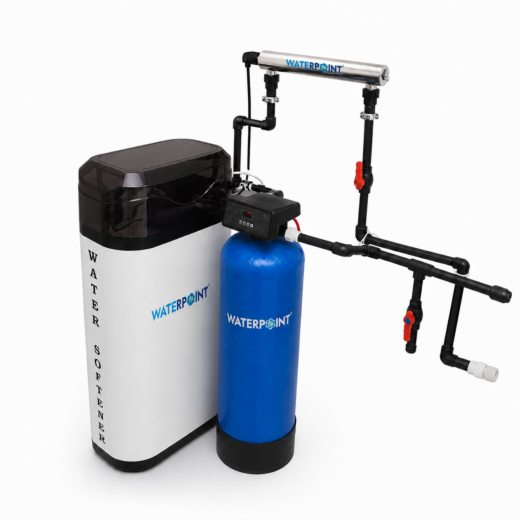
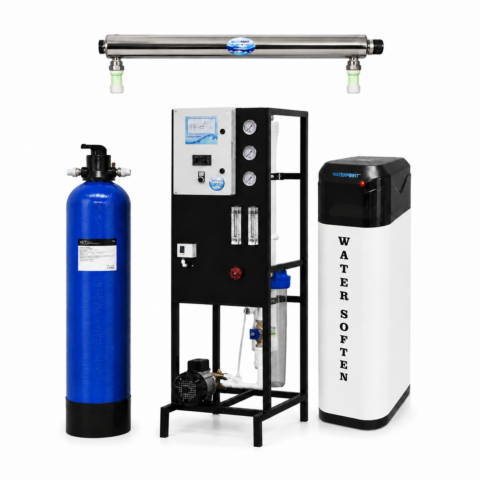
UV is rarely used on its own; it is usually added as the last link of an existing treatment chain. The common combinations are these:
Which combination is needed is decided from the raw water analysis. Adding a stage that is not needed raises both the initial outlay and the running cost for nothing; a missing stage lowers the performance of the UV. The decision must therefore come from the measurement result, not from a product catalogue.
UV and chemical approaches are often compared, and one is thought of as standing in for the other. Their working logic, however, is different. UV acts only on the water passing through the unit, at the moment it passes; it leaves no lasting trace on the line. Chemical approaches stay in the water for a while and can carry their effect along the line, but they bring a change in taste and odour and they need dosing to be managed.
In practice this difference means the following: where the distribution line is long and complex, a UV unit placed at the inlet alone does not cover the whole of it. In such cases the UV needs to be placed close to the point of use, or the line itself needs to be kept clean. On short lines and in arrangements serving a single point, UV is a very practical solution.
Chosen in homes on well water or with a storage tank in the installation. Under-sink models protect the drinking water point alone, while building inlet models take on the line feeding the whole installation. In detached houses on well water the UV is placed as the last link of the pre-filtration and softening chain.
Used as an additional barrier at points such as water going into the product and the ice machine feed. The flow rate calculation matters especially here; consumption concentrates during service hours and the unit must be selected for peak flow.
At seasonal facilities the system can stand idle for months. When it is recommissioned after a long wait, UV gives added assurance. At facilities of this kind the lamp's operating hours should be checked at the start of the season.
On high flow rate lines, industrial UV units with a stainless steel chamber are used. They are placed as an additional barrier on lines after reverse osmosis, at storage tank outlets and on process water feeds.
There are different approaches to reducing microbiological risk, and each has its own limit.
In practice these methods are usually not alternatives to one another but complements. Which combination is needed is decided from the raw water analysis and the intended use.
At a business, the most critical side of a UV stage is its continuity. When the lamp reaches the end of its life the system appears to be running while its effectiveness has fallen; the replacement date must therefore be put on a calendar and one person must be made responsible for it. Keeping a spare lamp on critical lines removes the gap that can open up during the supply lead time.
At high flow rate facilities the unit must be selected for peak flow, and pre-filtration must be configured strongly to prevent the loss of performance that turbidity causes.
Water Point provides technical support covering installation, commissioning, lamp and quartz sleeve replacement, and fault response. For industrial systems there is a service network across Türkiye; for domestic units service is provided in İstanbul and the surrounding provinces (such as Kocaeli and Tekirdağ). The service charge is set by the work and the materials involved; nothing is charged without the customer's approval.

UV water treatment prices vary with the flow capacity of the unit, the chamber material and whether it is an industrial model. The prices below are the current list prices on the relevant product pages.
| Product | Price | Description |
|---|---|---|
| Ultraviolet Lamp | 3,921.47 TL | The spare lamp replaced at scheduled intervals on UV units. |
| Ultraviolet Adaptor | 5,882.21 TL | The electronic adaptor that supplies the UV lamp. |
| Under-Sink UV Unit | 7,352.76 TL | A compact UV unit giving an additional barrier at the kitchen drinking water point. |
| Building Inlet Ultraviolet Water Treatment Unit | 24,999.38 TL | A UV treatment unit at a building or flat inlet, covering the whole line. |
| Under-Sink Ultraviolet Water Purifier | 26,960.12 TL | An under-sink system with UV treatment added to the reverse osmosis stages. |
| Ultraviolet Unit | 31,861.96 TL | A chambered UV treatment unit for medium flow rate lines. |
| Industrial Ultraviolet Unit | 73,527.60 TL | A UV system with a stainless steel chamber for high flow rate industrial lines. |
| Villa Inlet Water Treatment System | 107,840.48 TL | A central treatment system for detached buildings that can include a UV stage. |
| Well Water Treatment System | 147,055.20 TL | A system that completes sediment, iron and hardness removal on well water with a UV stage. |
| Industrial Well Water Treatment System | 343,128.80 TL | A multi-stage industrial well water treatment solution. |
The prices are for the standard configuration; they vary with flow capacity and chamber type. Whether a UV stage is needed and at what capacity is decided from the water source and the point of use.
For the right UV solution and a firm price, you can reach us on 0850 304 95 25 or at [email protected].
Let's settle on the right system together
If the unit is purchased from us, the site survey is free of charge; if only a survey and measurement are wanted, a survey fee of 2,000 TL applies. Capacity and treatment stages are set from the measurement result.
0850 304 95 25Ask on WhatsAppSend an e-mailUV treatment is used to reduce microbiological risk, but how effective it is depends on the conditions. Water clarity, the contact time set by flow rate and the light output of the lamp all bear directly on the result. In turbid water the light cannot travel, which is why UV is always placed after pre-filtration. It also gives no lasting protection; if re-contamination occurs on the line after the unit, its effect does not continue.
No. UV treatment is a physical effect; nothing is added to the water and nothing is taken out of it. The taste and the odour of the water therefore stay unchanged. Against that, it does not remove problems such as hardness, sediment, chlorine and dissolved minerals either.
Usually once a year. The lamp is replaced not because it stops lighting but because its light output falls over time; even when it appears to be working, its effectiveness may already have dropped. During the replacement the quartz sleeve must be cleaned and the life counter must be reset.
No. UV addresses microbiological risk alone; it does not remove problems such as hardness, sediment, chlorine, heavy metals and dissolved salts. It is therefore used as the last link in the chain, after pre-filtration and whatever other stages are needed.
It is selected for the line's highest instantaneous flow rate. As flow rate rises, the time the water is exposed to the light shortens and the dose received falls. A selection based on average flow falls short at moments of heavy use.
It is the transparent tube that separates the lamp from the water; it lets the light pass into the water without the lamp touching it. Limescale and sediment build up on it over time. A fouled sleeve markedly reduces the effect of even a new lamp, which is why it is cleaned at the same time as the lamp is replaced.
Usually yes. Switching the lamp on and off frequently shortens its life, and while it is off the water passing along the line is not treated. For that reason UV systems are configured to run continuously.
A 2-year warranty applies to the units; misuse is outside cover. Consumables such as filters, membranes and resin are outside cover.
Questions? Talk to our specialist directly.
WaterAI