
Laundry Water Treatment: Limescale and Efficiency in Textiles
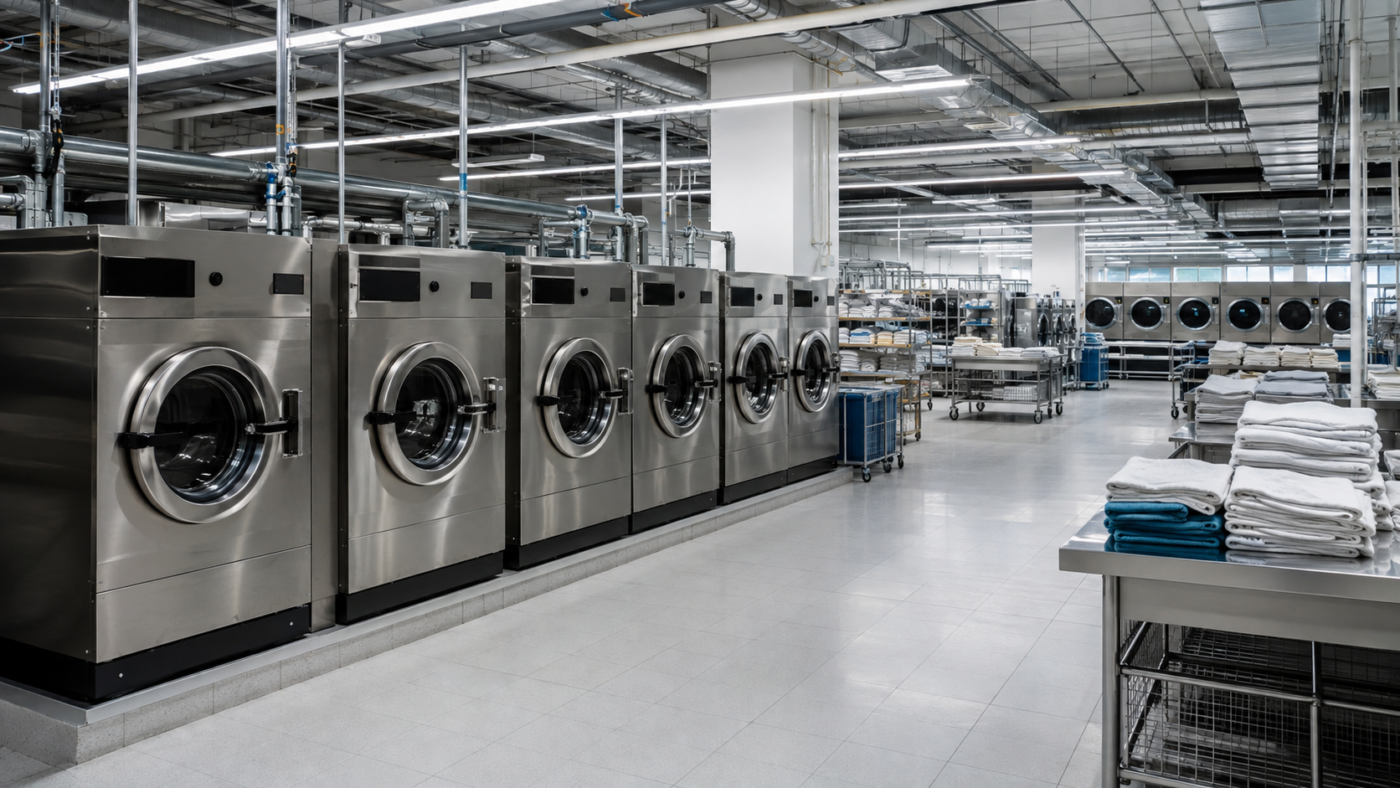
The chemical bill climbs a little every month, heating elements fail more often than expected, there is build-up in the steam boiler and unplanned stoppages disrupt production. The technical manager usually takes these items separately: talks to the chemical supplier, calls a service, plans boiler maintenance. Yet behind that picture there is often one common variable, and laundry water treatment comes up at exactly this point.
In this guide we take up three effects of water quality in an industrial laundry: limescale build-up on equipment, chemical and energy consumption, and repeatability of process. The aim is not to make claims about washing results but to show in measured terms how water affects running costs and the continuity of equipment.
Why Is Water Quality Decisive in a Laundry?
Water plays two roles in a laundry: it is the main component of the washing process and a working condition for the equipment. Hard water deposits limescale on heated surfaces, can raise consumption by lowering the performance of cleaning chemicals, and can lead to variability in washing results.
That dual role sets the subject apart from other business costs. In a laundry, chemicals are chosen carefully, the machine park is set up with care and programme times are optimised. Water, the most heavily used input of all, is meanwhile treated in most plants as something that is simply there.
Yet the minerals in the water leave a trace on every surface they touch. They build up in heated areas, interact with chemicals and can leave residue on the fabric after rinsing. All of these are measurable results with a calculable cost.
In a laundry water treatment assessment is therefore not a matter of comfort but a business decision. How often the equipment fails, how predictable chemical consumption is and how often there are stoppages all depend on this heading.
The relationship between water use in commercial sites and operating performance is taken up in official sources too; the US Environmental Protection Agency’s water use by facility type resource offers a general framework on water management in different types of site.
How Does Hard Water Affect the Washing Process?
The hardness ions in water interact with the active ingredients of detergents and cleaning chemicals. That interaction can reduce foaming and call for more chemical to be used to get the same result. Minerals left in the rinse water can also leave residue on the fabric.
This can be explained by basic water chemistry, and at industrial scale the effect is clearly felt. An increase in dose that goes unnoticed in a domestic machine shows in the annual budget of a laundry running all day.
The mechanism works like this: the calcium and magnesium ions in the water bind part of the active ingredients of the cleaning product. The part that is bound no longer performs its cleaning function; the amount left may not give the performance expected.
On the operator’s side the answer to that is a higher dose. When the expected result is not obtained the amount of chemical is raised, it becomes a habit, and consumption rises quietly. The problem is usually blamed on the product; the source, though, is the water.
The second effect is on the rinsing side. Minerals left in the rinse water can leave residue in the fabric fibres; that can lead to a need for extra rinsing and a rise in water consumption. The first aim of a laundry water treatment build is to remove those two effects.
Limescale in Industrial Washing Machines
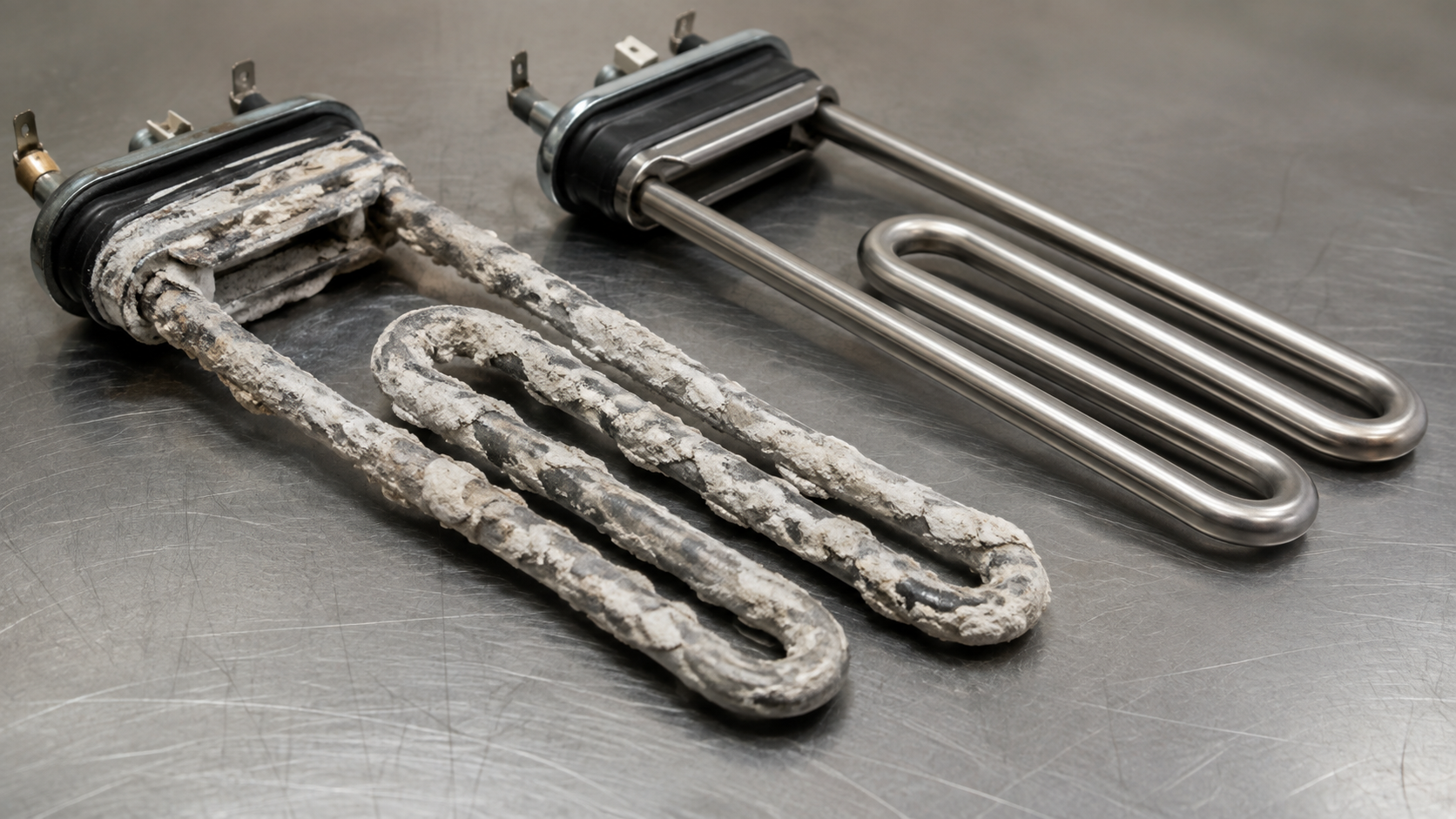
The calcium and magnesium in water precipitate on heated surfaces and form a layer of limescale. Because that layer lowers heat transfer, the machine reaches its target temperature later; the programme takes longer, energy consumption rises and the load on the heating element increases.
Industrial washing machines run all day and at high temperatures. Those two conditions create the most favourable environment for build-up; the process is markedly faster than in domestic use.
The second and more critical consequence of lost heat transfer is that the temperature of the heating element itself rises. When the heat cannot be transferred to the water, the element is strained; that accelerates material fatigue and raises the frequency of failures.
The points affected are these:
The Heating Element
The layer collecting on the surface lowers heat transfer; the load on the element rises.
Heating Time
Because the target temperature is reached later, the programme takes longer.
Energy Consumption
Longer running is needed for the same result; costs rise.
Water Lines
Build-up in the inlet and drain lines can narrow the bore.
Valves and Sensors
Build-up on moving parts and measuring components can affect how they work.
Unplanned Stoppages
As failures become more frequent production is disrupted and work is lost.
We took up the mechanism of limescale on heat transfer and how it advances in equipment in a separate article; the technical background is what hard water does to equipment article. The focus here is industrial scale.
Limescale in the Steam Boiler, Irons and Press Lines
In steam generation the quality of the feed water is directly decisive. Because the water evaporates completely, the minerals in it stay inside the boiler and form scale. On iron and press lines the minerals carried can leave marks on the fabric and create build-up in the equipment channels.
The steam side is the part of a laundry most sensitive to water quality. In other equipment the water passes through and some of it leaves the system; in a boiler the water evaporates and the minerals stay behind. The rate of build-up is therefore markedly higher.
Heating and rinsing
The water is both heated and works together with chemicals; the two effects are seen at once.
- Build-up forms on the heating element
- The programme time can lengthen
- Chemical consumption can rise
- Rinse residue can be seen
The most sensitive part
The water evaporates and the minerals stay in the boiler; scaling advances quickly.
- The heat transfer surfaces are coated
- Fuel consumption can rise
- Maintenance becomes more frequent
- Feed water quality is critical
Minerals carried to the surface
Minerals carried with the steam can leave marks on both the equipment and the fabric.
- Build-up in channels and holes
- Marks can form on the surface
- The cleaning load can rise
- Steam efficiency can be affected
We took up in a separate article the criteria on which boiler feed water is assessed and the idea of process water; for the framework see our process water article.
The chemical control of scaling is a separate heading and comes up on membrane systems in particular. We took up the mechanism and the conditions of application in our scale inhibitor chemicals article.
In plants with a steam line, a laundry water treatment build is planned to cover not only the washing machines but the boiler feed line. The needs of the two lines can differ; that distinction is clarified at the engineering stage.
The Variability Seen in Fabric and Washing Results
In hard water, mineral residue can form on the fabric after rinsing; operators may report a stiff feel and dulling. When the water quality changes seasonally or by region, variability can be seen in washing results. Water quality that is under control supports repeatability of process.
Measured language is needed in this section. We make no firm claims about washing results; those are matters that require proof. What can be said is this: a variable input makes standardising a process harder.
Consistency matters in an industrial laundry. A wash carried out with the same programme, the same chemical and the same timing is expected to run under similar conditions. If one of the inputs varies through the day or with the season, that variability can carry through to the process.
One of the inputs that can be fixed is water. When hardness is reduced at source, the water the plant uses becomes largely independent of seasonal fluctuation in the mains.
This article makes no claims about washing results. What it takes up is equipment protection, the predictability of chemical consumption and repeatability of process. Technical assessments relating to fabric and chemical applications should be made in line with the manufacturer’s information for the products you use.
Operator feedback should be assessed in that framework too. In plants with high hardness, reports of a stiff feel to the fabric and residue after rinsing are commonly met; but these are observations requiring measurement, not a guarantee of result.
Chemical and Energy Costs
Because the performance of cleaning chemicals can fall in hard water, consumption can rise. At the same time, build-up on heated surfaces can raise the energy bill by reducing heat transfer. When water quality is brought under control, those two items become more predictable.
For the business those are two constantly repeating costs. The investment in equipment is a one-off; chemicals and energy are consumed every day, every shift.
The headings affecting the cost are these:
| Item | What Happens in Hard Water | What It Means for the Business |
|---|---|---|
| Detergent and chemicals | Performance can fall and the dose is raised | The consumables bill rises |
| Energy | Heat transfer falls and the time lengthens | Electricity and fuel consumption rise |
| Water consumption | A need for extra rinsing can arise | Water and drainage costs rise |
| Maintenance | Descaling becomes more frequent | Service costs and stoppages arise |
| Spare parts | Wear on heating elements and valves accelerates | Parts are replaced more often |
| Capacity | The programme time can lengthen | The daily washing volume can fall |
The last row of that table is often left out of the calculation. A longer programme time means less work done with the same machine park; that is lost capacity directly.
The size of those items varies from plant to plant; the hardness of the water, the number of machines and the daily washing volume are what decide it. It would not be right to promise a percentage here. A laundry water treatment investment should be calculated from the site’s own data.
Which Stages Are Used in a Laundry Water Treatment System?
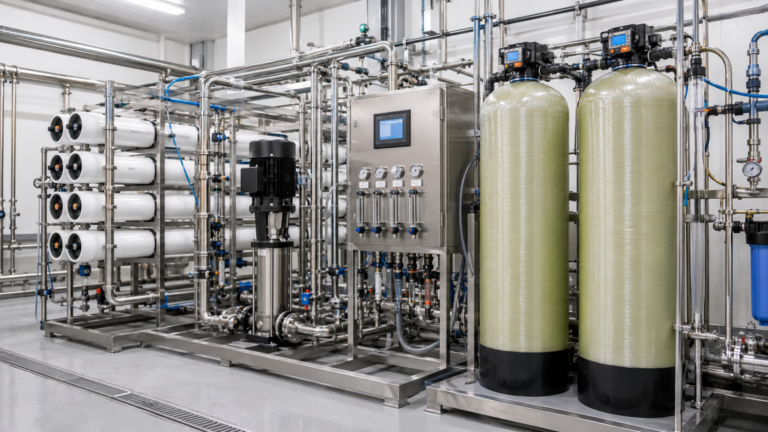
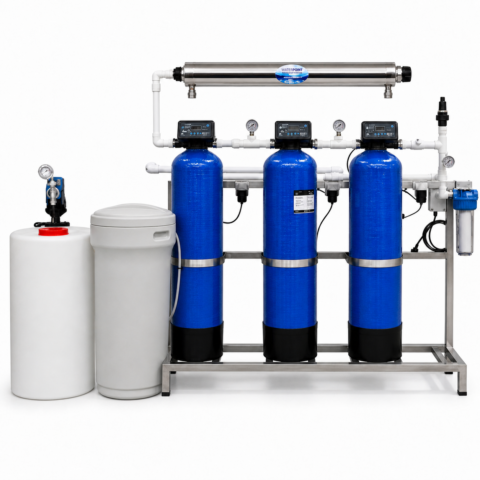
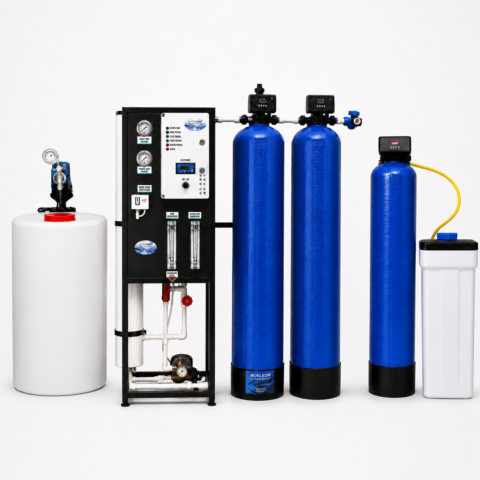
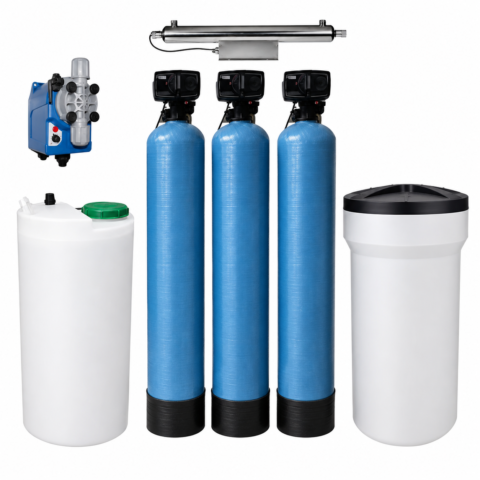
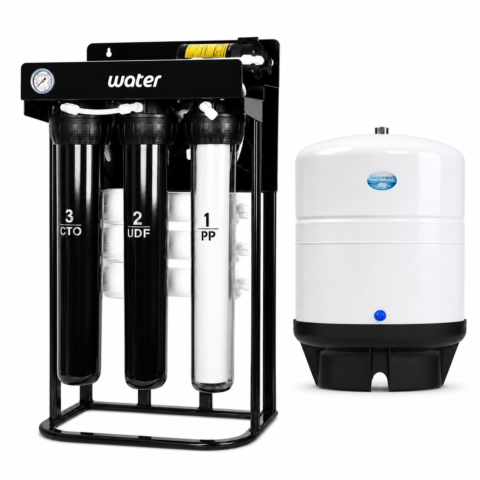
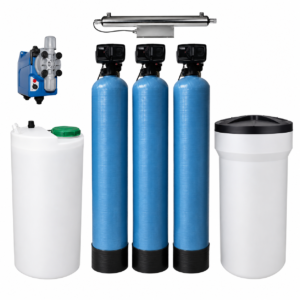
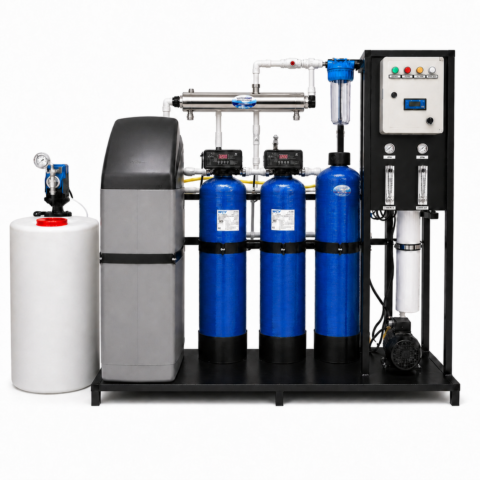
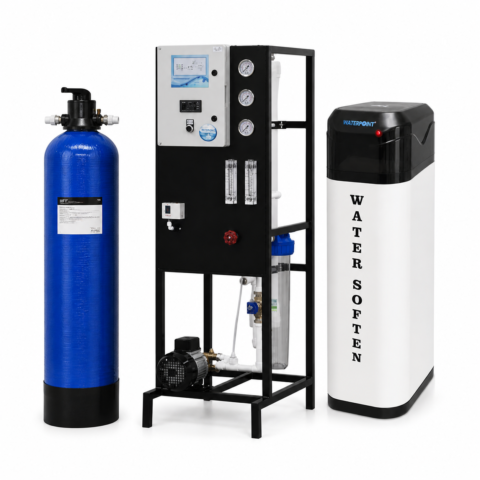
A typical build contains these stages: sediment or sand filtration, activated carbon, water softening and, where needed, reverse osmosis. Each stage targets a different problem and protects the next. Which stages are needed is established from the water analysis result.
The table below matches the problem met in the plant with the right stage:
| The Problem Identified | The Stage That Handles It | The Result It Gives |
|---|---|---|
| Sediment, sand, rust | Pre-filtration / sand filter | Holds back particles, protects the line and the equipment |
| Chlorine, odour, organic load | Activated carbon | Protects the membrane, reduces the sensory effect |
| Hardness and limescale | Water softening | Prevents build-up on heated surfaces |
| Uninterrupted soft water | Tandem build | Keeps the flow going during regeneration |
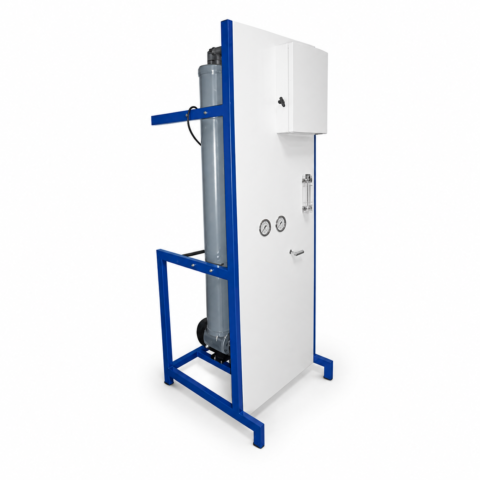
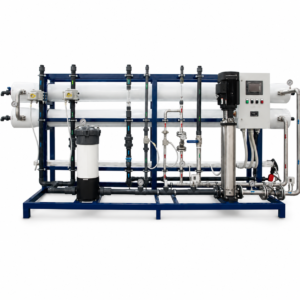
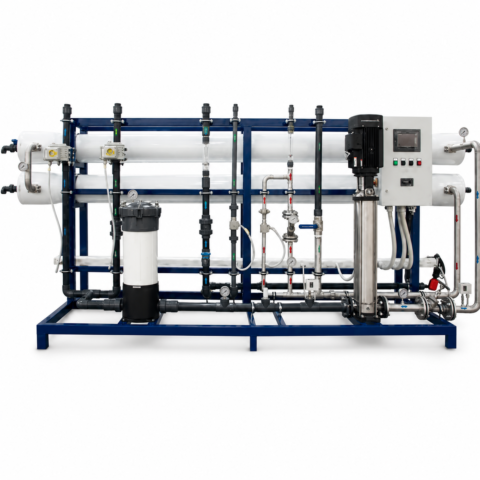
| High dissolved solids | Reverse osmosis | Lowers the load for special applications and steam feed |
| Microbiological risk | UV (ultraviolet) treatment | Reduces microbiological risks |
The first link in the chain is pre-filtration; it protects the stages behind it from particle load. Where the particle load is limited, industrial-type pre-filter sets may be enough, while at a high load sand units with automatic backwashing come into play.
Where chlorine and organic load are involved, high-capacity carbon units both reduce the sensory effect and protect the stages behind them.
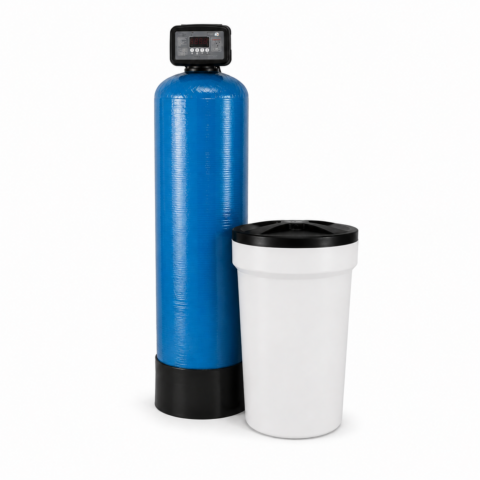
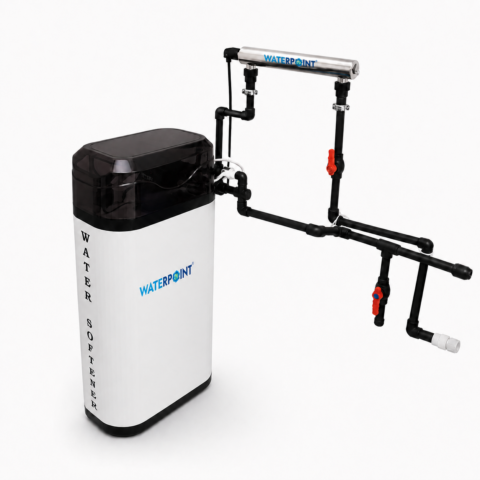
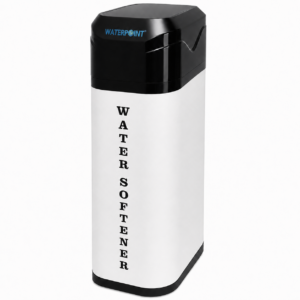
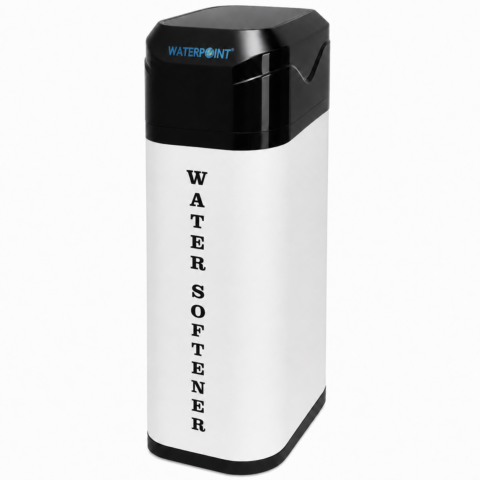
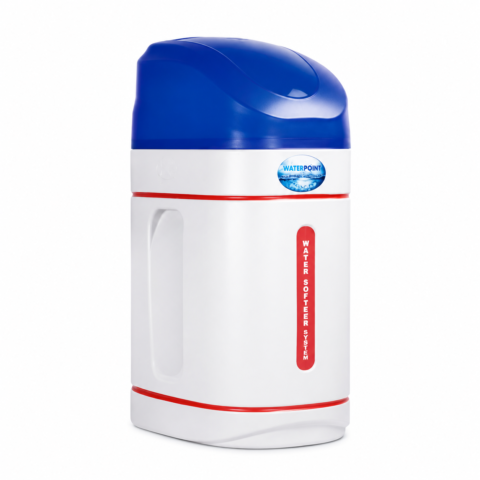
The decisive stage, though, is softening, because most of the problems in a laundry come from hardness. For needs at this scale, industrial softening systems are used, and the capacity is established from how heavily the plant works.
Let’s establish the stages that suit your plant
You can look at the solutions to clarify which stages you need from your water analysis, your machine park and your daily washing volume.
See the Industrial Solutions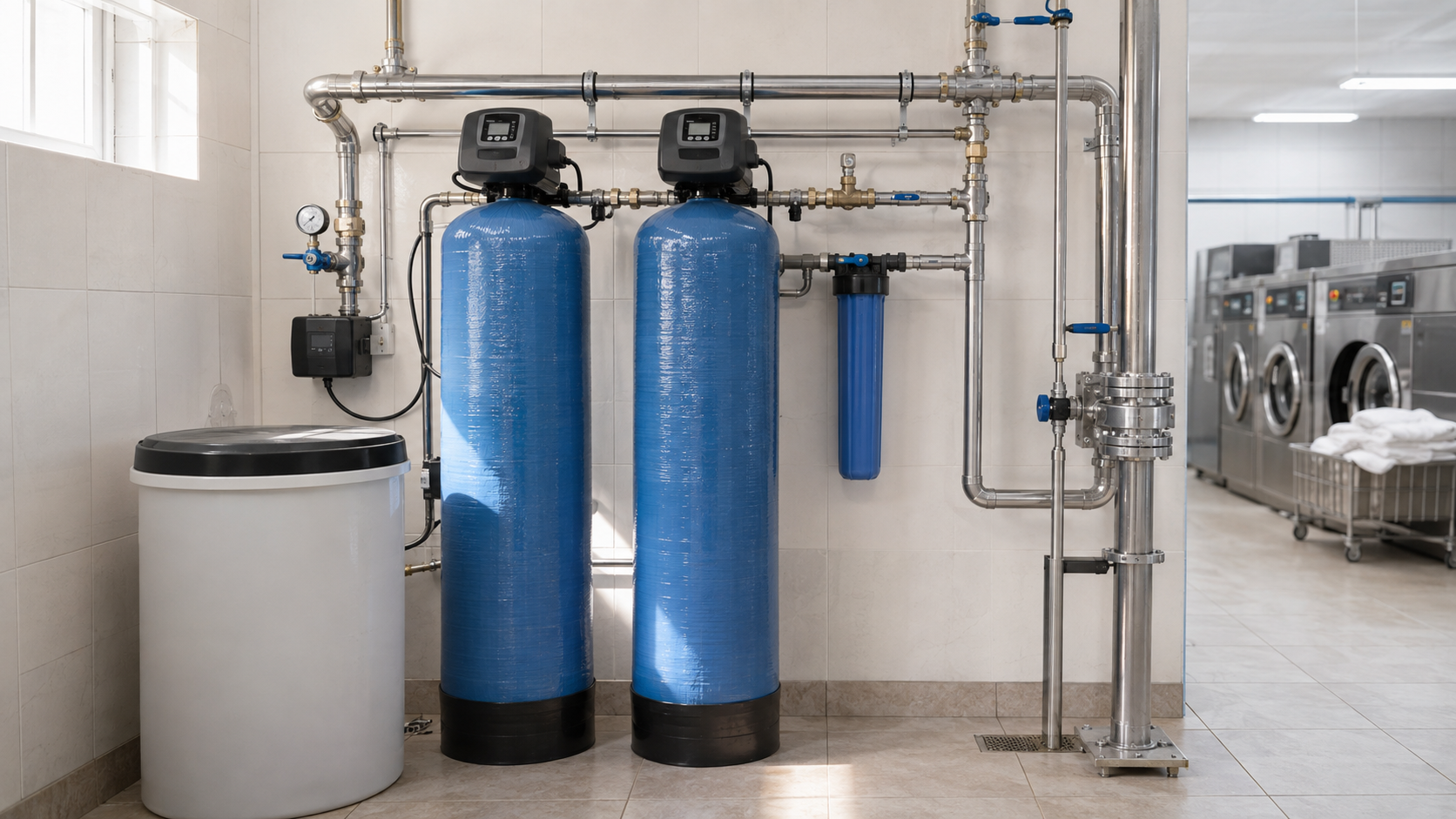
Why Is Uninterrupted Soft Water Critical?
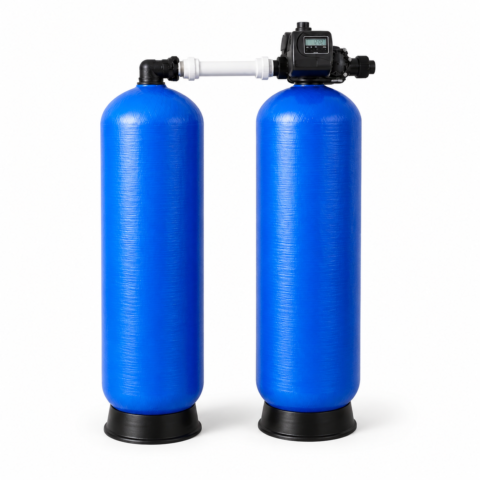
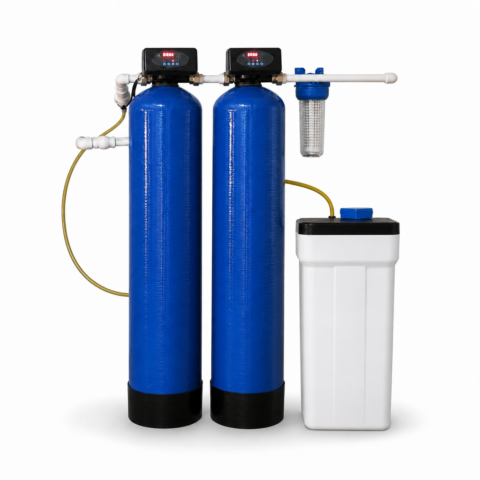
Softening systems regenerate regularly to renew the saturated resin. In a single-tank build, hard water can pass down the line for that period. In laundries running continuously that risk is unacceptable; twin-tank tandem builds are therefore preferred.
This is the design detail most often skipped in an industrial laundry. The system is installed and the capacity chosen correctly; but the regeneration window is not taken into account.
The problem appears like this: regeneration is generally programmed for the night hours. But in a plant running three shifts there is no “quiet hour”. Either hard water passes during regeneration, or the cycle is put off and the resin stays saturated.
A tandem build removes that dilemma. There are two tanks; when one goes into regeneration the other stays in service. Softened water is thereby delivered to the line without interruption.
We took up how the cycle works — backwash, brine draw and rinse steps included — in a separate article; for the details see regeneration cycle.
Built for plants running continuously, twin-tank tandem softening systems are, in a laundry water treatment project, usually considered an essential component.
In a single-tank build the regeneration window must always be planned. If there is no period when the plant genuinely stops, an uninterrupted build should be assessed at the design stage. That detail is settled before installation, not afterwards.
How Is the System Sized?
In sizing, the number and capacity of the machines, the daily washing volume, simultaneous use at peak hours, the steam line requirement and the inlet water quality are assessed together. The system should be chosen not for the daily average but for demand at the busiest hour.
Demand in a laundry is not spread evenly. In a hotel laundry the morning hours, in a hospital laundry the shift changes, and in dry cleaning the weekend peak stand out. A system chosen on the average falls short at exactly those hours.
The headings to assess are these:
-
Set Out the Machine Park
The number and capacity of the machines define the total load the system has to meet.
-
Establish the Daily Volume
The daily washing volume is the basic input for total water consumption and resin capacity.
-
Calculate the Peak Hour
How many machines run at the same time? That is the real load the system has to meet.
-
Assess the Steam Line
Where there is a boiler feed line its requirement is calculated separately; the quality expected can be different.
-
Define the Working Pattern
The shift arrangement and the need for uninterrupted running determine the decision on a tandem build.
-
Confirm the Infrastructure
The equipment layout, access to the salt tank, the drain connection and the power supply should be settled in advance.
We took up the general logic of a capacity calculation and what to watch for at business scale in a separate article; you can read the approach in our industrial-type system selection guide. The final capacity is always established from the water analysis and how busy the business is.
The starting point of the process is measurement. Without knowing the hardness of the water and its other parameters, which stages are needed and which capacity suits cannot be established. We explained how a sample is taken in our water analysis guide.
Maintenance and Continuity of Operation
Once the system is installed, continuity depends on maintenance. The salt in the softening stage has to be watched, the pre-filters renewed on time, periodic checks made and the water analysis repeated. Because a stoppage in a laundry means lost work directly, maintenance should be tied to a service plan.
The most common reason maintenance slips in a business is not technical but organisational: who checks what, and when, has not been settled. When that question goes unanswered, the salt runs out, the filter change is put off and the system does not perform as expected.
The headings to follow regularly are these:
- The salt level: When the salt in the softening stage runs out, the system cannot renew itself and hard water passes down the line.
- Renewing the pre-filters: The stages are renewed when saturated; the interval varies with the inlet water quality.
- Monitoring pressure and flow: The pressure difference between stages is an early indicator of blockage.
- Checking the outlet quality: Following the hardness is the most practical way of confirming the system is working properly.
- Periodic service: Valve settings and the state of the stages are checked regularly by a specialist.
- Repeating the analysis: The character of the inlet water can change seasonally; the dosage and capacity are reviewed.
The choice of product matters on the salt side too. A treatment salt made for this application and of suitable purity protects both the tank and the valve from residue and reduces how often maintenance is needed.
Water Point Su Arıtma Teknolojileri operates from Esenyurt, İstanbul under its founder Ali Genç, with more than 20 years of experience in the sector.
Survey
The survey is free if the unit is purchased from us; where only a survey and measurement are wanted, a survey fee of ₺2,000 applies. No charge is made without the customer’s approval.
Service Network
For industrial systems there is a service network across Türkiye; for home units service is provided in İstanbul and the neighbouring provinces such as Kocaeli and Tekirdağ.
Warranty
Units, valves, pumps and tanks carry a 2-year warranty and taps a 1-year warranty. Filters, membranes, resin and salt are consumables and fall outside the warranty.
Spare Parts Cover
Filters, membranes, resin and salt are consumables; valves, pumps and tanks are durable spare parts.
Certification
CE certification is held for the activities carried out.
Contact
For survey and maintenance requests, 0850 304 95 25 and [email protected] can be used.
Broad spare parts cover means continuity for plants running continuously. When maintenance is due, being able to obtain the part keeps the system running without interruption.
A water interruption in a laundry means production stopping directly. So that the flow continues during maintenance, a bypass line should be planned at the installation stage. That detail is settled before installation, not afterwards.
Frequently Asked Questions
Is a softening system essential in my laundry?
Whether it is needed depends on the hardness of the water and is established by analysis. In an area of low hardness the need may be limited; in plants using hard water it makes a clear difference in build-up on heated surfaces and in chemical consumption.
Which capacity is needed?
The capacity is established by assessing the number and capacity of the machines, the daily washing volume, simultaneous use at peak hours and the inlet water quality together. The system should be chosen not for the average but for demand at the busiest hour.
Is using a limescale remover enough?
It reduces the build-up already there but does not remove the cause. As long as the hardness of the feed water is unchanged, the build-up returns and the operation has to be repeated regularly. Frequently repeated treatments can also tire the internal surfaces of equipment over time.
When is a tandem system needed?
When there is no period in which the plant genuinely stops. In a single-tank build, hard water can pass down the line during regeneration; in laundries running continuously that risk is not accepted. In a twin-tank build, one tank stays in service while the other is renewed.
Does the steam boiler need a separate build?
The quality expected on the boiler feed line can differ from the washing line. Because the water evaporates completely, the minerals stay in the boiler and scaling advances quickly. The steam line requirement is therefore assessed separately in the engineering.
Is chemical consumption really affected?
In hard water some of the active ingredients of cleaning chemicals interact with the hardness ions; that can reduce foaming and lead to a higher dose. The size of the effect varies with the hardness of the water and the product used, so it should be assessed plant by plant.
How is maintenance planned?
Regular salt checks, renewing the pre-filters on time, monitoring the pressure and periodic service are needed. To avoid uncertainty over responsibility, the tasks should be tied to a written routine and a service plan; keeping records is the most practical way of stopping things slipping.
Will failures stop completely once the system is installed?
The wear caused by build-up that has already formed cannot be undone; but once hardness is reduced at source, the build-up stops advancing. If there is advanced build-up in existing equipment, whether cleaning is needed before the system is commissioned is assessed.
How often should the water analysis be repeated?
It would not be right to give a fixed period; the character of the inlet water can change seasonally. The analysis should be repeated to verify things after installation, when changes such as taste, colour or build-up are noticed, and when the capacity is reviewed.
Conclusion
Most of the problems in an industrial laundry that look unrelated come back to the same source. Hard water builds up on heated surfaces and strains the heating element and the steam boiler; it can raise consumption by lowering the performance of cleaning chemicals; it can leave residue on the fabric after rinsing and make the process harder to repeat. The chain of solutions is clear: pre-filtration protects the line, activated carbon safeguards the stages behind it, and softening deals with hardness at source. In plants running continuously, an uninterrupted build is an inseparable part of the design. And the right order is clear too — a water analysis first, then the capacity and stage build, then regular maintenance.
Let’s establish the capacity and the stages for your plant on site
The survey is free if the unit is purchased from us; where only a survey and measurement are wanted, a survey fee of ₺2,000 applies. No charge is made without the customer’s approval. To plan a build suited to your machine park and your water analysis, you can get in touch on 0850 304 95 25 or at [email protected].
Discover the Industrial Solutions