
Choosing an Industrial Water Treatment System by Calculation
Many business owners who put a domestic unit into their premises tell the same story: everything goes well for the first few months, then the filters start blocking constantly, the water does not keep up at lunch service and the unit fails often. The culprit is usually not the quality of the unit; the problem is the sizing. The answer that comes in at that point is an industrial water treatment system.
In this guide we take up the real difference between domestic and industrial, which businesses need that scale, how the capacity is worked out and which stages the system consists of. The aim is clear: to let you establish the right scale for your business by calculation rather than by guesswork.
What Is an Industrial Water Treatment System?
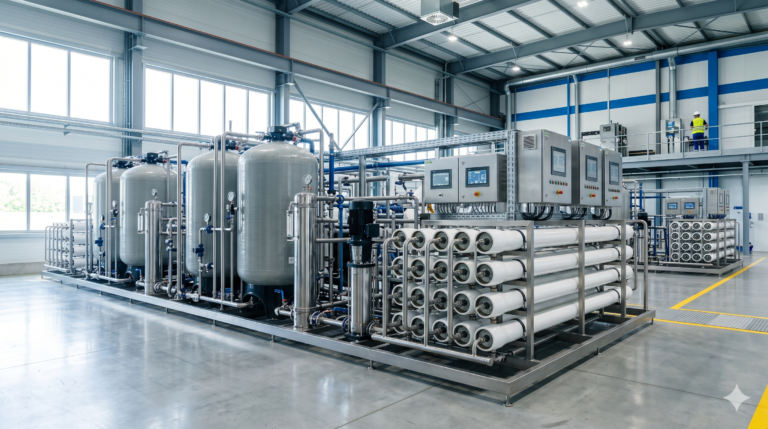
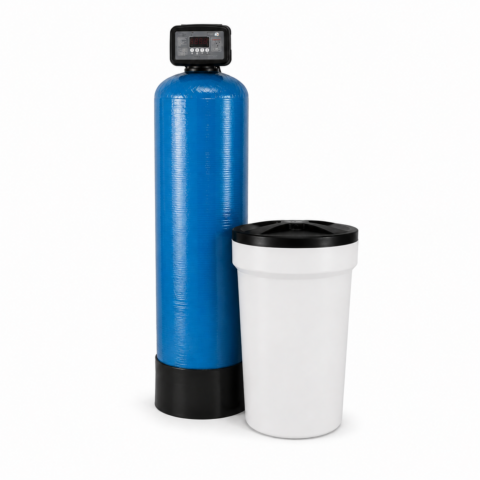
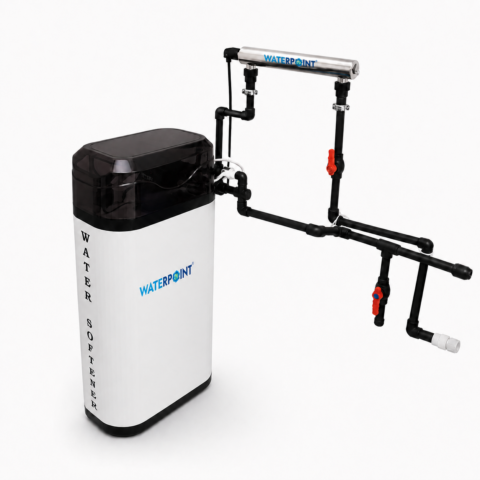
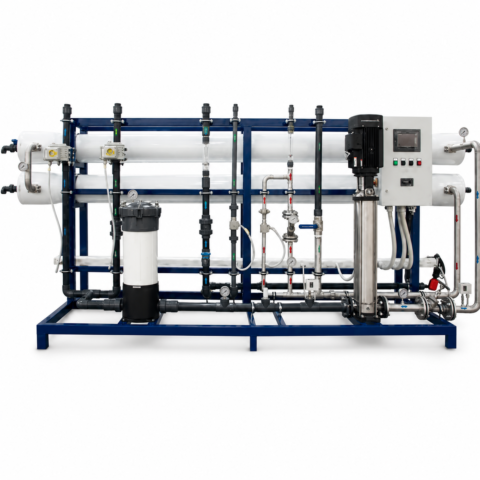
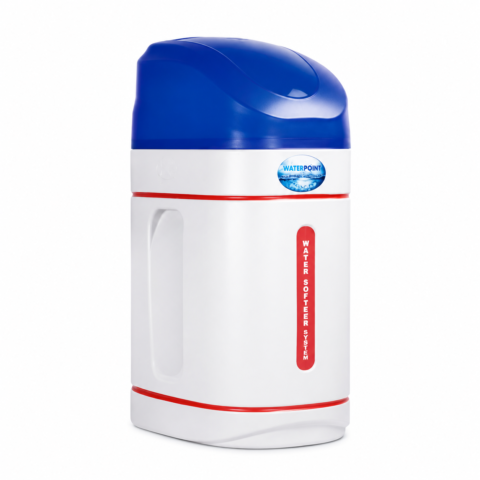
An industrial water treatment system is a treatment system designed for high flow and continuous running conditions. Unlike domestic units it is built with a durable body, an automatic valve and larger stage volumes. It is sized for the project to meet a business’s need for uninterrupted water.
The distinction here is not merely one of “big and small”. A domestic system is designed to produce a limited amount of water at particular hours of the day and to rest in between. In a business, demand for water runs all day; the system works for hours without a break. Those two scenarios create entirely different engineering requirements.
So an industrial water treatment system differs on three points: durability, capacity and automation. The body and the connections are chosen from material suited to continuous running, the stage volumes are enlarged to meet the high flow, and the valves manage their own cycles without needing an operator.
That segment is the field of businesses that say “not at factory scale, but a domestic unit is not enough either”. A hotel, a catering kitchen, a car wash or a medium-scale production workshop sits exactly in that range, and when it is sized correctly the system runs for years without trouble.
The Basic Difference Between Domestic and Industrial
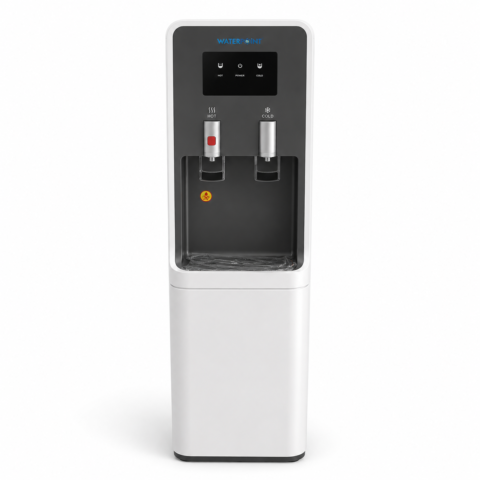
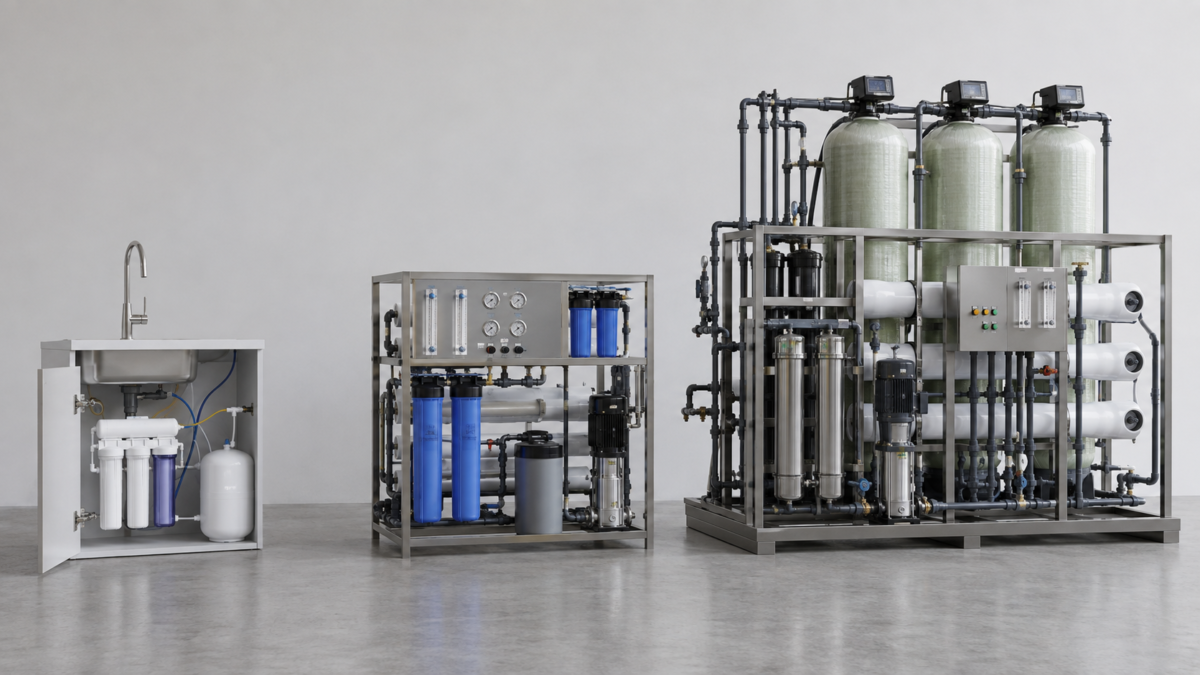
The basic differences gather in the flow, the body material, the level of automation, the pattern of operation and the service requirement. Domestic units are made for intermittent use; industrial systems are designed to run under continuous load. That difference directly settles the maintenance period and the total working life.
The comparison of the two classes runs like this:
| Criterion | A Domestic System | An Industrial System |
|---|---|---|
| The Pattern of Operation | Intermittent, at particular hours of the day | Continuous and under high load |
| Flow Capacity | Limited; to the need of a household | Scaled to meet the peak-hour demand |
| Body and Connections | Compact, lightweight material | A durable body and industrial connections |
| Automation | Simple control | An automatic valve and a programmable cycle |
| Maintenance | The user can do it | It calls for planned service |
| Installation | Standard installation | Plumbing and a space plan specific to the project |
The most decisive row in the table is the pattern of operation. When a domestic unit is used in a business it passes many times more water than it was designed for; the stages reach saturation far faster than expected and need changing often. The user reads that as a “poor-quality unit”, yet the unit is simply being used in the wrong place.
An industrial water treatment system, by contrast, assumes that load from the start. The stage volumes are large, the valves are chosen for high flow and the system is built for long periods of running. The result is less intervention and a more predictable operating routine.
Which Businesses Need This Scale?
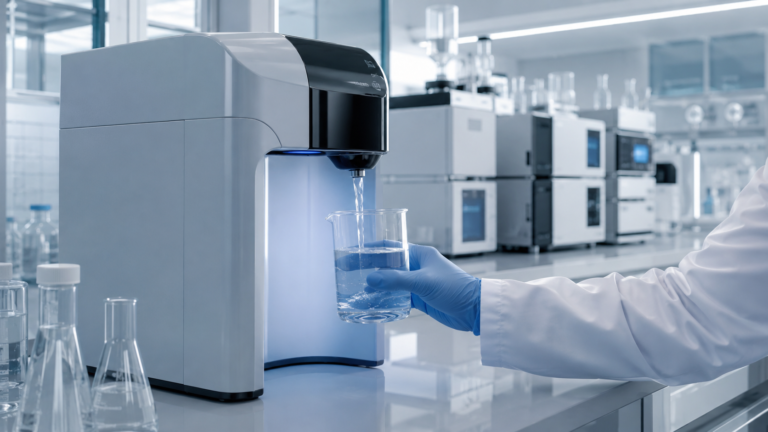
Every business whose water use runs all day and which cannot tolerate an interruption falls into this scale. Hotels, restaurants and catering kitchens, car washes, hairdressers and spas, food and drink and textile workshops, farms, greenhouses and laboratories are the most common groups of users.
Different sectors turn to these systems for different reasons:
Hotels and Accommodation
Uninterrupted water twenty-four hours a day; limescale, plumbing and guest comfort are protected together.
Restaurants and Catering Kitchens
Peak demand at service times; dishwashers and steam equipment are protected.
Car Washes
Rinse water that leaves no marks on the surface is a direct indicator of the quality of the work.
Hairdressers and Spas
Soft water markedly affects the quality of the service and the life of the equipment.
Food and Beverage
Water is a production input; consistency of taste and protecting the equipment become priorities.
Textile Workshops
In dyeing and washing processes, water quality settles the consistency of colour.
Farms and Greenhouses
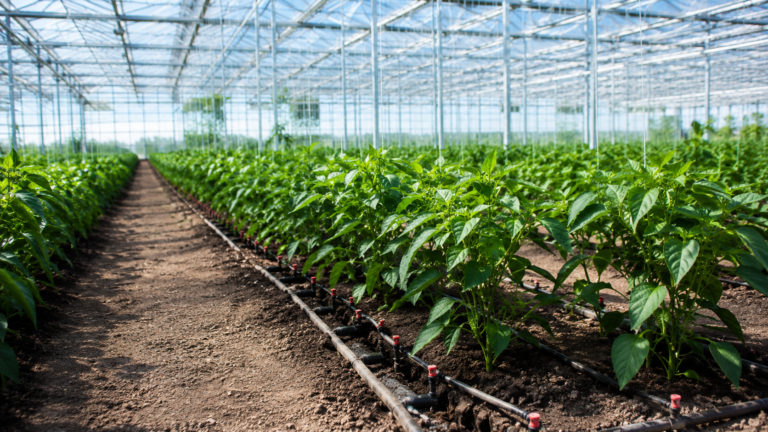
Sediment and limescale in the irrigation lines block drip systems.
Laboratory
Steady water of high quality is needed for analysis and for feeding instruments.
What the businesses on that list have in common is that water is not an auxiliary element but part of the operation. When the water stops or its quality falls, the work stops; so investing in an industrial water treatment system is not a matter of comfort but a decision about operational continuity.
For anyone wanting to compare the water use profiles of different types of site, the US Environmental Protection Agency’s water use by facility type resource offers a general framework on sectoral consumption.
The First Step: Water Analysis and Defining the Problem
The right choice always starts with a water analysis. Without measuring hardness, sediment, iron, TDS and microbiological load, which stages are needed cannot be known. An industrial water treatment system bought without an analysis either falls short or contains stages that were never needed.
The analysis is a step of diagnosis. Two businesses in the same sector can have entirely different water profiles; one is fed from a well, the other from the mains. So copying the installation of a neighbouring site is not a reliable method.
The basic parameters to be measured, and the problems they point to, are these:
- Hardness: It shows the risk of limescale and scaling; it determines the need for softening.
- Sediment and cloudiness: It defines the grade of the filtration stage.
- Iron and manganese: It sets out the source of colour, staining and deposit problems.
- TDS and conductivity: They show the dissolved solids load and whether advanced treatment is needed.
- Microbiological load: It determines whether an extra treatment stage is needed.
We took up step by step how to take a sample and how to read the report in our water analysis guide. What quality the water has to be on the production side is a separate subject; we examined that framework in detail in our process water article.
A choice made without an analysis is at best a guess. An investment in an industrial water treatment system is a serious budget item; skipping the diagnostic step leads to mistakes that are costly to put right afterwards.
How Is the Capacity Established?
The capacity is established with two separate sets of data: the total daily consumption and the instantaneous peak flow. The system should be chosen to the demand at the peak hour, not to the daily average. An installation that cannot meet the peak flow shows itself as a drop in pressure and inadequate treatment at the busiest hours.
That distinction is the source of most capacity mistakes. A restaurant may have a reasonable total daily water consumption; but most of that consumption is concentrated into lunch and dinner service. A system chosen to the average falls short at exactly the most critical hours.
The logic of the capacity calculation is built with these four questions:
-
What is the total daily consumption?
The total amount of water the business uses across a day defines the general work load on the system.
-
What happens at the peak hour?
How many points draw water at once? Service time, the start of a shift or a moment of heavy production is what decides.
-
Is an interruption acceptable?
If the flow of water stopping even briefly affects the operation, the build is planned for uninterrupted running.
-
How demanding is the inlet water?
A high hardness and sediment load calls for a larger stage volume for the same flow.
The fourth question is often skipped but bears directly on the result. Two systems meeting the same flow will not give the same performance if the inlet water quality differs. On a hard, sediment-laden source the stages tire far faster; so when an industrial water treatment system is sized, the flow and the water quality are assessed together.
The exact values differ for every business and are engineered from the water analysis, the peak flow and the hours of operation. So instead of giving figures here we share the logic of the calculation; the real capacity is worked out during the site survey with your own data.
Choosing the system to the peak flow does not mean “buying one bigger than you need”. On the contrary, choosing to the average falls short; choosing to the peak flow means meeting the real working condition of the system.
Which Stages Does an Industrial Water Treatment System Consist Of?
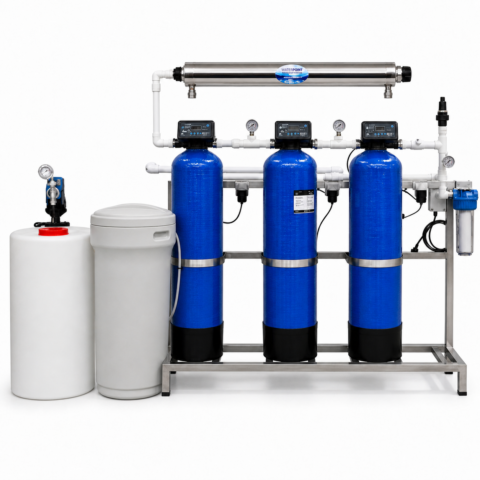
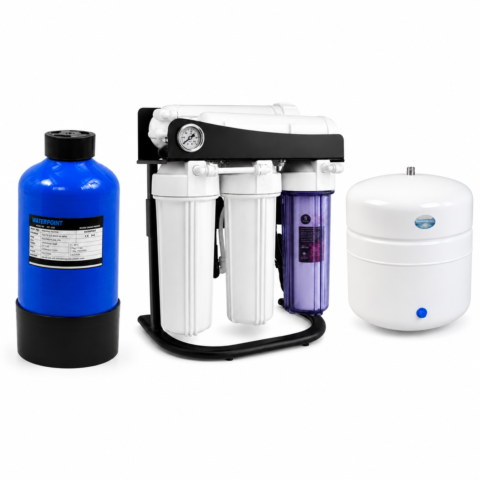
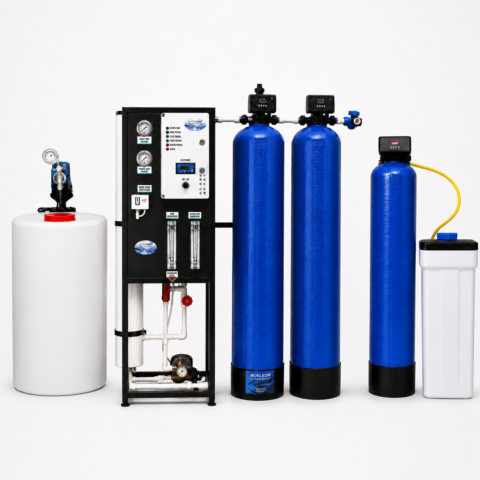
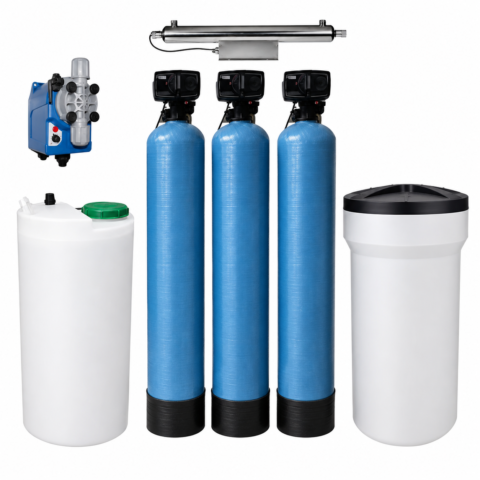
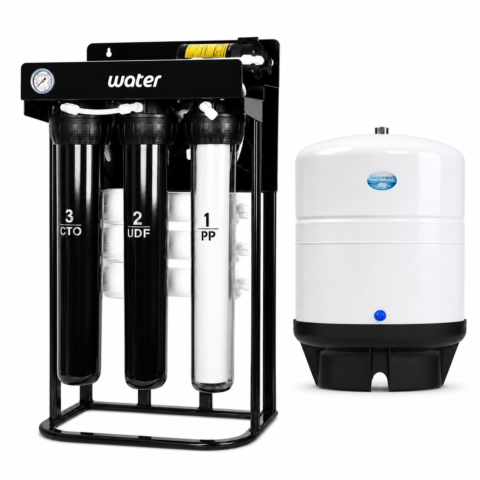
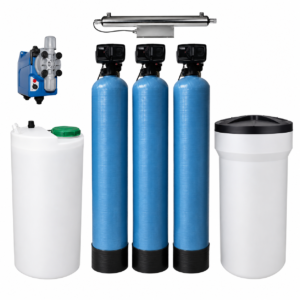
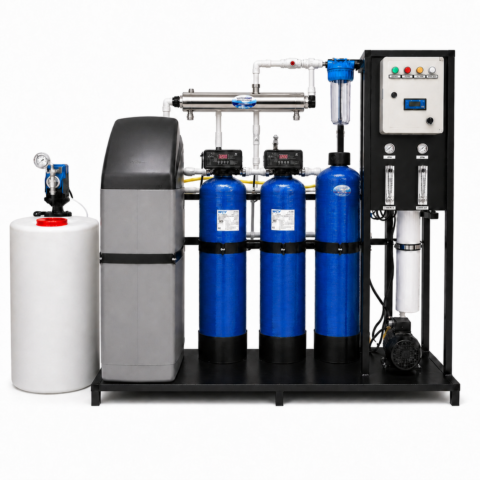
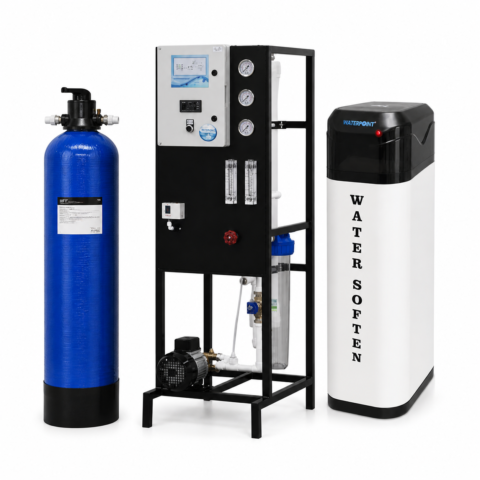
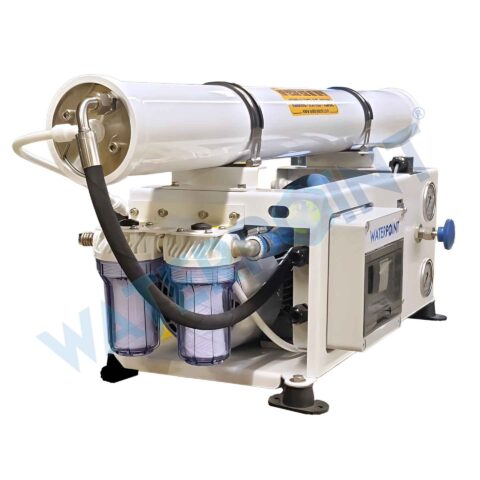
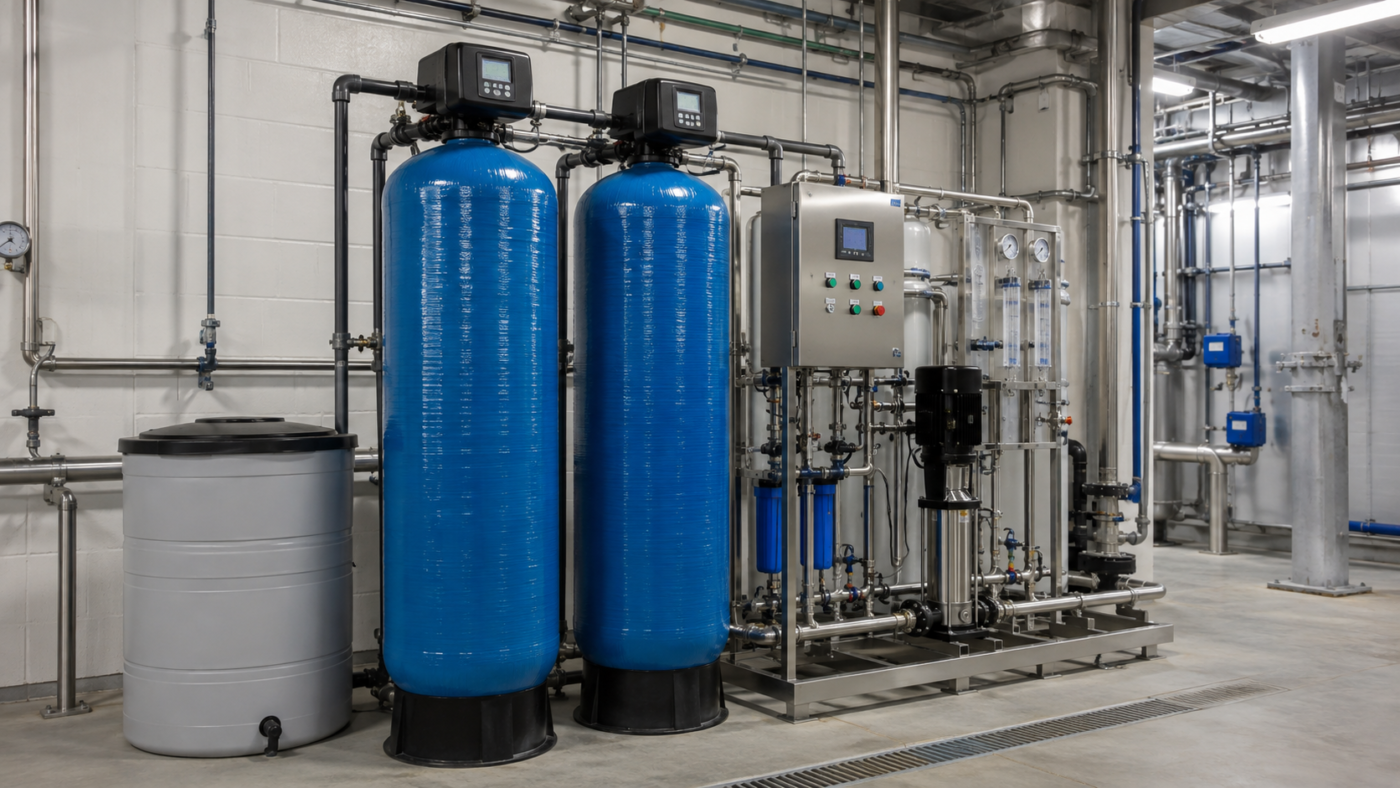
A typical build works in stages: sand or multimedia filtration, activated carbon, softening and, where needed, reverse osmosis. Deionisation and UV (ultraviolet) treatment are added as the need requires. Which stages are installed and in what order is established from the water analysis result.
The table below sets out which problem is solved by which stage:
| The Problem Identified | The Stage That Handles It | The Result It Gives |
|---|---|---|
| Sand, sediment, cloudiness | Sand / multimedia filtration | It separates suspended solids and protects the line |
| Chlorine, odour, taste | Activated carbon | Corrects sensory quality, protects the membrane |
| Hardness and limescale | Softening | It prevents scaling and protects the equipment |
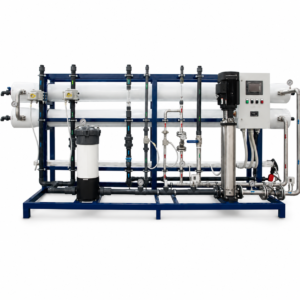
| High TDS and salinity | Reverse osmosis | Lowers the dissolved solids load |
| Trace ion residue | Deionisation | It brings the conductivity to its lowest level |
| Microbiological load | UV (ultraviolet) treatment | Reduces microbiological risks |
The first link in the chain is always pre-filtration. On sources with a high particle load, sand filters with automatic backwashing come into play; at a more limited load, industrial-type pre-filter sets give sufficient protection.
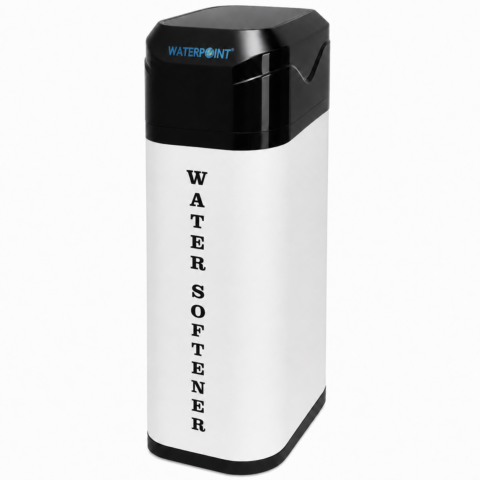
Where chlorine and organic load are involved, high-capacity carbon units both correct the sensory quality and protect the membrane behind them. On the hardness side, industrial softening systems prevent limescale build-up at its source.
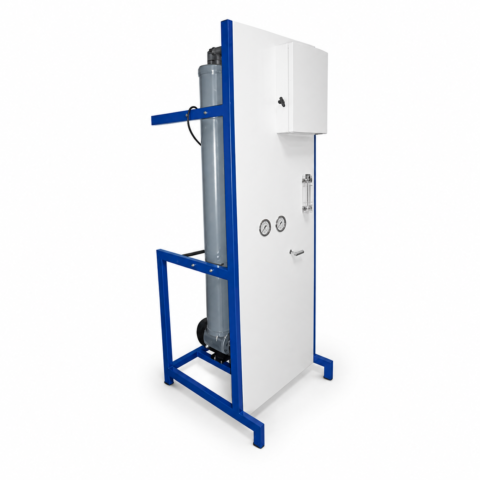
In areas with a heavy limescale load, different approaches can be assessed too; in that case industrial-type limescale treatment solutions make an alternative or complementary build. Where the dissolved solids load is high, the chain is completed with high-capacity reverse osmosis systems.
Automation and the Choice of Valve
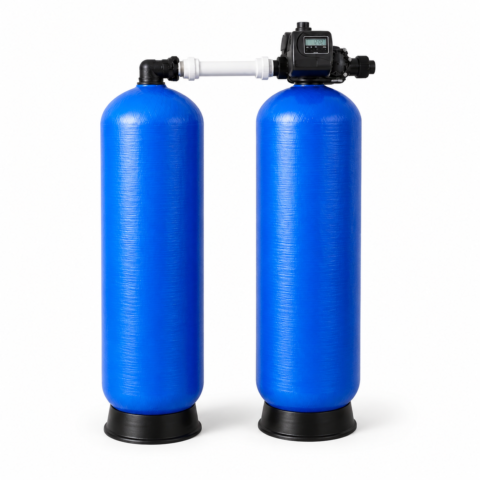
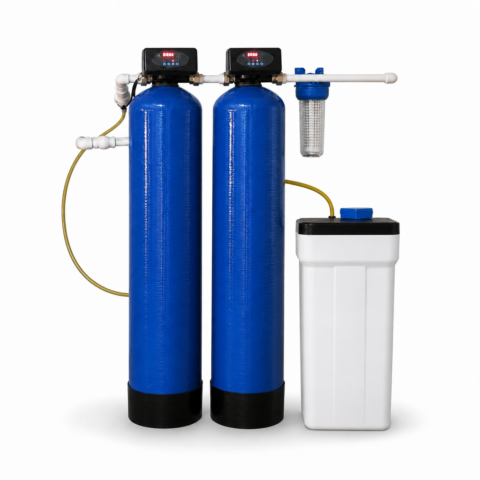
The valve is the component that decides for the system. Time-controlled valves start the cycle at a fixed interval; flow-controlled valves measure the real consumption and run it only when it is needed. In businesses needing uninterrupted water, a twin-tank tandem build is preferred.
At business scale the choice of valve is a far more critical decision than in domestic use, because consumption is high and an interruption carries an operational cost. The two approaches separate out like this:
It works to a fixed calendar
When the set period comes round the cycle starts; the amount consumed is not taken into account.
- Its structure is simple and predictable
- It works consistently where consumption is steady
- It runs for nothing in seasonal businesses
- It carries a risk of running out early on busy days
It follows real consumption
The water passing through the meter is measured; the cycle is triggered only when the need arises.
- It gives a marked advantage under variable consumption
- It removes the unnecessary cycle
- It lowers salt and wash water consumption
- It is efficient in seasonal businesses
In businesses running twenty-four hours another requirement arises: no hard water should pass into the line while the softening system renews itself. In that case twin-tank tandem systems come into play; while one tank is renewed the other stays in service and no interruption occurs.
The level of automation is a heading that should not be overlooked when choosing an industrial water treatment system. A system needing an operator is neglected over time in a busy business; a build that manages itself carries on with its own cycle.
Let’s establish the system that suits the peak flow of your business
To plan the right capacity from your consumption profile and your water analysis, you can look at the industrial solutions.
See the Industrial Solutions
Installation Space, Plumbing and Power Requirements
Before installation the layout space, the drain connection, the power supply, the bypass line and room for service should all be clarified. Tank systems call for space both for the body and for maintenance work. Where those conditions are not planned, extra cost and delay arise at the installation stage.
The physical conditions are as decisive as the choice. The headings to check are these:
- The space: Room is needed for the tank bodies and for opening the covers and working on the units.
- The drain connection: Discharging the backwash and regeneration waste water has to be planned.
- The power supply: A suitable supply point is essential for the automatic valves and for any pumps.
- The bypass line: It makes it possible to bypass the system during maintenance without cutting off the flow to the business.
- Access to the salt tank: Where there is a softening stage, easy access is needed for topping up the salt.
- The floor and the route in: The weight of the full tanks and the route for carrying them in during installation should be assessed.
The bypass line on that list is critical for businesses in particular. On an installation made without a bypass, every maintenance operation means cutting off the water to the business. In restaurants, hotels and production plants that is not an acceptable position.
In newly built premises, when the layout of an industrial water treatment system is planned at the design stage, both the space and the plumbing are built far more efficiently. In existing businesses a site survey before installation lets those conditions be confirmed on site.
Operating Cost and Maintenance
The operating cost consists of renewing filters, resin and membranes and of salt and wash water consumption. A correctly sized system keeps those items in balance. An installation chosen too small, on the other hand, runs under constant load, needs maintenance more often and costs more over the long run.
That is the dimension most overlooked in a purchasing decision. The price of the unit is paid once; the spend on consumables and maintenance goes on for years. An industrial water treatment system chosen at too small a capacity may look like a saving on the initial investment, but it more than takes that difference back within a few years.
The maintenance items run like this:
Renewing Filters
The sediment and carbon stages are renewed at saturation; the frequency depends on the quality of the inlet water.
Checking the Resin
Softening resin is long-lived but calls for periodic checking and renewal over time.
Membrane Maintenance
On the reverse osmosis stage the performance is followed and the module changed when its time comes.
Topping Up the Salt
On the softening stage, checking the salt regularly is the most basic condition of continuity.
Monitoring Performance
Following the outlet quality and the pressure difference shows problems at an early stage.
Planned Service
A periodic service agreement prevents maintenance slipping and stops unplanned downtime.
The cost of too little capacity is not limited to consumables. A system running under constant load wears faster, faults grow more frequent, and every fault creates a disruption in the business. That indirect cost is often greater than the direct spending.
The right approach is to make the decision on total cost of ownership: the price of the unit, the annual consumables spend, the service cost and the possible cost of downtime should be weighed together. When that calculation is made, a correctly sized industrial water treatment system comes out ahead in almost every scenario.
How Is the Right System Engineered?
The engineering is done with four sets of data: the water analysis result, the peak flow, the purpose of use and the conditions of the installation space. When those come together, the build of the stages, the capacity and the level of automation become clear. Planning the process with a single contact, from analysis to commissioning, keeps the steps aligned with one another.
A sound project process runs in this order. First a site survey is carried out and the water use profile of the business worked out. Then a sample is taken and analysed and the problem parameters established. In the third step the stages are chosen to those parameters and arranged in the right order. In the fourth step the capacity is worked out from the peak flow and the hours of operation. Finally the installation space and plumbing conditions are confirmed and the installation plan drawn up.
None of those steps can be skipped, because each affects the others. A build chosen without establishing the need for uninterrupted running can stop production during maintenance. And a choice made without checking the space conditions calls for revision at the installation stage.
That is where the advantage of working with a single contact lies too: when the analysis, the engineering, the installation of the unit and the commissioning are planned by the same team, no information is lost between the steps. The business owner works with one contact and the process runs predictably.
Finally, the monitoring plan after commissioning should be discussed from the outset too. An industrial water treatment system becomes long-lived not through the installation but through the discipline of regular maintenance.
Frequently Asked Questions
Can I use a domestic unit in my business?
Technically it works, but it is not sustainable. Domestic systems are designed for intermittent use; when they are left under constant load in a business the stages saturate quickly, they need frequent maintenance and they cannot give the performance expected.
What is the capacity established from?
The total daily consumption and the instantaneous flow at the peak hour are assessed together. The system should be chosen to the peak demand, not to the average. The quality of the inlet water also bears directly on the stage volume.
How do I know which stages I need?
The water analysis is what decides. Hardness points to softening, sediment to filtration, chlorine to the carbon stage, and a high TDS to reverse osmosis. In most businesses more than one stage is needed together.
Will my business lose its water supply during maintenance?
If a bypass line has been planned, it is not cut off; the flow continues while the system is taken out of service. Where uninterrupted soft water is needed, a twin-tank tandem build is preferred and the softening carries on during regeneration too.
How much space does it take?
The space needed varies with the capacity and the number of stages. As well as the tank bodies, room should be left for working on the units, for access to the salt tank and for the plumbing connections. The exact layout is planned during the site survey.
Is choosing a smaller capacity more economical?
It looks so in the short term but not over the long run. A system of insufficient capacity runs under constant load; the consumables spend rises, faults grow more frequent and there is a risk of unplanned downtime. When the total cost is worked out, the right scale is more advantageous.
How long does the installation take and what is needed?
The time depends on the number of stages and the plumbing conditions. Before installation the layout space, the drain connection, the power supply and the bypass line should be ready. Those conditions are established during the site survey and included in the installation plan.
Conclusion
Most of the water treatment problems businesses run into come not from the quality of the unit but from wrong sizing. The right decision starts with a water analysis, defines the capacity from the peak flow, chooses the stages to the problem identified and plans them together with the installation conditions. The level of automation settles the operating load and the type of valve the consumables cost; in plants running without a break a tandem build is an inseparable part of that equation. When choosing, you have to look not at the label price but at the total cost of ownership; a system chosen too small takes back far more than it saved within a few years. Taken up in that frame, the right industrial water treatment system stops being a cost item and becomes an infrastructure that secures the continuity of your business.
Let’s plan a water analysis and a site survey for your business
To engineer a system to suit your consumption profile, your peak flow and your installation conditions, you can get in touch with the Water Point expert team.
Discover the System That Suits You