
Water Quality in Food Production: Ingredient, Process and Steam
The same recipe, the same raw materials, the same process parameters; and still there is a difference in taste and appearance from batch to batch. Residue is left on surfaces after cleaning, unexpected build-up appears on equipment. The quality team checks the raw material, the process records are reviewed — yet the most heavily consumed input is often left out of the equation. And water quality in food production is precisely the variable standing behind that kind of inconsistency.
In this guide we take up the three different roles water plays in a production plant: the ingredient water that goes into the product, the process water used along the line, and the water on the cleaning and steam side. Every role has a different expectation; that distinction settles both the right treatment build and the right scale of investment.
Why Is Water Quality in Food Production Critical?
In food and drink production water is both a component of the product and a means of processing and cleaning. Because of that double role, water quality bears directly on product consistency, equipment life and hygiene management. The quality targets are set by the plant quality system and the relevant regulations.
That double role sets the subject apart from other production inputs. In a food plant a raw material specification is defined, the supplier is audited, records are kept batch by batch. Water, by contrast, counts in most plants as something “already there”, and no specification is written for it.
Yet the components in the water both go into the product and leave a mark on every surface they touch. On the product side they can affect sensory properties; on the equipment side they can create build-up and a loss of efficiency.
That is why water quality in food production is not an infrastructure detail but a quality parameter in its own right. Water too is expected to have a defined specification and a monitoring plan in the plant quality system.
The suitability of water used in food production is established by the relevant regulations and by accredited laboratory analysis; the assessment is made according to the plant quality system. This article does not constitute legal advice and shares no limit values; for the exact framework the competent authorities and the regulations should be consulted.
As an international reference point, the US Food and Drug Administration has a guidance on the use of water by food manufacturers that can be consulted. That source offers a general framework; it does not take the place of Turkish regulations, and local assessment is made by the competent authorities.
The Three Different Roles of Water in Production
Water takes on three separate jobs in a food plant: the ingredient water that goes into the product, the process water used in steps such as blanching and cooling, and the wash and steam water covering the cleaning lines and the boiler feed. Every role has a different quality expectation and is not met with a single build.
That distinction is the backbone of this article and the foundation of correct engineering too. Handling the three roles with one standard leads either to falling short on some lines or to unnecessary investment across the whole plant.
It goes into the product
In products such as drinks, soups, canning liquid and dough, water is directly part of the formulation.
- It can affect sensory properties
- It determines batch consistency
- The highest quality expectation is here
- It generally calls for advanced treatment
It is used along the line
In steps such as blanching, cooling, conveying and pre-washing it touches the product but does not enter the formulation.
- It touches the product
- It works with equipment surfaces
- A medium to high quality is expected
- Sediment and hardness control are needed
Cleaning and energy
It covers the cleaning lines, the final rinse and the boiler feed water; its effect on the product is indirect.
- It affects the yield of the chemicals
- It can leave residue on surfaces
- It creates scaling in the boiler
- Quality differs from line to line
Because the three roles do not have the same expectation, quality targets are defined line by line as well. That approach makes water quality in food production as much an economic heading as a technical one.
We took up the general idea of industrial process water — including the boiler, cooling and corrosion headings — in a separate article; for the framework you can look at our process water article. The focus of this article, though, is food and drink production.
Ingredient Water: It Sets the Taste and the Consistency of the Product
Ingredient water is the water that goes into the product, and it is the line carrying the highest quality expectation. The mineral content and the dissolved solids profile of the water can affect the sensory properties of the product. So when the source of differences between batches is looked into, the water has to be assessed too.
In drinks production that relationship is at its clearest, because most of the product is water. When the character of the water changes, the same formulation can give a different result.
The same holds in the other food categories. In soup and sauce production, in baked goods, in canning liquid and in dairy products water is a component of the formulation; what is in it shows up in the result.
The key idea here is repeatability. A production plant has to get the same result from the same recipe. If one of the inputs varies during the day or with the season, that variability can show up in the product.
The profile of mains water can differ by area and by season. So a controlled and predictable quality is aimed for on the ingredient water line; advanced treatment stages are generally built in for that purpose.
Which quality the ingredient water has to provide is defined by the product group and by the plant quality system. This article gives no numerical target; the specification is set by the plant, in line with the relevant regulations and accredited laboratory analysis.
Process Water and Protecting the Equipment
Process water is used in the blanching, cooling, conveying and pre-washing steps. Sediment and hardness in the water can create build-up inside the line, in the nozzles and on heated surfaces. That build-up raises both downtime and the cleaning load.
Two effects are seen together on this line: contact with the product and contact with the equipment. The quality of the water bears on both sides.
On the equipment side the points most affected are these:
Heated Surfaces
Limescale build-up on exchanger and heater surfaces lowers heat transfer.
Nozzles and Jets
Build-up in narrow-bore parts can upset the distribution of flow.
Pipework
The layer building up on the inner wall narrows the bore and creates pressure loss.
Cooling Circuits
Build-up affects heat transfer and can make process control harder.
Valves and Sensors
Build-up on moving parts and measuring elements can upset their function.
Unplanned Stoppages
As cleaning and failures grow more frequent, the production plan slips.
What that table means for the operation is clear: every unplanned stop is both lost production and extra cleaning labour. So sediment and hardness control are among the priority headings on the process water line.
We took up water quality on the food service side — kitchen, dishwashing and drinks equipment — in a separate article; if you are interested you can look at our water treatment in restaurant and hotel kitchens piece. The scope of this article, though, is the production and manufacturing line.
Quality in CIP and Wash Water
The hardness of the water used in the cleaning lines can lower the performance of the cleaning chemicals and leave mineral residue on surfaces. The quality of the final rinse water is decisive in particular; water that dries should leave no residue behind. That is an inseparable part of hygiene management.
The cleaning lines are one of the most critical operations in a food plant and depend directly on water quality. Two separate effects are involved.
The first effect is the yield of the chemicals. The hardness ions in the water bind part of the active components of the cleaning products. The bound part no longer does any cleaning work; that can lead to raising the dose to get the result expected.
The second effect is residue. When the water left on a surface after washing dries, the minerals in it stay behind. That residue both creates a visible mark and can affect the state of the surface.
The final rinse is a heading of its own for that reason. The quality of the water used in the final rinse of surfaces that will touch the product settles the outcome of the cleaning process. In many plants a separate quality target is defined for that line.
The choice of chemicals and the dosage are outside the scope of this article; that assessment should be made in line with the manufacturer information for the products used and with the plant quality system. What is taken up here is only the water quality in food production side of it.
Steam and Boiler Feed Water
Hardness in boiler feed water creates scaling on the heat transfer surfaces. Because the water evaporates completely, the minerals stay in the boiler and the build-up advances quickly. Steam quality is assessed separately because it can have an indirect effect in processes that touch the product.
The steam side is the part of a food plant most sensitive to water quality. On the other lines water passes through and some of it leaves the system; in the boiler the water evaporates and the minerals stay behind.
That mechanism raises the rate of build-up markedly. As scaling advances, heat transfer falls, fuel consumption rises and maintenance grows more frequent.
The second dimension is the steam itself. In steam applications that touch the product directly, steam quality can carry over to the product side too. So the feed water specification is defined in the plant quality system.
The chemical control of scaling is a separate heading and comes up on membrane systems in particular. We took up the mechanism and the conditions of application in our scale inhibitor chemicals article.
The chemicals and the feed water criteria to be used in steam applications that touch the product are set within the framework of the plant quality system and the relevant regulations. This article offers no choice of chemical or dosage recommendation.
How Is Water-Related Product Inconsistency Recognised?
The typical signs of a water-related problem are these: variation in taste and colour from batch to batch, different results from the same recipe, build-up on equipment and residue after cleaning. Where those signs are seen together, the water analysis should be repeated and the source side assessed.
This is the scenario quality teams find hardest: the process records are normal, the raw material meets the specification, and still the result varies. In that case one of the inputs to review is the water.
The table below matches the sign observed with a likely water-related cause:
| What Is Observed | A Likely Water-Related Cause | The Parameter to Check |
|---|---|---|
| A difference in taste between batches | The ingredient water profile may have changed | Conductivity and mineral content |
| Variation in colour and appearance | Metal content or cloudiness | Iron, manganese, cloudiness |
| Build-up on equipment | Precipitation caused by hardness | Hardness |
| Residue after cleaning | Mineral load in the rinse water | Hardness and dissolved solids |
| A rise in chemical consumption | A drop in yield in hard water | Hardness |
| Scaling in the boiler | The hardness of the feed water | Hardness and alkalinity |
| Seasonal variation | A change in the profile of the source | A repeat of the full analysis |
That table is not a diagnosis but a first steer. The exact answer comes only from an analysis; the signs only show where to look.
We took up how to take a sample, which parameters should be requested and how to read the report in our water analysis guide. In production plants an analysis gives a far more accurate result when it is done line by line.
One important point: an analysis is not a one-off. On mains and well sources the profile can change with the season, so water quality in food production should be monitored regularly.
The Treatment Stages Used in Food Production
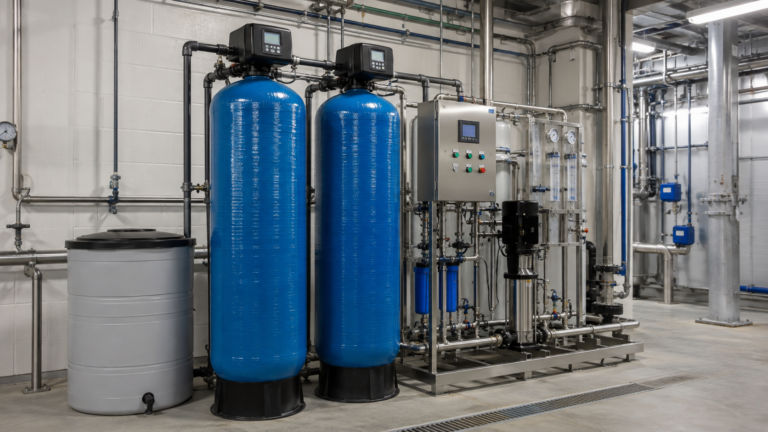
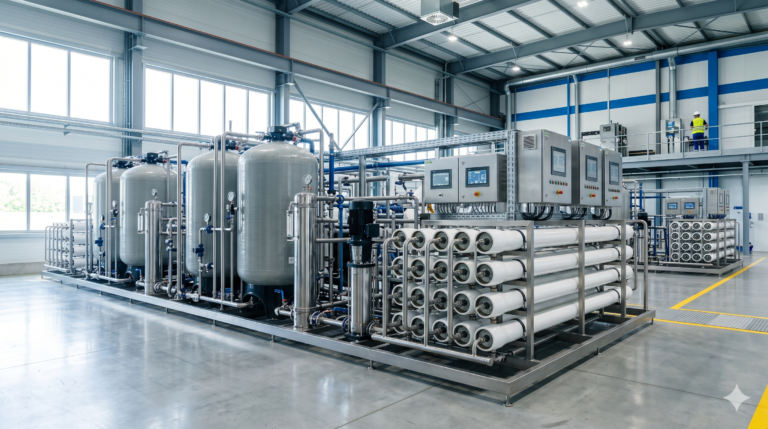
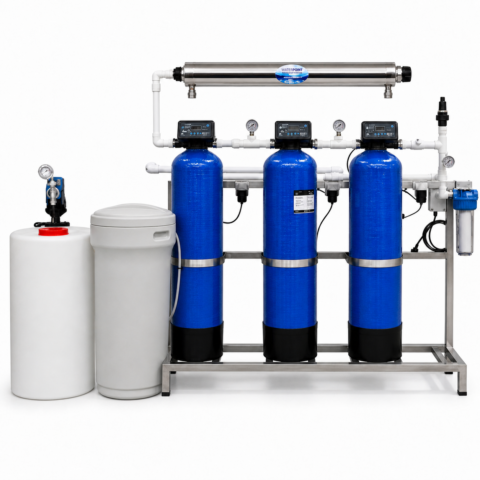
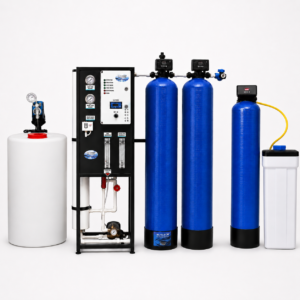
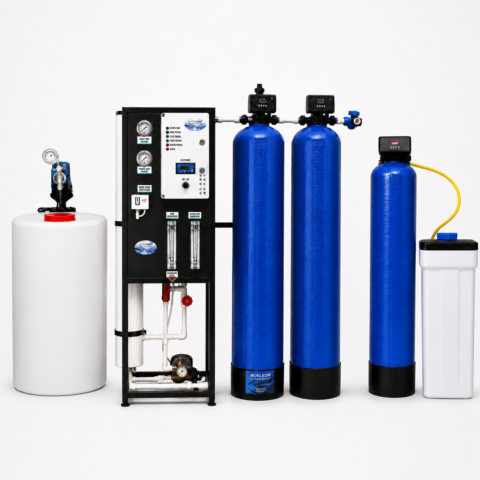
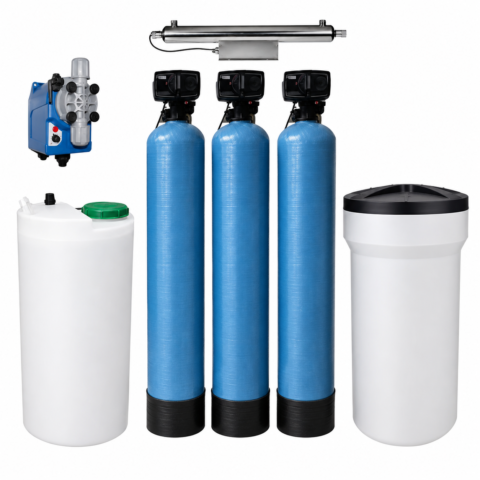
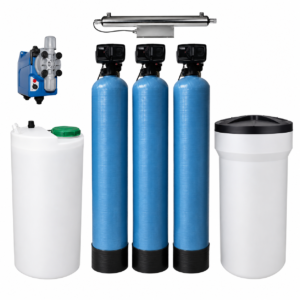
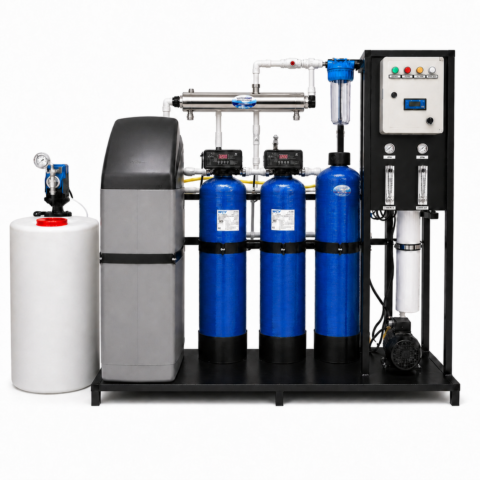
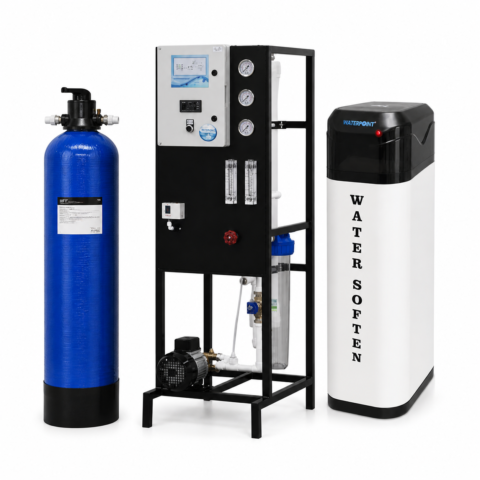
A typical build includes these stages: sediment or sand filtration, activated carbon, water softening and reverse osmosis. In applications calling for higher purity, deionisation is added, and UV (ultraviolet) treatment for microbiological risks. The choice of stages is made from the analysis result and the line-by-line targets.
The table below matches the need with the right stage:
| The Need | The Stage That Handles It | The Result It Gives |
|---|---|---|
| Sediment, sand, cloudiness | Pre-filtration / sand filter | Holds back particles, protects the line and the equipment |
| Chlorine, odour, organic load | Activated carbon | It reduces the sensory effect and protects the membrane |
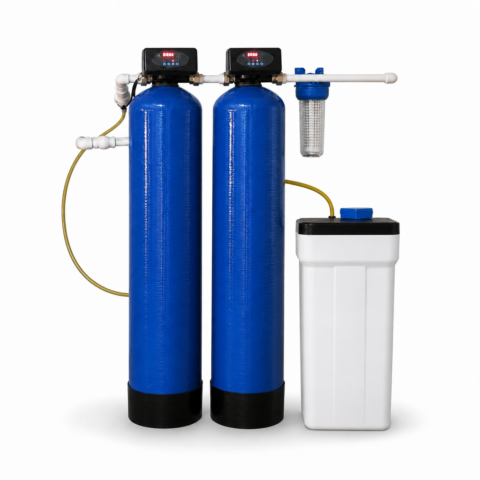
| Hardness and scaling | Water softening | Prevents build-up on heated surfaces |
| Dissolved solids load | Reverse osmosis | It provides removal at rates of up to 99% |
| The lowest conductivity target | Deionisation | It holds the remaining trace ions |
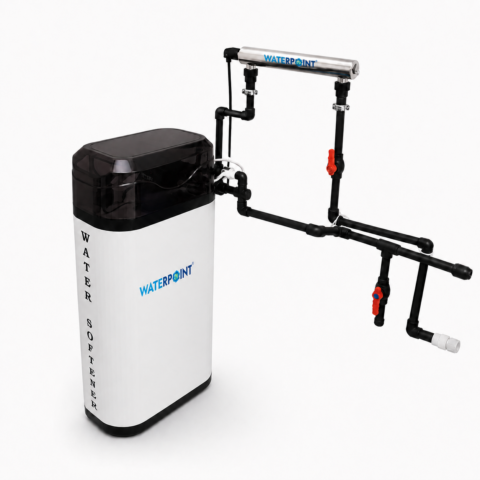
| Microbiological risk | UV (ultraviolet) treatment | Reduces microbiological risks |
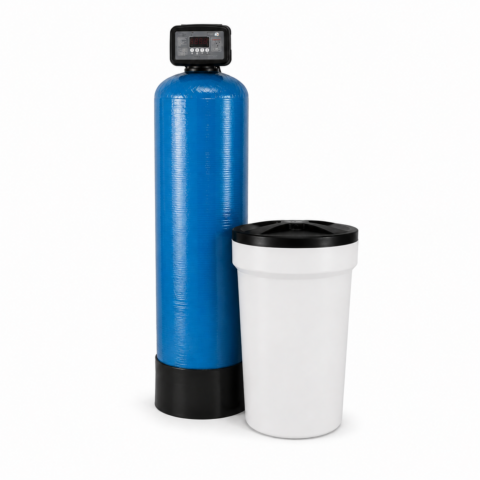
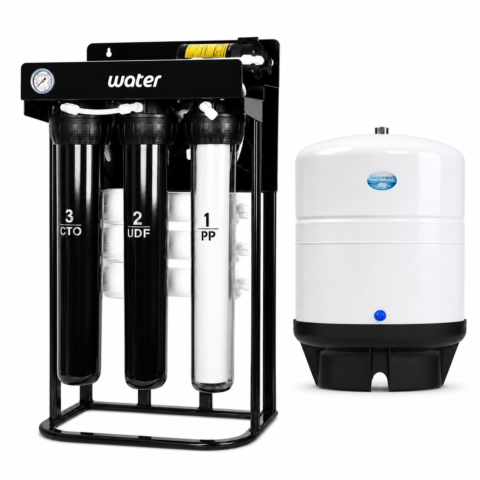
The first link in the chain is pre-treatment; it protects the stages behind it from particle and chlorine load. The high-capacity carbon units used for that purpose take on a critical job especially ahead of the membrane.
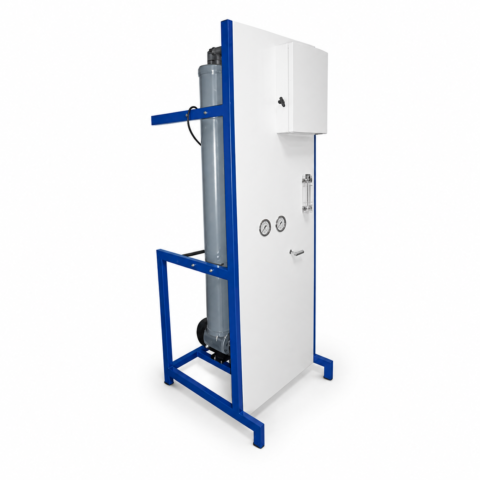
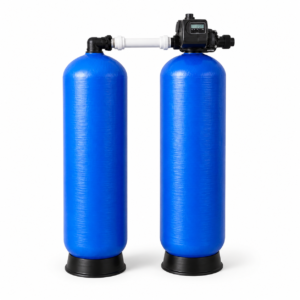
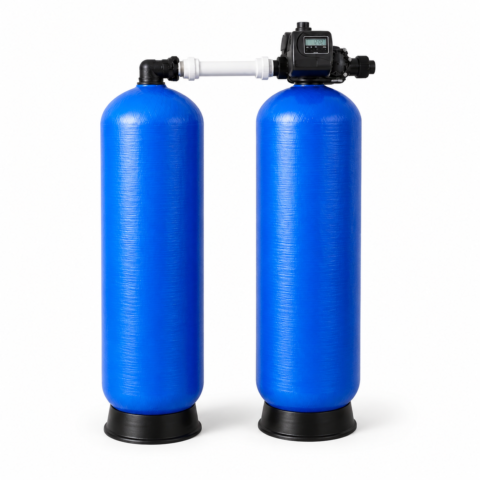
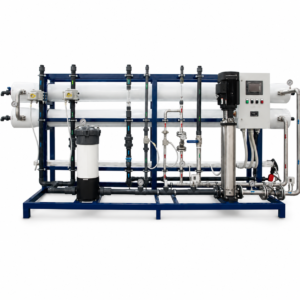
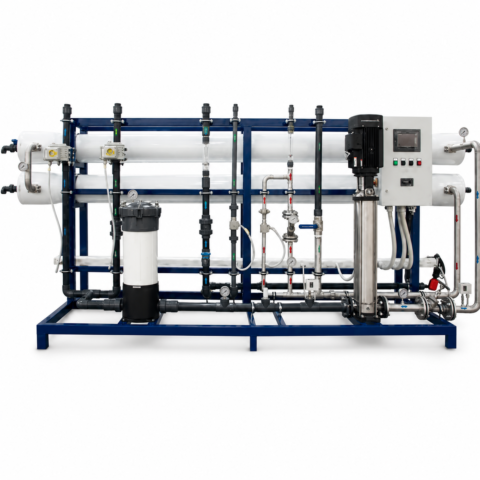
On the hardness side, industrial softening systems come into play. On the ingredient water line and on lines calling for high quality, high-capacity reverse osmosis systems are used.
In special applications calling for a higher level of purity, deionised pure water systems may be preferred. We took up separately in which sectors pure water is used, and why, in our uses of pure water article.
Let’s establish the stages that suit the lines in your plant
To clarify which stages are needed from your water analysis and your line-by-line quality targets, you can look at the solutions.
See the Industrial Solutions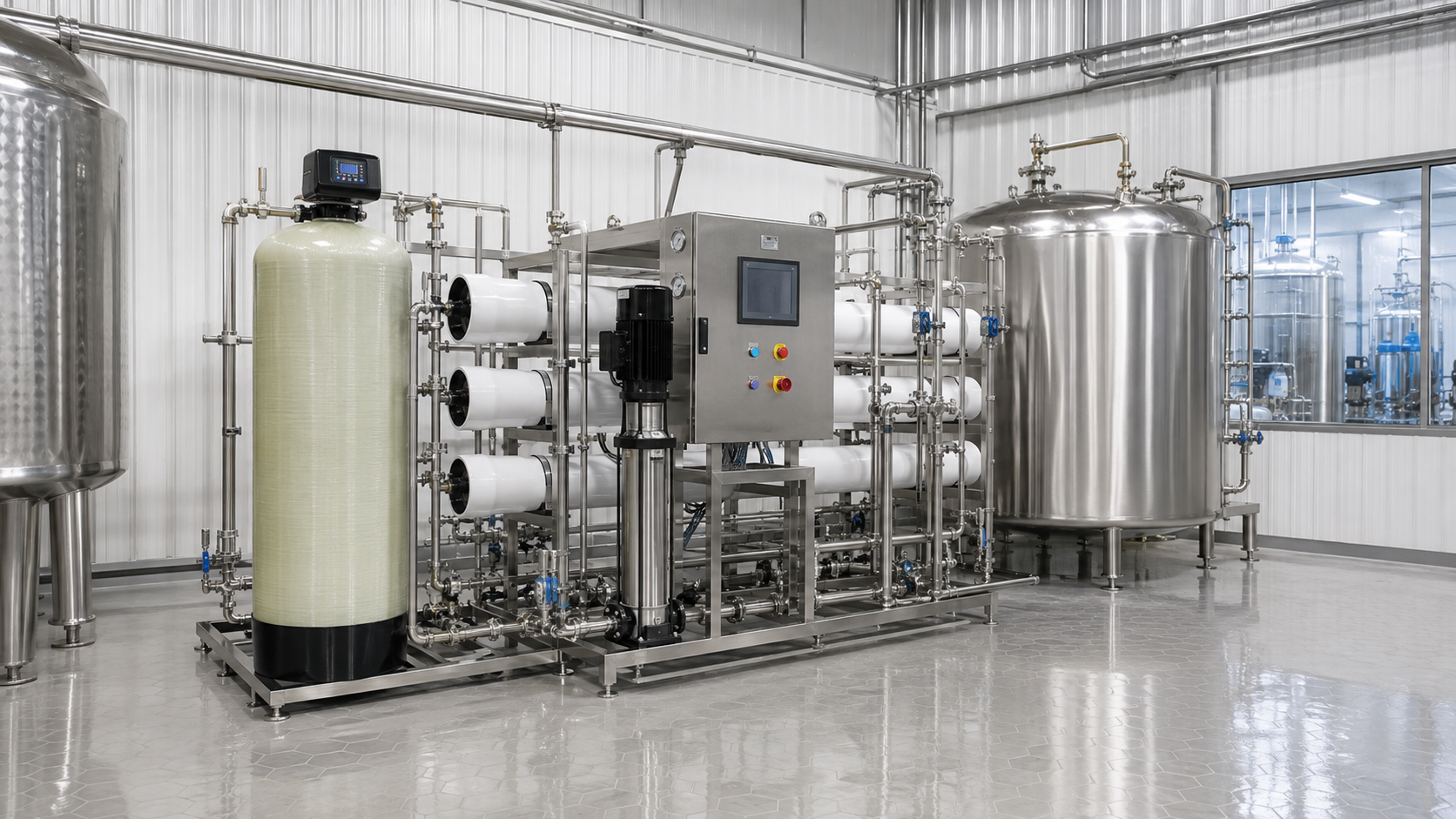
Not Every Line Calls for the Same Quality
Feeding a whole plant to a single quality target usually means unnecessary investment. Ingredient water calls for the highest quality, while pre-washing and some process steps can be met at a lower level. A line-by-line build lowers both the investment and the running cost.
This is the most practical heading in engineering a system, and the one that saves the most. It is skipped often all the same; the whole plant is fed to the highest standard and an unnecessary investment in capacity is made.
The quality expectation of the lines runs roughly in this order:
Pre-Washing and General Use
In steps that do not touch the product directly the expectation is relatively low; sediment control is the priority heading.
Process Water
It touches the product and works with equipment; sediment and hardness control are needed together.
Final Rinse and Boiler Feed
It is expected to leave no residue; on the boiler side hardness control is decisive.
Ingredient Water
It goes into the product; the highest quality and the highest repeatability are aimed for here.
That order is not a rule but a logic of planning. The spread of lines and their expectations differ in every plant; the exact targets are defined in line with the plant quality system.
In practice this is usually built as follows: the water entering the plant passes through a common pre-treatment, and additional stages then come into play for the lines calling for high quality. Advanced treatment therefore runs only at the flow rate needed.
What that approach means on the operating side matters too: a smaller advanced treatment capacity means less consumable use and a lower energy spend. Water quality in food production planning is therefore an exercise in cost optimisation.
Before starting the engineering, list the points of water use in the plant and place each one in one of the three roles. That simple exercise is the most effective step there is against an unnecessary investment in capacity.
How Is the System Engineered?
The engineering is done with five sets of data: the water analysis result, the line-by-line quality targets, the flow and peak use profile, the installation space along with the infrastructure conditions, and the automation and maintenance plan. Until those headings are clear, the capacity and the build of the stages cannot be settled.
A sound project process runs in this order:
-
Have a Water Analysis Done
The profile of the inlet water is established at an accredited laboratory. Where the source varies, repeating it at different times is advised.
-
Classify the Lines
The points of water use are grouped by the ingredient, process and wash-steam roles. A quality target is defined for each group.
-
Work Out the Flow and Peak Profile
The daily consumption and the simultaneous use at the busiest hour are established. The system is sized to peak demand, not to the average.
-
Build the Stages
Which stages will be installed, and in what order, is established from the analysis result. A common pre-treatment and line-by-line advanced stages are planned.
-
Confirm the Space and the Infrastructure
The layout of the equipment, the drain connection, the power supply, access for salt and room to work on the units are all clarified in advance.
-
Set Up a Maintenance and Monitoring Plan
Consumable renewal, performance tracking and repeat analysis are tied to a plan. Monitoring records are kept in the quality system.
We took up the general logic of a capacity calculation and what to watch for at business scale in a separate article; you can read the approach in our industrial-type system selection guide. The exact capacity is always established from the water analysis and the intensity of use at the plant.
Water Point Su Arıtma Teknolojileri operates from Esenyurt, İstanbul under its founder Ali Genç, with more than 20 years of experience in the sector.
Certification
CE certification is held for the activities carried out.
Survey
The survey is free if the unit is purchased from us; where only a survey and measurement are wanted, a survey fee of ₺2,000 applies. The solution proposed is established from the water analysis.
Service Network
For industrial systems there is a service network across Türkiye; for home units service is provided in İstanbul and the neighbouring provinces such as Kocaeli and Tekirdağ.
Warranty
Units, valves, pumps and tanks carry a 2-year warranty and taps a 1-year warranty. Filters, membranes, resin and salt are consumables and fall outside the warranty.
Spare Parts Cover
Filters, membranes, resin and salt are consumables; valves, pumps and tanks are durable spare parts.
Contact
For survey and engineering requests, 0850 304 95 25 and [email protected] can be used.
Frequently Asked Questions
Is mains water enough for production?
That depends on the quality expectation of the line and on the profile of the inlet water. On some lines pre-treatment may be enough, while lines carrying a high expectation, such as ingredient water, may call for advanced stages. The assessment is made from the analysis result and the plant quality system.
Is reverse osmosis essential?
It is not essential for every line. On lines where the dissolved solids load has to be brought down — on ingredient water in particular — it is often preferred. On wash and general use lines a simpler build may be enough. The decision is made on the line-by-line targets.
Is the same water used on every line?
Generally no, and it would not be the right approach either. Ingredient water calls for the highest quality, while pre-washing can be met at a lower level. A line-by-line build both prevents unnecessary investment and lowers the running cost.
How often should an analysis be done?
It would not be right to give a fixed period; the frequency is set by how variable the source is and by the plant quality system. Seasonal change, an observation of product inconsistency, a change of source and verification after commissioning are all situations calling for a repeat analysis.
How much space does the system take?
The space needed varies with the capacity, the number of stages and the number of lines. As well as the tank bodies, room has to be left for working on the units, for access for salt and for the plumbing connections. The exact layout is planned during the site survey.
Can the source of product inconsistency be the water?
It can. If differences are seen between batches even though the raw material and the process parameters have been checked, the water has to be assessed too. The exact answer comes from an analysis; the signs only show which parameters to look at.
Is a water specification needed for quality certification?
In food safety management systems water is handled as an input used in production and is expected to be monitored. The scope and the requirements are set by the plant quality system and the relevant regulations; this article does not constitute legal advice.
What should I do if I already have a system?
First it is assessed whether the existing build lines up with the line-by-line targets. In some plants an additional stage is enough, while in others separating the lines may suit better. A site survey and an analysis form the basis of that decision.
Can well water be used in production?
Whatever the source, suitability is established by analysis. In well water the profile varies with the geology and can fluctuate with the season, so it is followed more often. The assessment is carried out in line with the relevant regulations and the plant quality system.
Conclusion
Water quality in food production is not a heading that can be handled with a single standard. Water takes on three separate roles in a plant: the ingredient water that goes into the product, the process water used along the line, and the water on the cleaning and steam side. Every role has a different expectation — repeatability and the highest quality are aimed for in ingredient water, while pre-washing can be met at a lower level. That distinction settles the right treatment build and prevents an unnecessary investment in capacity. The right order is clear: a full water analysis first, then classifying the lines and defining the quality targets, then engineering the stages to the flow and peak profile. The assessment of suitability is always made within the framework of the relevant regulations, accredited laboratory analysis and the plant quality system.
Let’s engineer your plant line by line
The site survey is free if the unit is purchased from us; where only a survey and measurement are wanted, a survey fee of ₺2,000 applies. The solution proposed is established from the water analysis. To plan a build that suits your line-by-line quality targets, you can reach us on 0850 304 95 25 or at [email protected].
Discover the Industrial Solutions