
Freight delivery
New
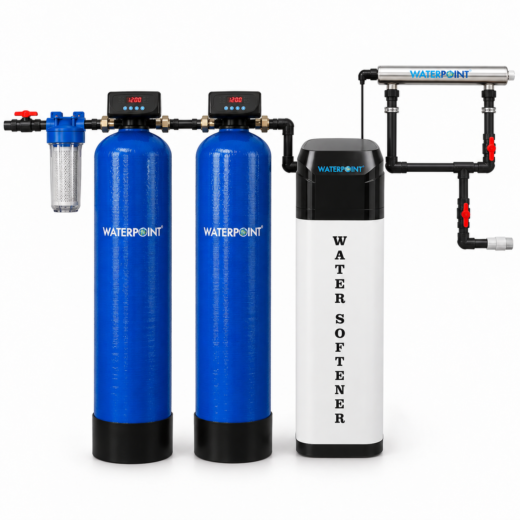
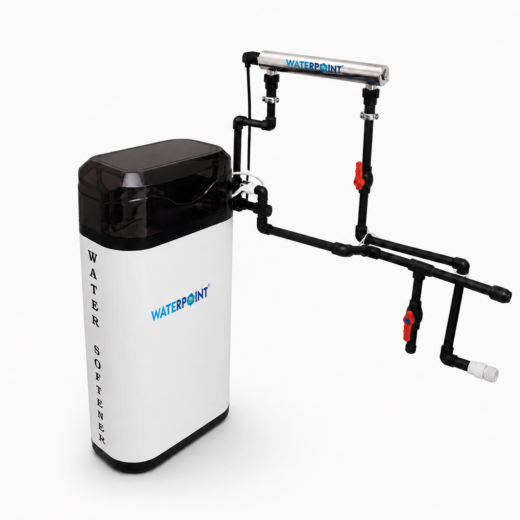
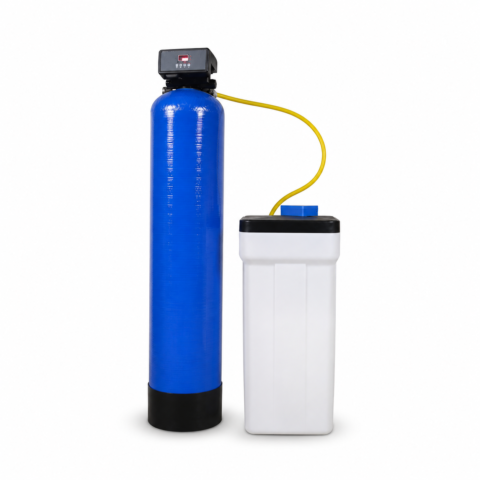
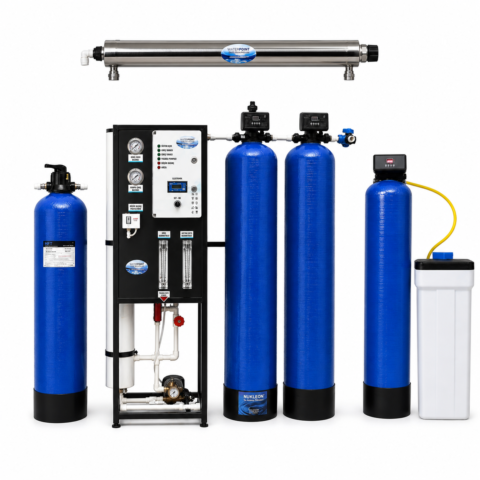
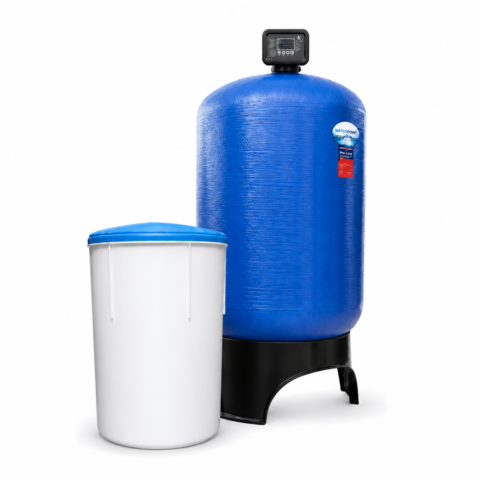
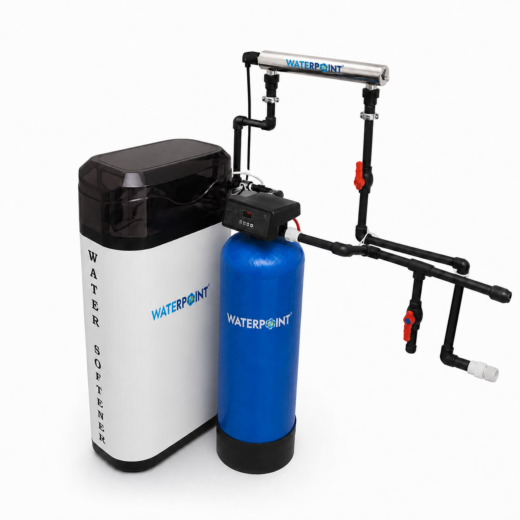
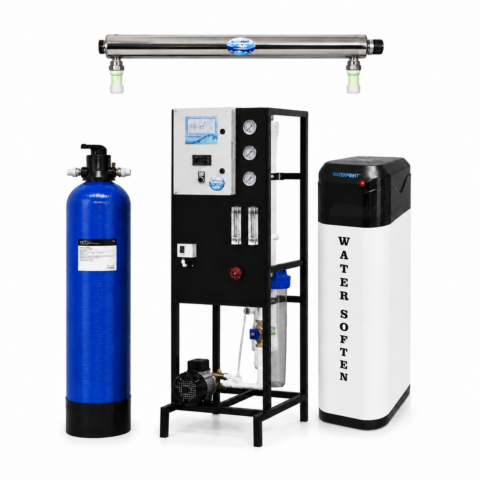
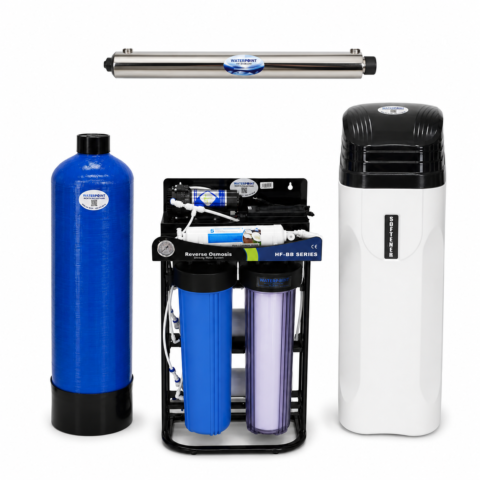
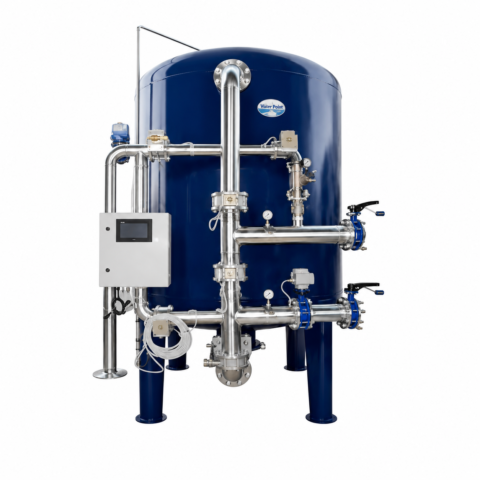
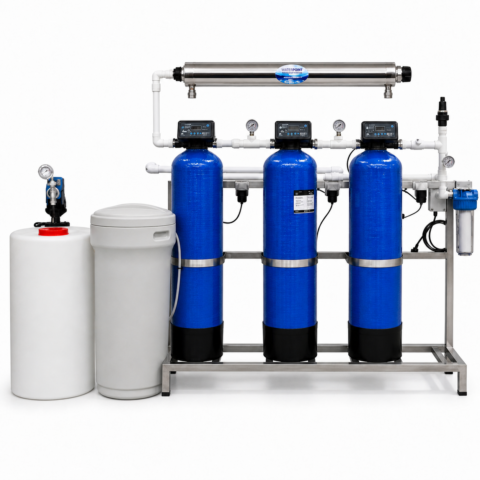
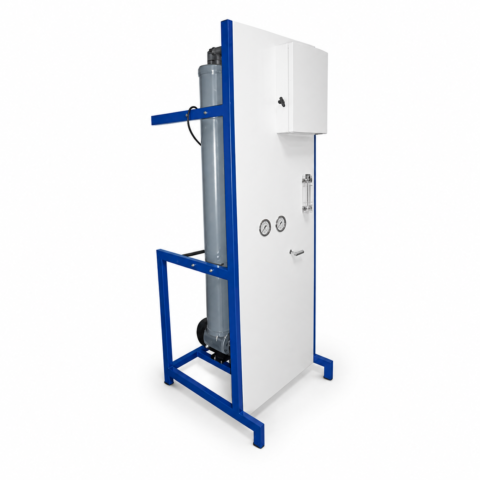
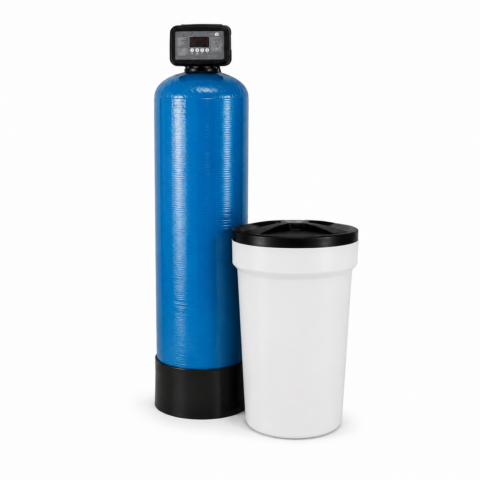
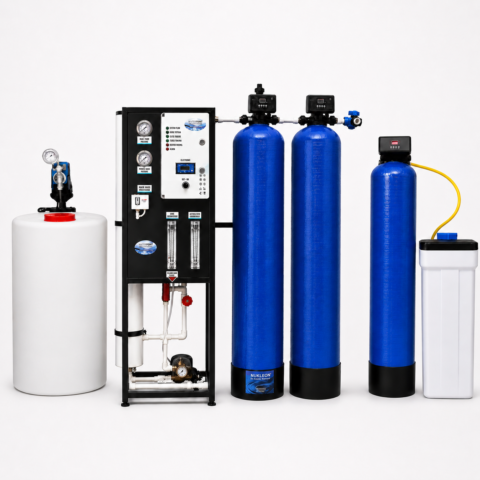
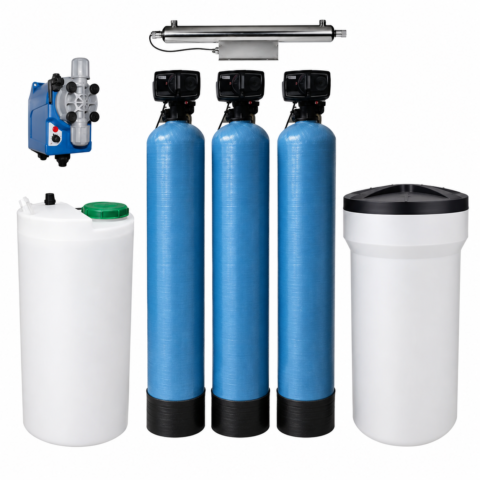
Industrial Water Treatment System 5-10 Tonnes/Day – Sand, Carbon, Softening and UV
5 – 10 Tonnes
Premium Cationic
₺117,644.16
VAT included

Categories
Solutions
Process water, line feed and sizing by flow rate.
Systems and units Industrial Water Treatment Read the guideTreatment that stops limescale and corrosion before they reach the boiler.
Systems and units Water Softeners Read the guidePure water of low conductivity and repeatable quality.
Systems and units Pure Water Systems Read the guideRemoving the salts and sediment that clog drip lines.
Systems and units Well Water Treatment Read the guideThe right hardness for equipment life and drink flavour.
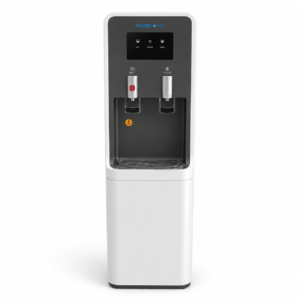
Systems and units Filtered Water Dispensers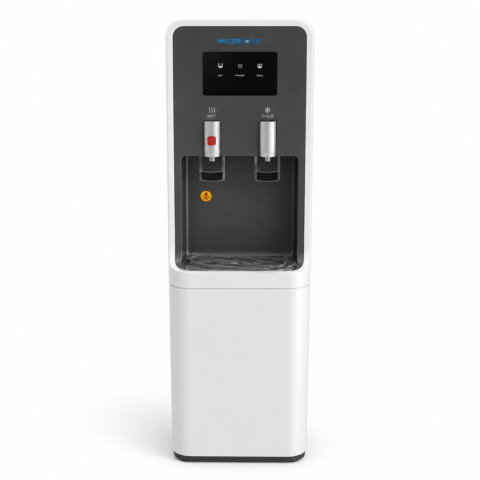 Water Point Filtered Water Dispenser
₺63,723.92
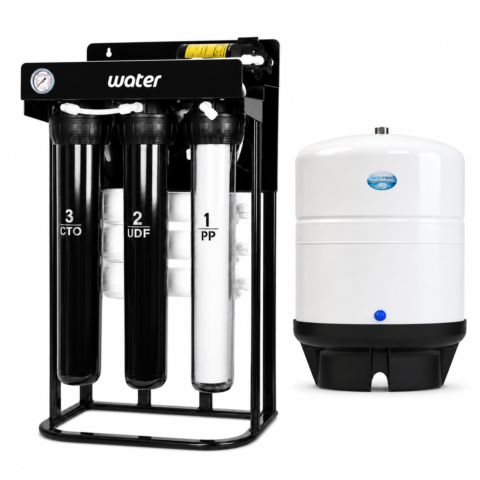 Restaurant Water Purifier, 500 GPD with 40 Litre Tank
₺49,018.40
A main line that filters the water entering your plumbing at a single point.
Systems and units Whole House & Building Inlet Systems Read the guideA staged system for iron, manganese and turbidity.
Systems and units Well Water Treatment Read the guideLow-conductivity rinse water for spot-free drying.
Systems and units Reverse Osmosis Systems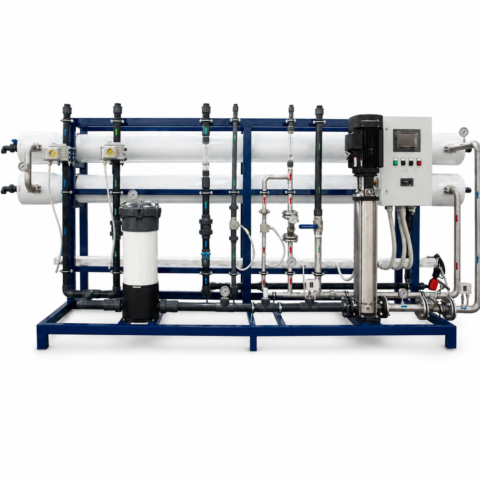 95 Tonne Reverse Osmosis System
₺980,368.00
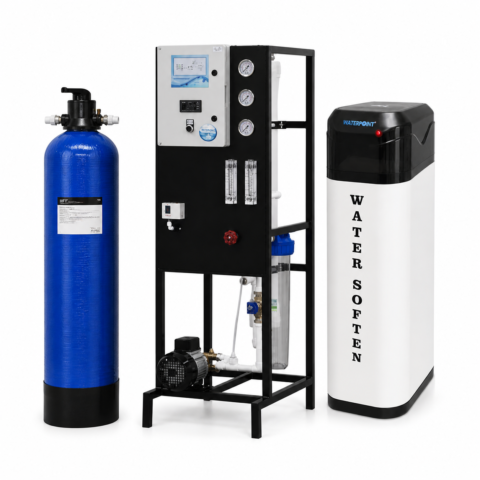 Industrial Deionised Pure Water Unit, 250 L/h
₺220,582.80
The problems hard water causes in hair and skin care.
Systems and units Water Softeners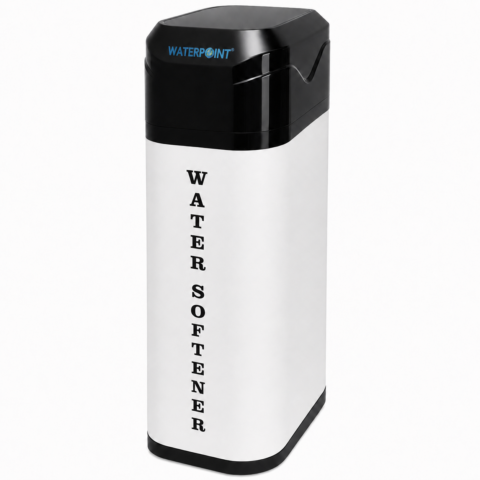 Maxi Cabinet Water Softener, 5 Tonnes/Day
Original price was: ₺49,018.40.₺34,312.88Current price is: ₺34,312.88.
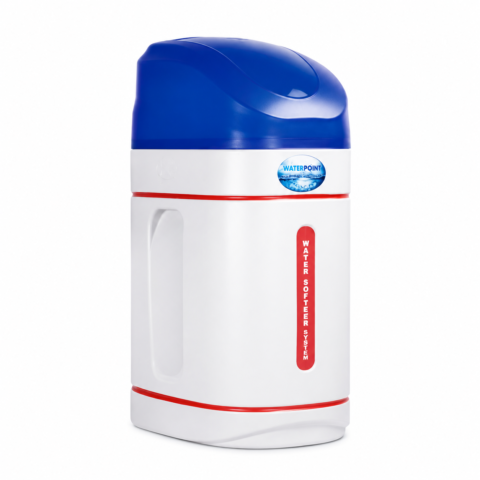 Mini Cabinet Water Softener, 2 Tonnes/Day
₺44,116.56
Drinking water from seawater with high-pressure reverse osmosis.
Systems and units Reverse Osmosis Systems Read the guideCompany
Product Category
In water softening the choice starts with measuring the hardness; how the unit works, capacity, salt consumption and maintenance intervals complete the decision. The aim is to make clear which questions you need to ask when choosing the right unit.
Filter
The daily treatment capacity stated by the manufacturer.
Not sure which one is right for you?
In water softening the choice starts with measuring the hardness; how the unit works, capacity, salt consumption and maintenance intervals complete the decision. The aim is to make clear which questions you need to ask when choosing the right unit.
Water softener prices vary with capacity, resin volume, valve type and vessel construction. The prices below are the current list prices on the relevant product pages.
| Product | Price | Description |
|---|---|---|
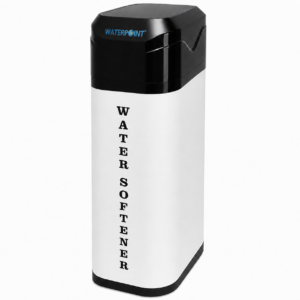
| Maxi Cabinet Water Softener, 5 Tonnes/Day | 34,312.88 TL | Cabinet-type central softening system for villas, detached houses and high-consumption businesses, with a capacity of 5 tonnes per day. |
| Mini Cabinet Water Softener, 2 Tonnes/Day | 44,116.56 TL | Compact cabinet-type system for flats and small businesses, with a capacity of 2 tonnes per day. |
| Flow-Controlled Water Softener | 49,018.40 TL | System that regenerates according to the volume of water that has passed, lowering salt and water consumption. |
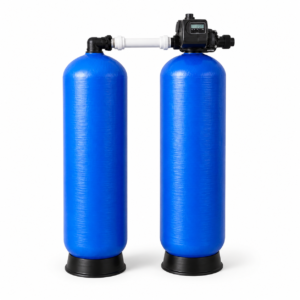
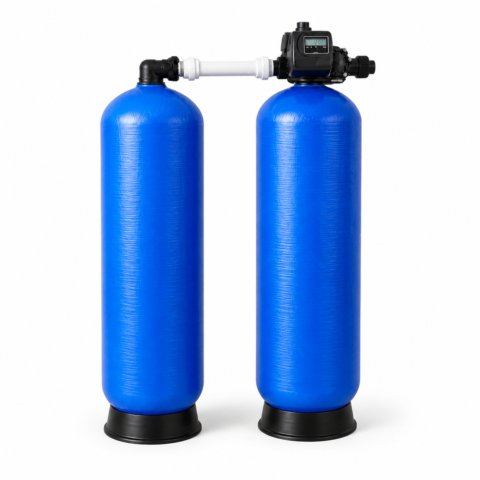
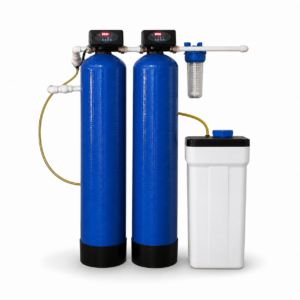
| Twin-Tank Water Softening System | 115,193.24 TL | System in which two columns work in alternation, so the soft water flow is not interrupted even during regeneration. |
| Industrial Twin Water Softener | 490,184.00 TL | Industrial twin system that runs without interruption, for facilities with a high flow rate. |
| Face-Piped Softening System | 588,220.80 TL | Industrial system that gives low pressure loss at high flow rates through large-diameter pipework. |
Prices are for the standard configuration; they vary with capacity, valve type and any additional equipment chosen. The correct capacity is determined from the measured hardness and the daily consumption figures.
For a water softener suited to your home or business and a firm price, you can reach us on 0850 304 95 25 or at [email protected].
Water softeners work on the principle of ion exchange. The vessel of the unit is filled with sodium-charged cation exchange resin. As hard water passes through the resin bed, the calcium and magnesium ions in the water are held by the resin; in exchange, the sodium ions in the resin pass into the water. The water leaving the unit no longer leaves limescale behind.
The holding capacity of the resin is not unlimited. Once it has held a certain amount of hardness it becomes saturated and has to be renewed. This process is called regeneration: brine from the salt tank is passed through the resin, the calcium and magnesium held there are stripped off and sent to drain, the resin is reloaded with sodium and the cycle starts again.
The heart of the system is the control valve. It manages the backwash, brine draw, slow rinse and fast rinse steps in sequence. Programming the valve correctly has a direct effect on both water quality and salt consumption.
Water hardness is a measure of the calcium and magnesium dissolved in the water. In Türkiye the unit in common use is French hardness (°fH). The measurement can be made on site with a simple test kit, or determined by laboratory analysis.
Hardness has two components:
A softener removes both components. Boiling the water or fitting a sediment filter therefore does not solve the hardness problem; ion exchange is needed to bring hardness down permanently.
Bringing the hardness at the unit outlet down to zero is not always wanted. In homes a certain amount of hardness is usually left in; completely soft water can produce unwanted results with some plumbing materials and in the taste of drinking water. In industrial applications such as steam boilers, on the other hand, the target is close to zero. The right target is set by where the water is used; the point of use must therefore be clarified before the unit is chosen.
Even before you have an analysis done, you can recognise hard water from the following signs:
How strong these signs are is directly proportional to the degree of hardness. A hardness measurement must be made for a firm decision; at Water Point the site survey is free if the unit is purchased from us.
Limescale forms an insulating layer on heat transfer surfaces. Building up on a combi boiler heat exchanger or a boiler tube, this layer makes it harder for the heat to pass into the water; more fuel or electricity is spent to produce the same hot water. As the build-up progresses:
Because a softener stops this build-up before it forms, it is both more economical and safer for the equipment than intervening afterwards with descaling chemicals.
The type of unit is chosen according to where it will be used and whether the water supply has to be uninterrupted.
| Type | Where It Is Used | Key Feature |
|---|---|---|
| Cabinet type | Flats, villas, small businesses | Resin vessel and salt reservoir in a single body; compact and takes up little space. |
| Flow-controlled | Anywhere with variable consumption | Counts the volume of water that passes and regenerates once the capacity is used up; lowers salt and water consumption. |
| Twin-tank (duplex) | Facilities that need an uninterrupted supply | While one column is regenerating the other is in service; soft water is never interrupted. |
| Face-piped | Industrial facilities with a high flow rate | Low pressure loss at high flow rates through large-diameter pipework. |
| Item-coded systems | Engineered industrial lines | Capacity and the equipment list are determined on a project basis. |
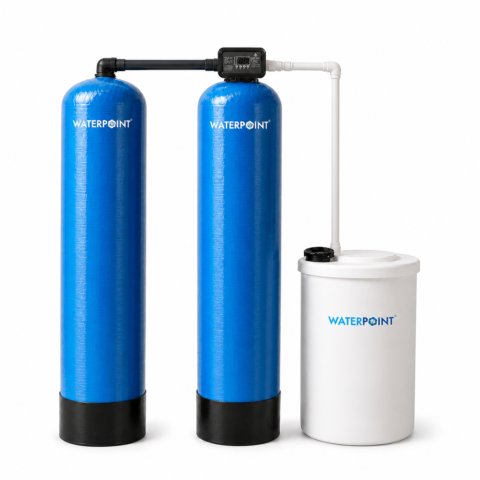
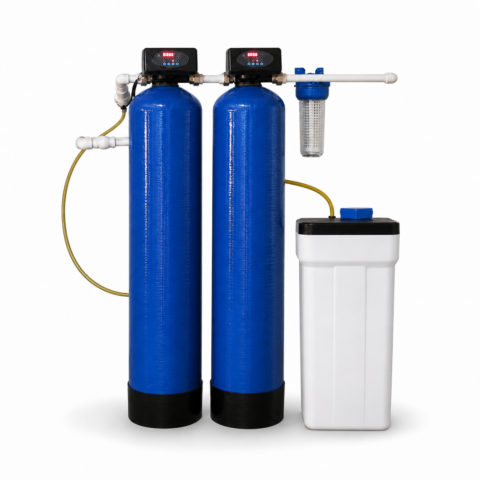
In a tandem system two resin tanks work in turn: while one regenerates, the other stays in service, so softened water never stops. It is chosen where water is needed without interruption all day, such as boiler rooms, hotels, hospitals and production lines. The Twin-Tank Water Softening model has twin 13×54 tanks and a Runxin flow-controlled valve for a capacity of 15 tonnes a day (mains water). The Industrial Twin Water Softener works with two 18×65 tanks, 400 litres of cation resin and a Clack digital flow-controlled valve, at a flow rate of 7.5 m³ per hour and a capacity of 70 tonnes a day.
Timer-controlled units regenerate at a set interval; they are simple to install and low in cost. But if consumption varies they regenerate before the capacity is used up and waste salt and water unnecessarily; in the opposite case, if the capacity is used up and regeneration is late, hard water reaches the line.
Because flow-controlled units measure the volume of water that passes, they regenerate only when it is needed. As well as lowering salt and water consumption, they also work correctly when consumption changes, as it does over a holiday or a shift change. In homes and businesses with irregular consumption, a flow-controlled choice is more economical in the long run.
Capacity selection rests on two figures: raw water hardness and daily water consumption. Multiplying the two gives the total hardness load the unit has to handle between two regenerations. The resin volume is determined from that load.
In industrial applications the peak flow rate is also taken into account: the system must be able to meet the m³/h figure required at the busiest moment. If the flow rate is insufficient the pressure drops, and because the water passes through the resin bed too fast the softening efficiency falls.
| Place of Use | Deciding Criterion | Suitable Type |
|---|---|---|
| Flat | Number of people in the household and the hardness | Mini cabinet |
| Villa, detached house | Garden and multiple-bathroom consumption | Maxi cabinet |
| Café, restaurant, hotel | Daily consumption and service hours | Flow-controlled |
| Facility in continuous production | Requirement for uninterrupted flow | Twin-tank |
| Factory with a high flow rate | Peak m³/h figure | Face-piped or engineered system |
Choosing the capacity smaller than it should be leads to frequent regeneration and therefore to high salt and water consumption. Choosing it larger than necessary raises the initial investment and can leave the resin standing for long periods and working inefficiently. A hardness measurement is essential for the right choice; our guide on how to choose a water softener walks through the calculation.
Softeners run on tablet salt. The salt is used to renew the resin and does not mix into the supply; the regeneration water goes to drain. The factors that determine salt consumption are these:
The salt level must be checked regularly and topped up before the tank empties completely. When the salt runs out the unit carries on regenerating but the resin cannot be renewed; hard water is then delivered at the outlet, and the problem usually goes unnoticed until limescale appears again.
A water softener is positioned immediately after the water inlet, so that it feeds the whole line you want to protect. In a home it is usually connected after the water meter, and in a business on the main feed line.
What must be checked before installation:
After installation the hardness of the outlet water must be tested to confirm that the target value has been reached. At Water Point a water test is carried out after installation and the user is briefed on salt top-ups and on alarm conditions.
This is the point most often confused. The two solve different problems and, most of the time, are not alternatives to each other but complements.
The common arrangement in practice is this: a softener is fitted at the building or flat inlet, and a separate under-sink purifier is used in the kitchen for drinking water. The whole installation is then protected from limescale while the drinking water passes through a separate stage. In systems that use reverse osmosis, softening also protects the membrane and extends membrane life.
In ion exchange, calcium and magnesium are taken out of the water and sodium takes their place. The amount of sodium that passes over is directly proportional to the raw water hardness: the higher the hardness, the more sodium there is in the softened water.
For this reason softeners are usually positioned for utility water; for drinking and cooking water, a separate purifier in the kitchen is preferred. People who need to limit their sodium intake should consult their doctor before using softened water for drinking. Setting the unit so that it leaves some hardness at the outlet is also common practice.
A softener is not a purifier; it is not designed to remove bacteria, chlorine, sediment or heavy metals. Separate stages are needed for those requirements.
Measuring hardness does not need an expensive instrument. Drop test kits show the hardness of the water in a few minutes. The procedure is simple: the stated amount of water is taken into the tube supplied with the kit, the test liquid is added drop by drop and the tube is shaken after each drop. The number of drops at which the colour turns gives the value of the water in French hardness.
Points to watch when measuring:
Where well water is used the hardness can change with the season; in that case the measurement should be repeated a few times a year. With mains water the value is relatively stable, though it can shift when the source changes.
If limescale has started to appear again, or the outlet water has turned hard, the following checks can be made before calling out a service engineer:
If these checks bring no result, the resin may be fouled or the valve faulty; at that stage a technical service assessment is needed.
Cation exchange resin is not a consumable; under the right conditions it works for many years. There are, however, factors that shorten its life:
A drop in capacity shows up as more frequent regeneration at the same consumption, or as a rise in the outlet hardness. At that point cleaning or renewing the resin is considered. Resin is within Water Point's spare parts scope.
In summer houses, on construction sites or in seasonal businesses, a unit may have to stand for months. Over a long standstill, stagnant water is left in the resin bed and a risk of microbiological growth arises. In that case:
Short holidays need no special procedure; flow-controlled units do not regenerate because there is no consumption, while timer-controlled units carry on with their programme.
Softened water brings changes you can see. Soap and detergent lather more easily; a smaller amount may be enough for the same cleaning. Resetting the dosing on washing machines and dishwashers therefore saves money and prevents residue after rinsing.
White marks forming on fittings, shower enclosures and ceramic surfaces once they dry are reduced; cleaning frequency and the use of descaling chemicals fall. Because limescale build-up stops in heated equipment, heat-up time and energy consumption stay at their first-day level.
Dishwashers also have a built-in softening section; where there is central softening, the salt setting on the machine can be lowered. The hardness setting in the machine manual should be updated according to the value measured at the unit outlet.
| Component | Task | Frequency |
|---|---|---|
| Salt level | Check and top up | Regularly, according to consumption |
| Outlet water hardness | Measurement with a test kit | At intervals |
| Salt bridge | Check for a hardened crust | At intervals |
| Resin bed | Check for fouling, clean if necessary | When performance drops |
| Control valve | Verification of the regeneration steps | At scheduled service |
| Pre-filter | Cartridge replacement | According to the raw water quality |
At Water Point, filters, membranes, resin and salt are consumables; valves, pumps and tanks are durable spare parts; there is a service network covering the whole of Türkiye for industrial systems and İstanbul and the surrounding provinces for domestic units, and technical service is provided for units of all domestic and foreign brands.
Table salt and rock salt are not used in water softeners. These salts leave insoluble residue; the residue collects at the bottom of the salt tank and blocks the draw line and the valve. Softeners use tablet salt: a high-purity, low-residue form pressed so that it dissolves slowly.
What to watch when choosing salt:
A hard crust formed in the salt tank looks full from the outside even when the unit is not drawing salt. Looking at the level alone is therefore not enough; whether there is a void under the salt must be checked at intervals. Tablet water softener salt is available in our shop, and purity and the salt bridge are covered in our water softening salt guide.
Manufacturers of heating equipment set conditions on the quality of the feed water in their warranty terms. The reason is technical: when limescale collects on a heat transfer surface the surface temperature rises, the metal fatigues and permanent damage occurs in the heat exchanger. To limit this risk, manufacturers ask for certain values in the filling and top-up water.
Three points matter in practice:
Meeting these conditions becomes easier in an installation that has a central softening system. Even so, since the value each manufacturer expects can differ, you should compare the water quality requirement in your appliance's manual with the outlet hardness you measure.
In apartment buildings softening can be installed at two different points, and each has consequences of its own.
Building inlet installation means a single system feeds all the blocks. The unit is installed once, it is maintained jointly and the cost per person comes down. Against that, the capacity must be chosen for the peak flow rate of the whole building, which means a larger and more expensive system. The position of the unit, the drain line and responsibility for maintenance also require a decision by the building management.
Flat inlet installation means each flat uses its own system. Because the capacity is small the initial investment is low, the decision rests with one person and maintenance is under your own control. The drawback is that the pipework in the common areas is not protected; limescale keeps building up in the main risers.
These questions need to be settled before you decide: where will the system be installed, is there a drain line, is the power supply suitable, who will top up the salt and who will carry responsibility for maintenance. Calculating the capacity before these questions are answered leaves the job half done. If sediment and chlorine are to be handled on the main line alongside softening, you can look at the set solutions in the whole house and building inlet systems category.
Softening is often the first link in the chain and protects the stages that come after it.
For that reason, when a softener is chosen, not only today's need but the stages likely to be added later should be thought through. Leaving bypass and sampling points in place from the start makes later additions easier.
Water Point supplies water softening systems at scales ranging from homes to industrial facilities. The unit is not chosen from a catalogue but from measured hardness and consumption figures.
In hotels, restaurants, laundries, textile plants and food facilities, hard water means equipment failure, a rise in chemical consumption and production downtime. In facilities that must run without interruption a twin-tank arrangement is preferred; while one column is regenerating the other stays in service and the soft water flow is never interrupted.
In businesses that run steam boilers the target hardness is close to zero. On the boiler feed line hard water collects on the heat transfer surface and raises fuel consumption; the softening system is therefore sized separately according to the boiler capacity. In facilities with a cooling tower the target is not to bring the hardness to zero but to keep under control the concentration that rises with evaporation.
Efficient operation of the system depends on correct installation and regular maintenance. Water Point provides technical support covering installation, commissioning, scheduled maintenance and fault response. For industrial systems there is a service network across Türkiye; for domestic units, service is provided in İstanbul and the surrounding provinces (such as Kocaeli and Tekirdağ).

Let's work out the right system together
The site survey is free if the unit is purchased from us; if only a survey and measurement are wanted, a survey fee of 2,000 TL applies. Capacity and treatment stages are determined from the water analysis result.
0850 304 95 25Ask on WhatsAppSend an e-mailThey are used anywhere there is a hard water problem, from flats, villas and detached houses to hotels, restaurants, laundries, textile plants and food facilities. They are also common in businesses with steam boilers and cooling systems.
The raw water hardness and the daily water consumption must be measured, the valve type must be decided as timer-controlled or flow-controlled, and a twin-tank arrangement must be assessed according to whether an uninterrupted supply is needed. Spare part continuity should be asked about as well.
There is a wide range, from compact cabinet systems for flats to high flow rate industrial twin-tank and face-piped systems. Capacity is chosen by assessing the hardness together with the daily consumption.
It works on the principle of ion exchange. As hard water passes through cation exchange resin, calcium and magnesium are held by the resin and sodium passes into the water in their place. When the resin is saturated it is regenerated with brine and becomes usable again.
Softeners are usually positioned for utility water; for drinking and cooking water a separate purifier in the kitchen is preferred. Because sodium passes into the water in ion exchange, people who need to limit their sodium intake should consult their doctor.
Salt consumption varies with the raw water hardness, the volume of water treated and the valve type. The salt level must be checked regularly and topped up before the tank empties completely. When the salt runs out the resin cannot be renewed and hard water is delivered at the outlet.
Softening removes hardness and prevents limescale; water purification separates dissolved substances and raises drinking water quality. The two are not alternatives to each other but complements; in reverse osmosis systems softening also protects the membrane.
Units carry a 2-year warranty; misuse is outside the scope. Consumables such as filters, membranes and resin are outside the scope.
The price varies with capacity, resin volume, valve type and vessel construction. Current list prices are shown in the price table on this page. For a capacity suited to your hardness value, you can reach us on 0850 304 95 25.
Questions? Talk to our specialist directly.
WaterAI