
Why Do Odour and Taste Change in Treated Water?

You have a unit, it runs regularly and your water comes out clear. Yet when you bring the glass to your nose you notice an odour, or that the taste is not what it used to be. The first thought is usually the same: the unit has broken down. Yet a change in odour in treated water and in taste usually rests on a simple, solvable cause; what matters is looking for that cause in the right order.
This article is a diagnostic guide. It lets you work out step by step whether the problem comes from a filter that has reached the end of its life, a tired membrane, water standing in the tank, the incoming water itself, or a habit of use. We also separate clearly which checks you can make yourself and which are a job for technical service.
Why Do Odour and Taste Change in Treated Water?
A change in odour and taste usually comes from four causes: filter stages that have reached the end of their life, a tired or fouled membrane, water standing in the tank for a long time, and a change in the incoming water itself. In rare cases the tap, the hoses and the fittings can play a part too.
Those four headings explain most cases. Their order is not random either; they run from the most common cause to the rarest. Working through the diagnosis in that order saves both time and money.
One point should be made at the outset: clarity is not an indicator. Water can look clean to the eye while its taste and odour have changed, because those two properties are about dissolved components and are invisible.
Another common misconception is this: the problem is not always in the unit. When an odour in treated water is noticed, the first thing to do is to work out whether the source is in the unit or in the incoming water. The next section takes up exactly that.
Work It Out First: Is the Problem in the Unit or in the Incoming Water?
The most practical method is comparison. Draw water from the untreated taps in the house too and assess the odour and taste. If the same problem is present in both, the source is the mains or the building’s plumbing. If it is noticed only at the treated tap, the source is on the unit side.
That single check halves the field of diagnosis and prevents unnecessary part replacement. It is simple to carry out too: filling two separate glasses and comparing them is enough.
The source is the incoming water
A change arising from the mains, the building’s plumbing or a storage tank is involved.
- It may be a seasonal change in the mains
- It may come from the building’s tank
- The age of the plumbing may play a part
- The chlorine residue may have changed
The source is on the unit side
The filters, membrane, tank or fittings should be assessed.
- The carbon stage may have saturated
- The membrane may be tired
- Water standing in the tank may be involved
- It may come from the tap or the hoses
If the left-hand column applies, the answer lies outside the unit. We took up chlorine residue in mains water and the taste and odour complaints that come with it in a separate article; for the details you can read our piece on chlorine taste and odour in incoming water.
In buildings with storage tanks a separate heading comes into play. Water standing in a tank can change its character before it reaches the user; we examined that subject in detail in our tank water quality article.
If the right-hand column applies — that is, if the problem is seen only on the treated line — the rest of this article is directly for you. We take up the sources of an odour in treated water one by one in the sections that follow.
Likely Causes by Type of Odour
The character of the odour gives a strong clue about its source. A musty smell usually points to standing water, a metallic taste to the plumbing or membrane performance, a plastic-like smell to the first water from a new system, and a flat taste to the mineral content. That distinction speeds up the diagnosis.
The table below matches the character you notice with a likely cause:
| The Character Noticed | Likely Cause | The First Place to Look |
|---|---|---|
| A chlorine-like smell | The carbon stage may have saturated | The activated carbon filter |
| A musty or stale smell | Water standing in the tank for a long time | The tank and how often it is used |
| A metallic taste | The plumbing or membrane performance | The reading and the state of the membrane |
| A plastic-like smell | The first water from a new system | Whether the initial rinse was done |
| A flat or plain taste | A low mineral content | The choice of final stage |
| A sediment-laden or earthy taste | Pre-filtration may have fallen short | The sediment stage and the inlet water |
| A salty taste | The passage of dissolved solids may have risen | The membrane and the reading |
The matches in that table are not a diagnosis but a first pointer. The definite answer becomes clear through the checks in the sections that follow. Even so, the distinction is valuable in deciding where to start.
For a technical framework on taste and odour in drinking water, the US Geological Survey’s resource on taste and odour in drinking water offers a general assessment and sets out that the sensory properties of water can come from different factors.
The Most Common Cause: A Saturated Carbon Stage
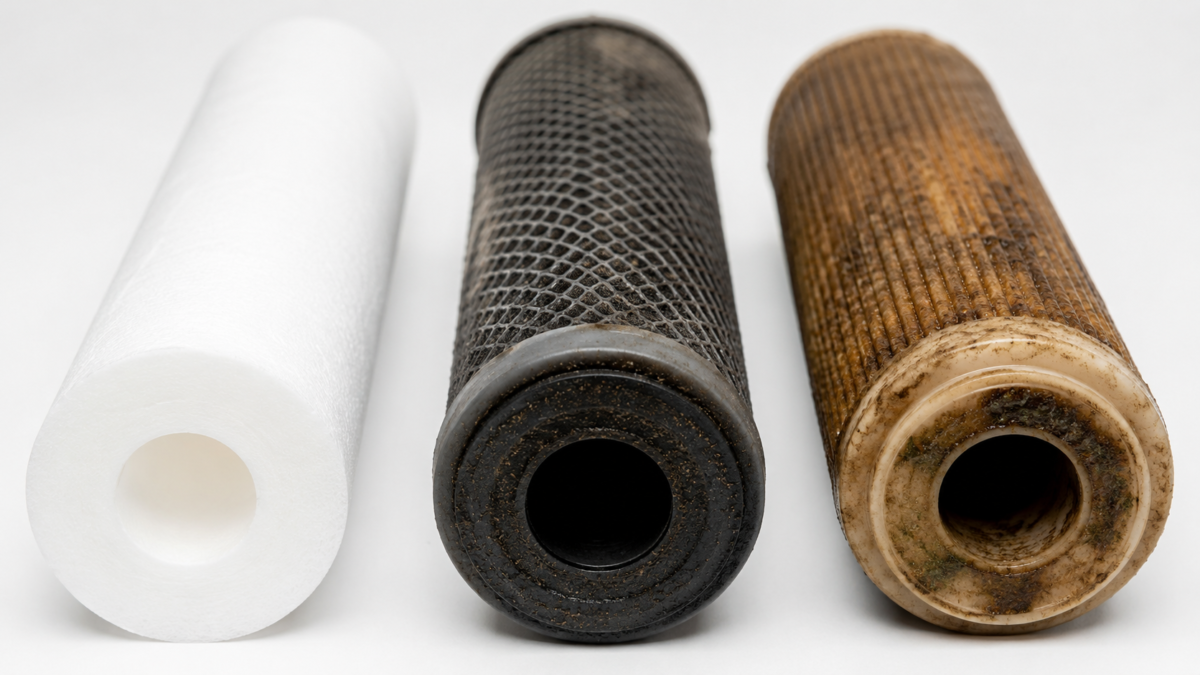
Activated carbon holds chlorine along with odour and taste components on its surface. When its holding capacity is full it gives that job up and the character it had removed returns. Because the carbon stage does not show its saturation from the outside, the problem is usually noticed by the return of taste and odour.
This is the single heading that explains most cases. Carbon is a consumable with a defined capacity. When that capacity is exhausted the water goes on flowing; but the stage no longer does anything.
The telling sign is clear: the chlorine-like character that had been removed starts to be noticeable again. A change in the aroma of tea and coffee is often the first signal noticed.
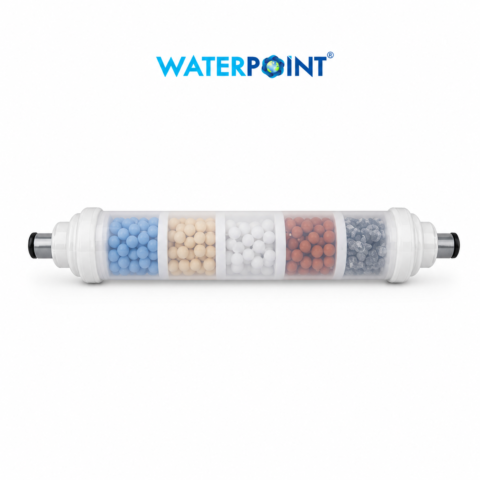
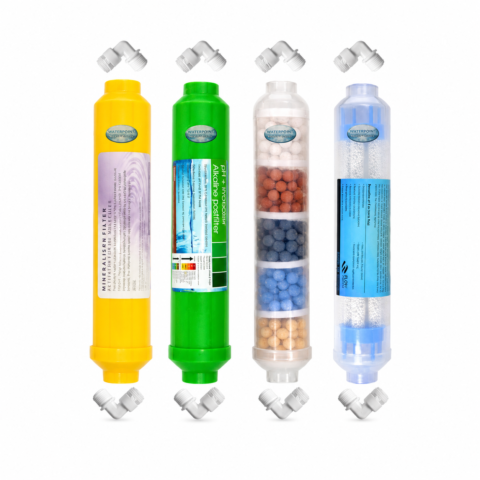
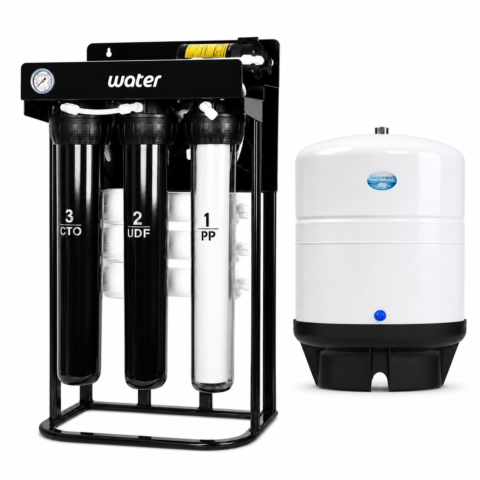
We took up in detail how the carbon stage works and what it removes and does not remove in our activated carbon filter article. When the time to renew the stage comes, the whole line can be refreshed with a staged filter set suited to the build of the unit; on systems using separate stages, coal-based activated carbon can be chosen instead.
We took up what determines the change interval and how to read the signs in our filter change guide. It would not be right to give a fixed period; the inlet water quality and the amount consumed are what decide it.
The carbon stage is both the component that saturates most often and the easiest to change. In diagnosing odour in treated water, therefore, the first thing to check is the age of the filter; that step should be completed before moving to the membrane.
A Tired or Fouled Membrane
When a membrane loses its performance, the passage of dissolved solids rises and the taste of the water changes. The telling indicator is the reading: if the taste has gone off and the reading on the outlet water has risen permanently, the membrane should be assessed. When the pre-filters are not renewed on time, the membrane tires early.
This heading is the second cause after the carbon stage. The membrane is the most valuable component of the system, and rather than starting with it, the simpler items should be eliminated first.
A membrane-related problem has two typical scenarios. The first is ageing: the module has completed its working life and its separation performance has fallen. The second is fouling: build-up has formed on the surface and permeability is impaired.
In both cases the reading is decisive. If the reading on the outlet water does not fall as far below the inlet as expected, the module may have lost its performance. We took up what that measure tells you in our TDS and dissolved solids article; to follow it day to day a practical meter can be used.
We explained the structure of the membrane, the mechanism of ageing and why it depends on the pre-filters in our membrane filter article. What should be stressed here is this: replacing a membrane and working inside the system are jobs for technical service.
The age of the filters must always be checked before moving on to assessing the membrane. Users who have replaced a membrane because of a saturated carbon stage are not rare; working from the easy to the hard prevents unnecessary expense.
Water Standing in the Tank
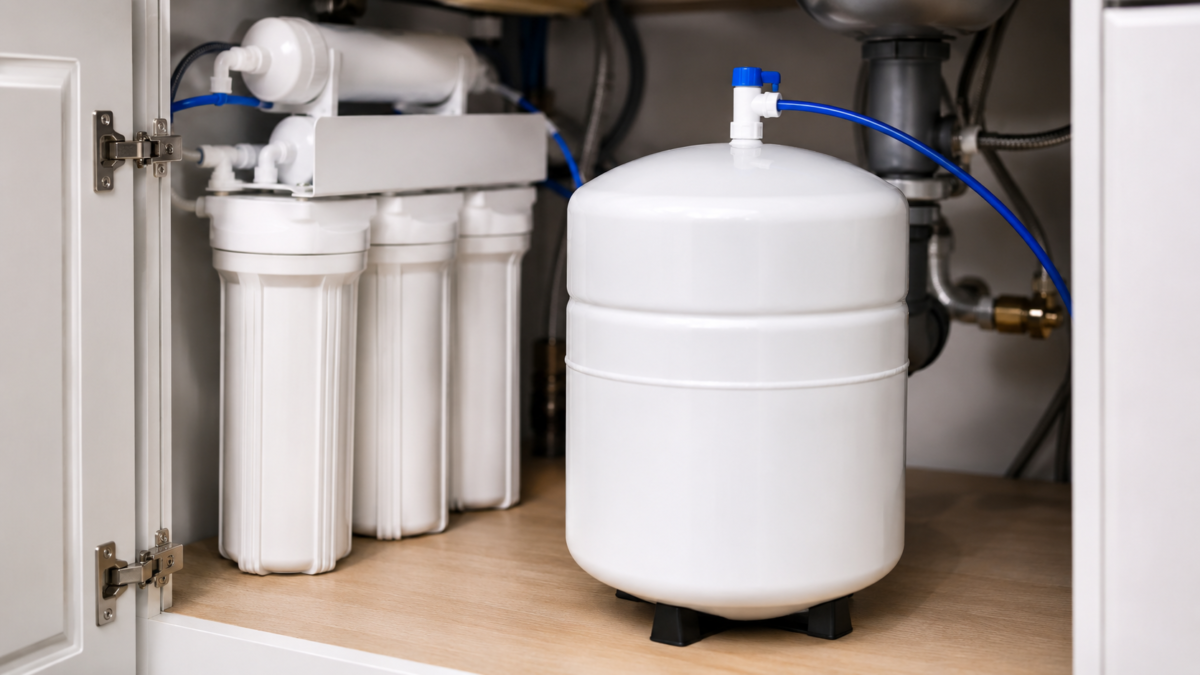
In systems with storage, water waits in the tank for a while. When use becomes less frequent the wait lengthens and the character of the water can change; biological build-up can also form over time. The first thing to do in that case is to empty the water in the tank and let the system refill with fresh water.
This cause comes to the fore in systems that are used little in particular. The tank is a buffer volume that lets the water be refreshed; but when consumption falls, that volume stops being an advantage.
The telling sign is typical: in the first water drawn after a long gap a musty character is noticeable, and after a few glasses that feeling fades. That points to water standing in the tank.
The answer is clear too: the tank is emptied completely and the system is allowed to refill. How many times to repeat it varies with the unit; the guidance in the unit’s manual should be taken as the basis.
The tank itself should be assessed too. The internal lining and the air pressure directly affect how the tank works. But removing the tank, measuring the air pressure and cleaning it inside are jobs for technical service; they are not recommended for the user.
Infrequent Use
When consumption falls, water stands in the tank for a long time and its character can change.
A Long Pause
On holidays or with seasonal use the standing time lengthens markedly.
Biological Build-Up
In the right conditions build-up can form inside the tank; a periodic check is needed.
Air Pressure
When the pressure falls the tank does not empty fully and old water can stay inside.
The Taste of the First Water from a New Unit
In newly installed systems a slight taste or odour can be noticed in the first water produced. That comes from residues left in the stages by the production and storage process. That water should not be used but run off; the system becomes stable after a few fills.
This is not a fault but expected behaviour after installation. New cartridges can contain carbon dust; the first water can look grey or cloudy and carry a slight character.
The most common mistake users make is to use that first water and read the result as the unit’s performance. The right practice is to rinse as many times as the manual states.
We took up in detail the steps of commissioning and why the first water should be discarded in our installation guide. Because the number of rinses varies with the unit, the guidance in the manual should be taken as the basis.
If the character persists after rinsing is complete the situation is different; the installation and the connections should then be checked. A connection made to the hot water line, for example, can have an unexpected effect on the stages.
Systems Left Unused for a Long Time
After a summer house, seasonal use or a long holiday, the water inside the system stands still. When recommissioning, the line should be run for a while, the tank emptied and the state of the filters checked. If the period is up, the stages should be renewed before use.
That scenario explains the periods in which odour in treated water complaints rise seasonally. Enquiries of this kind clearly increase at the start of summer and on return from holidays.
The order to follow when recommissioning is this:
- Run the line: The water standing in the plumbing should be run off for a while.
- Empty the tank: In a system with storage, the water standing in it should be fully discharged.
- Check the age of the filters: Even if they have not been used, the period for the stages may have run.
- Check for leaks: After a long pause the connections should be checked.
- Repeat the rinse: After the system has refilled, the first water should not be used.
- Call a service if necessary: If the character persists, the tank and the membrane should be assessed.
The third item is a surprise to most users: the stages age even when they are not used. After a long pause, therefore, the state of the filters should be reviewed regardless of the amount consumed.
Causes from the Tap, Hoses and Fittings
Though seen less often, the treated tap, the hoses and the fittings can be a source of odour too. In a tap left unused for a long time the water stands still; in ageing hoses and fittings, build-up can form over time. That possibility is assessed after the other causes have been eliminated.
This heading comes at the end of the diagnostic order because it is relatively rare. But if the problem persists after every other item has been checked, this is where to look.
The points to assess are these:
The Treated Tap
In a tap used infrequently, water can stand still inside the body.
Ageing Hoses
In hoses used for a long time, material fatigue can develop.
Build-Up at Fittings
Deposits can form at unions and connection points over time.
A Crushed Line
In a restricted hose the flow slows and the water stands longer.
The simplest check in this group is to leave the tap open for a while and run off the standing water. If the character disappears after that, the cause is standing water. Renewing hoses and fittings is within the scope of technical service.
A reminder is needed at this point: whatever the cause of odour in treated water, taking the system apart and reassembling it should not be attempted by the user. The unit works under pressure and a mistaken intervention can cause a leak.
Step-by-Step Diagnosis: When Should a Service Be Called?
Diagnosis works from the easy to the hard: first comparison with the other taps, then checking the age of the filters, then emptying the tank, then reading the meter, and last assessing the membrane. The first three steps can be done by the user; the membrane, tank and valve are jobs for technical service.
Following the order below, most cases are solved without needing a service call:
-
Compare the Other Taps
Draw water from an untreated tap and compare. If the same character is there, the source is not the unit.
If it is present in both: the mains, the plumbing or the tank side is assessed. -
Check the Age of the Filters
Consider the date of the last change and how heavily they have been used. Darkening in a clear housing makes saturation obvious.
If the period is up: renew the stages and watch for a few days. -
Empty the Tank
In a system with storage, use up all the water in the tank and wait for the system to refill.
If the character disappears: the cause is standing water, and how often it is used should be reviewed. -
Read the Meter
Check the reading on the outlet water and compare it with earlier records.
If the value has risen permanently: the membrane should be assessed. -
Check the Tap and the Line
Leave the tap open for a while to run off the standing water; inspect the hoses by eye for crushing.
If the character passes: the cause is standing water, and the pattern of use is adjusted. -
Call a Service
If the steps above bring no result, the system should be assessed as a whole.
Work on the membrane, tank and valve is carried out by technical service.
The value of that order is that it prevents unnecessary expense. Replacing a membrane because of a saturated carbon stage, or having the system taken apart because of water standing in the tank, are common and avoidable situations.
What the User Can Do
- Compare with the other taps
- Check the date of the last filter change
- Empty the tank by using up the water
- Run the tap to clear standing water
- Read the meter on the outlet water
- Inspect the hoses by eye
What Technical Service Will Do
- Assess the state of the membrane and renew it
- Measure and set the tank air pressure
- Clean the inside of the tank by a suitable method
- Check the valve and the check valve
- Renew connections and hoses
- Commission the system as a whole
The work in the right-hand column is carried out on a system under pressure. Attempting it as a user carries a risk of both leaks and equipment damage; it should therefore be left to an authorised service.
If the problem persists, have the system checked
You can look at the options to assess causes arising from the filters, the membrane or the tank and to establish the right spare part.
See the Spare Parts and SolutionsFrequently Asked Questions
My treated water smells musty — what should I do?
That character usually points to water standing in the tank for a long time. The first step is to use up all the water in the tank and let the system refill. If the character persists, the age of the filters should be checked; if there is still no result, the tank and the membrane should be assessed by technical service.
My new unit’s water smells of plastic — is that normal?
In new systems a slight character coming from the stages can be noticed in the first water produced. That water should not be used but run off. The system becomes stable after a few fills; for the number of rinses, the guidance in the unit’s manual should be taken as the basis.
The water smells bad after a holiday — why?
During a long pause the water in both the plumbing and the tank stands still. When recommissioning, the line should be run for a while, the tank emptied and the period of the filters checked. Even if they have not been used, the time for the stages may have run.
I changed the filter but the odour did not go — why?
The next headings are then assessed: water standing in the tank, membrane performance and causes arising from the tap and hoses. New stages that have not been rinsed can also create a temporary character. If there is no result, the system should be examined as a whole by a service.
Is water that smells drinkable?
A change in odour and taste does not always point to a health problem; it usually comes from a saturated stage or standing water. Even so, being careful about using the water until the cause is established, and having the system checked, is the right approach.
The water tastes flat — is that a fault?
No. When the dissolved solids load falls, the character of the water becomes plainer; that is an expected result. For those who care about how it drinks, a cartridge with mineral content can be chosen at the final stage. That is not compulsory but entirely a matter of taste.
What does a metallic taste indicate?
A metallic character can come from the plumbing or point to a fall in membrane performance. To tell them apart, compare with the other taps first, then check the reading on the outlet water. If the value has risen permanently, the membrane is assessed.
Can I clean the tank myself?
It is not recommended. The tank is a component working under pressure; removing it, measuring the air pressure and cleaning it inside call for technical knowledge. What the user can do is empty the tank by using up the water and let the system refill.
What should I do to stop the problem recurring?
Record the filter change dates and put the period in your calendar. After long pauses, run the line and empty the tank. Checking the reading on the outlet water from time to time is also a practical way of catching a loss of performance early.
Conclusion
A change in the odour and taste of treated water is usually not a fault but a maintenance signal you can follow. The right diagnosis works from the easy to the hard: compare with the other taps first, then check the age of the filters, then empty the tank, then read the meter on the outlet water, and last assess the membrane. Followed in that order, most cases are solved with a simple intervention; and the most common cause is a saturated carbon stage. In new systems the first water should be discarded, and after long pauses the line should be run and the tank emptied. Work on the membrane, tank and valve is within the scope of technical service; intervention by the user on a system under pressure is not recommended.
Let’s establish the cause together and plan the right part
The site survey is free if the unit is purchased from us; where only a survey and measurement are wanted, a survey fee of ₺2,000 applies. To have problems arising from the filters, the membrane or the tank assessed, you can get in touch on 0850 304 95 25 or at [email protected].
Discover the Solutions