
Why Does Tank Water Go Bad? Water Tank Treatment Solutions
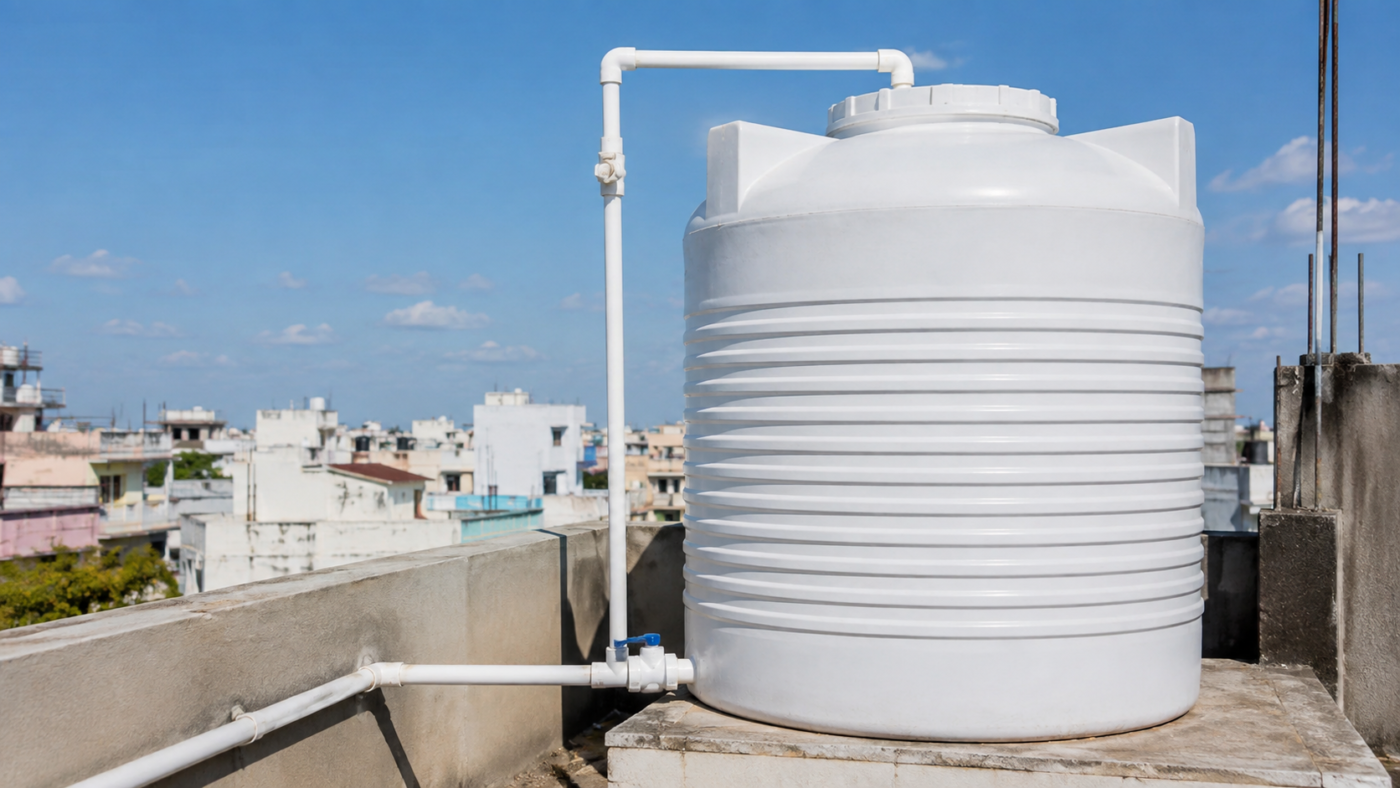
You come back from holiday, turn on the tap and a heavy smell spreads through the kitchen. Or the water runs cloudy the first time you open it in the morning and clears after a few seconds. If you manage an apartment block you will be hearing similar complaints from residents. What those pictures have in common is this: the problem is not in the water coming from the mains but in the place where it waits. Because tank water changes character the longer it stands.
In this guide we take up why water quality falls in a tank — standing water, sediment, temperature and outside influences — and which maintenance and treatment stages solve those problems. The aim is not to alarm but to make visible why the water in your tank changes and to show the right measure.
Why Does Tank Water Lose Quality Over Time?
Tank water changes through three factors over the time it stands: the chlorine residue from the mains falling away, sediment collecting on the bottom, and rising temperature raising the microbiological risk. Standing water accelerates all three at once. The result is a loss of quality noticed in odour, cloudiness and taste.
Water leaving the mains is designed to be protected along the line. But that protection is not endless. Once water is taken into a tank and begins to stand there, the protective effect weakens over time and the character of the water becomes open to change.
That change is not sudden but gradual. In the first days it is not noticed; it becomes clear as use falls and the standing time lengthens. The problem is therefore usually felt on returning from a holiday or after a period of low consumption.
Preserving water quality inside a building is a subject taken up in international sources too; the US Environmental Protection Agency’s guidance on maintaining water quality in buildings stresses that water quality should be monitored during periods of low use in particular.
Standing Water: The Biggest Factor
Standing water is the first thing that lowers water quality in a tank. When water does not move, the protective chlorine residue from the mains falls away over time and microbiological risks can rise. In periods of low consumption — in summer houses, on holiday or in empty flats — that effect grows markedly.
A tank causes no problem as long as it is constantly refreshed. Water comes in, is used, and new water takes its place. When that cycle slows, the time water stays in the tank lengthens; that is the point at which the loss of quality begins.
In tanks with poor circulation there is a further problem: dead zones. In some corners of a tank the water barely moves at all; if the inlet and outlet are not well positioned, fresh water follows only one path through and the rest of the volume goes on standing.
The scenarios in which standing water is felt most are these:
- Summer houses and seasonal use: In a tank unused for months the water stands completely still.
- Holiday periods: When a building empties, consumption falls and the standing time lengthens.
- Empty flats: Unoccupied units raise the amount of standing water in the line.
- An oversized tank: A volume larger than needed makes the water stand longer than it should.
- Poor circulation: If the inlet and outlet are badly positioned, part of the volume is never renewed.
The last item escapes most managers. The assumption that “a bigger tank is better” works in reverse in buildings with low consumption; when tank water stands longer than it should, the loss of protection begins earlier. The right volume has to be in proportion to consumption.
Sediment and Settlement
Sand, rust and fine sediment arriving with mains or well water collect on the bottom of the tank over time. That deposit is not normally felt in the upper part of the water; but when the level drops or the tank is filled suddenly, it mixes in and reaches the tap. Cloudy water when the tap is first opened in the morning is usually a sign of it.
Sediment building up is an inevitable process. The fine particles carried in the water settle to the bottom by gravity in a still environment. The longer a tank goes without cleaning, the thicker that bottom layer becomes.
The real problem is that the deposit mixes into the water not continuously but periodically. That makes diagnosis harder: sometimes the water runs clear, sometimes cloudy. The user blames the mains, while the source is their own tank.
The situations that trigger sediment mixing in are these:
A Falling Level
When the water level approaches the bottom, the deposit easily reaches the suction line.
A Sudden Fill
A fast inflow stirs the bottom sediment and spreads it through the water.
Pump Vibration
The running of a booster set and vibration can lift settled sediment back into suspension.
Long Neglect
In a tank that is not cleaned the layer thickens and the problem becomes more frequent.
The position of the suction line is decisive too. If the outlet pipe is very close to the bottom, the deposit is carried into the line regularly. A suitable height leaves most of the sediment on the bottom. That detail can be improved with a small change on existing tanks.
The lasting answer on the sediment side is filtration. We covered how the particle load is held and why backwashing is needed in our sand filter article.
Temperature and the Effect of Sunlight
In water that warms up, microbiological risks can rise and the protective chlorine residue falls away faster. Tanks on roofs, terraces or in areas that get the sun warm up markedly in summer in particular. Insulation and shading are the most practical measures for reducing the loss of quality caused by heat.
Temperature affects tank water quality on two fronts. The first is chemical: as the heat rises, so does the rate at which the protective residue is used up. The second is biological: a warm environment creates more favourable conditions for microorganisms to multiply.
Those two effects feed one another. As the protection falls the environment becomes more favourable; the result is odour and taste complaints that become clear in summer. That the same tank causes no problem in winter confirms that seasonal link.
The measures that can be taken are clear and most are low-cost:
- Insulation: Insulating the tank body reduces how much the inside temperature is affected by outside conditions.
- Shading: On tanks in direct sun, shading markedly lowers the heating.
- Choice of position: On new installations a cool, shaded position should be chosen.
- Keeping light out: In tanks that let light through, the risk of algae rises; opaque material is preferred.
- Ventilation: Ventilating the tank space properly reduces the build-up of heat.
The question of light matters particularly. In transparent or translucent tanks, sunlight gets in and prepares the ground for algae. That directly triggers both appearance and odour problems.
The Lid, Ventilation and Outside Influences
A lid that does not close properly means the tank is left open to outside influences. Dust, leaves and insects getting in affect water quality directly. Overflow and drain lines that are not properly arranged also create a risk of backflow. The tank material being suitable for drinking water is a basic requirement too.
This heading is the easiest to put right but the one most often neglected. However good a tank may be technically, when its lid is left open everything from outside comes into contact with the water.
The points to check are these:
The Lid Seal
The lid should seat fully, its gasket should be sound and it should stay closed.
The Ventilation Filter
The ventilation openings should be filtered; dust and insects should be kept out.
The Overflow Line
The overflow pipe should be suitably positioned and closed to backflow.
The Drain Valve
There should be an accessible valve for discharging the sediment on the bottom.
The Tank Material
The material used should be suitable for contact with drinking water.
The Integrity of the Surface
Cracks and wear create a risk of both leaks and contamination.
Ventilation calls for particular care. The tank space has to breathe; but when those openings are left unfiltered they open the door to dust and living things from outside. Filtered ventilation meets both needs together.
A tank water problem should be looked into with these physical checks as the first step. Because in a tank whose lid has been left open, no treatment stage installed can fully solve the problem.
The Signs That There Is a Problem
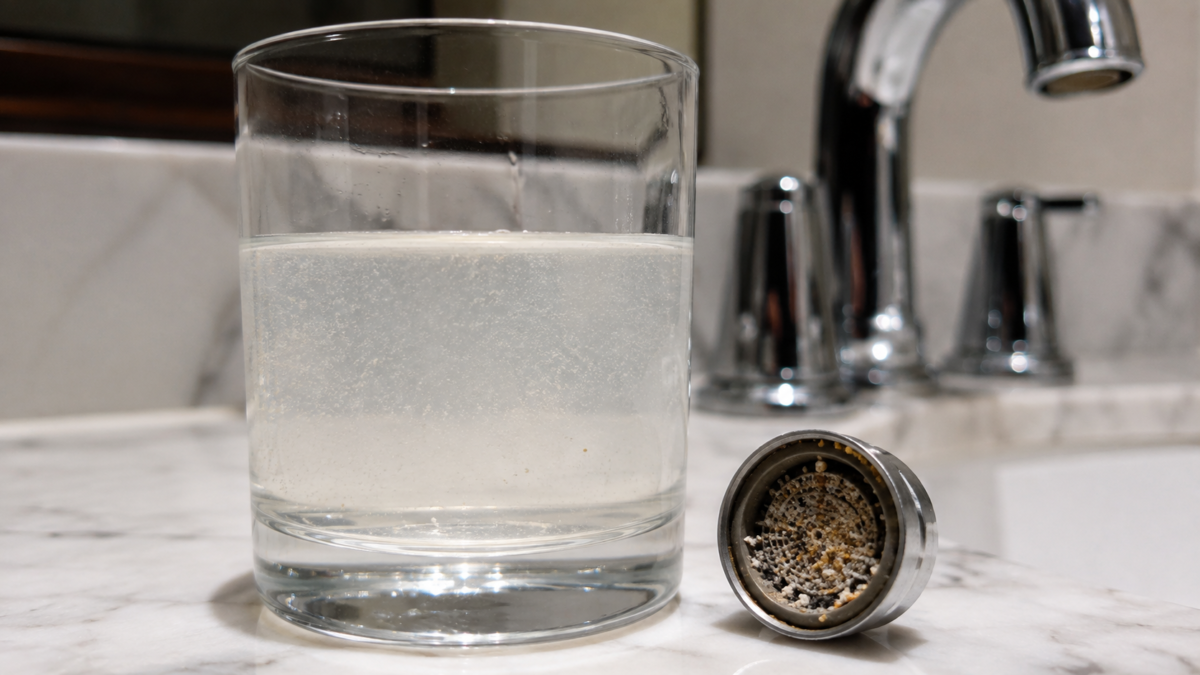
The most common signs are these: a stale or musty smell from the tap, water running cloudy, sediment collecting in the tap aerators, a noticeable change in taste and coloured water on first opening after a long gap. Where these signs appear together, the tank side should be checked first.
Reading the signs narrows down the source of the problem. The table below matches what you observe with a likely cause:
| The Sign Observed | Likely Cause | The First Thing to Check |
|---|---|---|
| A stale or musty smell | Long-standing water | The standing time and the circulation |
| Cloudiness on first opening in the morning | Bottom sediment mixing in | Cleaning the tank and the suction height |
| Sediment collecting in aerators | Particles being carried through | The filtration stage |
| A change in taste | The protective residue falling away | The intensity of use and the tank volume |
| Complaints rising in summer | The effect of temperature | Insulation and shading |
| A heavy smell on returning from holiday | A long period of standing water | The flushing and recommissioning procedure |
| A greenish look inside the tank | Light getting in | The lid and the opacity of the material |
Most of these signs show that the problem has advanced. Regular observation is needed if it is to be noticed early; in apartment blocks and estates in particular, once complaints have built up putting things right is far more troublesome.
There is one more detail on the odour and taste side: complaints caused by chlorine can be confused with those caused by standing water. We took up the difference between the two and how a chlorine taste is removed in our chlorine taste and odour article.
What Should Be Done First? Analysis and Tank Maintenance
The first step is a water analysis and a physical check. The tank should be emptied and cleaned periodically, the sediment on the bottom discharged, and the lid and ventilation reviewed. A treatment stage gives a lasting result only after that maintenance is done.
The order matters. Installing a treatment system on a dirty, neglected tank means leaving the problem at its source and filtering only the result. The right approach runs in these steps:
-
Have a Water Analysis Done
Take a sample from the tank outlet and establish the real profile of the water; cloudiness, sediment and microbiological load are assessed.
-
Empty and Clean the Tank
The bottom sediment is discharged and the internal surfaces washed. That operation should be tied to a periodic maintenance plan.
-
Make the Physical Checks
The lid, gasket, ventilation filter, overflow line and drain valve are reviewed one by one.
-
Assess the Circulation
Is the tank volume in proportion to consumption? Are the inlet and outlet positioned so that all the water is renewed?
-
Plan the Treatment Stage
Which stages are needed is established from the analysis result and the system is built.
We took up all the details of sampling and reading a report in our water analysis guide. On the tank side it matters that the sample is taken from the outlet line; that way the real state of the water reaching the user is measured.
The cleaning interval varies with the intensity of use, the tank volume and the water analysis. In apartment blocks and estates the task should be tied to a maintenance plan; for obligations, the local authority and the relevant regulations are what count.
The Stages Used in Tank Water Treatment
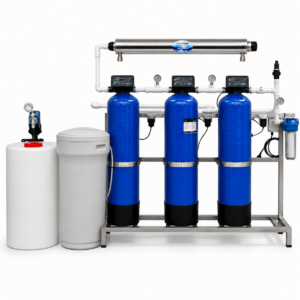
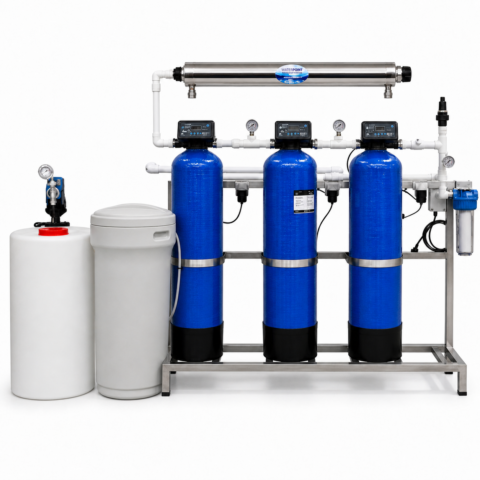
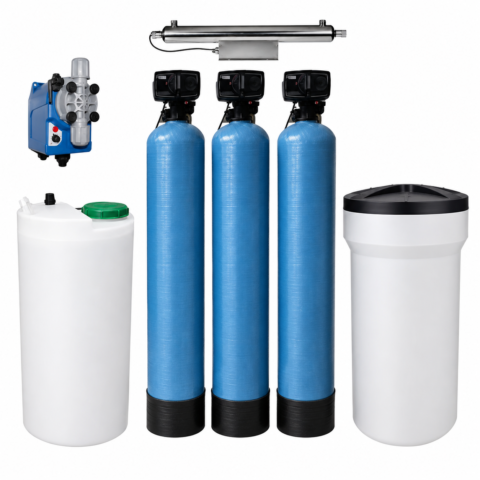
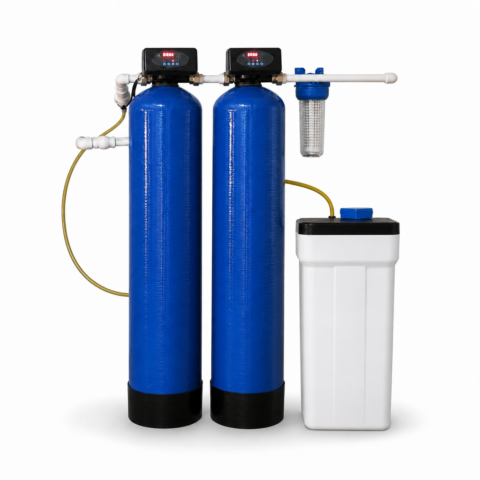
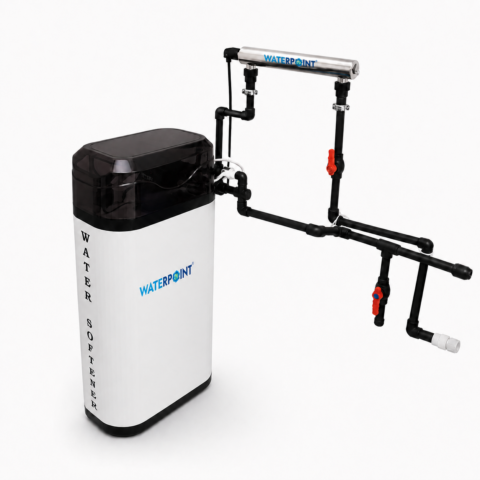
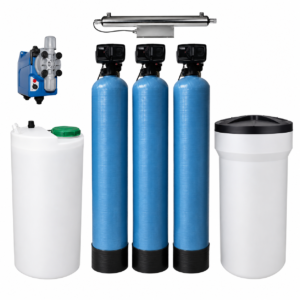
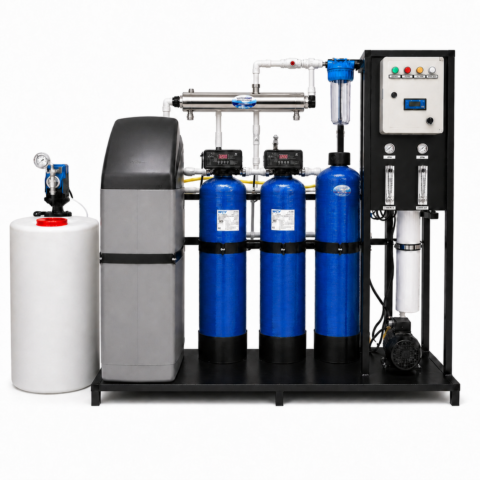
A typical build consists of these stages: sediment filtration, activated carbon for odour and taste, softening where there is hardness, and UV (ultraviolet) treatment for microbiological risk. Which stages are needed is established from the water analysis result; the same chain is not needed on every tank.
The table below matches the problem identified with the right stage:
| The Problem Identified | The Stage That Handles It | The Result It Gives |
|---|---|---|
| Sediment, sand, cloudiness | Sediment filtration | Holds back particles, raises clarity |
| An odour and taste problem | Activated carbon | Markedly improves sensory quality |
| Limescale and hardness | Water softening | Protects the plumbing and appliances from limescale |
| Microbiological risk | UV (ultraviolet) treatment | Reduces microbiological risks |
| Drinking water quality | Advanced treatment in the kitchen | Lowers the dissolved solids load |
The ultraviolet stage often comes to the fore on systems with tanks, because standing water is the basic factor raising microbiological risk. How that technology works, and what it does and does not do, is covered in our ultraviolet treatment article.
There is an important technical condition: for the ultraviolet stage to work effectively, the water has to be clear. Cloudiness stops the light reaching the water. That stage is therefore always positioned after filtration.
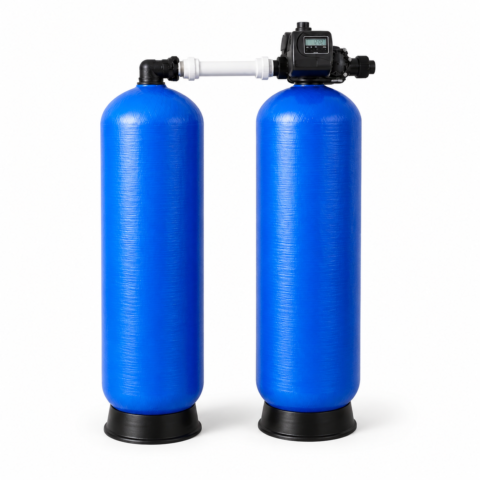
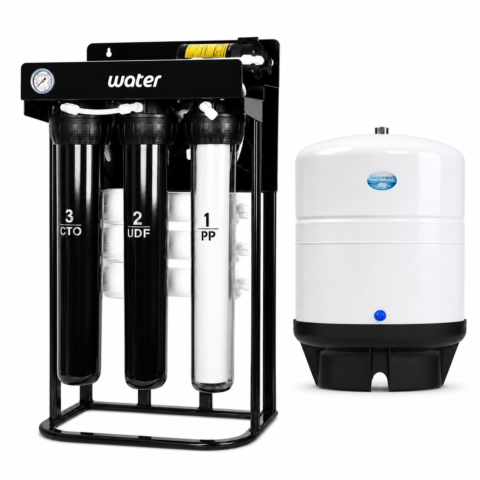
Built for that need at the building inlet, building inlet ultraviolet units support the microbiological safety of the line at the tank outlet. On the filtration side a staged build is preferred; three-stage inlet filter systems offer the sediment and carbon stages together.
Let’s establish the stages that suit your tank outlet
You can look at the solutions to clarify which stages you need from your water analysis and the conditions of your tank.
See the Building Inlet Solutions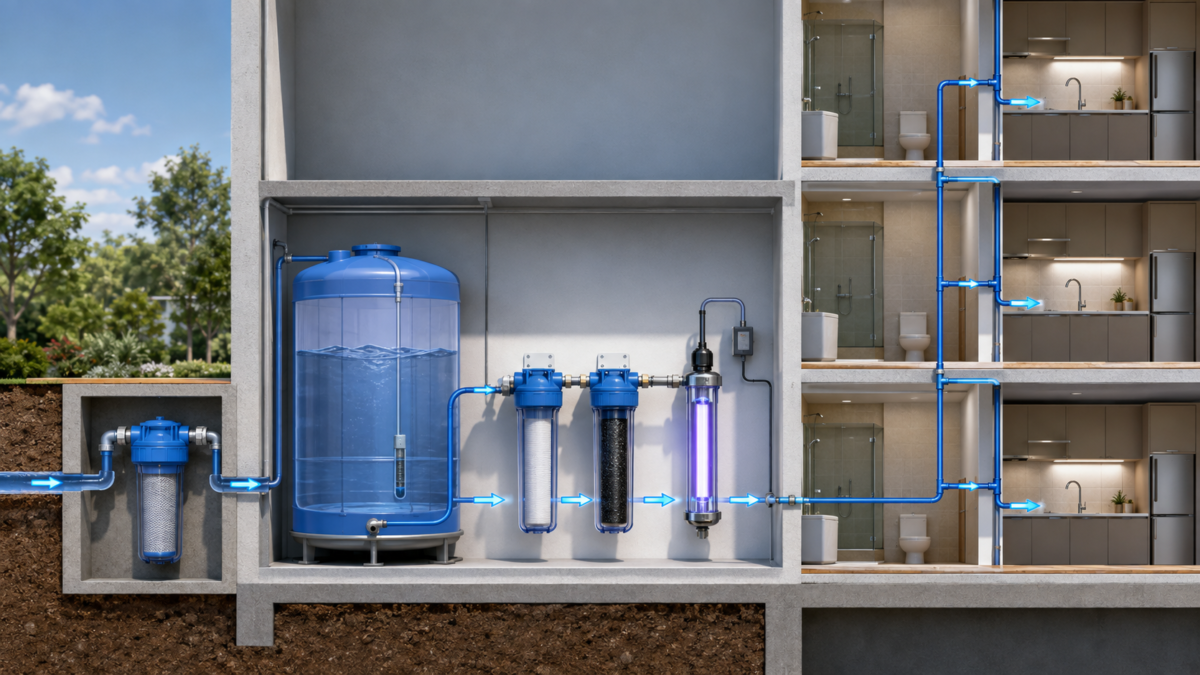
Is the System Installed Before or After the Tank?
The two take on different jobs. Coarse filtration installed before the tank stops sediment entering it and reduces build-up. Fine filtration and the ultraviolet stage installed after the tank secure the water reaching the user. The most effective build uses both together.
That is the technical question asked most often on systems with tanks. Although the answer is “both”, each position has its own logic:
It protects the tank
Coarse filtration stops sediment and particles entering the tank; build-up slows.
- Bottom sediment falls markedly
- The cleaning interval lengthens
- The inside of the tank stays cleaner
- The load on the following stages falls
It secures the water used
Fine filtration and the ultraviolet stage stop risks arising in the tank being carried to the point of use.
- Cloudiness and sediment are held back
- Odour and taste are corrected
- Microbiological risks are reduced
- Clean water is sent to the plumbing
A system installed only before the tank cannot act on problems arising inside it; risks from standing water and temperature are carried down the line. A system installed only after the tank does not protect the tank; sediment goes on building up and cleaning is needed more often.
In most apartment blocks and estates, therefore, the approach recommended is a paired build: coarse protection at the inlet, fine treatment at the outlet. We took up the scope of that structure and the logic of installation in our building inlet treatment systems article.
On estates and multi-block buildings the capacity grows and the build is established by engineering. For needs at that scale, estate-wide treatment systems is sized from the total number of users and peak-hour demand.
Treatment stages do not replace tank maintenance. As long as the sediment collecting on the bottom is not discharged and the lid and ventilation are not checked, the problem continues at its source. The two should be planned together.
What Else Is Needed for Drinking Water?
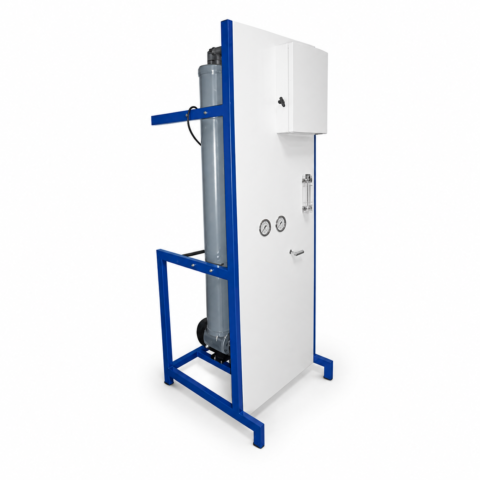
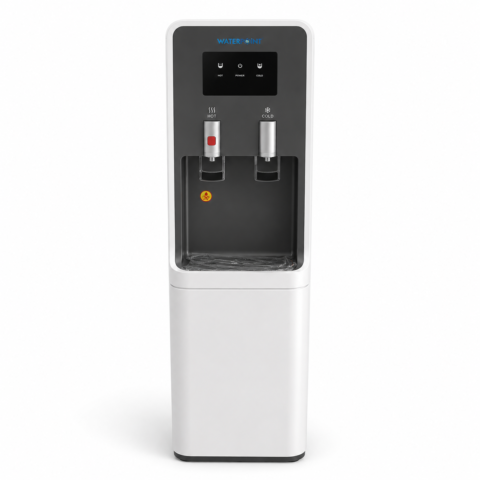
Treatment at the tank outlet improves the water used around the building and protects the plumbing. But an additional stage should be planned in the kitchen for drinking water quality. Dissolved solids, nitrate and similar components are not removed by inlet filtration; that calls for advanced treatment.
That distinction is critical for managing expectations. When a tank outlet system is commissioned, the odour disappears, the cloudiness clears and the taste of the water improves markedly. That improvement gives most users the feeling that “everything is fine now”.
Technically the picture is different. Sediment filtration and the carbon stage work on particles, odour and taste; they do not act on components dissolved in the water. The quality aimed for in drinking water calls for a separate advanced stage in the kitchen.
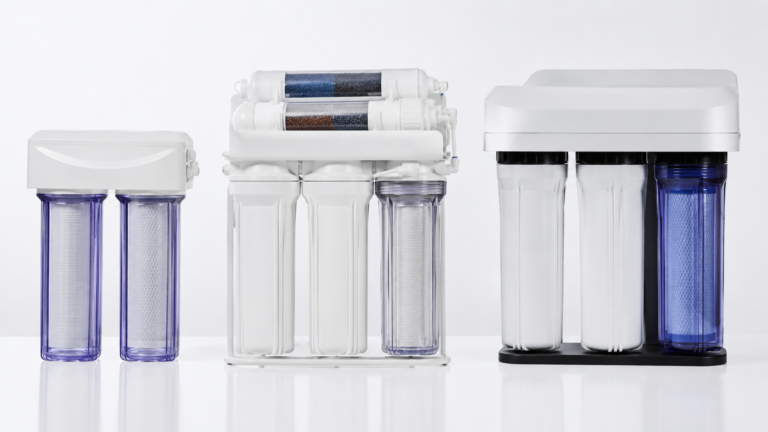
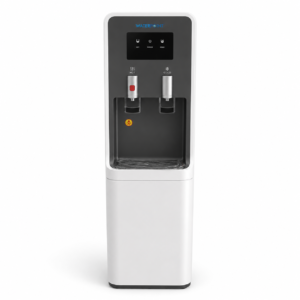
The right build has two layers: the tank outlet protects the whole plumbing system, while the unit in the kitchen treats the drinking water. We cover which type suits the kitchen side in our unit selection guide.
When those two layers are planned together, both the building’s plumbing and the water you drink are secured. Tank water management: that is the complete approach.
Frequently Asked Questions
Why does tank water smell?
The main cause is standing water. When water stands for a long time the protective chlorine residue falls away and the conditions change; add temperature and the sediment collecting on the bottom, and the odour becomes clear. In periods of low consumption that effect grows.
How often should a tank be cleaned?
It would not be right to give a fixed period; it varies with the intensity of use, the tank volume and the water analysis. What matters is that the task is tied to a maintenance plan. For obligations, the local authority and the relevant regulations are what count.
Why does cloudy water come out when I first open the tap in the morning?
It usually comes from the bottom sediment mixing in. The deposit that settles overnight reaches the suction line on the first draw in the morning. Cleaning the tank and reviewing the suction height markedly reduces that problem.
Is the UV stage enough on its own?
No. Ultraviolet treatment works only on the microbiological side; it does not remove sediment, limescale, odour or dissolved substances. For it to be effective the water also has to be clear; it is therefore always positioned after filtration.
What should I do when opening up my summer house?
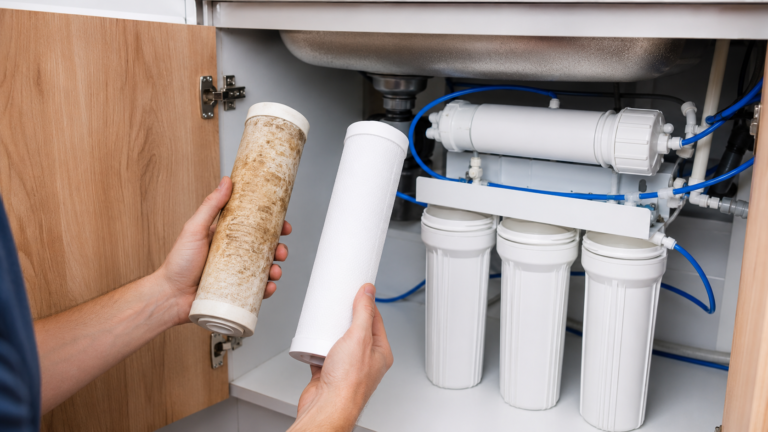
On systems left unused for a long time, the tank should be emptied and cleaned before recommissioning and the lines run through for a while to flush them. Where there is a treatment stage the filters should be checked and renewed if necessary.
Should I install the system before or after the tank?
The two do different jobs. Coarse filtration before the tank stops sediment entering it; fine filtration and the ultraviolet stage after the tank secure the water reaching the user. The most effective result comes from using both together.
Does tank treatment provide drinking water?
It markedly improves the water used around the building and removes odour, cloudiness and sediment. But an additional advanced treatment stage should be planned in the kitchen for drinking water quality. The two layers do not replace one another.
Conclusion
A large share of water quality problems in a building comes not from the mains but from the tank where the water waits. Standing water weakens the protective effect, bottom sediment mixes in periodically, temperature and sunlight raise the microbiological risk, and a lid left open opens the door to outside influences. The right approach has two stages: physical maintenance first — periodic cleaning, discharging the sediment, checking the lid and ventilation — then treatment stages built around the analysis result. The most effective build is the paired structure combining coarse protection at the inlet with fine filtration and an ultraviolet stage at the outlet. For drinking water, a separate stage should be planned in the kitchen. Approached in that framework, tank water stops being a source of problems and becomes a dependable buffer volume.
Let’s plan the solution for your tank on site
To establish a treatment build suited to the conditions of your tank, how heavily it is used and your water analysis, you can get in touch with the Water Point expert team.
Discover the Solution That Suits You