
Seasonal Home Water Treatment: Opening and Closing

The first day of the season. The shutters are opened, the cases are carried in and the tap in the kitchen is turned. The water that comes is cloudy, the smell is unpleasant, and the first thought is always the same: the unit has broken down. Yet in most cases there is nothing wrong with the unit — the system has stood still for months. Seasonal home water treatment comes down to exactly that distinction: the problem is not in the equipment but in seasonal use itself.
In this guide we take up the opening and closing procedure in buildings used seasonally. We explain step by step which steps are applied in which order at the start of the season, how the filters are affected by the standing time, what should be done against the risk of freezing at the end of the season, and the headings particular to coastal areas.
What Changes in a System Left Unused for a Long Time?
In plumbing unused for months the water stands still. Water standing in the lines, in the filter bodies and in the vessels can change its character; build-up can form in the stages and in the tanks. So at the start of the season the system has to be run off, the stages checked and, where needed, renewed.
In a house lived in continuously the water never stops; the line is refreshed at every opening. In a seasonal building exactly the reverse holds: the water stands for months inside the same body.
That standing affects more than one point. The water in the plumbing line, the water in the filter bodies, the water in the tank if there is one and the water in the reservoir — all stay motionless at the same time.
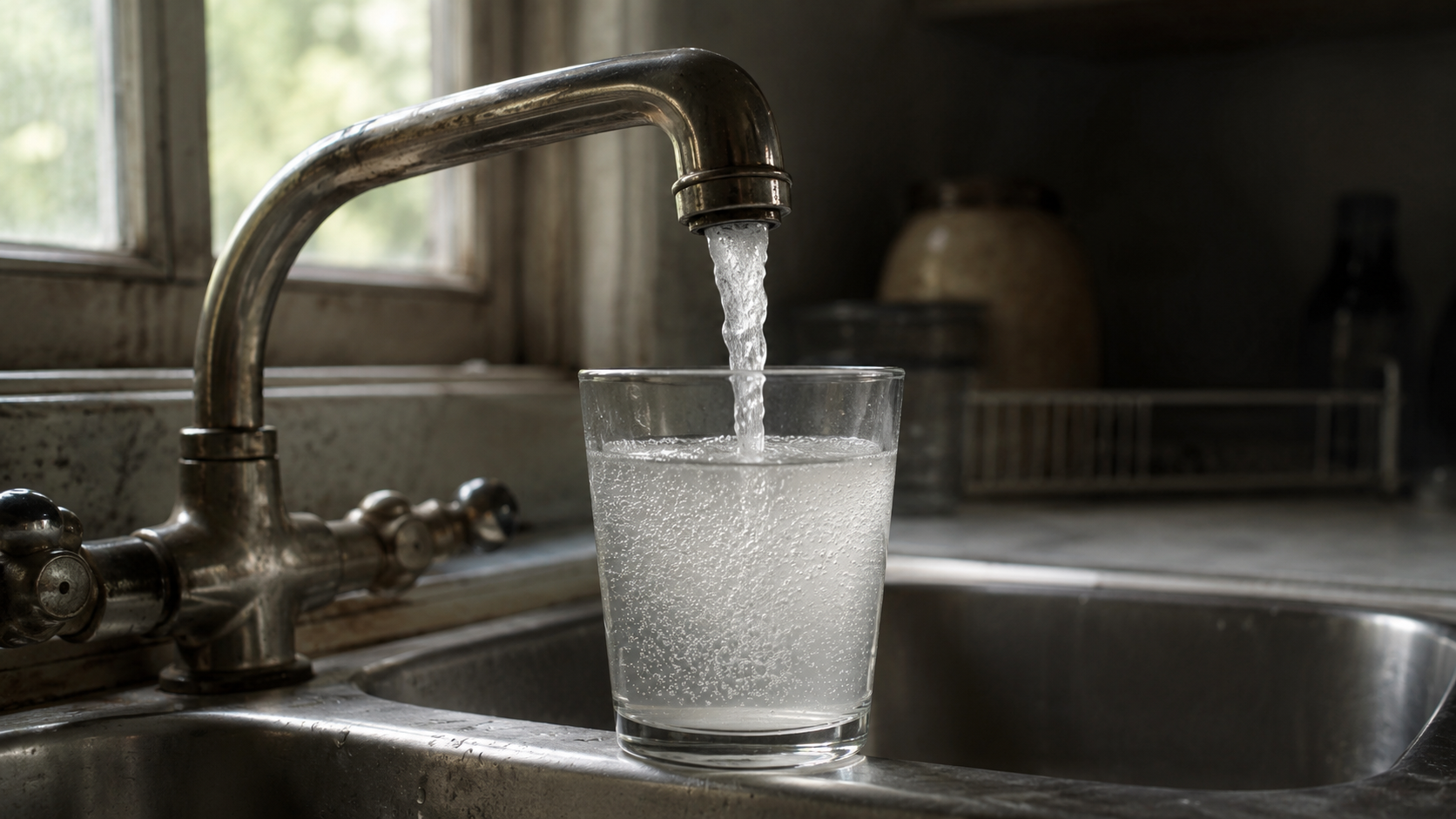
The result shows up on the user’s side in a typical picture: cloudiness at the first opening, a stale smell and a marked change in taste. Those are not the sign of a fault but the result of standing. In a seasonal home water treatment system the opening of the season should therefore be tied to a procedure.
Preserving the water quality inside a building after a long closure is a subject taken up in international sources too. The US Environmental Protection Agency’s fact sheet on water quality in buildings after extended closures offers a general framework on flushing the lines before reopening. That source does not take the place of Turkish regulations; local assessment is made by the relevant regulations and the competent bodies.
The Water Source in Summer Homes Is Generally Different
In seasonal homes the structure of the source differs from use in the city. Mains, well or use with a tank can be present together. In coastal areas the hardness and dissolved solids profile can differ; and that directly affects the treatment build.
That difference also settles the scope of the opening procedure. Opening a simple installation on the mains and opening a tank-fed system supplied from a well do not involve the same steps.
The typical source structures met in summer home areas are these:
The Mains Connection
In seasonal settlements the line pressure and the pattern of interruptions can differ from use in the city.
Well Water
The content changes with the geology and can fluctuate with the season.
Use With a Tank
A tank is present against interruption; in a long closure the standing concentrates there.
Regional Hardness
In coastal areas the hardness and mineral profile can differ from the city.
We covered how mains and well sources differ, where the responsibility lies and how the approaches to treatment diverge in our source comparison article; we do not go deeper into the subject here.
The practical result is this: when a seasonal home water treatment build is planned, what the source is should be made clear from the start. A build suited to your home in the city may not give the same result if the source at the summer house is different.
The Steps for Bringing the System Into Service at the Start of the Season
Bringing it into service goes in a certain order: checking the valves and the power, running the lines off, checking the state of the stages, checking the tank and the reservoir, looking over the UV unit if there is one, checking for leaks, and not using the first water. When that order is followed, most start-of-season problems disappear.
This section is the backbone of the guide. Applying the steps without skipping any prevents the greater part of the problems that would be met through the season.
-
Checking the Valves and the Power
The valves closed at the end of the season are opened and the electrical connection of the unit is checked. On systems with a pump the state of the socket and the cable is examined by eye.
-
Flush the Lines
Before it reaches the treatment unit the main plumbing line is run off for a while. That step takes the standing water waiting in the pipes away from the system and forms the basis of all the steps that follow.
-
Check the State of the Stages
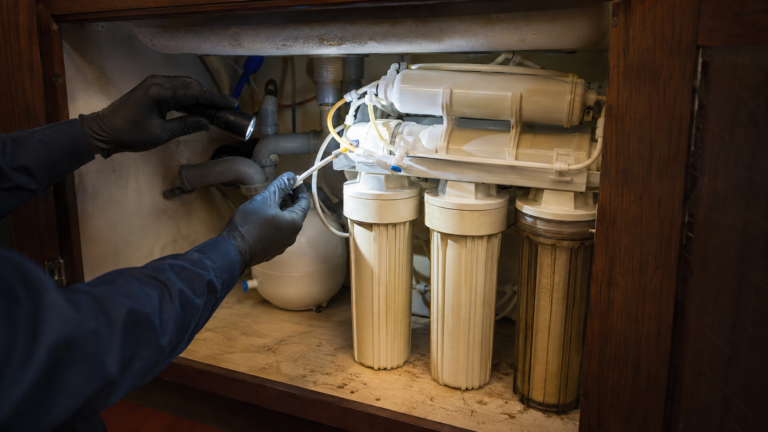
The filter bodies are opened and the state of the stages examined. On models with a clear body, darkening and a change of colour can be seen by eye. If the standing time has been long, renewal is assessed.
-
Empty the Tank and the Reservoir
In a system with storage the water in the tank is used up entirely and drained, and the system is let fill with fresh water. If there is a water reservoir, the state of the lid and the contents is checked separately.
-
Look Over the UV Unit
If the system has a UV (ultraviolet) treatment stage, whether the lamp is working and the state of the quartz sleeve are checked; on models with a counter the indicator is assessed.
-
Check for Leaks
Once water is turned on, all the connection points are examined by eye. After a long standing the seals may have tired; the area under the cabinet is checked for wetness.
-
Do Not Use the First Water
Once the system has refilled, the first water produced is not used but drained. How many fills to make changes with the unit; the guidance in the user manual is taken as the basis.
-
Call a Service Engineer if Needed
If an odour, taste or flow problem continues although the steps have been completed, technical service support should be taken for checking the vessel and the internal line.
The situation described in the eighth step is the scenario met most often at the start of the season. If the problem continues although the steps have been applied, a different path is followed to tell the source apart; we set out the order of diagnosis for odour and taste step by step in our odour and taste guide.
That procedure is not a list to be applied once and forgotten. When it is repeated in the same order at the start of every season, the seasonal home water treatment system is brought into service predictably.
Do Filters Tire Even Without Being Used?
Yes. The state of the stages is settled not only by the water passing through them; the moisture left inside the body and the conditions of standing have an effect too. After a long closure, renewal is most often the right decision even though the stages have not been used. The assessment is made on the standing time and the conditions.
That is the heading that surprises seasonal users most. The thought "I never used it in winter, my filter counts as new" is common; but technically it is not quite right.
The reason is this: a filter body is a closed volume and moisture stays inside it. That environment, standing motionless for months, can affect the state of the stage. And before the closure the stages had already seen a certain amount of use.
The headings to assess when deciding are these:
| Situation | Assessment | The approach |
|---|---|---|
| Newly fitted before the closure | It may have seen a short use | It is checked by eye and watched after running off |
| Used through the season | The period may largely have run out | Renewal is assessed at the start of the season |
| There is darkening in the body | The stage may have saturated | Renewal is advised |
| A long closure has been lived through | The conditions of standing are uncertain | Renewal is the right decision in most cases |
| The system has been left without water | The stages may have dried out | It is checked and renewed if needed |
| The flow has weakened | Blockage may be involved | Renewal and a pressure check are made |
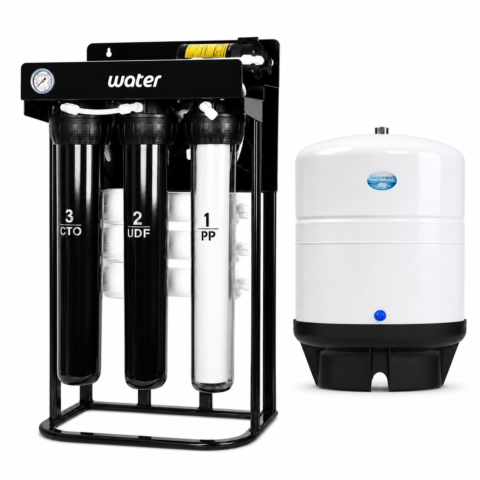
The practical approach is this: renewing the stages at the opening of the season is the simplest step preventing the odour and taste problems that would be met through the season. When the time to renew comes, the whole line can be refreshed with a staged filter set suited to the structure of the unit.
We covered the signs that a change is due, and what determines the interval, in our filter change guide. In a seasonal home water treatment build, the season cycle can be taken as the basis instead of the calendar: a check at every opening, and renewal where needed.
Water Standing in the Reservoir and the Tank
In seasonal buildings the reservoir and the tank are the points where standing is heaviest. The water stays motionless for months, sediment settles and the character can change. At the opening of the season those volumes have to be emptied and the lid and the ventilation checked.
That is the most critical step of the opening procedure in buildings with a reservoir. Even if the lines are run off, if the water standing in the reservoir is still feeding the system the problem continues.
The points to check are these:
- The seal of the lid: Whether the lid closes fully and whether it is open to outside influences is checked.
- Ventilation: The state of the ventilation component is looked over.
- Sediment build-up: Whether there is a visible build-up at the bottom of the reservoir is looked at.
- Draining: The standing water is discharged and it is filled with fresh water.
- Tank pressure: In a treatment system with storage the state of the tank is assessed by a service.
We explained in detail why the character of water standing in a tank changes, and what measures should be taken, in our tank water quality article; we do not go deeper into the subject here.
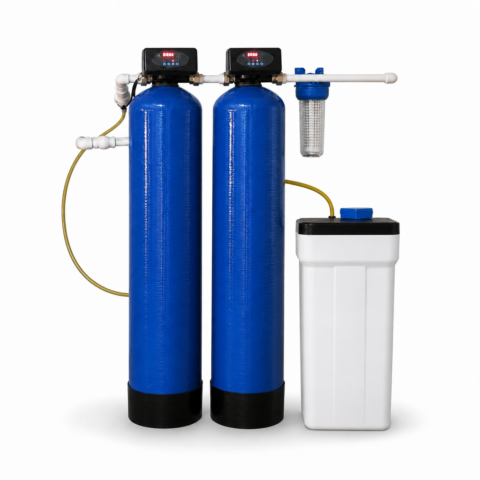
Cleaning the reservoir is a separate operation and can be planned as a routine part of the opening of the season. If there is a pre-filtration stage at the building inlet, that stage reduces the sediment load on the reservoir and the plumbing; the inlet filter systems take on that job.
The Opening of the Season on Systems With a UV Unit
If the system has a UV (ultraviolet) treatment stage, three headings are checked at the opening: whether the lamp is working, the transparency of the quartz sleeve, and on models with a counter the state of the indicator. If the lamp has completed its working life it should be renewed before the system is started.
That stage is often used in summer homes on well water working with a tank. And in seasonal use a particular situation arises: the lamp may have completed its period of use even though the unit was not running.
The basic rule to know here is this: the lamp being alight does not show that it is working at the expected performance. Ultraviolet lamps lose their effective light intensity as the hours of use go on and give no sign of it from outside.
The quartz sleeve is a separate heading too. After a long standing a build-up may have formed on the sleeve surface; in that case the light cannot reach the water even if the lamp is new. At the opening the transparency of the sleeve must be checked.
We covered in detail how the time to replace is settled, the safety rules and the steps of the operation in our UV lamp replacement guide. When renewal is needed, an ultraviolet lamp compatible with the unit model should be preferred.
Ultraviolet units are systems with an electrical connection working under pressure. Before every intervention the power must be cut and the water shut off. Where you are not sure, the operation should be carried out by a technical service.
Closing at the End of the Season: The Risk of Freezing
When water standing in an unheated space freezes it expands in volume and can lead to cracking in a body, a hose or a tank. So at the end of the season the water is shut off, the water inside the system is drained and the unit is left protected against frost. That is the most critical step of the closing.
An important part of the problems at the opening of the season in fact comes from a step skipped at the closing. And freezing damage can produce a result there is no going back from.
Water expands as it freezes. A filter body, a hose or a tank with water left in it, under that pressure, can crack. The damage is most often noticed at the opening of the season, when the water is turned on, and at that point a part has to be renewed.
The risk is especially high in unheated garages, basements, storerooms and cabinets against an outside wall. On systems installed in such positions the closing procedure should not be skipped.
The steps to follow at the closing are these:
The Opening of the Season
- The valves and the power are checked
- The lines are run off for a while
- The stages are checked and renewed where needed
- The tank and the reservoir are emptied
- The UV unit is looked over if there is one
- A check is made for leaks
- The first water is not used
The Closing of the Season
- The valve at the unit inlet is closed
- The electrical connection is disconnected
- The water in the tank and the line is drained
- The water in the filter bodies is discharged
- The unit is moved to a position protected from frost
- It is checked that no water is left in the hoses
- The date of closing is put on record
The fifth item in the right-hand column can be applied on portable builds. On a permanently installed system taking the unit out of place may not be possible; in that case the space it is in has to be protected from frost or the water in the system drained entirely.
If you are not sure about the closing operation, it is right to take technical service support at the end of the season. That prevents from the start the damage to parts that could be met at the opening.
Freezing damage has another side too: damage caused by misuse is not covered by the warranty. So the closing procedure is an operation that protects both the system and the budget.
Extra Subjects in Coastal Areas
In coastal areas the damp and the salt air put an extra load on metal parts. And in buildings using a well the seasonal variability can be more marked, while the hardness profile differs from area to area. Those headings should be included in the build and the maintenance plan.
Coastal summer homes differ at several points from seasonal buildings inland. Those differences affect both the choice of equipment and the frequency of maintenance.
Damp and Salt Air
They can put an extra load on metal parts and fittings; the frequency of checks rises.
Seasonal Variability
In buildings using a well the water profile can differ from period to period.
Regional Hardness
The level of hardness changes from area to area; the build is planned accordingly.
An Intermittent Mains
In settlements with interruptions in the busy season, use with a tank is common.
The Summer Peak
In periods with guests the consumption can go far above what is expected.
Access to Service
When service is planned in advance for outside the season, no unexpected delay is met.
The fifth card explains why planning the capacity has to be handled differently. In a summer home the use is near zero for most of the year, while for a few weeks it can go above the consumption in the city. The system should be assessed against that peak period.
And in summer homes using a well, following the analysis is more important. Because the profile of the source can change with the season, repeating the analysis at the opening can be assessed.
Those conditions show why a seasonal home water treatment build is planned separately from use in the city. The same unit, in a different pattern of use, calls for a different discipline of maintenance.
Responsibility in Summer Homes That Are Let
In buildings let seasonally the intensity of use cannot be foreseen and the maintenance easily ends up belonging to no one. So a person responsible should be named, a check planned mid-season and the operations carried out put on record. That arrangement removes the uncertainty for the owner and the tenant alike.
In summer homes that are let the problem is not technical but organisational. Even where the system has been built correctly, when the question of who checks what and when is not defined the maintenance slips.
The headings to make clear are these:
- The person responsible: Will the owner, the estate management or a member of staff follow it?
- The opening of the season: By whom and when will the bringing into service be done?
- A mid-season check: Should an interim check be planned in the busy period?
- The record: Where will the filter change dates and the service operations be kept?
- The closing of the season: Who will apply the closing procedure?
- Informing: Will the tenant be told about using the system?
The third item is especially important. In a summer home that is let the intensity of use can be higher than expected; the stages can use up their capacity mid-season. An interim check in the busy period prevents problems through the season.
And in commercial businesses such as guest houses and holiday villages that arrangement should be tied to a service plan. We covered which components of a unit need attention, and how often, in our article on the life of a unit and its maintenance.
A Seasonal Maintenance Plan
In seasonal use the maintenance is managed not by the calendar but by the cycle: the opening check, a mid-season observation and the closing procedure. When those three stages are put in writing they are applied with the same discipline every year and the system works predictably.
The list below is a set of checks usable on a single page for both the opening and the closing:
The Seasonal Checklist
- At the opening, was the main line run off for a while?
- Was the state of the filter stages checked?
- If the standing time was long, were the stages renewed?
- Was the standing water in the tank and the reservoir drained?
- If there is a UV unit, were the lamp and the quartz sleeve checked?
- Once water was turned on, was a check made for leaks?
- Was the first water produced drained without being used?
- Was a check planned for mid-season?
- At the closing, was the valve shut and the power disconnected?
- Was the water in the system drained against the risk of freezing?
- Were the opening and closing dates put on record?
The value of that list is in its simplicity. Hung at the entrance of the summer house or inside the cabinet the unit is in, the same steps are applied every season and the risk of forgetting disappears.
Keeping records matters too. When it is not known when the filters were last renewed the decision rests on guesswork; when the date is recorded, the intervention comes at the right time.
Water Point Su Arıtma Teknolojileri operates from Esenyurt, İstanbul under its founder Ali Genç, with more than 20 years of experience in the sector.
Service Network
For industrial systems there is a service network across Türkiye; for home units service is provided in İstanbul and the neighbouring provinces such as Kocaeli and Tekirdağ. Technical service is provided for units of every make, domestic and foreign.
Warranty
Units, valves, pumps and tanks carry a 2-year warranty and taps a 1-year warranty. Filters, membranes, resin and salt are consumables and fall outside the warranty.
Delivery
Products in stock are dispatched within 1–3 working days; products not in stock are ordered in and the lead time confirmed. Free shipping applies across Türkiye.
Scope of Installation
The unit is delivered ready to install; the inlet and outlet connections are made. The plumbing labour and materials are the customer’s responsibility. Where a valve setting is needed, free support is given over a video call.
On-Site Survey
The survey is free if the unit is purchased from us; where only a survey and measurement are wanted, a survey fee of ₺2,000 applies.
Contact
For orders and information by phone, 0850 304 95 25; to speak to a specialist, the 0536 729 99 52 WhatsApp line and [email protected] can be used.
Plan the opening of the season a few days before you move in. If the stages need renewing, getting the parts can take time; with the shipping time counted in, doing the check in advance makes things easier.
Get your summer home’s system ready for the season
To assess your opening check and your need for spare filters, you can look through the solutions.
See the Treatment SolutionsFrequently Asked Questions
The water smells at the start of the season — has the unit broken down?
In most cases no. In plumbing unused for months the water stands still and its character can change. The first step is to run the main line off for a while and drain the standing water in the tank and the reservoir. If the problem continues the stages should be checked, and if no result is obtained service support should be taken.
I did not use it in winter — should I still change the filter?
The state of the stages is settled not only by the water passing through them; the moisture inside the body and the conditions of standing have an effect too. After a long closure, renewal is most often the right decision. The exact assessment is made on the standing time and the look of the stages.
What do I need to do at the end of the season?
The valve at the unit inlet is closed, the electrical connection disconnected and the water in the system drained. On systems in an unheated space that step is especially important; a body, hose or tank with water left in it can crack during freezing.
Is freezing damage under warranty?
Damage caused by misuse is not covered by the warranty. So applying the closing procedure at the end of the season is an operation that protects both the system and the budget. If you are not sure about the closing, it is right to take technical service support.
Does the UV lamp count as new because it was not used?
No. Ultraviolet lamps lose their effective light intensity as the hours of use go on and give no sign of it from outside. And after a long standing a build-up may have formed on the quartz sleeve. Both headings should be checked at the opening of the season.
Which build suits a summer home better?
The build is settled by the source and the pattern of use. A building on the mains and a tank-fed system supplied from a well do not call for the same stages. And in a summer home the consumption is low for most of the year while it rises markedly in the peak period; the system is assessed against that period.
Who should do the maintenance in a summer home I let?
The responsibility should be defined from the start. The opening and closing of the season are generally carried out by the owner or a member of staff. Planning an interim check in the busy period is advised against the possibility of the stages using up their capacity mid-season.
Should I have an analysis done at the opening of the season?
In buildings using a well it can be assessed; because the profile of the source can change with the season. In buildings on the mains an analysis comes onto the agenda when a change is noticed in the taste, the odour or the appearance. The assessment of suitability is made by an accredited laboratory report.
Is it a problem if the system has been left without water?
The state of the stages and of some components can be affected when they are left without water for a long time. So at the opening of the season the bodies should be opened, the state of the stages checked and, where needed, renewed. And on systems with a pump the unit should not be run dry.
Conclusion
Seasonal home water treatment is a matter of procedure rather than of a unit. In plumbing unused for months the water stands still; the cloudiness and odour met at the start of the season are generally not a fault but the result of that standing. At the opening the order is set: checking the valves and the power, running the lines off, looking over the stages, emptying the tank and the reservoir, checking the lamp and the sleeve if there is a UV unit, checking for leaks and not using the first water. The stages are affected by the conditions of standing even when they are not used; after a long closure renewal is most often the right decision. At the closing one heading stands out: the risk of freezing. In unheated spaces a body, hose or tank with water left in it can crack. When those two procedures are put in writing the system is brought into service with the same discipline every season.
Get in touch for the opening check and renewing the filters
Products in stock are shipped within 1-3 working days; free shipping applies Türkiye-wide. For an opening-of-season check, renewing the filters and service support you can reach us on 0850 304 95 25, to speak to a specialist on the 0536 729 99 52 WhatsApp line, or at [email protected].
Discover the Solution That Suits You