
Freight delivery
New
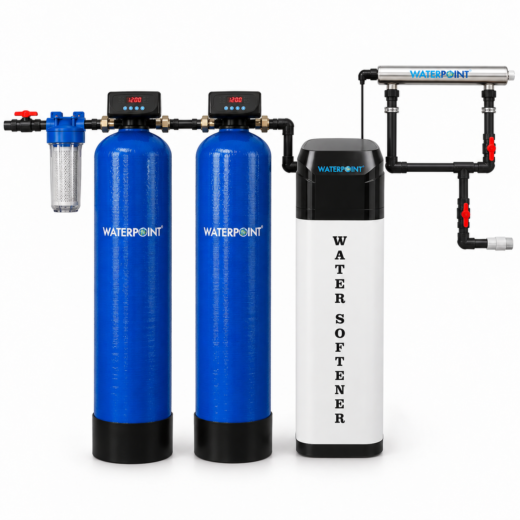
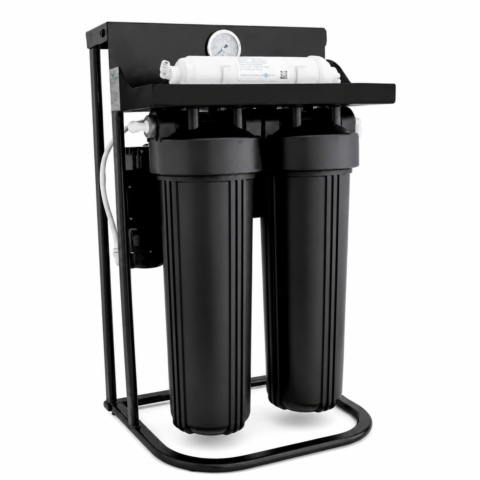
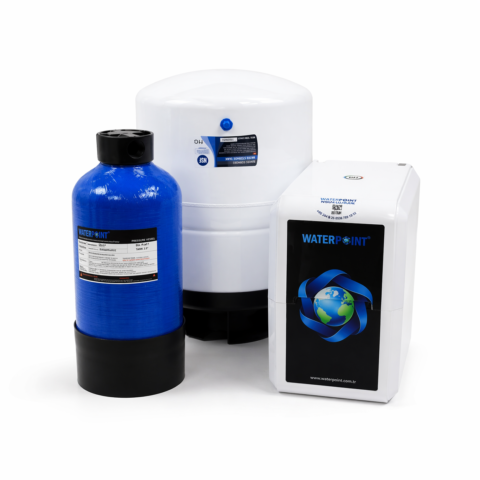
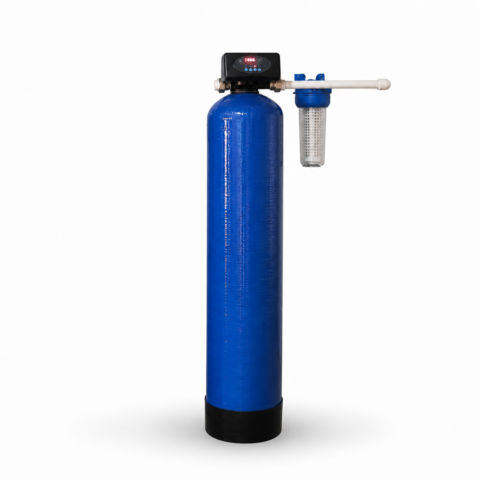
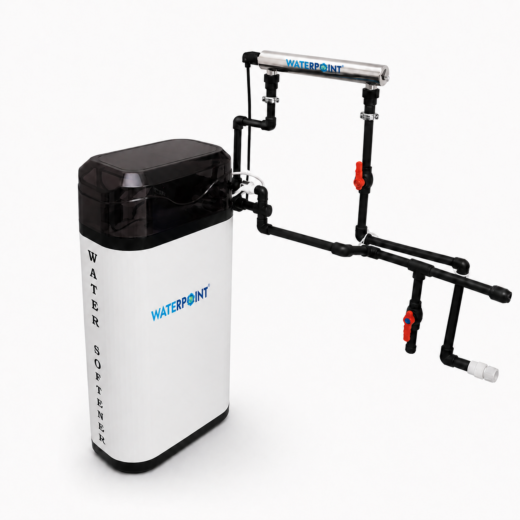
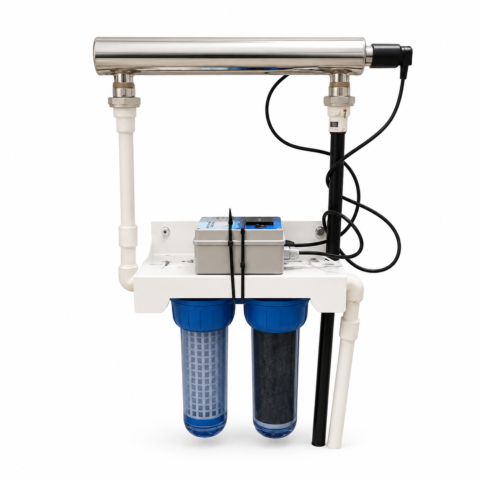
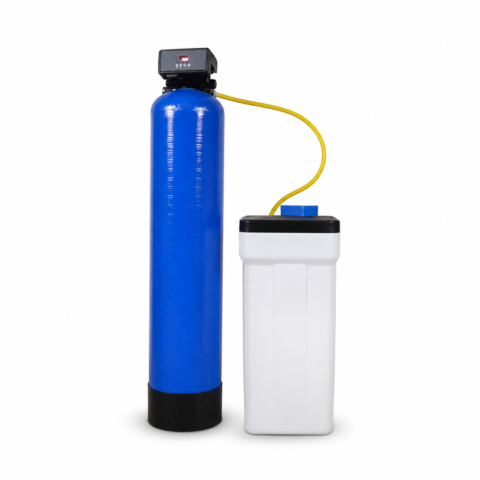
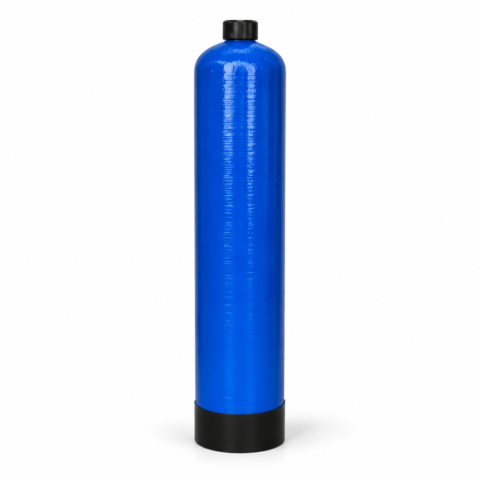
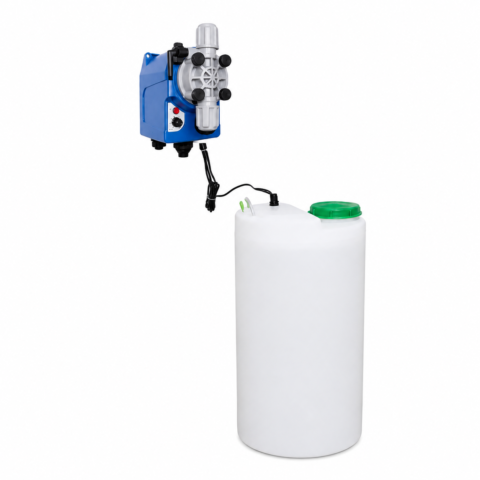
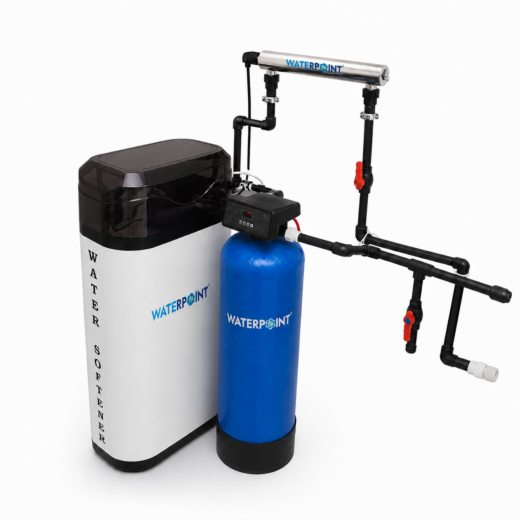
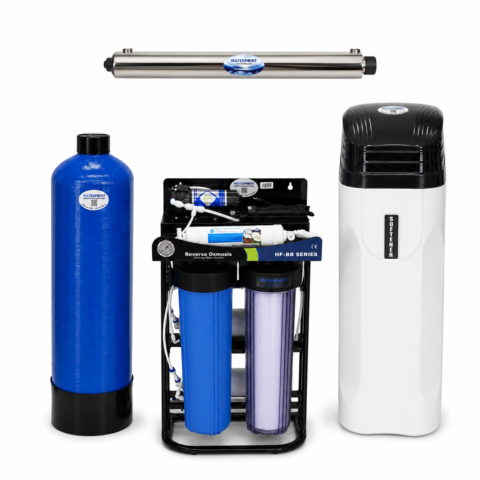
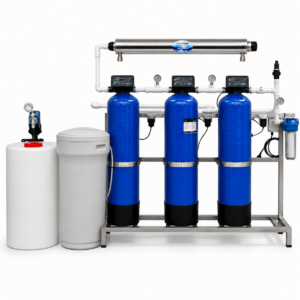
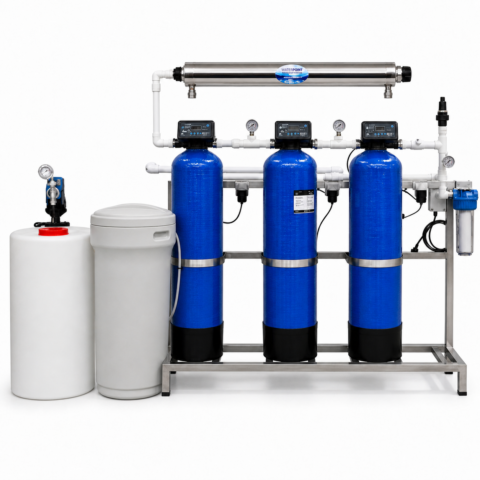
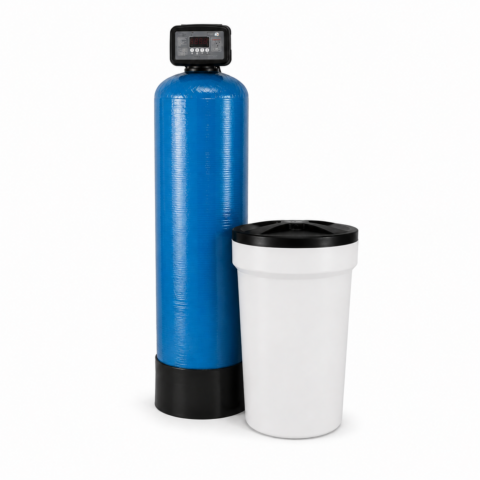
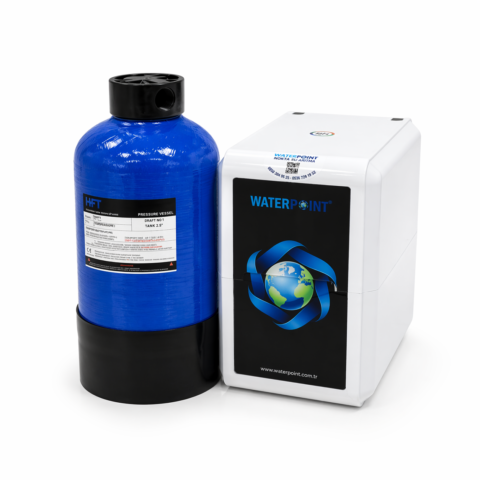
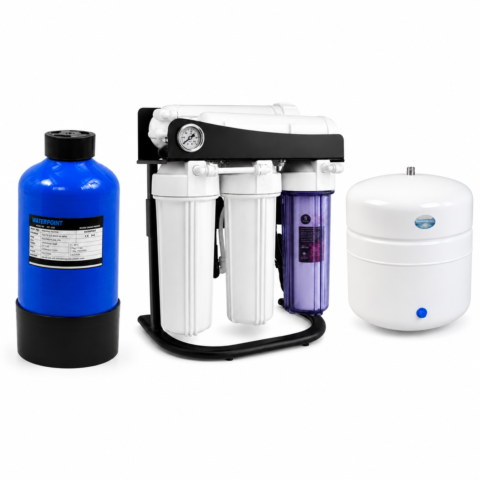
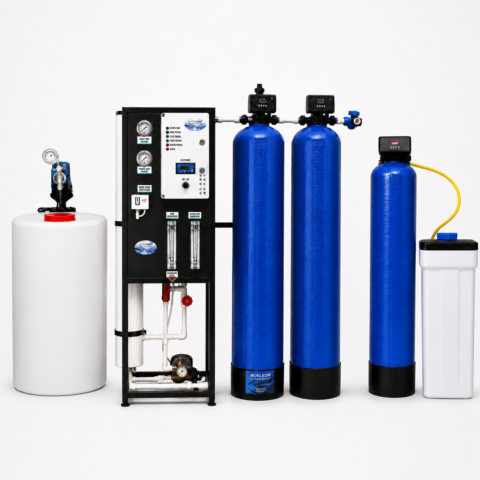
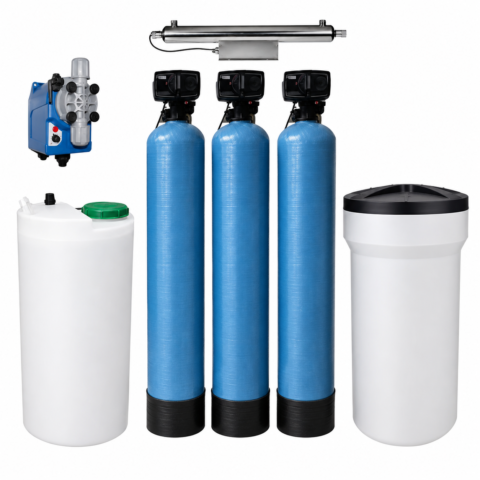
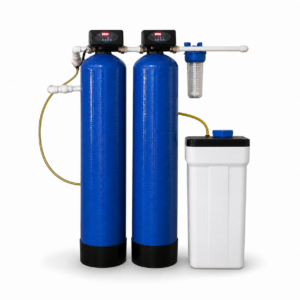
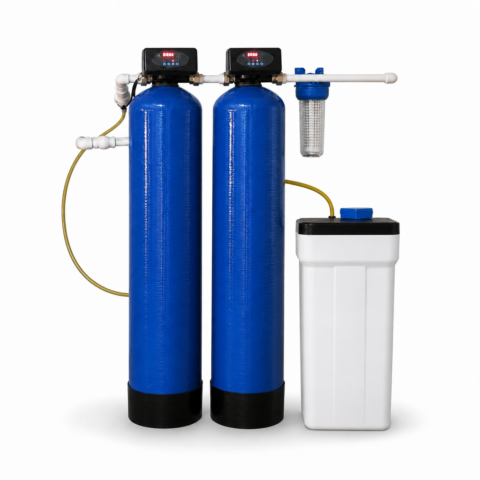
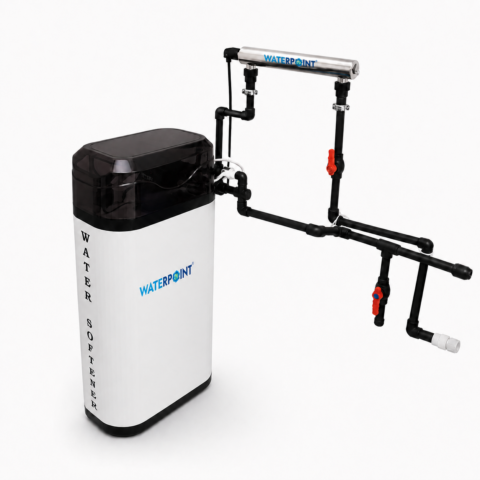
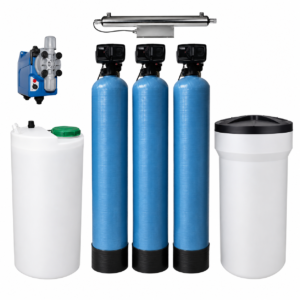
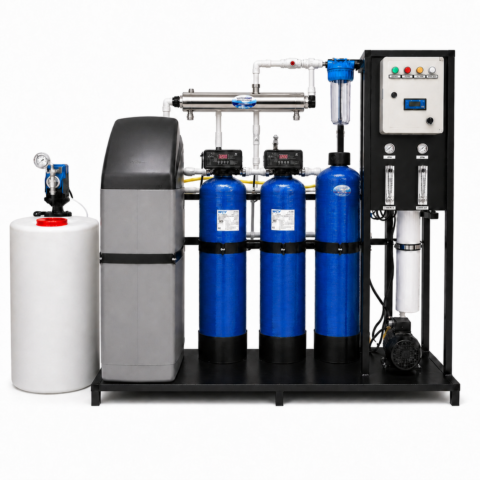
Industrial Water Treatment System 5-10 Tonnes/Day – Sand, Carbon, Softening and UV
5 – 10 Tonnes
Premium Cationic
₺117,644.16
VAT included
Categories
Solutions
Process water, line feed and sizing by flow rate.
Systems and units Industrial Water Treatment Read the guideTreatment that stops limescale and corrosion before they reach the boiler.
Systems and units Water Softeners Read the guidePure water of low conductivity and repeatable quality.
Systems and units Pure Water Systems Read the guideRemoving the salts and sediment that clog drip lines.
Systems and units Well Water Treatment Read the guideThe right hardness for equipment life and drink flavour.
Systems and units Filtered Water Dispensers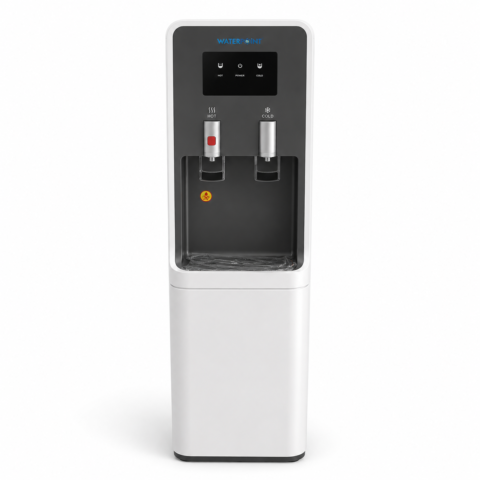 Water Point Filtered Water Dispenser
₺63,723.92
Water Point Filtered Water Dispenser
₺63,723.92
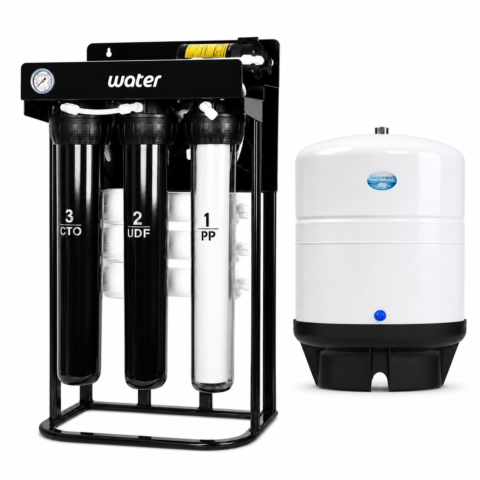 Restaurant Water Purifier, 500 GPD with 40 Litre Tank
₺49,018.40
Restaurant Water Purifier, 500 GPD with 40 Litre Tank
₺49,018.40
A main line that filters the water entering your plumbing at a single point.
Systems and units Whole House & Building Inlet Systems Read the guideA staged system for iron, manganese and turbidity.
Systems and units Well Water Treatment Read the guideLow-conductivity rinse water for spot-free drying.
Systems and units Reverse Osmosis Systems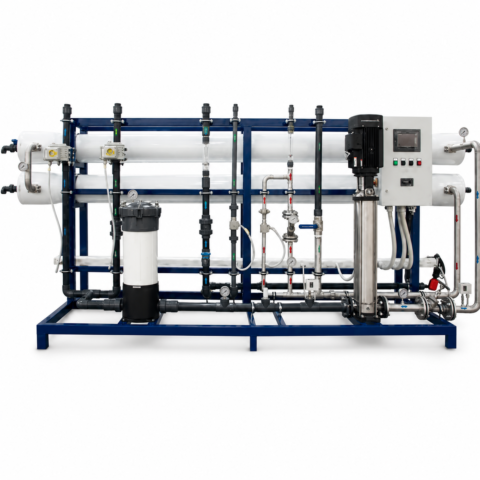 95 Tonne Reverse Osmosis System
₺980,368.00
95 Tonne Reverse Osmosis System
₺980,368.00
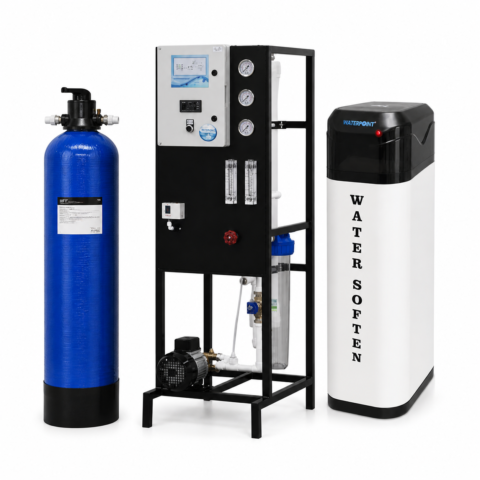 Industrial Deionised Pure Water Unit, 250 L/h
₺220,582.80
Industrial Deionised Pure Water Unit, 250 L/h
₺220,582.80
The problems hard water causes in hair and skin care.
Systems and units Water Softeners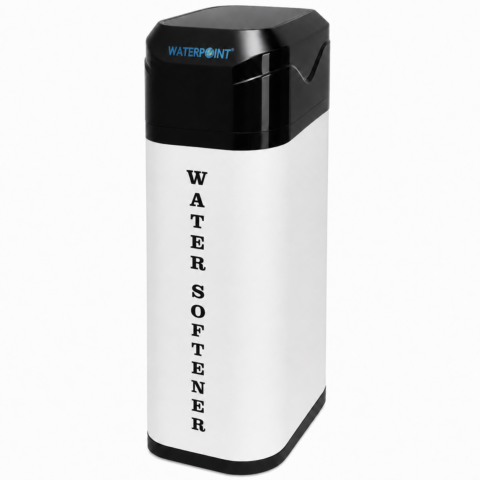 Maxi Cabinet Water Softener, 5 Tonnes/Day
Original price was: ₺49,018.40.₺34,312.88Current price is: ₺34,312.88.
Maxi Cabinet Water Softener, 5 Tonnes/Day
Original price was: ₺49,018.40.₺34,312.88Current price is: ₺34,312.88.
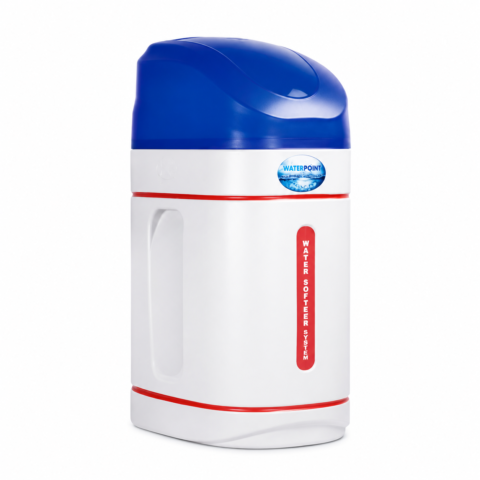 Mini Cabinet Water Softener, 2 Tonnes/Day
₺44,116.56
Mini Cabinet Water Softener, 2 Tonnes/Day
₺44,116.56
Drinking water from seawater with high-pressure reverse osmosis.
Systems and units Reverse Osmosis Systems Read the guideCompany
Product Category
In industrial-type systems the right choice begins with understanding the working principle and the stages; the capacity calculation and the items that drive operating cost complete the decision. The aim is to make clear which questions you should ask when selecting the right system for your facilit…
Filter
The daily treatment capacity stated by the manufacturer.
How much water is waiting ready when you open the tap.
Not sure which one is right for you?
In industrial-type systems the right choice begins with understanding the working principle and the stages; the capacity calculation and the items that drive operating cost complete the decision. The aim is to make clear which questions you should ask when selecting the right system for your facility.
Industrial-type or project-built industrial? Industrial-type systems are supplied in standard capacities and ready-made configurations; if the measured flow rate is known, the selection is made from the catalogue and installation is short. If facility-specific engineering, multi-line production and a process-based quality target are required, the industrial water treatment systems category is the right place.
An industrial-type water treatment unit differs from domestic systems in capacity, material strength and level of automation. Where a domestic unit produces a few hundred litres of treated water a day, industrial-type systems are sized on hourly flow rate and can process tens of cubic metres of water a day.
The role of water changes from sector to sector, and that determines which treatment stages are needed.
The most common mistake with an industrial-type water treatment system is choosing from the catalogue without having an analysis done. Two facilities with the same capacity need completely different stages if their raw water quality differs. The parameters below directly determine how the system is laid out.
| Parameter | What It Determines |
|---|---|
| Total hardness (French hardness, °fH) | Determines whether softening is needed, the resin volume and salt consumption. |
| Conductivity and TDS (µS/cm — mg/L) | Shows the total dissolved solids load; determines the need for reverse osmosis or deionisation. |
| pH | Affects the tendency to corrosion and scaling, and the need for chemical dosing. |
| Turbidity (NTU) | Determines whether a pre-filtration stage — sand, multimedia or separator — is required. |
| Iron and manganese (mg/L) | Can foul the resin and the membrane; may require a dedicated removal stage. |
| Free chlorine (mg/L) | Damages the reverse osmosis membrane; it must be removed with activated carbon. |
| SDI (Silt Density Index) | Shows whether the reverse osmosis feed water is suitable; measures whether pre-treatment is adequate. |
| Microbiological load (cfu/mL) | Determines the need for ultraviolet (UV) treatment or an additional barrier. |
The site survey is free of charge if the unit is purchased from us; the system proposal is shaped by this assessment.
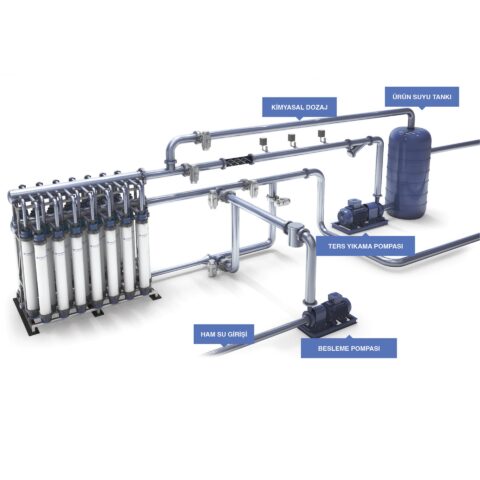
An industrial-type system is not a single unit but a series of stages that feed one another. Each stage protects the next, which is why the order is not arbitrary.
| Stage | What It Does and When It Is Needed |
|---|---|
| Separator and sand filter | Separates sand, sediment and heavy particles. It is the first stage on well water and on raw water with high turbidity. |
| Multimedia filter | Retains suspended solids and lowers turbidity. Used in pre-treatment ahead of reverse osmosis. |
| Activated carbon filter | Removes free chlorine and odour and taste compounds. Required on mains water and ahead of any membrane system. |
| Water softening (cation resin) | Exchanges calcium and magnesium for sodium and lowers hardness. It comes into play wherever limescale is the cause of the problem. |
| Antiscalant dosing | Delays scale crystallisation on the membrane surface. Used in reverse osmosis applications on high-hardness water. |
| Reverse osmosis (RO) | Separates dissolved salts and minerals with a semi-permeable membrane. Preferred when low-conductivity water is required. |
| Deionisation (mixed bed) | Retains the remaining ions and brings conductivity close to zero. Used in laboratory, pharmaceutical, plating and battery water applications. |
| Ultraviolet (UV) treatment | Reduces microbiological risk. Preferred after storage and in food applications. |
Both remove minerals, but they work at different levels. Reverse osmosis separates most of the dissolved matter through a membrane under pressure and lowers conductivity considerably. Deionisation then retains the ions remaining at the reverse osmosis outlet in a resin bed and brings conductivity down to near-zero values. This is why the two stages are used one after the other in applications that need high purity; used on its own, deionisation saturates the resin quickly and raises operating cost.
Capacity selection rests on three figures: total daily consumption, peak hourly flow rate and operating hours. The system is selected on peak flow rate, not on the daily average; otherwise pressure and flow drop at busy moments such as the start of a shift.
The practical approach is this: the facility's daily water consumption is divided by the number of hours during which water is actually used to find the average flow rate; a safety margin is then added to allow for simultaneous use. Using a storage tank lowers the peak flow rate and makes it possible to work with a smaller, more economical system.
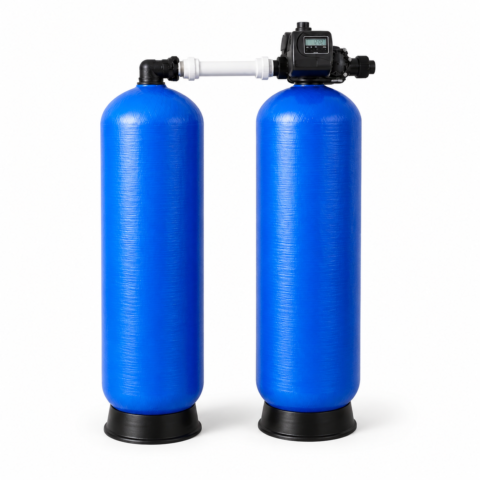
The arrangements that stand out by facility profile are as follows. In a small workshop or office kitchen the flow rate is low and continuity is not critical; softening and pre-filtration are usually enough. In medium-scale production a moderate flow rate concentrated on the day shift is seen; softening and reverse osmosis are laid out together. In continuous production and three-shift facilities uninterrupted flow is required; twin-tank (duplex) softening with reverse osmosis is preferred. In laboratory, pharmaceutical and plating applications high purity is sought, so reverse osmosis and deionisation are used one after the other. In steam boiler feed hardness is expected to be close to zero; twin-tank (duplex) softening and conditioning are planned together.
Hard water deposits calcium and magnesium salts on every surface where it is heated. This build-up forms an insulating layer on heat transfer surfaces: boilers, heat exchangers and water heaters have to spend more energy to reach the same temperature. The same build-up narrows the bore of pipes, increases the load on pumps and shortens the life of moving parts such as valves and seals.
French hardness (°fH) is widely used in Türkiye to classify hardness. The generally accepted approach is that low values mean soft water and rising values mean hard water. In industrial applications, though, what matters is less an absolute threshold than how much hardness the process can tolerate. A steam boiler is expected to run on hardness close to zero, while higher values can be accepted in cooling water. The target hardness is therefore set by the process requirement, not by a product catalogue.
As the cation resin retains hardness ions it becomes saturated and needs to be regenerated with brine. Regeneration can be triggered in three ways.
The resin volume is calculated from the raw water hardness and the volume of water to be treated between two regenerations. Because capacity per unit of resin varies with the resin type and the manufacturer's data, correct sizing needs the analysis result and the manufacturer's capacity table to be assessed together.
Two systems of the same capacity can be priced differently and last for different lengths of time because of component quality. When comparing quotations, these items should be asked about alongside capacity.
Installation time varies with system capacity; on compact systems it can be completed in one working day, while on large multi-stage systems it can take longer depending on site conditions.
On an industrial-type system the total cost is not just the purchase price. These items should be assessed together when making the decision.
Most of these items fall when the pre-treatment is laid out correctly. Feeding water that has not had its chlorine removed to a membrane, or running without a sediment filter, may look like a saving in the short term, but it shortens membrane life and raises the total cost.
| Component | Task and Frequency |
|---|---|
| Brine tank | Level check and top-up are carried out regularly according to consumption. |
| Outlet water hardness | Measured periodically with a test kit. |
| Cartridge filters | Replaced according to differential pressure and raw water quality. |
| Activated carbon | Renewed according to chlorine removal performance. |
| Reverse osmosis membrane | Conductivity and flow rate are monitored; when performance drops, cleaning or replacement is considered. |
| Control valve | Correct operation of the regeneration steps is verified at scheduled service. |
| Pressure and flow rate | Pressure gauge readings and flow measurement are checked periodically. |
On the Water Point side, filters, membranes, resin and salt are consumables, while valves, pumps and tanks are durable spare parts; there is a service network covering the whole of Türkiye for industrial systems and İstanbul and the surrounding provinces for domestic units, and technical service is provided for units of all domestic and foreign brands.
In industrial facilities the water source is usually the mains or a well, and the two require completely different treatment layouts.
Mains water arrives having already been through a degree of treatment; turbidity is usually low. On the other hand, mains water contains free chlorine. Because chlorine damages the reverse osmosis membrane, an activated carbon stage becomes mandatory in membrane systems. With mains water the real issue is hardness: the hardness value, which varies by region, is the main parameter that determines softening capacity.
With well water the picture is more complicated. The sand and sediment load can be high; iron and manganese can be present in dissolved form and, on contact with air, precipitate and foul the resin and the membrane. For this reason well water applications use a longer pre-treatment chain that starts with a separator or sand filter and, where needed, includes iron and manganese removal. Microbiological risk must also be assessed on well water and, if necessary, an ultraviolet (UV) treatment stage must be added.
Another critical difference is that well water can change with the season. Depending on the rainfall pattern, turbidity and mineral load can differ through the year; on well water projects the analysis should therefore be repeated periodically rather than carried out once.
On industrial-type systems automation is a matter of operational safety, not just convenience. Regeneration that is not carried out on time lets hard water into production, and failing to monitor membrane pressure can lead to irreversible loss of performance.
Recording the monitored values regularly in a simple logbook or in digital form is the most practical way to see a fault before it happens.
In membrane systems part of the feed water is discharged as concentrate carrying the minerals that have been retained. This proportion is not fixed; it varies with the raw water quality, the system design, the operating pressure and the quality of the pre-treatment. On a system with correctly laid out pre-treatment the membrane works less hard and the recovery rate improves.
In some facilities the reverse osmosis concentrate can be put to use at points where the quality requirement is low. Applications such as garden irrigation, pre-washing or cooling duty, for example, can stop all of the water going to drain. Whether such recovery is feasible must be assessed against the quality of the concentrate and the relevant regulations.
Even within the same facility the target quality changes with where the water goes. The two applications most often confused are boiler feed and cooling water.
In boiler feed water the water evaporates continuously and leaves minerals behind. Hardness ions build up on the heat transfer surface and form an insulating layer; that layer means more fuel is burned to raise the same amount of steam. The target is therefore to keep hardness close to zero. In practice twin-tank (duplex) softening is preferred, because hard water must not reach the boiler even during regeneration. Alongside hardness, oxygen and conductivity management are also assessed according to the boiler type; the blowdown regime keeps the mineral concentration inside the boiler under control.
In cooling water the water rejects heat by evaporating. Because the evaporated part leaves minerals behind, the concentration in the system rises over time. The target here is not to eliminate hardness but to control the cycles of concentration. Excessive concentration leads to scaling, while excessive make-up with fresh water wastes water and chemicals. To strike this balance, softening, conditioning and regular blowdown are planned together.
In short, almost no hardness is wanted on the boiler side, while a manageable range is targeted on the cooling side. Rather than adapting a single system to both applications, assessing the lines separately optimises both the initial investment and the operating cost.
When the information below is prepared, a sound quotation comes together faster and the quotations you receive become comparable.
These eight headings will be asked in the same way whichever supplier you work with. Preparing the answers in advance makes the quotations you receive comparable with one another.
Water Point supplies industrial-type treatment systems suited to high flow rates and demanding operating conditions. Systems engineered around your facility's water profile and production capacity provide long-lasting solutions.
The quality of the water used in industrial facilities directly affects the continuity of production processes. The contamination load that can build up in high-flow systems can cause a drop in machine performance and an increase in maintenance costs.
Water Point industrial-type water treatment systems offer solutions tailored to your business's needs, with capacity options suited to the production line and durable equipment construction. Water quality is brought under control and operational risks are reduced.
Correct installation and regular maintenance matter a great deal if industrial-type systems are to run efficiently. Water Point provides comprehensive technical support, from installation through to scheduled maintenance and fault response. For industrial systems there is a service network covering the whole of Türkiye; for domestic units, service is provided in İstanbul and the surrounding provinces (such as Kocaeli and Tekirdağ).

Industrial-type water treatment unit prices vary with system capacity, the contamination level of the water and the equipment to be used. Because every business has different needs, project-specific solutions are offered instead of standard systems.
| Product | Price | Description |
|---|---|---|
| Flow-Controlled Water Softener | 49,018.40 TL | A softening system that removes the limescale- and hardness-forming minerals in water to protect plumbing and equipment, regenerating according to the volume of water passed. |
| Deionised Pure Water Unit, 5 Tonnes/Day | 196,073.60 TL | A pure water production system with a capacity of 5 tonnes per day that uses reverse osmosis and deionisation stages together to bring conductivity close to zero. |
| 500 GPD Direct Flow Water Purifier | 36,763.80 TL | A direct flow reverse osmosis system with a daily capacity of 500 GPD that provides uninterrupted flow without using a storage tank. |
| Industrial Limescale Treatment Unit | 98,036.80 TL | A vessel-based industrial-type system for limescale and hardness control on high-flow lines. |
| Semi-Industrial Pure Water System | 147,055.20 TL | A semi-industrial pure water system producing low-conductivity water for medium-scale businesses. |
The prices above are the current list prices on the relevant product pages and are for the standard configuration; they change when capacity, automation and additional filtration units are selected. Systems are engineered taking into account the raw water analysis results and your facility's daily water consumption.
For the industrial-type water treatment system that suits your business and a firm price, you can reach us on 0850 304 95 25 or at [email protected].
Let's work out the right system for your facility together
The site survey is free of charge if the unit is purchased from us; if only a survey and measurement are requested, a site survey fee of 2,000 TL applies. Capacity and treatment stages are engineered according to the water analysis result.
0850 304 95 25Ask on WhatsAppSend an e-mailIt is suitable for factories and production facilities with high water consumption, food and beverage businesses, textile plants and dyehouses, metalworking and plating facilities, and businesses that use steam boilers.
It varies with the system capacity and site conditions. On compact systems it can be completed in one working day, while on large multi-stage systems it can take longer.
Total daily consumption, peak hourly flow rate and operating hours are assessed together. The system is selected on peak flow rate, not on the daily average; using a storage tank lowers the peak flow rate and allows a more economical choice.
It is not advisable. Two facilities of the same capacity need completely different stages if their raw water quality differs. Without knowing the hardness, conductivity, iron, chlorine and turbidity values, it cannot be determined which stages are needed.
Reverse osmosis separates most of the dissolved matter with a membrane under pressure. Deionisation then retains the ions remaining at the reverse osmosis outlet in a resin bed and brings conductivity down to near-zero values. When high purity is required, the two stages are used one after the other.
Salt consumption varies with the raw water hardness, the volume of water treated and the valve type. Flow-rate controlled valves use less salt and water than time-controlled valves. The salt level must be checked regularly.
Units carry a 2-year warranty; misuse is outside the cover. Consumables such as filters, membranes and resin are outside the cover.
Filters, membranes, resin and salt are consumables; valves, pumps and tanks are durable spare parts. There is a service network covering the whole of Türkiye for industrial systems and İstanbul and the surrounding provinces for domestic units, and technical service is provided for water treatment units of all domestic and foreign brands.
The price varies with daily capacity, the treatment stages, the level of automation and the raw water quality. Current list prices are given in the price table on this page. For a quotation specific to your facility you can reach us on 0850 304 95 25.
Questions? Talk to our specialist directly.
WaterAI