
The Water Treatment Tap: Single-Flow or Three-Way?
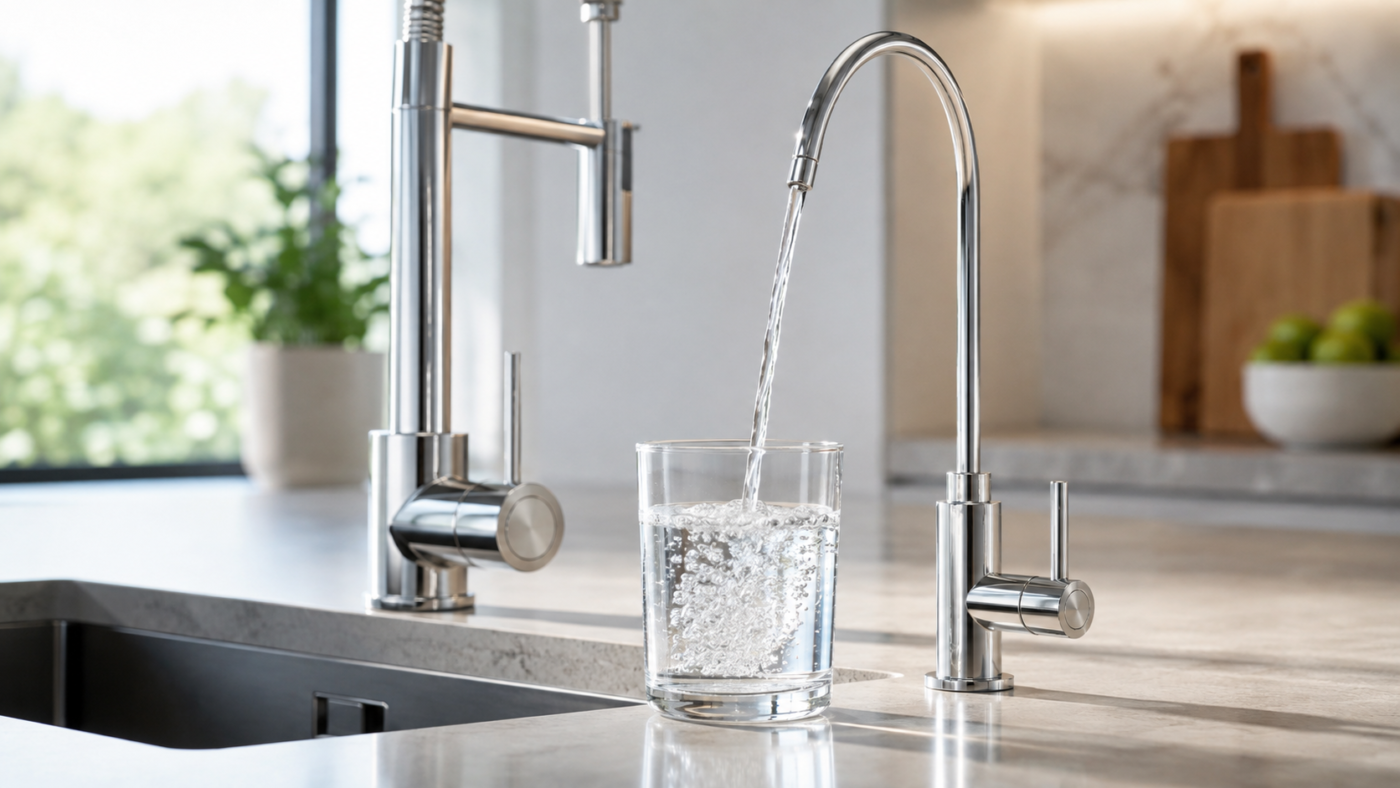
Hours are spent comparing membranes, stages and capacities when choosing a unit. Against that, the smallest part in the box is often never discussed — yet it is the only component touched by hand dozens of times a day. A few months later the lever starts to move, drips come from the spout and a permanent mark forms on the worktop. So a water treatment tap is not an accessory to the unit but the part at the centre of the experience of using it.
In this guide we take up the tap side: the difference between single-flow and three-way, the worktop hole and layout conditions, the effect of body material on durability, connection compatibility, the reasons for dripping and when to replace it. We do not go into the installation steps; the focus is on the tap itself.
Why Is a Water Treatment Tap Fitted Separately?
Treated water comes through an independent line leaving the unit. That line does not mix with the mains connection of the kitchen mixer; so a separate tap is fitted to the worktop. That tap gives only treated water and is connected directly to the outlet line of the unit.
The technical reason for the separation is simple. A kitchen mixer works by mixing the hot and cold mains lines; treated water, on the other hand, is delivered through a separate line after passing through the stages. The two flows mixing in the same body would remove the definition of treated water.
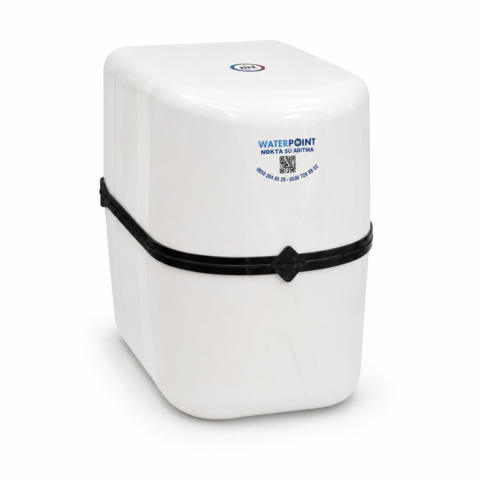
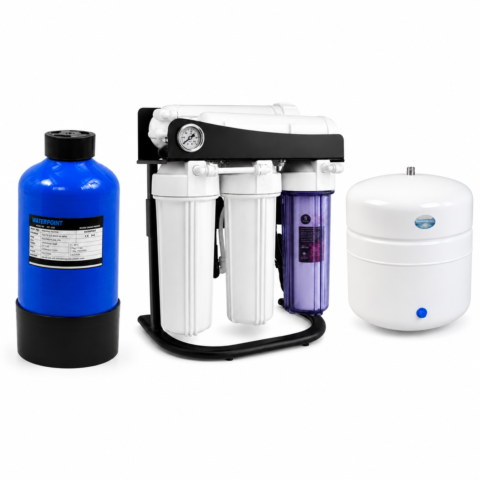
On systems with storage that line is fed from the tank. When the tap is opened, the air pressure in the tank pushes the water and the flow starts; so the flow character of the tap is related to the tank structure of the unit too. The storage tanks widely used on domestic installations are the component feeding that line.
For the general framework of point-of-use treatment units, the US Environmental Protection Agency point-of-use and point-of-entry treatment units resource can be consulted; it defines systems where the treatment is done at the point where the water is used.
Which type of unit to choose is a separate subject; we took up the criteria in our unit selection guide. The scope of this article is the last link after the unit: water treatment tap and the connection side.
The Difference Between Single-Flow and Three-Way Taps
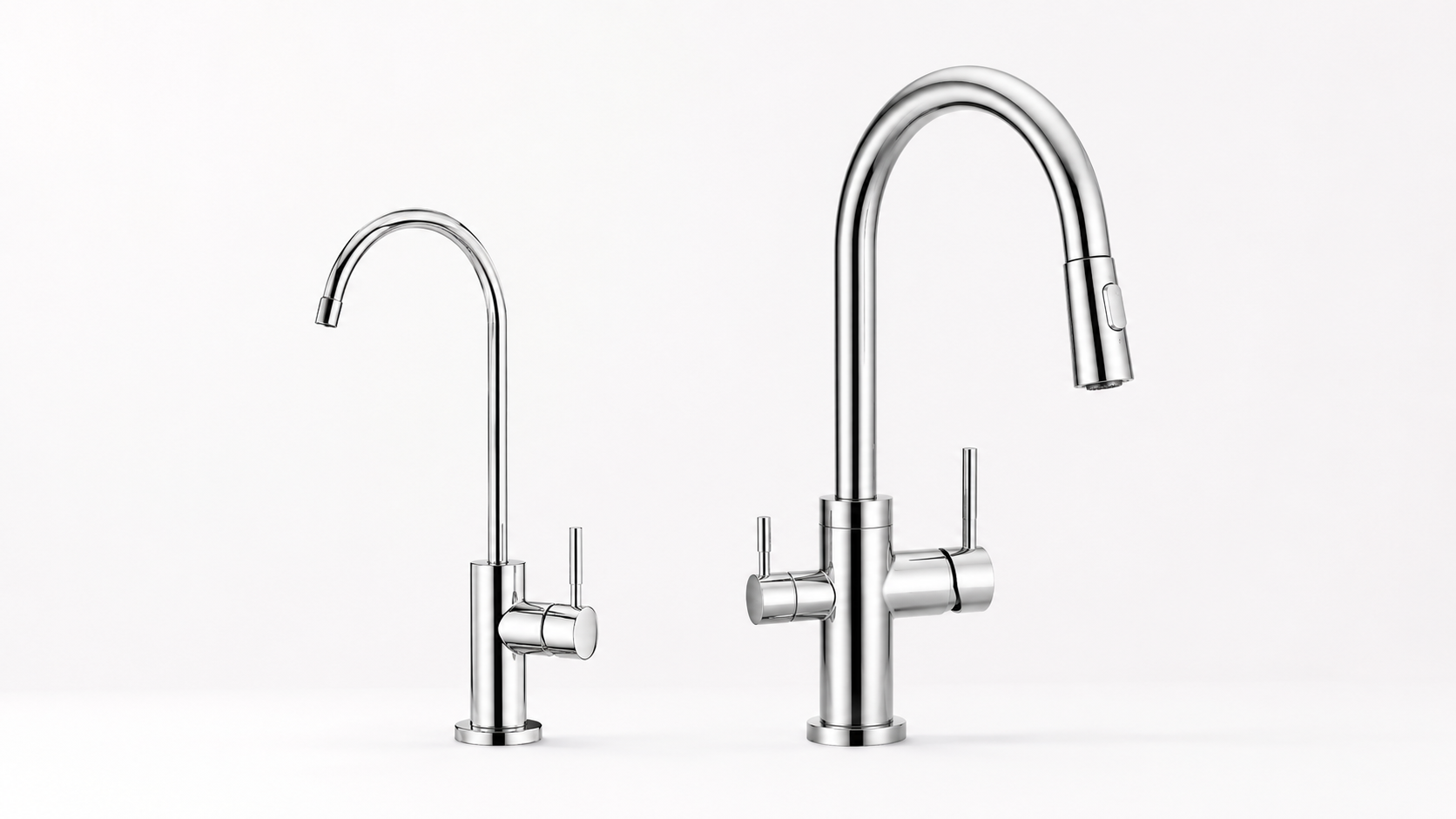
Single-flow models give only treated water and are fitted to the worktop through a separate hole. Three-way models bring hot, cold and treated water together in one body; that way an extra hole in the worktop may not be needed. The choice is made according to the state of the worktop and the kitchen layout.
The two types do the same job with a different logic of layout. The distinction runs like this:
An independent body
It gives only treated water; the existing mixer stays as it is and a second tap is added.
- A slim, compact body
- It calls for a separate hole in the worktop
- The existing mixer does not change
- It is connected only to the treatment line
Combined in one body
It brings hot, cold and treated water together in one body; there is a separate lever or outlet for the treated water.
- It may need no extra hole
- It replaces the existing mixer
- A cleaner look on the worktop
- It is connected to both the mains and the treatment line
The deciding point is usually the worktop. If there is a suitable empty hole in the worktop, or if a new worktop is being made, a single-flow model is used easily. If you do not want an extra hole made in an existing granite or composite worktop, a three-way model can remove that need.
There is one detail to watch on three-way models: the treated water line runs through a separate channel inside the body and does not mix with the mains water. The three-way tap models offering that structure are preferred by those who want to work with a single fitting in the kitchen.
The comparison of the two types can be summed up like this:
| Criterion | Single-Flow | Three-Way |
|---|---|---|
| The worktop hole | A separate hole is needed | An existing hole can be used |
| The existing mixer | It stays in place | It is replaced |
| Appearance | Two separate fittings | A single fitting |
| The number of connections | The treatment line only | The mains plus the treatment line |
| Worktop space | It takes extra space | It needs no extra space |
| Ease of replacement | It is renewed on its own | It is dealt with together with the mixer |
The last row of that table matters over the long run. When a single-flow water treatment tap fails, only that part is renewed; on a three-way model the whole kitchen mixer is involved.
The Worktop Hole and the Layout
Before installation it is checked whether there is a suitable hole in the worktop. Some worktops have an unused blanking hole ready. Where a new hole is needed, the operation carries a risk depending on the worktop material and must always be done by a specialist.
That is the most critical heading in the installation process and the one where most mistakes are made. The worktop material is decisive here.
On granite, marble, natural stone and composite worktops, making a hole carries a risk of breaking and cracking. That operation calls for special equipment and experience; damage that occurs is often irreversible and can call for the whole worktop to be replaced.
This article does not give instructions for making a hole. The operation should be done by a specialist who knows the worktop material. Where you cannot be sure, a solution needing no extra hole should be considered.
The position by material can be summed up roughly like this:
Granite and Natural Stone
Hard and brittle in structure; making a hole calls for special equipment and experience.
Marble
The risk of cracking is high; the operation should not be done without a specialist assessment.
Composite
The behaviour varies with the structure of the material; the manufacturer’s guidance should govern.
A Stainless Steel Sink
There is generally a blanking hole ready; that hole can be considered.
A Laminate Worktop
The operation is relatively easy; even so a specialist should be preferred for the integrity of the edges.
A New Worktop
If the worktop is still being made, the hole should be planned from the outset; that is the most trouble-free method.
On the layout side two points are assessed: the position of the tap relative to the sink and the cabinet space beneath it. The tap should be in a position where the flow falls into the sink; and there should be enough room inside the cabinet for the connection at the underside of the body.
There is a practical suggestion for those having a new worktop made: the hole for a water treatment tap should be planned while the worktop is being manufactured. That both removes the risk and creates no extra cost.
The Tap Body and Material Quality
The body material and the durability of the finish directly settle the working life of a tap. The quality of the cartridge and the gaskets in the internal parts affects how it behaves for dripping. On low-quality products, the finish coming away and early dripping are problems met with often.
This part is opened and closed dozens of times a day. A moving mechanism, constant contact with water and constant contact with hands come together; those three conditions make material quality decisive.
The headings to assess are these:
- The body material: The structural strength of the body, which works under pressure, is what decides.
- The finish: The durability of the surface finish affects the staining and flaking that occur over time.
- The cartridge / mechanism: The quality of the opening and closing mechanism settles how it behaves for dripping.
- The gaskets: The sealing parts come first in preventing leaks.
- The internal channel: The inner surfaces the water touches are expected to be made of suitable material.
- Spare parts: Being able to obtain the gasket and cartridge separately makes the product repairable.
The last item is often overlooked. On a product whose spare parts can be found, when dripping starts only the gasket or the cartridge is renewed; on a product whose parts cannot be found, the whole tap is changed.
When choosing among the treatment tap models offering different bodies and finishes, those technical headings should be assessed as well as the appearance.
We took up what component quality means across the unit as a whole in our component guide; here we focus on the tap side alone.
A water treatment tap When looking at a tap, you can watch how smoothly the lever moves, how the body feels for weight, and the workmanship of the connection threads. Those three observations give a quick idea of the general build quality of the product.
Looks and Fitting In With the Kitchen
A tap is a part constantly on show in the kitchen, so how it goes with the existing mixer matters. Chrome, matt black and stainless-look options are common. The height of the body and the direction of the flow should suit the depth of the sink.
Assessing looks is personal; but it can be done through a few concrete headings.
The first heading is matching the finish. If the kitchen mixer is chrome and a matt black fitting is added beside it, a visual mismatch appears. Preferring finishes from the same family gives the worktop a coherent look.
The second heading is the height of the body. A tall body makes filling jugs and large vessels easier; against that, it can create splashing in a shallow sink. A low body reduces splashing but can make filling large vessels harder.
The third heading is the direction of the flow and the ability to swivel. On some models the body turns horizontally; that gives access to different points in the sink. That feature is a practical convenience in wide and double-bowl sinks in particular.
And finally the position: placing the tap too close to the mixer can lead to your hand catching it in use. When planning the layout, a comfortable working distance should be left between the two fittings.
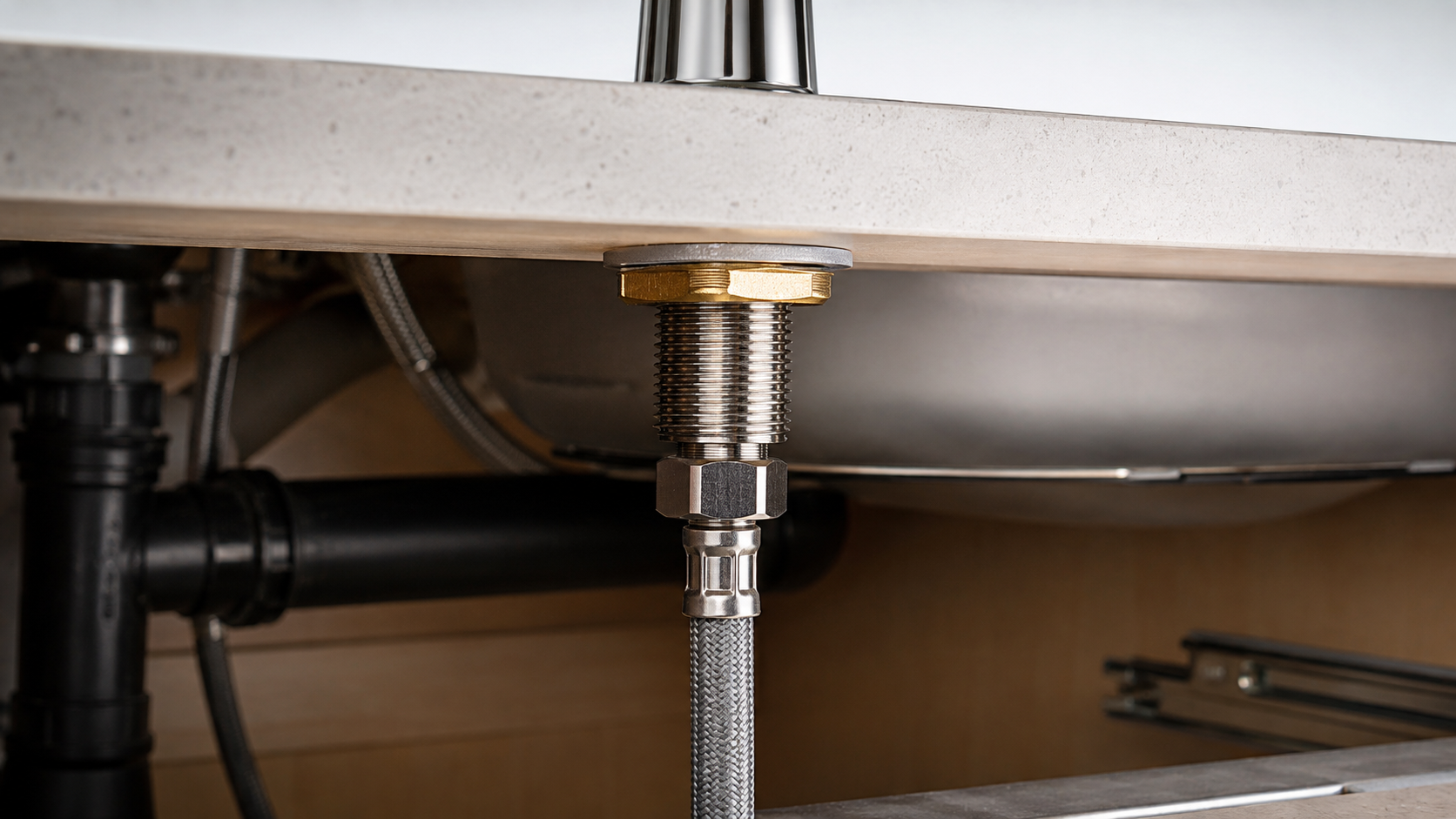
Fittings and Hose Compatibility
The tap hose has to be compatible with the outlet of the unit; the connector size and the connection type have to match. A significant share of leaks comes from connections that are not fully seated and from tired gaskets. So the connection points call for as much care as the tap itself.
Because that heading stays inside the cabinet it is the least noticed area but the one that causes the most trouble. However good the tap body is, a leak forms where the connection is not made correctly.
What should be checked for compatibility is this:
| The Point to Check | What to Look At | What Happens if It Does Not Match |
|---|---|---|
| The connector size | Do the unit outlet and the tap inlet match | The connection cannot be made or is forced |
| The hose type | Does it suit the hose structure the unit uses | A risk of leaking and coming loose arises |
| The hose length | Does it cover the distance inside the cabinet comfortably | A stretched line tires over time |
| The gaskets | Are they fully seated, are they worn | Dripping and leaking start |
| The fixing nut | Is it tightened properly under the worktop | The body moves and loosens over time |
| The route of the hose | Is it crushed or sharply kinked | The flow is restricted and the material tires |
The last row of that table is a common mistake. A hose trapped inside a cabinet or making a sharp turn both restricts the flow and creates structural weakness over time.
We took up the steps of the installation process and the mistakes made most often in our installation guide; we do not repeat the steps here.
The practical rule on compatibility is this: when buying a new water treatment tap, the model of the unit and its outlet connection type should be stated. Once that information is shared, the risk of an incompatible part largely disappears.
What Should Be Done if the Tap Drips?
Dripping generally comes from four causes: the gaskets tiring, the opening and closing cartridge wearing, the connection points loosening, and the line pressure being high. To tell the source apart, where the drip is coming from should be observed; where you cannot be sure, a technical service should be called.
Where the drip comes from largely explains the cause. The table below matches the sign with a likely cause:
| Symptom | Likely Cause | What Should Be Done |
|---|---|---|
| Dripping from the spout | The cartridge or an internal gasket may be worn | The part is renewed; a service engineer should assess it |
| Seeping from the base of the lever | The body gasket may be tired | The gasket needs changing |
| Damp under the worktop | A connection has loosened or a gasket is leaking | The water is turned off and the connection checked |
| Movement in the lever | The fixing nut may have loosened | The fixing of the body is checked |
| A constant flow when closed | The mechanism may not be closing fully | Technical service should assess it |
| Leaks throughout the system | The line pressure may be high | The pressure is assessed separately |
The last row is a heading of its own. If the line pressure is above what is expected, the connection points are strained and the risk of a leak rises. We took up the diagnosis of pressure and how it is assessed in our pressure article.
The check a user can make is at the level of looking: where the drip is coming from, whether there is damp under the cabinet and whether there is movement in the body. Taking things apart beyond that falls within the scope of technical service.
When a clear leak is noticed, the water can be turned off by closing the valve at the inlet to the unit. That is not a solution but a measure preventing water loss and damage inside the cabinet until a service engineer arrives.
When Does a Tap Need Replacing?
Replacement comes onto the agenda when signs such as constant dripping, the finish flaking, permanent movement in the lever and a marked drop in flow appear together. If the unit is sound, only the tap can be renewed; there is no need to change the whole system for that.
The most important thing in this section is this: the tap is an independent part. If the unit is working without trouble and the tap has worn, only that part is changed.
The signs that bring replacement onto the agenda are these:
Constant Dripping
If the dripping continues even though the gasket and cartridge have been renewed, the body should be assessed.
The Finish Flaking
The surface finish coming away affects both the appearance and the integrity of the surface.
Permanent Movement
If the body moves even though the fixing has been tightened, there may be a structural problem.
A Drop in Flow
If the flow is weak while the unit is working normally, build-up inside the tap is assessed.
Parts Not Being Found
If the gasket and cartridge cannot be supplied, the option of repair disappears.
Refitting the Kitchen
When the mixer changes, the tap can be dealt with alongside it for a matching look.
The fifth card is the result of the decision made at the buying stage. On a product whose spare parts can be found, dripping is solved with a small piece of maintenance, while on a product whose parts cannot be found the only option is replacing the whole thing.
We took up how the components of a unit age at different rates and how the repair-or-replace decision is made in our unit lifespan article. The tap is one of the parts in that picture that can be renewed on its own.
The point to watch during a replacement is compatibility: the new water treatment tap has to be compatible with the outlet connection of the unit and with the existing hole in the worktop. Once those two are clear, the change goes ahead without trouble.
Let’s establish the tap that suits your unit
You can compare the options compatible with your unit model and the state of your worktop.
See the ProductsIts Relationship With the Final-Stage Filter
The final-stage filter sits between the unit and the tap; the water passes through that stage before reaching the tap. So the choice of tap does not affect the filter build, and the choice of filter does not settle the type of tap. The two are independent decisions.
That distinction is a point users often confuse. The answer to “if I am going to use a mineral filter, do I need a special tap?” is no.
The order of the line is this: the stages, the tank if there is one, then the final-stage filter and the tap last. The tap is only the outlet point of the line; it does not change the character of the water passing through it.
Whether a cartridge containing minerals is used at the final stage is a separate preference. We took a balanced look at what that stage does and does not do in our mineral filter article.
The practical conclusion: there is no need to think about the filter build when choosing a tap. What is decisive is compatibility with the unit outlet, the state of the worktop and the quality of the material.
How Is the Right Water Treatment Tap Chosen?
Five headings are assessed in the choice: compatibility with the unit outlet, the state of the hole in the worktop, fitting in with the kitchen, the quality of the body and internal parts, and the availability of spare parts. Once those five are clear, the right model is easily established.
The checklist below covers the items to complete before deciding:
A Checklist for Choosing a Tap
- What is my unit’s outlet connection type and connector size?
- Is there an empty hole in my worktop that can be used?
- If a new hole is needed, is my worktop material suitable for it?
- Does a single-flow or a three-way model meet my need?
- Does the finish colour go with my existing mixer?
- Does the height of the body suit the depth of my sink?
- Can spare parts such as the gasket and the cartridge be obtained separately?
- Is there enough room inside the cabinet for the connection and for service?
- Who will carry out the installation, and will the seal be checked afterwards?
If you can answer those nine items, the choice is largely settled. The only thing left is a preference about appearance, and that is entirely a personal decision.
Water Point Su Arıtma Teknolojileri operates from Esenyurt, İstanbul under its founder Ali Genç, with more than 20 years of experience in the sector.
Spare Parts Cover
Filters, membranes, resin and salt are consumables; valves, pumps and tanks are durable spare parts.
Warranty
Units, valves, pumps and tanks carry a 2-year warranty and taps a 1-year warranty. Filters, membranes, resin and salt are consumables and fall outside the warranty.
Survey
The survey is free if the unit is purchased from us; where only a survey and measurement are wanted, a survey fee of ₺2,000 applies.
Service Network
For industrial systems there is a service network across Türkiye; for home units service is provided in İstanbul and the neighbouring provinces such as Kocaeli and Tekirdağ.
Contact
For a compatible part and installation support, 0850 304 95 25 and [email protected] can be used.
Frequently Asked Questions
Is a three-way tap essential?
It is not essential. If there is a usable hole in the worktop, or a new hole can be made, a single-flow model is used easily. A three-way model is an advantage for those who do not want an extra hole made in an existing worktop and prefer to work with a single fitting.
Can a hole be made in my worktop?
That depends on the worktop material and carries a risk. On granite, marble and composite worktops, making a hole creates a risk of breaking and cracking; it calls for special equipment and experience. The operation must always be done by a specialist; where you cannot be sure, a solution needing no extra hole should be considered.
Can the tap be bought on its own?
Yes. The tap is an independent part; when the unit is sound, only the tap can be renewed. There is no need to change the whole system for that. What matters is that the new part is compatible with the unit outlet and with the existing hole in the worktop.
My tap is dripping — what should I do?
First observe where the drip is coming from: the spout, the base of the lever, or under the worktop? Dripping from the spout and the lever generally comes from the gasket or the cartridge. If there is damp under the worktop, the water should be turned off and the connection checked by a technical service engineer.
Does it fit every unit?
Compatibility is settled by the outlet connection type and connector size of the unit. So you have to state your unit model before buying. An incompatible part either cannot be fitted or leaks when it is forced into place.
Can I change the tap myself?
An experienced user can separate the connection and make the change once the water is turned off. But the fixing under the worktop and checking the seal call for care; a faulty connection can lead to a leak that goes unnoticed inside the cabinet. Where you cannot be sure, technical service should be preferred.
The flow has weakened — could the tap be the cause?
It could be. Build-up can form inside a tap over time; but the more common causes of weak flow are saturated filters and a drop in tank pressure. So the age of the filters and the state of the tank should be assessed first, and the tap examined if that gives no result.
Does the colour of the finish affect durability?
What is decisive is not the colour but the quality of how the finish is applied. The same colour can show different durability on different products. So when assessing, the body material and access to spare parts should be taken into account as well as the appearance.
If I am going to use a mineral filter, do I need a special tap?
No. The final-stage filter sits between the unit and the tap; the water passes through that stage before reaching the tap. So the choice of filter does not settle the type of tap, and the choice of tap does not affect the filter build.
Conclusion
A water treatment tap is the smallest part of the system but the one touched most. Because treated water comes through an independent line, a separate tap is used; that tap can be fitted separately to the worktop as a single-flow model, or combined with the mixer in a three-way body. The decision is usually settled at the worktop — where there is an existing hole a single-flow model comes to the front, and where no extra hole is wanted a three-way one. On granite and marble worktops, making a hole carries a risk of breaking and must always be done by a specialist. The body material, the durability of the finish and the quality of the internal parts settle how it behaves for dripping, while access to spare parts makes the product repairable. And when dripping starts, the source is generally the gasket, the cartridge or the connection; while the unit is sound, only the tap can be renewed.
Get in touch for a compatible tap and installation
The site survey is free if the unit is purchased from us; where only a survey and measurement are wanted, a survey fee of ₺2,000 applies. For a choice suited to your unit model and the state of your worktop, and for installation support, you can reach us on 0850 304 95 25 or at [email protected].
Discover the Solution That Suits You