

What Is Water Softening Resin? Its Life and Replacement
The unit that ran without trouble for years no longer does its job as it did. The salt is topped up regularly, the system runs at night, the valve looks normal; yet white marks have appeared on the taps again and the soap does not foam as it used to. What is missed in that picture is usually somewhere unseen inside the tank: the water softening resin may be tired or fouled.
In this guide we take up the resin as a material: what it is made of, how it works, what determines its life, what wears it out most and how to tell when it is time to change it. We also clarify an important distinction — softening stopping does not always come from the resin.
What Is Water Softening Resin?
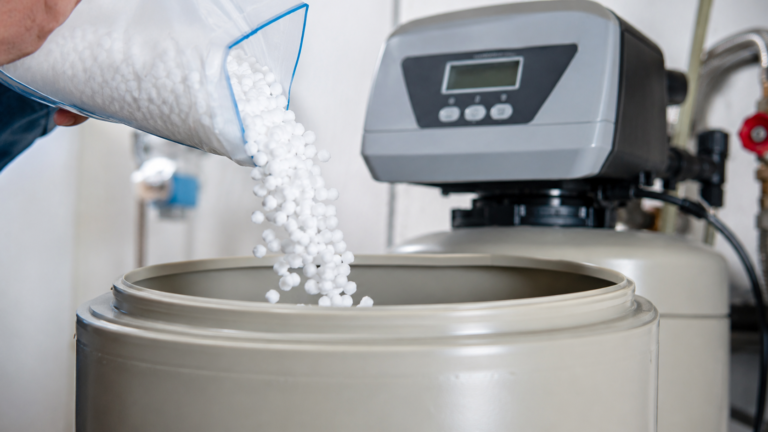
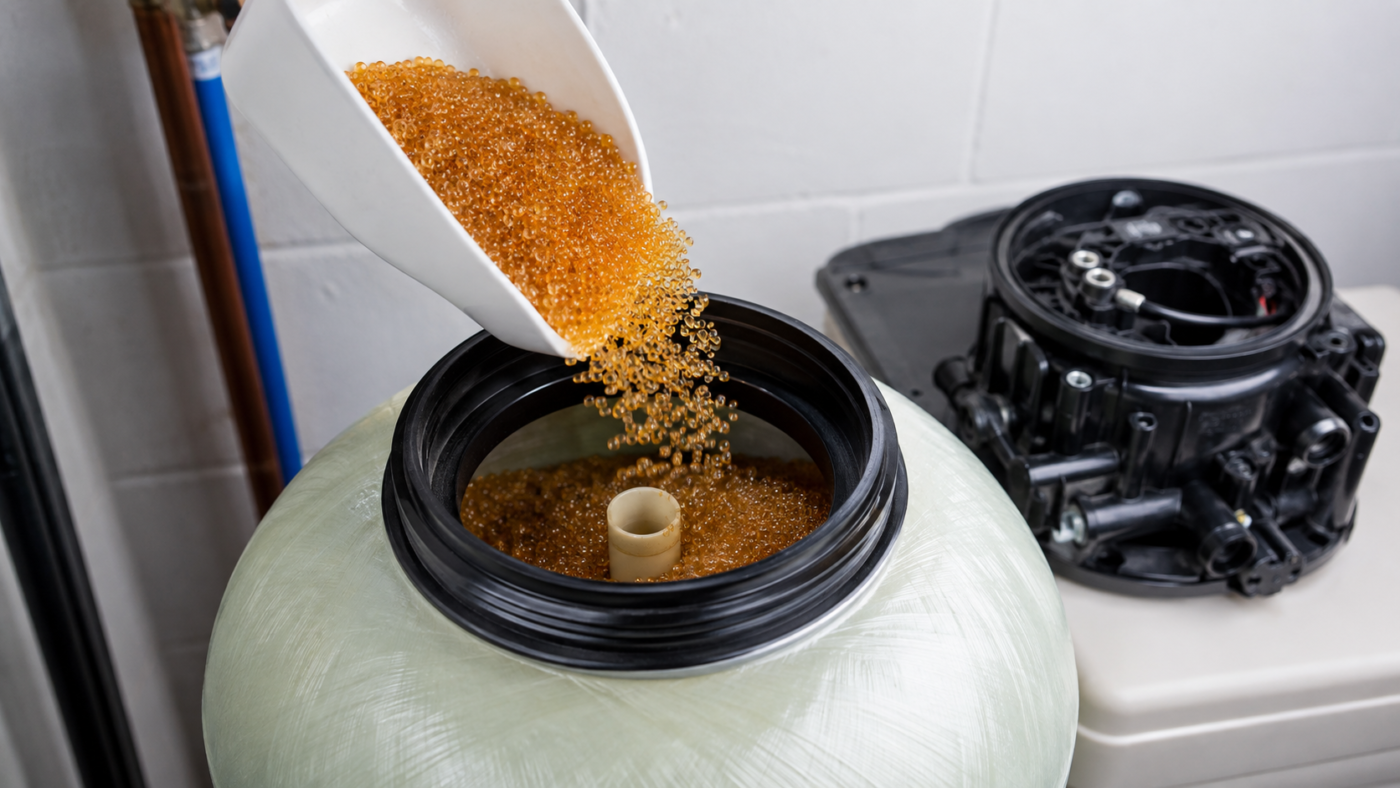
Water softening resin is an ion exchange material made up of millimetre-sized beads forming a bed inside the tank. It holds the calcium and magnesium ions in the water on its surface and releases sodium in return. The water is thereby softened; when the capacity is full, it is renewed with brine and works again.
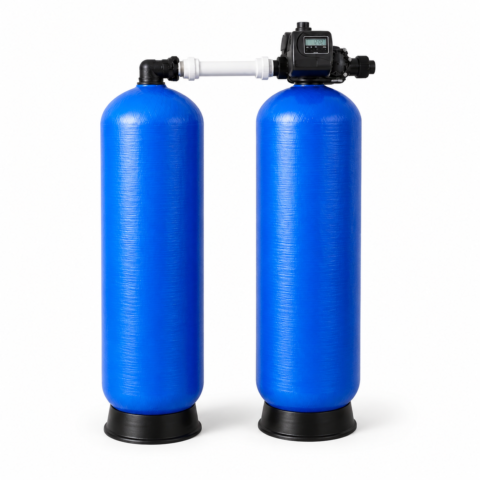
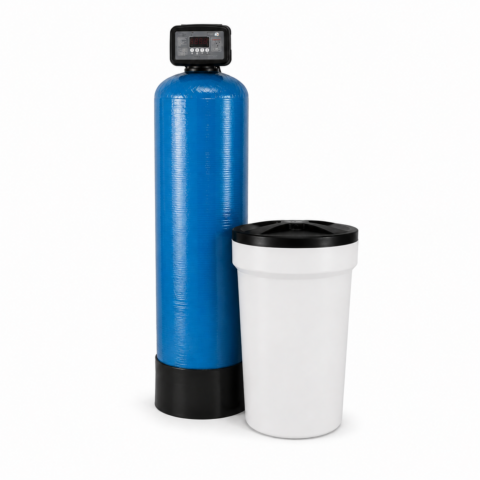
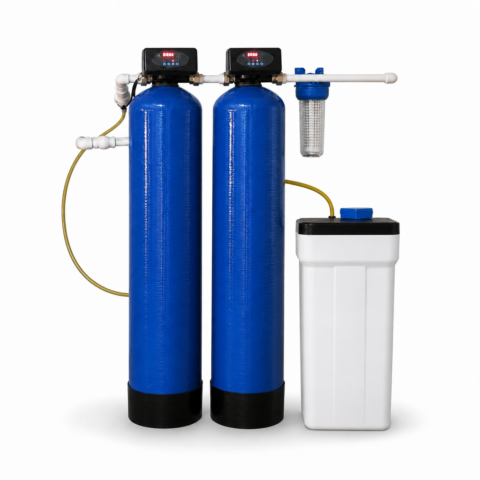
You cannot see it when you look at the body of the unit, but all the work happens here. That bed inside the pressure vessel is the only “active” component of the system; the valve merely manages the flow, and the salt is used to renew the bed.
A water softening resin is not a filter in that sense. Filters hold particles mechanically; resin makes a chemical exchange. Because it works with ions dissolved in the water, it does its job at a level the eye cannot see.
That distinction also determines the logic of maintenance. A sediment filter is replaced when it fills; resin is renewed when it saturates, and used again and again. But that cycle is not endless either — the material tires over time and at some point has to be replaced entirely.
What Does Resin Look Like and What Is It Made Of?
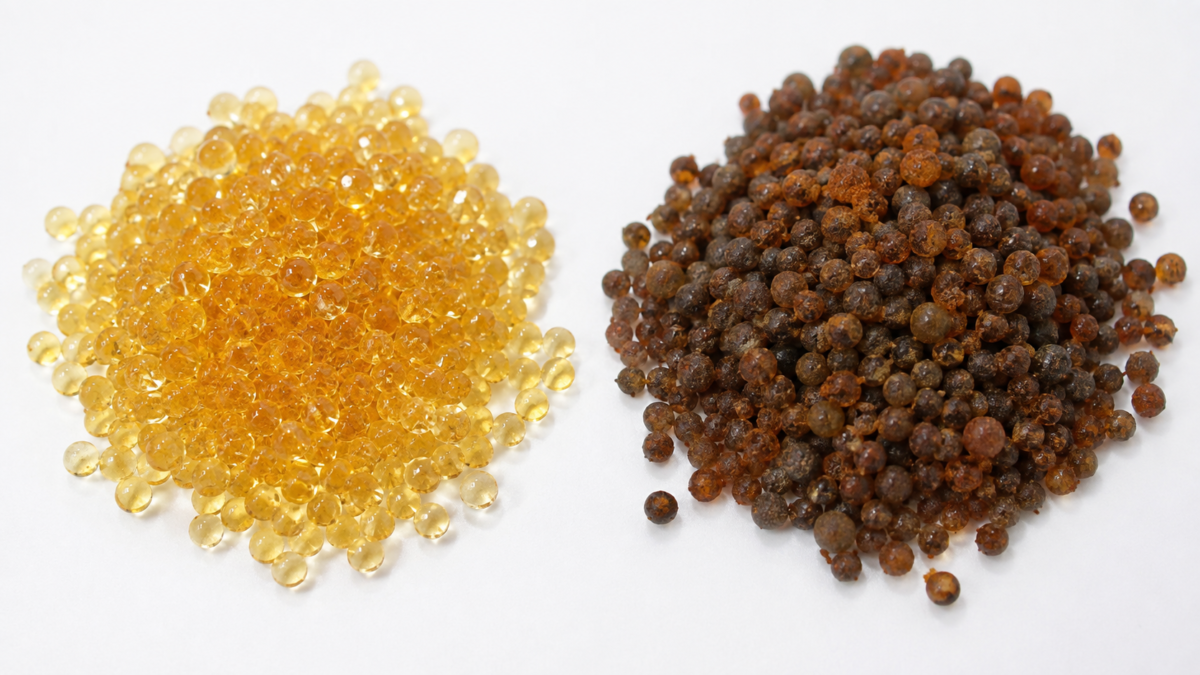
Resin consists of small porous polymer-based beads. They are close to amber in colour, slightly glossy and round. Thanks to the porous structure, a small volume offers a very large internal surface area; the ion exchange takes place on that surface. The beads form a bed inside the tank.
The performance of the material comes precisely from that surface area. A handful of resin beads, opened out, corresponds to a surprisingly large contact surface. As water passes between the beads it is in constant contact with that surface and the exchange takes place.
The shape of the beads is no accident either. The spherical form offers low resistance to the flow of water while stopping the grains from packing together. An even flow is thereby created along the bed and all the water comes into contact with the resin.
Another important property of the structure is its flexibility. The beads swell slightly when saturated with water and move during regeneration. That flexibility decreases over time; in an ageing bed the beads become brittle and start to break up.
It would not be right to give a general figure for the amount. The volume of water softening resin used is established from the tank size of the unit and its design capacity; every system has its own right amount.
How Does It Hold Hardness?
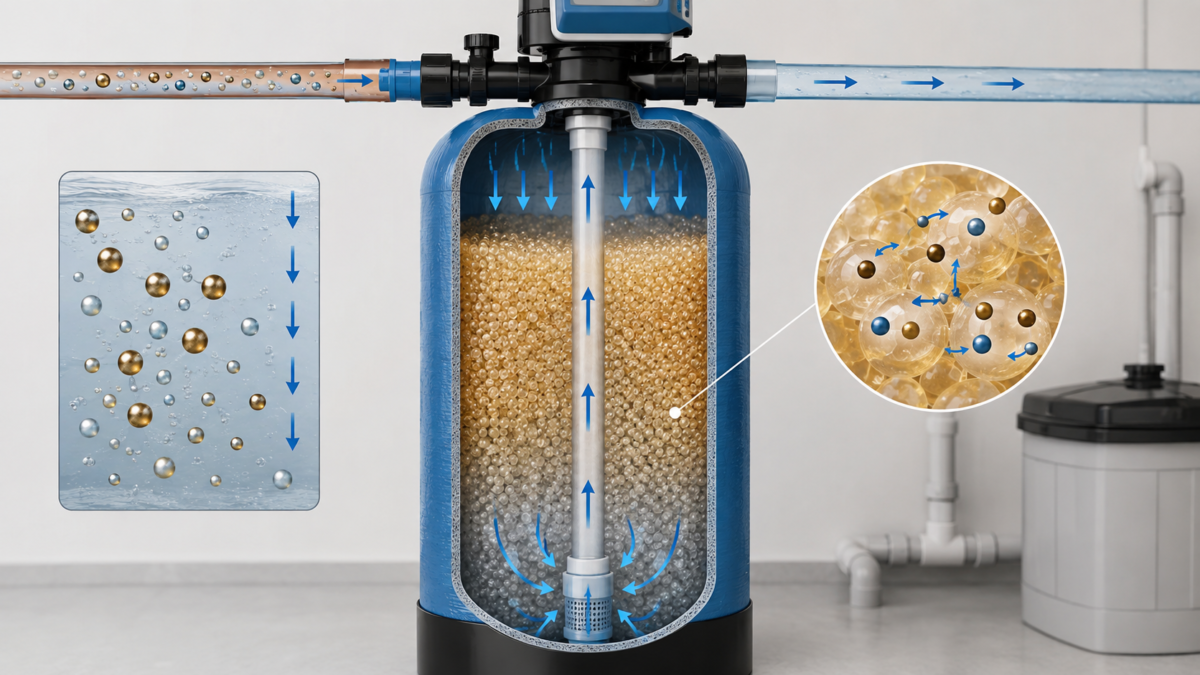
The resin beads carry sodium ions on their surface. As water passes through the bed, calcium and magnesium attach to the resin and sodium is released into the water in return. Because the ions that give hardness are removed from the water, the water is softened. When the capacity is full the exchange stops and the bed has to be renewed.
The reason the exchange takes place is simple: calcium and magnesium tend to attach to the resin surface more strongly than sodium. Thanks to that natural order of preference, softening proceeds on its own; no extra energy or intervention is needed.
The bed saturates from top to bottom. The exchange takes place in the area the water meets first; when that area fills, the process moves further down. When the whole bed is full, hardness starts to appear at the outlet.
A bed that has reached saturation is renewed with brine. We took up in detail how that cycle works — backwash, brine draw, rinse and valve types included — in our regeneration cycle article. The subject of this piece is not the cycle itself but the material that makes it possible.
For an academic framework on ion exchange, the University of Nebraska publication on domestic water softening explains the basic principles of the process and the behaviour of the material.
Resin Types: Cationic and Mixed Bed
Cationic resin is used in softening; it holds only positively charged hardness ions and is renewed with salt. Mixed bed resin is a structure in which cation and anion resins are combined; it is used in producing pure water and is not regenerated with salt.
The two materials are often confused; yet they are designed for different jobs:
For softening
It holds the positive ions that give hardness; it works by sodium exchange and is renewed with salt.
- It holds calcium and magnesium
- It is regenerated with brine
- It is used for limescale control
- It is long-lasting and economical
For producing pure water
Cation and anion resins are intermingled; it brings conductivity down to the lowest level.
- It holds both positive and negative ions
- It is renewed by special methods, not with salt
- It is used in laboratories and production
- It sits at the final stage of the system
A water softening resin and mixed bed material cannot be used in place of one another. Filling a softener with mixed bed will not give the result expected; putting cationic resin in a pure water unit will never reach the conductivity aimed for.
Designed for use on the pure water side, mixed bed pure water resin serves at the deionisation stage. We took up how that process works in detail in our deionised water article.
On the softening side the standard material is the cationic structure. In choosing a cationic water softening resin suited to your unit, what is decisive is the tank volume and the design capacity of the system.
How Long Does Water Softening Resin Last?
Its life is determined by conditions, not by the calendar. The quality of the inlet water, the frequency of regeneration, the purity of the salt used and the chlorine and iron load in the water all have a direct effect. A bed working on clean inlet water serves for many years, while an unprotected bed loses performance far earlier.
There is therefore no single answer to “how many years does it last”. The same brand and the same amount of resin can work for completely different periods in two different homes. What is decisive is not the material but the conditions it works in.
The main factors affecting its life are these:
- Inlet water quality: The higher the chlorine, iron and sediment load, the faster the bed wears.
- Regeneration frequency: Every cycle puts a mechanical load on the beads; frequent cycles accelerate ageing.
- Salt quality: Salt with additives and of low purity leaves residue in the bed and leads to fouling.
- The presence of pre-treatment: A protected bed lasts markedly longer than an unprotected one.
- Standing dry: Resin left without water for a long time can be damaged structurally.
- Capacity match: A system of inadequate capacity is strained constantly and the bed tires faster.
The second item on that list is a surprise to most users. Regeneration is a process that renews the bed, but it also puts a mechanical load on it. Unnecessarily frequent cycles age the material for nothing; the right capacity and the right hardness setting are therefore a matter not only of saving salt but of resin life.
What Wears and Fouls Resin
There are four main threats to resin: chlorine and oxidants break down the structure, iron and manganese coat the beads, sediment blocks the bed and poor-quality salt leaves residue. Standing dry for a long time can also cause structural damage. Most of these can be prevented with pre-treatment.
What these threats have in common is that they advance quietly. The bed does not fail all at once; its capacity falls gradually and the user notices only when performance has clearly been lost.
| The Threat | Its Effect on the Resin | The Result |
|---|---|---|
| Chlorine and oxidants | They break down the polymer structure over time | The beads crack and capacity falls permanently |
| Iron and manganese | It coats the bead surface (fouling) | The exchange is blocked and softening efficiency falls |
| Sediment and suspended solids | It blocks the spaces in the bed | Channelling forms and the flow becomes uneven |
| Poor-quality salt | It leaves undissolved residue | The bed is fouled and the brine line blocks |
| Standing dry | The beads shrink and crack | Structural damage and lost capacity |
| Excessively frequent regeneration | It accelerates mechanical fatigue | Its life ends earlier than expected |
The most dangerous on that list is chlorine, because its effect is cumulative and irreversible. Chlorine breaks the polymer structure of the resin over time. Broken beads both lose their capacity and create fine particles in the bed that upset the flow.
Iron fouling advances by a different mechanism. Oxidised iron sticks to the bead surface and closes off the exchange sites. Even when regeneration is carried out, that coating cannot be removed completely; the bed may look “renewed” but its capacity does not return.
Chlorine Damage
It breaks down the structure; the effect is permanent and the capacity cannot be recovered.
Iron Coating
It covers the bead surface; it cannot be cleaned off completely by regeneration.
Channelling
In a blocked bed the water passes along particular paths; part of the volume goes unused.
Salt Residue
Low-purity salt leaves deposits in the bed and in the line.
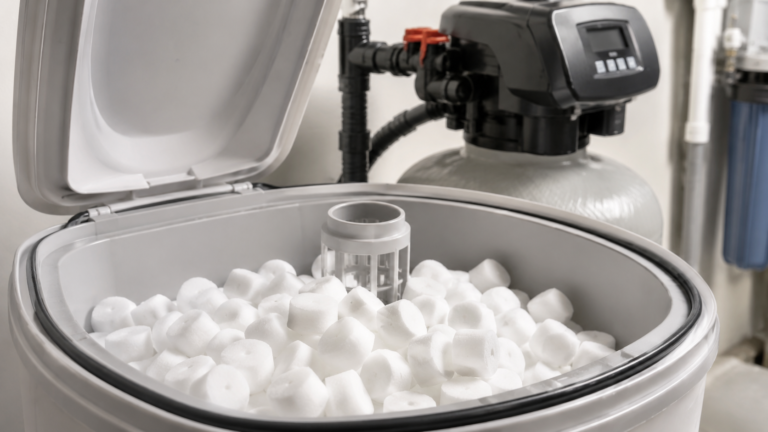
The answer on the salt side is simple: use a high-purity product made for softening. A suitable water softener salt protects both the bed and the valve from residue and contributes directly to the life of the water softening resin.
How Does Pre-Treatment Extend the Life of the Resin?
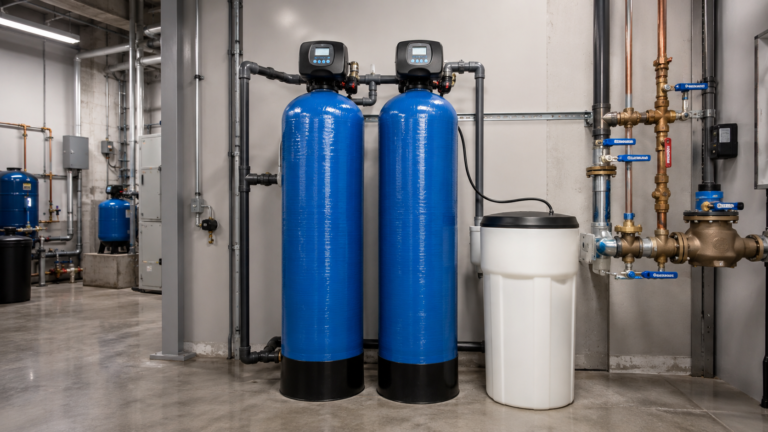
Pre-treatment removes the threats to the resin before they reach the bed. Sediment filtration holds back particles, the activated carbon stage removes chlorine, and where there is an iron problem, iron removal is built in first. That chain of protection markedly extends resin life and preserves softening performance.
The logic is economic: relatively inexpensive protective stages protect a far more valuable material for years. Saving on pre-treatment may look like a gain in the short term, but it comes back as the cost of replacing the resin.
The chain of protection has three links:
-
Sediment Filtration
Sand, rust and suspended solids are held back before they reach the bed; channelling and blockage are prevented. We explained the working logic of that stage in our sand filter article.
-
The Activated Carbon Stage
Chlorine and oxidants are removed so that the bed is not broken down chemically. That protection is the most critical link; we set out the detail in our activated carbon filter article.
-
Iron Removal
Where there is iron in the inlet water, that problem has to be solved first; otherwise the bed is coated and loses its capacity permanently. We explained the approach in detail in our article on iron in water.
Using a softener for iron removal is a common mistake. Resin can hold a limited amount of iron; but it was not designed for it. Under a high iron load the bed is fouled and softening performance falls permanently.
The choice of capacity at installation is also a form of protection. A system of inadequate capacity runs constantly at full load and regenerates more often; that ages the bed quickly. We took up the correct sizing criteria in our softening system selection guide.
Is the Resin Spent, or Is the Unit Faulty?
Softening stopping does not always come from the resin. Running out of salt, a salt bridge forming, a wrong valve setting or a valve fault all give the same symptom. The right order of checking is salt first, then the valve, and the resin last. When that order is skipped, resin can be replaced unnecessarily.
This section prevents unnecessary expense. In a large share of cases that come in with “the water has gone hard”, the problem is not in the material but somewhere far simpler.
| Symptom | Likely Cause | The Order of Checking |
|---|---|---|
| The water has gone completely hard | The salt may have run out | The salt level first |
| The salt is not going down but the water is hard | A salt bridge has formed | A hardened layer inside the tank |
| No regeneration is taking place | A valve setting or a valve fault | The valve position and programme |
| The system runs water constantly | The valve has not returned to service | The valve and the drain line |
| Efficiency low despite regeneration | The resin is fouled or tired | The state of the bed (the last check) |
| Loss of pressure and low flow | The bed may be blocked | Sediment build-up and channelling |
The order in that table matters. Salt and valve checks can be done in minutes, while replacing the resin is both costly and a nuisance. Troubleshooting should therefore always work from the easy to the hard.
The most reliable indicator pointing to the resin is this: the salt is full, the valve is working properly and regeneration is completed in full; yet the outlet water stays hard. In that picture the bed has most likely lost its capacity permanently.
Even then a second confirmation is useful: measure the hardness of the outlet water and compare it before and after regeneration. If there is no difference, it is time to renew the water softening resin.
How Is Water Softening Resin Replaced?
The general flow is this: the unit is put on bypass, the water and pressure are released, the valve is removed, the old bed is taken out of the tank, the tank is cleaned, new resin is filled in and the system is commissioned with a first regeneration. The work should follow the unit’s manual.
This is a far more involved job than a pre-filter change. The position of the distributor tube inside the tank, the bottom screen and the valve connection all call for care; a mistake causes both leaks and performance problems.
The general steps of the process are these:
-
Bypass and Releasing the Pressure
The unit is put on bypass, the inlet water is shut off and the pressure in the system is released safely.
-
Removing the Valve
The control valve is separated from the tank. The position of the distributor tube and the state of the seals are checked.
-
Removing the Old Bed
The used resin is emptied out of the tank. The inside of the tank is washed to clean off residue and deposits.
-
Filling In the New Resin
The right amount of new material is filled in carefully so that none escapes into the distributor tube.
-
Commissioning
The valve is refitted, water is admitted gradually and the system is pressurised again.
-
The First Regeneration
A starting cycle is run so that the bed settles and comes into service.
This flow is a general framework, not an instruction for a particular make and model. In practice the manual for your unit is what counts. On industrial and high-capacity systems the work must be carried out by a technical service.
The most common mistake during a change is leaving the mouth of the distributor tube open; resin then escapes into the tube and is carried down the line. The tank should also not be filled completely — space has to be left for the bed to expand during regeneration.
How Is the Right Resin Chosen?
Three criteria are decisive: an amount suited to the tank volume of the unit, the intended use (softening or pure water) and the inlet water conditions. Material that is mismatched or of the wrong type will not give the performance expected. The right amount is established from the capacity of the unit.
The most practical way of running the decision is with these questions:
- For what purpose? Cationic for softening, a mixed bed structure for pure water; the two cannot be used in place of one another.
- How much? The amount is established from the tank size and the design capacity of the system.
- What is the inlet water like? Where there is high chlorine or iron, protective stages have to be planned first.
- How heavy is the use? Under heavy use, matching the capacity directly affects the life.
- What standard of quality? Material of known manufacturing quality is more economical over the long term.
Quality matters particularly here. Low-quality beads are more brittle; they stand fewer regeneration cycles and break up earlier than expected. The saving on the first purchase is then more than taken back by an early replacement.
Where you are not sure, the safest route is to have compatibility checked by stating your unit model and tank size. That way both the right type and the right amount are chosen and the water softening resin performs as expected.
Renewing the resin is more efficient when it is planned together with the general servicing of the unit. When the tank is opened, the bottom screen, the distributor tube and the seals are checked too; the whole system is thereby reviewed in a single visit.
Let’s establish the resin that suits your unit together
You can look at the options to choose material suited to your tank size, your intended use and your inlet water conditions.
See the Resin OptionsFrequently Asked Questions
How long does water softening resin last?
There is no fixed period; the life is determined by conditions. The quality of the inlet water, the chlorine and iron load, the frequency of regeneration and the quality of the salt all have a direct effect. A protected bed works for many years, while an unprotected one loses performance far earlier.
How do I know the resin is spent?
The most reliable indicator is this: the salt is full, the valve is working properly and regeneration is completed in full; yet the outlet water stays hard. The bed may then have lost its capacity permanently. The order of checking is salt first, then the valve, and the resin last.
Can resin be cleaned, or does it always have to be replaced?
Certain cleaning approaches can be applied to light fouling; but chlorine damage and advanced iron coating are irreversible. A bed that is structurally worn or permanently fouled has to be renewed.
Are softening resin and mixed bed the same thing?
No. Cationic resin is used in softening and renewed with salt. Mixed bed is a mixture of cation and anion resins; it is used in producing pure water to bring conductivity to a minimum and is not regenerated with salt. The two cannot be used in place of one another.
Does chlorine really damage resin?
Yes, and the effect is permanent. Chlorine breaks down the polymer structure of the beads over time; broken beads lose their capacity and create fine particles in the bed. An activated carbon stage on the inlet line is therefore recommended.
Can I replace the resin myself?
On a domestic unit someone experienced can do it by following the manual; but removing the valve, the position of the distributor tube and the seals all call for care. On industrial and high-capacity systems the work must be carried out by a technical service.
How many litres of resin are needed?
The amount is established from the tank size and design capacity of the unit; it would not be right to give a general figure. The safest route is to have compatibility checked by sharing your unit model and tank details.
Conclusion
The component that does the real work in a softening system is the bed you cannot see. Water softening resin softens water by holding hardness ions and exchanging them for sodium, and is renewed again and again with brine. But that cycle is not endless: chlorine breaks down the structure, iron coats the surface, sediment blocks the bed and poor-quality salt leaves residue. Its life is therefore measured in conditions, not in years. The most effective protection is pre-treatment — sediment filtration, a carbon stage and, where needed, iron removal protect the material for years. When performance falls, the right order is clear: salt first, then the valve, and the resin last. Work with that discipline and you avoid unnecessary expense while the system runs trouble-free for years.
Get support for renewing your resin and checking compatibility
You can get in touch with the Water Point expert team for choosing material suited to your unit and for the replacement process.
Discover the Softening Solutions