
Delivery
Across Türkiye · 1–3 business daysProducts in stock ship free anywhere in Türkiye and arrive within 1–3 business days. Items not in stock are supplied to order — the lead time is confirmed to you when the order is approved.

Your cart is empty.
Browse productsCategories
Solutions
Process water, line feed and sizing by flow rate.
Systems and units Industrial Water Treatment Read the guideTreatment that stops limescale and corrosion before they reach the boiler.
Systems and units Water Softeners Read the guidePure water of low conductivity and repeatable quality.
Systems and units Pure Water Systems Read the guideRemoving the salts and sediment that clog drip lines.
Systems and units Well Water Treatment Read the guideThe right hardness for equipment life and drink flavour.
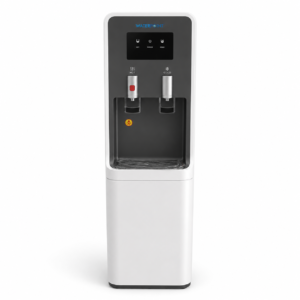
Systems and units Filtered Water Dispensers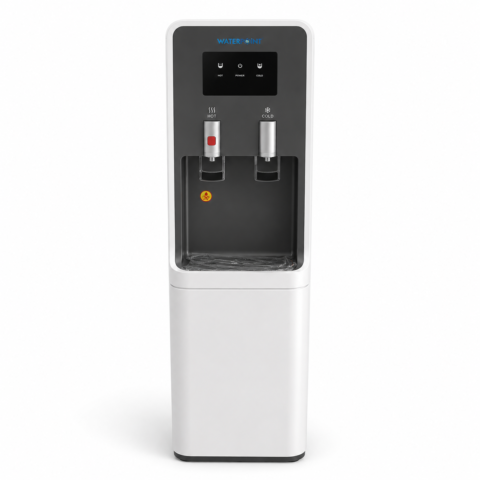 Water Point Filtered Water Dispenser
₺63,723.92
Water Point Filtered Water Dispenser
₺63,723.92
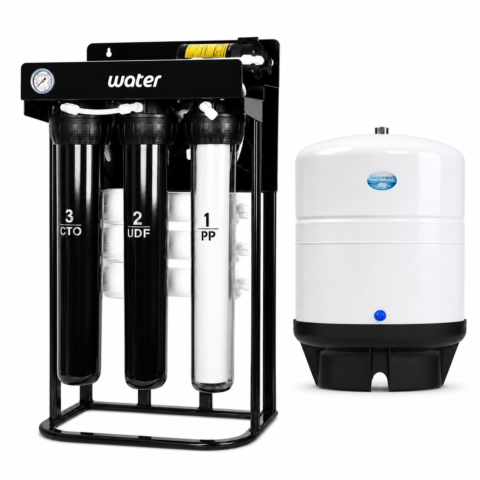 Restaurant Water Purifier, 500 GPD with 40 Litre Tank
₺49,018.40
Restaurant Water Purifier, 500 GPD with 40 Litre Tank
₺49,018.40
A main line that filters the water entering your plumbing at a single point.
Systems and units Whole House & Building Inlet Systems Read the guideA staged system for iron, manganese and turbidity.
Systems and units Well Water Treatment Read the guideLow-conductivity rinse water for spot-free drying.
Systems and units Reverse Osmosis Systems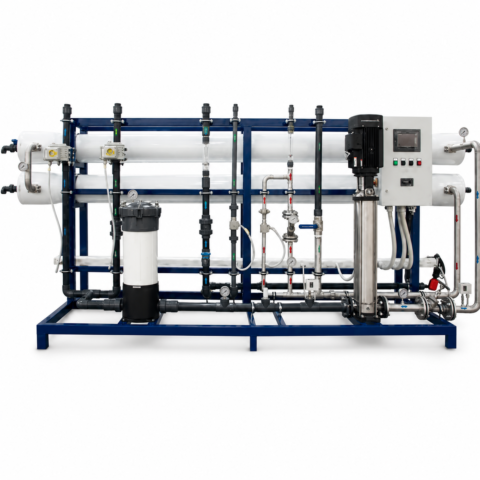 95 Tonne Reverse Osmosis System
₺980,368.00
95 Tonne Reverse Osmosis System
₺980,368.00
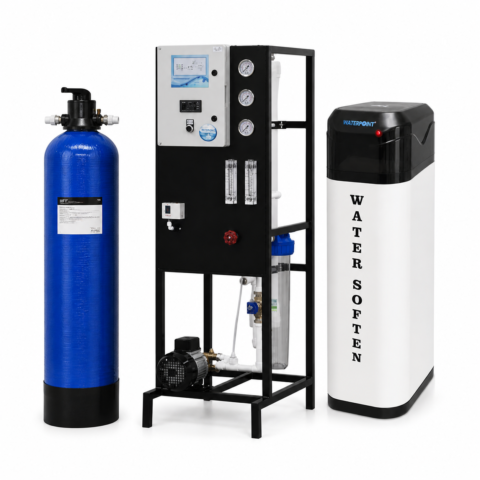 Industrial Deionised Pure Water Unit, 250 L/h
₺220,582.80
Industrial Deionised Pure Water Unit, 250 L/h
₺220,582.80
The problems hard water causes in hair and skin care.
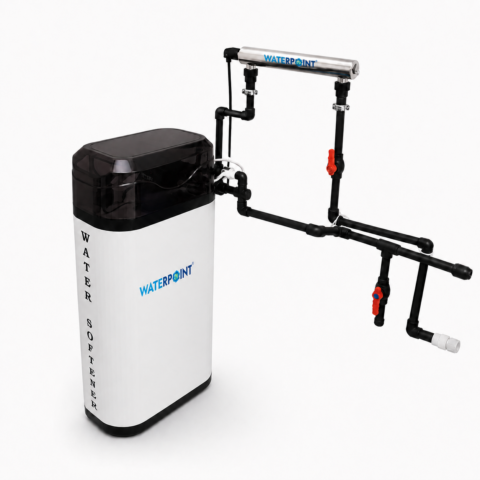
Systems and units Water Softeners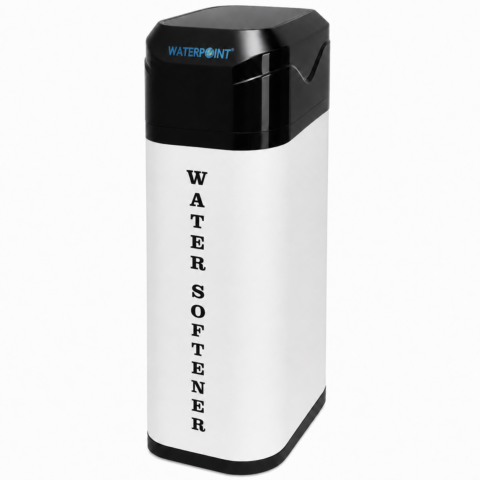 Maxi Cabinet Water Softener, 5 Tonnes/Day
Original price was: ₺49,018.40.₺34,312.88Current price is: ₺34,312.88.
Maxi Cabinet Water Softener, 5 Tonnes/Day
Original price was: ₺49,018.40.₺34,312.88Current price is: ₺34,312.88.
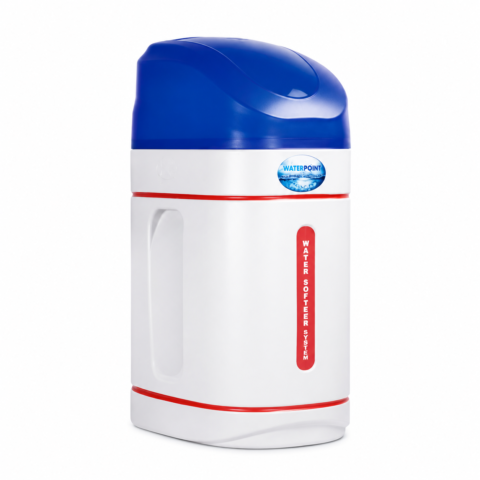 Mini Cabinet Water Softener, 2 Tonnes/Day
₺44,116.56
Mini Cabinet Water Softener, 2 Tonnes/Day
₺44,116.56
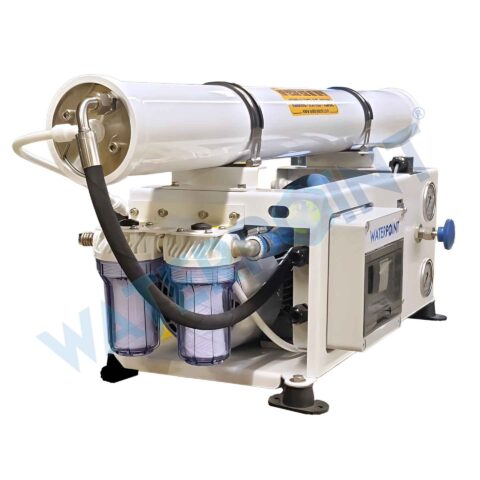
Drinking water from seawater with high-pressure reverse osmosis.
Systems and units Reverse Osmosis Systems Read the guideCompany


VAT included · Free shipping in Türkiye
Ordering from outside Türkiye
Online payment is only available for delivery addresses in Türkiye. For orders from abroad, we prepare a price quote.
Your location:
Ion Exchange Media · Water Softening
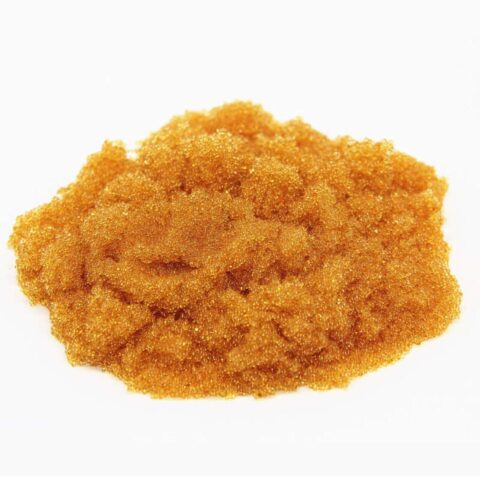
Water Softening Resin is the basic treatment medium that removes hardness and limescale from water by ion exchange. Cationic resin captures the calcium and magnesium ions that cause hardness and releases sodium ions in their place, softening the water; regenerated with salt, it is used again and again for years.
01Problem & Solution
Problem
The calcium and magnesium in water make it hard, leaving limescale, blockages and lost performance in boilers, water heaters, washing machines and dishwashers. And a softener whose resin has been used up starts delivering hard water again.
Solution
Cationic Water Softening Resin captures the hardness ions and releases sodium in their place, softening the water. When it saturates it is renewed with brine, and fresh resin gives your unit uninterrupted soft water performance.
02Key Features
Cationic resin is the basic treatment medium made for high efficiency and long life in water softeners.
Capturing calcium and magnesium ions and releasing sodium in their place softens the water effectively.
When it saturates, the unit’s valve washes it with brine and it is ready for use again.
With regular regeneration it holds its performance for years and does not need constant replacement.
An even bead size gives balanced flow in the vessel, preventing pressure loss and raising efficiency.
Soft water protects the plumbing and every water-using appliance against limescale build-up.
It is a standard medium usable in every water softener, from domestic to industrial.
03Technical Specifications
| Feature | Value | What it does |
|---|---|---|
| Resin Type | Strong Acid Cation | The material that holds back limescale. The more of it, the greater the softening capacity. |
| Form | Bead (Gel) | The shape of the product and how it is laid out. |
| Construction | Styrene-Divinylbenzene | How the unit is put together. A compact cabinet takes little room; an open system makes servicing easier. |
| Principle | Ion Exchange (Na⁺) | |
| Regeneration | With Salt (NaCl) | How the resin is regenerated. This is where salt consumption comes from. |
| Use | Water Softening Units | |
| Weight | 20 kg | Product weight. For wall mounting, the supporting surface is chosen accordingly. |
| Dimensions | 10 × 25 × 35 cm | The outer dimensions of the unit. The cabinet or plant room has to be wider than this. |
04Applications
Cationic resin is used in water softening systems of every size where hard water is a problem.
05How It Works
Hard water begins to pass through the sodium-charged cationic resin bed in the unit’s vessel.
The resin captures the calcium and magnesium ions that cause hardness and releases sodium ions into the water in their place.
Cleared of hardness, the soft water goes into the plumbing, preventing limescale build-up and wear on appliances.
Over time the resin fills with calcium and magnesium and reaches saturation, at which point it can no longer soften.
The unit’s valve washes the resin with brine; sodium is recharged and the resin is ready for use again.
06Making the Right Choice
When choosing Water Softening Resin, the unit’s capacity and the conditions of use must be assessed correctly.
The vessel size determines how much resin is needed; too little affects efficiency and too much affects the flow.
The hardness affects how soon the resin saturates and how often it regenerates.
For drinking water applications, choose a quality resin that meets hygiene and food-contact requirements.
Charging a new unit and replacing resin at the end of its life call for different quantity planning.
07Maintenance and Use
08Frequently Asked Questions
To write a review, please log in to your account. If you don't have an account, you can create one on the same page.
Questions & Answers
Questions on compatibility, capacity and installation are answered by our technical team. The answers stay public — so the next person with the same question can see them too.
No questions have been published for this product yet. You can be the first to ask.
Products in stock ship free anywhere in Türkiye and arrive within 1–3 business days. Items not in stock are supplied to order — the lead time is confirmed to you when the order is approved.
This product is classed as a consumable or spare part; because its life depends on use, it is not covered by warranty. Faulty or incorrectly shipped items are replaced — just get in touch with us.
The right of withdrawal and the return terms are set out in detail in the distance sales agreement. Systems that have been installed and commissioned, and made-to-order products, are outside its scope.
Checkout
Instalment TableInstalment rates vary by each bank’s card programme and may include interest. The amounts below are calculated with the banks’ current rates; the final amount is shown again at checkout.
Questions? Talk to our specialist directly.
WaterAI
Reviews
There are no reviews yet.