

Mains Water and Well Water: Two Models of Management
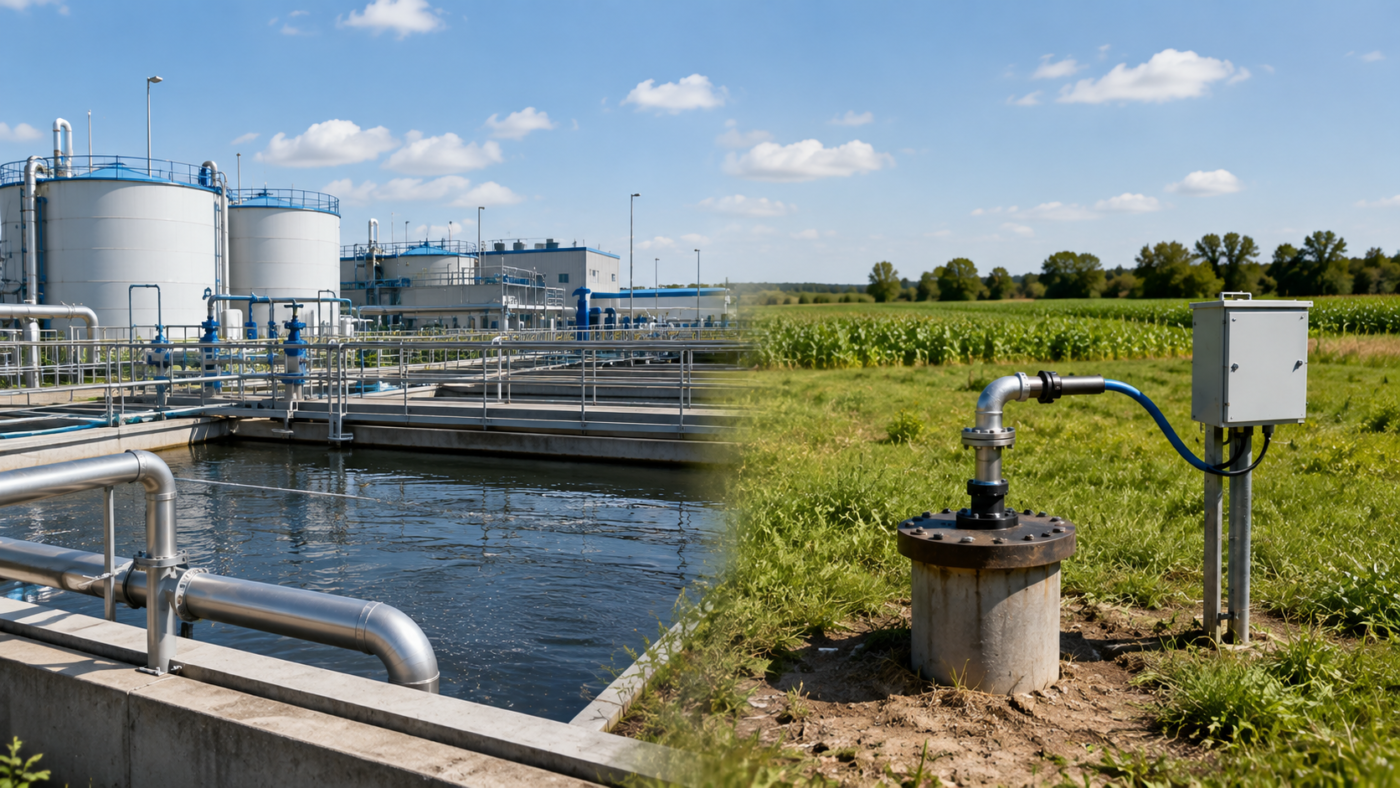
On one side there is a user who pays no water bill because they have a well, but has never had what is in that water measured. On the other, someone connected to the mains who has never opened the subject at all, saying “it must be treated anyway”. The two situations are nothing alike; but what is missing is the same: data. Mains water and well water — that is exactly where understanding the difference between them begins.
This article compares the two sources impartially. It presents neither as superior to nor more objectionable than the other; it sets out that the two behave differently and so call for different approaches to treatment. And the conclusion reached is the same for both sources: the right answer starts with an analysis.
What Is the Basic Difference Between Mains Water and Well Water?
Mains water is treated centrally and monitored regularly by the competent authorities. With well water, monitoring the quality and treating it where necessary is entirely the responsibility of the user. The two sources have different profiles of content and variability, and so their approaches to treatment differ too.
The key idea in that definition is “responsibility”. The difference has less to do with the water itself than with who monitors it. On the mains a body takes regular measurements and works within a defined framework; on a well that job belongs to the user.
The second decisive difference is variability. Because mains water goes through a central process, it offers a relatively steady profile. Well water, drawn directly from underground, can differ with the geology and with the conditions of the season.
When those two differences are weighed together the picture becomes clear. A Mains water and well water comparison is not a ranking of “good and bad” but a comparison of two different models of management.
The Difference in Responsibility: The Most Critical Distinction
On the mains, water goes through a defined process before it is put into distribution and is monitored regularly. On a well there is no such mechanism; knowing what is in the water and treating it where necessary is left to the user’s own initiative. That is the most decisive structural difference between the two sources.
Let us make it concrete. In a household connected to the mains, the user is inside a defined framework even without knowing directly about the work done on the source side. In a household using a well, no such framework comes into play automatically.
There is central monitoring
The water is treated before it is put into distribution and monitored regularly by the competent authorities.
- A central treatment process is applied
- Regular measurement and inspection are carried out
- The source profile is relatively steady
- The user’s side concerns the plumbing and the tank
The responsibility is the user’s
Knowing what is in the water and treating it where necessary is left to the user’s own initiative.
- The analysis is arranged by the user
- The treatment build is planned by the user
- The content varies with the geology
- The monitoring has to be kept up regularly
That distinction does not run well water down. It says only this: in a household using a well, an analysis is not a choice but a necessity. On private wells, the US Environmental Protection Agency private wells resource offers a similar framework and stresses that well owners should keep up regular monitoring.
On the legal side care is needed. Drilling a well, permission to use it and the obligations that go with them vary by area and by regulation; the local authority and the relevant regulations should be consulted on that.
The Difference in Source: Surface and Underground
Mains water is generally taken from a central source, treated and delivered through a distribution line. Well water is drawn directly from underground; its content is settled by the rock and soil layers it passes through. So two wells can show different profiles even in the same area.
What is in groundwater is the result of a journey. Rainwater seeps into the soil, moves between the layers and dissolves part of the minerals it touches along the way. In an area rich in limestone the hardness can be high, while in a different geology the picture changes entirely.
So no “general” profile can be defined for well water. In the same village, the water of two neighbouring wells can show different content when they are fed from different depths.
On the mains the position is different. The source is processed centrally and put into distribution, and that means a more predictable profile. Variability on the user’s side generally arises not from the source but from the conditions of the plumbing and the tank.
That difference in source is also the basic explanation of why mains water and well water call for different treatment builds.

The Parameters Seen Most Often in Well Water
The parameters most often assessed in well water are hardness, iron, manganese, turbidity, nitrate and microbiological load. Which of them come to the fore varies widely with the geology of the area and with the activities around it; so every well is assessed separately.
The headings below are the ones met with most often in well analyses:
Hardness
It shows the calcium and magnesium content; it determines the tendency to form limescale.
Iron
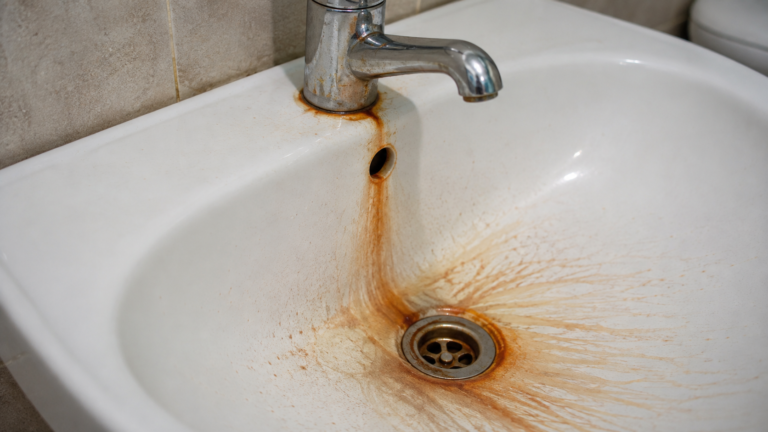
It is the main source of colour, staining and metallic taste problems.
Manganese
It accompanies iron; it can create dark-coloured stains and deposits.
Turbidity
It reflects the suspended solids load; it defines the need for filtration.
Nitrate
It shows effects from agriculture and waste; it is assessed separately on wells.
Microbiological Load
It is a heading calling for a separate sample and a laboratory analysis.
The numerical values of those parameters vary over a very wide range from area to area, so it would not be right to give threshold values here. Suitability as drinking water is established by the relevant regulations and an accredited laboratory report.
Iron comes up particularly often in well water and divides into different forms of its own. We took up that distinction and the approaches to solving it in detail in our article on iron in water.
We examined which problem in well water is dealt with by which stage in a separate article; for the build of the stages you can look at our treatment stages for well water. We do not repeat the stages in this article.
The Subjects Seen Most Often in Mains Water
The most common subjects in mains water are taste and odour from residual chlorine, hardness varying by area, and changes caused by the plumbing and the tank. Most of those arise not at the source but along the way the water travels before it reaches the user.
Residual chlorine is there to protect the water along the distribution line. That is not a fault but a deliberate practice; it is, however, the main source of complaints about taste and odour. We took up how it is removed at the point of use in our chlorine taste and odour article.
Hardness is a regional matter. In the same country, hardness can differ markedly between cities and even between districts. That explains why limescale is a problem in some households and never comes up in others. We took up the criteria for choosing on the softening side in our softening selection guide.
The third heading is change on the user’s side. The age of the building’s plumbing, the condition of the tank if there is one and how long the water stands can all affect the profile at the source. That effect is more marked in buildings with a tank; we examined the subject in our tank water quality article.
So being connected to the mains does not remove the need for an analysis entirely either. A sample taken at the point of use shows the real position at your own tap.
Why Is Seasonal Variability More Marked in a Well?
Because well water is fed directly from underground, it can be affected by rainfall, drought and activities in the surrounding area. Turbidity can rise after heavy rain, while the concentration of dissolved solids can change in dry periods. So a one-off analysis is not an adequate way of monitoring a well.
On the mains the central process largely balances out that fluctuation. On a well there is no such buffer; the conditions at the source show up directly for the user.
The main factors leading to variability in well water are these:
- Heavy rainfall: As surface water seeps into the layers, cloudiness and particle load can rise.
- Drought: When the water level falls, the concentration of dissolved solids can change.
- Activities in the surrounding area: Agricultural and industrial activity nearby can affect the content.
- Well maintenance: Protecting and maintaining the mouth of the well determines how far outside factors get in.
- The running of the pump: The pattern of draw and the depth can affect the amount of particles carried up.
That variability does not make well water problematic; it only shows that it calls for monitoring. For a well, a regular analysis is the only way to confirm that the system is working correctly.
An analysis is not a one-off operation on a well. Because of seasonal change and environmental effects, regular monitoring is advised. The frequency is set by the location of the well, the conditions around it and the purpose of use.
The Two Sources Side by Side: A Comparison
The two sources differ in the monitoring mechanism, the responsibility, the level of variability, the typical problems and the treatment approach needed. The comparison is not a ranking of superiority; it shows the management requirement of each source.
The table below sums up the differences between mains water and well water heading by heading:
| Criterion | Mains Water | Well Water |
|---|---|---|
| The Source | A central source, treated and distributed | Drawn directly from underground |
| Monitoring | Monitored regularly by the competent authorities | There is no central monitoring mechanism |
| Responsibility | The source side is with the authority | Entirely with the user |
| Variability | Relatively steady | It can vary seasonally and by area |
| Typical subjects | Chlorine-related taste and odour, hardness, the effect of the plumbing | Sediment, hardness, iron and manganese, microbiological load |
| The treatment approach | Generally focused on taste, odour and hardness | Multi-stage, weighted towards pre-treatment |
| The need for analysis | Assessed at the point of use | It calls for regular monitoring |
| Regulation | Carried out within the framework of the relevant regulations | The local authority and the regulations should be consulted |
What the table shows is not that one source is superior to the other but that the two are managed differently. On the mains the work on the user’s side is limited to the point of use, while on a well the process is in the user’s hands from end to end.
So applying the same solution to the two sources would not be right. The next section takes up how the approaches differ.
How Do the Treatment Needs Differ?
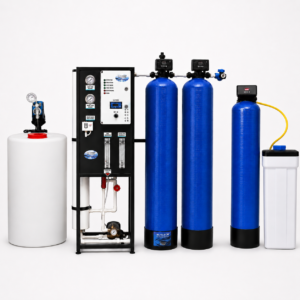
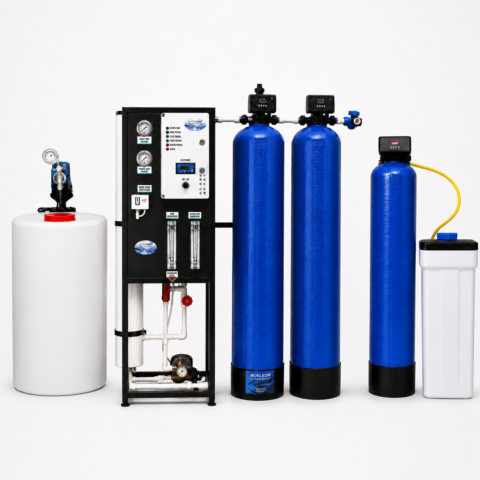
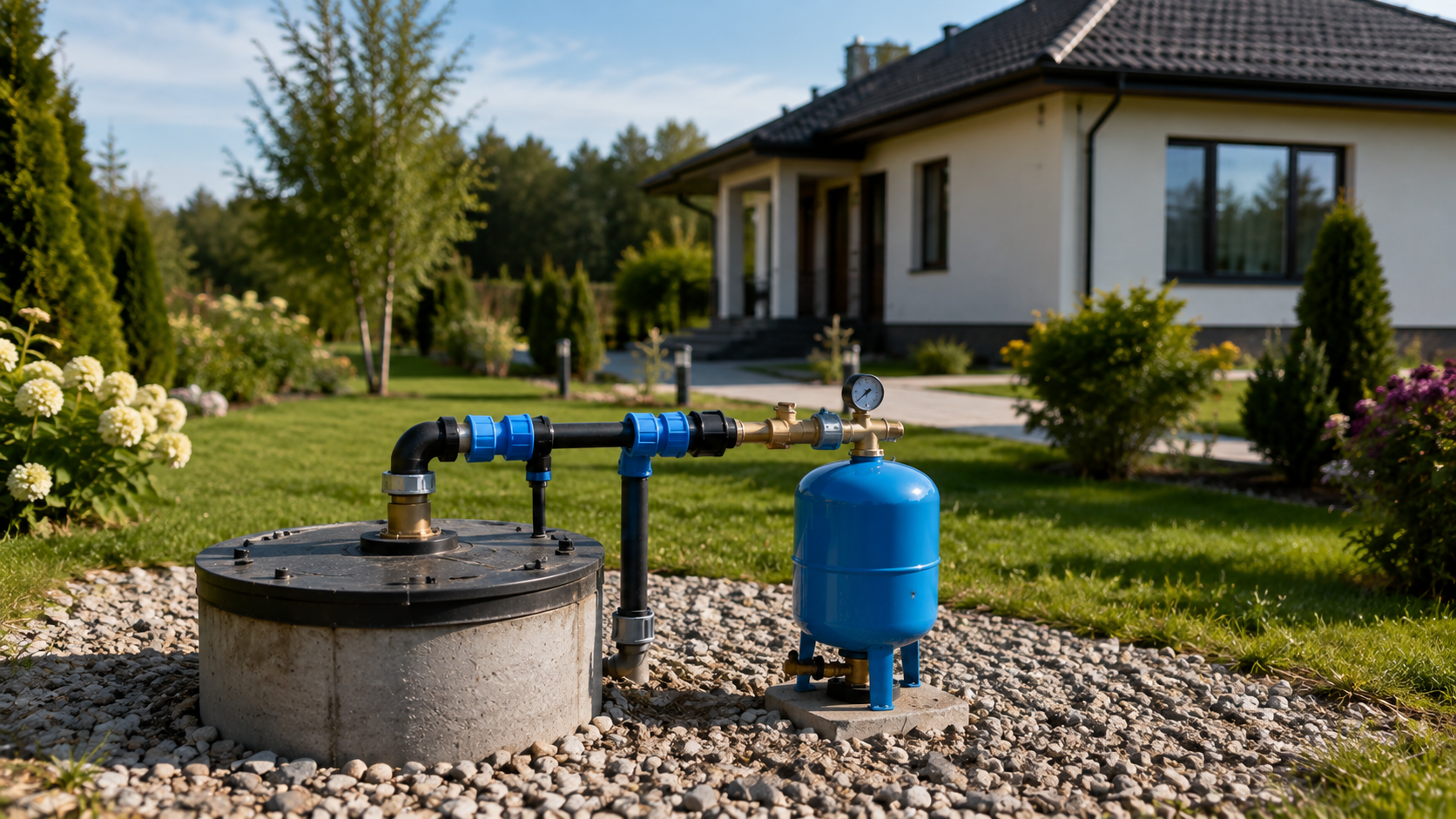
On the mains the solutions are generally focused on taste, odour and hardness; a carbon stage and, where needed, softening come to the front at the point of use. On a well the approach is broader: sediment filtration, iron removal where needed and an extra stage for microbiological risks are all assessed together.
The scheme that sums up the difference runs like this:
Generally a simpler build
Because the source side is processed centrally, the need on the user’s side is mostly concentrated in taste, odour and hardness. Where there are problems caused by the plumbing and the tank, an extra stage is assessed.
A multi-stage chain
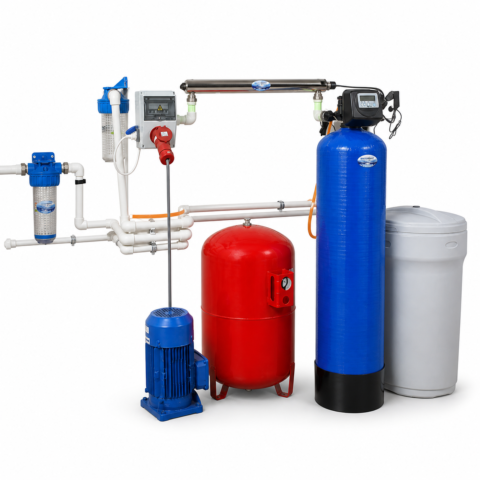
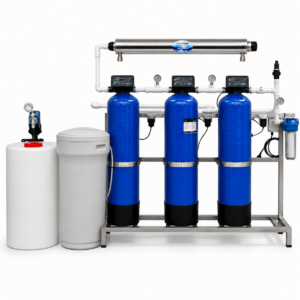
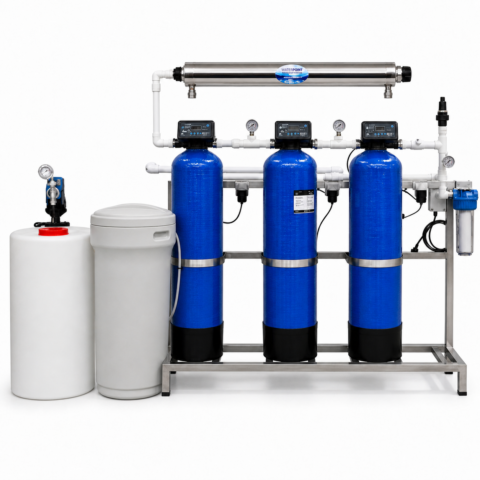
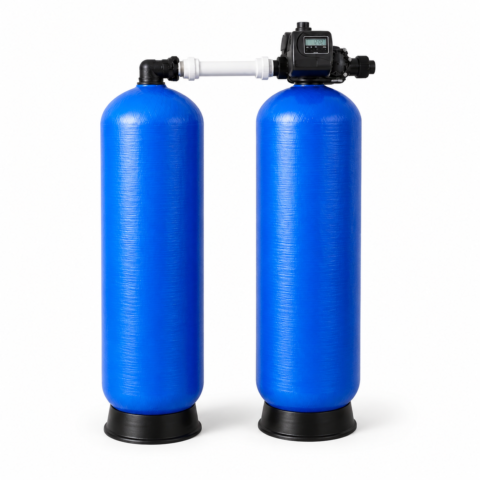
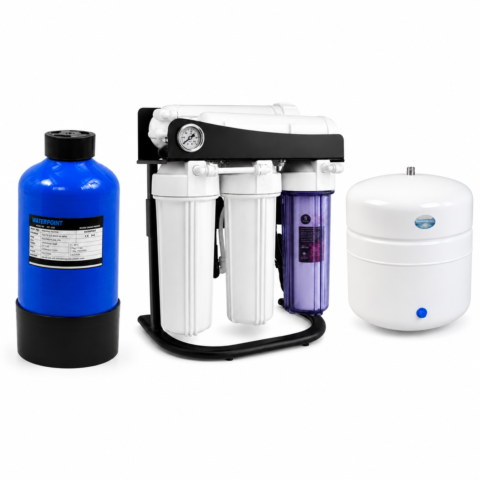
Pre-filtration is an essential start. From the analysis result, iron removal, softening and stages that reduce microbiological risks are added. The build is planned separately for every well.
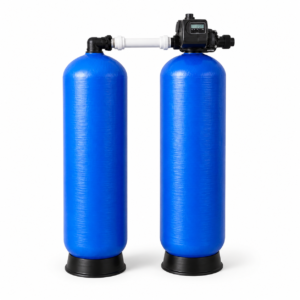
It is worth stressing why pre-filtration is essential on the well side: the particle load affects every stage behind it. On sources with a high particle load, sand units with automatic backwashing take on that job.
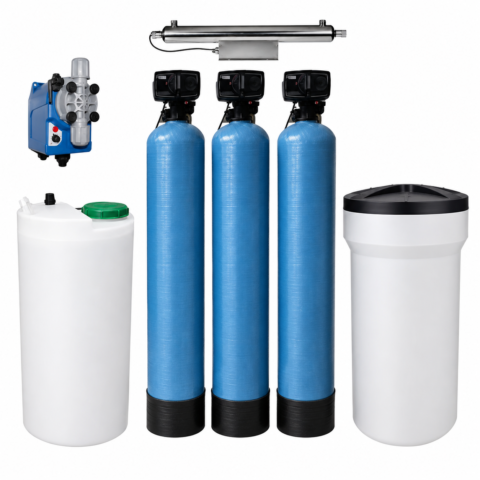
If a microbiological risk is identified, an extra stage comes onto the agenda. We took up how UV (ultraviolet) treatment works and what it does and does not do in our ultraviolet treatment article; that stage is always positioned after the filtration.
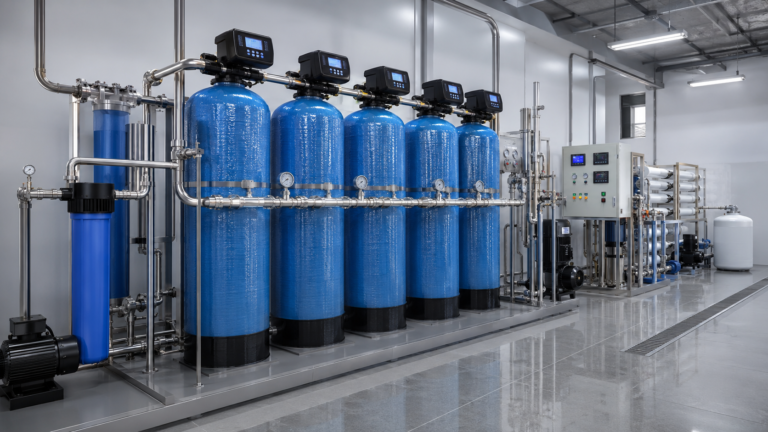
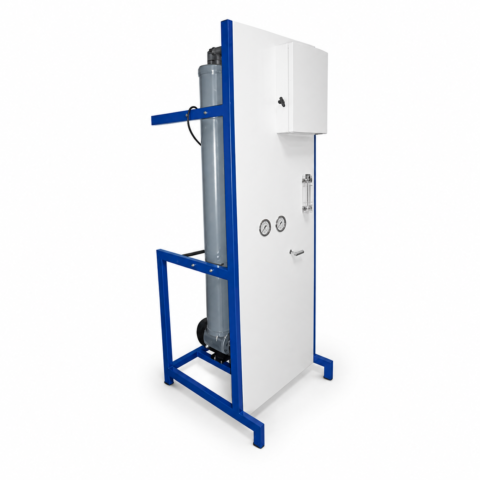
For comprehensive well installations the system is sized for the project. In high-flow buildings, industrial well water systems.
Buildings Using Both Together
In villas, farms and some plants the two sources are used together: well water for the garden and as utility water, mains water on the drinking and kitchen line. The most critical technical point in that build is separating the two lines and preventing backflow.
Using both is a practical answer and a common one. Well water is preferred for garden watering, cleaning and technical use, while the drinking and kitchen line is left on the mains. In that way each source is used where it is strong.
But that build has one aspect calling for care on the plumbing side: the two lines must not mix. The lines joining, or backflow occurring, upsets the expected behaviour of both sources.
In buildings using two sources, the separation of the lines and the backflow prevention arrangement have to be built correctly. That is a technical matter calling for plumbing engineering; the work should be planned with a competent plumbing specialist. The rules of the local authority on the subject should also govern.
When the build is planned, these headings should be made clear: which points will be fed from which source, where the lines will separate, how backflow will be prevented, and which treatment stages will sit on each line.
In buildings of that kind, separate treatment builds are planned for mains water and well water. The well line works mainly on pre-filtration, while point-of-use solutions come into play on the mains line.
The Starting Point in Both Cases: An Analysis
Whatever the source, the right answer starts with an analysis. On the mains the sample is taken at the point of use so that the effect of the plumbing and the tank is assessed; on a well a full analysis and regular monitoring are needed. A choice made without an analysis rests on guesswork.
The right order is the same for both sources:
-
Take a Sample
On the mains the sample should be taken at the point of use, and on a well directly from the source line. The sample should represent the real position.
-
Ask for the Right Parameters
In well water, headings such as iron, manganese, nitrate and microbiological load should be requested separately; standard packages may not include them.
-
Assess the Report
Which parameters stand out is established. Suitability as drinking water is assessed by the relevant regulations and an accredited laboratory report.
-
Match the Stages
Stages to suit the problems identified are chosen. Adding an unnecessary stage creates cost, and a missing stage affects the result.
-
Keep Up the Monitoring
In well use in particular the analysis should be repeated regularly and the system confirmed to be working correctly.
We took up step by step how to take a sample and how to read the report in our water analysis guide step by step; we do not repeat the process here.
Water Point Su Arıtma Teknolojileri operates from Esenyurt, İstanbul under its founder Ali Genç, with more than 20 years of experience in the sector.
An Approach Based on Analysis
The survey is free if the unit is purchased from us; where only a survey and measurement are wanted, a survey fee of ₺2,000 applies. The solution proposed is established from the water analysis.
Service Network
For industrial systems there is a service network across Türkiye; for home units service is provided in İstanbul and the neighbouring provinces such as Kocaeli and Tekirdağ.
Contact
For your questions, 0850 304 95 25 and [email protected] can be used.
Let’s establish the build that suits the source of your water
To clarify which stages are needed from your analysis result, you can look at the solutions.
See the Well Water SolutionsFrequently Asked Questions
Can well water be drunk?
That question cannot be answered without an analysis. Suitability as drinking water is established by the relevant regulations and an accredited laboratory report. Because every well is fed from a different geology, the content varies from well to well; the assessment should be made with your own analysis result.
Is well water better than mains water?
The two sources behave differently; presenting one as superior to the other would not be right. Mains water is treated centrally and monitored regularly; the content of well water varies with the geology and its monitoring belongs to the user. A comparison can only be made through analysis results.
How often should I have my well water analysed?
It would not be right to give a fixed period; the frequency is set by the location of the well, the conditions around it and the purpose of use. Because of seasonal variability, regular monitoring is advised. An extra analysis should also be arranged when a change is noticed in taste, smell or appearance.
Which unit is needed for well water?
It is not a question that can be answered with a single unit. Well builds are generally multi-stage: pre-filtration is the basic start, and then iron removal, softening and stages that reduce microbiological risks are assessed from the analysis result.
Does mains water need treatment?
Whether it is needed depends on the position at the point of use. Mains water is treated and monitored centrally; but changes can arise from the plumbing, the tank and standing water. Chlorine-related taste and odour and regional hardness are common headings too. The decision is made from the analysis result.
I have a well and I am also on the mains. How should I build it?
The common approach is to treat the well water as utility water and the mains as the drinking and kitchen line. The critical point in that build is separating the two lines and preventing backflow; the work should be planned with a competent plumbing specialist.
Which parameters should I ask for in well water?
Hardness, iron, manganese, turbidity and nitrate are the basic headings; a separate sample is needed for microbiological load. Standard drinking water packages may not include all of those parameters, so the scope should be made clear when you ask.
Is permission needed to drill a well?
The obligations around drilling and using a well vary by area and by regulation. For definitive information the local authority and the relevant regulations should be consulted; the process should be carried out with the competent bodies.
What happens if I buy a unit without an analysis?
The choice rests on guesswork. A stage may be added for a problem your water does not have, or the stage that meets the real problem may be missing. Either way it means unnecessary cost or not getting the result expected.
Conclusion
The difference between mains water and well water is not a matter of superiority but a difference in the model of management. On the mains the water is treated centrally and monitored regularly; the subjects on the user’s side are generally chlorine-related taste and odour, regional hardness, and the effect of the plumbing and the tank. On a well the monitoring and the treatment are entirely the responsibility of the user; the content varies with the geology and can fluctuate with the season. So the treatment approaches differ too: on the mains a simpler build is usually enough, while a well calls for a multi-stage chain starting with pre-filtration. In both cases the starting point is the same — an analysis first, then the choice of stages, then regular monitoring.
Let’s plan the answer that suits your source together
The site survey is free if the unit is purchased from us; where only a survey and measurement are wanted, a survey fee of ₺2,000 applies. The solution proposed is established from the water analysis. Mains or well, for a build that suits your source you can reach us on 0850 304 95 25 or at [email protected].
Discover the Solution That Suits You