
Bottleless Dispenser or Bottled Water? An Honest Comparison
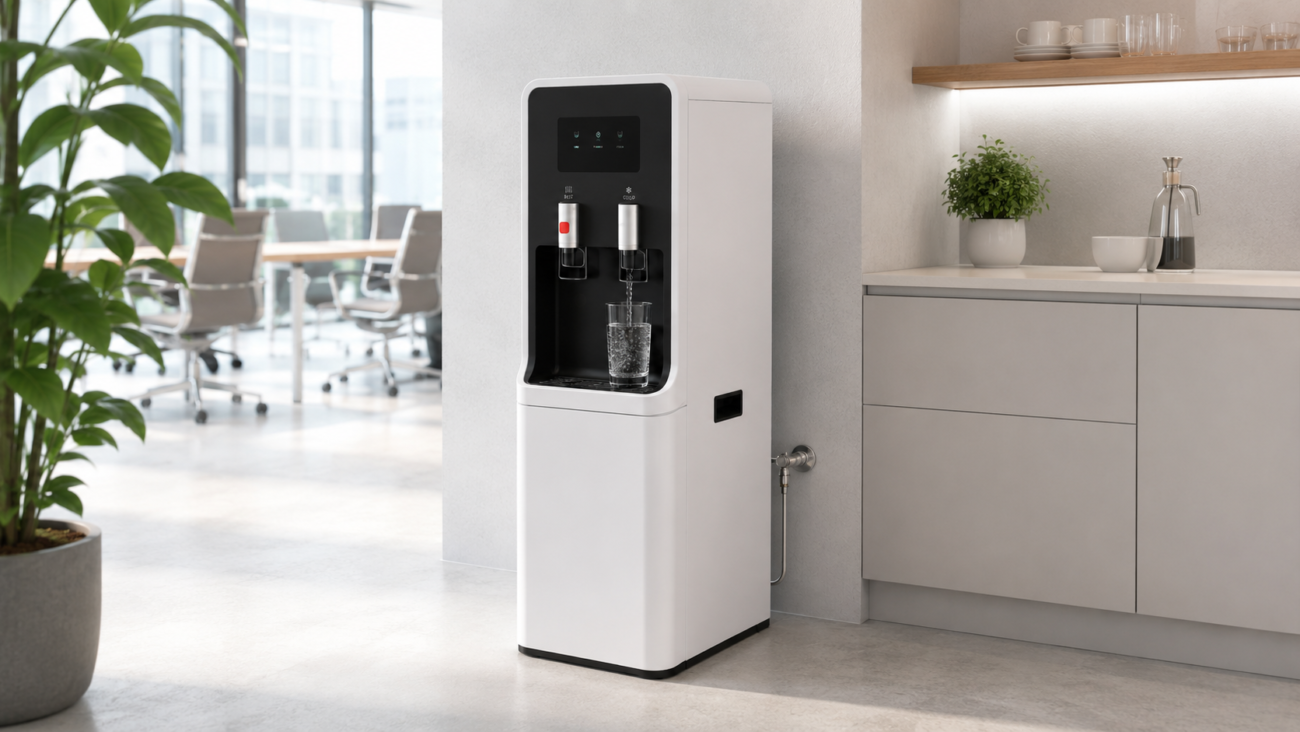
The water runs out in the afternoon, someone goes to the store and shoulders a new bottle, the empties pile up in the corner, and the bill that arrives at the end of the month is signed off with “it has always been like this”. In most businesses that cycle has become such a habit that it is no longer even seen as a cost. Yet there is an alternative that meets the same need: a bottleless water dispenser. Connected to the mains, these systems treat the water on the spot and remove the carrying, storage and ordering cycle entirely.
So is that really more sensible, or just a different cost item? In this article we compare the two solutions honestly on cost, hygiene management, logistics, comfort in use and practicality. We also state plainly the cases in which bottles are still the better option; because the right decision comes not from taking sides but from knowing your own pattern of use.
What Is a Bottleless Water Dispenser and How Does It Work?
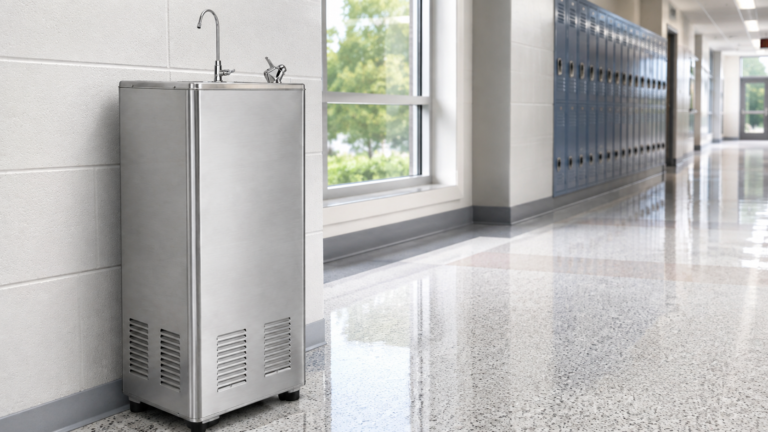
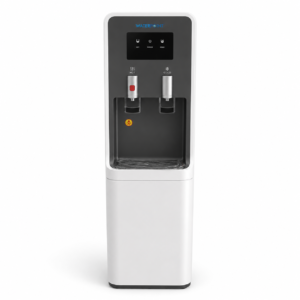
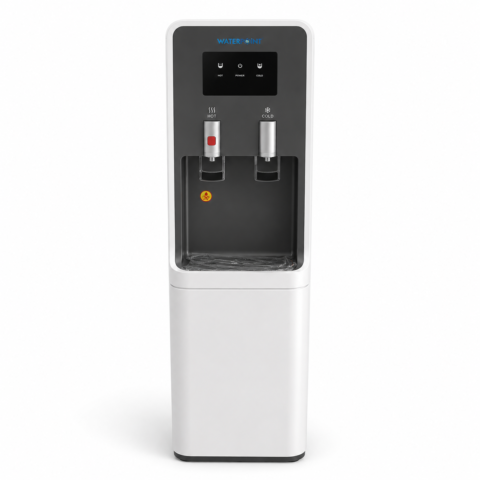
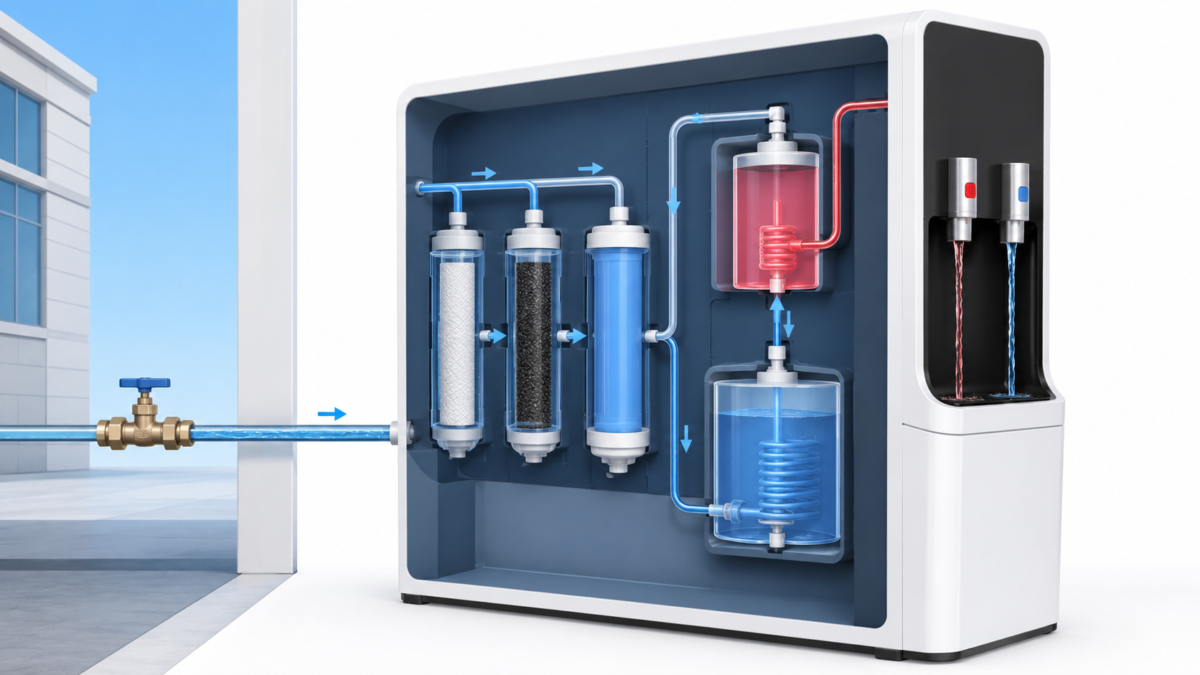
A bottleless water dispenser is a system connected directly to the mains water line that treats the water by passing it through filters inside the unit. It serves the treated water hot and cold. It removes the need to carry, store and order bottles; because the water comes from the line, there is no risk of running out.
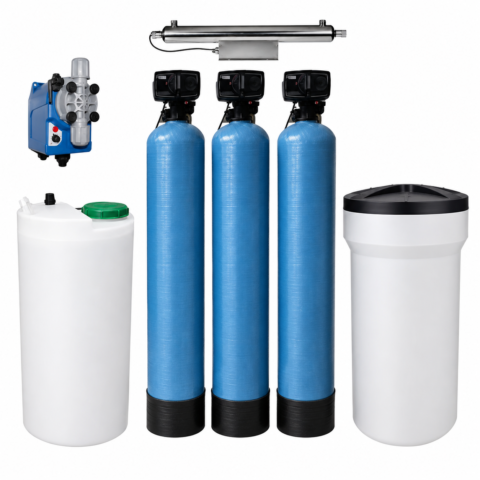
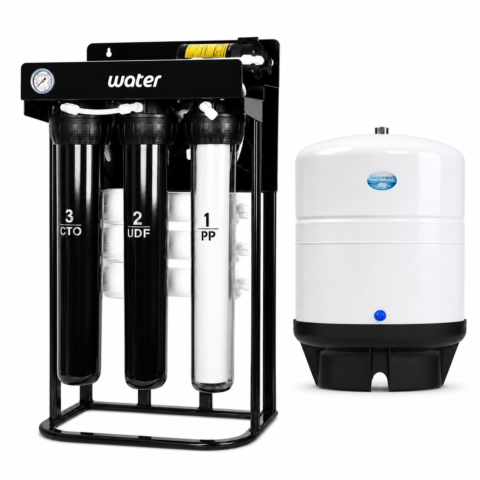
The working logic is plain. Mains water is taken in through the unit’s inlet, passed first through stages holding back sediment and particles, then through a carbon stage that corrects odour and taste. Depending on the model, advanced treatment stages can be added. The treated water is prepared in the cooling and heating units inside the machine and served at the tap.
The most basic difference from a bottled system is the source of the water. In a bottled dispenser the water is bought in and the unit is only a means of serving it; in a treating dispenser the unit also takes on the treatment. A bottleless water dispenser therefore works as both the source of the water and the point of service.
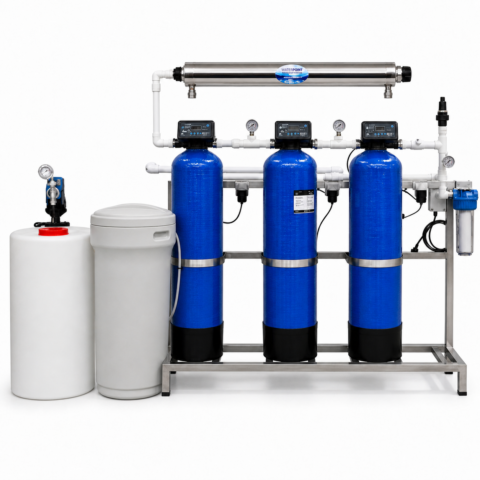
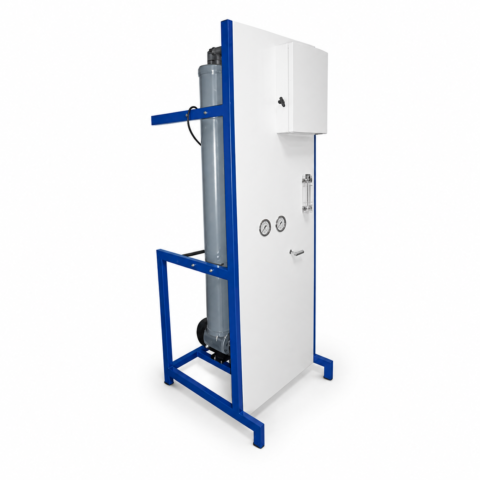
For those curious about the technical side of treatment, we took up in detail how advanced stages work in our how reverse osmosis works article. Knowing what those stages do makes choosing the right model easier when picking a bottleless water dispenser.
The Hidden Costs of a Bottled System
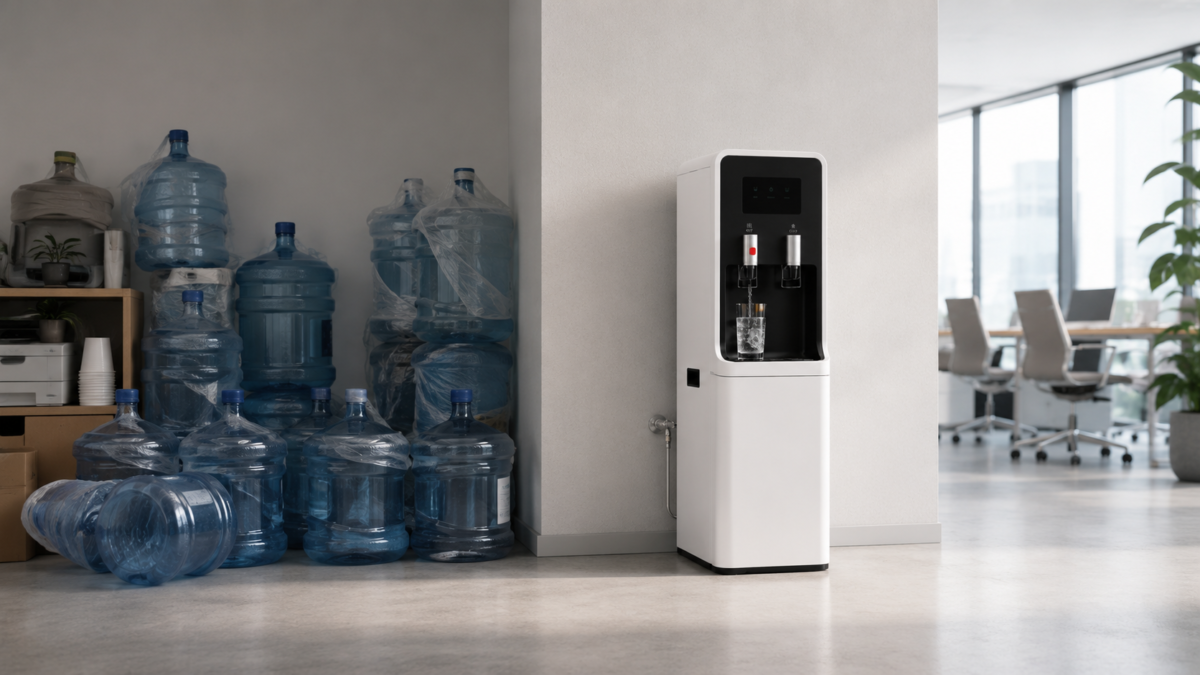
The cost of a bottled system is not only the price of the bottles. Storage space, the labour of carrying, staff time, tracking full and empty bottles, and the disruption when the water runs out all have to be counted. Because those items do not show on the invoice, the total cost is perceived in most businesses as lower than it is.
To see the real price of bottles in a business you have to look not at the invoice but at the process. The items below exist almost everywhere bottles are used but are rarely counted:
Storage Space
The area set aside for full and empty bottles comes out of your usable floor space.
The Labour of Carrying
Fitting a bottle is physical work and takes staff time.
Tracking and Ordering
Stock control, placing orders and following deliveries create an administrative load.
The Risk of Running Out
Water running out on a busy day affects staff and customer satisfaction directly.
Returning Empties
Collecting and returning empty bottles is an extra operational step.
Loss and Damage
Bottles that go missing or are damaged create an extra cost over time.
None of those items looks large on its own; added together they change the picture. When assessing a bottleless water dispenser, the comparison should be made on that wider list. Comparing only the unit price of a bottle with the investment in a dispenser is an incomplete calculation.
Staff time in particular is the item most businesses overlook. Changing a bottle looks like a job of a few minutes a day, but added up over a year it corresponds to a serious amount of labour. In businesses using a bottleless water dispenser that item disappears entirely.
How Is the Cost Comparison Made Properly?
A proper comparison has to include every item on both sides. First the consumption is calculated: the number of people, the average daily consumption and the working days in a month. Then the unit price and logistics load on the bottled side, and the investment, filter maintenance and electricity cost on the dispenser side, are added up and compared over the same period.
The framework of the calculation has four steps, and every business should fill it in with its own data:
-
Work out your consumption
The number of people × average daily consumption × working days in a month. In cafés and restaurants add the service to customers.
-
Add Up the Bottled Side
Unit price + delivery + the value of the storage space + staff time + disruption from running out.
-
Add Up the Dispenser Side
The investment in the unit (or rental) + periodic filter maintenance + the mains water charge + electricity.
-
Compare Over the Same Period
Compare the two totals on an annual basis; assess the one-off investment by spreading it across the period.
The critical point here is comparing a one-off investment with a continuing cost properly. On the bottled side the cost is continuous and grows in a straight line with consumption. On the bottleless water dispenser side the main investment is at the start; after that only filter maintenance and low-level running costs remain. As consumption rises, therefore, the relative advantage of the dispenser becomes clearer.
The exact figures vary from business to business; the number of people, the intensity of consumption, the water and electricity tariffs in your area and the model chosen all decide it. Rather than giving figures here, we share the logic of the calculation. If you would like to fill that table in for your own business, a clear comparison can be made with your real data.
Make the comparison annually, not monthly. Looked at monthly, the one-off investment appears large; looked at annually, the continuing cost of bottles shows its real weight.
The Difference in Hygiene and Water Safety
Hygiene can be managed in both systems, but the methods differ. With bottles, the time they stay open, the conditions of carrying and storage, and cleaning the pump and cap all have to be followed. On the bottleless water dispenser side, because the water flows in a closed line there is less outside contact; the control point is regular filter maintenance.
In a bottled system the path the water follows is long: the filling plant, transport, the depot, delivery to the business and finally fitting to the unit. At every link of that chain variables such as temperature, sunlight and physical contact come into play. The bottle fitted also stands in the unit until it is used up; the longer that takes, the more hygiene management matters.
In a system connected to the mains, the water flows along a closed line and is treated at the moment of use. The storage time is short or non-existent. But there is a responsibility here too: renewing the filter stages on time. A filter past its period lowers treatment performance. In using a bottleless water dispenser, therefore, maintenance discipline is at the centre of hygiene management.
It should be noted that bottled water and mains water are subject to different regulations; the US Environmental Protection Agency’s bottled water fact sheet explains that the two sources are regulated by different bodies and that consumers should assess their own conditions of use.
In the end there is no one-sentence answer to “which is more hygienic”. In both systems hygiene depends on the user’s maintenance discipline. The difference is where that discipline is directed: with bottles, at managing carrying and contact; with a bottleless water dispenser, at the filter calendar.
Logistics and Operational Load
A bottled system calls for a continuous operational cycle: placing orders, waiting for delivery, putting full bottles in place, collecting empties and returning them. A bottleless water dispenser removes that whole cycle; because the water comes from the mains line, there is no stock, ordering or return process at all.
The side that feels that difference most clearly is the administrative team. Managing bottles involves more steps than it appears:
- Stock tracking: The number of bottles left has to be watched constantly.
- Ordering and delivery: When the timing does not work out there is either excess stock or no water.
- Physical carrying: Putting a full bottle on the unit calls for care from a safety point of view too.
- Managing empties: Collecting and returning empties takes separate space and time.
- Space taken: Storage consumes valuable space in small offices and kitchens in particular.
A bottleless water dispenser requires none of the items on that list. Once the unit is connected to the line the water flows without interruption; the only periodic task is filter maintenance, and that is usually tied to a service plan. Operationally, a bottleless water dispenser stops being “a process to be managed” and becomes “infrastructure you install and forget”.
In multi-storey offices and large sites that difference is clearer still. Instead of carrying bottles to every floor, when mains-connected treating dispensers are positioned at the points of use, the logistics load disappears entirely.
Comfort in Use: Hot, Cold and Uninterrupted Water
The clearest difference in comfort is continuity. In a bottled system, when the water runs out use stops; in a system connected to the mains the flow is never cut. Most bottleless water dispensers also offer hot and cold water together, meeting the need for tea, coffee and drinking water at a single point.
At busy hours that difference is clearly felt. In an office filling glass after glass at lunchtime, or in a restaurant working through service, a bottle running out creates an immediate disruption. In a system connected to the mains there is no such interruption; the limit on capacity is the cooling and heating performance, not the amount of water.
Comfort of temperature is the second important heading. Hot water speeds up making tea and coffee, while cold water directly affects staff satisfaction in summer in particular. In areas of heavy use, stainless models with chilling are preferred so that cool water can be served even at peak hours.
The third element of comfort is the form of use. Although drinking from a glass is common, in shared areas such as schools, factories and sports facilities models offering a drinking fountain are more practical. The form of use is a criterion that should not be overlooked in choosing a bottleless water dispenser.
Which Businesses Does a Bottleless Water Dispenser Suit Best?
Mains-connected systems come to the fore in businesses where the number of people is above a certain level and consumption is regular. Offices, cafés and restaurants, hotels, factories, schools and clinics are in that group. The higher the consumption and the more continuity matters, the clearer the advantage.
Different types of business turn to this solution for different reasons:
Offices
Saving staff time and storage space comes to the fore; the job of fitting bottles disappears.
Cafés and Restaurants
Uninterrupted water and fast access to hot and cold are decisive at busy service times.
Hotels
Continuous access in communal areas and a tidy appearance matter.
Factories
A high headcount and shift working call for a continuous flow of water.
Schools
Fast access at break times and a durable body are needed.
Clinics
Regular maintenance and controlled use make hygiene management easier.
The number of people is not a sufficient measure on its own in the decision; how consumption is spread through the day matters too. In an office of thirty, consumption is spread through the day, while in a school canteen of the same size demand concentrates at break times. When choosing a bottleless water dispenser, therefore, the peak-hour capacity must always be assessed.
In heavy environments calling for durability, the body material is decisive too. In factories and industrial areas, stainless-bodied industrial models are preferred for both hygienic cleaning and long life. In small offices and kitchens the constraint is space; there, countertop solutions do the same job without taking up room.
Would you like to establish the capacity that suits your headcount?
You can look at the options to establish a model suited to your consumption profile and how heavily it will be used, and plan a build made for your business.
See the Dispenser SolutionsWhen Do Bottles Still Make Sense?
Bottles are still a practical answer where a mains connection cannot be made or a permanent installation is not possible. Construction sites and temporary areas, very low consumption small offices and short-term rented premises fall into that group. In those conditions an investment in a bottleless water dispenser may not always be necessary.
An honest comparison should also show where the alternative is strong. The scenarios in which bottles still have the advantage are these:
- Areas with no mains connection: Where a water line cannot be run, a permanent installation is not possible.
- Temporary and portable installations: On construction sites, at exhibitions and in seasonal operations, flexibility comes first.
- Very low consumption: In offices of a few people used infrequently, the payback on an investment can be long.
- Short-term rented premises: There are situations where making a permanent change to the plumbing is not appropriate.
- Operations that move: In businesses that move often, bottles offer independence from an installation.
A bottleless water dispenser is not automatically better in every situation. What is decisive is mains access, the level of consumption and how permanent the premises are. If those three conditions are met the advantage is clear; if not, bottles remain the practical answer.
There is a middle option too: businesses that do not want to replace their existing bottled dispenser can convert the unit to run from the mains. Used for that purpose, a reservoir conversion kit removes the dependence on bottles while keeping the existing unit. It offers a reasonable start for those wanting to try the change without investing in a new bottleless water dispenser.
The Two Systems Side by Side
The comparison can be summed up under seven headings: the water source, continuity, space requirement, operational load, cost structure, installation and portability. In a bottled system the cost is continuous and grows with consumption; on the bottleless water dispenser side the main investment is at the start, after which a low level of maintenance cost remains.
| Criterion | Bottled System | Mains-Connected Dispenser |
|---|---|---|
| Water Source | Bottles bought in | Mains + internal treatment stages |
| Continuity | An interruption when a bottle runs out | Fed from the line, no interruption |
| Space Requirement | Storage needed for full and empty | Only the space the unit occupies |
| Operational Load | The order, carry and return cycle | Periodic filter maintenance |
| Cost Structure | A continuous cost growing with consumption | Investment at the start + low running costs |
| Installation | No installation needed | A water line connection is needed |
| Portability | Easily moved | Installed at a fixed point |
The last two rows of that table explain why the decision varies with the business. Installation and portability are the areas where bottles are strong; on every other heading a bottleless water dispenser offers a clear advantage. Establishing which rows weigh more in your own business is the key to the right decision.
What Should You Look At When Choosing a Bottleless Water Dispenser?
Six criteria are decisive: capacity, the need for hot and cold water, the body material, the form of use, the installation point and access to a water line, and ease of filter maintenance. Once those headings are clear, the bottleless water dispenser model that suits your business becomes obvious on its own.
Capacity and performance
Correct sizing is needed so that the unit can run without strain at peak hours.
- The number of people and the peak-hour load
- The balance between hot and cold water demand
- The body material and durability
- The build of the treatment stages
Siting and practicality
Where the unit sits and how it is used directly affect the daily experience.
- A tap or a drinking fountain
- The installation point and access to a water line
- The drain and power connections
- How easy the filter change is
The criterion most often skipped is the installation point. Because a bottleless water dispenser is connected to the mains, there has to be access to a water line where it will sit. When a suitable point is not identified, extra plumbing work comes up; that affects both the cost and the installation time. The layout should therefore always be assessed before deciding.
The second criterion often skipped is ease of filter maintenance. On a unit where the stages are hard to reach, maintenance slips; and maintenance that slips lowers treatment performance. A bottleless water dispenser that is easy to service runs more hygienically and more economically over the long term.
Installation, Maintenance and Filter Changes
Installation is completed by connecting the unit to the mains water line and making the necessary power and drain connections. The only regular task afterwards is renewing the filter stages periodically. Continuity of maintenance is decisive for the performance of a bottleless water dispenser and for the quality of the water.
The installation process is generally quick, but a few points have to be prepared in advance: a suitable water line connection point, a power supply and, depending on the model, the possibility of drainage. Once those conditions are met the unit is commissioned quickly and is ready to use.
What really calls for continuity is maintenance. The filter stages fill over time; a stage that reaches saturation stops treating. The change interval is set not by a fixed calendar but by the inlet water quality and the intensity of consumption. How to plan a maintenance routine is covered in our filter change guide.
At this point an interesting balance appears against the bottled system: with bottles the operational load is continuous and daily; with a bottleless water dispenser it turns into infrequent but planned maintenance. For most businesses that change means an arrangement far easier to manage.
Having accessible service support is part of that equation too. Working with a supplier who carries out regular maintenance to a plan both extends the life of the unit and secures the continuity of water quality.
The Route to Follow in Deciding
The decision becomes clear in four steps: calculate your consumption, check your mains access, compare the total cost of the two systems on an annual basis, and assess comfort in use against the operational load. Once those steps are complete, whether an investment in a bottleless water dispenser suits you is clearly visible.
Keeping to that order matters. The need should be clear first, and the product discussed afterwards. Otherwise the decision is shaped not by the need but by the first model you see. The right order is this: how many people, how much do they consume, where is the water line, what form of use is needed and how does the total cost look on an annual basis?
At the end of that assessment one of two results emerges. Either your mains access and level of consumption are suitable and a bottleless water dispenser offers a clear advantage; or, because the premises are temporary or consumption is very low, continuing with your existing arrangement makes more sense. Both results are valid; what matters is that the decision rests on data.
Frequently Asked Questions
How does a bottleless water dispenser work?
The unit is connected directly to the mains water line. The incoming water is treated by passing it through the filter stages inside, then served hot or cold through the cooling and heating units. Because the water is fed continuously from the line, there is no risk of running out.
Is moving from bottles to a dispenser really more economical?
In most businesses with regular consumption it gives an advantage on an annual basis; but the result varies with the number of people, the intensity of consumption and local tariffs. For a proper comparison, logistics and staff time on the bottled side and the investment and maintenance cost on the dispenser side have to be calculated together.
Is any special infrastructure needed for installation?
There has to be access to a mains water line and a power supply where the unit will sit; depending on the model a drain connection may also be needed. Where those conditions exist, installation is completed quickly. If there is no suitable point, extra plumbing work comes up.
How often should the filters be changed?
There is no fixed period; the inlet water quality and the intensity of consumption are what decide it. The sediment and carbon stages are renewed more often, the advanced stages at longer intervals. The period in the unit’s manual should be taken as the basis and interpreted for your own conditions.
Can I convert my existing bottled dispenser?
Yes, using a suitable kit an existing unit can be converted to run from the mains. That route offers a practical middle answer for businesses wanting to remove their dependence on bottles without investing in a new unit.
Does the water come out lukewarm at busy times?
That is entirely a matter of choosing the capacity. On a unit sized inadequately for peak-hour demand the cooling may not keep up. A bottleless water dispenser chosen at the right capacity goes on serving cool water at busy hours too.
When are bottles the better option?
Bottles keep their practicality in areas where a mains connection cannot be made, in temporary installations such as construction sites, in short-term rented premises and in very low consumption small offices. In those conditions a system requiring a permanent installation may not always be necessary.
Conclusion
The choice between bottles and a mains-connected solution is not a preference for a brand or a product; it is a decision about your business’s consumption profile, the conditions of your premises and your operational priorities. Bottles, with their portability and the fact that they need no installation, still make sense in temporary areas and in low-consumption, short-term use. In businesses with regular consumption, mains access and a need for continuity, on the other hand, a bottleless water dispenser removes the carrying, storage and ordering cycle entirely, makes the cost predictable and serves uninterrupted hot and cold water. What to do to make the right decision is clear: calculate your consumption, check your mains access and put the total cost of the two systems side by side on an annual basis. Let the result come from your own data, not from a guess.
Let’s establish the system that suits your headcount together
To plan the capacity that best suits you by assessing your consumption profile and the conditions of your premises, you can consult the Water Point expert team.
Discover the Dispenser That Suits You