
Free Shipping
New
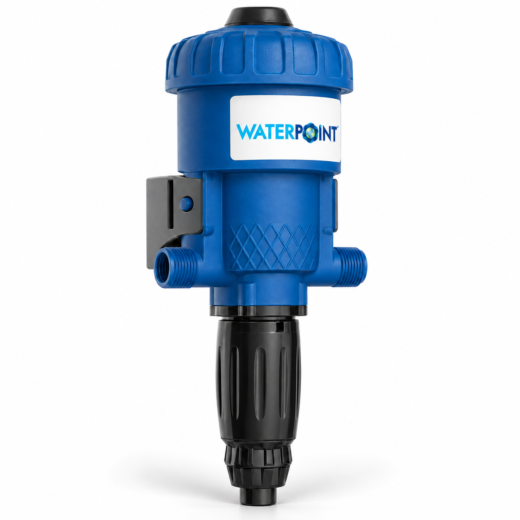
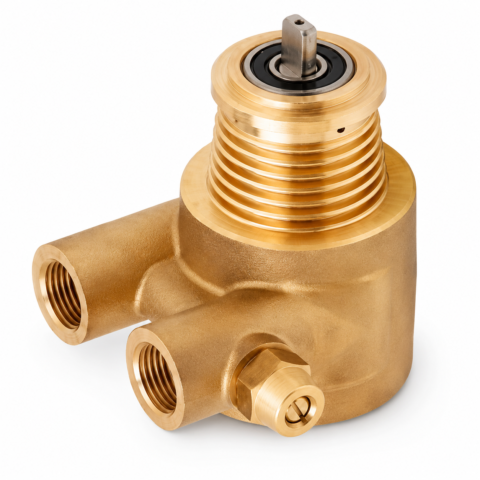
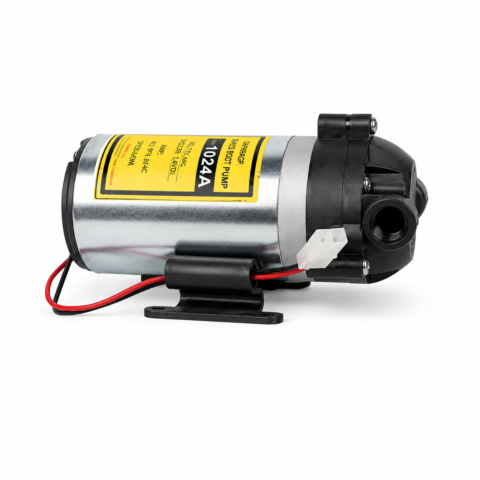
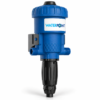
Hydrakos D25RE050FP00 Proportional Dosing Pump
Water-Powered Dosing Pump
Water Pressure (No Electricity)
₺83,331.28
VAT included

Categories
Solutions
Process water, line feed and sizing by flow rate.
Systems and units Industrial Water Treatment Read the guideTreatment that stops limescale and corrosion before they reach the boiler.
Systems and units Water Softeners Read the guidePure water of low conductivity and repeatable quality.
Systems and units Pure Water Systems Read the guideRemoving the salts and sediment that clog drip lines.
Systems and units Well Water Treatment Read the guideThe right hardness for equipment life and drink flavour.
Systems and units Filtered Water Dispensers Water Point Filtered Water Dispenser
₺63,723.92
Water Point Filtered Water Dispenser
₺63,723.92
 Restaurant Water Purifier, 500 GPD with 40 Litre Tank
₺49,018.40
Restaurant Water Purifier, 500 GPD with 40 Litre Tank
₺49,018.40
A main line that filters the water entering your plumbing at a single point.
Systems and units Whole House & Building Inlet Systems Read the guideA staged system for iron, manganese and turbidity.
Systems and units Well Water Treatment Read the guideLow-conductivity rinse water for spot-free drying.
Systems and units Reverse Osmosis Systems 95 Tonne Reverse Osmosis System
₺980,368.00
95 Tonne Reverse Osmosis System
₺980,368.00
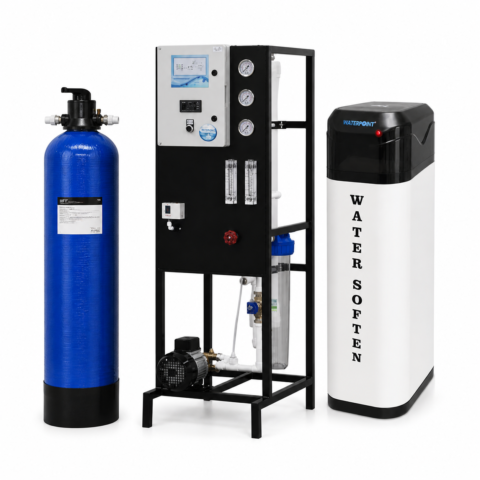 Industrial Deionised Pure Water Unit, 250 L/h
₺220,582.80
Industrial Deionised Pure Water Unit, 250 L/h
₺220,582.80
The problems hard water causes in hair and skin care.
Systems and units Water Softeners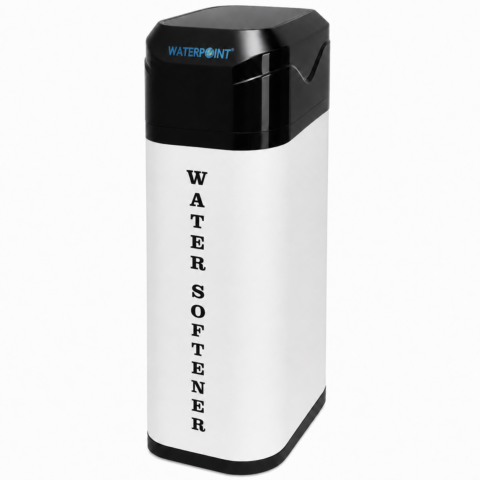 Maxi Cabinet Water Softener, 5 Tonnes/Day
Original price was: ₺49,018.40.₺34,312.88Current price is: ₺34,312.88.
Maxi Cabinet Water Softener, 5 Tonnes/Day
Original price was: ₺49,018.40.₺34,312.88Current price is: ₺34,312.88.
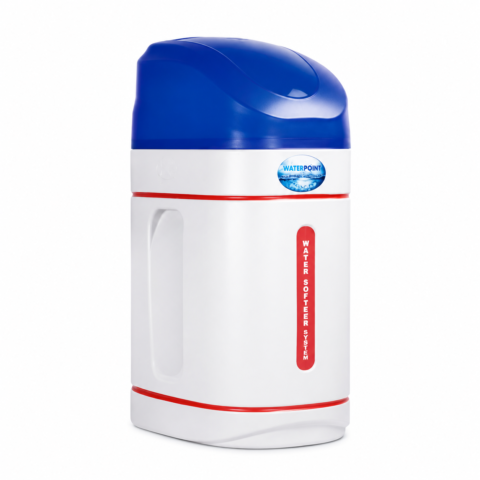 Mini Cabinet Water Softener, 2 Tonnes/Day
₺44,116.56
Mini Cabinet Water Softener, 2 Tonnes/Day
₺44,116.56
Drinking water from seawater with high-pressure reverse osmosis.
Systems and units Reverse Osmosis Systems Read the guideCompany
Product Category
A reverse osmosis membrane can only work if the water is fed to it at a certain pressure. Mains pressure is below that threshold most of the time; on upper floors, on long runs and during peak-use hours it falls noticeably. A booster pump closes that gap. Without a pump the membrane either produces…
Filter
The daily treatment capacity stated by the manufacturer.
A reverse osmosis membrane can only work if the water is fed to it at a certain pressure. Mains pressure is below that threshold most of the time; on upper floors, on long runs and during peak-use hours it falls noticeably. A booster pump closes that gap. Without a pump the membrane either produces no water at all or runs far below its capacity. Matching the type and the capacity is what decides a pump choice; dry-run protection and fault symptoms are the operating side of the question. You can look at our RO Membranes category for the membrane and our Pressure Tanks category for storage.
Reverse osmosis, as the name says, is the process of reversing the natural osmotic flow. That reversal is only possible with pressure applied from outside. When pressure is insufficient the membrane cannot drive water through the film; the result is production stopping or slowing right down.
In practice a pump solves three problems at once:
These are compact pumps integrated into standard domestic units. They run quietly, draw little power and are sized to fit under the sink. Under-Sink Purifier Pump 2,941.10 TL.
They are named after membrane capacity and are paired with membranes of the same capacity.
| Product | Price |
|---|---|
| 300 GPD Booster Pump | 6,862.58 TL |
| 500 GPD Booster Pump | 8,333.13 TL |
They are preferred in high-capacity under-sink units and in small commercial applications.
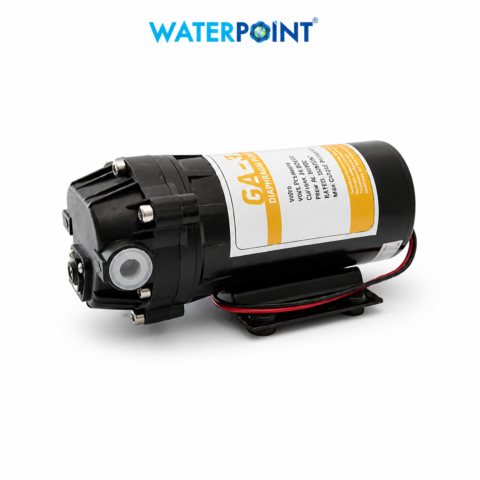
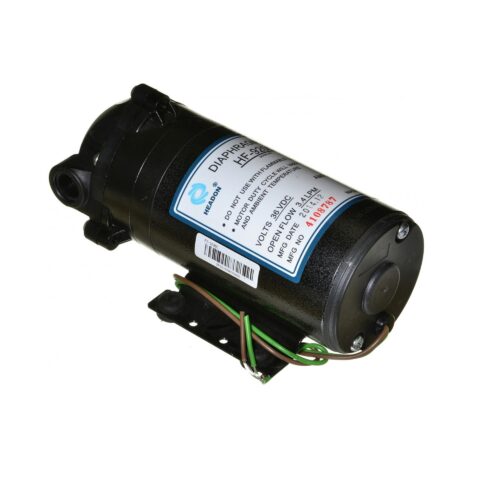
These are defined by hourly flow rate. RO Pump, 600 L/h 19,607.36 TL, built for continuous duty at commercial scale. In this class the pump is chosen according to the total flow rate of the line and the number of membranes.
| Pump | Class | Typical use | Price |
|---|---|---|---|
| Under-Sink Pump | Domestic | Standard under-sink unit | 2,941.10 TL |
| 300 GPD Booster Pump | Domestic, high capacity | System with a 300 GPD membrane | 6,862.58 TL |
| 500 GPD Booster Pump | Domestic / small commercial | System with a 500 GPD membrane | 8,333.13 TL |
| RO Pump, 600 L/h | Commercial | Continuously running lines | 19,607.36 TL |
Pump and membrane are linked choices. The flow rate and the pressure the pump delivers must be compatible with the values the membrane needs.
If the pump is undersized, the membrane cannot reach its design pressure; production falls, the wastewater ratio deteriorates and the output quality stays below what was expected. If the pump is larger than it needs to be, needless strain builds up on the membrane, energy is wasted and the system components tire faster.
Three pieces of data are needed for a correct match: the capacity of the membrane (GPD or L/h), the salinity of the feed water and the existing mains pressure. As salinity rises, the pressure needed for the same production goes up; that is why pump selection for high-salinity sources such as well water differs from mains water.
Booster pumps are cooled and lubricated by the water itself. When no water arrives the pump runs empty; this is called dry running and it does permanent damage to the pump within a short time.
The main causes of dry running are these: the mains supply being cut off, the inlet valve being left closed, the pre-filters becoming completely blocked and air being trapped in the feed line. All of them end in no water reaching the pump.
The way to protect against it is to place a low-pressure switch ahead of the pump. This component stops the pump when the inlet pressure falls below a set threshold. The high-pressure switch, which stops the pump once the tank is full, is a standard part of the system too; when that component fails the pump runs continuously, consuming energy and wearing out early.
| Symptom | Possible cause | First check |
|---|---|---|
| The pump does not run at all | No power, faulty adapter or switch | Adapter, pressure switch |
| The pump runs but no water is produced | No inlet water or blocked filters | Inlet valve, sediment filter |
| The pump runs continuously and does not stop | Faulty high-pressure switch or low tank pressure | Pressure switch, tank pre-charge |
| Excessive noise and vibration | Air drawn in or loose mounting | Connections, mounting pads |
| The pump is heating up | Dry running or staying permanently on | Inlet water, pressure switch |
| Production has slowed down | Pump output has dropped or the filters are blocked | The filters first, then the pump |
Booster pumps run for a long time without trouble under the right conditions. Most of the factors that shorten their life have to do with the rest of the system.
The most decisive factor is the condition of the pre-filters. A blocked filter strains the suction of the pump; the pump runs at a higher load, heats up and motor life is shortened. The second factor is the health of the pressure switches; a faulty switch keeps the pump needlessly on all the time. The third is dry running, and it usually leaves permanent damage in a single event.
Beyond these, fluctuations in the electrical supply, the use of an unsuitable adapter and a mounting with excessive vibration also shorten life. A simple check once a year — the state of the filters, the operation of the switches, the leak-tightness of the connections — prevents most early failures.
The first step in deciding whether a pump is needed is knowing the existing pressure. Pressure varies with the time of day, the floor you are on and the length of the line; a single measurement may therefore not be enough.
There are practical signs that pressure is low. Flow weakening noticeably during a shower on upper floors, the water thinning out at the busy morning and evening hours, and the pressure tank never quite filling during the day are the first of them. If these signs are present, the reverse osmosis unit is being fed at that same inadequate pressure.
A second clue is the wastewater behaviour of the unit. When pressure is insufficient the system produces more wastewater and clean water production falls disproportionately. This picture is usually voiced as the complaint that "the unit wastes a lot of water"; the root cause, though, is pressure.
If pressure is adequate and production is still slow, the pre-filters and then the membrane come next. Following this order prevents money being spent on the wrong part.
In a reverse osmosis system these three parts work as a linked set. Changing one without taking the others into account does not give the expected result.
| Change | Effect | Must be assessed together with |
|---|---|---|
| Membrane capacity increased | Higher pressure and flow rate are needed | Pump class |
| Pump upsized | The membrane runs at a higher load | Membrane class and durability |
| Tank volume increased | Filling time gets longer | Production capacity |
| Tank pressure dropped | The pump may stay permanently on | Pressure switch |
| Feed water became more saline | More pressure for the same production | Pump and membrane together |
This table explains most of the "I changed one part but it did not get better" cases. The system is a whole; when a capacity increase is planned, the three parts must be reviewed together.
In domestic systems the pump runs intermittently: it cuts in as the tank empties and stops once it is full. On commercial and industrial lines the pump runs without interruption for far longer. That difference changes the selection criteria too.
Pumps suited to continuous duty are designed differently in terms of cooling and durability. RO Pump, 600 L/h is an example of this class. When a choice is made at this scale, the hourly flow rate of the line, the number of membranes and their array layout, and how many hours a day the system will run are all taken into account.
There is a second matter on industrial lines: redundancy. In a system tied to a production line, a pump failure means an immediate stoppage. That is why keeping a spare pump, or building a parallel pump arrangement, is a common approach on critical lines. You can find the details of setups at this scale in our Industrial Water Treatment and Industrial Packaged Systems categories.
The third matter is energy consumption. The annual energy cost of a continuously running pump can exceed its purchase price. Industrial choices therefore consider pump combinations that can work with low-pressure membranes; low-pressure RO membranes can deliver the same production with less energy.
When a new pump is commissioned, the order that is followed matters both for the life of the pump and for the system working correctly.
In domestic installations the pump is mostly mounted under the sink, that is, at a point close to the living space. Noise level is therefore a real criterion.
Noise comes from three sources: the running sound of the pump itself, the sound made by air in the line and the vibration coming from the mounting. The first depends on the model; the other two can largely be removed with correct installation. Using a vibration pad instead of fixing the pump directly to a hard surface reduces the perceived noise noticeably.
On the energy side, domestic pumps draw little and, because they run intermittently, their annual cost is limited. On commercial and industrial lines the energy item comes to the fore, because the pump runs without interruption for long periods. At this scale, combinations that can work with low-pressure membranes are considered; when the same production can be achieved at lower pressure, energy consumption drops as well.
A third criterion is durability. The cooling and the material strength of a continuously running pump are designed differently from an intermittently running domestic pump. Using a domestic pump on a commercial line ends in early failure, even if it works in the short term.
Taking the pump decision in order prevents both an unnecessary purchase and an incomplete solution.
When this order is followed, in most cases the source of the problem emerges in the first three steps. If a pump really is needed, it is seen clearly at the fourth step.
Reverse osmosis systems produce wastewater as a matter of principle; this water prevents salt building up on the membrane surface. The wastewater ratio is not fixed, though; it varies with the feed pressure.
When pressure is insufficient the membrane produces less clean water, while the concentrate flow continues. The result is more wastewater for every litre of clean water produced. The user perceives this as "the unit wastes a lot of water" and usually blames the membrane.
When pressure is brought up to the right level, the ratio moves towards the design value of the system. So a pump does not only increase the production rate, it improves the wastewater ratio as well. This is a direct cost item in particular on industrial water treatment lines, where water consumption is high.
"I have fitted a pump, the water will come out cleaner." A pump does not clean water; it lets the membrane work at the pressure it was designed for. As an indirect result the output quality improves, but it is the membrane that does the treating, not the pump.
"A more powerful pump is better." A pump larger than necessary creates unnecessary strain on the membrane, spends energy and tires the system components. The pump must be matched to the membrane capacity.
"The pump should run all the time." In a healthy system the pump stops once the tank is full. Running continuously is a fault symptom; the high-pressure switch or the tank pressure must be checked.
"If there is noise, there is a fault." Pumps produce a certain amount of sound while they run. Excessive noise usually comes from air in the line or a loose mounting and is solved by correcting the installation.
"The pump is fitted ahead of the filters." Quite the opposite: the pump must sit behind the sediment and carbon stages. Unfiltered water abrades the pump and shortens its life.
The schedule below keeps the system working at the expected performance for years. The intervals are for typical mains water; they shorten with well water and in high-sediment conditions.
| Frequency | Check to be carried out | Why |
|---|---|---|
| 3-6 months | Sediment and carbon cartridge replacement | Preserving the flow rate, protecting the following stages |
| 6-12 months | Output TDS measurement | Numerical tracking of membrane performance |
| Once a year | Pressure tank pre-charge pressure | Preserving the strength of the flow |
| Once a year | Operation of the pressure switches | Keeping the pump from staying needlessly on |
| Once a year | Connection and leak-tightness check | Early detection of leaks |
| Once a year | Tap outlet and hose check | Preventing the flow from being throttled |
| 2-3 years | Membrane assessment | Replacement decision based on measurement |
| 5-8 years | Condition of the pressure tank | Checking the health of the internal bladder |
The most important side of this schedule is that the decisions rest on measurement rather than guesswork. TDS and pressure checks prevent both early and late replacement; early replacement means unnecessary cost, late replacement means damage to the equipment. When you cannot be sure of the state of your system you can make use of our site survey and fault diagnosis service; the site survey is free of charge if the unit is purchased from us.
A short verification after the new pump has been commissioned heads off later problems.
In systems with a tank the pump runs intermittently: it cuts in as the tank empties and stops once it is full. In direct-flow systems there is no tank; the water is delivered to the tap the moment it is produced. This difference changes the duty regime of the pump.
In direct-flow installations the pump cuts in every time the tap is opened and runs for as long as the flow lasts. It must therefore suit both a more frequent starting cycle and a high instantaneous flow rate. Membrane capacity is chosen accordingly; a direct-flow system built with a low-capacity membrane gives inadequate flow at the tap.
The advantage of this arrangement is that it removes the problem of water standing in a tank. The disadvantage is that it calls for a high-capacity RO membrane and a pump to match it. The choice is made according to the usage profile and the budget.
To sum up briefly: a pump does not treat water, it lets the membrane work at the right pressure. The choice is made by matching it to the membrane capacity; a pump larger than necessary spends energy and tires the system, while a small pump cannot give the expected production. Dry running and a faulty pressure switch are the two biggest enemies of a pump. Replacing the pre-filters on time protects the pump directly and extends its life. With these four headings kept in mind, a pump serves for years without trouble.
The prices below are the current values on the product pages and include VAT.
| Product | Class | Price |
|---|---|---|
| Under-Sink Purifier Pump | Domestic | 2,941.10 TL |
| 300 GPD Booster Pump | Domestic, high capacity | 6,862.58 TL |
| 500 GPD Booster Pump | Domestic / small commercial | 8,333.13 TL |
| RO Pump, 600 L/h | Commercial | 19,607.36 TL |
Address: Mehterçeşme Mah. 1919 Sk. No: 54/B Esenyurt / İstanbul.
Could not find the spare part you are looking for?
Send us the brand and the model of your unit and let us determine the right filter, membrane, valve or resin together. The site survey is free of charge if the unit is purchased from us; if only a site survey and measurement is requested, a site survey fee of 2,000 TL applies.
0850 304 95 25WhatsApp[email protected]If your mains pressure is above the threshold the membrane needs, it can work without a pump. On upper floors, on long runs and during peak-use hours, though, pressure falls noticeably. A pump increases the production rate, improves the quality of the output water and brings the wastewater ratio closer to the design value.
Usually no. The most frequent cause of slow production is inadequate feed pressure or blocked pre-filters. If the problem is pressure, a larger membrane runs just as slowly. The filters and the feed pressure must be assessed first, and if needed a pump should be added instead of a membrane.
Pump and membrane are linked choices. A 300 GPD class pump is used for a 300 GPD membrane and a 500 GPD class pump for a 500 GPD membrane. On commercial lines the choice is made by hourly flow rate. As the salinity of the feed water rises, the pressure needed for the same production goes up; the choice is therefore different in well water applications.
Pumps are cooled and lubricated by water. When no water arrives the pump runs empty and takes permanent damage within a short time. The most frequent causes are a mains interruption, an inlet valve left closed, completely blocked pre-filters and air in the line. The way to protect against it is to place a low-pressure switch ahead of the pump.
There are two common causes: the high-pressure switch failing, or the pre-charge pressure of the pressure tank dropping. The pressure switch stops the pump once the tank is full; when it fails the pump stays permanently on. If the tank pressure is low the system cannot sense that the tank is full. These two points must be checked first.
The pump must sit behind the sediment and carbon stages; unfiltered water abrades the pump. The arrow on the body shows the flow direction, and fitting it the wrong way round means no production at all. Vibration must be isolated and the electrical connection must be kept away from any possible water leak.
Under the right conditions it runs for a long time without trouble. The main factors that shorten its life are strain caused by blocked pre-filters, staying permanently on because of a faulty pressure switch, and dry running. Checking the filters, the switches and the connections once a year prevents most early failures.
Pumps produce a certain amount of sound and vibration while they run. Excessive noise, though, usually comes from air in the line or a loose mounting. Bleeding the air in the line at first start-up, not fixing the pump directly to a hard surface and using mounting pads reduce the noise noticeably.
Questions? Talk to our specialist directly.
WaterAI