
Made to order
Product Category
Reverse Osmosis Systems
Reverse osmosis pushes water through a semi-permeable membrane under pressure. Dissolved salts, most organic molecules and a large share of the mineral load stay on the feed side and leave as concentrate; what passes through is permeate. It is the only method on this site that lowers total dissolved…
Made to order
Made to order
Made to order
Made to order
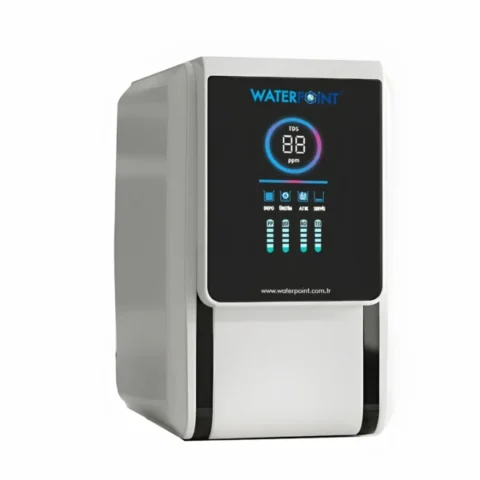
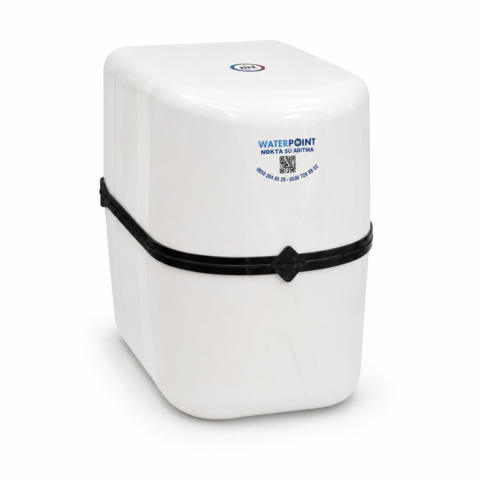
Digital Water Purifier
Domestic RO (Digital)
Digital Panel + Alarm
5.00 (1)5.00 out of 5, 1 review
₺81,320.29
Made to order
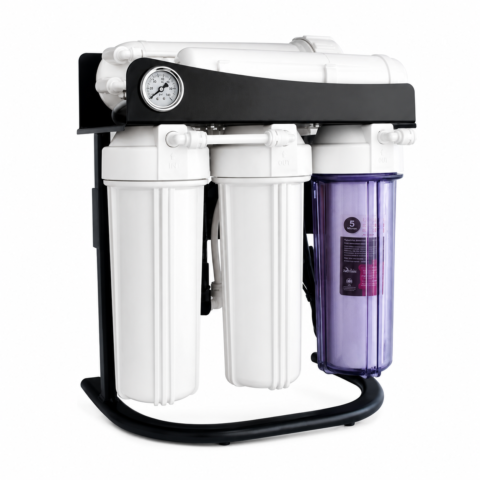
Made to order
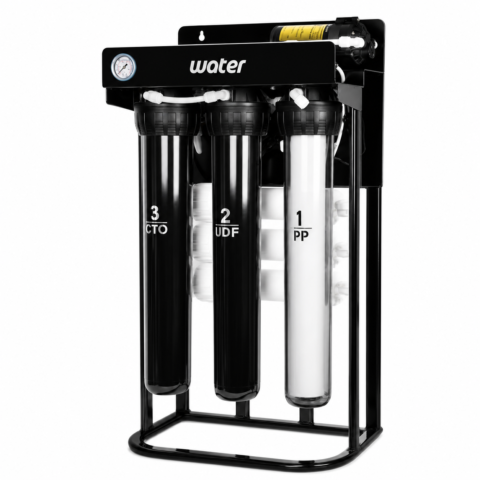
Made to order
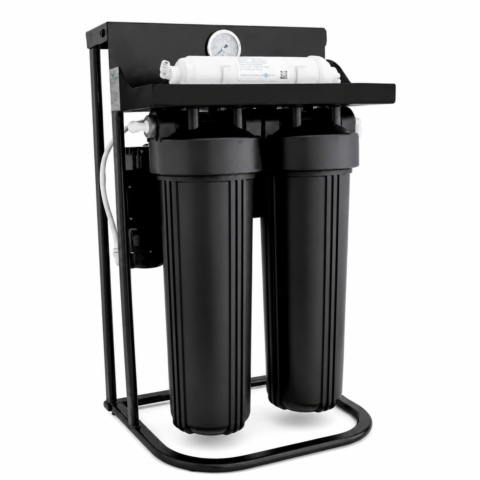
Made to order
Made to order
Made to order
Made to order
Made to order
Made to order
Made to order
Made to order
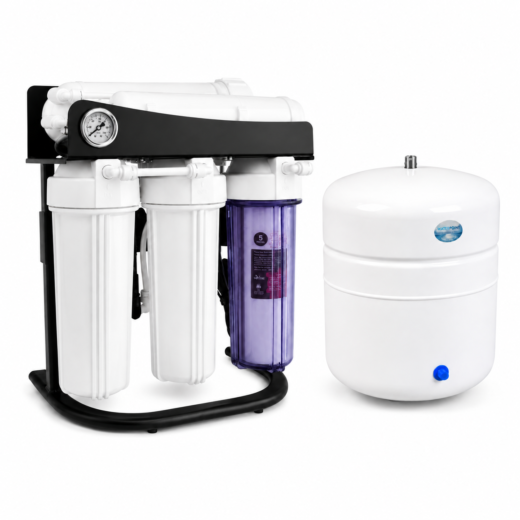
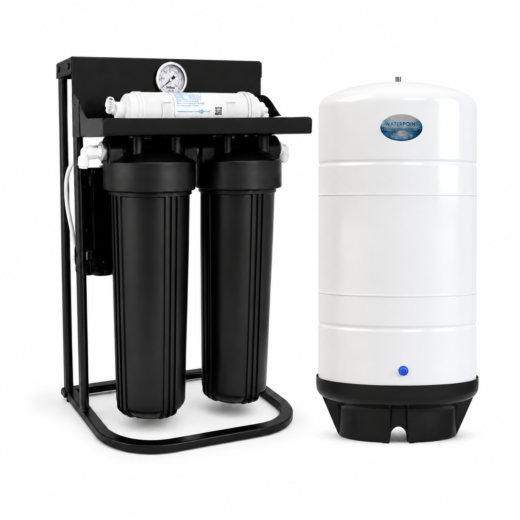
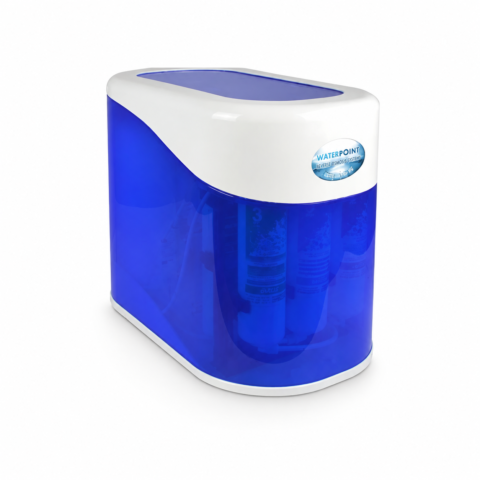
8 Litre Pumped Water Purifier
8 Litres
Domestic RO (Pumped)
5.00 (1)5.00 out of 5, 1 review
₺18,821.91
Made to order
Made to order
Made to order
Made to order
Made to order
Made to order
Made to order
Made to order
Reverse osmosis pushes water through a semi-permeable membrane under pressure. Dissolved salts, most organic molecules and a large share of the mineral load stay on the feed side and leave as concentrate; what passes through is permeate. It is the only method on this site that lowers total dissolved solids across the board, which is why it sits at the centre of both drinking-water units and industrial process lines.
What reverse osmosis actually does
An RO membrane is rated by salt rejection — typically 96–99% for the membranes used here. Feed water at 500 ppm TDS leaves the membrane at roughly 10–20 ppm. That single number drives everything downstream: taste, scale formation in equipment, and whether a deionization stage is needed afterwards for laboratory or process use.
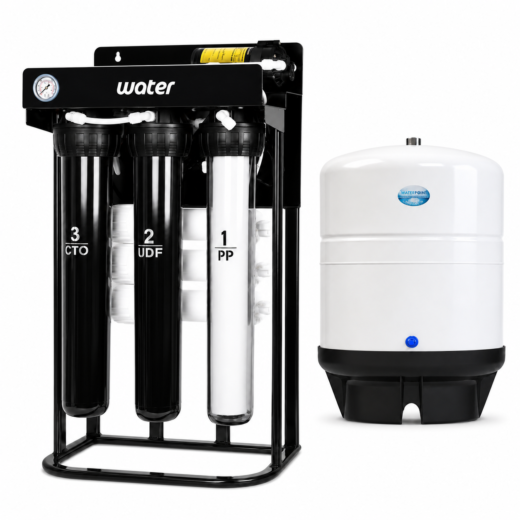
What RO does not do is fix bad pre-treatment. Chlorine oxidises a thin-film composite membrane and permanently reduces its rejection; iron and turbidity foul the surface; hardness precipitates on it as scale. Every RO system on this page therefore carries sediment and carbon stages ahead of the membrane, and industrial lines add softening or antiscalant dosing.
Recovery rate and concentrate
Recovery is the share of feed water that leaves as permeate. Small domestic units without a recovery valve typically run at 20–25%; the rest goes to drain. Well-configured domestic systems reach 40–50%, and industrial lines with concentrate recirculation and staged pressure vessels commonly run at 65–75%.
Higher recovery is not automatically better. Pushing recovery beyond what the feed chemistry allows concentrates hardness and silica at the membrane surface and brings scaling forward. On industrial lines the operating point is set from the water analysis, not from a preference.
Sizing an RO system
Domestic units
Rated in GPD at a reference temperature and pressure. Real output falls as feed water gets colder — a 100 GPD membrane at 10 °C produces considerably less than its label. Size for winter, not for summer.
Industrial lines
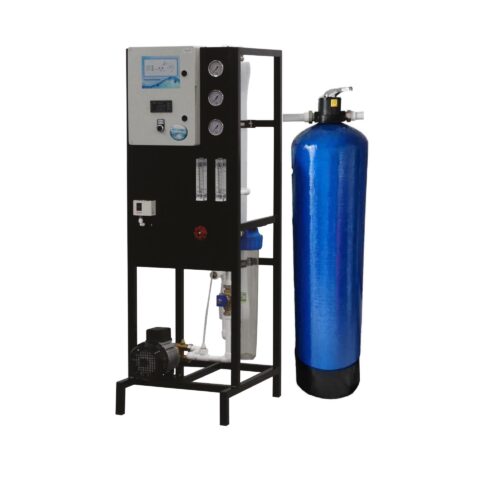
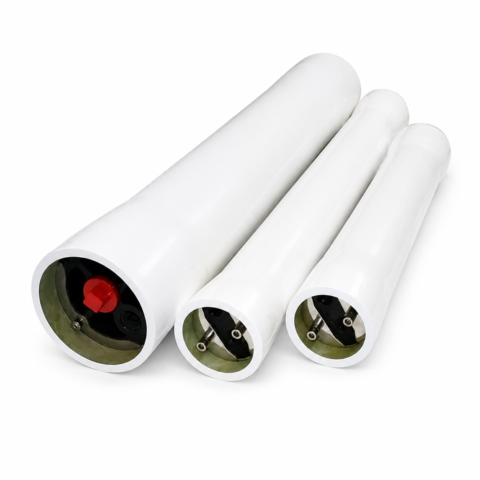
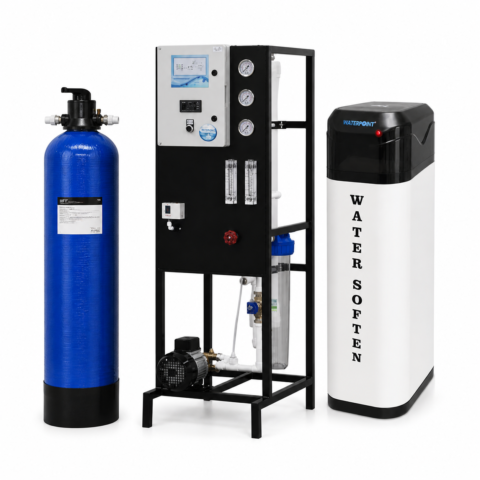
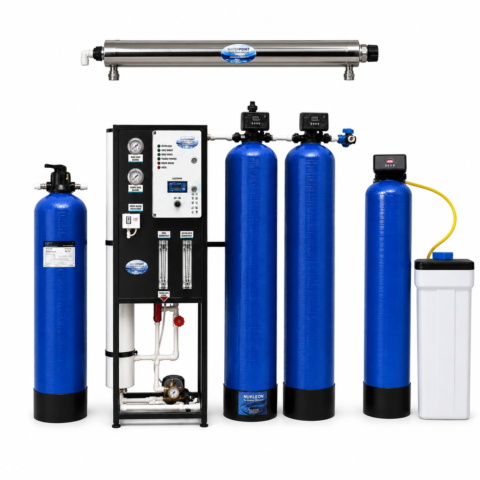
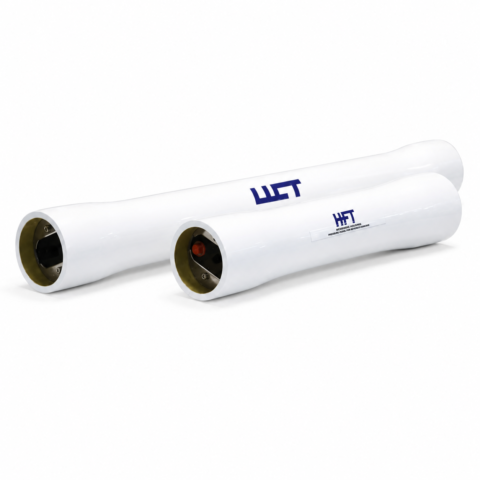
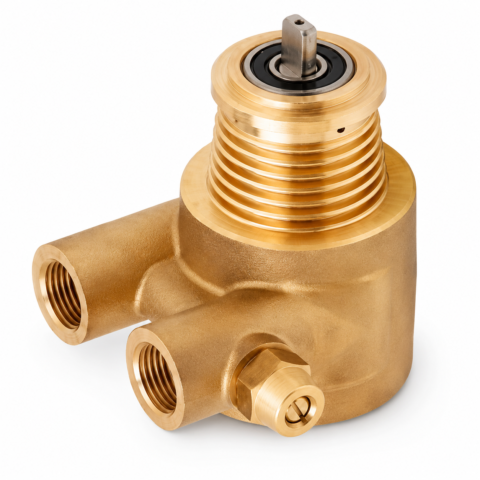
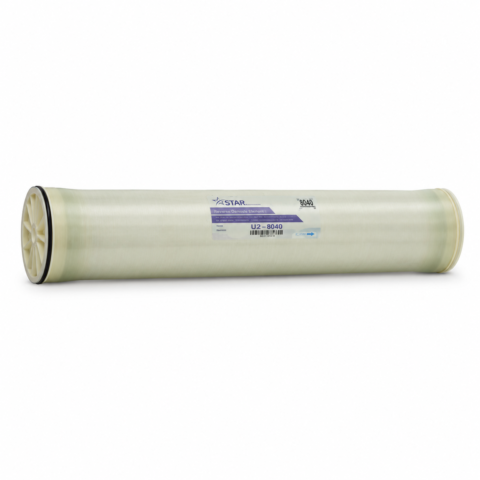
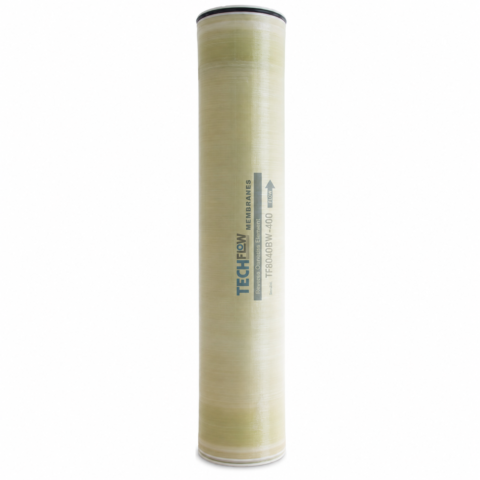
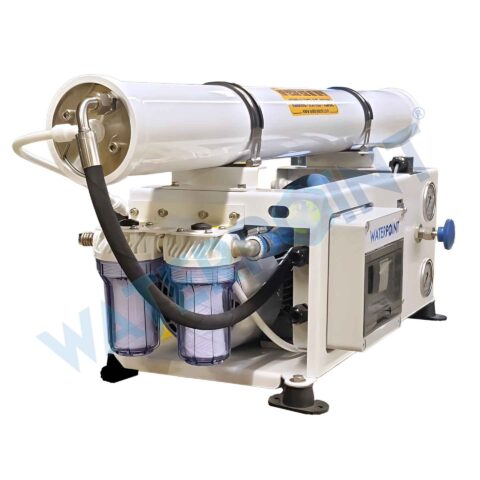
Rated in tonnes per day or cubic metres per hour and built around 4040 or 8040 membrane elements in pressure vessels. Sizing starts from a raw water analysis: hardness, conductivity, iron, silica and turbidity together decide the pre-treatment, the number of stages and the achievable recovery. Capacity is set from the real flow rate measured during the site survey, not from an estimate.
Membrane life and replacement
A domestic membrane protected by working pre-filters commonly lasts 2–3 years; an industrial element under monitored conditions lasts longer. The honest indicator is not the calendar but the numbers: rising permeate conductivity, falling flow at the same pressure, or a growing pressure differential across the stage. Measure those and the replacement decision makes itself.
Membranes and cartridges are consumables and are outside warranty cover, because their life depends on the water they see. The pumps, valves and pressure vessels around them carry a 2-year warranty.
Have a water analysis? Send it to us and we will size the system on measurement rather than assumption. If you do not have one, we measure it during the site survey — free when the system is purchased from us.