Water-Saving Aerators: What They Save and Where They Fail

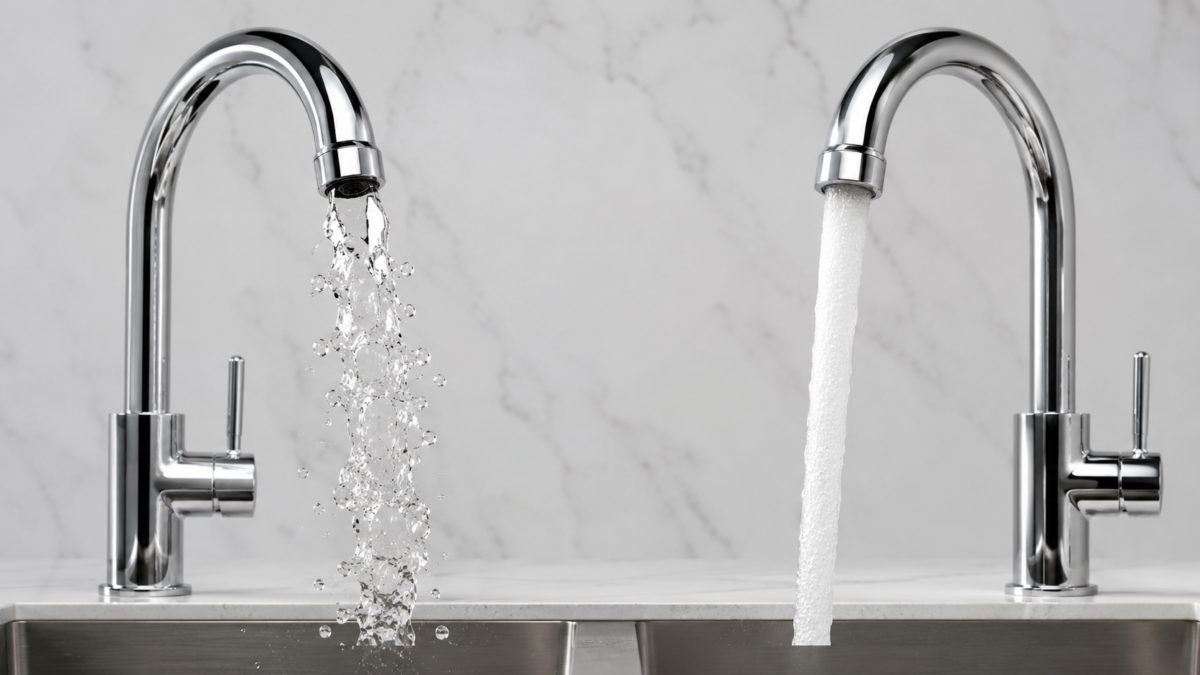
A small part fitted to the end of a tap can halve the amount of water flowing, and it usually does so without the user noticing. A water-saving aerator , as that part is called, mixes the water with air so that the flow looks full; the same job is then done with less water. But does it really work, does it lower the pressure and can it be used on every tap?
This article takes the subject up in six questions: what the part is, how it works, what types there are, how much it saves, where it should not be used and how to weigh it up alongside a treatment system. The aim is to offer a measurable framework about the water-saving aerator , free of exaggerated promises.
What Is a Water-Saving Aerator?
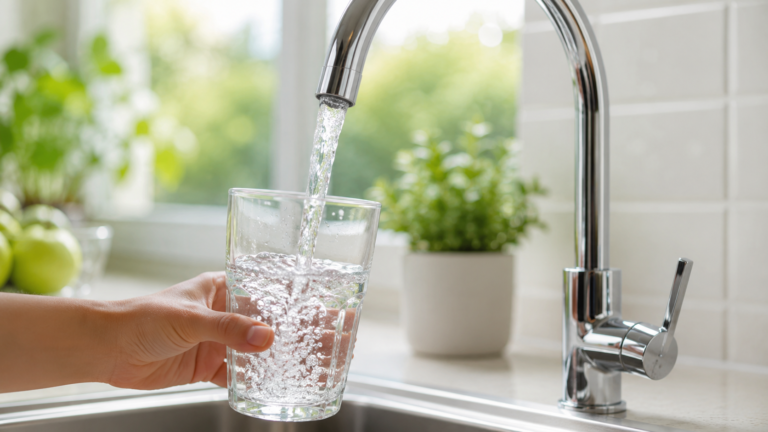
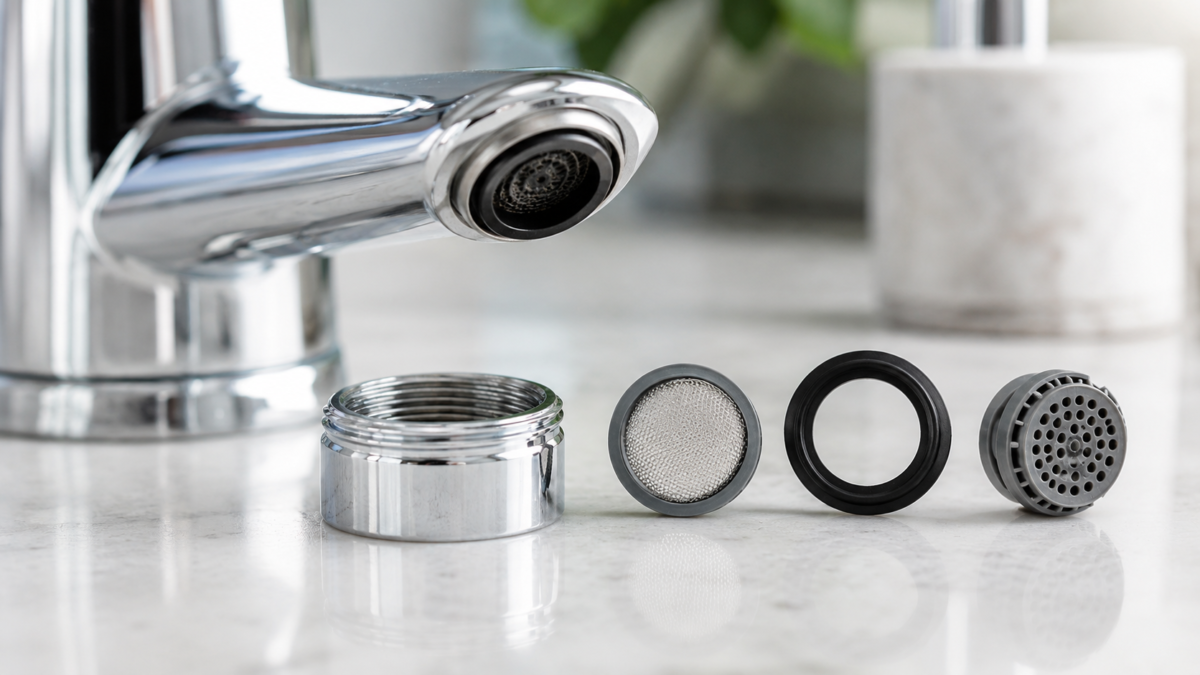
A water-saving aerator is a small additional part fitted to the end of a tap or to a shower line that lowers the flow rate of the water. On most models two mechanisms work together: an element that mixes the water with air and a restrictor disc that narrows the opening. The result is a flow that stays visually full while the amount of water passing per minute falls.
It is also sold under the names aerator, perlator or saving head. Technically they all serve the same purpose; the differences are in the type of flow and the flow level.
In fact most taps already have an aerator on the end. A water-saving aerator The basic difference between one of these and a standard aerator is that the saving models are made to a particular flow limit. Where a standard aerator can pass up to fifteen litres a minute, saving models fix that value at six or eight litres.
On the efficient use of fittings, the US Environmental Protection Agency’s guide to efficient fittings and flow standards offers a measurable reference.
How Does a Water-Saving Aerator Work?
The working principle has two steps. First the opening is narrowed and the amount of water passing is lowered, then the reduced flow is mixed with air to create the look of a full flow. The user feels the same covering power, because the surface of the flow widens; yet the water passing has fallen.
That three-stage process explains why the aerator goes unnoticed:
-
Narrowing the Opening
The restrictor disc at the inlet fixes the amount of water passing within a particular pressure range.
Result: the litres per minute fall. -
Mixing in Air
Air drawn in through side channels mixes into the flow and lifts it.
Result: the flow looks fuller and softer. -
Shaping the Flow
The mesh shapes the flow, reduces splashing and widens the surface.
Result: the same job is done with less water.
The third step is the most decisive for user satisfaction. Because splashing is reduced, the area around the basin stays dry and the flow feels more controlled. So a well-designed water-saving aerator can be felt as a gain in comfort rather than a loss of it.
Types of Water-Saving Aerator
There are five common types: the aerating perlator, the laminar-flow head, the flow restrictor ring, the water-saving shower head and sensor systems. The choice is made according to the point of use and the existing pressure. Laminar flow is preferred in the kitchen, while aerating models are more common at the basin.
| The Type | How It Works | Where It Suits |
|---|---|---|
| The aerating perlator | It mixes the water with air and lifts the flow | Basin and bathroom |
| The laminar-flow head | It gives a straight, parallel flow without mixing in air | Kitchens and areas where hygiene comes first |
| The flow restrictor ring | It only narrows the opening | The shower line and intermediate connections |
| The water-saving shower head | It lowers the flow through the pattern of holes | The bathroom shower line |
| The sensor fitting | It stops the flow completely when not in use | Shared areas and businesses |
Laminar-flow models have one advantage: because they do not mix in air, there is less aerosol. That type is preferred in areas where hygiene comes to the front. Against that, aerating models give a softer feel.
On the shower side there is one more option. Models with a cartridge both lower the flow and apply an extra stage to the water; an example is the shower head with a mineral filter can be consulted.
How Much Does a Water-Saving Aerator Save?
The rate of saving depends on the existing flow. When a tap running at fifteen litres a minute is brought down to six, the theoretical saving comes close to sixty per cent. The real gain varies with habits of use; where the tap is left open for long, the gain is more marked.
The table below offers a comparison over typical values. The figures are approximate and vary with pressure:
| The Point of Use | Flow Without an Aerator | Flow With an Aerator |
|---|---|---|
| A basin tap | 12-15 litres a minute | 5-6 litres a minute |
| A kitchen tap | 12-16 litres a minute | 6-8 litres a minute |
| The showerhead | 15-20 litres a minute | 8-9 litres a minute |
| A shared-area basin | 12-15 litres a minute | 4-5 litres a minute |
The biggest gain in that table is in shared areas. Because there are many short uses in businesses and schools, an investment in a water-saving aerator generally pays for itself within a few months.
A lower flow affects not only the water bill but the cost of heating. When less hot water is used, the boiler and the water heater run less. That second gain is usually left out of the calculation, yet in most households it is larger than the water charge itself.
How Is a Water-Saving Aerator Fitted?
Fitting can be done without tools. The existing aerator is removed by hand or with pliers wrapped in a soft cloth, the thread size is checked, and the new part is fitted by hand with its gasket in place. The job takes a few minutes and needs no work on the plumbing.
The steps to follow in order are these:
-
Remove the Existing Part
Take out the aerator on the end of the tap by turning it anticlockwise. If it is stuck, wrap it in a cloth and use pliers.
Watch out: do not use pliers directly, so as not to scratch the chrome. -
Check the Thread Size
Establish whether the part you removed has an internal or an external thread, and its diameter.
Watch out: a size that does not match leads to leaks. -
Clean the Seat
Clean the limescale and sediment collected in the thread seat and take out the old gasket.
Watch out: any sediment left behind breaks the seal. -
Fit the New Part
Put the gasket in place and tighten the part clockwise by hand. There is no need to overtighten.
Watch out: overtightening can strip the thread. -
Check It
Turn the water on and look for any leaks and for whether the flow is even.
Watch out: if the flow is scattered, the mesh may be fitted the wrong way round.
Those steps apply to all fittings. Where a unit has to be installed the job is different; we took up installing treatment systems in our installing a water treatment system article.
In the first days after fitting, the flow can feel different. That is normal and you get used to it within a few days. If the difference is uncomfortable, it is possible to move to a water-saving aerator model with a higher flow.
Using Water-Saving Aerators in Businesses
The gain is far greater in commercial premises than in homes, because the number of uses is high and, since the user does not pay the water bill, saving behaviour is weak. In restaurants, hotels, offices, schools and shopping centres, the small investment made per fitting pays back in a short time.
The calculation on the business side is simple: the number of daily uses, the average time the tap is open and the difference in flow are multiplied together. The result is usually larger than expected.
| The Type of Business | The Point That Stands Out | An Extra Suggestion |
|---|---|---|
| Offices and business centres | Shared-area basins | Sensor fittings can be considered |
| Restaurants and cafes | Rinsing points in the kitchen | A laminar-flow model is preferred |
| Hotel | Room bathrooms and showers | A flow that creates no loss of comfort is chosen |
| Schools and halls of residence | Heavy, short uses | A durable metal body is preferred |
| Hairdressers and beauty salons | The washing units | It is assessed together with the water hardness |
The last row matters. In salons the water quality shows up directly in the quality of the service; we took the subject up in our water treatment in hairdressing salons article. In commercial kitchens the life of the equipment comes to the front; our water treatment in restaurants and hotels piece examines that side.
When applying water-saving aerator in businesses there is one point to watch: the points where vessels are filled in the kitchen should be left out of the scope. Otherwise the pace of work falls and the change is undone by the staff.
Does It Lower the Pressure? The Most Common Worry
An aerator does not lower the line pressure; it only limits the flow passing through the tap. The pressure in the plumbing stays the same. What the user feels is the fall in the volume of flow, and thanks to the air mixed in that difference is largely made up. But if the line pressure is already low, an aerator can make matters markedly worse.
That distinction matters when assessing a water-saving aerator. Pressure and flow are different quantities: pressure is the force pushing the water, flow the amount passing in a given time.
On low-pressure lines the pressure problem has to be solved first. We took up the causes and the ways of solving it in our what happens if the water pressure is low article.
Some water heaters and instant heaters need a certain minimum flow to switch on. A water-saving aerator that lowers the flow too far can lead to that unit not working or to the temperature fluctuating. On a system like that, the minimum flow value of the unit should be checked before an aerator is chosen.
Where Is It Used, and Where Is It Not?
An aerator is used comfortably on basin, kitchen and shower lines where the mains pressure is sufficient. Against that, it should not be chosen on low-pressure lines, on instant heaters needing a minimum flow, or at points where large vessels are filled often.
It gives efficiency
The gain is marked at points with short, frequent use.
- Bathroom and basin taps
- Hand washing and rinsing in the kitchen
- Shared-area and business basins
- The shower line, where there is enough pressure
It can cause trouble
It is not advised at points where the flow is critical.
- Plumbing where the line pressure is already low
- Water heaters needing a minimum flow
- Points where large vessels are filled
- Garden and cleaning lines
The last item in the right column is often skipped. At a tap where a bucket or a large pan is filled, lowering the flow saves nothing; it only lengthens the time it takes to fill the same volume. Because the total amount of water does not change, there is no gain.
Limescale and Maintenance: The Life of an Aerator
Because the mesh of an aerator is made of fine holes, it scales up quickly in hard water. As the holes block, the flow is spoiled, the water starts to splash unevenly and the saving effect is lost. Taking it off and cleaning it monthly extends its life markedly.
Cleaning a water-saving aerator is simple: the part is removed, left in a descaling solution, rinsed and refitted. But the real answer is not cleaning the surface; it is lowering the hardness at source.
We took up why limescale forms and the lasting answer in our why does limescale form in water article. And we took up the effect of limescale on household appliances in our what hard water does to white goods .
In areas with a heavy limescale load, an water-saving aerator blocks earlier than expected. In that case, rather than changing the aerator often, softening at the inlet to the line should be considered; otherwise the same problem repeats at every fitting.
What Should Be Watched When Buying a Water-Saving Aerator?
Five criteria are looked at in the choice: matching the thread size, the flow value aimed at, the body material, the type of flow and being able to take it apart and clean it. Avoiding products whose flow value is not stated on the label prevents dissatisfaction later on.
- The thread size: Take off the existing aerator and establish whether it has an internal or external thread, and its diameter.
- The flow value: A lower flow is preferred at the basin and a higher one in the kitchen.
- The body material: A metal body is longer-lived than plastic.
- The type of flow: An aerating model gives a soft feel, laminar flow splashes less.
- Being cleanable: Models that can be taken apart and washed last far longer in hard water.
- Gasket quality: A weak gasket starts leaking in a short time.
- Heater compatibility: If there is an instant water heater, check its minimum flow value.
- Availability of spares: Products with spare meshes and gaskets available are more economical.
The one most often skipped among those eight items is the flow value. A water-saving aeratorwhose label does not carry that information gives you no way of measuring how much it saves either. A gain that cannot be measured is usually an assumed gain.
In areas with hard water, preferring a metal body and a removable mesh matters too, because cleaning will be needed more often. And on that point we took up the lasting answer in our what is water hardness article.
Do a Water-Saving Aerator and a Treatment System Work Together?
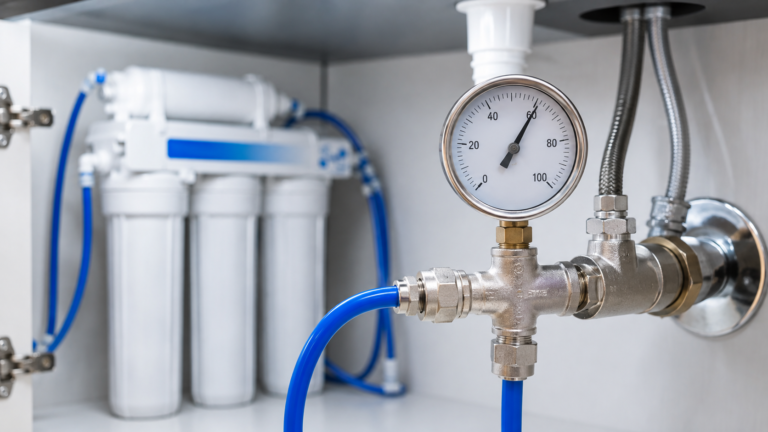
Yes, but two things have to be told apart. Because the treatment tap is a separate line, an aerator fitted to the kitchen mixer does not affect the flow of treated water. The real point is this: in a household that genuinely wants to reduce its water use, the water the treatment unit sends to the drain has to be counted too.
Classic reverse osmosis units send a certain amount of water to the drain for every litre they produce. We took up what that ratio depends on and how it can be improved in our why a water treatment system sends water to the drain article.
So where saving is the aim in a home, two fronts are taken up together: the flow at the fittings and the efficiency of the treatment unit. Focusing on only one leaves the picture incomplete.
| The Front | What Can Be Done | The Effect Expected |
|---|---|---|
| Fittings | A saving aerator and shower head | A marked fall in utility water use |
| The efficiency of the treatment unit | A high-capacity direct flow unit | An improvement in the ratio going to the drain |
| The treatment tap | A three-way tap for use from a single point | Less running of water for nothing |
| Checking for leaks | Checking dripping fittings and the cistern | Preventing losses you cannot see |
| Hardness | A water softening system | A longer life for the aerator and the fitting |
For treatment tap options you can look at the water treatment tap category. And we took up which model suits on the unit side in our how to choose a water purifier guide.
Let us plan the saving together, from the fitting to the unit
When the efficiency of your treatment unit and the flow at your fittings are assessed together, the gain is far greater. The site survey is free if the unit is purchased from us.
See the Treatment TapsFrequently Asked Questions About Water-Saving Aerators
Can a water-saving aerator be fitted to every tap?
It can be fitted to most standard fittings, but the thread size has to match. The common sizes divide into internal and external threads. The most practical way is to take off the existing aerator and look at its size before buying. On some concealed and specially designed fittings there may be no compatible model.
Does a water-saving aerator lower the pressure?
It does not lower the line pressure; it only limits the flow passing through. Thanks to the air mixed in, the flow feels full. But if the line pressure is already low the difference is felt markedly; in that case the pressure problem has to be solved first.
How much does a water-saving aerator save?
It depends on the existing flow. When a tap running at fifteen litres a minute is brought down to six, the theoretical gain comes close to sixty per cent. The real gain varies with habits of use; it is higher at points where the tap is left open for long.
Does it save water when filling a vessel too?
No. The amount of water needed to fill a given volume is fixed; when the flow falls, only the time gets longer. So there is no point in using an aerator at points where large vessels are filled often.
How often should a water-saving aerator be cleaned?
Where the water is hard, checking it once a month is right. When the mesh scales up the flow becomes scattered and splashing increases. It is easily cleaned by taking it off and leaving it in a descaling solution.
Does a water-saving aerator filter the water?
No. The mesh only shapes the flow and holds back coarse particles; it does no treating. If there is an expectation about drinking water quality, a staged treatment system is needed.
Can it be used on a shower head too?
Yes, water-saving shower heads or restrictor rings fitted to the line serve that purpose. But on systems with an instant water heater the minimum flow value of the unit should be checked.
Can it be fitted to a treatment tap?
It is generally not advised. Treatment taps already work at a low flow, and on systems with storage the tank pressure is limited. An extra restriction slows the flow unnecessarily.
Are sensor fittings more efficient?
In shared areas, yes. Because they stop the flow completely when not in use, they remove the waste caused by people. Inside a home, though, a simple aerator is usually the more sensible choice because of the cost and the maintenance needed.
Conclusion
A water-saving aerator is a simple part that lowers the flow passing through the end of a tap and lifts the flow with air to prevent a loss of comfort. When a fitting running at fifteen litres a minute is brought down to six, the theoretical gain comes close to sixty per cent; and on the hot water side there is a second gain in the cost of heating. Against that, it is not suitable at every point: if the line pressure is low, if an instant water heater needs a minimum flow, or if large vessels are filled often, the benefit expected is not achieved. In hard water the mesh scales up quickly, so monthly cleaning is needed; and the real answer is lowering the hardness at source. For those who genuinely want to reduce the total water use in a home, the picture has two fronts: the flow at the fittings and the efficiency of the treatment unit. Taken up together, the gain becomes lasting.
Let us go over your water use together
The site survey is free if the unit is purchased from us; where only a survey and measurement are wanted, a survey fee of ₺2,000 applies. For the flow at your fittings and the efficiency of your treatment unit you can reach us on 0850 304 95 25 or at [email protected].
See the Efficient Systems