




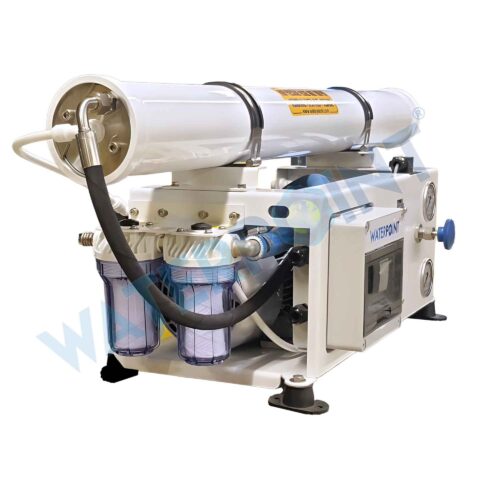
Free Shipping
Product Category
Pressure Tanks
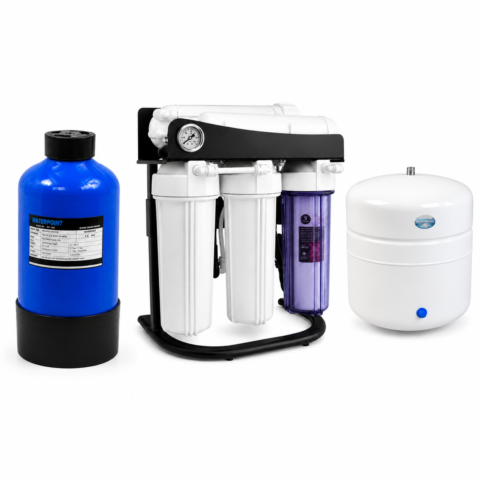
The term water treatment tank covers two different parts that do completely different jobs in a system, which is why this is the component people mix up most. The pressure tank (also searched for as a treatment storage tank) stores the water the reverse osmosis unit produces and pushes it out when t…
- Free Shipping · across Türkiye
- 2-Year Warranty
Filter
Tank volume
How much water is waiting ready when you open the tap.
Products
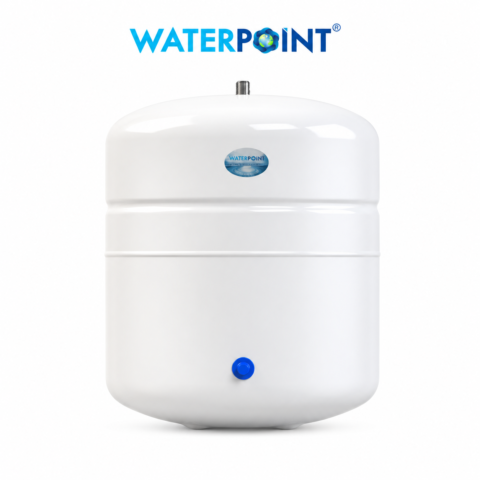
Free Shipping
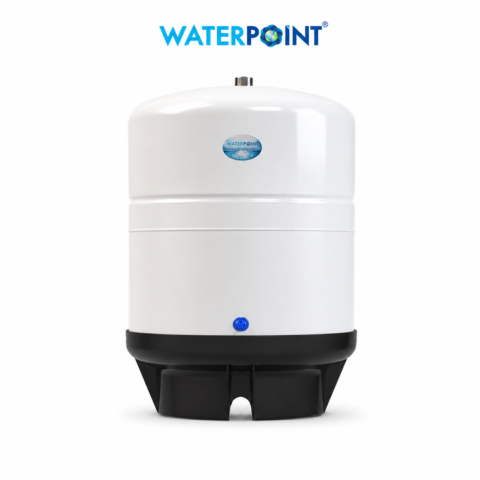
Free Shipping
Free Shipping
Free Shipping
About Pressure Tanks
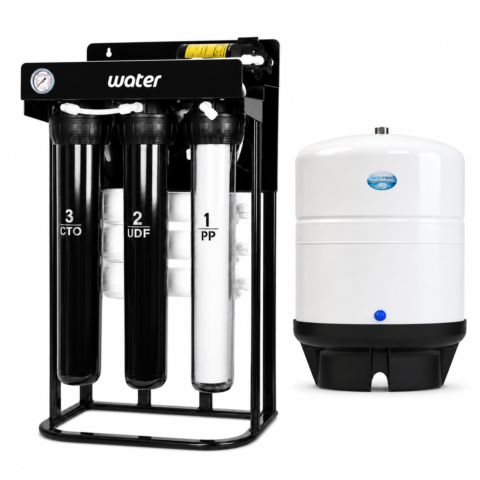
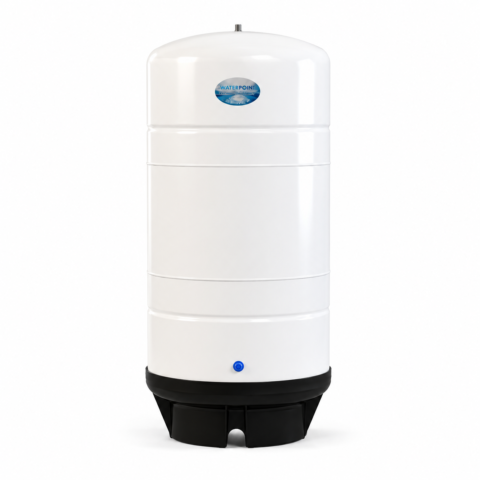
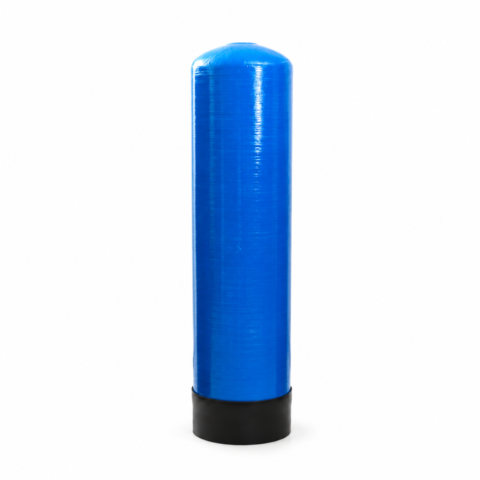
The term water treatment tank covers two different parts that do completely different jobs in a system, which is why this is the component people mix up most. The pressure tank (also searched for as a treatment storage tank) stores the water the reverse osmosis unit produces and pushes it out when the tap is opened. The media vessel holds resin or activated carbon; it works together with the valve mounted on top of it and stores no water. The difference between the two, the volume you choose and the pressure logic behind it decide which tank is right, and fault symptoms usually trace back to those same three points. For media, see our Ion Exchange Resin and Activated Carbon Filters categories, and for valves the Control Valves category. Water treatment tank and storage tank prices vary with volume, shell material and pressure rating; the current list is in the price table below.
Water Treatment Tank Prices — What Does Each Tank Cost?
Water treatment tank prices vary with volume and tank type; for current treatment tank prices, the list below shows the values from the product pages and includes VAT.
| Product | Type | Price |
|---|---|---|
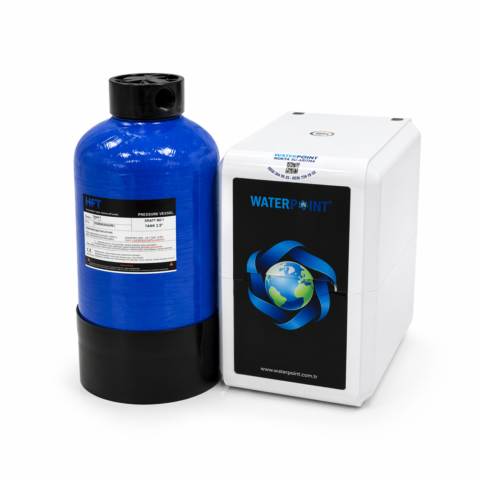
| 8 Litre (8 L) Water Treatment Tank | Pressure tank | 2,696.01 TL |
| 12 Litre (12 L) Water Treatment Tank | Pressure tank | 2,941.10 TL |
| 40 Litre (40 L) Water Treatment Tank | Pressure tank | 8,333.13 TL |
| 80 Litre (80 L) Water Treatment Tank | Pressure tank | 14,705.52 TL |
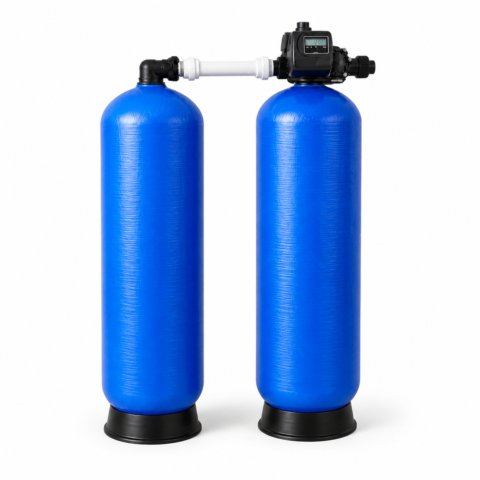
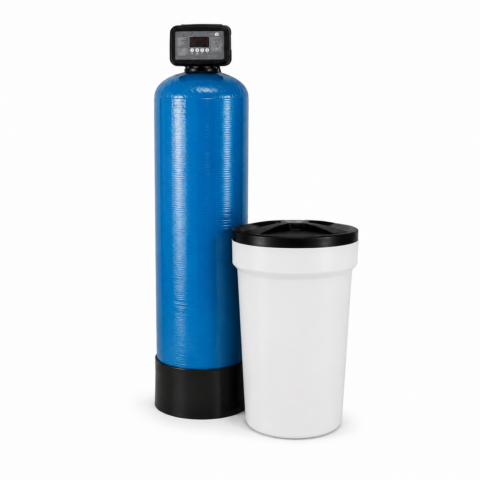
| Sand, Carbon and Softener Vessels | Media vessel | 6,372.39 TL |
How a Pressure Tank Works
A reverse osmosis membrane produces water slowly; filling a single glass straight from the membrane takes minutes. The pressure tank solves that: the unit produces slowly all day long, the tank stores what it makes, and when the tap is opened the stored water flows out quickly.
Inside the tank there is a flexible bladder, and behind that bladder sits pre-charged air. As the water side fills, the air is compressed and the pressure rises. When the tap is opened, the compressed air pushes the bladder and drives the water out. The pressure you feel at the tap therefore comes from the tank's own air, not from the mains.
How to Choose Tank Volume
What decides the volume is not the number of people in the household but how much water is drawn in one go. A small tank is enough for someone who takes a glass at a time through the day; someone who fills a teapot, a jug and a pan in one go needs more volume.
| Tank | Typical use |
|---|---|
| 8 Litre Water Treatment Tank | 1-2 person household, low consumption |
| 12 Litre Water Treatment Tank | Standard family use |
| 40 Litre Water Treatment Tank | Large household, office, small business |
| 80 Litre Water Treatment Tank | Commercial use, heavy consumption |
For current prices, see the Water Treatment Tank Prices table.
Going up a tank size does not speed up production. The tank only stores; the production rate is set by the membrane and the booster pump. Buying a bigger tank without changing the unit can mean the tank never fills.
Pre-charge Pressure: The Most Often Skipped Setting
Whether a pressure tank works properly depends on the air pressure inside it when it is empty. This value is called the pre-charge pressure, and it falls over time. When it falls, the tank takes water in but cannot push it back out.
The typical symptom is this: the unit is running, the tank feels heavy and full, and yet the water from the tap is weak and short-lived. In that picture the first place to look is not the filter but the air pressure in the tank.
- Measure with the tank empty. A reading taken while the tank holds water is misleading; the tank must be drained completely first.
- Check it at the Schrader valve. Open the cover at the base of the tank and you will see a valve much like the one on a bicycle tyre.
- If it is low, add air. The setting is chosen to suit the pressure of the unit and of the mains.
- If it keeps falling, the bladder has split. If water comes out of the Schrader valve, the tank must be replaced.
Media Vessels
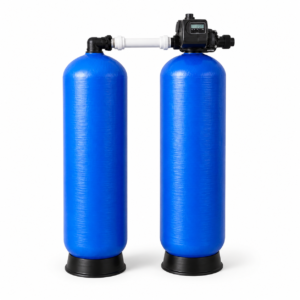
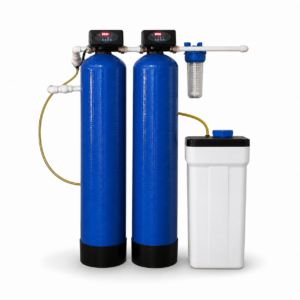
The vessels used in softening and filtration systems are completely different from a pressure tank. They contain no air cushion and no bladder; they hold resin or activated carbon, and the water passes through that bed.
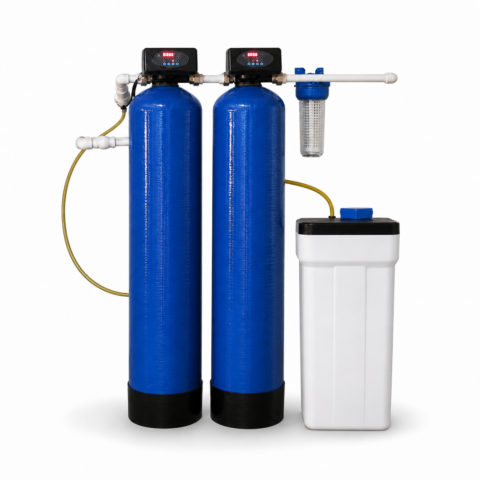
Sand, Carbon and Softener Vessels at 6,372.39 TL belong to this class. What decides the choice is diameter and height; diameter sets the backwash flow rate, while volume sets how much media fits and therefore the capacity.
Two points are critical in a media vessel. The first is leaving freeboard at the top: about one third of the vessel must stay empty so the bed can lift during backwash. The second is the distributor tube and the lower support bed; without a graded sand or gravel layer, the media escapes into the distributor and blocks the valve.
Comparing the Two Tank Types
| Feature | Pressure tank | Media vessel |
|---|---|---|
| What is inside | Water and an air cushion | Resin or activated carbon |
| What it does | Stores the water produced | Passes water through the bed |
| What sits on top | Ball valve | Automatic control valve |
| Maintenance | Pre-charge pressure check | Backwash, media renewal |
| Typical life | 5-8 years | Long; the media is renewed periodically |
| System it is used in | Reverse osmosis | Softening, carbon filtration |
Tank Faults: Symptom and Cause
| Symptom | Likely cause | Check |
|---|---|---|
| Tank full but flow weak | Pre-charge pressure has dropped | Air pressure with the tank empty |
| Water coming from the Schrader valve | Inner bladder split | Tank needs replacing |
| Tank never fills | Production too low or valve closed | Membrane, pump, tank valve |
| Taste has changed | Stagnant water left standing too long | Drain the tank and refresh it |
| Water runs out quickly | Volume too small or pressure low | Volume choice and pre-charge |
| Pressure loss in a media vessel | Bed has compacted | Backwash time and flow rate |
What to Watch for When Installing a Tank
- Install it upright. Pressure tanks are designed to work upright; horizontal mounting can make the bladder work unevenly.
- A solid base. A full tank reaches a considerable weight; in under-sink installations the base must carry that load.
- The valve must stay reachable. The tank valve must be left where it can be reached easily during maintenance.
- It must not sit in direct sunlight. Light and heat affect both the material and the water quality.
- Drain the tank on the first fill. On newly installed systems the first two fills must be drained without being used.
- Drain it before a long break. Over long gaps such as a holiday it is better not to leave standing water in the tank.
Tank Pressure and System Pressure
The strength of the water coming out of a pressure tank is the result of three pressures working together: the mains feed pressure, the working pressure of the membrane and the pre-charge pressure of the tank. When one of the three goes wrong the result shows up at the tap, and the wrong part usually gets the blame.
When mains pressure falls, the unit produces more slowly; the tank cannot fill enough and runs out early in the day. Enlarging the tank is not the answer here — a booster pump needs to be added. A tired membrane produces a similar picture: the tank fills, but very slowly, and the water runs out in the evening.
When the pre-charge pressure falls, the picture is different. The tank fills quickly and feels heavy and full, but when the tap is opened the water runs for a few seconds and then weakens. Nothing is wrong on the production side here; what is wrong is the push from the tank.
Telling these three pictures apart prevents needless membrane or filter changes. The quickest way to separate them is to drain the tank completely and watch it refill: if the fill time is normal, the production side is healthy and the problem is in the tank pressure.
Tank Hygiene and Maintenance
A pressure tank is a closed volume and the water inside it stands for a while. In normal use the water is refreshed through the day, so nothing goes wrong; but when the system is left unused for a long period the water in the tank goes stagnant.
After a holiday, or on a system that has been shut down for a long time, the simplest thing to do is to drain the tank completely and refill it a few times. This clears the stagnant water and brings the taste back to normal.
For scheduled maintenance, three checks on the tank are enough:
- Pre-charge pressure: Checked once a year with the tank empty. If it has dropped, air must be added.
- Leak at the Schrader valve: If water rather than air comes out of the Schrader valve, the inner bladder has split and the tank must be replaced.
- Connection and valve: The tank valve and the union fitting are checked for leaks.
These three checks take a few minutes during a filter replacement and extend the life of the tank.
Choosing a Tank for Offices and Businesses
In a home what matters is how much water is drawn in one go; in offices and businesses the picture changes: use is heavy and intermittent. A high demand builds up in a short window at lunchtime, and consumption falls for the rest of the day.
In this use profile a large tank makes a clear difference. 40 Litre and 80 Litre tanks hold the reserve needed to meet demand at the busy hour and let the system refill slowly through the day.
The second factor is the production capacity of the unit. A large tank only makes sense with enough production behind it; otherwise, once the tank empties, refilling it takes hours. That is why in commercial installations the tank volume is chosen together with the membrane capacity and the pump.
Where a system is converted to a dispenser, the tank is planned together with the dispenser fitting and the tap type. Our Filtered Water Dispensers category has the details of these setups.
Diameter and Height in a Media Vessel
In media vessels, volume on its own is not a sufficient criterion; diameter and height each matter separately.
Diameter sets the flow rate needed during backwash. A wide vessel asks for a higher flow rate to lift the bed; if the line cannot deliver that flow, the bed does not lift enough and compacts over time. The vessel diameter must therefore be chosen to match the flow the existing line can give.
Height affects the media volume and the contact time of the water inside the bed. At the same volume, a narrow, tall vessel gives a longer contact time than a wide, short one. This matters in particular in activated carbon applications.
A third constraint in the choice is the installation space. A tall vessel gives better contact, but the ceiling height and the service clearance above the valve must be taken into account; enough clearance must be left above the vessel for the valve to be removed.
Tank Replacement and Installation Steps
Replacing a pressure tank takes a little more care than changing a cartridge, but it is still a short job. As long as the order is kept, little is likely to go wrong.
- 1 — Shut off the feed to the unit. The inlet valve to the reverse osmosis unit is closed, so no new water is produced.
- 2 — Close the tank valve and drain the tank. Leave the filter tap open and wait until the water in the tank has drained completely.
- 3 — Undo the tank connection. Loosen the union between the tank valve and the tank. Put a container underneath for the water left inside.
- 4 — Measure the pre-charge pressure of the new tank. The pressure of a tank straight out of the box may have changed in transit; measuring it empty before installation is the right move.
- 5 — Make the connection with PTFE tape. Wind the right number of turns onto the thread at the tank inlet; too much tape strains the thread, too little leaks.
- 6 — Set the tank upright. Position it on a firm, level base with its valve accessible.
- 7 — Open the valve slowly. Let the water in gradually while you watch the connection point.
- 8 — Drain the first two fills without using them. On a new tank this clears any residue left from manufacturing.
- 9 — Check the flow strength. Make sure the water runs steadily and strongly when the tap is opened.
- 10 — Note the date. It gives you a reference for the next pre-charge check.
Common Mistakes When Choosing a Tank
- Treating volume as the only criterion. A bigger tank does not speed up production; if the unit capacity is too low, a large tank never fills.
- Never checking the pre-charge pressure. A tank left unchecked for years loses its push over time, and the filter gets the blame.
- Measuring pressure with the tank full. The measurement must always be made with the tank empty; otherwise the reading means nothing.
- Horizontal mounting. Pressure tanks are designed to work upright.
- Confusing a pressure tank with a media vessel. The two do different jobs and cannot be used in place of each other.
- Leaving no service clearance. In media vessels, clearance is needed above for the valve to be removed.
Price–Benefit Balance in Tank Choice
The tank is one of the longest-lived parts of the system, and when it is chosen correctly it gives no trouble for years. Cutting back on volume at the first purchase usually turns out to be a short-term saving.
The price difference between 8 litres and 12 litres is relatively small; the difference in day-to-day comfort is not. In the same way, choosing 80 litres instead of 40 in an office or business keeps the water from running out at busy hours and removes the complaints that come with it.
Oversizing the tank is not right either. If the production capacity of the unit is not enough, a large tank never fills completely; and water that stands longer in the tank can give an unwanted result in terms of taste. The right approach is to balance the tank volume against daily consumption and unit capacity.
Three questions are enough when deciding: how much water do I draw at most in one go? Can my unit fill that volume in a reasonable time? Does my installation space take this tank? If all three have a clear answer, the choice is right.
Tank Capacity and Daily Use Scenarios
The clearest way to make the volume decision concrete is to think through the use over a day. The scenarios below show typical needs.
Small household, a glass at a time: Water is taken in small amounts at intervals through the day. The tank has time to refill each time. An 8-litre tank is comfortably enough.
Standard family, cooking and drinking: A pan and a teapot are filled while cooking, and a jug is refreshed through the day. The amount drawn in one go goes up; a 12-litre tank suits this profile.
Large household or office: A high demand builds in a short window in the morning and at midday. A 40-litre tank holds the reserve at the busy hour and refills through the day.
Commercial use: Consumption is constant and heavy. An 80-litre tank acts as a buffer at peak hours, when production cannot keep up with demand.
What these scenarios have in common is this: the tank closes the time gap between production and consumption. If the production capacity is not enough, no tank volume closes that gap permanently; in that case the membrane and pump side must be assessed.
Tank Location and Space Planning
Physical space matters as much as the technical criteria when choosing a tank. In under-sink installations in particular, the volume you choose has to fit the cabinet and stay reachable for service.
Three dimensions are taken into account in planning: the diameter of the tank, its height and the clearance needed for the valve on top of it. Even when the internal height of the cabinet equals the height of the tank, a few centimetres of extra allowance are needed for the valve and the hose connection. Without that allowance the tank goes into the cabinet but cannot be connected.
Large tanks may not fit under the sink. In that case the tank is placed in a cabinet near the kitchen, in a pantry, or in an enclosed area such as a balcony where there is no risk of freezing, and the line is extended to it. A longer line affects the flow somewhat, so the distance should not be stretched needlessly.
Finally, the strength of the base must be taken into account. A full tank reaches a considerable weight; thin, unsupported shelves can bend over time. Setting the tank on a level, solid base where it can stand upright is required both for safety and for correct operation.
Common Misconceptions About Tanks
"The bigger the tank, the better the water quality." The tank only stores; the water quality is set by the membrane and the filter stages. Volume affects how much water you can reach, not its quality.
"As long as the tank is full, the pressure stays constant." The pressure from the tank falls as the fill level drops. That is normal behaviour; as the air cushion expands, the push weakens.
"Tanks do not fail and need no maintenance." The pre-charge pressure falls over time and must be checked once a year. When the inner bladder splits, the tank must be replaced.
"A system with a tank is always better." Direct-flow systems have no tank; the water is delivered as it is produced. On high-capacity units this arrangement removes the problem of water standing in a tank. The choice depends on the use profile.
Short Maintenance Schedule
The simple schedule below keeps the system working at the expected performance for years. The intervals are for typical mains water; they shorten with well water and high sediment.
| Frequency | Check to make | Why |
|---|---|---|
| Monthly | Salt level and salt bridging | So that regeneration stays effective |
| 3-6 months | Sediment and carbon cartridge replacement | Protecting the flow rate and the following stages |
| 6-12 months | Outlet hardness and TDS measurement | Tracking performance in numbers |
| Once a year | Pressure tank pre-charge pressure | Keeping the flow strong |
| Once a year | Connection and seal check | Catching leaks early |
| 2-3 years | Valve O-ring kit | Preventing leaks and position faults |
| 2-3 years | Membrane and activated carbon assessment | Renewal decision based on measurement |
| 4-6 years | Resin bed assessment | Detecting capacity loss |
The most important part of this schedule is that the decisions rest on measurement rather than guesswork. Measuring hardness, TDS and pH prevents both early and late replacement; an early change is needless expense, a late one means damage to the equipment. When you are not sure of the state of your system, you can use our site survey and fault diagnosis service; the site survey is free if the unit is bought from us.
Checklist After a Tank Replacement
Once the new tank is commissioned, three things need confirming. First, that the water runs steadily and strongly when the tap is opened; if it runs briefly and then weakens, the pre-charge pressure must be measured again. Second, that there is no leak at the connection points; the PTFE tape wrap and the tightness of the union should be watched over the first few hours. Third, that the tank fills in a reasonable time; if filling takes far longer than expected, the problem is not in the tank but on the membrane or feed pressure side.
What Buying a Tank from Water Point Means
- A 2-year warranty applies; misuse is not covered.
- CE certified products — we work with products that fall within certification scope.
- ETBİS-registered e-commerce — we are registered in the Ministry of Trade system.
- Invoiced sales — a legal invoice is issued with every order.
- The right volume choice — we work out the right tank with you, based on your consumption habits.
- Free site survey available — we determine on site whether the problem is in the tank or in the membrane. see the details
- Service network across Türkiye for industrial work — for domestic units we serve İstanbul and the surrounding provinces (such as Kocaeli and Tekirdağ).
Address: Mehterçeşme Mah. 1919 Sk. No: 54/B Esenyurt / İstanbul.
Cannot find the spare part you are looking for?
Send us the brand and model of your unit and we will work out the right filter, membrane, valve or resin together. The site survey is free if the unit is bought from us; if only a survey and measurement are requested, a site survey fee of 2,000 TL applies.
0850 304 95 25WhatsApp[email protected]Pressure Tanks: frequently asked questions
Does a 12-litre tank hold 12 litres of water?
No. That figure is the total volume of the shell. Inside the tank there is an air cushion that pushes on the water side, and that cushion takes up room. The usable amount of water is below the total volume and varies with the pre-charge pressure and the mains pressure.
The tank is full but the water flows weakly — what causes that?
The most common cause is a drop in the pre-charge air pressure of the tank. The tank takes water in but cannot push it back out. The check is made with the tank empty, at the Schrader valve underneath it. If water comes out of the Schrader valve, the inner bladder has split and the tank must be replaced. This check must be done before looking at the filter.
If I buy a bigger tank, does the unit produce faster?
No. The tank only stores; the production rate is set by the membrane and the booster pump. Buying a bigger tank without changing the unit can mean the tank never fills completely. If the production rate is not enough, the membrane capacity and the feed pressure must be assessed.
What is the difference between a pressure tank and a media vessel?
A pressure tank stores the water the reverse osmosis unit produces; it has an air cushion and a flexible bladder inside and a ball valve on top. A media vessel holds resin or activated carbon, the water passes through that bed, there is no air cushion inside it and an automatic control valve sits on top. The two cannot be used in place of each other.
How often does a tank need replacing?
Pressure tanks are typically used for 5-8 years. The replacement decision is made on the symptom rather than the age: water coming from the Schrader valve shows that the inner bladder has split and the tank must be replaced. If the pre-charge pressure can be corrected by adding air, the tank can stay in service.
What should be watched when filling a media vessel?
Two points are critical. The first is leaving about one third of the vessel empty; that freeboard is needed so the bed can lift during backwash. The second is capping the mouth of the distributor tube; otherwise the media fills the inside of the tube and blocks the valve. A graded support bed must also be laid at the bottom.
Does the water in the tank go stale?
When the system is left unused for a long time the water in the tank stands still and a change in taste can be noticed. After long gaps such as a holiday, draining and renewing the tank is recommended. On newly installed systems it is also right to drain the first two fills without using them.
Where should the tank be installed?
Pressure tanks are designed to work upright. Because a full tank reaches a considerable weight, the base must carry that load. A position out of direct sunlight, where the tank valve can be reached easily during maintenance, should be preferred.