What Is a Mineral Filter? Taste, Balance and Choice
Almost everyone starting to look into water treatment systems meets the same question: “Does this unit take the minerals out of the water too?” Then come the contradictory and sometimes wildly exaggerated comments online. Some sources present treated water as entirely objectionable, while others promise miraculous results once a mineral filter is fitted. Neither reflects the truth.
In this guide we take the subject up in a calm and balanced frame: what effect reverse osmosis has on minerals, whether that is really a problem, what final-stage filters do and who needs them. The aim is neither to run down a technology nor to load a product with exaggerated benefits; it is to let you make your decision on sound information.
What Is a Mineral Filter and What Does It Do?
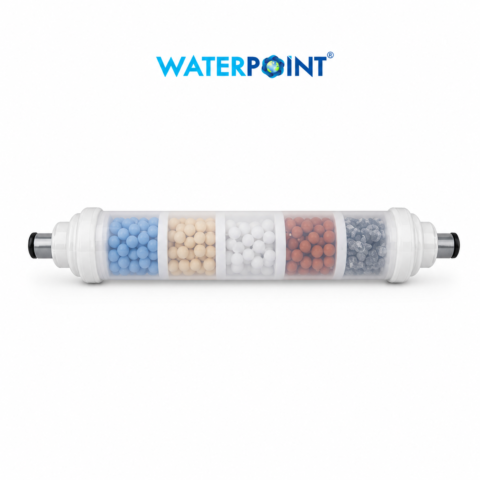
A mineral filter is a cartridge sitting at the final stage of the treatment chain that gives treated water back a certain amount of mineral. Its basic function is to adjust the taste and the mineral balance of the water. It is not a compulsory stage; it is an optional choice for users who care about the character of the water they drink.
Its position explains its function too. That stage sits not at the beginning of the chain but at the end; so it has no treating job. The treatment work is completed by the earlier stages; the mineral filter gives the outgoing water a final touch.
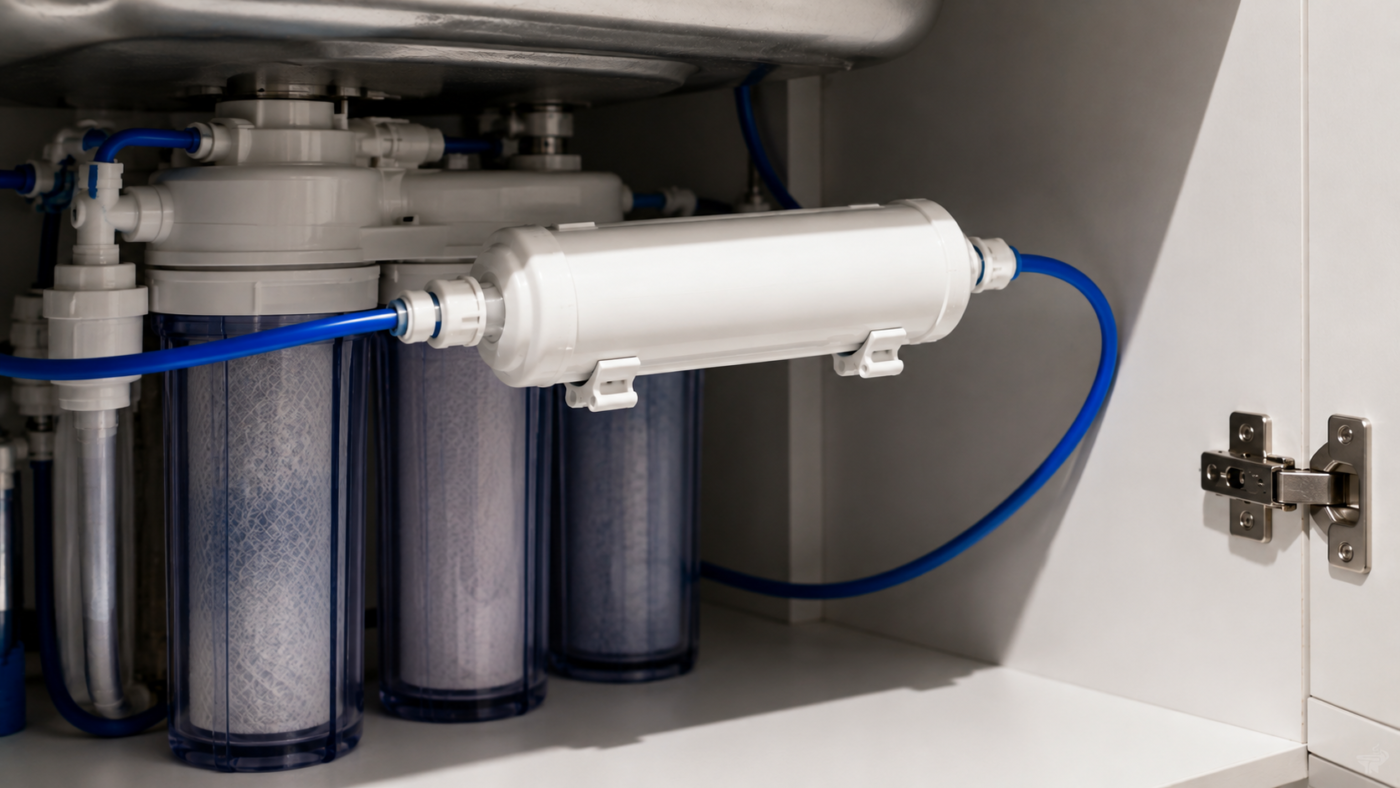
Structurally it is generally an inline type, a compact cartridge fitted onto the line. Inside it is a bed containing minerals; as the water passes through that bed it dissolves a certain amount of mineral and the taste changes. The process is entirely one of physical and chemical dissolution.
It is worth being clear from the outset: this stage is not a health product but a choice about taste and balance. The safety and performance of a water treatment system are settled at the earlier stages; the final stage shapes the drinking experience.
Does Reverse Osmosis Take the Minerals Out of the Water?
Yes, it does. While reverse osmosis separates dissolved substances, it also separates most of the minerals such as calcium and magnesium. That is not a fault but a consequence of the nature of the technology; the same mechanism that removes the unwanted contaminants also holds back the minerals. A mineral filter offers a balancing option at that point.
That is the honest answer to the question, and there is no need to go round it. A reverse osmosis membrane is a barrier at the molecular level; it does not distinguish between the ions dissolved in the water. While unwanted components such as nitrate, salt and heavy metals are held back, calcium and magnesium are separated by the same mechanism.
So the membrane does not sort “good mineral” from “bad contaminant”; both are in the dissolved solids category. We set out step by step how the mechanism works in our article on how reverse osmosis works article.
The most concrete indicator of that effect is a measurement. The dissolved solids value of treated water falls markedly against the inlet water. That drop shows that the system is working; we took up in detail what it means in our TDS and dissolved solids article .
In short, the question is a fair one and the answer is clear. What really matters is what comes next: is that a problem, or a preference you can manage?
Is It a Problem? A Balanced View
Most of the daily mineral intake comes from food; what water contributes is one part of that picture. The subject has been examined by scientific bodies and assessed from various angles. So it is a heading to be taken up through taste and balance, not as an alarming deficiency.
It is necessary to stay clear of exaggeration in this section. Two extreme approaches circulate online: on one side comments presenting treated water as entirely objectionable, and on the other claims promising extraordinary results once a mineral filter is fitted. Neither offers a realistic framework.
The realistic framework is this: most of the minerals the human body needs are met from food. Water is part of that picture too and its contribution cannot be dismissed; but positioning it as a decisive source on its own would not be right either.
It is worth noting that the subject has been examined scientifically; the World Health Organization study on calcium and magnesium in drinking water is a comprehensive source taking that heading up from various angles. Our aim here is not to pass on a numerical recommendation from that study but to show that the subject has been examined seriously.
This article does not constitute medical advice. If you need a personal assessment about nutrition and mineral intake, consulting your doctor is the right approach. The subject here is a technical preference about the taste and mineral balance of water.
So why do so many people ask this question? Because the difference is noticeable. Water stripped entirely of its minerals has a different drinking character from the tap water people are used to. A user who notices that difference naturally looks for an explanation. And the answer lies not in health but in taste.
How Does a Mineral Filter Work?
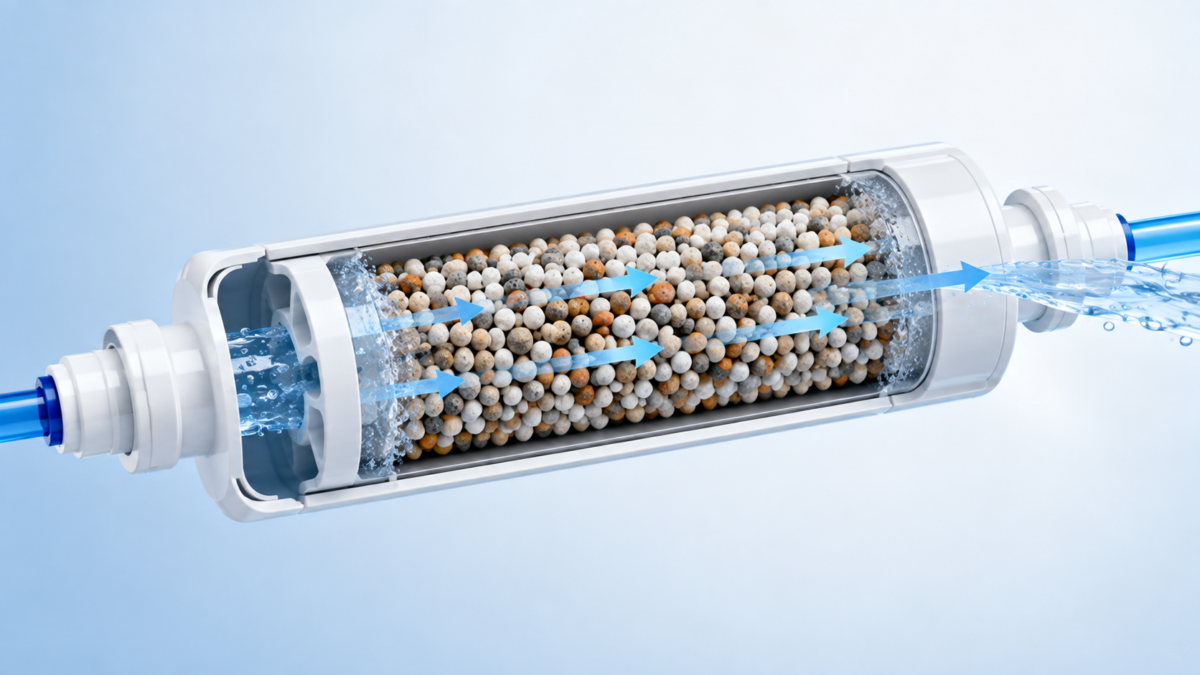
The treated water is passed through a bed or cartridge containing minerals. As the water touches that material it dissolves a certain amount of mineral and takes it up. The result is a change in the mineral content and the pH balance of the water, and its drinking character changes accordingly. The process is an entirely natural one of dissolution.
The mechanism works in the opposite direction from treatment. Where the earlier stages take substances out of the water, this stage puts substances into it. That is why it is positioned at the end of the chain; otherwise the mineral added would be separated out again at the next stage.
In a typical installation the order of the stages is this:
Pre-Filtration
Sediment and particles are held back; the stages behind are protected.
Activated Carbon
Chlorine, odour and taste components are removed; the membrane is protected.
Membrane
Dissolved substances are separated; the main treatment of the water is completed here.
The Final Stage
The mineral filter comes into play; taste and balance are shaped here.
The material inside the cartridge is generally a naturally sourced bed containing minerals. As the water touches that bed, a certain amount of dissolution takes place. The rate of dissolution depends on the flow rate of the water, the contact time and the state of the bed.
A mineral filter cartridge has a capacity that is not endless. The mineral in the bed runs out over time and the dissolution falls. So this stage is not a permanent component but a consumable renewed periodically.
It would not be right to give an exact figure for the amount of mineral added; that varies with the character of the inlet water, the structure of the cartridge and the intensity of use. What matters is not the number but the difference the user tastes.
How Does It Change the Taste of the Water?
Water largely stripped of its minerals is described by many users as “flat” or “plain”. A mineral filter gives the water a certain fullness and roundness. But taste is entirely a personal preference; some users prefer the plain character of treated water.
The taste of water comes from the substances dissolved in it. When the mineral content falls, that character becomes plainer. Some people find that “clean and light”; others miss the fullness they are used to.
The difference is felt in these situations in particular:
- Drinking it straight: The character of the water is clearest when you drink it from a glass.
- In tea and coffee: Water is the carrier of the aroma; the mineral balance affects the extraction.
- In cooking water: In preparations such as soup and rice the character of the water shows up in the result.
- When habits change: A user who has drunk hard water for a long time feels the difference more sharply in the first days.
So the subject is not a matter of “right and wrong” but of taste. Fitting a mineral filter does not make the water better or worse; it only changes its character. The decision is yours.
A practical suggestion: use your unit for a while without the final stage and observe the taste of the water. Then add the stage and experience the difference. That is the most reliable way to find out which you prefer.
Is It the Same Thing as an Alkaline Filter?
Both are final-stage filters and work on similar logic. The difference is one of emphasis: a mineral filter focuses on content, an alkaline filter on pH balance. In practice many cartridges take on both functions together. So the two terms are often used in place of one another.
The reason for the confusion is that the functions overlap. A cartridge that gives minerals to water naturally affects its pH value too; likewise a structure that adjusts pH generally contains minerals. The difference is in the naming and in the feature brought to the front.
| Criterion | A Mineral Filter | An Alkaline Filter |
|---|---|---|
| The Emphasis | Mineral content | pH balance |
| Position | Final stage | Final stage |
| The Basic Mechanism | Mineral dissolving from a bed | Mineral dissolving from a bed |
| The Effect on Taste | It gives a sense of fullness | It softens the drinking character |
| Compulsory? | Optional | Optional |
Various health claims about alkaline water circulate online. This article makes no such claims; it takes the subject up only in terms of the taste and technical balance of the water. For questions about health it is right to consult your doctor.
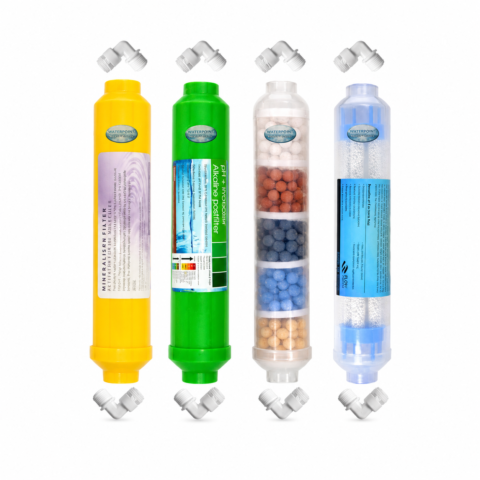
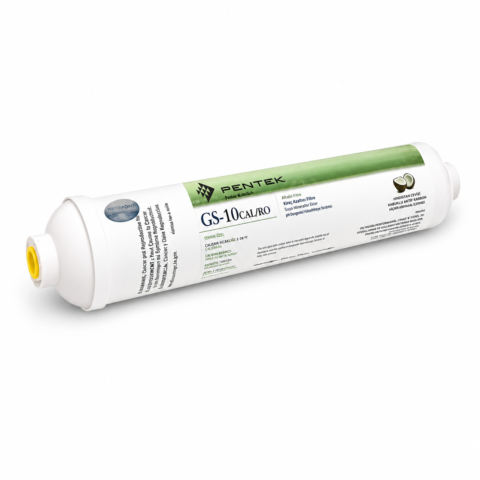
On the product side, the choice is made according to the stage structure of your unit. For a build weighted towards pH, pH alkaline mineral filter sets can be preferred. For those looking for an alternative compatible with standard housings, the Pentek GS10-CAL alkaline cartridge is a widely used option.
What Does a Taste Filter Do?
A taste filter is a cartridge at the final stage focusing on softening the drinking character of the water. Its difference from a mineral filter is one of emphasis: the priority here is not adding minerals but improving the perception of taste. The two stages can also be used together so that they complement one another.
In practice those three ideas — mineral, alkaline and taste — are members of the same family. All of them sit at the end of the chain and all of them aim at the character of the water at the moment it reaches the user. The difference between them is which feature is brought to the front.
The focus of the taste approach is the sensory experience: the feel the water leaves in the mouth, its softness and how easy it is to drink. The taste filter options preferred for that stage are used in a way compatible with standard stage structures.
Using them together is possible too. On some builds both a mineral and a taste stage are present; the number of stages then rises and planning the layout inside the cabinet becomes important. The decision is made according to the structure of your unit and your preference.
Mineral-Focused
It puts adding minerals to the water first; a sense of fullness comes to the front.
Alkaline-Focused
It emphasises pH balance; the drinking character softens.
Taste-Focused
It aims at improving the sensory experience; the feel in the mouth comes to the front.
Does Everyone Need a Mineral Filter?
No, it is not a compulsory stage. It makes sense for users who care about the taste of the water; those who prefer the plain character use the system without trouble without it. In laboratory and production applications it is not wanted, because there the aim is to bring conductivity to a minimum.
This section calls for an honest assessment. A mineral filter is not necessary for every user, and not having one is no shortcoming. The decision depends entirely on the purpose of use and on taste.
In drinking water use
It can be preferred by home and office users who care about the character of the water.
- Users who find treated water “flat”
- Those who care about the taste of tea and coffee
- Those moving over from hard water
- Palates looking for a sense of fullness
In applications calling for pure water
In laboratory, analytical and sensitive production work the aim is to bring conductivity to a minimum.
- Laboratory and analysis water
- Sensitive production processes
- Deionised water applications
- Anywhere with a low conductivity target
The second column matters in particular. On the laboratory and production side, giving minerals to water produces exactly the opposite of the aim. What is wanted in those fields is the lowest possible conductivity; we took up the logic of that approach in detail in our deionised water article .
So the same stage is a useful choice in one application and directly unwanted in another. That shows why the subject has to be taken up with the question “does it suit you?” rather than “is it necessary?”.
When Is a Mineral Filter Changed?
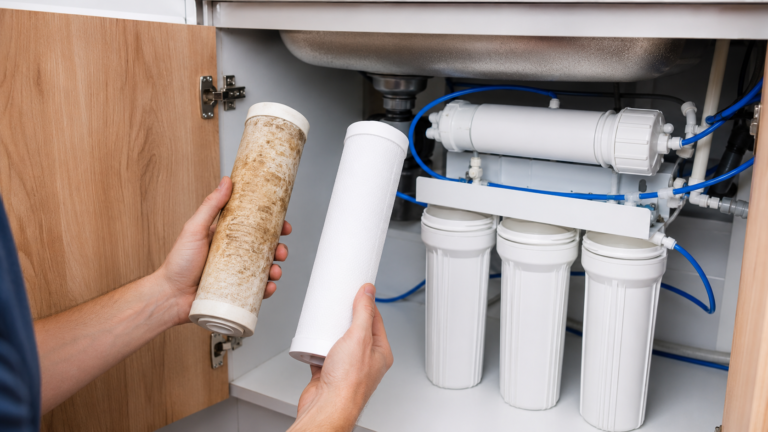
The clearest sign is the taste it gave fading and the water becoming flat again. When the mineral in the bed runs out, the dissolution falls and the effect stops being felt. The interval is set not by the calendar but by use; the amount consumed and the structure of the cartridge bear directly on that period.
This stage, like the other filters, is a consumable. But it completes its life not by saturating but by running out; the mineral inside it falls over time and the cartridge loses its function.
The signs showing it is time to change are these:
- The taste flattening: The sense of fullness it gave disappears and the water takes on a plain character again.
- A drop in flow: A slowing in the flow shows that the cartridge is starting to block.
- A change in tea and coffee: A difference in the aroma is often the first signal noticed.
- The period is up: Even where there is no sign, the stage should be renewed once the interval in the manual has come round.
It would not be right to give an exact period; the same cartridge runs out far faster in a household that uses it heavily. We took up in detail how to plan the maintenance routine and in what order the stages are renewed in our filter change guide in our guide.
A practical approach is to plan the final stage together with the other stages. For those who want to refresh the whole line in one go, staged filter sets simplify the maintenance calendar and reduce the risk of forgetting.
How Do You Choose the Right Final Stage for Your System?
The choice is made on four criteria: the stage structure of the unit, compatibility of cartridge size, the mineral content of the inlet water and the purpose of use. An incompatible cartridge causes leaks and a loss of efficiency. Drinking water and process use call for entirely different choices.
The most practical way is to run the decision in this order:
-
Clarify the purpose of use
Is it drinking water, or an application calling for low conductivity? That distinction sets the direction of the decision.
-
Check the structure of the unit
How many stages does your system have, and is there a suitable slot for a final stage?
-
Confirm the size
The cartridge size and connection type must be compatible with the existing system; incompatibility creates leaks.
-
Establish your preference
A mineral, alkaline or taste-focused approach: decide which one suits you.
-
Add it to the maintenance plan
Put the final stage in the calendar along with the other filters so that the change does not slip.
For those looking for an option compatible with standard stage structures, a mineral filter for five-stage systems is a widely used answer. If you are not sure of your decision, the safest route is to give your unit model and have the compatibility checked.
One last reminder: a mineral filter does not raise treatment performance, nor lower it. The safety and quality of the water are settled at the earlier stages. This stage only adds a final touch and serves your preference alone.
Let us establish the right final stage for your unit together
To choose a mineral, alkaline or taste-focused cartridge to suit your stage structure and your preference, you can look at the options.
See the Treatment SolutionsFrequently Asked Questions
What exactly does a mineral filter do?
It sits at the final stage of the treatment chain and gives treated water back a certain amount of mineral. That changes the taste and the mineral balance of the water. It has no treating job; the safety and quality of the water are settled at the earlier stages.
Does reverse osmosis take the minerals out of the water?
Yes. While the membrane separates dissolved substances, it also separates most of the minerals such as calcium and magnesium. That is not a fault but a consequence of the nature of the technology; the same mechanism that removes contaminants holds back the minerals too.
Can I use the unit without a mineral filter?
You certainly can. That stage is not compulsory and not having it is no shortcoming. Many users prefer the plain character of treated water; the decision depends entirely on taste.
Is there a difference between it and an alkaline filter?
Both are final-stage filters and work on similar logic. The difference is one of emphasis: one brings the mineral content to the front, the other the pH balance. In practice many cartridges take on both functions together.
Is it used in laboratory or production water?
No, it is not wanted in those applications. In laboratory and sensitive production work the aim is to bring conductivity to a minimum; giving minerals to the water produces the opposite of that aim. There the pure water and deionisation approach applies.
When should the cartridge be changed?
The clearest sign is the taste it gave fading and the water becoming flat again. A drop in flow also points to blocking. There is no fixed period; the amount consumed and the structure of the cartridge are what decide. The interval in the manual should be taken as the basis.
Does the taste of the water really change?
Most users feel a marked difference; the water takes on a fuller and rounder character. But that is an entirely personal perception. Some users prefer the plain taste of treated water; both preferences are valid.
Conclusion
The honest answer to “does treatment take the minerals out of the water?” is yes; while the reverse osmosis membrane separates dissolved substances it separates most of the minerals too, and that is the natural consequence of the mechanism that removes contaminants. Presenting that as a deficiency is no more accurate than presenting its correction as a miraculous solution. Most of the daily mineral intake comes from food; what water contributes is one part of that picture. In that frame a mineral filter is not a component that changes treatment performance but an optional final stage shaping the taste and balance of the water. It makes sense for a user who wants character in their drinking water, and it is not wanted in applications calling for pure water. The decision belongs to your taste and your purpose of use.
Let us plan your final-stage choice to suit your unit
For a cartridge chosen to suit your stage structure and for maintenance planning, you can consult the Water Point expert team.
Discover the Solution That Suits You