The Stages of Well Water Treatment: Building the System Step by Step
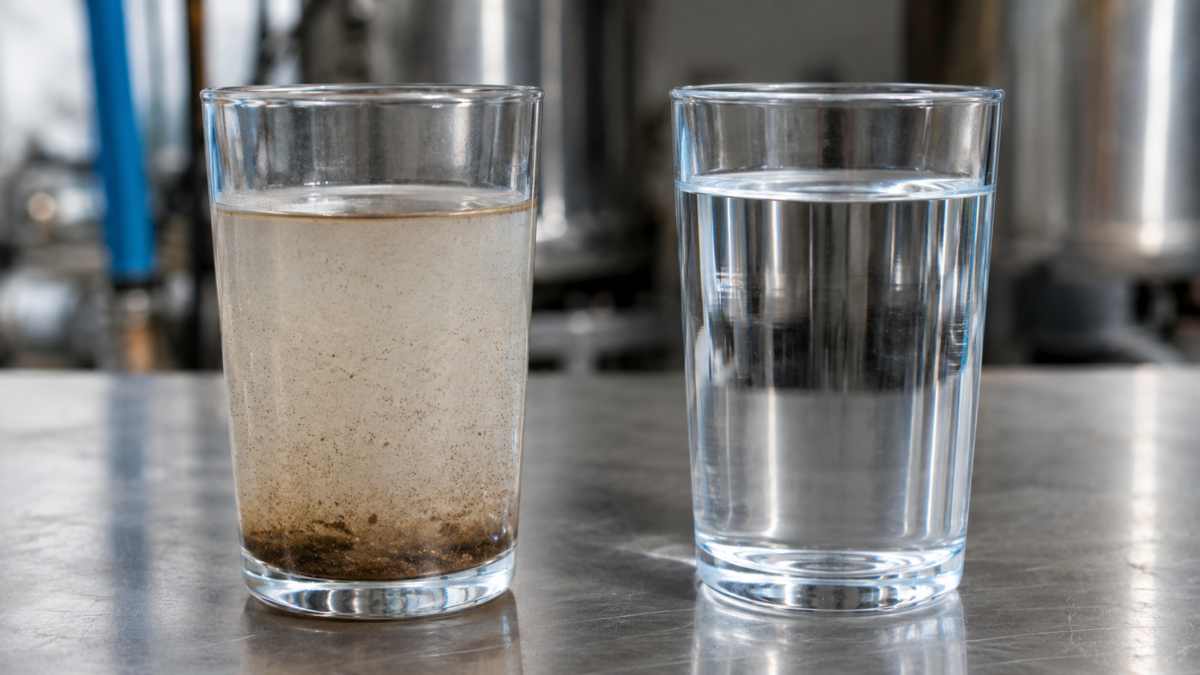
Water drawn from a well usually looks clear, has no smell and gives nothing away at first glance. Yet the same water can carry fine sediment, iron, manganese, high hardness and a microbiological load. Each of these contaminants has a different nature and none of them is removed collectively by a single unit. That is why the stages of well water treatmentare built as a chain of stages that complement one another.
In one well, sand and mud dominate; in another, the real problem may be iron staining or limescale. “Buying a ready-made unit and plumbing it in” is therefore not the right approach; which stage is needed is established from the content of the water itself. In this guide we take up, step by step, why well water cannot be used directly, which contaminant is removed at which stage, and why the system is engineered around an analysis.
Why Cannot Well Water Be Used Directly?
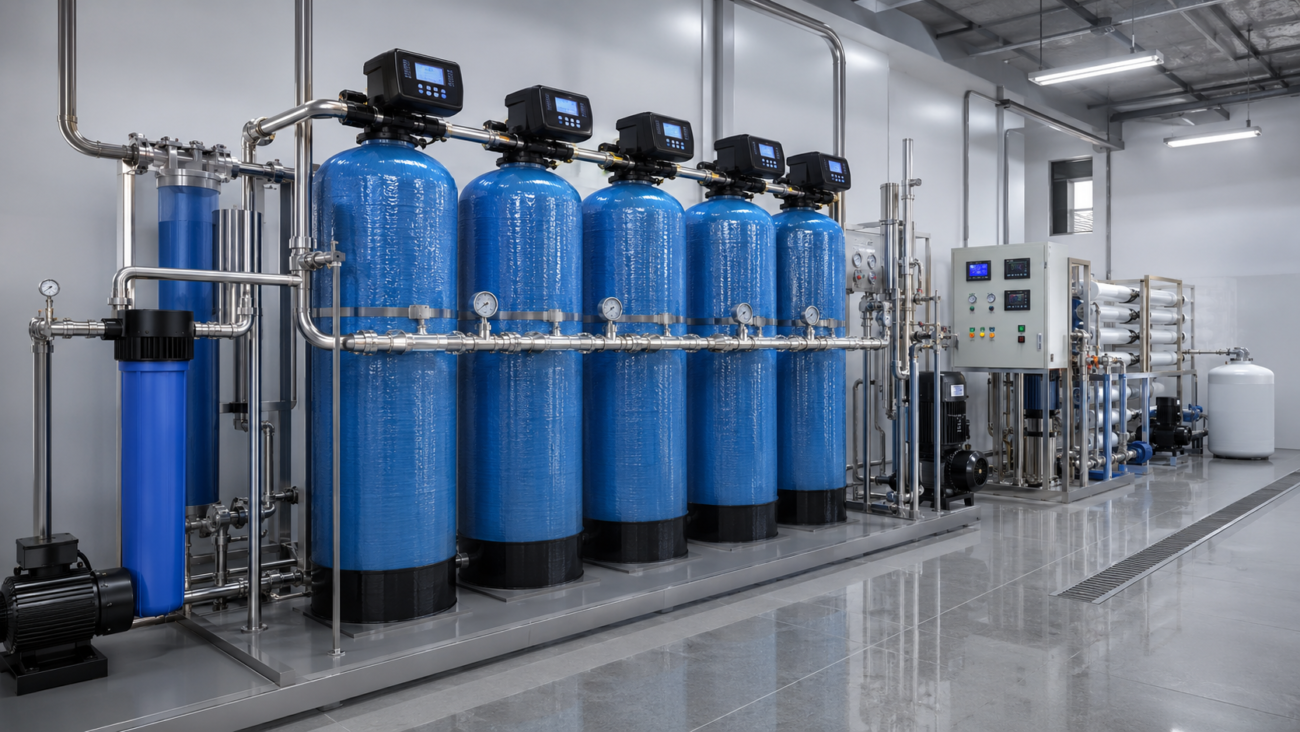
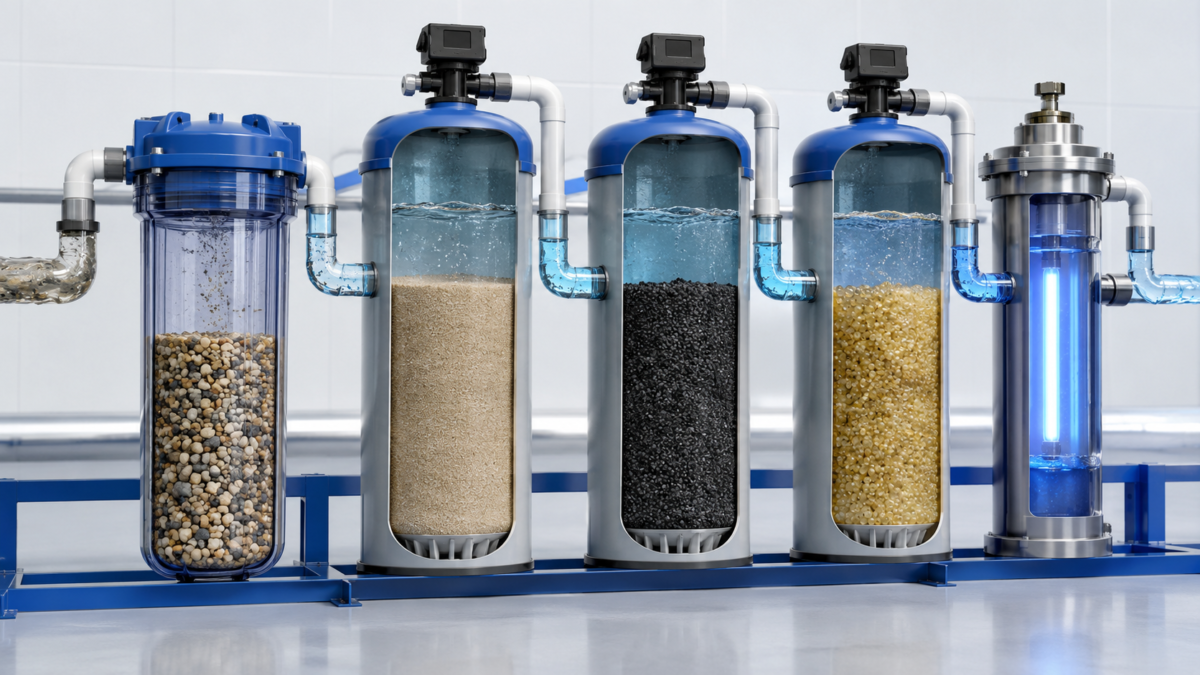
The stages of well water treatment consist of steps that remove different types of contaminant in turn: coarse sediment separation, sand and multimedia filtration, iron and manganese removal, activated carbon, softening and, where necessary, advanced treatment. Each stage targets a particular problem; which ones are installed is established by a water analysis.
As it moves underground, well water picks up minerals, metals and particles from the layers it passes through. Unlike mains water, it does not go through regular public monitoring, so its content is unknown to the user. Accepted as the authority on the safety of private wells, the US Environmental Protection Agency’s private well resources stress that well owners have to monitor their own water quality.
Whether the water is drinkable is a separate assessment; you can read the subject in detail in our article on whether well water is drinkable . In this piece our focus is on which technical stage removes the problems identified.
It All Starts with a Water Analysis
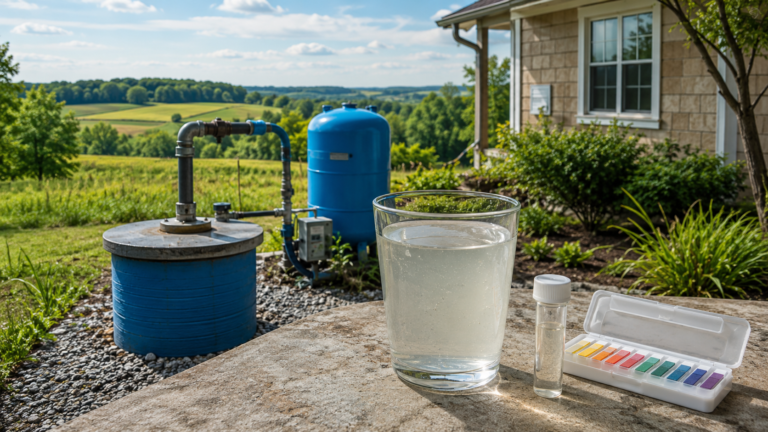
The right system always starts with a water analysis. Without one there is no knowing which stages are needed, and that leads to investment that is either incomplete or unnecessary. Hardness, iron, manganese, turbidity, TDS, pH and microbiological load are measured to establish the real profile of the water, and the treatment chain is built around it.
The analysis is the diagnosis stage. Because even two wells in the same area can give different results, copying a neighbouring installation is not a sound method. In establishing the stages of well water treatment, these parameters are measured first:
- Hardness: Shows the calcium and magnesium load; the main indicator of limescale risk.
- Iron and manganese: Reveals the source of colour, staining and metallic taste problems.
- Turbidity and suspended solids: Determines how much filtration is needed.
- TDS / conductivity: Shows the total dissolved solids load and whether advanced treatment is needed.
- pH: Affects the tendency to corrode and the efficiency of some removal methods.
- Microbiological load: Reveals the presence of bacteria and microorganisms.
Systems installed without an analysis often either solve part of the problem or contain stages that were never needed. Capacity, the order of the stages and the choice of equipment are established from the water analysis and the flow required.
First Stage: Separating Coarse Sediment and Particles
The first stage separates the coarse particles in the water. Sand, mud, rust and large sediment from the well are held back by pre-filtration equipment such as a separator or a bag filter. This step protects the sensitive stages behind it and directly extends the life of the whole chain.
Sand and settlings being carried along with the water while the well pump runs is a common situation. Once those particles enter the system they quickly wear out valves, membranes and resin. That is why pre-filtrationis the first link in the stages of well water treatment and must not be skipped.
Separator-type equipment removes heavy particles by centrifugal action, while bag or cartridge filters hold back finer sediment. Which equipment is used and at what rating is established from the particle load of the water and the flow required.
Second Stage: Sand and Multimedia Filtration
Sand filters and multimedia filters lower the turbidity and suspended solids in the water. Passing through beds of different grain sizes, the water clears in stages. Thanks to automatic backwashing, the sediment held is periodically flushed out and the filter bed renews itself.
This stage targets the finer suspended matter the pre-filtration could not hold. Because the contaminant collecting in the bed makes the flow harder over time, the system backwashes at set intervals: water is passed in the reverse direction to lift the bed, the sediment held is sent to drain, and the filter returns to service. That cycle is usually managed by an automatic valve.
On wells with a high particle load this stage becomes critical. For builds suited to the need, sand filters with automatic backwashing are assessed across a range of capacities; correct sizing is done from the water analysis and the flow required.
Third Stage: Iron and Manganese Removal
Iron and manganese removal clears the colour, staining and metallic taste problems in well water. Because these metals are dissolved in the water, they are first converted to solid form by oxidation and then held in a suitable filter bed and separated out. The method and the order of the stages are established from the analysis result.
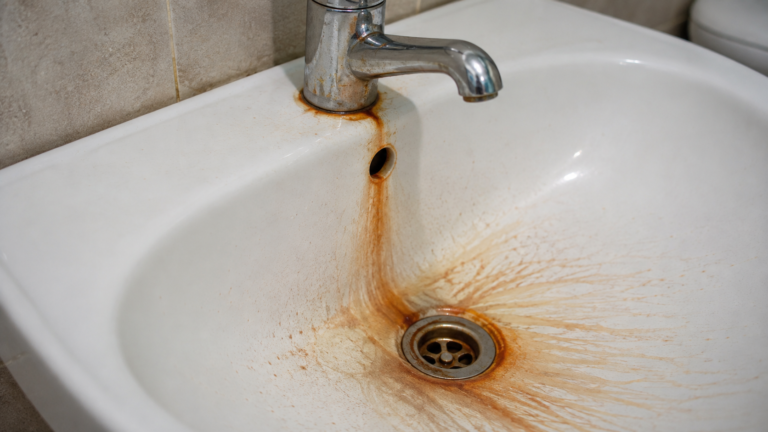
Dissolved iron is invisible in water; but when it meets air it oxidises and takes on its characteristic rust colour. That is why water running clear from the tap can yellow after standing a while. Manganese leaves dark stains and deposits. Both leave lasting marks on fittings, ceramic surfaces and laundry.
The removal logic has two steps: oxidation first, then filtration. Oxidation can be achieved by aeration or by suitable oxidising approaches. The metals, now in solid form, are held in special filter beds and separated from the water. Because the method to be used depends on the metal concentration and the pH of the water, it is always established after an analysis.
Fourth Stage: Controlling Odour, Taste and Colour
An activated carbon filter removes odour, taste and colour problems from water. The carbon bed, with its large surface area, holds organic components and unwanted taste and odour compounds by adsorption. This stage improves the sensory quality of the water markedly and protects the stages that follow.
An earthy smell, a sulphurous smell or slight colouring are often seen in well water. These problems usually come from dissolved organic matter and are not removed by mechanical filters. An activated carbon filterholds those components on its surface and separates them from the water.
The carbon bed saturates over time and therefore needs periodic checking and renewal. How often it is renewed varies with the organic load of the water and the amount consumed.
Fifth Stage: Hardness Control and Preventing Limescale
Hardness is controlled by a water softening stage working on the ion exchange principle. The resin holds the calcium and magnesium ions in the water and gives sodium in return. Limescale is thereby prevented and the plumbing, boiler and appliances are protected. When the resin is saturated it is regenerated with brine.
Hardness in well water is often higher than in mains water, because the water passes through limestone layers and picks up calcium and magnesium. That leads quickly to limescale building up in the boiler heat exchanger, the taps and white goods.
Water softening stage brings that problem under control at source. The capacity is established from the degree of hardness, daily consumption and the instantaneous flow. For needs at different scales, softening systems working by ion exchange can be consulted.
Sixth Stage: Advanced Treatment and Microbiological Control
The final stage targets dissolved solids and microbiological risks. Reverse osmosis lowers high TDS and salinity and brings the water to drinking quality. UV (ultraviolet) treatment provides control of bacteria and microorganisms and reduces microbiological risks. These stages are added according to the analysis result.
The earlier stages deal with particles, metals, odour and hardness; but dissolved salts and microbiological load call for separate solutions. Reverse osmosisworks through a semi-permeable membrane and separates most of the dissolved substances in the water. On wells where high TDS, salinity or nitrate is found, this stage becomes decisive.
Where a microbiological load is found, UV treatment comes into play. Ultraviolet light brings the ability of microorganisms to multiply under control without adding chemicals to the water, and reduces microbiological risks. For this stage, ultraviolet treatment units are placed at a suitable point on the line.
For UV treatment to work efficiently the water has to be clear; turbidity limits the effect of the light. This stage is therefore positioned after the filtration stages. The order of the stages directly affects the efficiency of the system.
Let us establish together which stages your well needs
You can get support from the Water Point expert team to plan the right stages and capacity from your water analysis result and the flow you need.
Treatment Systems Made for Well WaterHow Is the Right System Engineered for Well Water?
Correct engineering is done by assessing the water analysis, the intended use, the flow requirement and the installation space together. The quality needed for drinking, for process use and for irrigation is different. What is built, therefore, is not a single ready-made unit but a system in which stages chosen for the need work together.
A villa and a production plant fed from the same well do not have the same requirement. The main criteria in the engineering are these:
Water Analysis
Establishes which contaminants are present and which stages are needed.
Intended Use
Drinking, process or irrigation; each changes the water quality aimed for directly.
Flow Requirement
Instantaneous and daily consumption are the basis of sizing the equipment.
Installation Space
The layout, drainage and access conditions shape the system design.
The table below sums up which problem is handled by which stage. Several of these rows may apply at once on a single well:
| The Problem Identified | The Stage That Handles It | Conclusion |
|---|---|---|
| Sand, mud, rust | Pre-filtration (separator/bag) | Separates coarse particles |
| Turbidity, suspended solids | Sand / multimedia filtration | Raises clarity |
| Colour, staining, metallic taste | Iron and manganese removal | Separates the metals from the water |
| Odour, taste, slight colour | Activated carbon | Improves sensory quality |
| High hardness, limescale | Softening (ion exchange) | Prevents limescale forming |
| High TDS, salinity | Reverse osmosis | Lowers the dissolved solids load |
| Microbiological load | UV (ultraviolet) treatment | Reduces microbiological risks |
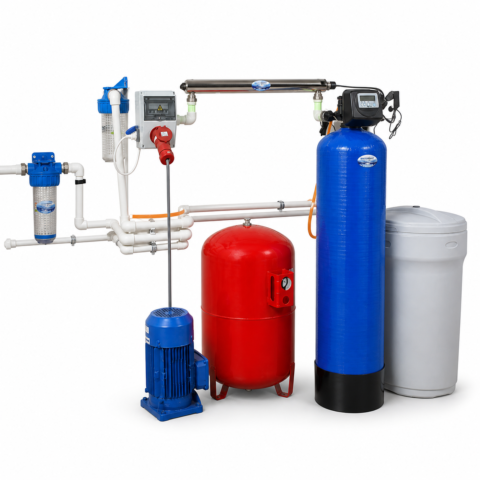
On high-flow plants, farms and production sites this chain is built at a larger scale. For needs of that kind, high-capacity well water solutions are sized project by project.
The General Flow of the Stages
In a typical installation the stages work in this order; but which steps are included and how the order is optimised varies with the analysis result:
-
Coarse Sediment Separation
Large particles such as sand, mud and rust are held back; the equipment behind is protected.
-
Sand / Multimedia Filtration
Turbidity and suspended solids are lowered; the bed is renewed by automatic backwashing.
-
Iron and Manganese Removal
Dissolved metals are oxidised, filtered and separated from the water.
-
Activated Carbon
Organic components giving odour, taste and colour are held by adsorption.
-
Softening
Hardness is removed by ion exchange; limescale is brought under control.
-
Advanced Treatment and Microbiological Control
Reverse osmosis and UV (ultraviolet) treatment stages are brought in where needed.
Frequently Asked Questions
Are the stages of well water treatment the same for every well?
No. The stages are established from the content of the water. One well may have only a sediment and hardness problem, while another has iron, manganese and a microbiological load together. The system is therefore always engineered from the analysis result.
Can every problem be solved with a single unit?
Different types of contaminant in well water have different physical and chemical natures, so a single piece of equipment cannot remove them all. The right result comes from complementary stages working together. The number of stages and their order varies with the need.
How is the system capacity established?
The capacity is established by assessing the water analysis results, daily consumption and the instantaneous flow required together. Inadequate capacity costs performance, while an oversized system costs money for nothing. Sizing is therefore done project by project.
Why does the order of the stages matter?
Each stage protects the next and affects its efficiency. Sensitive stages installed without filtration ahead of them, for example, block within a short time; and UV treatment does not have the effect expected in turbid water. The right order determines both efficiency and equipment life.
Are all the stages needed for irrigation use too?
Generally no. The water quality needed for irrigation is different from drinking water; in most cases sediment and particle control comes to the fore. Once the intended use is clear, unnecessary stages are left out and the system is built more economically.
Conclusion
Well water cannot be used safely without knowing its content, however clear it looks. The right approach is to analyse the water first, then handle each problem identified with its own stage. From coarse sediment separation to filtration, from iron and manganese removal to softening and, where needed, advanced treatment, the stages of well water treatment work as a chain that complements itself. The capacity, the number of stages and their order are established from the water analysis and the flow required. The right result on well water therefore comes not from choosing a ready-made unit but from building a system engineered for the need.
Let us engineer a system to suit your well’s analysis
If you are not sure which stages you need, you can consult the Water Point specialists for the water analysis and survey process and plan a solution made for your well.
Discover the Well Water Solutions